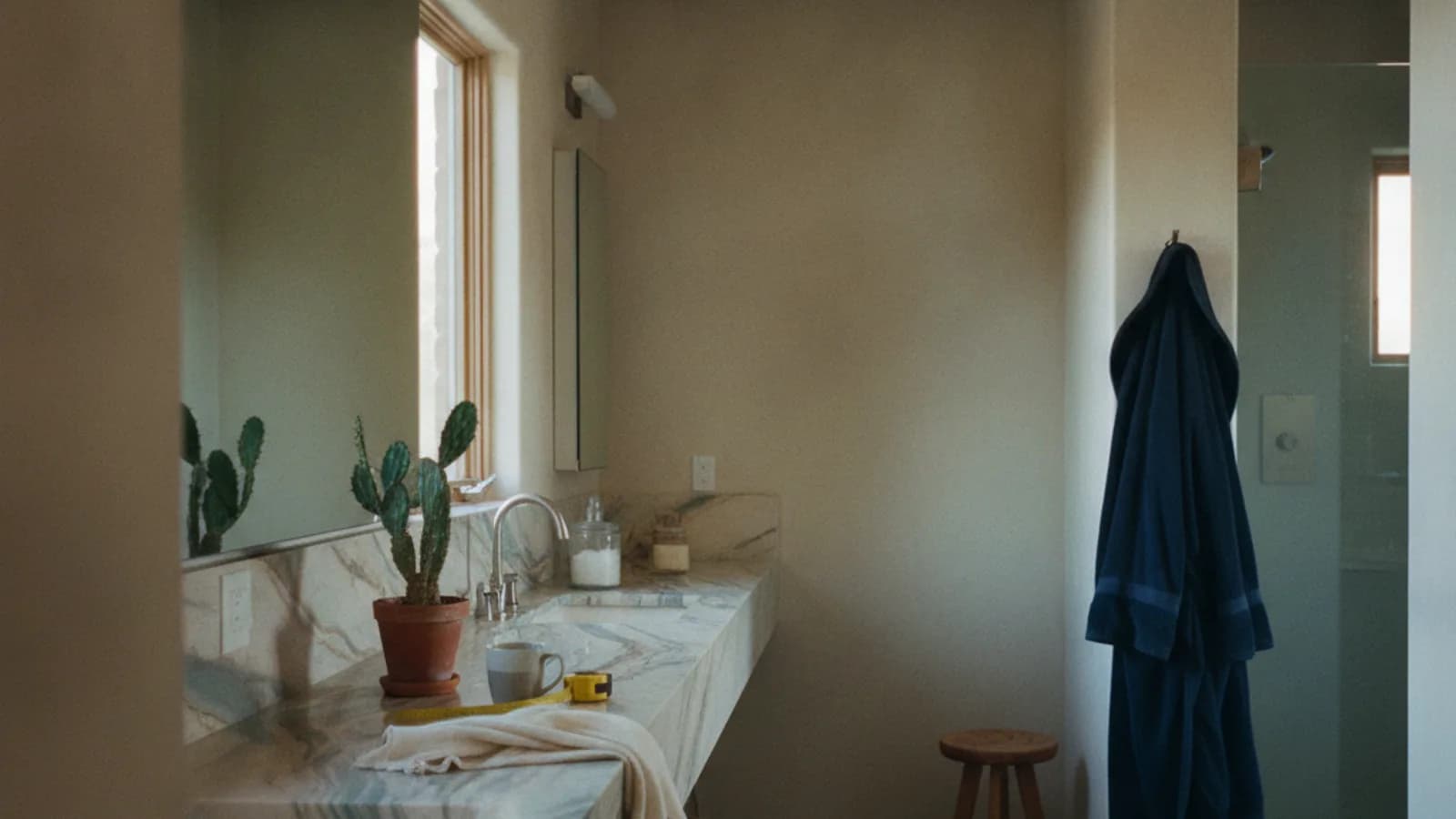
You get what you pay for. In construction, you get what you inspect. A full bathroom remodel is more than tile and a new vanity; it's a complex system of plumbing, electrical, and waterproofing that has to perform perfectly for decades. In San Diego, a complete, down-to-the-studs bathroom renovation typically runs $33,000 to $55,000 (Renology Cost Index, updated 2026-08). This is for a standard five-by-eight-foot bathroom with good-quality, but not luxury, finishes. Hiring the right bathroom contractor in San Diego is the single most important decision you'll make. It's the difference between a project that passes inspection the first time and one that's torn apart to fix a leaking shower pan.
Finding the right professional for your San Diego bathroom project involves more than just collecting three bids. It's about vetting their license, checking their insurance, understanding their process for handling surprises, and ensuring the contract protects you. A good contractor builds a durable, waterproof assembly. A great contractor communicates clearly from the first call to the final punch list, ensuring the project pencils out over ten years of use.
In a Nutshell
- Typical Cost: A full gut bathroom remodel in San Diego costs between $33,000 and $55,000. Cosmetic updates can be less, while major reconfigurations or luxury finishes will be more.
- Vetting is Key: Always verify a contractor's CSLB license is active and in good standing. Ask for proof of general liability and workers' compensation insurance.
- Get It in Writing: Never work without a detailed contract. It should specify a payment schedule tied to milestones, a clear scope of work, and a formal change order process.
- Permits are Non-Negotiable: Any work that involves moving plumbing, electrical, or walls requires a permit from the San Diego Development Services Department (DSD). An unpermitted remodel is a major liability.
- Factor in Contingency: For any home older than thirty years, plan for a 10-15% contingency budget to cover unforeseen issues like mold, rotted subfloors, or outdated wiring found after demolition.
- Local Risks Matter: San Diego's coastal humidity demands superior waterproofing and ventilation to prevent mold. Older homes may also have cast iron drains or galvanized pipes that need replacement.
The Real Cost of a San Diego Bathroom Remodel in 2026
When you see a price tag of $33,000 to $55,000 for a bathroom, it's easy to wonder where the money goes. It's not just the tile and the tub. The cost is a pyramid built on a base of skilled labor. Roughly 50-60% of your budget will go to the people doing the work: the general contractor's management fee, the plumber, the electrician, the tile setter, the painter, and the demolition crew. These trades aren't interchangeable. A great tile setter who can execute a perfect mud-set shower pan is an artist, and their skill is what prevents leaks for the next twenty years. The remaining 40-50% is split between materials, fixtures, permits, and overhead. Materials cover everything from the things you see, like the vanity and faucets, to the critical components you don't, like the waterproofing membrane, cement backer board, and PEX supply lines. Fixtures can have a huge price variance. A faucet from a big-box store might be $150; a designer fixture could be $1,500. These choices are where you have the most control over the final cost. Permits from the San Diego DSD are a smaller but essential line item, typically running from $500 to $2,000 depending on the project's complexity.
Why Bathroom Remodels Cost More in San Diego
San Diego isn't the cheapest place to build, and that reality extends to remodeling. Several local factors drive costs higher than national averages. First is labor. Skilled trade labor is in high demand and commands a premium wage. According to the California Department of Industrial Relations prevailing wage data for San Diego County, certified plumbers and electricians earn rates that reflect their extensive training and licensing requirements. This isn't just a number; it's the cost of ensuring your electrical work won't be a fire hazard and your plumbing won't leak into the subfloor. Second, regulatory compliance is stringent. California's building codes, including Title 24 energy efficiency standards and CALGreen building standards, add requirements for things like low-flow fixtures, high-efficacy lighting, and specific ventilation fan performance. These aren't suggestions; they're code requirements that will be checked during inspection. Third, the region's coastal environment adds material and technique considerations. In neighborhoods like La Jolla or Coronado, proximity to salt air means contractors should be using corrosion-resistant fasteners and fixtures to prevent premature failure. It also means a heightened focus on ventilation and waterproofing to combat the persistent humidity that can lead to mold. Finally, general operating costs for any business, from insurance to vehicle expenses, are higher in Southern California, and this overhead is factored into any contractor's bid.
Three Representative San Diego Bathroom Projects (2026)
Three representative projects from 2026, scoped similarly, reconstructed from Renology's Project of the Day network and used here in aggregate form:
1. The North Park Craftsman Hall Bath: $38,500
A classic five-by-nine-foot hall bathroom in a 1940s Craftsman. The layout remained the same to control costs. The project involved a full gut demolition. The old cast iron tub was replaced with a new Kohler cast iron model. The floor got classic hex tile, and the shower walls received white subway tile with a waterproof membrane system behind it. The big surprise was behind the wall: galvanized supply lines had corroded to the point of near-failure and had to be replaced with PEX back to the main stack. The toilet was also moved six inches to meet modern code clearance, requiring some jackhammering of the slab. The project passed all DSD inspections and took nine weeks from demolition to final punch list.
2. The Carmel Valley Primary Suite Expansion: $62,000
This project in a 1990s home involved more than a simple remodel. The homeowners annexed an adjacent closet to expand the bathroom, allowing for a large, curbless walk-in shower and a freestanding tub. This required moving a non-load-bearing wall. The scope included a double vanity with quartz countertops, heated floors, and all new LED lighting on dimmers. Because the plumbing layout was significantly altered, the permit was more complex. The curbless shower required a specialized waterproofing method and a thorough pan flood test for the inspector. The selection of high-end fixtures and extensive tile work pushed the cost higher. Total timeline was 14 weeks due to the structural changes and custom glass fabrication.
3. The Downtown Condo Refresh: $26,000
This project was a cosmetic-focused update in a 15-year-old building. The goal was to modernize without the expense of moving plumbing. The existing shower and tub combo was kept, but retiled. A new prefab vanity was installed in the same location as the old one. The toilet was replaced with a high-efficiency model. The floor tile was replaced, and the entire room was repainted. Because no plumbing or electrical was relocated, the permit was simpler and less expensive. This is a good example of how keeping the existing layout can provide a significant visual upgrade while controlling the budget. The project was completed in five weeks.
Finding a Qualified Bathroom Contractor in San Diego
The search for a great bathroom contractor in San Diego starts with the basics. Any contractor performing work valued at over $500 must have a license from the California Contractors State License Board (CSLB). The most common license for this work is the B-General Building Contractor license. Some contractors may operate with a C-36 Plumbing or C-10 Electrical license and subcontract the rest, which is also a valid model. Your first step is to verify their license number on the CSLB website. Look for an active license, no disciplinary actions, and confirmation that they carry a bond and workers' compensation insurance. A contractor without workers' comp puts you, the homeowner, at financial risk if a worker is injured on your property. Beyond the license, look for local experience. A contractor who has worked in older San Diego neighborhoods like Mission Hills or Kensington will be familiar with the common issues found in those homes, like knob-and-tube remnants or failing cast iron drains. Ask for references from projects completed in the last year, and make the calls. Ask the previous clients about communication, cleanliness of the job site, and how change orders were handled. A portfolio of beautiful finished photos is nice, but a roster of happy former clients is proof of professionalism.
The First Phone Call: What to Ask Potential Contractors
Your initial phone screen is for qualification, not a detailed bid. The goal is to create a shortlist of three to four contractors you want to invite to your home. Wasting time on a detailed meeting with an unqualified contractor helps no one. Be direct and have your questions ready. Start with the essentials: "Are you licensed and insured in California for this type of work?" The answer must be an immediate yes. Ask for their CSLB license number. Then, inquire about their business: "What is the typical size and scope of bathroom projects you take on?" A contractor who specializes in massive home additions may not be the right fit for a small hall bath remodel, and vice versa. Ask about their current workload and availability: "When would you potentially be able to start a project of this scope, and what is your estimated duration for such a job?" This sets realistic expectations from the beginning. If they say they can start tomorrow, it's often a red flag; good contractors are usually booked out for at least a few months. Finally, ask about their process: "What are the next steps? Do you provide a detailed, itemized bid? Is there a cost for the estimate?" A professional contractor will have a clear, repeatable process for bidding, design, and construction. The goal of this call is to get a feel for their professionalism, communication style, and suitability for your specific project.
Reading the Bids: Apples to Apples Isn't Enough
Once you have three bids in hand, the real work begins. Don't just look at the bottom-line number. A low bid is often a sign of an incomplete scope, not a good deal. A professional bid is a detailed document, often several pages long, that breaks down the project into phases and line items. It should clearly state what is included and, just as importantly, what is excluded. Look for specificity. A bid that says "Install new toilet" is weak. A bid that says "Install customer-supplied Toto Drake II toilet on new wax ring and install new quarter-turn angle stop" is professional. Pay close attention to allowances. An allowance is a placeholder budget for items you haven't selected yet, like tile or light fixtures. Unscrupulous contractors may put unrealistically low allowances in the bid to make their total price look more attractive, knowing you'll have to pay the difference later. For example, a $3 per square foot tile allowance is not realistic for most quality porcelain tiles in San Diego. Compare the payment schedules. A request for a large upfront deposit (more than 10% or $1,000, whichever is less, as stipulated by California law) is a major red flag. Payments should be tied to the completion of specific project milestones, like 'completion of demolition' or 'passing rough-in inspection'. A vague bid is a prelude to a project with cost overruns and disputes.

Red Flags: Contractors to Avoid
3 San Diego bathroom remodelers, editor-screened. 4 questions.
See my 3 matchesIn construction, the warning signs are there if you know what to look for. Protecting your investment means walking away from contractors who exhibit red flags. The most obvious is a lack of proper licensing and insurance. Never hire an unlicensed individual for a project of this scope. Another is high-pressure sales tactics. A contractor who pressures you to sign a contract on the spot, offers a "special price" that's only good for today, or discourages you from getting other bids is not operating in your best interest. Be wary of any request for a large upfront payment or a demand to be paid in cash. Cash payments make it difficult to track what you've paid and provide little recourse if the contractor disappears. A professional business will have a physical office or mailing address, not just a P.O. box and a cell phone. If you can't find a footprint for their business online or in local directories, be cautious. Vague contracts are another significant red flag. If the scope of work is not detailed, if there's no clear payment schedule, or if it lacks information about warranties and dispute resolution, do not sign it. Finally, trust your gut. If a contractor is difficult to communicate with, dismissive of your questions, or seems unprofessional during the bidding process, that behavior will only get worse once they have your money and your bathroom is in pieces.
Information Gain: The Unseen Risks in San Diego Homes
What no one else covers is the specific anatomy of failure in older San Diego homes. The tile you choose is aesthetics; the plumbing you can't see is the project's real heart. I've torn out enough failed bathrooms in this city to see the patterns. In pre-1980s homes, especially in areas like University Heights or La Mesa, the number one issue is galvanized steel or cast iron drain lines. They rust from the inside out. A contractor who doesn't camera-inspect the main drain line as part of a gut remodel is exposing you to future failure. Replacing a section of drain in a slab-on-grade foundation after the fact is a nightmare. The second major risk is waterproofing, or the lack thereof. Many older homes used nothing more than a layer of tar paper behind green board. That's not a waterproof system. Today, code demands a continuous waterproof membrane. I see failures constantly from poorly detailed shower corners and improperly sloped pans. This is especially critical in coastal areas from Imperial Beach to Oceanside, where salt-laden, humid air accelerates any moisture intrusion. A small leak becomes a big mold problem fast. Third, unpermitted work is rampant. Many homes have had bathrooms added or moved without permits. When you open a wall, you inherit that history. Your new, permitted project must bring everything up to current code. This can mean upsizing vents, adding GFCI circuits, and correcting framing that wasn't properly tied into the load path. A good contractor anticipates this. They talk about it upfront and budget for it in the contingency. A bad contractor ignores it, hoping the inspector won't notice. The inspector always notices. These are the issues that turn a $40,000 project into a $55,000 project, and why a solid contingency is not optional.
The Contract: Your Most Important Tool
A handshake doesn't hold up in court. The contract is the single most important document in your remodel. It protects both you and the contractor by creating a clear, legally binding agreement on the scope, schedule, and cost. Do not accept a one-page estimate as a contract. A proper contract, often based on templates from the American Institute of Architects (AIA) or similar organizations, should include several key clauses. First, a detailed scope of work. It must list every task, from demolition to paint, and specify the materials to be used by brand and model number where applicable. Second, a fixed price for that scope. Third, a payment schedule. Payments should be made upon completion of specific, verifiable milestones (e.g., 'passing rough plumbing inspection'), not based on arbitrary dates. Fourth, a clear change order process. It should state that any changes to the original scope must be documented in a written change order, signed by both you and the contractor, with the cost and schedule impact clearly noted before the additional work begins. Fifth, it should include start and completion dates, acknowledging that these can be affected by approved change orders or unforeseen conditions. Finally, it must include the contractor's license number, proof of insurance, and clauses covering warranties, dispute resolution, and lien releases. A contractor who is hesitant to provide a detailed contract is not a contractor you want to hire.
Scope-Lock and the Contingency Conversation
Two concepts are critical for keeping your project on track: the scope-lock date and the contingency fund. The scope-lock date is a deadline, agreed upon in the contract, after which all your material selections (tile, vanity, fixtures, paint color) are considered final. This is crucial for the contractor to order materials with long lead times and build an efficient construction schedule. Changing your mind about the floor tile after it's been ordered and scheduled for installation creates delays and costs that ripple through the entire project. A professional contractor will guide you through the selection process to meet this date. For more guidance on scheduling and project phases, review our San Diego Bathrooms Permit Playbook for 2026. The contingency conversation is equally important. This is a fund, separate from the main contract price, set aside to deal with the unknown. The National Association of Home Builders recommends a ten to fifteen percent contingency on renovations in homes over thirty years old. This isn't a slush fund for upgrades. It's insurance against the surprises found inside the walls after demolition: dry rot in the subfloor from a slow leak, antiquated wiring that needs to be replaced, or asbestos-containing materials that require professional abatement. A good contractor will discuss this with you upfront and help you establish a realistic contingency amount. It's better to budget for it and not need it than to need it and not have it.
Pulling Permits with San Diego's DSD
Working without a permit is one of the most expensive mistakes a homeowner can make. In San Diego, the Development Services Department (DSD) is the agency responsible for issuing permits and conducting inspections. Any bathroom remodel that involves altering or adding plumbing, electrical wiring, or structural framing requires a permit. This is not optional bureaucracy. The permit and inspection process is a third-party check to ensure the work is done safely and according to current building codes, which are designed to protect you and future owners of your home. Typically, your general contractor is responsible for pulling the permit. The process involves submitting detailed plans of the existing and proposed bathroom layout, including plumbing and electrical diagrams. The DSD reviews these plans to ensure they comply with all relevant codes. Once the permit is issued, the inspection card must be posted at the job site. An unpermitted remodel can lead to fines, orders to tear out the completed work, and major problems when you try to sell your home. Mortgage lenders and title insurance companies are increasingly scrutinizing permit histories. A beautiful new bathroom with no permit on file is a red flag that can derail a sale or force you to do expensive, post-construction permitting and remediation.
Inspections: The Four Gates You Must Pass
The permit is your ticket to the game; inspections are how you win it. The inspection process is a series of checkpoints where a city inspector visits your home to verify that the work completed so far meets code. You cannot proceed to the next phase until the previous one has been approved and signed off on the inspection card. For a typical bathroom remodel, you'll have at least three, and often four, key inspections. The first is the rough-in inspection. After demolition and after the new plumbing, electrical, and framing are installed but before any drywall or backer board goes up, the inspector checks everything. They verify drain slopes, nail plates on studs, proper vent sizes, and correct wiring. The second is the waterproofing and shower pan test. The inspector will check the integrity of your shower's waterproofing membrane. This often involves the plumber plugging the drain and filling the shower pan with water for 24 hours to ensure it's completely watertight. A single pinhole leak means failure. After insulation and drywall, you might have a drywall nailing inspection. The final inspection occurs when the project is 100% complete. The inspector checks everything: GFCI outlets, toilet function, sink drainage, ventilation fan operation, and all finishes. Passing each inspection is a critical milestone. A good contractor knows the code, anticipates what inspectors look for, and gets it right the first time.
Surviving the Remodel: Timelines and Expectations
A full bathroom remodel is not a weekend project. It's disruptive, noisy, and dusty. Setting realistic expectations for the timeline is key to a less stressful experience. For a standard, full-gut bathroom remodel in San Diego, plan for a timeline of eight to twelve weeks from the day demolition begins. This can be 10 weeks if nothing surprises you, 14 if the slab moves or you find extensive rot. Why so long? It's not continuous work. The process is a sequence of dependent steps with built-in pauses. Demolition might take two days. Rough-in plumbing and electrical might take a week. Then you wait for the rough-in inspection. Once that passes, insulation and drywall go up, which involves multiple days for taping, mudding, and sanding. Then comes waterproofing, tile setting, and grouting, which requires curing time. Only then can the final plumbing fixtures, vanity, and electrical trim be installed, followed by painting. This timeline can be extended by several factors: permit approval delays from the DSD, the lead time for special-order tile or a custom vanity, or the discovery of unforeseen conditions. A professional contractor will provide you with a detailed project schedule and communicate proactively about any changes. They will also take steps to mitigate the disruption, such as sealing off the work area with plastic barriers and using dust extractors.
The Renology Take
Homeowners get fixated on the things they can see. They spend weeks choosing the perfect tile, the right vanity, the ideal faucet. Those things matter for the daily experience of the room. But the real value, and the real risk, in any bathroom project is in the systems behind the walls. A successful bathroom remodel isn't about the finishes; it's about a perfectly waterproofed, properly vented, and correctly plumbed assembly. The difference between a $35,000 bathroom that lasts for thirty years and a $25,000 one that starts leaking in three is the quality of the work nobody will ever see. Your contractor's primary job is not to be a design consultant; it is to be a risk manager. They manage the risk of water intrusion, mold growth, electrical faults, and inspection failures. When you're vetting a bathroom contractor in San Diego, shift your focus. Ask less about their design portfolio and more about their waterproofing methods, their relationship with city inspectors, and how they handle the inevitable surprises. That's what pencils out over the long run.
Sources & Methodology
See the Renology Methodology for how sources are reviewed, ranges are normalized, and planning-data limits are handled.
Cost ranges in this guide draw on the following named industry sources, public agency datasets, and Renology editorial research.
- Renology Cost Index (2026-08)
- California Contractors State License Board (CSLB) (2026)
- City of San Diego Development Services Department (DSD) (2026)
- California Department of Industrial Relations, Prevailing Wage Data (2026)
- National Association of Home Builders (NAHB) (2025)
- Remodeling Magazine, Cost vs. Value Report (2026)
- National Kitchen & Bath Association (NKBA) (2026)
- U.S. Environmental Protection Agency (EPA), Asbestos Information (2025)
- American Institute of Architects (AIA) Contract Documents (2025)
- Tile Council of North America (TCNA) Handbook (2026)
- California Building Standards Code (Title 24) (2025)
This article is from The Renology Magazine, the renovation magazine and contractor-advisory for homeowners in Southern California, San Diego, and Greater Seattle. Want more renovation breakdowns? Search "The Renology Magazine" on Google.
Frequently Asked Questions
How much should I budget for a bathroom remodel in San Diego in 2026?
Do I need a permit for my bathroom remodel in San Diego?
How long does a typical bathroom remodel take?
What is the most common mistake homeowners make when hiring a contractor?
What are the best waterproofing methods for a shower?
Should I be concerned about asbestos in my older San Diego home?
What is the ROI on a bathroom remodel in San Diego?
How can I save money on my bathroom remodel without cutting corners?
Ready to find a pro?
Tell us about your project and location. A Renology advisor can help you explore contractor matching.
Free for homeowners. No obligation to hire.
Find a ProSources
- Renology Cost Index
- California Contractors State License Board (CSLB)
- City of San Diego Development Services Department (DSD)
- California Department of Industrial Relations, Prevailing Wage Data
- National Association of Home Builders (NAHB)
- Remodeling Magazine, Cost vs. Value Report
- National Kitchen & Bath Association (NKBA)
- U.S. Environmental Protection Agency (EPA), Asbestos Information
- American Institute of Architects (AIA) Contract Documents
- Tile Council of North America (TCNA) Handbook
- California Building Standards Code (Title 24)
Follow Renology on Google
Choose Renology as a preferred source and our guides show up more often in your Google results, including Top Stories and AI Overviews.