New landscaping install
$3k to $16k
- New plants, ground cover or sod on the existing grade
- Irrigation, mulch and light grading as the design needs
- Basic landscaping work runs $4 to $12 per square foot
- HomeGuide national range, not a local average
Plan paths, drainage and usable outdoor areas before selecting plants. Separate hardscape, planting, irrigation and ongoing care in the budget. Choose materials and plants for the site’s sun, soil, water and maintenance needs rather than a photograph alone.
Match the budget to the work you need. Each tier is a published range for that scope, with its source listed at the end of this guide, and the local figures below show how your area compares. None of them is a quote. Confirm dimensions, preparation, materials, labor, fees and exclusions in each proposal.
$3k to $16k
$7k to $26k
$55.1k to $59.1k
Use the ranges to discuss scope and allowances. A site assessment and written proposals determine your actual cost. Material prices and service-life ranges below depend on product, installation and conditions; they are not warranties. References support their specific topics and do not validate all prices in this guide.
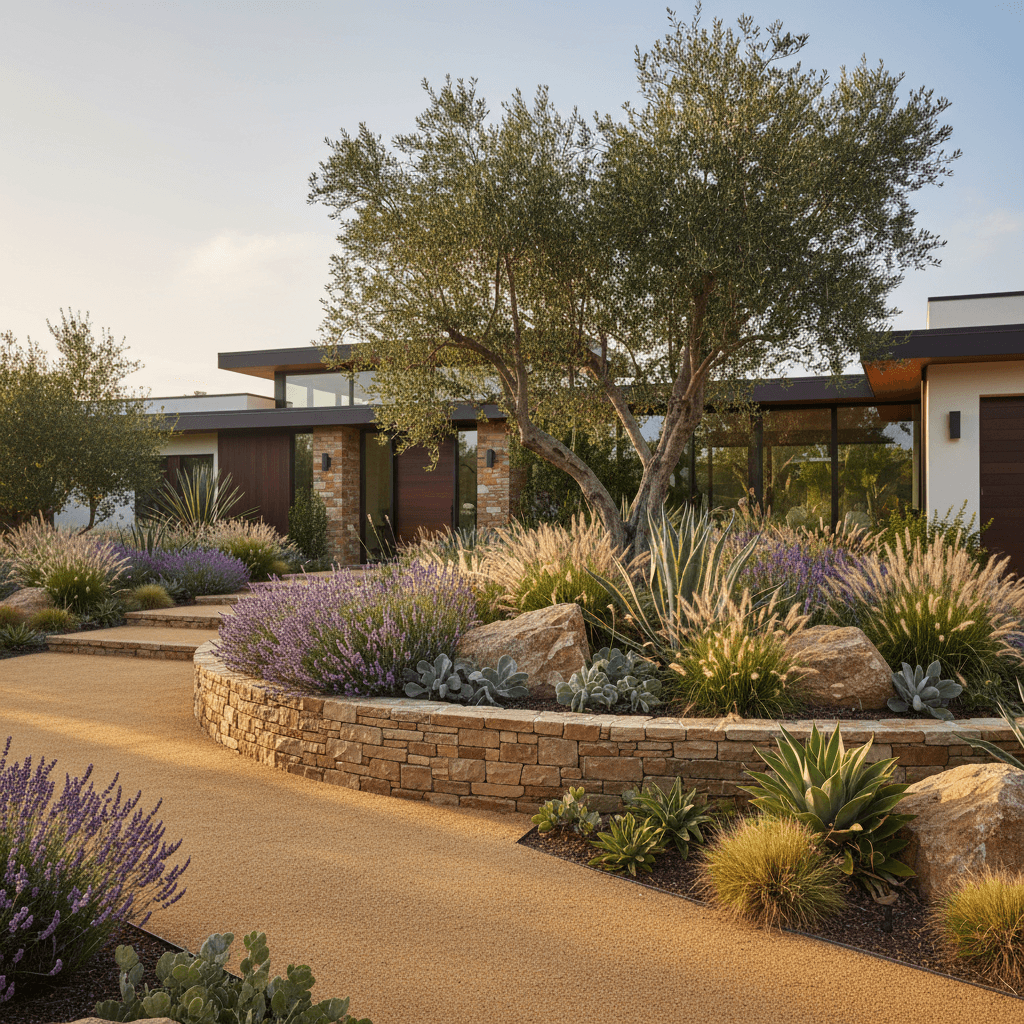
Compare project costs by areaWalkways, retaining walls, and planted zones that tie it all together.
Landscaping is the part of a renovation the street sees first. The budget depends on how much of the yard is built (walls, paths, patios) and how much is planted, and on how the site drains.
National ranges from HomeGuide: $3,000 to $16,000 for a new landscaping installation and $4 to $12 per square foot for basic landscaping work. A 4-foot retaining wall runs $7,000 to $13,000 for 50 linear feet and $14,000 to $26,000 for 100. Cost vs Value 2025 prices a full backyard patio build, with a flagstone patio, fire pit, pergola and outdoor kitchen, at $55,070 in Los Angeles, $56,191 in San Francisco and $59,075 in Seattle.
Hardscape sets the structure of the space: walkways, walls, patios, fire pits. Softscape is the plants, trees and mulch that change through the seasons. Ask each designer how the budget splits between the two and what the planting needs in water and care after installation.
Labor is the biggest expense in basic landscaping work, at 80% of the total by HomeGuide's estimate. A design plan costs $700 to $3,000 for a medium project with minimal hardscaping.
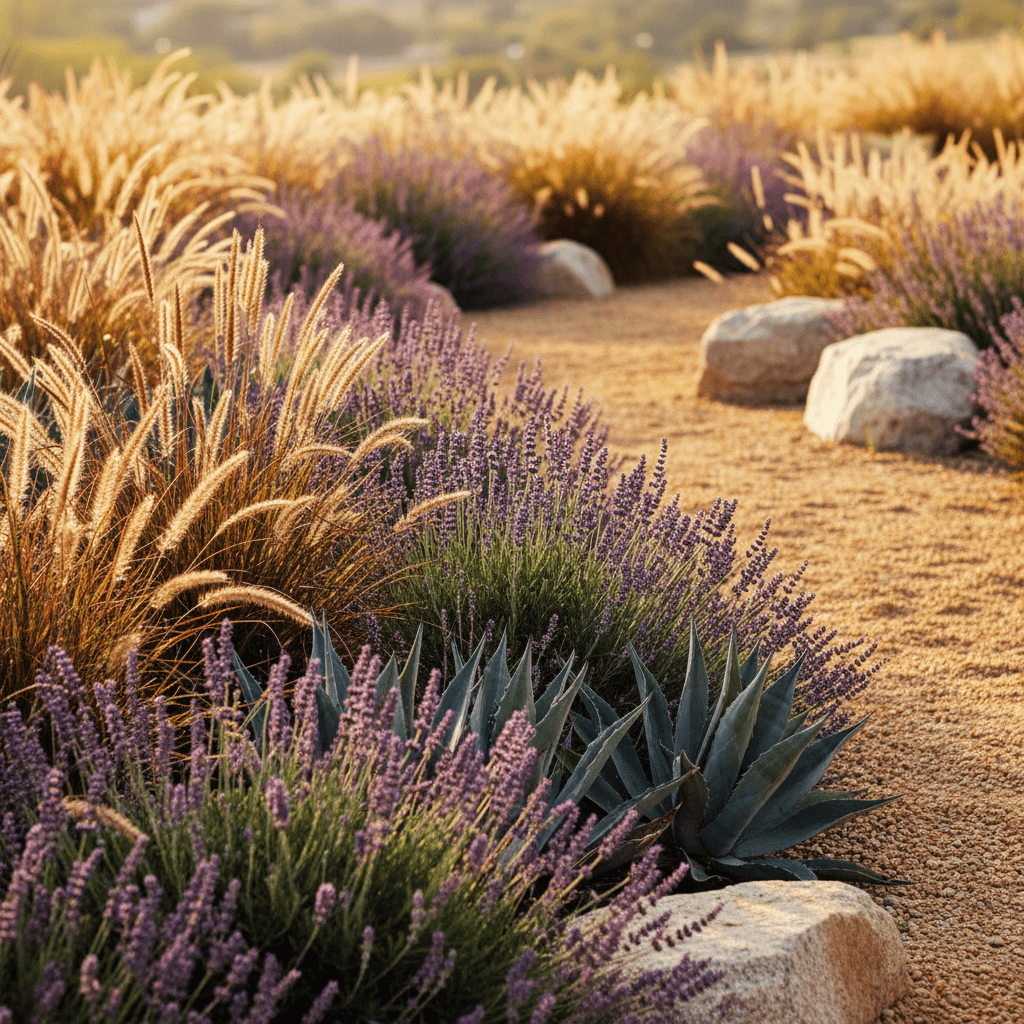
Select plants for the actual soil, sun, available space and water. The Metropolitan Water District pays $2.00 per square foot of converted lawn, up to 5,000 square feet a year, through SoCal Water$mart, and your water agency may add its own incentive. Reserve the rebate before you start: the new yard needs organic, drought tolerant planting, irrigation changes and rainwater retention, and synthetic turf does not qualify.
Plants that suit many California yards include California fuchsia, ceanothus, manzanita, salvia, deer grass, agave, olive trees and native oaks. Match each one to the sun and soil of the spot where it goes.
Synthetic turf is not an approved conversion option for this program. (SoCal Water$mart Turf Replacement Program)
Greater Seattle yards face winter rain and dry summers. Native plants adapted to that rhythm include salal, Oregon grape, sword fern, vine maple, Western red cedar, Pacific dogwood and kinnikinnick.
Rain gardens, shallow planted depressions that soak up roof runoff, help with drainage. RainWise, a partnership of King County and Seattle Public Utilities, offers rebates that cover up to 100% of the cost of building rain gardens and cisterns on eligible Seattle properties. Check eligibility before construction.
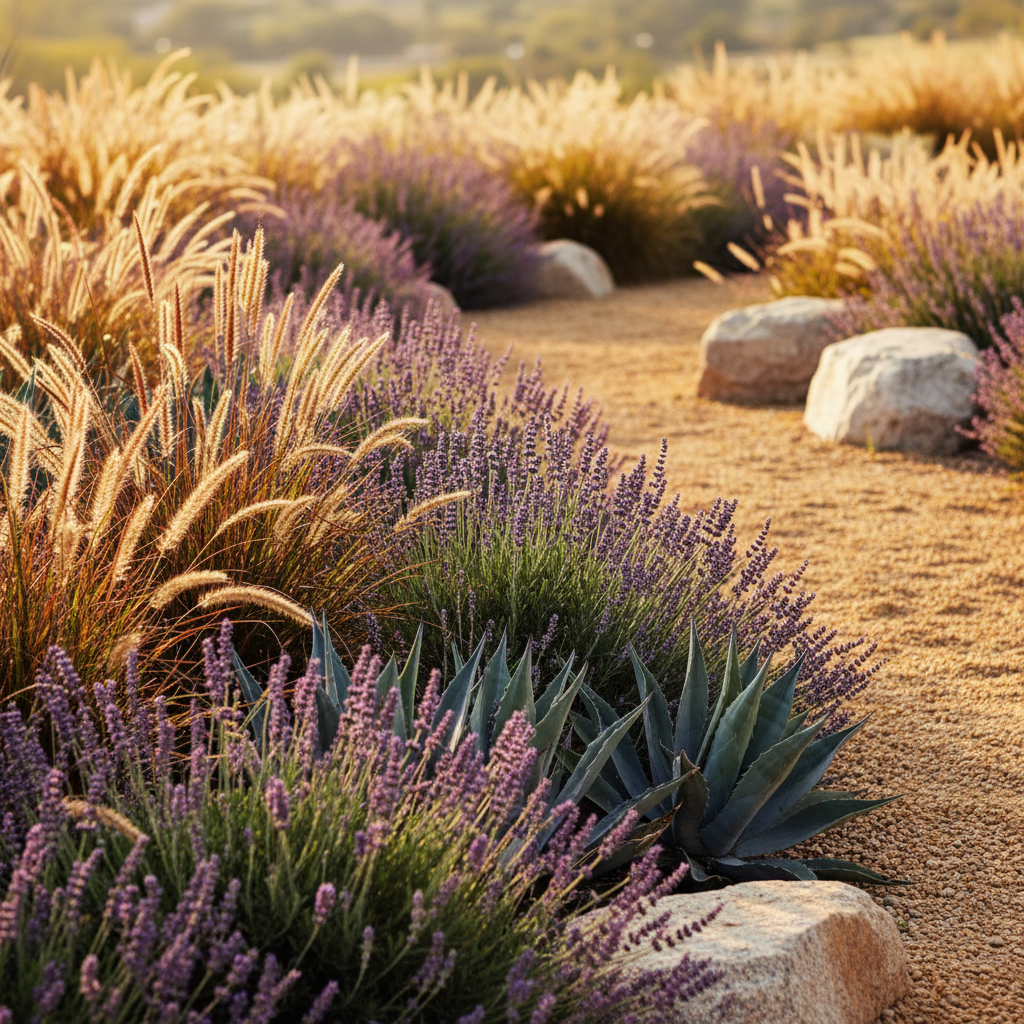
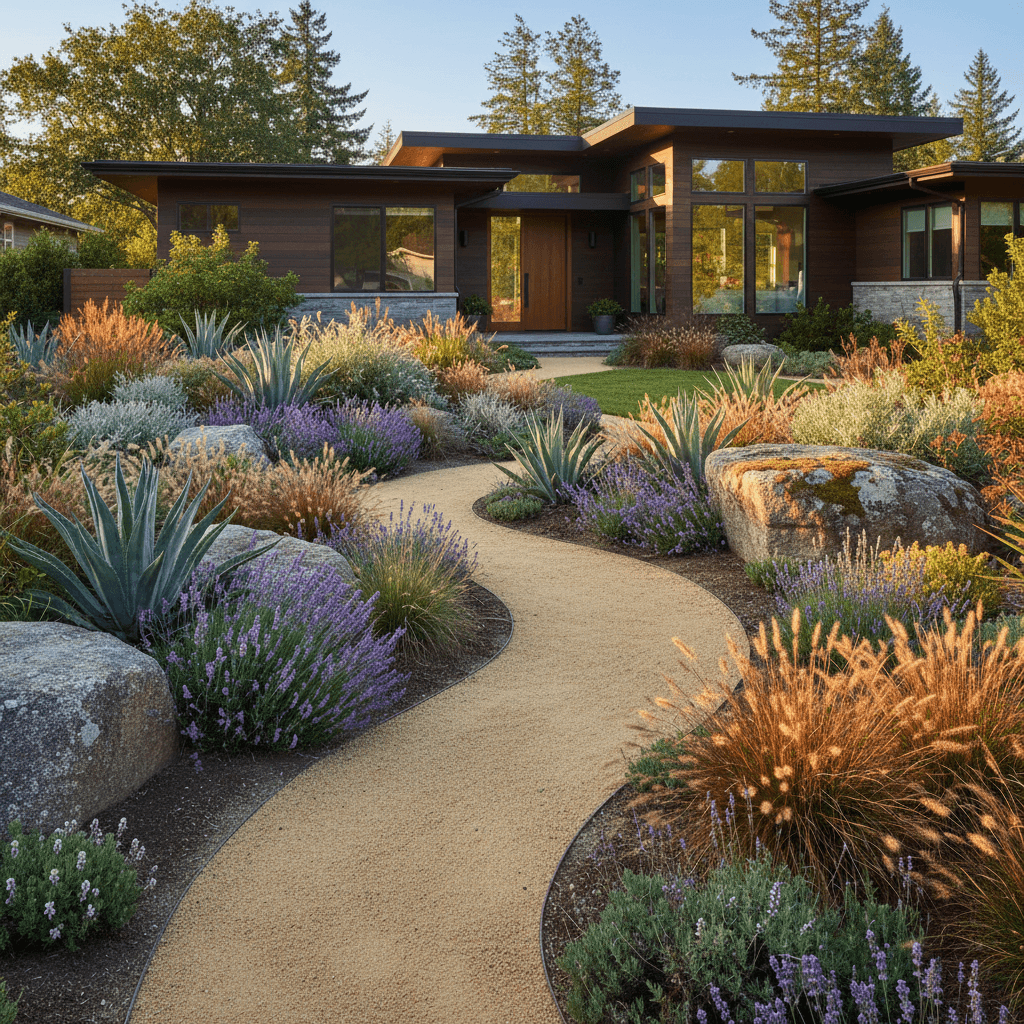
Decomposed granite costs $40 to $100 per cubic yard for natural DG and $100 to $225 for stabilized DG, before delivery and installation. Stabilized DG, mixed with a binder, erodes less and suits walkways and patios.
A dry-laid flagstone path or patio costs $15 to $32 per square foot installed, and $20 to $42 set in mortar. A stone walkway costs $16 to $35 per square foot.
Retaining walls cost $35 to $65 per square foot of wall on average, including materials and labor. Segmental block walls run $15 to $35 per square foot and handle heights up to 3 to 4 feet without extra reinforcement. Cantilevered concrete walls, used above 4 feet, run $40 to $80. Walls taller than 4 feet need additional engineering, permits and deeper foundations, and most contractors set a $1,500 to $3,000 project minimum.
The most common retaining wall failure is poor drainage behind the wall. Specify perforated drain pipe at the base, gravel backfill and weep holes through the face.
A drip irrigation system costs $1.50 to $4.50 per square foot, or $300 to $1,200 per zone installed, per HomeGuide. A smart controller adjusts run times to the weather. A sprinkler system for a lawn costs $3,000 to $10,000.
Compare the complete specification, not just the price per unit. Ask which preparation, installation and finish work the allowance includes.
Regional fit: Both
Stabilized DG runs $100 to $225 per cubic yard
Typical service life: 10 to 50 years · Regional fit: Both
Porous stone; reseal every 1 to 5 years
Typical service life: 50 to 100 years · Regional fit: Both
Confirm permit requirements for height, slope and nearby loads
Typical service life: 50 to 100 years · Regional fit: Both
Have the local authority confirm permits and engineering for the site
Regional fit: Both
Or $300 to $1,200 per zone
The guide’s planning timeline is 2 to 8 weeks. Ask the contractor to separate design, approvals, ordering and construction in the schedule for your scope.
Assess sun, soil, slope, drainage and intended use. Agree on hardscape dimensions, plant selections and maintenance expectations.
Confirm approvals for walls, structures, utility work or public areas with the local authority before construction.
Coordinate clearing, grading and drainage. Check any rebate application conditions before removing existing landscaping.
Build the specified paths, walls and outdoor structures before installing vulnerable planting where practical.
Install and test the agreed irrigation system and controls for the selected plants and site.
Install the specified plants and mulch using site-appropriate methods. Confirm the establishment and watering plan.
Walk through the installation and agree on care, follow-up visits and any plant replacement terms in writing.
Give each contractor the same project description and product selections. Ask what is included, excluded or left as an allowance, who handles approvals, and how changes will be agreed in writing.
The Southern California turf replacement rebate has to be reserved before the project starts, and the work finished within 180 days. The Metropolitan Water District pays $2.00 per square foot of converted lawn, and synthetic turf does not qualify.
The first two budget tiers use HomeGuide's national installed ranges, built from contractor estimates. The Census figures are averages of what metro households said they spent on landscaping or sprinkler work, small jobs included. Cost vs Value prices one large defined backyard project with a patio, pergola and outdoor kitchen, which is why it sits far above the other two.
Start with the authority responsible for your property. Costs and requirements vary within a metro. Browse California city guides.
Editorial planning notes; confirm the current scope, requirements and prices locally.
Los Angeles metro households reported an average of $3,450 on landscaping or sprinkler work and San Francisco metro households $6,459 (Census American Housing Survey 2023). Cost vs Value 2025 prices its backyard patio project at $55,070 in Los Angeles and $56,191 in San Francisco. Median landscaping worker wage, May 2025 (BLS): $21.46 an hour in Los Angeles, $23.10 in San Francisco, $21.90 in San Diego.
Seattle-Tacoma-Bellevue households reported an average of $4,007 on landscaping or sprinkler work (Census American Housing Survey 2023). Cost vs Value 2025 prices its backyard patio project at $59,075 in Seattle. Landscaping workers in the metro earned a median $23.31 an hour in May 2025 (BLS). RainWise rebates cover up to 100% of the cost of rain gardens and cisterns on eligible Seattle properties.
HomeGuide's national range for a new landscaping installation is $3,000 to $16,000. Smaller local jobs land inside that band: Los Angeles metro households reported an average of $3,450 on landscaping or sprinkler work and San Francisco metro households $6,459 in the Census 2023 housing survey. Cost vs Value 2025 prices a full backyard patio build with a fire pit, pergola and outdoor kitchen at $55,070 in Los Angeles.
Seattle-Tacoma-Bellevue households reported an average of $4,007 on landscaping or sprinkler work in the Census 2023 housing survey. Cost vs Value 2025 prices its backyard patio project at $59,075 in Seattle. Landscaping workers in the metro earned a median $23.31 an hour in May 2025. For rain gardens and cisterns, RainWise rebates cover up to 100% of the cost on eligible Seattle properties.
In Southern California the Metropolitan Water District pays $2.00 per square foot of converted lawn, up to 5,000 square feet a year, and your water agency may add more. Reserve the rebate before any work starts; you then have 180 days to finish. The new yard needs drought tolerant plants, irrigation changes and rainwater retention, and synthetic turf does not qualify.
Confirm with the building department for your property. HomeGuide notes that most cities require permits for retaining walls over 3 to 4 feet tall, at $50 to $450, and that walls taller than 4 feet need additional engineering and deeper foundations. A wall that holds up a driveway, a slope or a structure can need review at a lower height, so ask the contractor to name the permits in writing.
Hardscape is the built part of a yard: walkways, walls, patios, driveways, fire pits and water features. Softscape is the living part: plants, trees, lawn and mulch. On HomeGuide's national figures, a dry-laid flagstone patio costs $15 to $32 per square foot and a retaining wall $35 to $65 per square foot, while basic landscaping work runs $4 to $12 per square foot.
HomeGuide notes that new landscaping takes 4 or more workers over several weeks. A design plan comes first, and a lawn conversion under the Southern California rebate has to be reserved before work starts and finished within 180 days. New plants then need an establishment period with regular watering. Ask the contractor for separate dates for design, approvals, hardscape, irrigation and planting.
October through April is the ideal planting window in California. Cooler temperatures and winter rains reduce establishment watering needs. Hardscape work can happen year-round. Avoid planting in July and August when high heat stresses new plants. Pacific Northwest planting season runs March through October, avoiding the deepest winter freezes.
A Renology representative calls to understand your plans and connects you with suitable contractors.
Find a ProFree to request a match. No obligation to hire.
Permits, costs and local conditions change by city. Pick the guide for your area.