Minor Renovation
$3.5k to $7.5k
- New flooring
- New vanity and fixtures
- Fresh paint
- Or a prefab shower stall added
Start with the bathroom you need: a fixture refresh, a tub-to-shower conversion or a complete rebuild. Drainage, waterproofing, ventilation and layout changes shape the scope. Compare proposals for the same fixtures and installation system before choosing finishes.
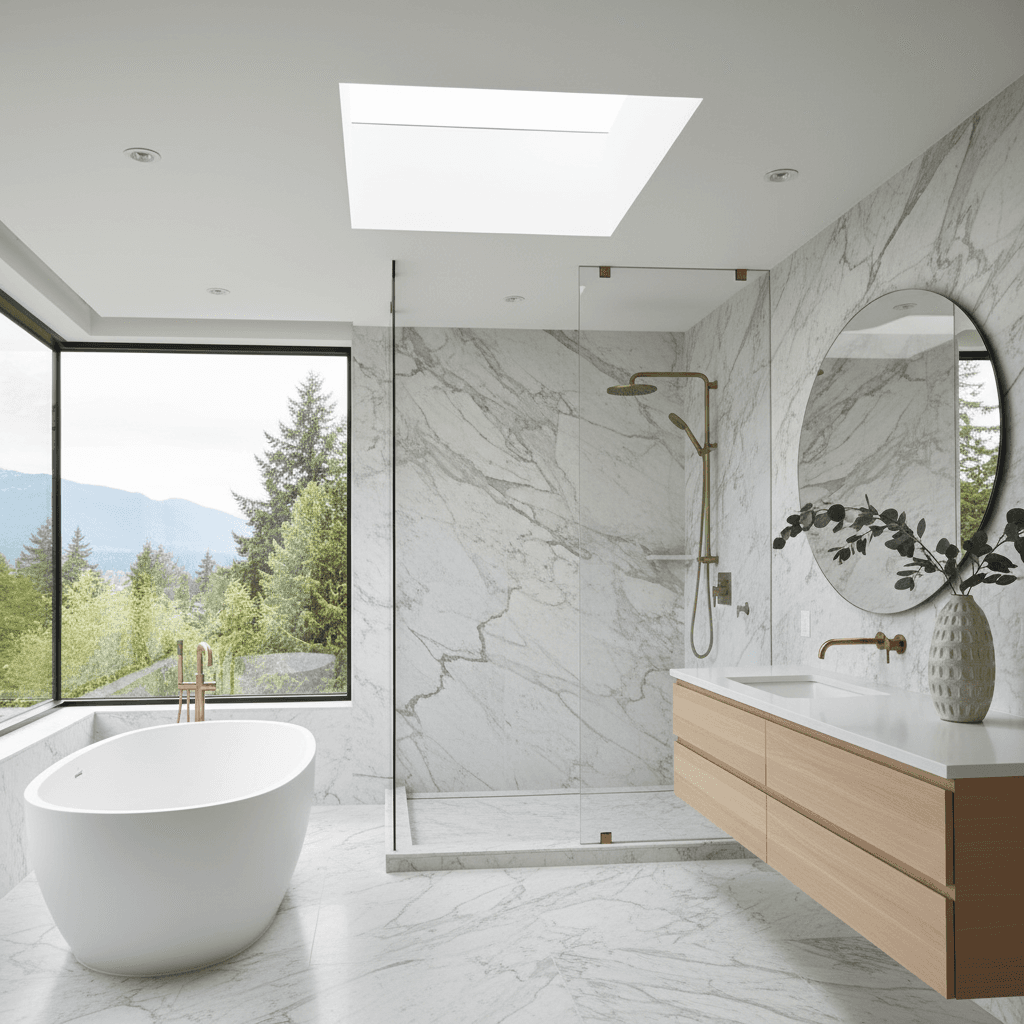
Match the budget to the work you need. Each tier is a published range for that scope, with its source listed at the end of this guide, and the local figures below show how your area compares. None of them is a quote. Confirm dimensions, preparation, materials, labor, fees and exclusions in each proposal.
$3.5k to $7.5k
$5.3k to $15k
$8.8k to $25k+
Use the ranges to discuss scope and allowances. A site assessment and written proposals determine your actual cost. Material prices and service-life ranges below depend on product, installation and conditions; they are not warranties. References support their specific topics and do not validate all prices in this guide.
Compare project costs by areaWet-room rebuilds, tub-to-shower swaps, and spa-grade upgrades.
A wet-room cost needs a defined layout. Removing a tub, removing a shower threshold, and opening the shower to the room can overlap, but they do not describe the same work.
What changes the quote? The area being rebuilt, floor or drain alterations, waterproofing system, tile and labor allowances, glass, ventilation, and required permits. Ask for these as separate line items; the full-bathroom ranges below are not a standalone wet-room quote.
Manufacturer reference: Schluter’s curbless shower guidance explains why water protection extends beyond the shower opening. The selected system’s instructions and a site assessment determine the details.
Compare tub-to-shower conversion scopes and costs or check what your bathroom quote includes.
Bathroom remodel prices follow scope. HomeGuide's bathroom cost guide (updated June 20, 2025) prices an average-size bathroom of 35 to 50 square feet at $3,500 to $7,500 for a minor renovation, $5,300 to $15,000 for a partial remodel, and $8,800 to $25,000 or more for a full remodel with layout changes. A large primary bathroom with high-end fixtures and materials can reach $60,000. Coastal cities run well above those national figures: the 2025 Cost vs Value Report prices a midrange bath remodel at $32,160 in San Francisco and $36,146 in Seattle. For national numbers line by line, see our 2026 tub to shower conversion cost guide, priced by tier.
The number that surprises people is labor. HomeAdvisor's bathroom guide (updated June 17, 2026) says labor takes roughly 40% to 65% of the total. Tile, flooring and countertops drive the material side, and the finish you pick can swing the total a long way.
A bathroom is the most plumbing-dense room in a house. Every square foot involves waterproofing, drainage, supply lines, ventilation, and electrical near water. Skip any of these and you get mold or shock hazards. HomeGuide prices bathroom remodels at $100 to $500 per square foot, against $150 to $250 per square foot for an average full kitchen remodel. That labor density is why a small bathroom can cost more than a much larger bedroom remodel.
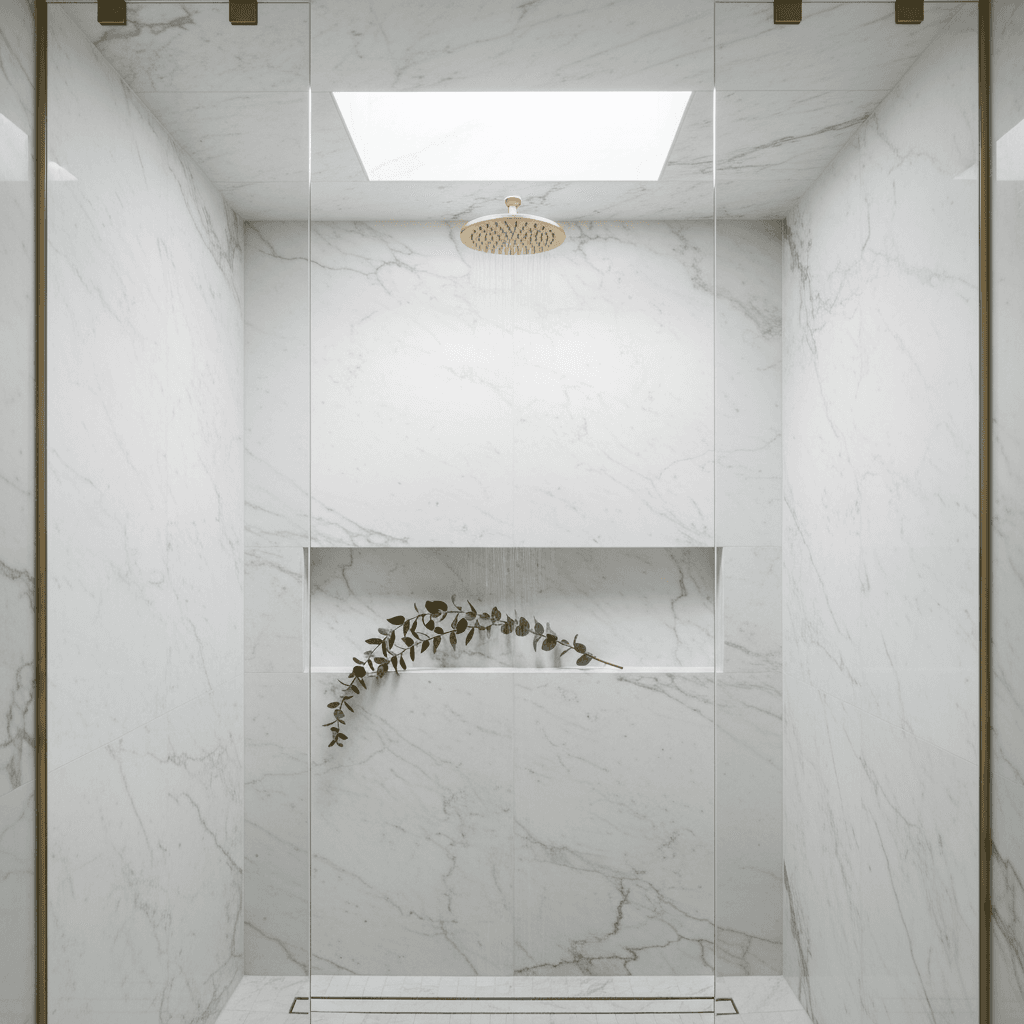
Consider daylight, privacy, ventilation and the way your household uses the room. A curbless layout, heated floor or steam shower adds a different design and installation scope; none is a universal local standard. Have the team assess drainage, power and moisture control before pricing these options.
Compare samples in the room’s light and ask whether the product is suitable for the intended wall or floor. For wet floors, ask the supplier and installer about the selected tile’s slip characteristics, drainage and cleaning requirements. Price the tile, substrate, waterproofing and installation together.
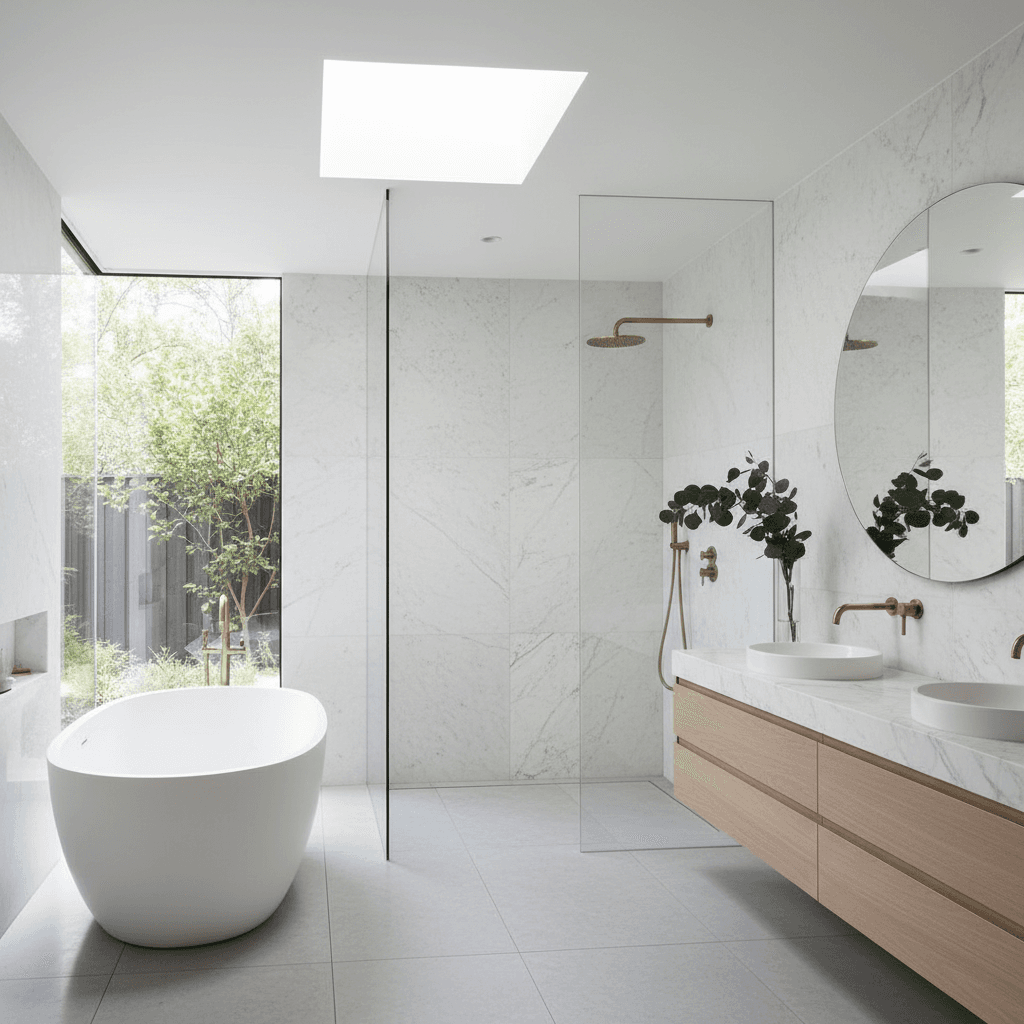
Floating vanities make small bathrooms feel larger and simplify cleaning. Allow 6 to 10 inches of clearance above the floor. Wall-mount toilets save depth and read as modern, but the in-wall tank carrier adds plumbing cost.
For a double-vanity primary bathroom, plan for at least 60 inches of cabinet width. Below that, two sinks fight each other and the storage suffers. If your space is under 60 inches, a single large vanity with a generous counter beats two small ones.
Ask for recent comparable bathrooms and references. Verify current licensing or registration and insurance for the work, and ask who will install the waterproofing and supervise the trades. Compare itemized proposals for the same system, fixtures, preparation and finish repairs.
Compare the complete specification, not just the price per unit. Ask which preparation, installation and finish work the allowance includes.
Typical service life: 75 to 100 years · Regional fit: Both
High-end tile can reach $35 per sq ft
Typical service life: 100+ years · Regional fit: Both
Labor is extra
Typical service life: 100+ years · Regional fit: Both
Quartz is priced the same; labor is extra
Typical service life: 20 years · Regional fit: Both
Average for the door and installation
Typical service life: 50+ years · Regional fit: Both
Prefab or custom, by size and material
The guide’s planning timeline is 3 to 8 weeks. Ask the contractor to separate design, approvals, ordering and construction in the schedule for your scope.
Define whether you are refreshing finishes, changing fixtures or rebuilding the layout. Give each bidder the same scope and exclusions.
Confirm required approvals, inspections and fees with the local authority. Put responsibility for each item in the proposal.
Confirm product specifications and delivery dates for tile, the vanity, fixtures and glass before demolition.
Remove the existing work, assess the substrate and complete the specified waterproofing and drainage system. Confirm required testing before covering it.
Coordinate tile, fixtures, cabinetry and glass with the selected products’ installation and curing requirements.
Complete lighting, accessories and touch-ups. Review the punchlist, applicable inspection sign-offs and warranty documents.
Give each contractor the same project description and product selections. Ask what is included, excluded or left as an allowance, who handles approvals, and how changes will be agreed in writing.
Have the selected waterproofing, drainage and ventilation systems specified together for the actual layout. Tile alone is not a complete waterproofing specification.
Consider access, bathing preferences, storage and the other bathrooms in the home before removing a tub. A conversion does not guarantee a specific resale return.
You will meet three kinds of bathroom numbers on Renology. The tiers above are HomeGuide's national contractor price ranges by scope for an average-size bathroom, while Cost vs Value prices one fully defined contractor job, a 5 by 7 foot bathroom with every fixture replaced, city by city. Census American Housing Survey medians count what households spent on any bathroom job, including small repairs and DIY, which is why they run lowest.
Start with the authority responsible for your property. Costs and requirements vary within a metro. Browse California city guides.
Editorial planning notes; confirm the current scope, requirements and prices locally.
The tier ranges above are national HomeGuide ranges for a 35 to 50 square foot bathroom. For California, the 2025 Cost vs Value Report prices one defined midrange bath remodel (a 5 by 7 foot bathroom with every fixture replaced) at $27,143 in Los Angeles and $32,160 in San Francisco, against $26,138 nationally, and an upscale remodel that expands the room to 100 square feet at $85,055 and $97,394. The Census 2023 American Housing Survey puts median household spending on a bathroom remodel at $8,727 in the Los Angeles metro and $10,000 in the San Francisco metro; those medians include small jobs and DIY.
The tier ranges above are national HomeGuide ranges. For Greater Seattle, the 2025 Cost vs Value Report prices the midrange bath remodel at $36,146 and the upscale bath remodel at $107,451 in Seattle. The Census 2023 American Housing Survey median for a bathroom remodel in the Seattle-Tacoma-Bellevue metro is $10,000, a figure that includes small jobs and DIY.
HomeGuide's national ranges (June 2025) for an average 35 to 50 square foot bathroom run $3,500 to $7,500 for a minor renovation, $5,300 to $15,000 for a partial remodel and $8,800 to $25,000 or more for a full remodel. California cities cost more. The 2025 Cost vs Value Report prices one midrange bath remodel, a 5 by 7 foot room with every fixture replaced, at $27,143 in Los Angeles and $32,160 in San Francisco.
The 2025 Cost vs Value Report prices a midrange bath remodel at $36,146 in Seattle and an upscale bath remodel at $107,451, against $26,138 and $81,612 nationally. The Census 2023 American Housing Survey puts the median bathroom project in the Seattle-Tacoma-Bellevue metro at $10,000, but that median counts small jobs and DIY work. For a full remodel with a contractor, the Cost vs Value figure is closer to a first bid.
A typical bathroom remodel takes 3 to 8 weeks, depending on size and complexity, according to HomeGuide. Smaller or simpler remodels can finish in 3 to 4 weeks, while larger or more involved renovations may take 6 to 12 weeks or longer. Moving plumbing or electrical lines, material delivery and the number of inspections all stretch the schedule. Add time for design and permits before work starts.
HomeAdvisor puts a typical tub-to-shower conversion at $1,200 to $3,600, and HomeGuide's range runs $1,000 to $15,000, because a kit swap and a tiled walk-in are different jobs. Pin down which one you are buying before comparing bids. Keep at least one tub somewhere in the house if you have or plan to have young children, since it affects your buyer pool.
Confirm the requirements for your exact scope with the building department responsible for the property. Structural changes, utility work and changes of use can follow different approval paths. Ask the contractor to identify required permits, fees and inspections in writing; an exemption for one task does not cover the whole project.
Three steps. Use a proper waterproofing membrane like Schluter Kerdi or RedGard behind tile, never just cement board. Install a properly-sized exhaust fan vented to the outside, sized for at least 1 CFM per square foot. Run the fan 20 minutes after every shower, ideally on a humidity-sensing switch.
A wet room is a fully tiled bathroom where the shower has no enclosure and the entire room is waterproofed. It works best for accessibility with curbless entry, small footprints where a separate shower stall would feel cramped, or a high-design statement. It costs more than a standard bathroom because of the extra waterproofing and the sloped floor, so price it as a full remodel.
Describe your project through The Renology's free contractor matching. A Renology representative calls to understand the work and connects you with 2 to 3 licensed, insured bathroom contractors in your metro. You discuss the scope and proposals with them directly. It is free for homeowners and there is no obligation to hire.
A Renology representative calls to understand your plans and connects you with suitable contractors.
Find a ProFree to request a match. No obligation to hire.
Permits, costs and local conditions change by city. Pick the guide for your area.