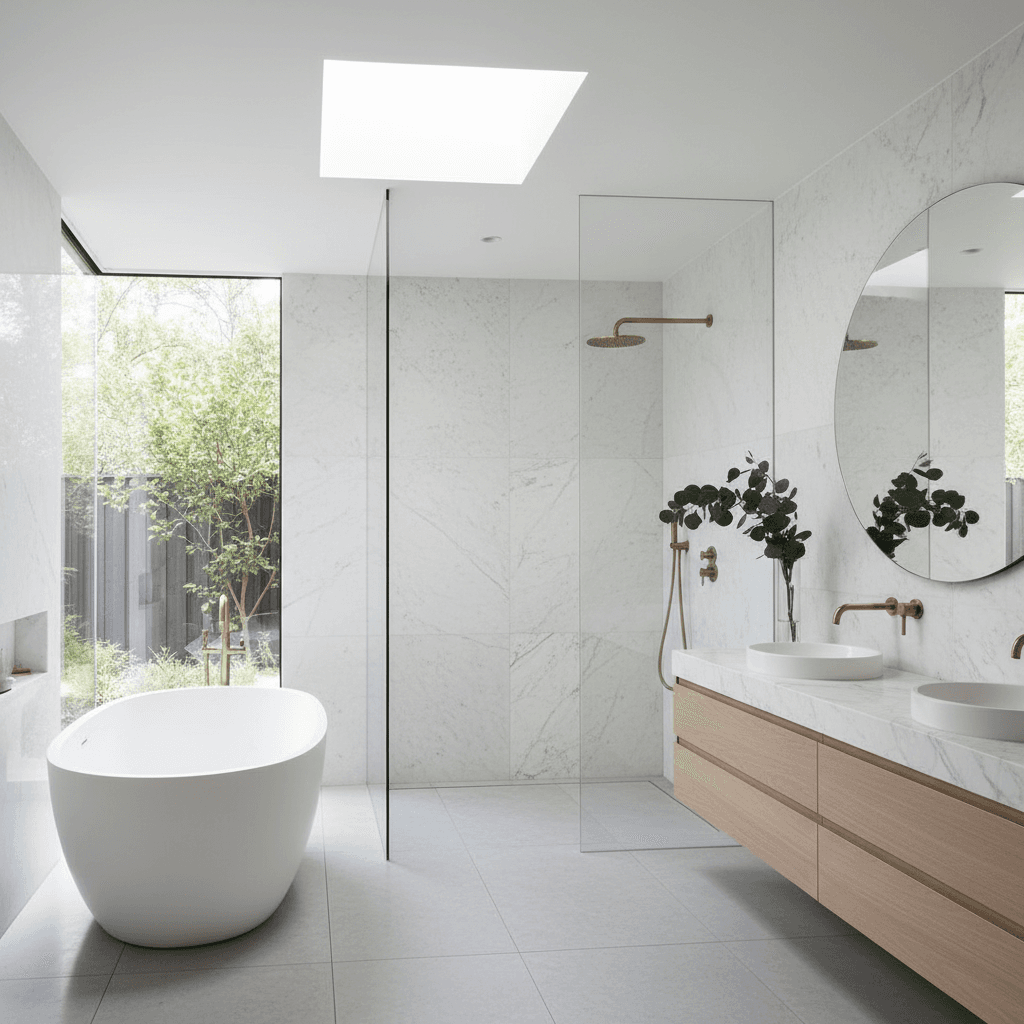
The short answer
Does a same-size tub or shower swap in San Diego need a permit?
In San Diego, the first question is whether the tub or shower keeps its size and location. The City exempts same-size, same-location tub and shower replacements from a building permit and allows a No-Plan permit for a bathroom remodel that leaves structure, framing and exterior walls alone and adds no fixtures. Anything more needs plans. Plan for the water, too: the City's treatment plants averaged about 14 grains per gallon of hardness in 2025, so choose valves, glass and grout you can descale easily.
If this is the only bathroom in the house, ask the contractor to put in writing the days the toilet and shower cannot be used, before demolition is booked.
Discuss your scope with a Renology advisor and check suitable contractor options. Free for homeowners, with no obligation.
Finish refresh: inclusions & limits
San Diego's permit flyer lists fixture swaps both ways, and the Municipal Code settles it. Replacing a toilet, sink, faucet or showerhead with a like one needs no plumbing permit, unless a drain, vent or supply pipe has to be altered or replaced. New fixtures must still meet the state's water-conserving limits. A refresh does not add a ducted exhaust fan, repair a failing shower pan or move a drain.
Rebuild the wet area: inclusions & limits
A tub-to-tub or shower-to-shower replacement that keeps size and location is exempt from a City building permit, but the valve, drain and any new fan circuit are plumbing and electrical work. Once a permit is required, smoke and carbon monoxide alarms must meet current code. In single-family homes built on or before January 1, 1994, state law requires every noncompliant toilet, showerhead and faucet in the house to be replaced before final permit approval.
Change the layout: inclusions & limits
An added fixture, such as a second sink, or changes to wall framing take the job out of the No-Plan route, so plans and plan review are needed. The City's remodel bulletin asks plans to show every plumbing fixture and the bathroom exhaust fan, and a Water Meter Data Card is required when fixtures are added. Adding or enlarging a window on a house 45 or more years old also triggers historic review.
What a bathroom remodel costs in San Diego in 2026.
In San Diego, some bathroom work never reaches the permit counter at all: the City exempts a tub or shower replaced at the same size and in the same spot from a building permit. Among the jobs that did file, 691 bathroom permits for single-family homes and duplexes since September 2024, the median declared value was $11,075, and half landed between $5,950 and $20,000.
$11,075
Those figures run lower than many owners expect, because they measure something narrow: the construction value on a City permit, often worked out from the City's own tables. For a full remodel the nearest yardstick is national. Houzz users who did a major primary bathroom remodel reported a median of $30,000 for rooms of 100 square feet or more and $18,000 for smaller ones.
All the numbers and where they come from
| Figure | Value | What it measures |
|---|---|---|
| Median permit value | $11,075 | Declared construction value on 691 bathroom permits for single-family homes and duplexes, filed September 2024 to September 2026. Half fall between $5,950 and $20,000. (City of San Diego development permits, open data) |
| Top tenth of permits | $40,000+ | One in ten of those permits declared $40,000 or more. (City of San Diego development permits, open data) |
| Kitchen and bath together | $42,027 | Median declared value on 364 permits that cover a kitchen and a bathroom in the same job. (City of San Diego development permits, open data) |
| National large primary bath | $30,000 | Houzz 2026 median spend on a major remodel of a primary bathroom of 100 square feet or more. National; the top tenth spent $75,000 or more. (Houzz, 2026 U.S. Houzz and Home Study, Renovation Trends (national)) |
| National small primary bath | $18,000 | Houzz 2026 median spend on a major remodel of a primary bathroom under 100 square feet. National; the top tenth spent $44,000 or more. (Houzz, 2026 U.S. Houzz and Home Study, Renovation Trends (national)) |
| Plumber wage | $34.86 an hour | Median plumber wage in the San Diego-Chula Vista-Carlsbad metro, May 2025. Tile setters earned a median $28.00. Contractors bill above wages. (U.S. Bureau of Labor Statistics, May 2025 wages, San Diego-Chula Vista-Carlsbad) |
| Toilet rebate | $40 per toilet | SoCal Water$mart pays $40 per premium high-efficiency toilet using 1.1 gallons per flush or less that replaces one using 1.6 or more. Amounts can vary by water agency. (SoCal Water$mart, Premium High-Efficiency Toilet rebates) |
Median declared bathroom value by community planning area
- Scripps Miramar Ranch$15,000 median, 32 permits
- Navajo$13,704 median, 44 permits
- Carmel Valley$12,000 median, 39 permits
- Rancho Penasquitos$10,075 median, 53 permits
- Clairemont Mesa$10,000 median, 59 permits
- Mira Mesa$10,000 median, 55 permits
- Rancho Bernardo$10,000 median, 33 permits
| Budget line | Define it | Watch for |
|---|---|---|
| Tub or shower rebuild | Demolition, waterproofing membrane, valve, drain, tile and glass for the tub or shower, priced together by the same bidder as one assembly. | Ask whether the valve and drain are replaced or reused. New piping there needs a plumbing permit, so the answer tells you which permits the price covers. |
| Fan, lighting and circuits | A ducted exhaust fan, its circuit and the bathroom lighting, including the occupancy or vacancy sensor control the state's 2025 Energy Code summary lists for bathrooms. | Ask whether the fan can vent without a new wall or roof opening. On a house 45 or more years old, an exterior change can bring historic review. |
| Code items and hard water | Water-conserving fixtures, alarm upgrades and faucets, glass and grout that stand up to San Diego's hard water. | In a pre-1994 single-family house, fixture swaps in other rooms can land in the bid. Ask which rooms are included and price them separately. |
For inclusions, allowances and exclusions, see how to read a contractor quote line by line. For broader benchmarks, see the Renology Cost Index.
What a bathroom remodel budget buys in San Diego.
Up to $6,000
A quarter of San Diego bathroom permits declared $5,950 or less. This is a refresh: vanity, toilet, lights and fittings replaced in place, with the tub or shower untouched. Like-for-like fixture swaps need no plumbing permit when the pipes stay as they are, and SoCal Water$mart pays $40 back on a qualifying high-efficiency toilet.
$11,000 to $20,000
The median bathroom permit here is $11,075, and a quarter declared $20,000 or more. Houzz users nationally reported $18,000 for a major remodel of a small primary bath. That is enough to rebuild the tub or shower at the same size and spot, which skips the building permit, though the valve, drain and any new fan circuit are still plumbing and electrical work.
$30,000 to $40,000
Two different yardsticks meet here. Houzz users nationally spent a median $30,000 on a major remodel of a primary bath of 100 square feet or more, and one in ten San Diego bathroom permits declared $40,000 or more. Layouts change at this level. An added sink, a moved toilet or new framing means drawn plans, and added fixtures need a Water Meter Data Card, the City form used to size the water meter.
$75,000 and up
One in ten major remodels of a large primary bath nationally reached this, per Houzz. Stone, glass and fixtures carry most of it, along with any new window, which on a house 45 or more years old brings historic review.
What a San Diego bathroom bid carries that a permit value does not.
The shower you are replacing sets most of the spread. Nobody sees the pan, the framing or the pipes until the old tile comes off, so one bidder builds in an allowance and another leaves it as a change order. A permit value carries none of that. It is the construction value the City records, and the simplest swaps are not in the count at all.
Next, ask what each bid covers outside the room. One may include a ducted fan and its route through the roof, alarm upgrades once a permit is pulled and the older toilets elsewhere in the house. Another may price the bathroom alone. Plumbers in the San Diego metro earned a median $34.86 an hour in May 2025 and tile setters $28.00, and a contractor's rate has to cover far more than the wage.
Bring the bid checklist to every contractor so the numbers describe the same job.
Make the guide yours
Same size and spot, or a new layout for your San Diego bath?
San Diego draws its permit lines around size and location. Replace a tub or shower at the same size in the same spot and the building permit falls away, though the valve, drain and any new fan circuit are still plumbing and electrical work. Add a second sink or move the toilet and the job needs plans. The choice also decides how long the bathroom is out of use.
No scope selected. The guide and checklist are available without choosing a project tier or leaving contact details.
Choose the wet-area system before the surface
Decide the shower before the tile, because in San Diego the choice sets the permit. A new tub in place of the old one, same size and same spot, needs no building permit. Turning that tub into a walk-in shower is not a like-for-like swap, but it can still use a No-Plan permit if no framing moves and no fixture is added. Make the shower bigger and the job needs drawn plans.
If plans are needed, the City's remodel bulletin wants every plumbing fixture and the exhaust fan drawn on them. In a condo, the building's shared drain and water lines bring a second party into the schedule, so ask the HOA early when the water can be shut off.
Official starting point: City of San Diego building permits.
A decision to work through · illustrative scenario
A shower upgrade in a one-bathroom home
The owners want to swap their tub for a walk-in shower in the same footprint. That keeps the job on a No-Plan permit, while a larger shower would add plans, plan review and more days without a usable bathroom.
Before you compare bids: Ask for the days the bathroom is out of use, fixture delivery dates and each inspection before you approve demolition.
What order does a San Diego bathroom rebuild follow?
Once tile goes on, nobody can see the pan, the drain or the valve. That is why the order matters: rough plumbing and electrical, inspection, waterproofing, tile, then fixtures and glass.
- 1
Decide the route. A same-size tub or shower swap skips the building permit, a remodel without added fixtures or framing changes can use a No-Plan permit, and anything else needs plans. Confirm plumbing and electrical permits either way.
- 2
Order fixtures that meet water-conserving limits, including replacements for older fixtures elsewhere in a pre-1994 single-family house, so final approval is not held up. Settle the fan and its duct route before demolition starts.
- 3
Rebuild in order: rough plumbing and electrical, inspection, waterproofing, tile, then fixtures and glass. Inspections are booked through the City's online portal or 858-581-7111, by 10 p.m. for the next business day.
Ask for separate dates for design, permit review, ordering and construction.
Hard water, fan ducts and other things San Diego bidders need
City water in San Diego averaged about 14 grains per gallon of hardness at the treatment plants in 2025, so finish choices for faucets, glass and grout belong in the brief next to the plumbing. So does the fan. A bid should say where the duct leaves the house, through roof or wall, because an exterior change on a house 45 or more years old can bring historic review.
- The year the house was built, so bidders can check the pre-1994 fixture rule and historic review
- A plan showing whether the tub, shower, toilet and sinks stay exactly in place or move
- The exhaust fan location and a likely duct route to the outside, through roof or wall
- Your finish choices for faucets, glass and grout, with San Diego's hard water in mind
- For condos, HOA rules on work hours, water shutoffs and access to shared plumbing lines
If you ask for help, a Renology advisor talks through your scope and checks local contractor availability. You decide whether to go ahead.
Already have a proposal? Check its scope and exclusions with the quote-review tool before your next contractor conversation.
Exemptions, unpermitted work and other San Diego bath questions
San Diego's permit exemptions are narrower than they sound. The full list sits in Municipal Code section 129.0203, the No-Plan route only applies to buildings that were legally permitted and passed final inspection, and the exemptions do not apply to designated historic resources. If this is the only bathroom in the house, start with the first answer below.
Can I swap my tub for a walk-in shower without plans in San Diego?
Usually, if the shower stays in the tub's footprint. The City's no-permit exemption covers only tub-to-tub and shower-to-shower swaps, so a conversion needs a permit. A No-Plan permit covers it as long as no framing changes and no fixture is added.
What does it cost to remodel a bathroom in San Diego?
On 691 San Diego bathroom permits for single-family homes and duplexes since September 2024, the median construction value on the City's record was $11,075, with half between $5,950 and $20,000. Same-size tub and shower swaps need no permit and are not counted. A budget of $11,000 to $20,000 covers rebuilding the tub or shower at the same size and spot. Nationally, Houzz users reported $18,000 for a major remodel of a primary bath under 100 square feet.
Do you need a permit to remodel a bathroom in San Diego?
Not for a same-size tub or shower swap, which is exempt from a building permit, though new valve or drain piping still needs a plumbing permit. A remodel that leaves structure, framing and exterior walls alone and adds no fixtures can use a No-Plan permit. Adding a fixture or moving a wall needs plans and plan review.
What are the exemptions for permits in the City of San Diego?
The full list is in San Diego Municipal Code section 129.0203. For bathrooms, the City's No-Plan bulletin highlights like-for-like maintenance repairs under $1,000 that do not affect electrical, plumbing or mechanical work. It also lists drywall replacement up to 100 square feet tied to those trades' repairs, and tub or shower replacements that keep the same size and location. Exemptions do not apply to designated historic resources or historic districts.
What happens if you redo a bathroom without a permit?
One cost shows up on your next project. The City only issues No-Plan permits for buildings that were legally permitted, built and passed final inspection, so unpermitted work can force full plans later. When you sell a single-family home, state law also requires a written disclosure of whether it has noncompliant plumbing fixtures.
Check contractor credentials with California CSLB. Match the business identity and scope to the proposal.
Sources
- City of San Diego DSD, Information Bulletin 203: No-Plan Building Permit (July 2024)
- City of San Diego DSD, When is a Permit Required?
- City of San Diego DSD, Building Permit
- City of San Diego DSD, Information Bulletin 140: Residential Addition/Remodel (April 2026)
- City of San Diego DSD, Information Bulletin 120: Project Inspections (October 2025)
- City of San Diego DSD, Information Bulletin 580: Potential Historical Resource Review
- California Civil Code section 1101.4
- California Civil Code section 1101.2 (homes built on or before January 1, 1994)
- California Civil Code section 1101.3 (noncompliant fixture definitions)
- California Energy Commission, 2025 Single-Family Residential Mandatory Requirements Summary
- City of San Diego Public Utilities, 2025 Annual Drinking Water Quality Report
- San Diego Municipal Code Chapter 12, Article 9, Division 4: Plumbing/Mechanical Permit Procedures (section 129.0403 exemptions)
- City of San Diego development permits, open data
- Houzz, 2026 U.S. Houzz and Home Study, Renovation Trends (national)
- U.S. Bureau of Labor Statistics, May 2025 wages, San Diego-Chula Vista-Carlsbad
- SoCal Water$mart, Premium High-Efficiency Toilet rebates
Keep planning.
Explore the general bathroom remodeling guide for project-wide ideas.
- Kitchen remodeling in San Diego →
- ADU & garage conversion in San Diego →
- Roof replacement in San Diego →
- Outdoor living in San Diego →
- Decks & pergolas in San Diego →
- Driveways & walkways in San Diego →
- Flooring installation in San Diego →
Bathroom remodeling in other regions
Ready to hire? See vetted San Diego contractors →
Planning guidance, not a quote. Confirm current requirements for your address with the official sources linked above.