Small wood deck
$3.6k to $12.8k
- Pressure-treated pine decking and framing
- 12 by 12 to 16 by 16 feet (144 to 256 sq ft)
- Attached to a one-story home
- Posts, joists and boards installed
Decide whether you need a raised deck, a ground-level patio or a covered outdoor space. Structure, drainage, access and maintenance matter before color and finish. Compare proposals with the same dimensions, foundation or base work, railings and cover scope.
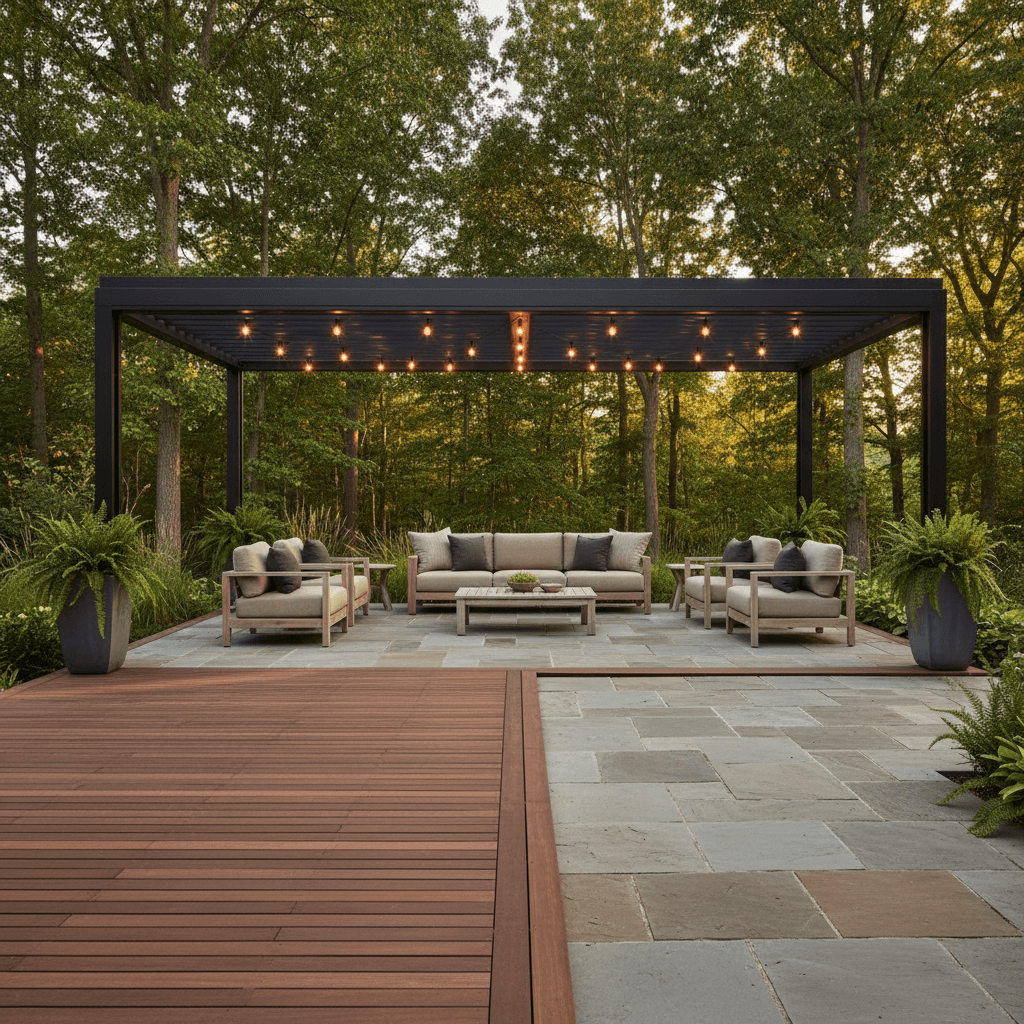
Match the budget to the work you need. Each tier is a published range for that scope, with its source listed at the end of this guide, and the local figures below show how your area compares. None of them is a quote. Confirm dimensions, preparation, materials, labor, fees and exclusions in each proposal.
$3.6k to $12.8k
$16k to $32k
$23k to $46k
Use the ranges to discuss scope and allowances. A site assessment and written proposals determine your actual cost. Material prices and service-life ranges below depend on product, installation and conditions; they are not warranties. References support their specific topics and do not validate all prices in this guide.
Compare project costs by areaTimber, composite, and stone surfaces built to host the whole block.
HomeGuide's national figures put a new pressure-treated deck at $25 to $50 per square foot installed and a composite deck at $40 to $80. On a 20 by 20 foot footprint that comes to $10,000 to $20,000 in wood and $16,000 to $32,000 in composite. The three cost tiers on this page use those national numbers. The local numbers come from Cost vs Value 2025 and from city permit records.
Cost vs Value 2025 prices one defined project: a 16 by 20 foot deck with a built-in bench and planter, three steps to grade and a full railing. Nationally it costs $18,263 in wood and $25,096 in composite, and recoups 95% and 89% of that at resale. The same deck costs $18,419 in wood and $26,872 in composite in Los Angeles, and $20,294 and $28,639 in Seattle.
Pressure-treated pine is the budget option at $25 to $50 per square foot installed. Builders advise staining and sealing it every year. Cedar runs $30 to $47 and redwood $28 to $54 per square foot installed, and both still need regular resealing.
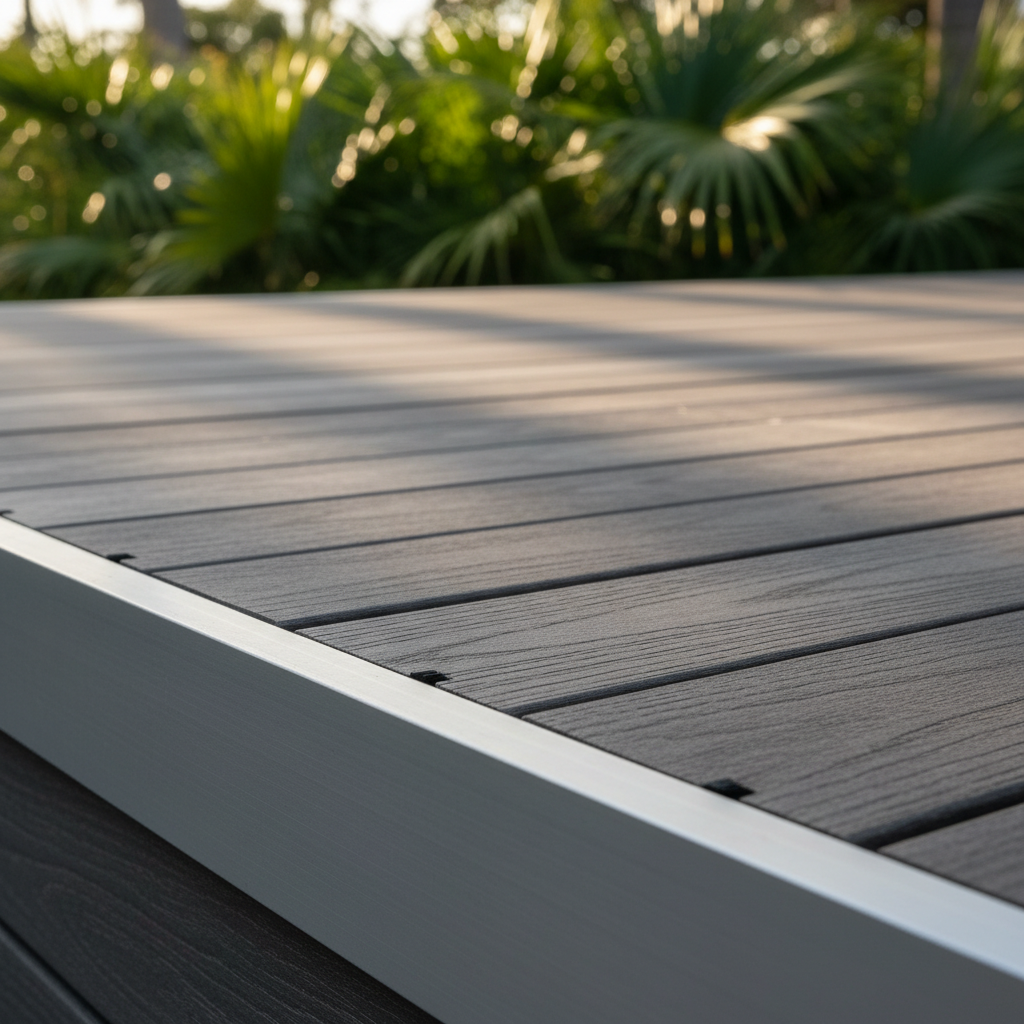
Composite runs $40 to $80 per square foot installed, and Trex $45 to $70. It never needs resealing, and HomeGuide puts its life at 25 to 50 years against 10 to 25 for a wood deck. Ipe, a dense Brazilian hardwood, costs $50 to $70 per square foot installed and lasts 40 to 70 years.
A stone patio skips the frame entirely. A flagstone patio costs $15 to $32 per square foot dry-laid, or up to $45 set in concrete, and a concrete or brick paver patio $10 to $17. Stone suits ground-level spots near a pool or where a raised deck would look out of place.
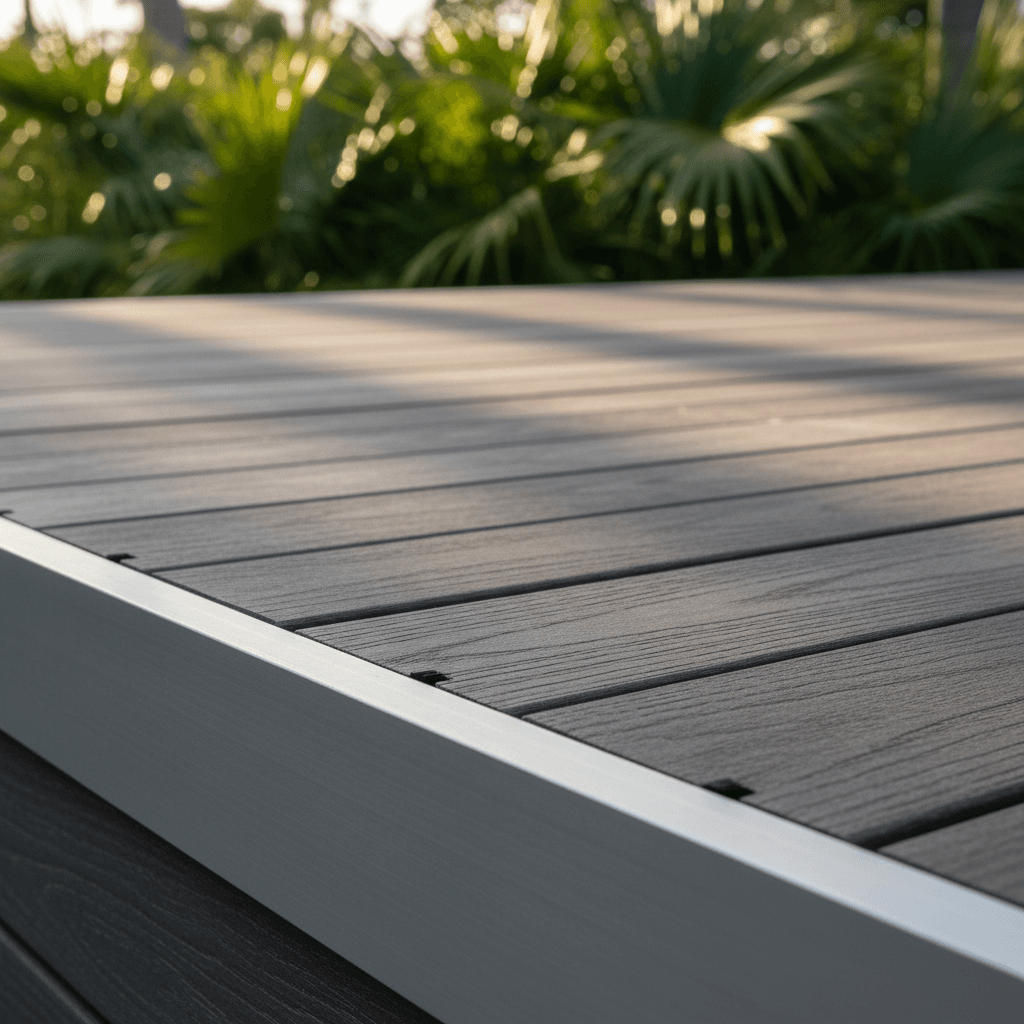
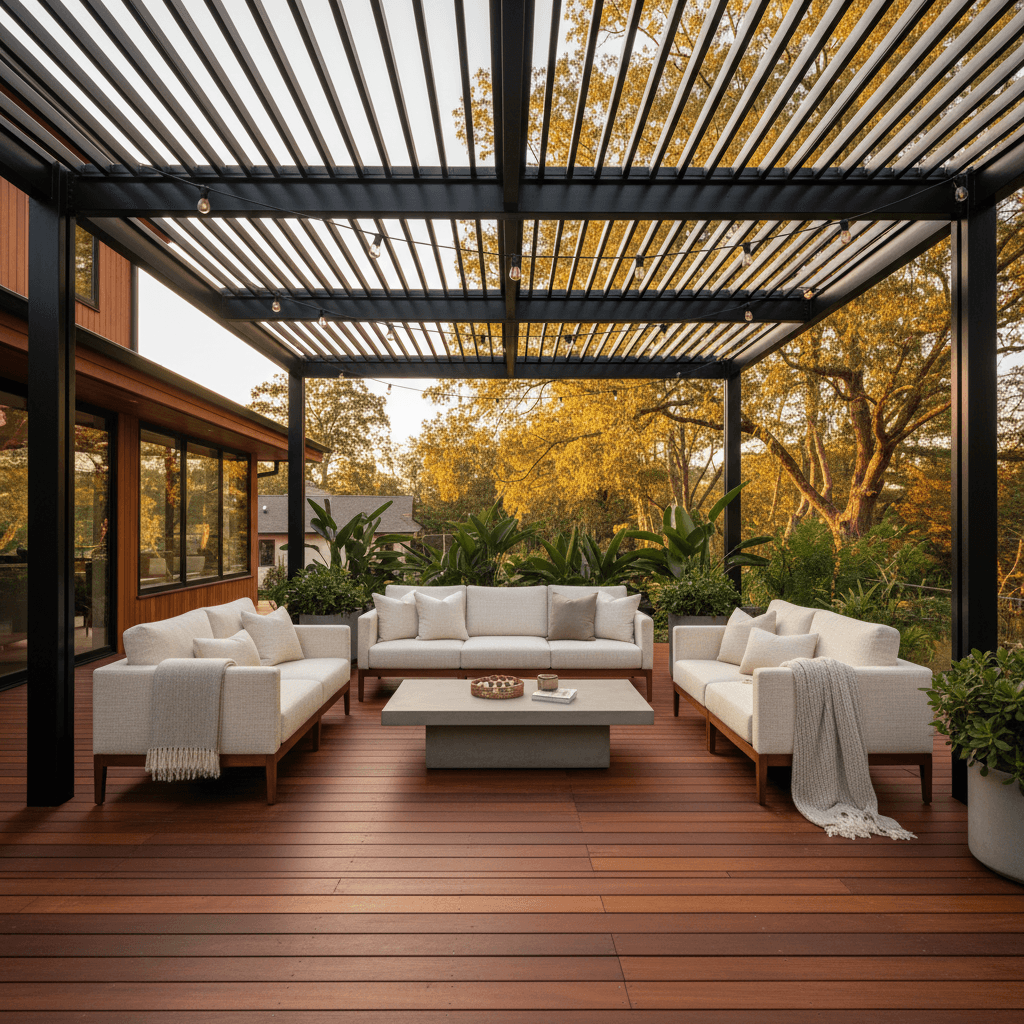
Decide how you want to use the space in sun, rain and cooler weather. Price a pergola or solid cover as a separate structural scope, including foundations, drainage and any utilities. Confirm approvals and the design for your site before treating a cover as a finish upgrade.
A deck more than 30 inches above the ground needs a guard. Wood or vinyl railing costs $20 to $60 per linear foot. Glass and cable systems vary widely by product, so ask each builder to price the railing as its own line. Deck stairs add $1,400 to $2,600 installed.
Low-voltage LED lighting in stair risers, post caps and under-rail strips changes how a deck reads at night. Outdoor lighting runs $80 to $300 per fixture. Skip rope lights and big spot fixtures.
Confirm the requirements for your exact scope with the building department responsible for the property. Structural changes, utility work and changes of use can follow different approval paths. Ask the contractor to identify required permits, fees and inspections in writing; an exemption for one task does not cover the whole project. Have a qualified professional specify the foundations, framing, house connections and water protection for the site. Do not use a generic footing depth or connection detail as a construction drawing.
Further reading: Los Angeles · Seattle
Compare the complete specification, not just the price per unit. Ask which preparation, installation and finish work the allowance includes.
Typical service life: 10 to 25 years · Regional fit: Both
Builders advise staining and sealing every year
Typical service life: 10 to 25 years · Regional fit: Both
Both need annual resealing
Typical service life: 25 to 50 years · Regional fit: Both
Does not need annual resealing
Typical service life: 25 to 50 years · Regional fit: Both
Most Trex products carry a 20 to 25 year warranty
Typical service life: 40 to 70 years · Regional fit: Both
Dense tropical hardwood; slower to install
Typical service life: Up to 100 years · Regional fit: Both
Flagstone runs $15 to $32 per sq ft dry-laid
The guide’s planning timeline is 2 to 5 weeks. Ask the contractor to separate design, approvals, ordering and construction in the schedule for your scope.
Confirm dimensions, elevation, access, sun exposure and drainage. Locate utilities before excavation.
Check local approvals and have the structure, connections and foundations designed for the site and intended loads.
Build the specified foundations and supporting structure, completing required inspections at the appropriate stages.
Install the selected decking or paving system according to its specification. Coordinate joints, edges and drainage.
Complete the specified stairs, guards, handrails, lighting and finish treatments. Check connections and access.
Complete applicable inspections and a joint walkthrough. Obtain care instructions and product and workmanship warranty details.
Give each contractor the same project description and product selections. Ask what is included, excluded or left as an allowance, who handles approvals, and how changes will be agreed in writing.
Ledgers must bolt through the rim joist of the house with proper flashing, never just into siding. Verify ledger attachment in writing before substantial completion.
The three tiers are national installed prices by size and material from HomeGuide. The Los Angeles and Seattle figures are values owners declared on building permits, which are not prices paid. Cost vs Value 2025 prices one defined project, a 16 by 20 foot deck with a bench, planter, stairs and railing.
Start with the authority responsible for your property. Costs and requirements vary within a metro. Browse California city guides.
Editorial planning notes; confirm the current scope, requirements and prices locally.
Los Angeles: on 477 City deck, pergola and trellis permits for one- and two-family homes issued since September 2024, the median value declared on the permit was $15,000, and half fell between $6,000 and $30,000. Cost vs Value 2025 prices its 16 by 20 foot deck addition at $18,419 in wood and $26,872 in composite for Los Angeles, and at $20,059 and $29,392 for San Francisco.
Seattle: on 339 SDCI deck, pergola, arbor and trellis permits for single-family homes and duplexes filed since September 2024, the median value declared on the permit was $20,000, and half fell between $10,000 and $48,500. Cost vs Value 2025 prices its 16 by 20 foot deck addition at $20,294 in wood and $28,639 in composite for Seattle.
Los Angeles permits give the clearest local signal. On 477 City deck, pergola and trellis permits issued since September 2024, the median declared value was $15,000, and half fell between $6,000 and $30,000. Those are values written on the permit, not prices paid. Cost vs Value 2025 prices a 16 by 20 foot composite deck at $26,872 in Los Angeles and $29,392 in San Francisco.
On 339 SDCI deck, pergola, arbor and trellis permits for single-family homes and duplexes filed since September 2024, the median declared value was $20,000, with half between $10,000 and $48,500. Cost vs Value 2025 prices a 16 by 20 foot deck at $20,294 in wood and $28,639 in composite for Seattle. A basic cover adds $10 to $60 per square foot on national figures.
Composite costs more up front: $40 to $80 per square foot installed against $25 to $50 for pressure-treated pine, on HomeGuide's national figures. It never needs resealing and lasts 25 to 50 years against 10 to 25 for wood. Cost vs Value 2025 shows wood recouping more at resale, 95% against 89% nationally. Wood wins on budget and warmth, and ipe wins on lifespan.
It depends on height, size and attachment. The model building code exempts only small detached decks: under 200 square feet, no more than 30 inches above grade, and not serving an exit door. Seattle is stricter and requires a permit for any deck more than 18 inches above the ground, on a roof, or in an environmentally critical area. Check with your city before you design.
HomeGuide says a simple ground-level deck of 100 to 300 square feet takes 5 to 7 days at minimum, and a new elevated deck larger than 300 square feet takes 2 to 4 weeks. Permit review comes first. In Seattle most decks use the quicker STFI permit, while decks more than 8 feet up or over 750 square feet need a full permit review.
HomeGuide puts a composite deck's life at 25 to 50 years and a wood deck's at 10 to 25 years. Most Trex products carry a 20 to 25 year warranty. The pressure-treated frame underneath matters as much as the boards, so ask how the joists are protected where water sits, and have the ledger checked where the deck meets the house.
A Renology representative calls to understand your plans and connects you with suitable contractors.
Find a ProFree to request a match. No obligation to hire.
Permits, costs and local conditions change by city. Pick the guide for your area.