Price roofing and siding as complete weather-protection systems, not only finish materials. Compare removal, substrate repairs, underlayment, flashing and ventilation with the named product. Separate known work from allowances for damage discovered after removal.
Match the budget to the work you need. Each tier is a published range for that scope, with its source listed at the end of this guide, and the local figures below show how your area compares. None of them is a quote. Confirm dimensions, preparation, materials, labor, fees and exclusions in each proposal.
Asphalt shingle reroof
$7.5k to $16k
Architectural (dimensional) asphalt shingles, national installed range
Priced at $4 to $6 per square foot installed
Tear-off, underlayment, flashing and ridge venting to confirm in the bid
HomeGuide national range, not a local average
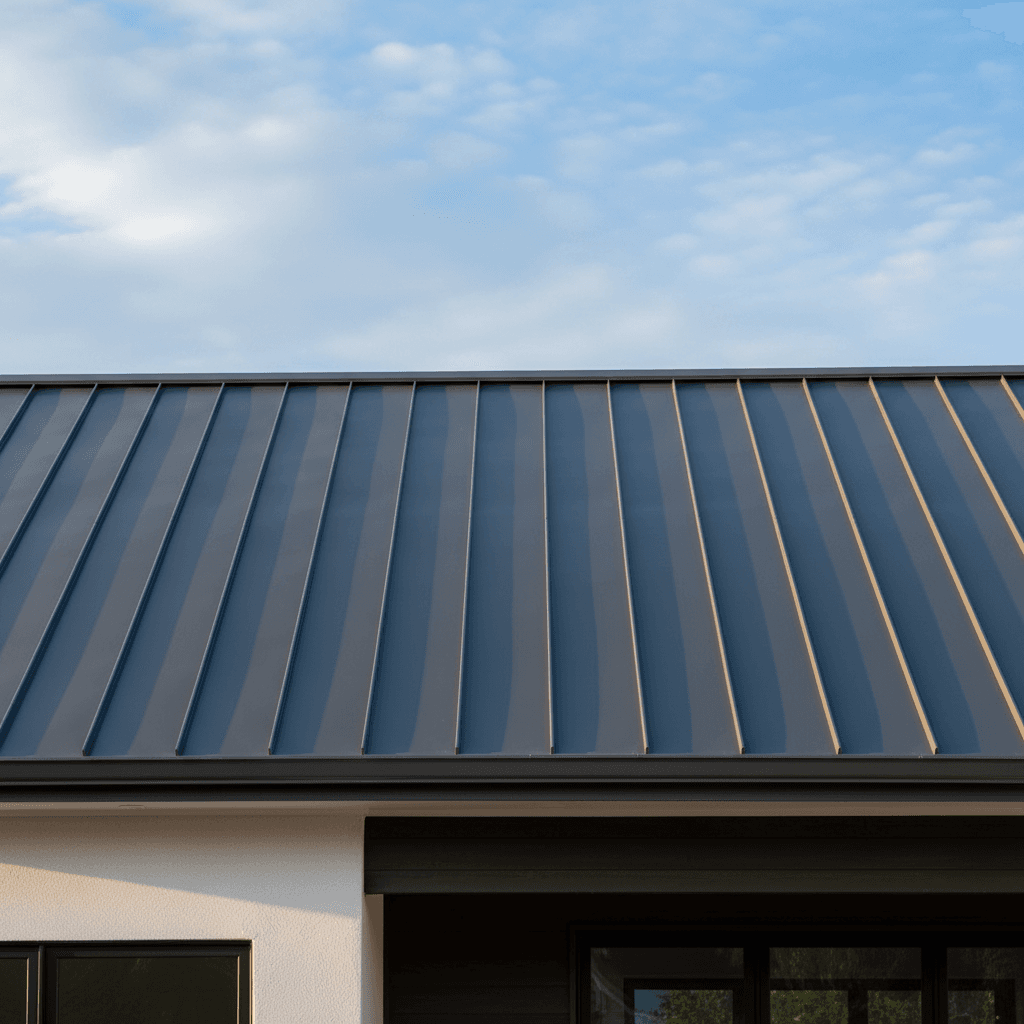
Standing-seam metal roof
$13.5k to $40k
Prefinished standing-seam metal panels and matching trim
Priced at $9 to $16 per square foot installed
Metal roofs last 30 to 80+ years
HomeGuide national range, not a local average
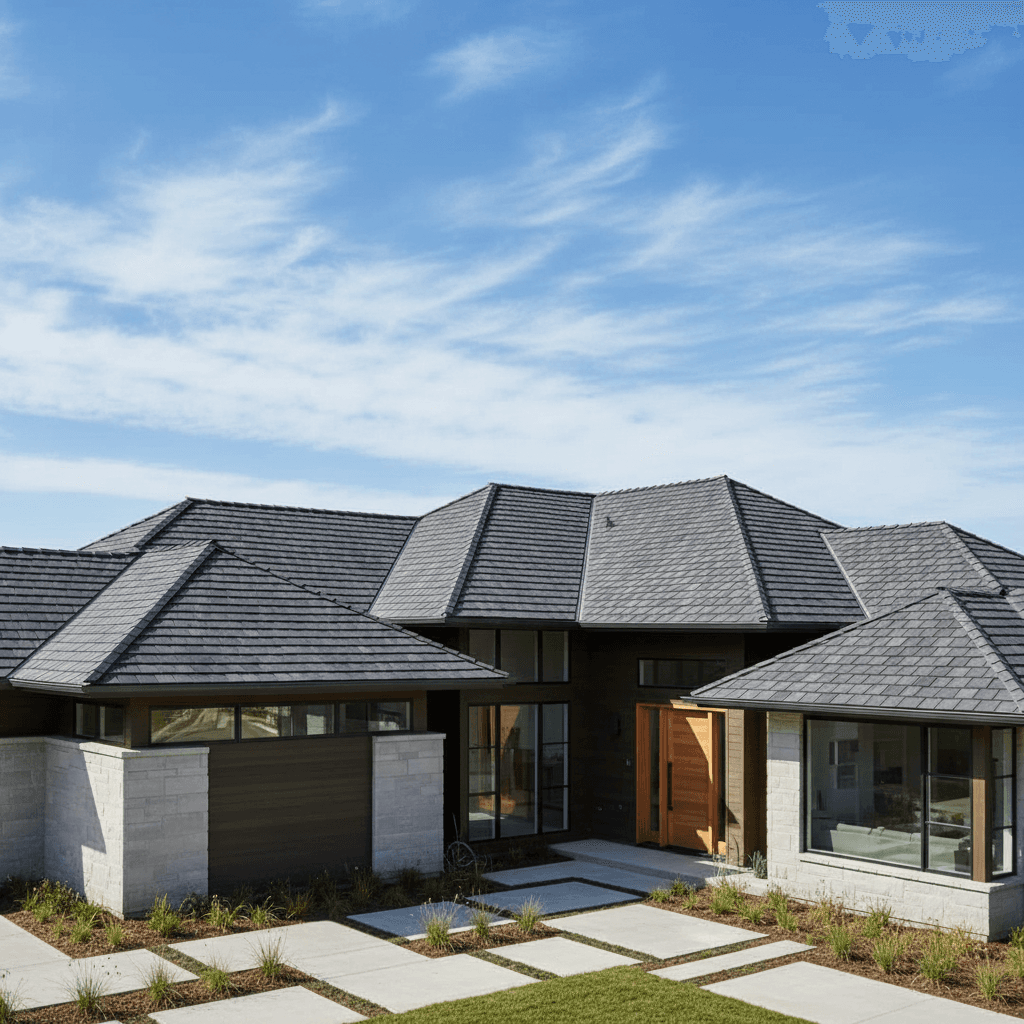
Tile or slate roof
$10.5k to $70k
Concrete or clay tile at $7 to $25 per square foot installed
Natural slate or stone at $10 to $30 per square foot installed
Framing check for the heavier covering
HomeGuide national ranges, not local averages
How to use these estimates
Use the ranges to discuss scope and allowances. A site assessment and written proposals determine your actual cost. Material prices and service-life ranges below depend on product, installation and conditions; they are not warranties. References support their specific topics and do not validate all prices in this guide.
Fire-rated and weather-sealed exteriors engineered for your climate.
Roof and siding replacement: 2026 costs and decisions
Roofs and siding keep water out of every other part of the house, so the system and the quality of the tear-off matter more than the color. Price the whole assembly: removal, decking repairs, underlayment, flashing, ventilation and the named product.
National installed ranges from HomeGuide: $7,500 to $16,000 for an architectural asphalt shingle roof, $13,500 to $40,000 for standing-seam metal, $10,500 to $62,500 for tile and $22,000 to $70,000 for slate or stone. Local spending sits near the top of the asphalt range: households in the Seattle-Tacoma-Bellevue metro reported a median of $15,000 on roofing work in the Census Bureau's 2023 housing survey, and Los Angeles metro households $14,290, against $10,000 nationally.
Material breakdown
Architectural asphalt shingles cost $4 to $6 per square foot installed, against $3 to $5 for 3-tab shingles. A new asphalt shingle roof lasts 15 to 30 years.
Standing-seam metal costs $9 to $16 per square foot installed, and metal roofs last 30 to 80+ years. Pick it when you plan to stay long enough to use that lifespan.
Tile costs $7 to $25 per square foot installed: concrete tile runs $7 to $19 and clay $8 to $25. Tile is heavier than asphalt, so ask the roofer whether the framing needs to be checked before you choose it.
Natural slate costs $10 to $30 per square foot installed. Slate and tile roofs last the longest, up to 100 to 200+ years.
Cost vs Value 2025 prices two fully specified jobs nationally: a 30-square asphalt shingle tear-off with new underlayment, drip edge and flashing at two skylights at $31,871, and a 3,000-square-foot standing-seam metal roof at $51,865. At resale the asphalt job returns 68% of its cost and the metal roof 50%.
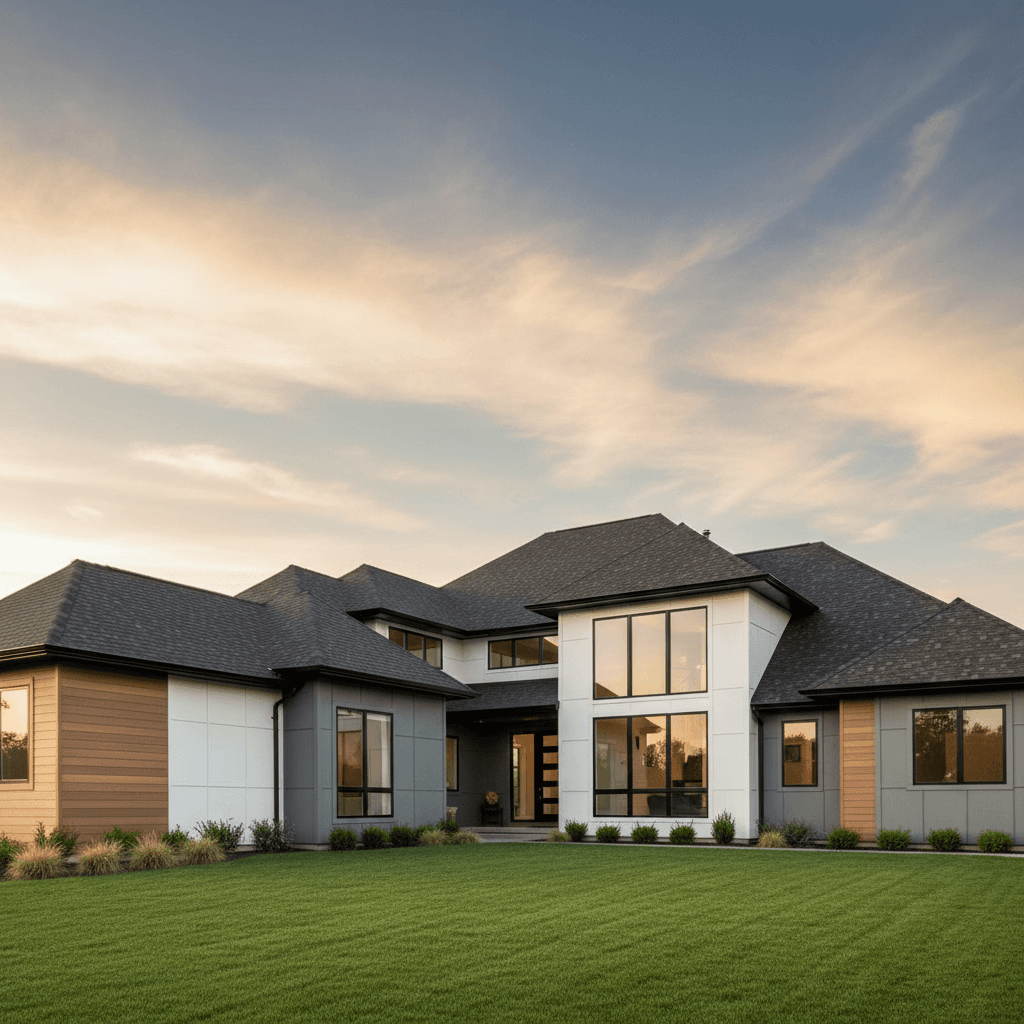
Design inspiration for your roofing & siding project.
California fire and energy requirements
Inside a fire hazard severity zone, section R902.1.1 of the California Residential Code requires the entire roof covering to be at least Class A when more than 50 percent of the roof area is replaced within one year, and on every new roof. Clay or concrete tile, slate and metal installed on noncombustible decks count as Class A assemblies; for other products, ask the roofer for the tested Class A assembly.
The 2025 California Energy Code applies its roofing requirements when 50 percent or more of the roof is replaced. On a steep roof, with a pitch of 2:12 or more, that means a cool roof in climate zones 4 and 8 to 15, unless the house meets an exception such as R-38 ceiling insulation or a qualifying radiant barrier. Ask the building department which climate zone and compliance path apply to your address.
Rain, snow and roof maintenance
Have the roofer assess the roof assembly, drainage and local exposure. Discuss ventilation, flashing and maintenance appropriate to the selected system. Follow product guidance for cleaning and moss treatment; a chemical treatment or material choice alone does not guarantee a longer service life.
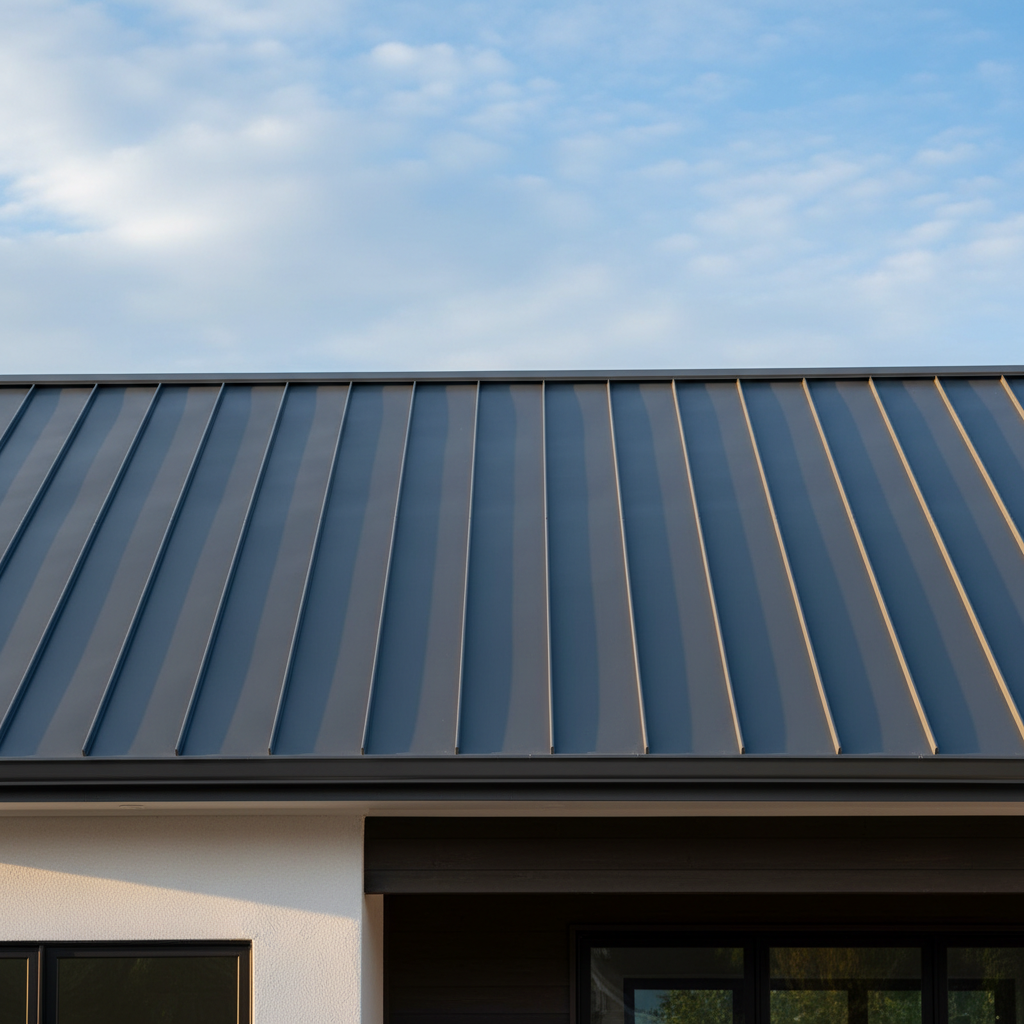
Standing-seam metal roofs last 30 to 80+ years.
Design inspiration for your roofing & siding project.
Siding: fiber cement vs vinyl vs natural wood
Fiber cement siding (James Hardie is the best-known brand) costs $6 to $15 per square foot installed, and HomeGuide lists a lifespan of 50 to 75 years. On a 2,500-square-foot house that comes to $15,000 to $37,500. Removing the old siding adds $0.70 to $2.00 per square foot.
Vinyl siding costs $4 to $12 per square foot installed, or $10,000 to $30,000 on a 2,500-square-foot house, and lasts 30 to 40 years. Its color can fade in direct sun.
Cedar siding costs $6 to $16 per square foot installed and lasts 20 to 40 years, with regular refinishing.
Cost vs Value 2025 prices one defined job, replacing 1,250 square feet of siding with factory-painted fiber cement, at $21,879 in Los Angeles, $24,197 in San Francisco and $29,743 in Seattle. Nationally the job costs $21,485 and returns 114% at resale; the vinyl version costs $17,950 and returns 97%.
How to vet a roofing contractor
Verify current licensing or registration in the state where the work will happen. C-39 is a California roofing classification, not a Washington endorsement. Confirm insurance, recent comparable work and supervision. Compare the named roofing product, underlayment, flashing, ventilation, repair allowances and disposal in writing.
Design inspiration for your roofing & siding project.
Compare materials and options
Compare the complete specification, not just the price per unit. Ask which preparation, installation and finish work the allowance includes.
3-tab asphalt shingles
$3 to $5 / sq ft installed
Typical service life: 15 to 20 years · Regional fit: Both
Lowest price and shortest lifespan in the HomeGuide table
Architectural asphalt shingles
$4 to $6 / sq ft installed
Typical service life: 20 to 30 years · Regional fit: Both
Thicker, dimensional shingle
Standing seam metal
$9 to $16 / sq ft installed
Typical service life: 30 to 80+ years · Regional fit: Both
Costs more up front than asphalt shingles
Concrete tile roof
$7 to $19 / sq ft installed
Typical service life: 30 to 50+ years · Regional fit: SoCal
Heavy; not suitable for every home
Natural slate
$10 to $30 / sq ft installed
Typical service life: 50 to 200+ years · Regional fit: Both
Weighs 8 to 10 lbs per sq ft
Fiber cement siding
$6 to $15 / sq ft installed
Typical service life: 50 to 75 years · Regional fit: Both
Class A fire rating
Vinyl siding
$4 to $12 / sq ft installed
Typical service life: 30 to 40 years · Regional fit: PNW
Color may fade in direct sunlight
How the project works
The guide’s planning timeline is 1 to 3 weeks. Ask the contractor to separate design, approvals, ordering and construction in the schedule for your scope.
1
Inspection and quote
Have the contractor assess the existing assembly and measure the work. Compare an itemized specification and repair allowances.
2
Permit and material order
Confirm local approvals and order the selected system. Coordinate weather, delivery and site protection.
3
Tear-off and decking inspection
Remove existing materials as specified and inspect the substrate. Agree on documented approval of hidden repairs.
4
Underlayment, flashing, install
Install the complete specified system, including water protection, flashing, ventilation and finish materials as applicable.
5
Cleanup and final inspection
Inspect the completed work, remove debris and complete required sign-offs. Obtain product and workmanship warranty documents.
Compare the scope before the total
Give each contractor the same project description and product selections. Ask what is included, excluded or left as an allowance, who handles approvals, and how changes will be agreed in writing.
Details worth checking
Check your fire zone before any re-roof
Inside a fire hazard severity zone, the California Residential Code requires at least a Class A roof covering when more than 50 percent of the roof is replaced within a year. Look up your address on the CAL FIRE hazard map before you sign a roofing contract.
Why roofing cost numbers differ
The budget tiers use HomeGuide's national installed ranges, built from contractor estimates. The Census figures are what metro households said they spent on roofing work, repairs included. Cost vs Value prices one fully specified 30-square tear-off with two skylights, which is why its Los Angeles figure is more than double what local households reported.
Local planning context
Start with the authority responsible for your property. Costs and requirements vary within a metro. Browse California city guides.
Regional cost notes
Editorial planning notes; confirm the current scope, requirements and prices locally.
California
Los Angeles metro households reported a median of $14,290 on roofing work and San Francisco metro households $14,550 (Census American Housing Survey 2023, repairs included). Cost vs Value 2025 prices a defined 30-square asphalt tear-off at $36,417 in Los Angeles and $38,289 in San Francisco. Median roofer wage, May 2025 (BLS): $30.56 an hour in Los Angeles, $35.74 in San Francisco, $29.90 in San Diego.
Washington
Seattle-Tacoma-Bellevue households reported a median of $15,000 on roofing work and $8,571 on siding (Census American Housing Survey 2023). Cost vs Value 2025 prices a defined 30-square asphalt tear-off at $45,077 in Seattle and a standing-seam metal roof at $75,867. Median roofer wage in the metro was $30.81 an hour in May 2025 (BLS).
How much does a roof replacement cost in California in 2026?
HomeGuide's national range for an architectural asphalt shingle roof is $7,500 to $16,000, and tile runs $10,500 to $62,500. California spending sits near the top of the asphalt range: Los Angeles metro households reported a median of $14,290 on roofing work and San Francisco metro households $14,550 in the Census 2023 housing survey. Cost vs Value 2025 prices a fully specified 30-square asphalt tear-off at $36,417 in Los Angeles.
What does a roof cost in Seattle and the Pacific Northwest?
Seattle-Tacoma-Bellevue households reported a median of $15,000 on roofing projects in the Census 2023 housing survey, repairs included, against $10,000 nationally. Cost vs Value 2025 prices a 30-square asphalt shingle tear-off at $45,077 in Seattle and a 3,000-square-foot standing-seam metal roof at $75,867. Roofers in the metro earned a median $30.81 an hour in May 2025, before the contractor's overhead and margin.
Asphalt shingles or metal roof?
Asphalt costs less up front: $4 to $6 per square foot installed for architectural shingles, against $9 to $16 for standing-seam metal, per HomeGuide. Metal lasts longer, 30 to 80+ years against 15 to 30 for asphalt shingles. Cost vs Value 2025 puts the national resale return at 68% for an asphalt reroof and 50% for metal. Choose metal when you plan to stay long enough to use its lifespan.
Do I need a fire-rated roof in SoCal?
Inside a fire hazard severity zone, yes. Section R902.1.1 of the California Residential Code requires the whole roof covering to be at least Class A on every new roof and when more than 50 percent of the roof area is replaced within one year. Clay or concrete tile, slate and metal on noncombustible decks count as Class A assemblies. Check your address on the CAL FIRE hazard map before you sign a contract.
What is the difference between fiber cement and vinyl siding?
Fiber cement costs $6 to $15 per square foot installed and vinyl $4 to $12, per HomeGuide, which lists lifespans of 50 to 75 years for fiber cement and 30 to 40 years for vinyl. Vinyl color can fade in direct sun. Cost vs Value 2025 prices a 1,250-square-foot fiber cement job at $21,485 nationally with a 114% return at resale, and the vinyl version at $17,950 with 97%.
Do I need a permit for a roof replacement?
Confirm the requirements for your exact scope with the building department responsible for the property. Rules differ by city: Seattle exempts most house reroofs with no envelope change, while California cities apply fire and energy rules to larger replacements. Ask the contractor to identify required permits, fees and inspections in writing, and to name who pulls the permit.
How long does roof replacement take?
HomeGuide puts an asphalt shingle replacement at 1 to 3 days of work, a metal roof at 1 to 5 days, and wood shakes or slate at 6 to 8 days. Permit review, material delivery and weather add time before the crew starts, and decking repairs found at tear-off can add more. Ask each roofer for separate dates for permits, delivery and installation.
Talk through your project
A Renology representative calls to understand your plans and connects you with suitable contractors.