Built-in grill island
$3k to $10k
- One-piece grill station, grill up to 3 feet long
- 1 to 2 drawers and cabinets below
- Fridge and counter space
- Hookups to existing utility lines on an existing patio
Plan the cooking area around how you use the yard, access to the house and exposure to weather. Choose appliance models before finalizing cabinetry and utilities. Compare the island, appliances, connections and any cover as separate parts of the budget.
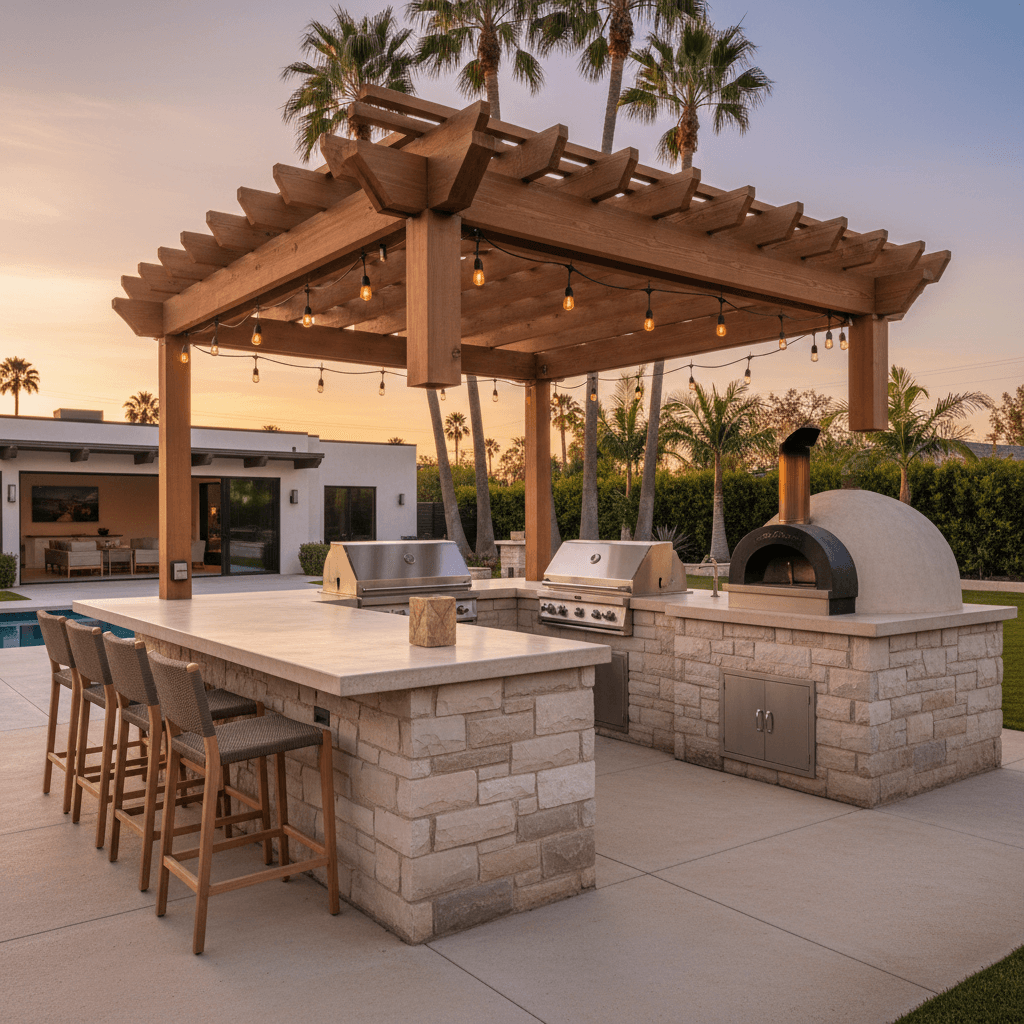
Match the budget to the work you need. Each tier is a published range for that scope, with its source listed at the end of this guide, and the local figures below show how your area compares. None of them is a quote. Confirm dimensions, preparation, materials, labor, fees and exclusions in each proposal.
$3k to $10k
$10k to $35k
$35k to $65k
Use the ranges to discuss scope and allowances. A site assessment and written proposals determine your actual cost. Material prices and service-life ranges below depend on product, installation and conditions; they are not warranties. References support their specific topics and do not validate all prices in this guide.
Compare project costs by areaWeather-proof cooking and entertaining setups, built to code.
The biggest mistake in outdoor kitchen design is over-building. The freestanding gas grill on the patio works hard. A built-out kitchen with pizza oven, kegerator and TV can turn into a sad shrine if the layout, weather protection and routine do not support it.
The kitchens that get used share three traits. They sit close to the indoor kitchen for ingredient runs. They have shade or cover for hot summer afternoons or Seattle drizzle. They have bar seating that turns cooking into hosting.
HomeGuide's national figures put a built-in grill island at $3,000 to $10,000 installed and a custom outdoor kitchen at $10,000 to $35,000. A luxury build with wrap-around stone counters, an oven and smoker, a TV and a bar runs $35,000 to $65,000. Those prices assume a patio and utility lines already in place. A new patio adds $5 to $35 per square foot, and a new gas line $12 to $25 per linear foot.
Cost vs Value 2025 prices one bigger backyard package: a 20 by 20 foot flagstone patio with a stone-veneer kitchen unit, a cedar pergola and a gas fire pit. It costs $51,454 nationally, $55,070 in Los Angeles and $59,075 in Seattle.
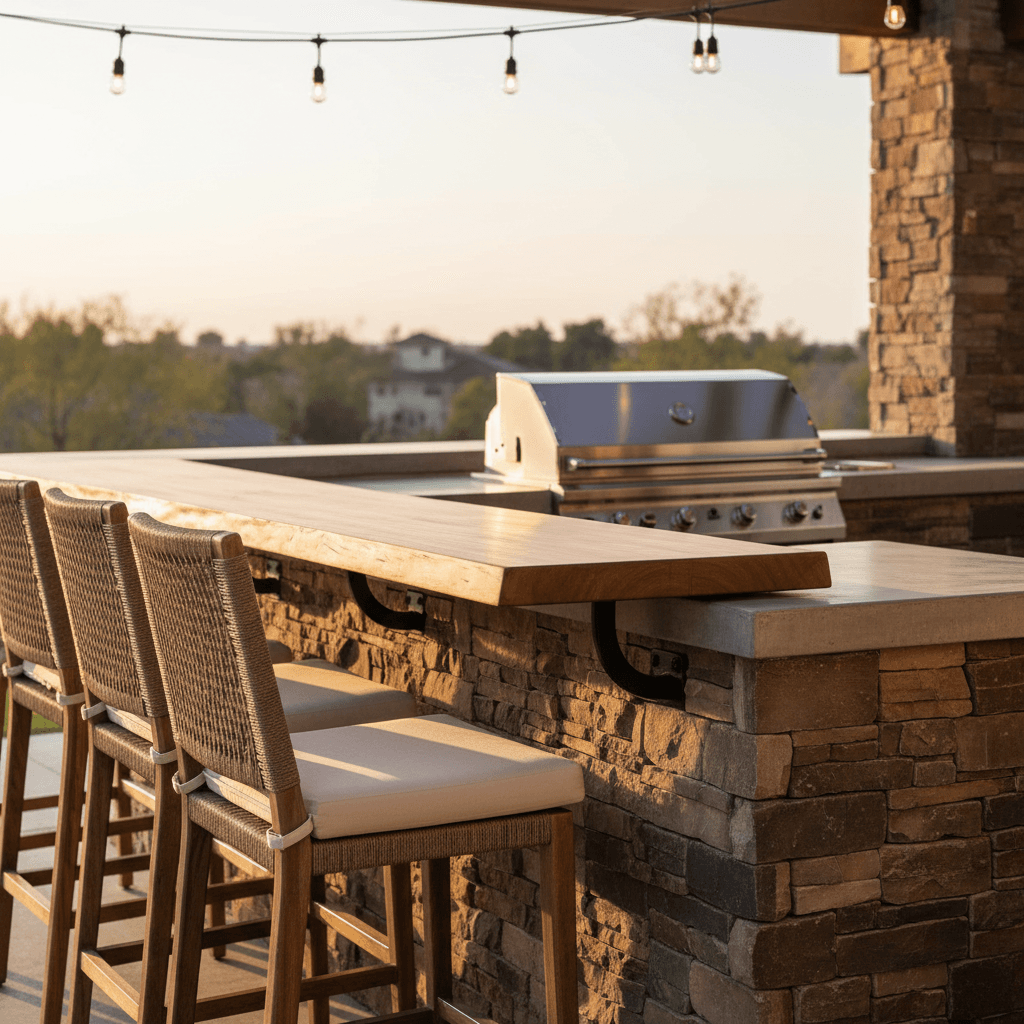
Consider afternoon sun, rain and prevailing wind when placing the cooking area. A cover can change ventilation and appliance clearance requirements, so have the layout reviewed before construction. Select equipment and electrical components for their actual outdoor exposure; a roof alone does not establish weather suitability.
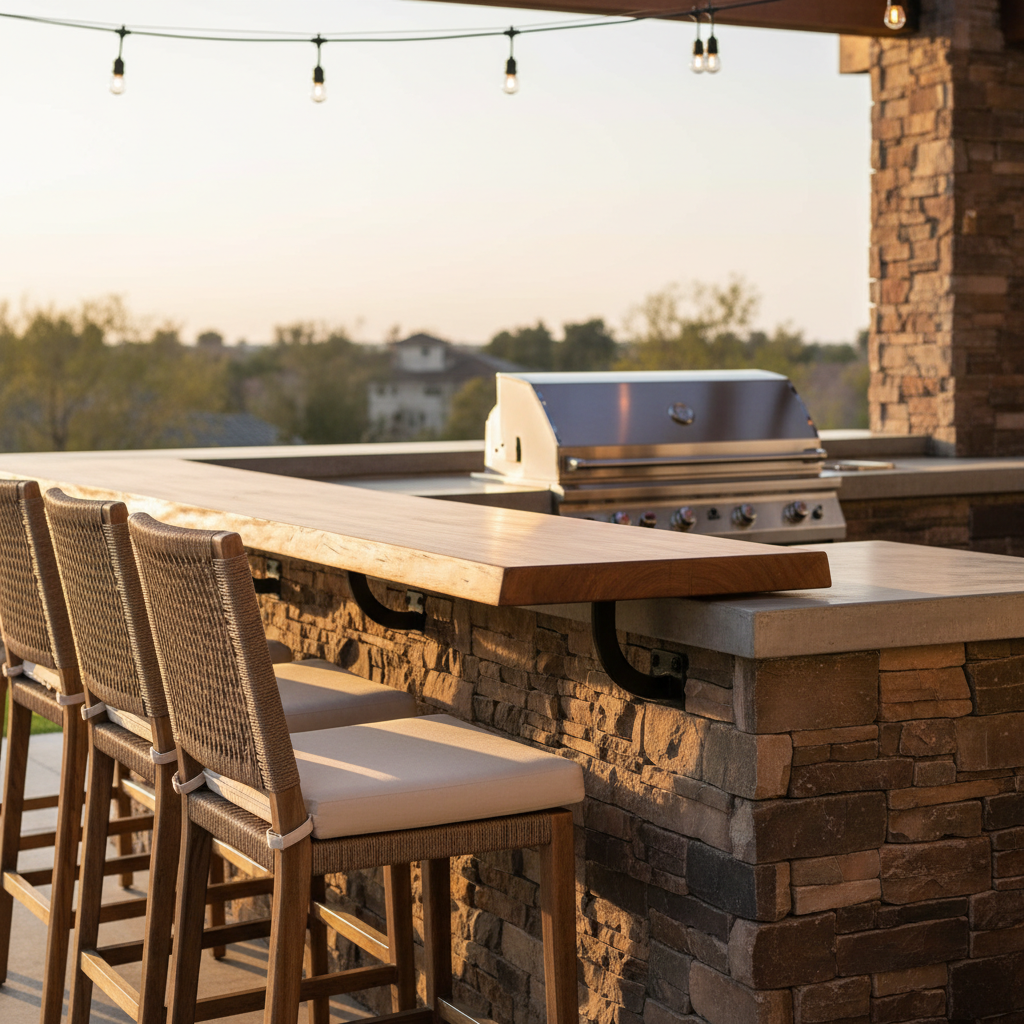
Keep the grill, prep counter and refrigerator close together, just like an indoor kitchen. Bar seating goes on the opposite side of the grill, never directly across from it (smoke and grease management). Wind direction matters: prevailing wind should carry smoke away from seating and the house.
Counter space matters more than appliance count. Leave landing space on both sides of the grill for prep and plating. Skip the side burner if it costs you counter space. Add an outdoor refrigerator only if you will use it weekly, otherwise a run to the indoor fridge is faster and cheaper to maintain.
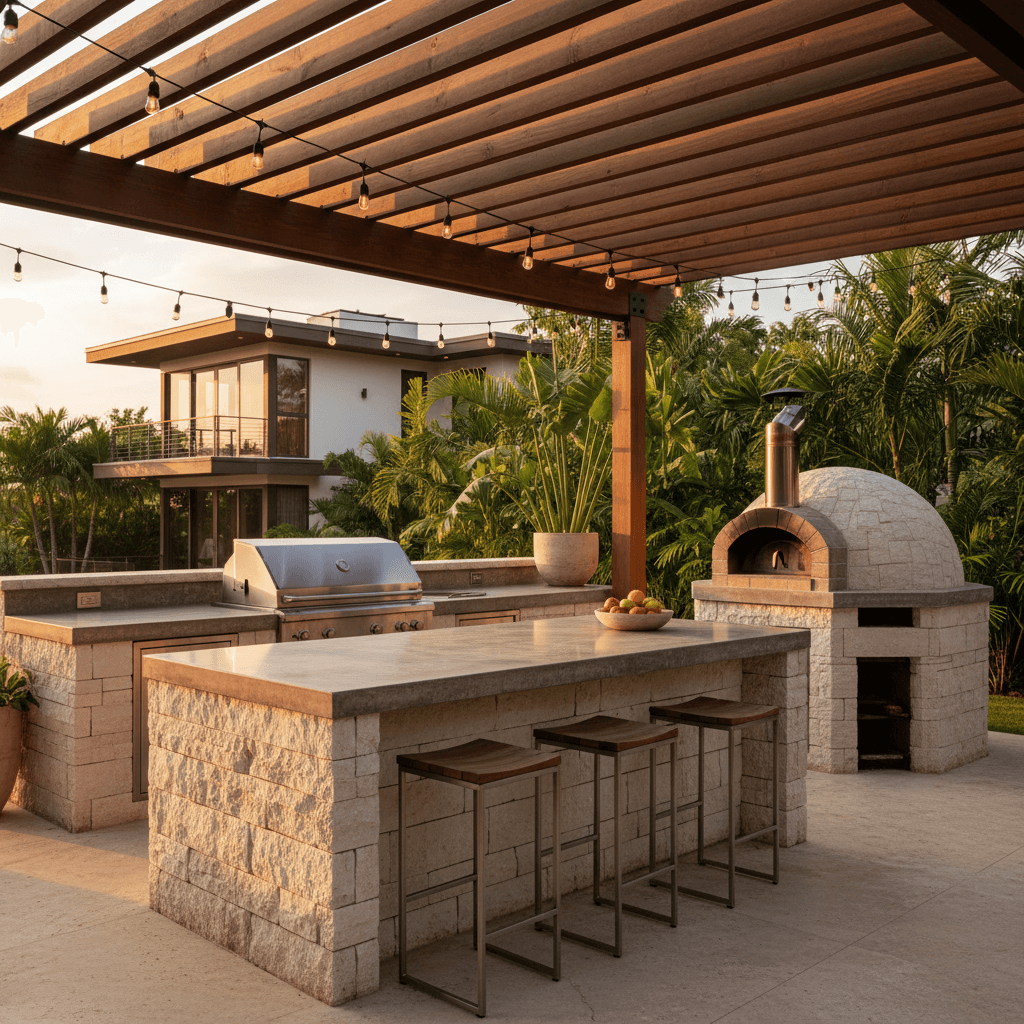
Pizza ovens are the most-requested premium upgrade and the most-likely-to-go-unused appliance. They take a long preheat, hold heat poorly without insulation, and take live-fire skill to use well. A built-in pizza oven costs $1,200 to $6,000. If you make pizza at home weekly today, it is worth it. If you do not, try a portable oven first and decide.
Confirm the requirements for your exact scope with the building department responsible for the property. Structural changes, utility work and changes of use can follow different approval paths. Ask the contractor to identify required permits, fees and inspections in writing; an exemption for one task does not cover the whole project. Have qualified installers assess appliance loads, fuel supply, electrical circuits, water and wastewater connections. Required pipe sizes and clearances depend on the selected equipment and actual installation.
Compare the complete specification, not just the price per unit. Ask which preparation, installation and finish work the allowance includes.
Typical service life: 50+ years · Regional fit: SoCal
Finish over the island frame
Regional fit: Both
Finish over the island frame
Typical service life: 100+ years · Regional fit: Both
Finish over the island frame
Typical service life: 50 years · Regional fit: Both
Poured or precast concrete
Typical service life: 100+ years · Regional fit: Both
Natural stone
Regional fit: Both
Price depends on size, fuel and brand
Regional fit: Both
Gas or wood-fired
The guide’s planning timeline is 3 to 8 weeks. Ask the contractor to separate design, approvals, ordering and construction in the schedule for your scope.
Choose the layout and appliance models around cooking, access, weather exposure and the manufacturer’s clearance requirements.
Confirm approval requirements and the capacity and routes for utilities with qualified installers before ordering.
Prepare the specified base or foundation and coordinate any underground work and inspections.
Install cabinetry or the island structure and countertops to the approved appliance and site specifications.
Have qualified installers connect the selected appliances and services, following manufacturer and inspection requirements.
Complete applicable inspections, test equipment and review operating, care and warranty information.
Give each contractor the same project description and product selections. Ask what is included, excluded or left as an allowance, who handles approvals, and how changes will be agreed in writing.
A built-in pizza oven is one of the most-requested upgrades and one of the most likely to go unused. HomeGuide puts one at $1,200 to $6,000. If you do not make pizza weekly today, get a portable oven first and decide.
The three tiers are national installed prices from HomeGuide, and they assume a patio and utility lines already exist. The Los Angeles, San Francisco and Seattle figures come from Cost vs Value 2025, which prices one defined project: a flagstone patio with a kitchen unit, a pergola and a fire pit.
Start with the authority responsible for your property. Costs and requirements vary within a metro. Browse California city guides.
Editorial planning notes; confirm the current scope, requirements and prices locally.
Cost vs Value 2025 prices one defined backyard project: a 20 by 20 foot flagstone patio with a stone-veneer kitchen unit (gas grill, mini fridge, sink), a cedar pergola, a gas fire pit and lighting. It costs $55,070 in Los Angeles and $56,191 in San Francisco, and recoups 47.2% and 48.1% of that at resale. Plan shade for inland summer afternoons.
The same Cost vs Value 2025 backyard patio project, with its kitchen unit, cedar pergola and fire pit, costs $59,075 in Seattle and recoups 24% at resale, against $51,454 and 46% nationally. Greater Seattle outdoor kitchens need a roof or louvered pergola to be usable outside summer.
Cost vs Value 2025 prices a full backyard package (a 20 by 20 foot flagstone patio, a stone-veneer kitchen unit with gas grill, mini fridge and sink, a cedar pergola and a fire pit) at $55,070 in Los Angeles and $56,191 in San Francisco. For the kitchen alone, HomeGuide's national figures run $3,000 to $10,000 for a grill island and $10,000 to $35,000 for a custom kitchen on an existing patio.
Cost vs Value 2025 prices its backyard patio project, which includes a stone-veneer kitchen unit, a cedar pergola and a fire pit, at $59,075 in Seattle, above the $51,454 national average. That project recoups 24% of its cost at resale in Seattle against 46% nationally. Plan cover into the budget: a roof, pergola or gazebo over the kitchen runs $1,450 to $31,000.
HomeGuide puts a built-in grill at $3,000 to $20,000 installed, and a standalone grill starts at $100 to $350 with no connections needed. Built-in wins on looks, counter space and a finished island. Freestanding works if you may move, want flexibility, or want to test how often you cook outside before paying for gas and electrical runs.
Yes for any project with gas line work, electrical circuits or plumbing. California and Washington require licensed trades for that work. HomeGuide puts permit costs at $200 to $600 nationally, and cities set their own fees. Follow the grill maker's installation instructions and clearances exactly, because the inspector checks them.
In Greater Seattle, yes. Cover makes the difference between a summer-only kitchen and one you use through the wet months, and it protects appliances and wiring from rain. In Southern California it is optional, but inland afternoon sun can make an open kitchen too hot to cook in. A roof, pergola or gazebo over an outdoor kitchen costs $1,450 to $31,000.
Exposure and care decide lifespan more than brand. Near the coast, pick 304-grade stainless for the grill, doors and drawers. Choose refrigerators rated for outdoor use rather than indoor units, and keep the grill covered between uses. A roof or pergola over the kitchen protects every appliance under it from sun, salt air and rain.
A Renology representative calls to understand your plans and connects you with suitable contractors.
Find a ProFree to request a match. No obligation to hire.