The short answer
Which San Francisco yard projects need a permit?
Much San Francisco yard work needs no permit until it gets tall, heavy or reaches the front. DBI exempts fences under 6 feet along the rear and side lot lines, retaining walls up to 4 feet from the bottom of the footing, platforms and walks no more than 30 inches above grade, and sheds under 100 square feet and 8 feet tall. Repaving more than 200 square feet of a front setback triggers the Green Landscaping rules: at least half permeable and 20% planted. And 500 square feet or more of new or modified landscape falls under the SFPUC's irrigation ordinance.
Count the landscape area before choosing plants. At 500 square feet of new or modified landscape, the SFPUC requires efficient irrigation, low water-use plants and an annual water budget.
Discuss your scope with a Renology advisor and check suitable contractor options. Free for homeowners, with no obligation.
Refresh the yard: inclusions & limits
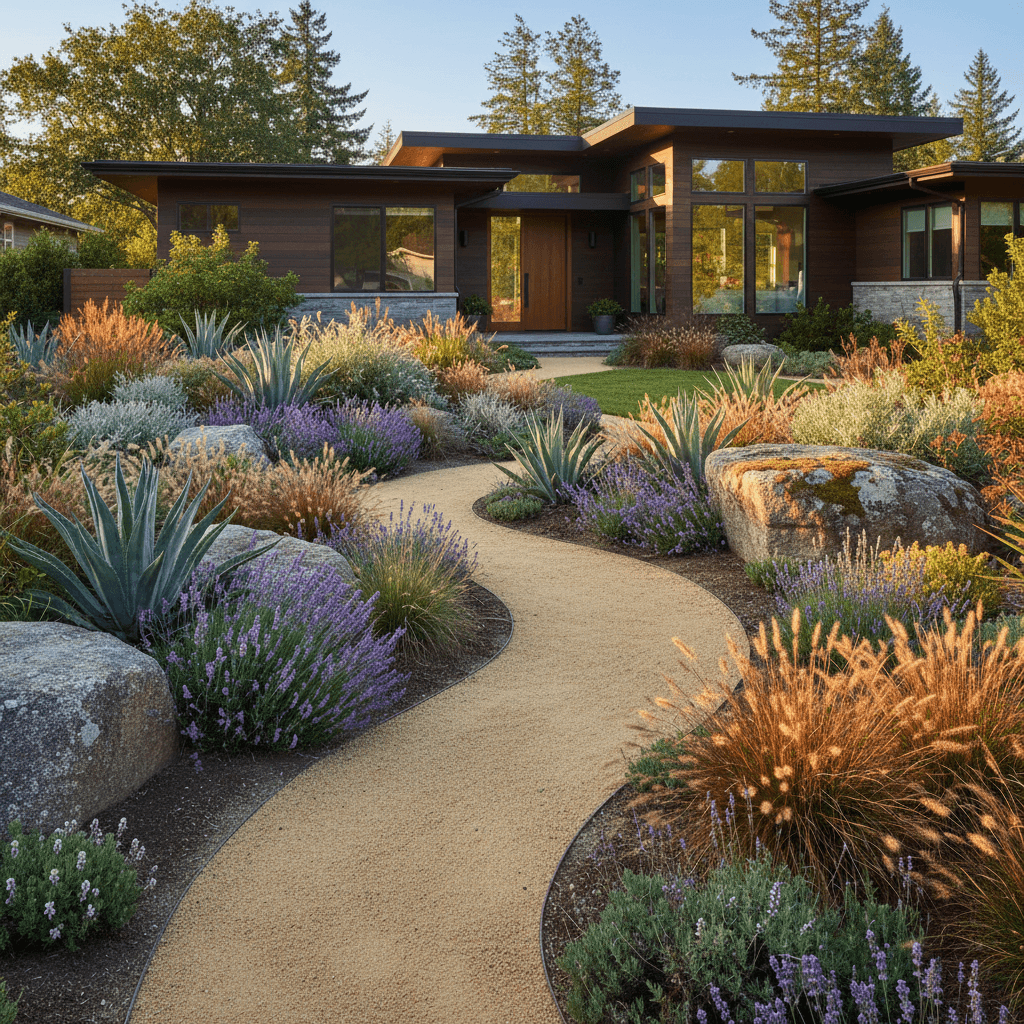
Covers planting, mulch, irrigation, lighting and resurfacing paths. Much of this needs no building permit, but two thresholds apply. 500 square feet or more of new or modified landscape falls under the SFPUC's Water Efficient Irrigation Ordinance, with efficient irrigation, low water-use plants and an annual water budget. Repaving more than 200 square feet of the front setback brings the Green Landscaping rules.
Replan the outdoor space: inclusions & limits
Includes demolition, grading, drainage, walls, paths and conduit or pipe for later phases. A retaining wall over 4 feet from the bottom of the footing needs a permit, as does a shorter one holding back extra load, such as a sloping bank or a driveway above it. In the front setback, at least half the surface must stay permeable, which porous concrete, interlocking pavers, brick or planting can meet. DBI notes that disturbing 50 cubic yards of soil in the Maher Ordinance area, land the Department of Public Health considers known or suspected to be contaminated, can require a site assessment.
Add a covered space: inclusions & limits
Treat these as building work. At grade, a shade structure avoids neighborhood notice if it is under 8 feet tall, enclosed on no more than half its perimeter and under 60 square feet. Fences taller than 6 feet in side or rear yards, up to 10 feet, and taller than 3 feet in front go over the counter with plans. Electrical and plumbing work for lights or a sink needs its own trade permits.
What an outdoor living project costs in San Francisco in 2026.
Most of what makes a San Francisco yard, the plants, the drip lines and a low path, never reaches a permit counter, so the City's records show the heavier end of yard work. On 219 permits for patios, retaining walls, patio covers and landscaping filed for single-family homes and duplexes since September 2024, owners declared a median of $18,320, and half of them landed between $8,350 and $40,000.
$18,320
More than half of those permits, 119 of them, are for retaining walls, and they carry a median of $25,000. Patio covers come in lower at $13,044, and hardscape and landscaping permits at $15,000. That tells you where the money goes in a hilly city: holding back soil costs more than planting it. A yard that only gets new plants and irrigation usually costs less and never shows up in them.
All the numbers and where they come from
| Figure | Value | What it measures |
|---|---|---|
| Median permit value | $18,320 | Declared construction value on 219 outdoor living permits (patios, retaining walls, patio covers, landscaping) for single-family homes and duplexes, filed September 2024 to September 2026. Half fall between $8,350 and $40,000. (San Francisco DBI building permits, open data) |
| Top tenth of permits | $75,000+ | One in ten of those permits declared $75,000 or more. (San Francisco DBI building permits, open data) |
| Retaining walls | $25,000 | Median on 119 retaining wall permits. Half fall between $8,750 and $40,000. (San Francisco DBI building permits, open data) |
| Hardscape and landscaping | $15,000 | Median on 51 permits for paving, patios and landscaping. Half fall between $5,000 and $34,250. (San Francisco DBI building permits, open data) |
| Patio covers | $13,044 | Median on 40 patio cover and shade structure permits. Half fall between $8,000 and $30,804. (San Francisco DBI building permits, open data) |
| What households spent | $6,459 | Average spent on landscaping and sprinkler projects in the San Francisco-Oakland-Hayward metro, small jobs and DIY work included. The Census survey does not publish a metro median for this category; the national median was $1,429. (U.S. Census Bureau, American Housing Survey 2023, Table 16) |
| Crew wages | $23.10 to $36.53 | Median hourly wages in the San Francisco-Oakland metro, May 2025: landscaping workers $23.10, construction laborers $34.91, cement masons $36.53. Contractors bill above wages. (U.S. Bureau of Labor Statistics, May 2025 wages, San Francisco-Oakland) |
| Budget line | Define it | Watch for |
|---|---|---|
| Access and soil | Moving demolition, soil and base rock through the house or garage, and hauling it away at the curb. | A debris box in the street needs a Public Works permit, and No Parking signs go up at least 72 hours before the curb is used. Disturbing 50 cubic yards of soil in the Maher area can add site assessment. |
| Paving and drainage | Base, edging, the finished surface and where the water goes afterward. In a front setback, permeable surfaces count toward the rule that half the area stays permeable. | The City's list of permeable surfaces includes porous concrete, pavers, open-jointed blocks and brick set loosely without mortar. Ask which surfaces in each bid count toward the front setback requirement. |
| Planting and irrigation | Plants, soil preparation, drip lines, controllers and any sidewalk garden out front. | At 500 square feet of new or modified landscape, the SFPUC requires efficient irrigation, low water-use plants and an annual water budget. A sidewalk garden needs a low-cost Public Works permit. |
For inclusions, allowances and exclusions, see how to read a contractor quote line by line. For broader benchmarks, see the Renology Cost Index.
What an outdoor living project budget buys in San Francisco.
About $8,500
A quarter of permitted San Francisco yard jobs declare $8,350 or less: a short wall replaced in place, a small patio cover. Much work at this level needs no permit at all. That includes fences under 6 feet at the back, retaining walls up to 4 feet from the bottom of the footing, and platforms no more than 30 inches above grade.
$13,000 to $15,000
The medians for patio covers, at $13,044, and for hardscape and landscaping permits, at $15,000. Enough for new paving and a planted bed, or a shade structure that stays under 8 feet tall and 60 square feet to avoid neighborhood notice. Repave more than 200 square feet of a front setback and at least half must stay permeable.
$25,000 to $40,000
The retaining wall median and the top of the middle half of all yard permits. Regrading lives here: walls over 4 feet or holding extra load, drainage, and soil hauled out through the house or garage. Disturbing 50 cubic yards of soil in the Maher Ordinance area can add a site assessment.
$75,000 and up
The top tenth of permits. A whole-yard replan with several walls, new drainage, buried lines for later phases, paving and a covered structure, often with electrical and plumbing permits for lights, a sink or a grill.
Two landscaping bids can match on plants and split on everything underneath.
A planting crew and a concrete crew are priced like different businesses. In May 2025 the median landscaping worker in the San Francisco-Oakland metro earned $23.10 an hour and the median cement mason $36.53. A bid heavy on walls and paving costs more per day than one heavy on plants, before overhead and profit go on top.
Access is the other split. In a narrow yard every bag of base rock may travel through the house, and a debris box in the street needs a Public Works permit with No Parking signs posted 72 hours ahead. Ask each bidder to show those lines.
Bring the bid checklist to every contractor so the numbers describe the same job.
Make the guide yours
Replant, regrade or build: how big is your San Francisco yard job?
Only about 18 percent of San Francisco homes are detached houses (Census ACS 2024), so most yards are small, and many can only be reached through the house or garage. Planting and irrigation can often go in with no permit, though 500 square feet of new landscape brings the SFPUC's rules. Regrading brings retaining walls and soil to haul, and a shade structure or tall fence is building work with its own limits.
No scope selected. The guide and checklist are available without choosing a project tier or leaving contact details.
Make a small yard work before filling it
The front yard has its own rule. Repave more than 200 square feet of the front setback and at least half of it must stay permeable, meaning water can soak through, and 20 percent must be planted. Settle the front before you pick a paver.
A shade structure at grade skips neighborhood notice only while it stays under 8 feet tall and under 60 square feet, and is enclosed on no more than half its perimeter. Go past any one of those limits and it needs notice.
Official starting point: San Francisco Department of Building Inspection.
A decision to work through · illustrative scenario
A sloping back yard reached through the garage
The owner wants a level patio where the yard now steps down. Leveling it means a retaining wall, and one taller than 4 feet from the bottom of its footing needs a permit. Every bag of soil that comes out travels through the garage.
Before you compare bids: Ask for wall heights measured from the footing, the volume of soil to haul, and the access and protection plan as separate priced lines.
The order that keeps a San Francisco yard from being dug up twice
Yards get built twice when the order is wrong: lay a patio before the drain line, and the patio comes up again. In San Francisco the order has a permit layer too. Fences over 6 feet, walls over 4 feet and shade structures need DBI review, often over the counter with plans. Settle those first, then build from the soil up and plant last.
- 1
Measure and map: draw the yard with levels, the front setback, fences and walls, and count the landscape area. That shows early whether the SFPUC irrigation rules, the Green Landscaping rules or a DBI permit apply.
- 2
Permit what needs it: fences over 6 feet, retaining walls over 4 feet, shade structures and raised platforms go through DBI, many over the counter with two sets of plans, and Planning reviews anything that needs notice. File electrical and plumbing permits alongside.
- 3
Build from the ground up: soil and drainage first, then walls, buried lines and paving, with planting last. Book the street space and the debris box before demolition day so the curb is ready.
Ask for separate dates for design, permit review, ordering and construction.
A one-page yard brief for San Francisco landscapers
Landscaping bids are easy to compare on plants and hard to compare on everything underneath. Put the numbers the City cares about on one page: landscape area, wall heights, front setback paving and the route materials take through the house. Then each bidder prices the same yard, and nobody discovers a permit threshold halfway through the job.
- Scaled plan marking the front setback, fences, walls, sheds and anything over 30 inches high
- Landscape area in square feet, checked against the 500-square-foot SFPUC threshold
- Retaining wall heights from the bottom of the footing, and any wall holding extra load
- Front setback paving area, showing it stays 50% permeable and 20% planted
- Access route through the house or garage, protection, and the curb plan for debris
If you ask for help, a Renology advisor talks through your scope and checks local contractor availability. You decide whether to go ahead.
Already have a proposal? Check its scope and exclusions with the quote-review tool before your next contractor conversation.
Fences, retaining walls and sheds: San Francisco yard questions
The first answer is the one most owners never think to ask. Then come fences, retaining walls and sheds.
Is my yard in the Maher area, and why does it matter?
Look up the address on the City's Property Information Map, which shows the Maher Ordinance area. If the lot is inside it and the project disturbs 50 cubic yards of soil or more, the City may require a site assessment before the digging starts. A planting bed will not come close to that; a regraded yard with new walls can.
How much does backyard landscaping cost in San Francisco?
On 219 San Francisco permits for patios, retaining walls, patio covers and landscaping at single-family homes and duplexes since September 2024, owners declared a median construction value of $18,320, with half between $8,350 and $40,000. Retaining walls carry the highest median, at $25,000. A budget of $13,044 to $15,000 matches the medians for patio covers and for hardscape and landscaping permits, enough for new paving and a planted bed. Planting and irrigation alone usually need no permit.
What is the maximum fence height in San Francisco without a permit?
Under 6 feet along the rear and side lot lines at the back of the property, and 3 feet or less in a front yard. DBI's over-the-counter list covers fences taller than 6 feet in side or rear yards, up to a maximum of 10 feet, and taller than 3 feet in front. Those fences need plans, brought in two sets to the Permit Center.
How tall can a retaining wall be without a permit in San Francisco?
Up to 4 feet, measured from the bottom of the footing to the top of the wall. DBI's exemption does not cover a wall that holds back extra load, such as a sloping bank or a driveway above it, even under that height. Anything taller, or carrying that kind of load, needs a building permit.
Do I need a permit for a 10x12 shed in San Francisco?
Yes. A 10 by 12 foot shed covers 120 square feet, which is over DBI's exemption for one-story detached tool and storage sheds with a projected roof area under 100 square feet and no taller than 8 feet. An 8 by 12 foot shed, at 96 square feet, can fall within the exemption if it stays under 8 feet tall.
Check contractor credentials with California CSLB. Match the business identity and scope to the proposal.
Sources
- SF.gov (DBI): Check if your construction project needs a permit
- SF.gov (DBI): Get an Over-the-Counter permit for your exterior residential project
- SF Planning: Guide to the San Francisco Green Landscaping Ordinance
- SFPUC: Water Efficient Irrigation Ordinance
- San Francisco Public Works: Sidewalk Landscaping permit
- SF Planning: Residential Decks public information handout (updated November 2022)
- SF.gov (DBI): Get a building permit for an Accessory Dwelling Unit (ADU)
- San Francisco Public Works: Street Space permit
- San Francisco Public Works: Debris Box permit
- U.S. Census Bureau, ACS 2020-2024 5-year, B25024 Units in Structure, San Francisco County
- SF.gov: Check your property's environmental information (Maher Ordinance area)
- SF Planning: Property Information Map
- San Francisco DBI building permits, open data
- U.S. Census Bureau, American Housing Survey 2023, Table 16
- U.S. Bureau of Labor Statistics, May 2025 wages, San Francisco-Oakland
Keep planning.
Explore the general outdoor living guide for project-wide ideas.
Ready to build the structure? Plan a San Francisco deck or pergola.
- Kitchen remodeling in San Francisco →
- Bathroom remodeling in San Francisco →
- ADU & garage conversion in San Francisco →
- Roof replacement in San Francisco →
- Decks & pergolas in San Francisco →
- Flooring installation in San Francisco →
Outdoor living in other regions
Ready to hire? See vetted San Francisco contractors →
Outside San Francisco? Choose your Bay Area jurisdiction.
Planning guidance, not a quote. Confirm current requirements for your address with the official sources linked above.