The short answer
How does a San Francisco ADU get approved: State or Local program?
In San Francisco, an ADU starts with a choice of program. The State program is ministerial, meaning City staff must approve a plan that meets the rules, with no hearing and no neighborhood notice. It runs on a 60-day review clock from a complete application. It also skips the Planning Code's rear yard rules and its exposure rules, which set how much open space a unit's windows must face. The Local program adds Planning review first, allows Planning Code waivers and puts the new unit under rent control. Every ADU needs at least 220 square feet.
Decide early between a full permit and a site permit. DBI says the choice cannot be changed without resubmitting. A full permit takes two payments, and a site permit takes at least four.
Discuss your scope with a Renology advisor and check suitable contractor options. Free for homeowners, with no obligation.
Convert existing space: inclusions & limits
Covers framing inside the existing shell, a separate entrance, light, ventilation, fire separation and new services. The ADU needs its own entrance, and walls between it and a garage or another unit must be 1-hour fire rated, built to hold back a fire for an hour. State law bars the City from requiring replacement parking for a converted garage. In a building with tenants, a garage, laundry room or storage space counts as a housing service, which an ADU may not remove without a just cause reason.
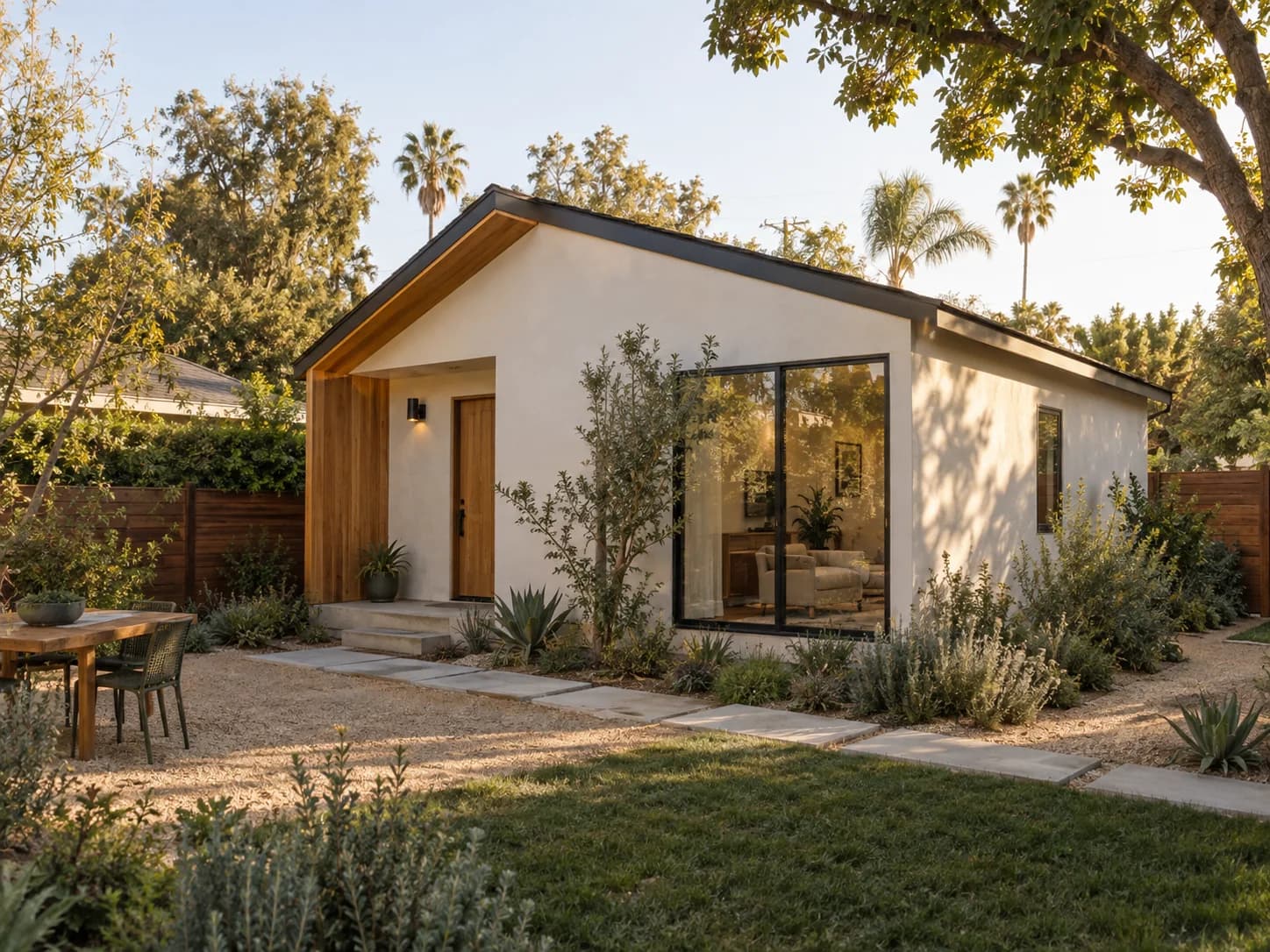
Detached ADU: inclusions & limits
Includes the foundation, the new building, utility runs across the lot and restoring the yard. State law caps side and rear setbacks at four feet for a new detached ADU, and on a single-family lot the City may limit a ministerial one to 800 square feet. SF Planning says a permitted rear-yard structure can often be converted, but expanding it is only allowed inside the buildable area. DBI asks for a fire flow study for new construction, a check that the water supply can serve firefighters, and an acoustical report for new residential buildings.
Attached addition: inclusions & limits
Carry the structural connection, any excavation and the fire-rated separation from the main home as separate lines. State law caps an attached ADU at 50 percent of the existing home's floor area. DBI's ADU permit covers expansions and excavations the unit requires, but unrelated construction in the same project sends it to a Planning Project Application first. On a hillside property, DBI may call for a geotechnical report or third-party engineering review.
What an ADU project costs in San Francisco in 2026.
In San Francisco the City itself puts a price on an ADU: DBI's permit guide says adding a unit typically costs at least $125,000 in material and labor. Its own permit records land close by. On 277 ADU and garage conversion permits filed for single-family homes and duplexes since September 2024, owners declared a median of $120,000, and half of them landed between $60,000 and $247,000.
$120,000
That number has been climbing. The 28 permits filed from September to December 2024 declared a median of $72,500, the 139 filed in 2025 declared $135,000, and the 110 filed so far in 2026 declared $137,400. None of it counts the work around the build: DBI puts architects and engineers at about 10% of construction cost and City fees at 6 to 9%. And a garage conversion and a new backyard unit sit closer than most owners expect, at medians of $120,000 and $127,400. What separates one project from another is the spread, and the rest of this guide is about where your unit falls in it.
All the numbers and where they come from
| Figure | Value | What it measures |
|---|---|---|
| Median permit value | $120,000 | Declared construction value on 277 ADU and garage conversion permits for single-family homes and duplexes, filed September 2024 to September 2026. Half fall between $60,000 and $247,000. (San Francisco DBI building permits, open data) |
| Top tenth of permits | $500,000+ | One in ten of those permits declared $500,000 or more. (San Francisco DBI building permits, open data) |
| 2026 median so far | $137,400 | Median on the 110 ADU permits filed in 2026, up from $135,000 on 139 permits in 2025 and $72,500 on 28 permits filed September to December 2024. (San Francisco DBI building permits, open data) |
| Garage conversions | $120,000 | Median on 113 garage conversion permits. Half fall between $65,000 and $225,000. (San Francisco DBI building permits, open data) |
| New detached units | $127,400 | Median on 60 permits for a new detached ADU. Half fall between $59,500 and $212,500. (San Francisco DBI building permits, open data) |
| DBI's own estimate | $125,000+ | DBI says adding a new unit typically costs at least $125,000 in material and labor, and that the total can range widely with the lot and project. (SF.gov (DBI): Get a building permit for an Accessory Dwelling Unit (ADU)) |
| Design and City fees | About 10% + 6 to 9% | DBI's rule of thumb: architects and engineers near 10% of construction cost, City fees 6 to 9% of construction cost. (SF.gov (DBI): Get a building permit for an Accessory Dwelling Unit (ADU)) |
| Architect | $10,000+ | The City's ADU design page lists hiring an architect or designer to draw the plans at $10,000 and up. (SF.gov: Design an ADU that meets City codes) |
| Carpenter wage | $42.89 an hour | Median carpenter wage in the San Francisco-Oakland metro, May 2025. Construction laborers earned a median $34.91. Contractors bill above wages. (U.S. Bureau of Labor Statistics, May 2025 wages, San Francisco-Oakland) |
| Budget line | Define it | Watch for |
|---|---|---|
| Design and City fees | Plans, engineering, structural calculations, Title 24 energy forms and permit fees. DBI's rule of thumb is about 10% of construction cost for architects and engineers and 6 to 9% for City fees; the City lists hiring an architect at $10,000 and up. | Choose between a full and a site permit carefully. DBI says the choice cannot be changed without resubmitting, and a site permit takes at least four payments. |
| Fire and life safety | 1-hour rated walls against a garage or another unit, rated doors in exit passageways, a 36-inch exit path and a rescue opening in every bedroom. | In a building with 3 or more units, a sleeping room facing a rear yard under 50 feet deep can require a manual fire alarm and ground-floor sprinklers. DBI warns these can significantly increase costs. |
| Utilities and meters | Independent wiring for the unit, gas extended to it if it has gas appliances, and gas and electric meters that meet PG&E requirements. | A single-family home adding an ADU does not usually need more water capacity, but adding a unit to a 2-unit building may require sprinklers and likely more capacity. A meter box in the exit passageway must be 1-hour fire rated. |
For inclusions, allowances and exclusions, see how to read a contractor quote line by line. For broader benchmarks, see the Renology Cost Index.
What an ADU project budget buys in San Francisco.
About $60,000
A quarter of San Francisco ADU permits declare $60,000 or less. At this level the work usually stays inside walls that are already sound. A garage or storage room becomes a unit of at least 220 square feet, with its own entrance, fire-rated walls against any remaining garage and new wiring. The architect comes on top, and the City lists that at $10,000 and up.
$120,000 to $140,000
The overall median is $120,000, and the 2026 median so far is $137,400. Garage conversions sit at $120,000 and new detached units at $127,400. At this level a conversion can carry a full kitchen and bathroom, and a small detached unit gets its foundation and utility runs across the lot.
About $250,000
The middle half of permits tops out at $247,000. Here the building itself asks for more. In a building with 3 or more units, a sleeping room facing a short rear yard can require a fire alarm and sprinklers. A 2-unit building may need sprinklers and more water capacity, and a new detached unit needs a fire flow study. Design near 10% and City fees of 6 to 9% grow with every dollar of construction.
$500,000 and up
One permit in ten declares $500,000 or more. Attached additions with excavation live here, and so do hillside lots where DBI may call for a geotechnical report on the soil. The site and the approval route push the price, not the unit's size.
What makes one San Francisco ADU bid double another.
Fire rules move ADU prices more than finishes do. One bid prices the fire-rated walls, the 36-inch exit path, gas and electric meters to PG&E requirements, and a ceiling that still clears 7.5 feet after the new floor goes in. Another leaves those for change orders.
The work around the build is priced separately, or not at all. DBI puts design near 10% of construction cost and City fees at 6 to 9%, and both usually sit outside a construction bid, so add them before comparing totals. Wages set the base: the median carpenter in the San Francisco-Oakland metro earned $42.89 an hour in May 2025 and the median construction laborer $34.91.
Bring the bid checklist to every contractor so the numbers describe the same job.
Make the guide yours
Garage, rear yard or addition: where can a San Francisco ADU go?
Most San Francisco ADUs begin in space the building already has. SF Planning says many are converted from storage or garage space, and state law means the lost parking does not have to be replaced. A detached unit or an addition raises other questions, from setbacks and the buildable area to a fire flow study and, on a hillside, a geotechnical report. Choose the scope first; the rules follow from it.
No scope selected. The guide and checklist are available without choosing a project tier or leaving contact details.
An existing building is a starting point, not a ready dwelling
Measure the garage ceiling before you fall for a floor plan. The living areas of an ADU need a 7.5-foot ceiling once the new floor, insulation and finishes go in, and a garage that starts close to that line can miss it by inches. The unit also needs at least 220 square feet and its own entrance.
If the building has tenants, check what they use before anyone draws. A garage, laundry room or storage space that tenants use counts as a housing service, and an ADU may not take it away without a just cause reason.
Official starting point: San Francisco ADU resources.
A decision to work through · illustrative scenario
A garage conversion under two rented flats
The owner of a two-unit building wants to turn the ground-floor garage into a third home. The tenants upstairs keep bikes there and use the laundry. Adding a unit to a 2-unit building may also require sprinklers and more water capacity.
Before you compare bids: Ask the designer for a plan that keeps or replaces the tenants' laundry and storage, and a written answer on sprinklers and water capacity, before requesting fixed bids.
From program choice to recorded permit: the San Francisco ADU order
Paperwork sets the pace more than construction does. The program you pick decides whether Planning sees the design before DBI does, and any restrictions on the unit are recorded before the permit issues. Building starts only after that.
- 1
Pick the program: check how many ADUs the lot allows, then choose State or Local. A Local program ADU needs a notice and declaration posted in the building at least 15 days before applying, a Project Application to Planning, and a Planning Approval Letter before DBI will accept the building permit.
- 2
Design and file: the architect draws to City code and adds structural calculations and special inspections. You sign several City forms, including one about how the 60-day review clock is counted and a screening form with an affidavit under the Rent Ordinance. A State program full permit then goes to a Permit Review Roundtable, a virtual meeting with reviewers from DBI, Planning, Public Works, the Fire Department and the SFPUC.
- 3
Record and build: if the approval comes with conditions, they are recorded on the property title before the permit issues. That can mean a Notice of Special Restrictions, or an agreement that places the unit under rent control. Then the job card arrives and construction and inspections begin, with gas and electric meters built to PG&E requirements.
Ask for separate dates for design, permit review, ordering and construction.
What every San Francisco ADU bidder should see before pricing
ADU bids drift apart on the things nobody measured. A garage that looks roomy can lose its 7.5-foot ceiling once a floor and insulation go in, and a sleeping room facing a short rear yard can add a fire alarm and sprinklers. Put the five items below in front of every bidder so each one prices the same unit.
- Program choice, State or Local, with the reason written down, since the two cannot be combined
- Whether the building has tenants, and whether the garage, laundry or storage is a housing service
- Measured ceiling heights, the 220-square-foot minimum, and a route for two exits
- Fire flow study results, and any fire alarm or sprinkler trigger from unit count and yard depth
- Full or site permit decision, and who prepares the City forms for the 60-day review clock and the ADU screening
If you ask for help, a Renology advisor talks through your scope and checks local contractor availability. You decide whether to go ahead.
Already have a proposal? Check its scope and exclusions with the quote-review tool before your next contractor conversation.
ADU costs, garage conversions and permits in San Francisco
Timing comes first, because in San Francisco the program you choose sets the clock. The cost and garage questions follow.
How long does San Francisco take to review an ADU?
State law gives the City 60 days to act on a complete ADU application. A State program ADU filed as a full permit goes to a Permit Review Roundtable, which DBI says generally moves faster than the Local program. A Local program ADU needs Planning review and a Planning Approval Letter before DBI accepts the building permit.
How much does it cost to build an ADU in San Francisco?
On 277 San Francisco ADU and garage conversion permits for single-family homes and duplexes since September 2024, owners declared a median construction value of $120,000, with half between $60,000 and $247,000. The 2026 median so far is $137,400. DBI's own guide says adding a unit typically costs at least $125,000 in material and labor, with architects and engineers near 10% of construction cost and City fees of 6 to 9% on top.
Can I convert my garage into an ADU in San Francisco?
Often, yes. SF Planning says many ADUs are converted from existing storage or garage space, and state law bars the City from requiring you to replace the parking you lose. The unit still needs its own entrance, 1-hour fire-rated walls against any remaining garage and at least 220 square feet. If tenants use that garage, it counts as a housing service, and removing it needs a just cause reason.
Do I need a permit to turn my garage into a room instead of an ADU?
Yes. DBI says a building permit is required to do construction in San Francisco, and turning a garage into living space is construction. SF Planning confirms you can add ground-floor living space without creating an ADU, but you may need to sign an Unauthorized Dwelling Unit affidavit so the space is not later used as a separate unit.
Check contractor credentials with California CSLB. Match the business identity and scope to the proposal.
Sources
- SF Planning: Accessory Dwelling Units
- SF.gov (DBI): Get a building permit for an Accessory Dwelling Unit (ADU)
- SF.gov: Design an ADU that meets City codes
- California Government Code Section 66314 (ADU standards)
- California Government Code Section 66317 (ADU permit timelines)
- California Government Code Section 66323 (ministerial ADU approvals)
- San Francisco DBI building permits, open data
- U.S. Bureau of Labor Statistics, May 2025 wages, San Francisco-Oakland
Keep planning.
Explore the general ADU & garage conversion guide for project-wide ideas.
- Kitchen remodeling in San Francisco →
- Bathroom remodeling in San Francisco →
- Roof replacement in San Francisco →
- Outdoor living in San Francisco →
- Decks & pergolas in San Francisco →
- Flooring installation in San Francisco →
ADU & garage conversion in other regions
Ready to hire? See vetted San Francisco contractors →
Outside San Francisco? Choose your Bay Area jurisdiction.
Planning guidance, not a quote. Confirm current requirements for your address with the official sources linked above.