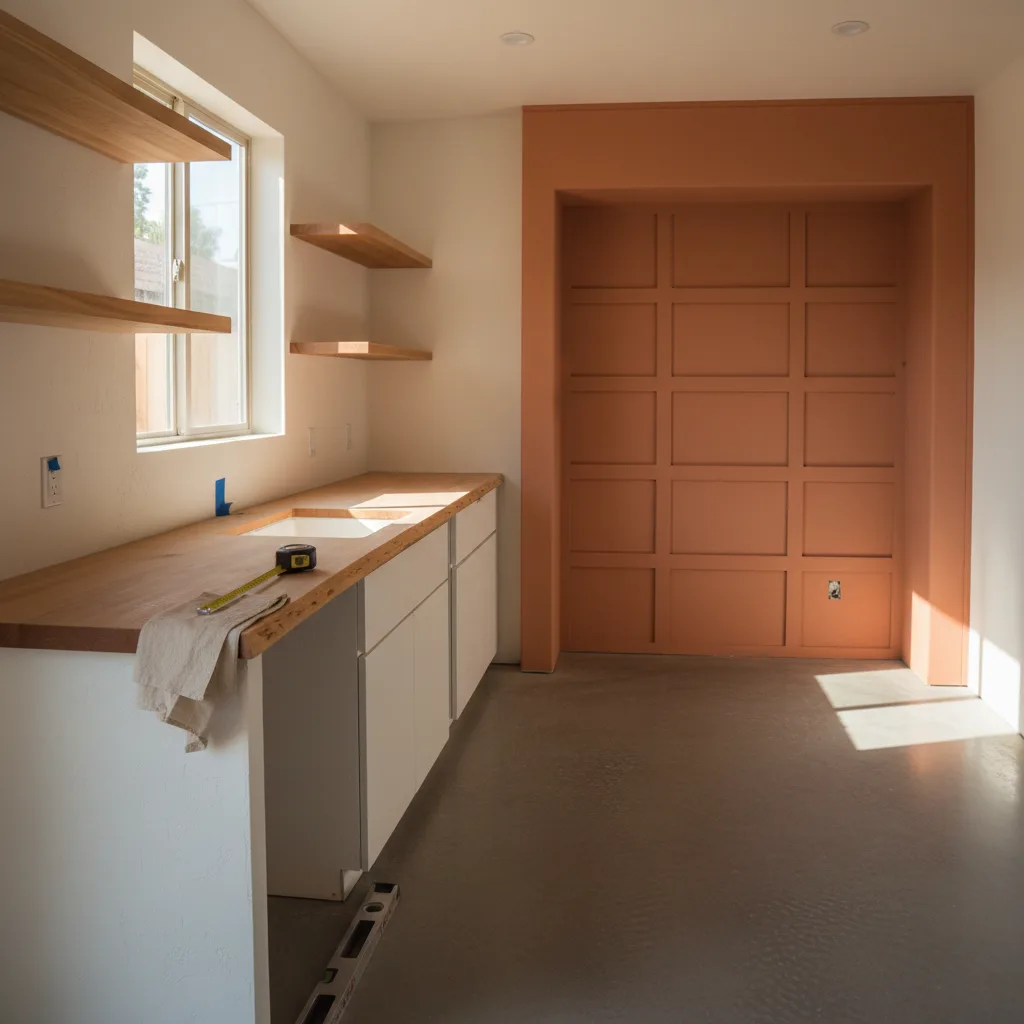
Planning an ADU and garage project in Calabasas? A full build typically runs $215,000 to $385,000 in 2026. Cosmetic garage conversions start near $130,000, while premium custom work climbs past $460,000. This is what your budget actually covers, what drives the price up, and how to vet a contractor who knows Calabasas permits.
The Honest 2026 Price for an ADU and Garage in Calabasas
Let's get straight to the point. Building an Accessory Dwelling Unit (ADU), whether it is a garage conversion or a new detached structure, is a significant investment in Calabasas. The costs are not hypothetical national averages, they are driven by local labor rates, demanding building codes, and the unique topography of the area. Forget the numbers you see on home improvement TV shows. Here, on the ground, the figures reflect the reality of building in one of Southern California's most desirable and regulated communities.
The price tag is more than just lumber and drywall. It includes architectural plans, structural engineering, soil reports, extensive city fees, and the high cost of skilled labor. A well-built ADU adds considerable value to your property, providing rental income, space for family, or a dedicated home office. But achieving that value requires a realistic budget from day one. Most homeowners in Calabasas find their projects fall within a predictable range, but understanding the tiers is crucial for setting expectations.
Three Tiers of Investment
We analyze hundreds of real project invoices to establish our cost guides. In Calabasas, ADU and garage projects consistently fall into three main categories based on scope and finish level.
- The Cosmetic Conversion ($130,000 to $215,000): This is the entry point. It typically involves finishing an existing garage within its current footprint. Think new drywall, insulation, flooring, basic electrical and plumbing for a simple kitchenette and bathroom, and standard fixtures. The structure itself is not altered.
- The Mid-Range Standard Build ($215,000 to $385,000): This is the most common project type. It could be a high-quality garage conversion that includes moving a wall or adding a proper foundation, or a modest new-construction detached ADU. This budget covers professional design, mid-grade to premium materials like stone countertops and quality cabinetry, and full utility hookups.
- The Premium Custom Unit ($460,000 to $695,000+): Here, you are building a small custom home. This tier involves an architect, significant site work on a hillside lot, premium materials throughout (think Sub-Zero appliances and custom millwork), complex structural engineering, and high-end finishes. The upper limit is defined only by your choices.
What Drives ADU and Garage Costs in Calabasas
See what a ADU build actually costs in your Calabasas zip.
Take 4 questions →The final cost of your ADU is a product of four key factors: labor, materials, bureaucracy, and the land itself. While you control some of these variables, others are fixed realities of building in this specific part of Los Angeles County. Understanding them helps you allocate your budget intelligently and avoid sticker shock when the bids come in.
Labor: The Cost of Skill
Calabasas is part of the greater Los Angeles market, where demand for qualified construction labor is intense. According to the California Department of Industrial Relations, prevailing wages for electricians, plumbers, and carpenters are among the highest in the nation. This is not a place to hunt for the cheapest bid. You are paying for expertise, reliability, and knowledge of local codes. A good general contractor's fee, typically 15 to 20 percent of the project cost, covers the complex job of scheduling dozens of subcontractors, managing inspections, and ensuring the project is built to code and on time.
Materials: Quality and Availability
Material costs are a global issue, but local conditions add another layer. Calabasas's climate, with its hot, dry summers and high UV exposure, demands durable materials. Stucco, tile roofing, and high-performance windows are standard for a reason., many parts of Calabasas are designated as Very High Fire Hazard Severity Zones. This is not just a warning, it is a building code mandate. It requires specific, more expensive materials like non-combustible siding, tempered glass windows, and specific roofing assemblies, adding thousands to the budget.
Key takeaway
Supply chain delays for key components like custom windows, appliances, and cabinetry can still stretch timelines. Order these long-lead items the moment your plans are finalized to avoid having your project sit idle for weeks waiting on a delivery.
Permits, Fees, and Professional Services
The "soft costs" of an ADU project can surprise many homeowners. Before a single shovel hits the dirt, you will spend a significant amount on essential services. This includes:
- Architectural and Engineering Plans: $10,000 - $25,000+
- Soil and Geotechnical Reports: $2,500 - $7,000 (often required for new foundations, especially on hillsides)
- City of Calabasas Plan Check and Permit Fees: Can run from $5,000 to over $15,000 depending on project valuation.
- School District Fees: Yes, new habitable square footage often triggers fees payable to the local school district.
- Utility Connection Fees: Tapping into water, sewer, and power lines is not free. These fees can be substantial, particularly if the hookup point is far from the ADU site.
Calabasas ADU and Garage by Tier: 3 Real Project Examples
To make these numbers tangible, let's look at what these different budget tiers actually build. The table below outlines a typical project for each level, based on aggregated data from Calabasas contractors in the Renology network. Notice how the timeline expands with the complexity of the scope, especially when new foundations and extensive site work are involved.
| Tier | Typical Scope | Cost Range (2026) | Timeline (Post-Permit) |
|---|---|---|---|
| Cosmetic Conversion | Finishing a 400 sq. ft. garage. No structural changes. Adding insulation, drywall, paint, LVP flooring. Installing a pre-fab kitchenette and a small bathroom with standard fixtures. Basic electrical panel upgrade. | $130,000 - $215,000 | 16-24 Weeks |
| Mid-Range Standard | A 600 sq. ft. detached ADU on a flat lot or a major garage conversion. Includes a full kitchen with semi-custom cabinets and quartz counters, one bedroom, one full bath with tiled shower, new foundation, and all new utility runs. | $215,000 - $385,000 | 32-48 Weeks |
| Premium Custom | An 800-1,000 sq. ft. architect-designed detached ADU on a hillside lot. Involves grading and retaining walls. High-end finishes: custom millwork, professional-grade appliances, bifold patio doors, extensive landscaping, and smart home integration. | $460,000 - $695,000+ | 48-60+ Weeks |
Permits and Local Code in Calabasas
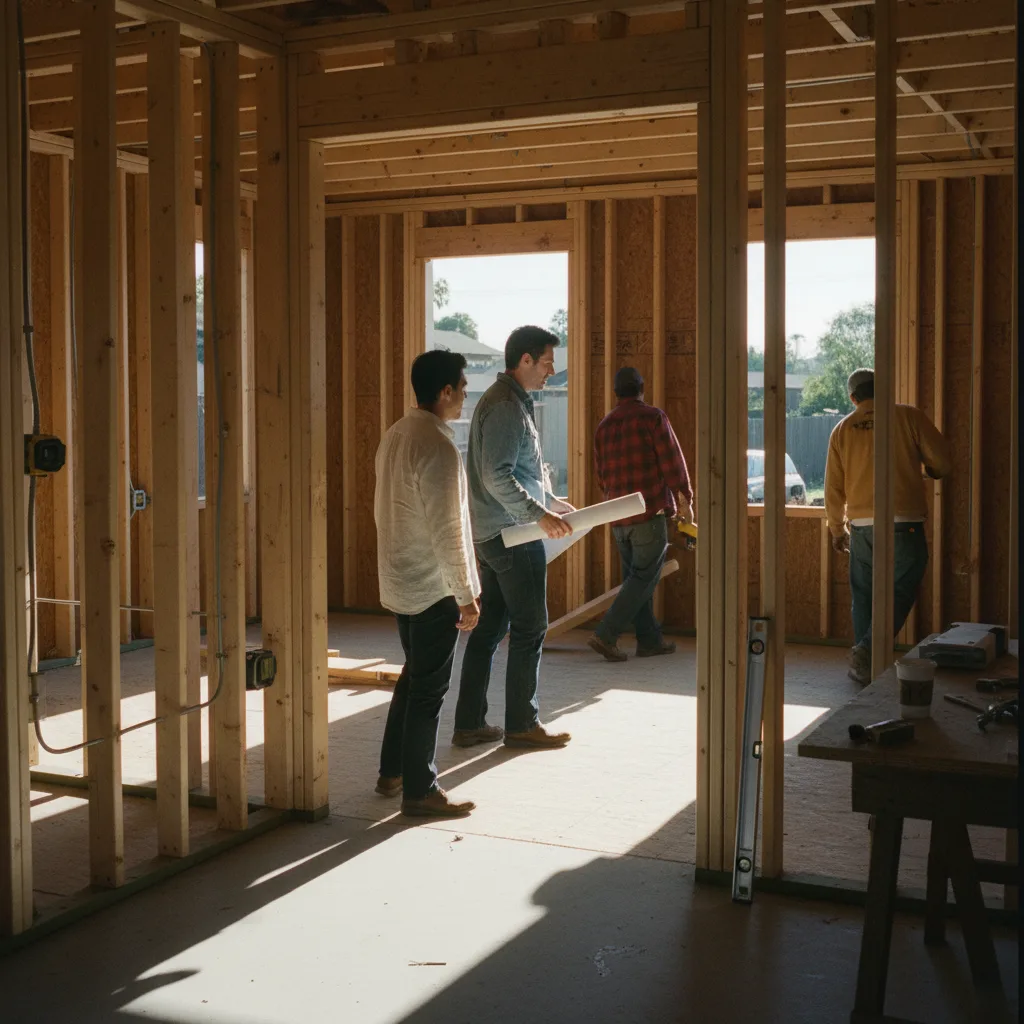
Building in Calabasas means working directly with the City of Calabasas Community Development Department. While statewide laws like California Assembly Bill 68 have streamlined the ADU approval process and mandated a 60-day review period, the city still has its own specific development standards that your project must meet. A contractor unfamiliar with these local nuances can cause significant delays.
The Permitting Gauntlet
Getting your permit is a multi-step process. You will submit a full set of plans, including architectural drawings, structural calculations, and often a soil report. A city plan checker reviews these documents for compliance with a long list of regulations. Any errors or omissions will result in comments and corrections, sending your plans back to your designer and adding weeks to your timeline. This is where a detail-oriented architect and an experienced local contractor earn their keep.
Pro tip
The City of Calabasas offers pre-approved ADU plans. Using one of these can sometimes shorten the plan check process, as the basic design has already been vetted. However, you will still need a site-specific plan showing how the structure fits on your property, along with foundation engineering and utility connections.
Key Regulations to Know
Your project will be governed by a combination of state and local codes. The big ones include:
- California Building Code (CBC): The foundational set of rules for structural safety, fire resistance, and accessibility.
- California Title 24: These are the state's energy efficiency standards. Your ADU will need to meet strict requirements for insulation, window performance, lighting, and HVAC efficiency.
- Calabasas Municipal Code: This local ordinance dictates ADU-specific rules like maximum size (which varies based on your lot size), height limits, and required setbacks from property lines. It also includes aesthetic guidelines to ensure new construction is in keeping with the neighborhood character.
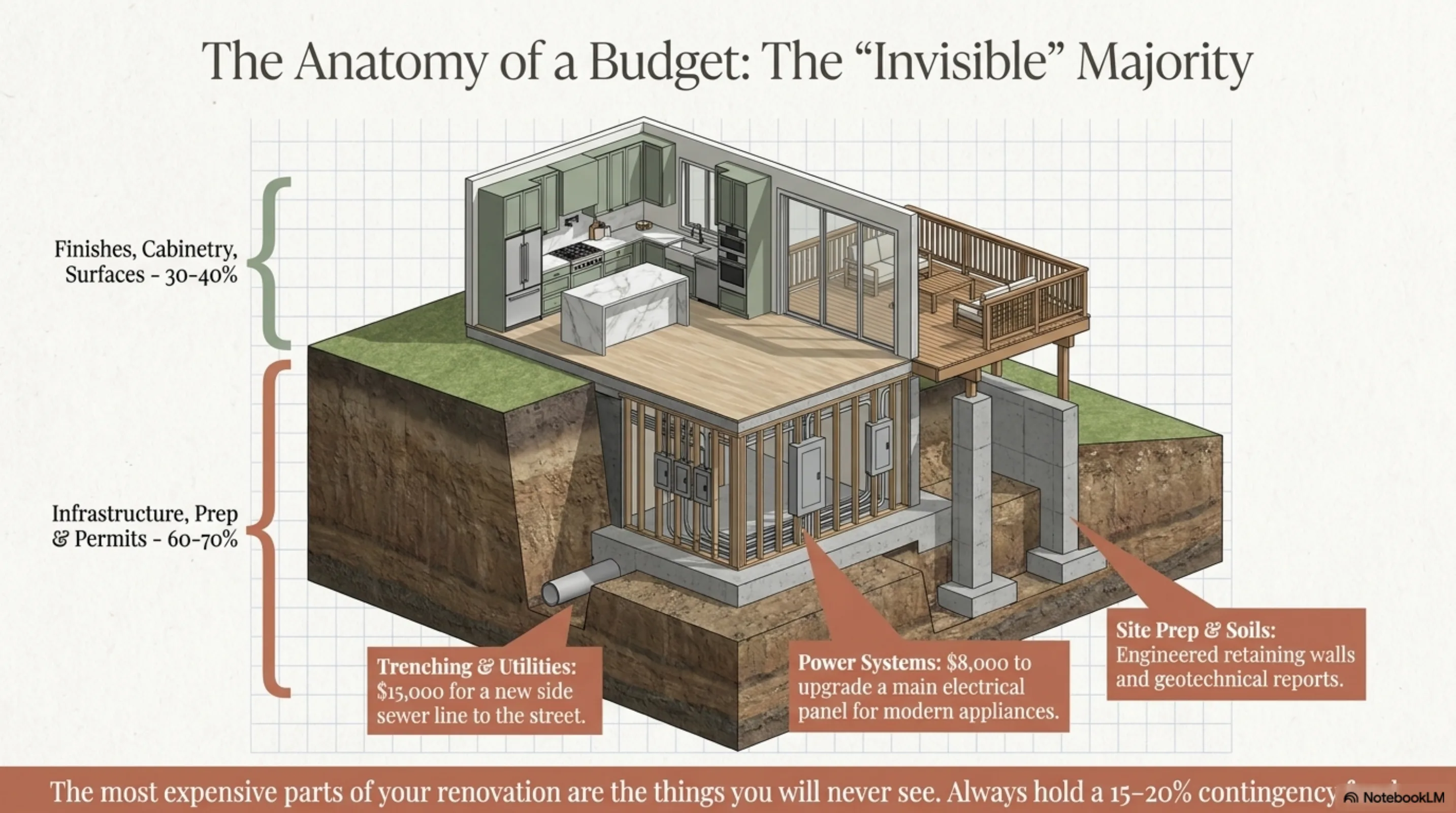
The structure is only half the project; the site work is the other, often more expensive, half.
The Calabasas Neighborhoods Where ADU and Garage Costs Diverge
Not all lots in Calabasas are created equal. The specific neighborhood you live in can have a major impact on your project's cost and complexity. The flat, gridded lots of one area present far fewer challenges than the steep, winding roads of another. A contractor’s bid will always reflect the unique constraints of your property.
The Oaks: The Challenge of Scale and Scrutiny
In a neighborhood like The Oaks, you are dealing with large lots, but often with significant slopes. This immediately brings grading, retaining walls, and complex foundations into the picture, adding tens of thousands of dollars before framing even begins. Access can also be an issue for large equipment. More importantly, The Oaks has a homeowner's association with a strict architectural review board. Your ADU design must not only satisfy the city but also a committee of your neighbors, which can add time, cost, and design constraints to the process. Contractors who work here regularly know how to prepare submittal packages that get approved.
Calabasas Park: The Constraints of Established Lots
Contrast this with Calabasas Park, one of the city's older, more established neighborhoods. Here, the lots are typically smaller and flatter, which simplifies site work. However, the challenge is fitting a new structure within tighter setbacks. A detached ADU might be difficult, making a garage conversion the more viable option., the existing homes, built decades ago, often have outdated electrical panels and sewer lines. Tying in a new ADU will almost certainly require expensive upgrades to this existing infrastructure, a cost that must be factored into the budget.
Timeline: Realistic Week-by-Week Expectations
One of the biggest sources of homeowner stress is an unrealistic timeline. A full ADU build is a marathon, not a sprint. The 36 to 64 week total window is a good average, but it is helpful to see how that time is spent. The clock does not start when the first worker shows up, it starts the day you hire your designer.
Phase 1: Design and Due Diligence (4-8 Weeks)
This is the planning stage. You will work with an architect or designer to create the layout and elevations. A structural engineer will design the foundation and framing. If you are building a new structure, you will likely need a survey and a soil report. This phase ends with a complete set of "permit-ready" plans.
Phase 2: Permitting and Plan Check (4-12 Weeks)
Your plans are submitted to the City of Calabasas. This is often a waiting game. The city has 60 days to review and respond. If they have corrections, your design team addresses them and resubmits. This back-and-forth can take a month or more. Do not schedule construction until you have the approved, stamped permit in hand.
Phase 3: Construction (32-56 Weeks)
Once the permit is issued, the physical work begins. This is the longest phase and is punctuated by a series of city inspections.
- Weeks 1-4: Site Preparation & Foundation. Demolition, grading, trenching for utilities, and pouring the concrete foundation.
- Weeks 5-8: Framing & Rough-in. The walls go up, the roof is installed, and windows are placed. Plumbers, electricians, and HVAC technicians run all the pipes, wires, and ducts inside the walls.
- Weeks 9-16: Insulation, Drywall & Exterior Finishes. The building is "dried in." Insulation is installed, followed by drywall. Stucco, siding, and roofing are completed on the exterior.
- Weeks 17-28: Interior Finishes. This is where the space starts to look like a home. Cabinets, countertops, flooring, tile, and painting happen in a careful sequence.
- Weeks 29-32+: Fixtures & Final Touches. Plumbing fixtures, light fixtures, and appliances are installed. The final city inspections for building, electrical, and plumbing are scheduled. Once you pass the final, you receive your Certificate of Occupancy.
Important
This timeline is for active construction. It does not account for delays from weather, material backorders, or inspection scheduling. A good contractor builds some buffer into the schedule, but some things are outside of anyone's control.
How to Vet a Calabasas Contractor
Choosing the right general contractor is the single most important decision you will make. The right partner will guide you through the process, manage the budget, and deliver a quality product. The wrong one can turn your project into a financial and emotional nightmare. I was on a site walk in The Oaks last month where a homeowner was dealing with a massive change order for foundation work that should have been caught in the initial soil report. A contractor with local hillside experience would have anticipated the need for deeper footings and budgeted for it upfront. That is the kind of local knowledge you are paying for.
Key Questions to Ask Every Potential Contractor
When you interview the two or three contractors you are considering, go beyond just asking for a price. Dig deeper with these questions:
- Can you show me your California State License Board (CSLB) license and proof of general liability and workers' compensation insurance?
- How many ADUs have you built specifically in Calabasas or nearby hillside communities in the last two years?
- Can I speak with your last three ADU clients?
- Who will be my day-to-day point of contact and the project manager on site?
- How do you handle unforeseen conditions and change orders? What is your process for pricing and approval?
- What does your payment schedule look like? (Note: California law limits down payments to 10% of the contract price or $1,000, whichever is less).
- What specific items are excluded from your bid? (e.g., landscaping, appliances, window coverings).
Red Flags to Watch For
Equally important is knowing what to avoid. Walk away from any contractor who:
- Provides a vague, one-page bid with no detail. A professional bid is dozens of pages long and itemizes every aspect of the job.
- Pressures you to sign a contract immediately.
- Suggests doing the work without permits to "save money." This is illegal and will cause massive problems when you try to sell or insure your home.
- Asks for a large cash down payment or wants the majority of the payment upfront.
- Cannot provide recent, relevant references you can actually call.
Editor's note
Always get three bids. The lowest bid is rarely the best value. It often indicates that the contractor missed something in the scope, is using cheaper materials, or is planning to make up the difference with change orders. The best bid is usually one of the middle ones that is thorough, transparent, and professional.
Renology Take
As an editor who reviews construction projects across the country, I see homeowners make the same critical mistake again and again: they fixate on the cost per square foot of the structure itself. In a place like Calabasas, that is a recipe for a busted budget. The meta-pattern most people miss is that the true cost drivers are often buried in the ground. It is the grading for a hillside lot, the 200-foot trench for a new sewer line, the retaining wall required by the geotechnical engineer, and the five-figure fee to upgrade your main electrical service. These "unseen" site work and utility costs can easily match the cost of the physical building. A smart homeowner and a great contractor focus just as much on what is happening outside the walls as what is going on inside them. Budget for the site, and the house will take care of itself.
Sources and Methodology
These cost ranges are reconstructed from publicly available labor and permit data, the latest Remodeling Magazine cost-vs-value report, and Renology's own Project of the Day network, a rolling sample of real homeowner invoices we collect from Calabasas-area contractors. Last refreshed April 2026.
- National Association of Home Builders (NAHB) Remodeling Market Index, Q1 2026
- California Department of Industrial Relations, Los Angeles County Prevailing Wage Data, 2026
- City of Calabasas Community Development Department, Permit Fee Schedule 2026
- Los Angeles Department of Building and Safety (LADBS) Permit Data, 2026
- Remodeling Magazine, 2026 Cost vs. Value Report
- California Building Standards Commission, Title 24 Information
- Renology Project of the Day Network, aggregated 2026 contractor invoices in Calabasas
Methodology
How Renology estimates adu / garage conversion costs in Calabasas.
Renology treats this page as a planning benchmark for Calabasas, California, not a final quote. We compare published local guide data, contractor scope patterns, permit-sensitive work, climate or site constraints, and finish-level assumptions.
Cost range
$215,000-385,000
Timeline
32-56 weeks
Source type
Editorial dataset
Local factor: Mediterranean (Köppen Csa): 14 inches annual rain, hot dry summers, mild winters. UV intensity is high year-round.
Use these numbers to shape a scope and spot missing line items. Confirm permits, structural work, electrical, plumbing, gas, waterproofing, drainage, and code-sensitive details with the local building department and a licensed professional.
Compare against the full Renology Cost IndexCalabasas · pre-screened
Get 3 Calabasas ADU bids in 48 hours.
Our editors already vetted Calabasas ADU builders. Answer 4 questions and we send 3 written bids inside 48 hours, with the real price for your scope, not their inflated first-call number.
- Free, no commission
- Pre-screened locally
- Bids inside 48 hours
Takes about 60 seconds. We'll text you when bids arrive.