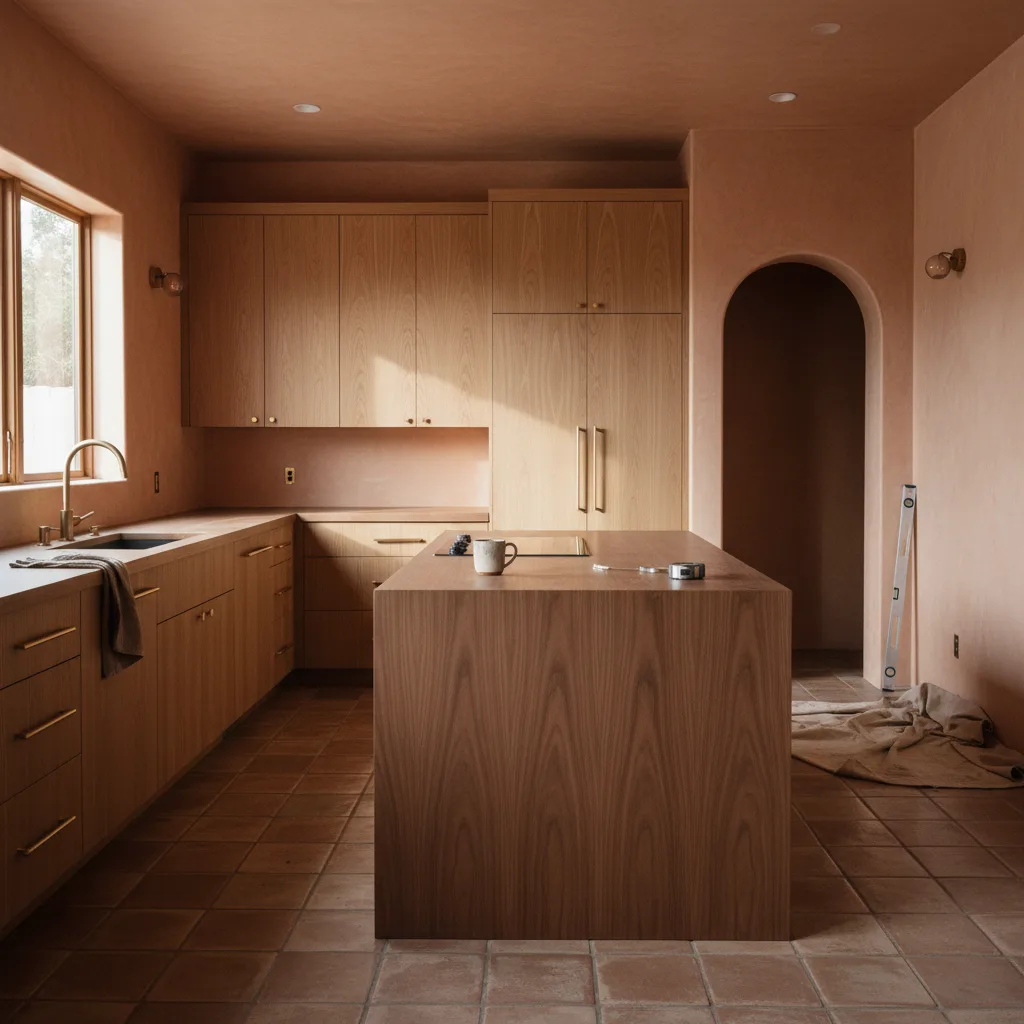
Planning a kitchen in Calabasas? A full project typically runs $66,000 to $110,000 in 2026. Cosmetic refreshes start near $40,000, while premium custom work involving structural changes often climbs past $130,000. This is what your budget actually covers, what drives the price up, and how to vet a contractor who truly understands Calabasas permits and design expectations.
The Honest 2026 Price for a Kitchen in Calabasas
In the world of home renovation, the kitchen stands alone. It is a home's functional core and its aesthetic heart, a space where pragmatic needs meet personal expression. In Calabasas, where homes reflect a sophisticated, indoor-outdoor lifestyle, the kitchen is often the anchor of the entire ground floor. Understanding the investment required is the first step toward a successful project. Based on our analysis of recent contractor invoices and permit data, a professionally managed kitchen renovation in Calabasas falls into a clear pricing spectrum.
The numbers we see, from a simple cosmetic update to a full gut renovation, represent an all-in cost. This includes not just the beautiful finishes you see, but the entire ecosystem of a project: architectural or design fees, structural engineering if required, city permit costs, skilled labor, all materials, and the general contractor's management fee. The final figure on a bid sheet is a summary of dozens of smaller decisions, from the grade of plywood in your cabinet boxes to the complexity of the under-cabinet lighting plan.
Think of this investment not just as an expense, but as a direct contribution to your home's daily function and its long-term market value. A well-designed kitchen, executed with quality craftsmanship, consistently delivers one of the highest returns on investment of any home project, a fact confirmed year after year by industry benchmarks like the Cost vs. Value Report.
What Drives Kitchen Costs in Calabasas
See what a kitchen remodel actually costs in your Calabasas zip.
Take 4 questions →The significant price variation in Calabasas kitchen projects is not arbitrary. It is a direct result of three key factors: the caliber of materials specified, the complexity of the scope, and the high standard of labor required to execute luxury design. A clear understanding of these drivers is essential for building a realistic budget.
Materials and Finishes: From Builder-Grade to Bespoke
This is where the design vision truly takes shape and where budgets can diverge most dramatically. The difference lies in the details of sourcing, fabrication, and finish quality.
- Cabinetry: The foundation of any kitchen. A project using stock or semi-custom cabinets from a major manufacturer will cost significantly less than one featuring a fully custom, site-built installation. A bespoke kitchen with rift-cut white oak cabinetry, custom-milled paneling, and specialized interior fittings can easily represent 30 to 40 percent of the total project budget.
- Countertops and Backsplash: The visual centerpiece. A standard quartz countertop is a durable and cost-effective choice. However, specifying a natural stone slab, like a honed Calacatta Vagli or a leathered Negresco quartzite, introduces costs for the material itself and for the highly skilled fabrication required for precise seams and complex edge details. A full-height slab backsplash, for instance, requires a different level of installation mastery than simple subway tile.
- Appliances and Fixtures: The functional jewels. A standard appliance package serves its purpose well. A premium project, however, will often feature a suite of professional-grade, panel-ready appliances from brands like Sub-Zero, Wolf, or Miele. These choices impact not just the material cost but also require more precise planning and installation from the cabinet maker and electricians. The same principle applies to plumbing fixtures, where a solid brass faucet from a design-forward brand carries a different cost and feel than its mass-market counterpart.
Scope Creep vs. Scope Clarity
The single largest driver of budget overruns is changing the plan mid-project. The difference between a cosmetic refresh and a full remodel is defined by scope.
- Footprint Changes: Keeping the existing layout of appliances and plumbing is the most cost-effective approach. Moving a sink, a gas line for a range, or a load-bearing wall introduces significant costs for plumbing, electrical, and structural engineering work.
- Infrastructure Upgrades: In many older Calabasas homes, a kitchen renovation reveals the need to update what is behind the walls. This can include upgrading an old electrical panel to handle the load of modern appliances, replacing aging galvanized plumbing, or bringing framing up to current seismic codes. These are not optional "nice-to-haves," but essential upgrades for safety and compliance.
The most expensive decision in a renovation is often the second one. Lock in your scope before the first hammer swings.
Labor and Management
Calabasas is part of the greater Los Angeles market, which commands some of the highest rates for skilled trade labor in the country. The premium is for expertise. The craftsmen who can flawlessly install a fragile porcelain slab or scribe custom cabinetry to an uneven wall are in high demand. Your general contractor’s fee, typically 15 to 20 percent of the project cost, covers the complex logistics of scheduling these trades, managing material orders, interfacing with city inspectors, and ensuring the entire project is executed to a high standard. It is the cost of a predictable, well-run process.
Calabasas Kitchen by Tier: Three Real Project Examples
To make these numbers tangible, we have modeled three distinct project tiers based on real-world scopes we track in the Renology network. These examples illustrate how budget, timeline, and design aspirations align.
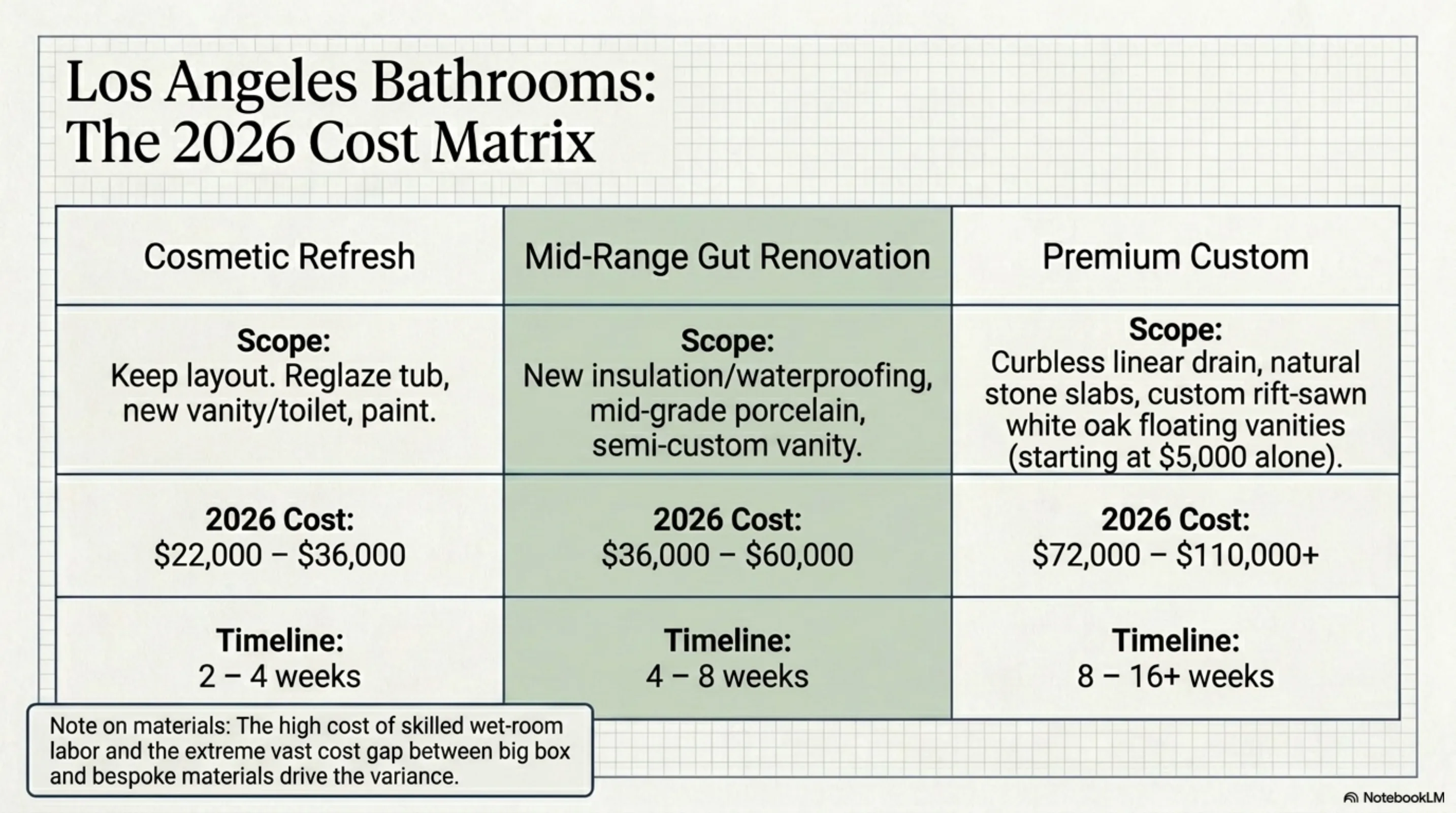
| Tier | Typical Scope | Cost Range (2026) | Construction Timeline |
|---|---|---|---|
| Cosmetic Refresh | Keep existing layout. Refinish or reface cabinets, new countertops (e.g., quartz), new backsplash tile, new sink/faucet, new light fixtures, fresh paint. No permits typically required. | $40,000 to $66,000 | 4 to 7 Weeks |
| Mid-Range Remodel | Full gut of existing kitchen. New semi-custom cabinets, stone or high-end quartz countertops, new flooring, premium appliance package, revised lighting plan. Minor non-structural layout changes. Permits required. | $66,000 to $110,000 | 8 to 14 Weeks |
| Premium Custom | Full gut and potential expansion. Fully custom cabinetry, natural stone slab countertops and backsplash, professional-grade appliances (e.g., Sub-Zero/Wolf), structural changes (wall removal), new windows, designer involvement from the start. Permits and engineering required. | $130,000 to $200,000+ | 16, 24+ Weeks |
Editor's note
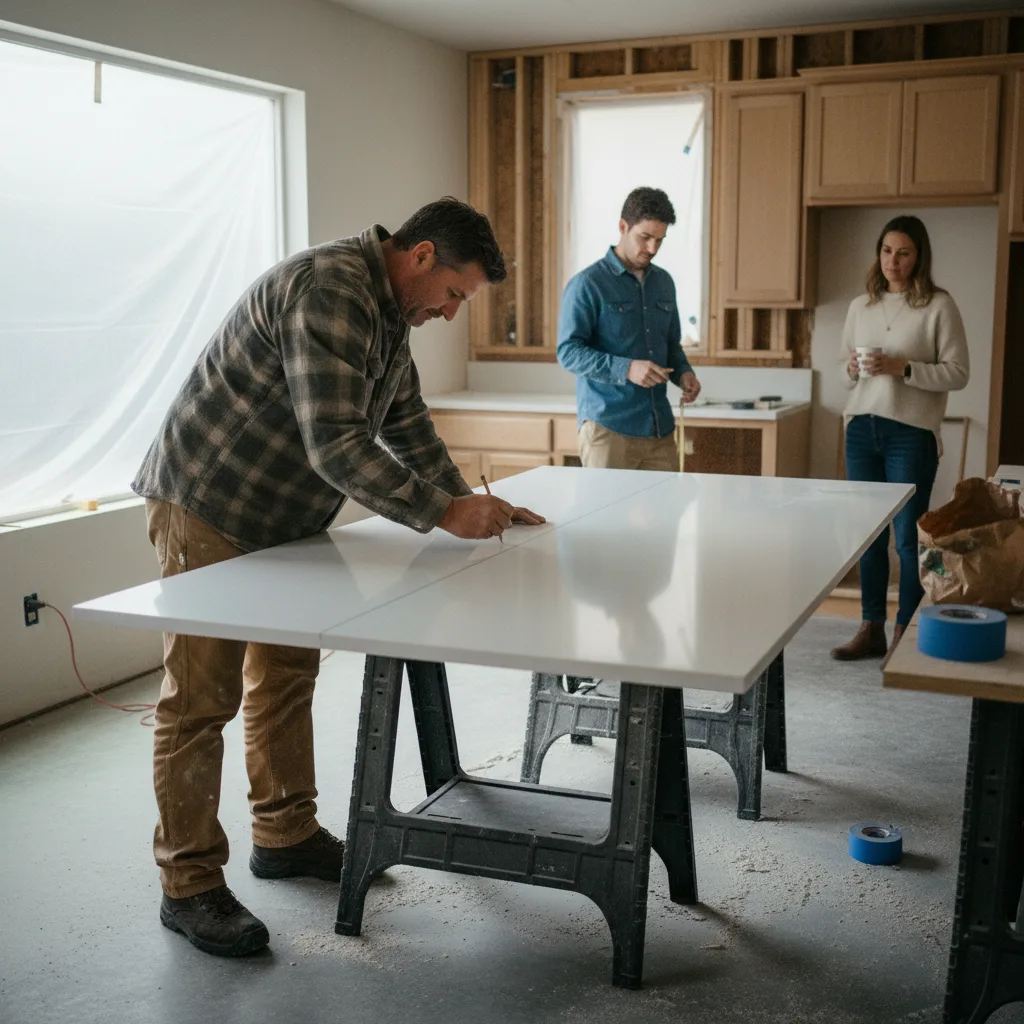
These timelines reflect active construction. Always add four to eight weeks to the front end of your project for design development, material selection, and permit processing before any demolition begins.
Permits and Local Code in Calabasas
Any renovation that alters the structural, electrical, or plumbing systems of your home requires a permit. In Calabasas, this process is managed with a focus on safety and energy efficiency, and it is a non-negotiable step for any significant kitchen project.
Working with the City of Calabasas Building and Safety Division
The primary governing body for your project is the City of Calabasas Building and Safety Division. Your licensed contractor or architect will be responsible for submitting a full set of plans for review. A permit is triggered by common renovation tasks such as:
- Moving or adding electrical outlets, switches, or dedicated circuits.
- Relocating supply or drain lines for a sink or dishwasher.
- Moving a gas line for a cooktop or oven.
- Removing, altering, or relocating any wall, load-bearing or not.
- Changing the size or location of a window or exterior door.
The plan check process typically takes several weeks. A well-prepared, detailed plan set is the key to a smooth approval. Incomplete or vague plans are the most common reason for delays, as they will be returned with corrections required.
California's Title 24 Energy Code
A significant part of the building code in California is Title 24, which sets strict energy efficiency standards. For a kitchen, this has very specific implications. All new lighting must be high-efficacy, which in practice means LED. You will need to use recessed cans, under-cabinet fixtures, and decorative pendants that meet this standard. Additionally, your range hood must be properly vented and sized, and certain appliances may need to meet specific energy-saving criteria. An experienced local contractor will be fluent in these requirements and will specify compliant products from the start.
The Calabasas Neighborhoods Where Kitchen Costs Diverge
While city-wide averages provide a baseline, project costs can vary based on the specific neighborhood, a reflection of the area’s housing stock, lot sizes, and community design standards.
The Oaks: Grand Scale and Bespoke Expectations
In a community like The Oaks, known for its large, custom, and newer-construction homes, kitchen renovations operate at a different scale. Here, kitchens are rarely isolated rooms. They are expansive, open-concept spaces that flow into family rooms and outdoor living areas. A renovation must consider the entire great room aesthetic. Budgets are inherently higher due to the sheer size, which demands more cabinetry, larger countertop slabs, and often dual islands. The expectation is for top-tier, bespoke finishes: custom hoods clad in plaster or metal, integrated refrigeration columns, and statement lighting that acts as sculpture. Homeowner association (HOA) design review boards add another layer of oversight, ensuring that any changes, even to windows, align with the community's rigorous architectural standards.
Calabasas Park: Mid-Century Bones, 21st-Century Needs
Contrast this with the beautiful, established neighborhoods of Calabasas Park, where many homes date back to the 1960s and 70s. While these properties have incredible character, their infrastructure was not designed for the demands of a modern luxury kitchen. In my last walkthrough in Calabasas Park, we were planning for a beautiful kitchen with an induction cooktop, double wall ovens, and a wine refrigerator. The project scope immediately grew when we discovered the original 100-amp electrical panel was completely insufficient. This is a common story. Renovations here frequently require a "systems-first" approach, budgeting for a new 200-amp panel, replacing old cast-iron plumbing, and sometimes addressing foundation or framing issues discovered during demolition. The cost is not just in the finishes you see, but in creating a safe and functional foundation for them.
Pro tip
When renovating an older home, assume you will need to upgrade your electrical panel. Factoring in $3,000 to $5,000 for this work from the beginning prevents it from becoming a budget-breaking surprise later.
Timeline: Realistic Week-by-Week Expectations
A well-managed kitchen renovation follows a logical sequence. While every project is unique, a full remodel in Calabasas generally adheres to the following critical path. Rushing this process is the surest way to invite mistakes and compromise quality.
- Phase One: Planning & Procurement (4-12 Weeks Pre-Construction)
- Weeks 1-4: Finalize design with your architect or designer. Select all materials, from cabinet style to grout color.
- Weeks 5-8: Contractor submits plans to the city for permit approval.
- Weeks 5-12: Place orders for long-lead-time items. Custom cabinetry can take 8 to 14 weeks to arrive; high-end appliances can have similar lead times. Construction should not begin until you have delivery dates for these critical components.
- Phase Two: Active Construction (8-16 Weeks)
- Week 1: Site preparation (protecting adjacent rooms) and demolition.
- Weeks 2-3: Framing, plumbing, and electrical rough-ins. This is followed by the first major city inspection.
- Weeks 4-5: Drywall installation, taping, and texturing.
- Week 6: Flooring installation and priming/first coat of paint.
- Weeks 7-8: Cabinetry installation. This is a meticulous process that sets the stage for everything else.
- Week 9: Countertop templating. The fabricator creates a precise digital or physical model.
- Weeks 10-11: Countertop fabrication and installation. This can take one to two weeks after templating.
- Weeks 12-13: Installation of backsplash, plumbing fixtures, and light fixtures.
- Weeks 14-15: Appliance installation and final trade work (finish carpentry, final paint).
- Week 16: Final inspections, contractor punch list, and final cleaning.
Important
The single biggest cause of timeline delays is waiting on materials. Do not start demolition until your cabinets, appliances, and flooring are either on-site or have a confirmed delivery date.
How to Vet a Calabasas Contractor
Choosing the right general contractor is the most important decision you will make. Your contractor is your partner in a complex and expensive undertaking. A thorough vetting process is crucial to protecting your investment and ensuring a positive experience.
Beyond the License and Insurance Check
Verifying a contractor's license on the California Contractors State License Board (CSLB) website and confirming they have active general liability and workers' compensation insurance are the absolute minimum. Go deeper. Look for a contractor who specializes in kitchens and has a deep portfolio of recent, relevant work in or near Calabasas. A generalist who does an occasional kitchen is not the same as a dedicated specialist.
Questions That Reveal True Expertise
During your interviews, move beyond the price and ask questions that probe their process and professionalism:
- How do you handle unforeseen conditions, like finding rot or outdated wiring during demolition? How are these changes documented and approved?
- Can you provide me with a detailed project schedule showing the critical path?
- Who will be my single point of contact for daily communication throughout the project?
- What specific measures do you take to protect the rest of my home and control dust?
- May I speak with the owners of your two most recently completed kitchen projects?
Red Flags in a Bid
The bids you receive are telling documents. Be wary of a contractor who:
- Provides a vague, one-page estimate with few line items. A professional bid will be detailed, breaking down costs for demolition, plumbing, electrical, cabinetry, and more.
- Is significantly cheaper than the others. This often means they have missed something in the scope, are using lower-quality labor, or plan to make up the difference with change orders.
- Pressures you to sign a contract immediately.
- Asks for a large upfront deposit. California law limits the down payment to 10 percent of the contract price or $1,000, whichever is less.
Renology Take
After reviewing hundreds of kitchen projects in the Calabasas area, a clear pattern emerges. Homeowners are exceptionally good at focusing on the aesthetic details they can see and touch: the perfect shade of cabinet paint, the veining in a marble slab, the sculptural form of a faucet. Where they often miscalculate is in the budget required for the invisible infrastructure that makes a modern kitchen function. The cost to upgrade a 20th-century electrical panel, to re-route plumbing for better ergonomics, or to properly vent a professional-grade range is not as exciting as selecting a backsplash, but it is far more critical to the home’s safety, performance, and long-term value. The most successful projects are those where the homeowner embraces the importance of what lies behind the walls as much as the beauty of what is on them.
Sources & Methodology
These cost ranges are reconstructed from publicly available labor and permit data, the latest Remodeling Magazine cost-vs-value report, and Renology's own Project of the Day network, a rolling sample of real homeowner invoices we collect from Calabasas-area contractors. Last refreshed April 2026.
- National Association of Home Builders (NAHB) Remodeling Market Index, Q1 2026
- California Department of Industrial Relations, Los Angeles County Prevailing Wage Data, 2026
- City of Calabasas Building and Safety Division Permit Data, 2026
- Remodeling Magazine, 2026 Cost vs. Value Report
- Renology Project of the Day Network, aggregated 2026 contractor invoices in Calabasas
- California Contractors State License Board (CSLB)
- California Building Standards Code (Title 24)
Methodology
How Renology estimates kitchen costs in Calabasas.
Renology treats this page as a planning benchmark for Calabasas, California, not a final quote. We compare published local guide data, contractor scope patterns, permit-sensitive work, climate or site constraints, and finish-level assumptions.
Cost range
$66,000-110,000
Timeline
6-14 weeks
Source type
Editorial dataset
Local factor: Mediterranean (Köppen Csa): 14 inches annual rain, hot dry summers, mild winters. UV intensity is high year-round.
Use these numbers to shape a scope and spot missing line items. Confirm permits, structural work, electrical, plumbing, gas, waterproofing, drainage, and code-sensitive details with the local building department and a licensed professional.
Compare against the full Renology Cost IndexCalabasas · pre-screened
Get 3 Calabasas renovation bids in 48 hours.
Our editors already vetted Calabasas contractors. Answer 4 questions and we send 3 written bids inside 48 hours, with the real price for your scope, not their inflated first-call number.
- Free, no commission
- Pre-screened locally
- Bids inside 48 hours
Takes about 60 seconds. We'll text you when bids arrive.