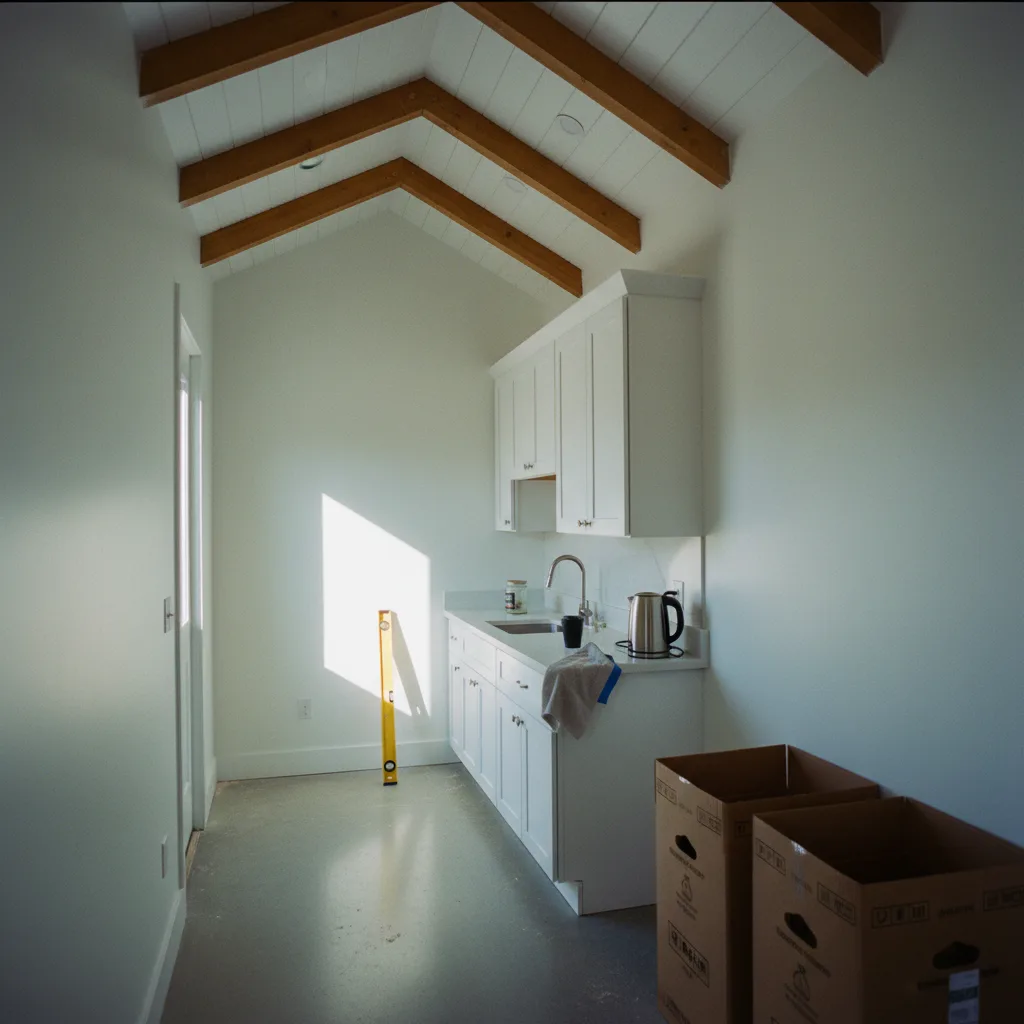
Planning an ADU and garage project in Anaheim? A full build typically runs from $210,000 to $380,000 in 2026. Cosmetic updates start near $125,000, while high-end custom work climbs past $455,000. Here is what that budget actually covers, what drives the price, and how to find a contractor who understands Anaheim’s specific rules.
The Honest 2026 Price for an ADU & Garage in Anaheim
Let's get straight to the point. Building an Accessory Dwelling Unit (ADU), whether it's a garage conversion or a new detached structure, is a significant investment. In Anaheim, the all-in cost for a standard, well-built project in 2026 falls between $210,000 and $380,000. This isn't a number from a national cost calculator; it's based on real invoices from local contractors and the hard costs of building in Orange County.
If you're looking at a more basic conversion of an existing garage with builder-grade finishes, you might land in the $125,000 to $210,000 range. On the other end of the spectrum, a fully custom, two-story ADU with premium materials, extensive site work, and high-end architectural design will easily push past $455,000 and can approach $700,000 depending on the complexity and square footage.
These numbers can feel intimidating, but they reflect the reality of construction in Southern California. Understanding what's behind them is the first step to planning a project that meets your goals without derailing your finances.
What Drives ADU & Garage Costs in Anaheim
See what a ADU build actually costs in your Anaheim zip.
Take 4 questions →The price tag isn't arbitrary. It's a direct result of specific, tangible costs that are particularly pronounced in the Anaheim market. A project budget is essentially a three-legged stool: labor, materials, and soft costs like permits and design. If one leg is more expensive, the whole stool gets taller.
Labor: The Skilled Trade Premium
Southern California has a high demand for skilled construction labor and a limited supply of experienced crews. This isn't just about general carpenters. We're talking about licensed electricians who can upgrade your main service panel to support a second dwelling, plumbers who can run new sewer laterals, and foundation specialists who understand local soil conditions. In Anaheim, you are paying a premium for reliable, licensed, and insured trade professionals. Expect labor to account for 40 to 50 percent of your total project cost.
Materials: Supply Chains and Quality
Material costs are a global issue, but local factors play a big role. Proximity to the ports of Los Angeles and Long Beach helps, but a project’s material package is still subject to market volatility. Lumber, concrete, insulation, and roofing are major commodities. Beyond the basics, the finishes you choose create huge price swings. For example, vinyl plank flooring might cost $7 per square foot installed, while engineered hardwood could be $20. Custom cabinetry can cost three times as much as semi-custom options. These choices add up quickly.
Permits, Fees, and Design
These are the "soft costs" that many first-time renovators underestimate. In Anaheim, this includes architectural or design fees (5-15% of project cost), structural engineering calculations, and fees paid directly to the City of Anaheim Planning & Building Department. You will also face school district fees and utility connection fees for water, sewer, and electricity. These can add tens of thousands of dollars to the budget before a single nail is hammered.
Key takeaway
Your ADU budget isn't just for the structure itself. A significant portion, often 20 to 25 percent, is allocated to design, engineering, city fees, and utility connections. Don't treat these as an afterthought.
Anaheim ADU & Garage by Tier: 3 Real Project Examples
To make the numbers more concrete, let's look at three common project tiers. I’ve seen variations of these projects all over Orange County. The scope, not just the square footage, is the primary driver of where a project lands on the cost spectrum.
| Tier | Typical Scope | Cost Range (2026) | Timeline |
|---|---|---|---|
| Cosmetic / Conversion | Converting an existing, structurally sound garage. No new foundation. Keeping existing plumbing locations. Builder-grade finishes, vinyl flooring, stock cabinets, and basic appliances. Minimal site work. | $125,000 - $210,000 | 4 - 7 Months |
| Mid-Range / Standard Build | New detached one-bedroom ADU (400-600 sq. ft.) or a significant garage conversion requiring a new foundation slab. Mid-grade finishes like engineered wood, semi-custom cabinets, quartz counters, and solid appliance package. Includes new utility trenching and some landscaping. | $210,000 - $380,000 | 8 - 14 Months |
| Premium / Custom | Architect-designed detached ADU (750-1,200 sq. ft.), potentially two stories. Custom cabinetry, high-end appliances, complex rooflines, large format windows or bifold doors. Significant site work, retaining walls, or complex utility runs. Full landscaping and hardscaping package. | $455,000 - $685,000+ | 12 - 18+ Months |
Permits and Local Code in Anaheim
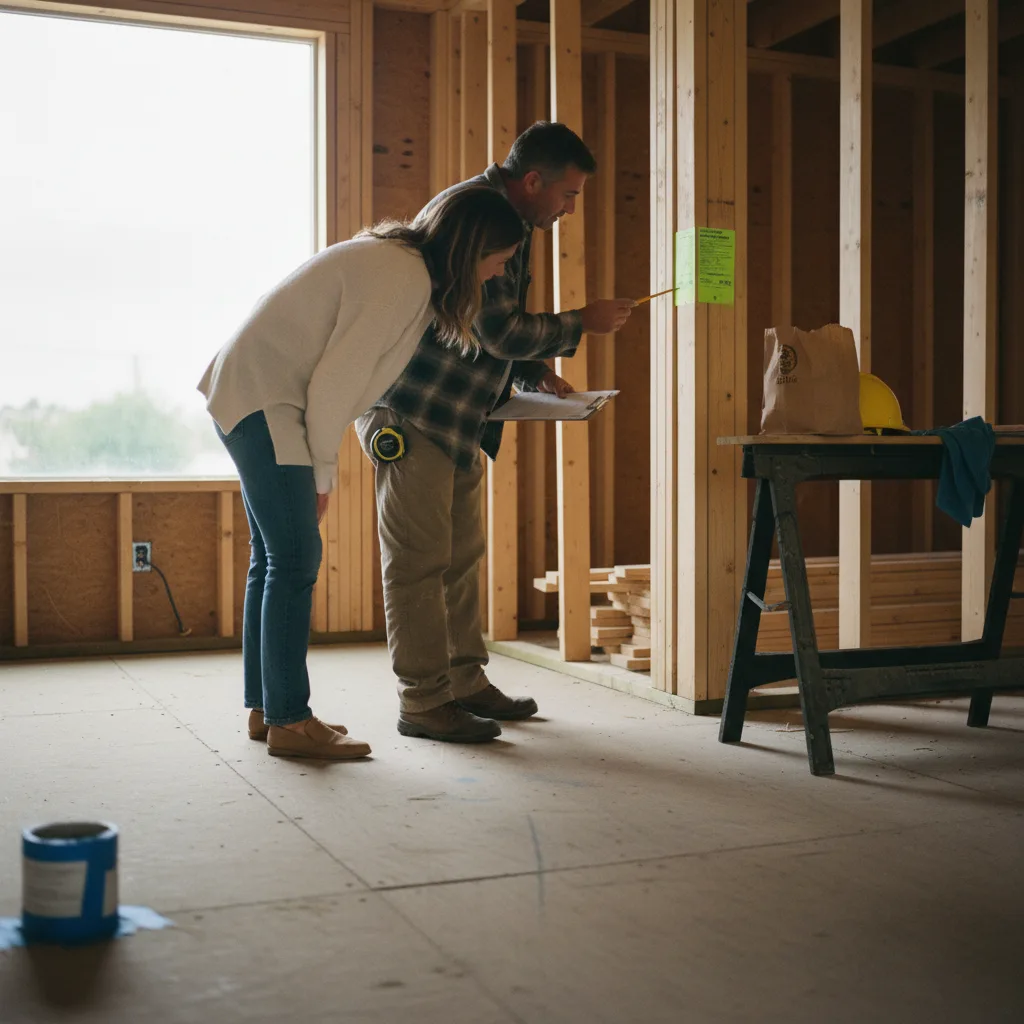
Getting a building permit in any California city requires patience and precision. In Anaheim, your project will be reviewed by the City of Anaheim Planning & Building Department. While state laws have streamlined the process for ADUs, you are still required to submit a comprehensive plan set that meets a host of local and state regulations.
Navigating the Plan Check Process
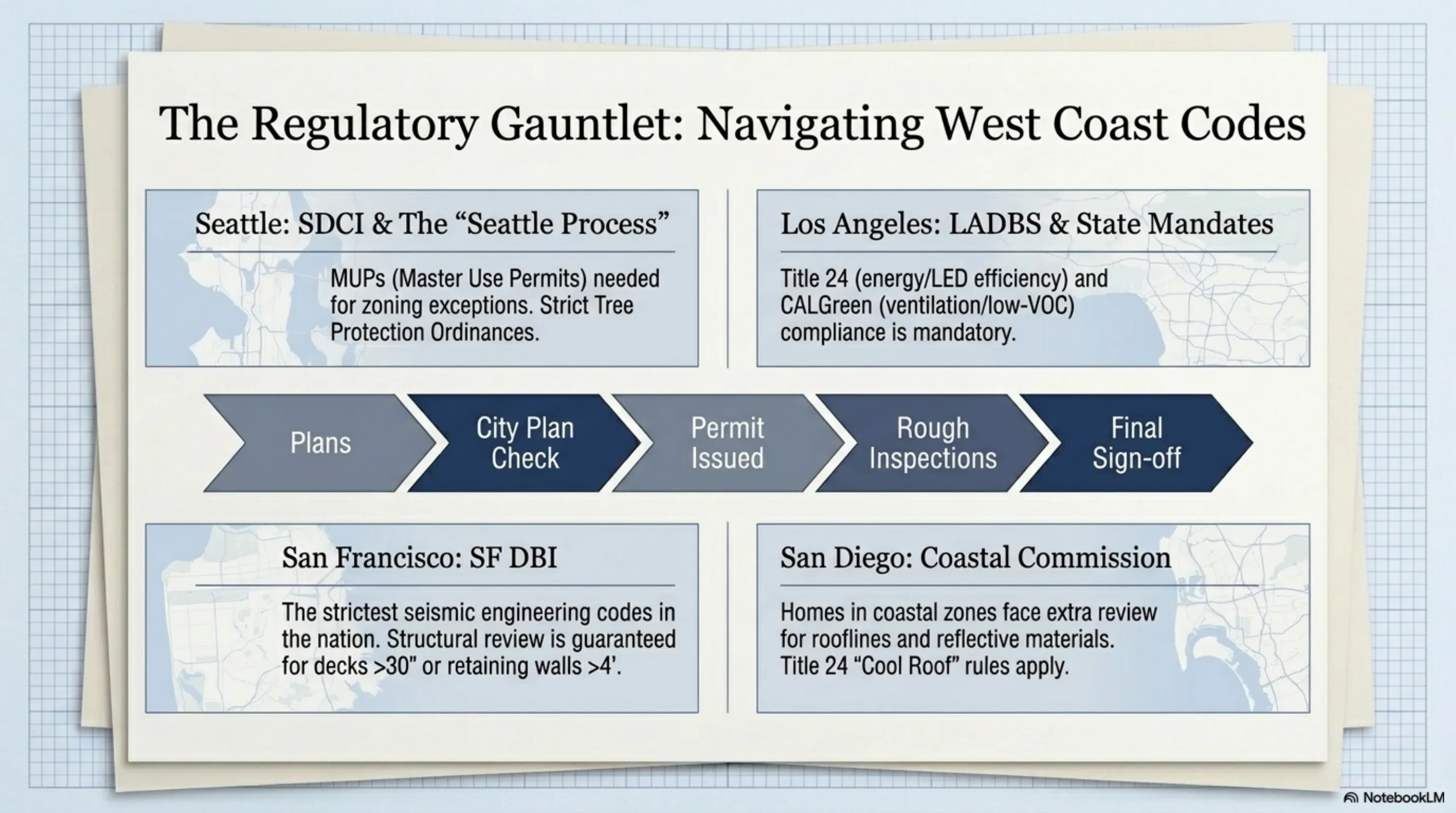
Your plans, typically drawn by an architect or a specialized ADU designer, must comply with the California Residential Code (CRC), California energy codes (Title 24), and green building standards (CALGreen). Title 24, for example, dictates everything from the R-value of your insulation to the efficiency of your lighting and HVAC system. Your plans will be reviewed for structural integrity, zoning compliance (setbacks, height limits), and fire safety. California state law, specifically government code section 65852.2, mandates that municipalities like Anaheim approve or deny an ADU permit application within 60 days of receiving it. However, this clock only starts once the city deems your application "complete," which can take several rounds of comments and revisions if the initial submission is lacking detail.
Pro tip
The city of Anaheim offers pre-approved ADU plans from several vendors. Using one of these can significantly shorten the plan check and permitting timeline, as the design has already been vetted for code compliance. It's a great option if you find a layout that works for your lot.
Utility Hookups and Fees
This is a critical, often overlooked, part of the process. A new dwelling unit requires its own utility connections. This involves coordinating with the Anaheim Public Utilities department for water and electricity, and potentially SoCalGas. Trenching from the street or the main house to the ADU site adds significant cost and complexity. The connection fees themselves can range from a few thousand to over $20,000, depending on the capacity of the existing infrastructure. Your general contractor should manage this coordination, but you need to ensure the costs are clearly itemized in their bid.
The Anaheim Neighborhoods Where ADU & Garage Costs Diverge
Anaheim isn't a monolith. The character of the neighborhood, the age of the housing stock, and the size of the lots directly influence the cost and complexity of an ADU project. A flat, 7,000-square-foot lot in West Anaheim presents a very different challenge than a sloped lot in the hills.
Anaheim Hills: Space and Slopes
In Anaheim Hills, you generally find larger, post-1970s homes on more spacious lots. This space is an advantage for a detached ADU, offering more flexibility in placement and size. However, the rolling topography is the key challenge here. Many lots are on a slope, which means a standard slab-on-grade foundation is often not feasible. Instead, you may need a more expensive raised foundation, stem walls, or even retaining walls to create a level building pad. Soil reports and geotechnical engineering are almost always required, adding to the upfront soft costs. The payoff is the potential for an ADU with great views and more privacy, but the site work budget needs to be solid.
The Colony Historic District: Constraints and Character
Building in and around The Colony, Anaheim's historic core, is a different game entirely. The lots are typically smaller, flatter, and feature homes built in the early to mid-20th century. Lot constraints are the main issue; fitting an ADU while respecting the required property line setbacks can be like a game of Tetris. Garage conversions are very popular here for that reason., any exterior work may be subject to design review to ensure it complements the historic character of the neighborhood. This doesn't mean your ADU must look like a 1920s bungalow, but the materials, massing, and roof pitch will likely face more scrutiny from city planners. You'll also be dealing with older infrastructure, which increases the odds of needing to upgrade the main home's electrical panel or sewer line to support the new unit.
Timeline: Realistic Week-by-Week Expectations
A common mistake is thinking construction begins the day you hire a contractor. The total project duration, from your first call to moving in a tenant or family member, is often much longer. A typical 12-month project breaks down like this.
An ADU isn't just a small house; it's a full-scale construction project on a miniature lot, with all the same phases.
- Weeks 1-8: Design & Due Diligence. This is the planning phase. You'll work with a designer or architect to create the floor plan and elevations. Your contractor will conduct site visits, consult with subcontractors, and perform initial feasibility checks. This is also when you'll engage a structural engineer and get a survey if needed.
- Weeks 9-16: Permitting. The completed plans are submitted to the City of Anaheim. This period involves waiting for the city's feedback. Your designer or contractor will respond to any comments or correction notices from the plan checkers. As mentioned, this can take 60 days or longer, depending on the quality of the submission and the city's workload.
- Weeks 17-24: Site Prep & Foundation. Once the permit is issued, work can begin. This includes demolition (if converting a garage), grading the site, trenching for utilities, and forming and pouring the concrete foundation. This phase is heavily weather-dependent.
- Weeks 25-36: Framing & Rough-Ins. The skeleton of the ADU goes up. This includes walls, floor joists, and the roof structure. Once it's "dried in" (roofing and windows are installed), plumbers, electricians, and HVAC technicians run all the pipes, wires, and ducts inside the walls. This phase involves multiple city inspections.
- Weeks 37-52: Finishes & Final Inspection. This is where the house becomes a home. Insulation, drywall, flooring, tile, cabinets, countertops, and paint are all completed. Fixtures like lights, faucets, and appliances are installed. The final push involves landscaping, exterior paint, and passing the final building inspection from the city, which grants you a Certificate of Occupancy.
How to Vet an Anaheim Contractor
Choosing the right general contractor is the single most important decision you'll make. A great contractor keeps the project on track and on budget; a bad one can turn your investment into a nightmare. Look past the slick truck and the nice website. Focus on substance.
I was on a site walk in Anaheim Hills last month for a detached ADU project that was struggling. The homeowner had picked the lowest bidder, a contractor who had built plenty of kitchens but had never managed a new build from the ground up. He completely underestimated the cost of trenching on the sloped lot and didn't have the relationships with the city inspectors to solve problems efficiently. The project was three months behind schedule and 20 percent over budget before they even got to drywall. This is a classic, avoidable mistake.
Important
The lowest bid is often a red flag, not a bargain. It frequently indicates that the contractor has either missed something in the scope of work or is using unrealistically low allowances for finishes. You'll pay for it later in change orders.
Key Questions to Ask
When you interview your top two or three candidates, ask them these direct questions:
- Can you show me your California State License Board (CSLB) B-General Contractor license and proof of general liability and workers' compensation insurance?
- How many ADUs or new construction projects have you completed in Anaheim or nearby cities in the last two years?
- Can I speak with your last three ADU clients?
- Who will be my day-to-day point of contact and the project manager on site?
- How do you handle change orders? What is your process for pricing and approving them?
- Can you provide a detailed, itemized bid that breaks down costs for each phase of construction, including specific allowances for finishes?
Red Flags to Watch For
- Vague or "allowance-heavy" bids that don't specify what's included.
- Pressure to sign a contract immediately.
- A request for a large upfront deposit (California law limits down payments to 10% of the contract price or $1,000, whichever is less).
- Inability to provide recent, relevant references.
- A lack of familiarity with the City of Anaheim's permit process or key personnel.
Renology Take
After tracking hundreds of projects in Southern California, the most common pattern I see with ADUs is a fundamental misunderstanding of the utility scope. Homeowners get hyper-focused on the floor plan and the kitchen finishes, which is understandable. But they forget that this is a new, independent home. It needs its own sewer, water, and electrical connections. Tying into the main house isn't always possible or code-compliant. Often, it requires trenching all the way to the street. This work is expensive, disruptive, and happens at the very beginning of the project, which can be a demoralizing way to start if it wasn't budgeted for properly. My advice is to get a firm, fixed price for all utility work, including city connection fees, before you sign a construction contract. It’s the most unpredictable part of the budget, and locking it down early is the key to a successful project.
Sources & Methodology
These cost ranges are reconstructed from publicly available labor and permit data, the latest Remodeling Magazine cost-vs-value report, and Renology's own Project of the Day network, a rolling sample of real homeowner invoices we collect from Anaheim-area contractors. Last refreshed April 2026.
- National Association of Home Builders (NAHB) Remodeling Market Index, Q1 2026
- California Department of Industrial Relations, Orange County Prevailing Wage Data, 2026
- City of Anaheim Planning & Building Department Permit Data, 2026
- Remodeling Magazine, 2026 Cost vs. Value Report
- California State License Board (CSLB) Contractor Database
- Anaheim Public Utilities Department, 2026 Fee Schedule
- Renology Project of the Day Network, aggregated 2026 contractor invoices in Anaheim
Methodology
How Renology estimates adu / garage conversion costs in Anaheim.
Renology treats this page as a planning benchmark for Anaheim, California, not a final quote. We compare published local guide data, contractor scope patterns, permit-sensitive work, climate or site constraints, and finish-level assumptions.
Cost range
$210,000-380,000
Timeline
32-56 weeks
Source type
Editorial dataset
Local factor: Coastal Mediterranean: 12 inches annual rain, mild year-round, salt-air corrosion within 5 miles of coast.
Use these numbers to shape a scope and spot missing line items. Confirm permits, structural work, electrical, plumbing, gas, waterproofing, drainage, and code-sensitive details with the local building department and a licensed professional.
Compare against the full Renology Cost IndexAnaheim · pre-screened
Get 3 Anaheim ADU bids in 48 hours.
Our editors already vetted Anaheim ADU builders. Answer 4 questions and we send 3 written bids inside 48 hours, with the real price for your scope, not their inflated first-call number.
- Free, no commission
- Pre-screened locally
- Bids inside 48 hours
Takes about 60 seconds. We'll text you when bids arrive.