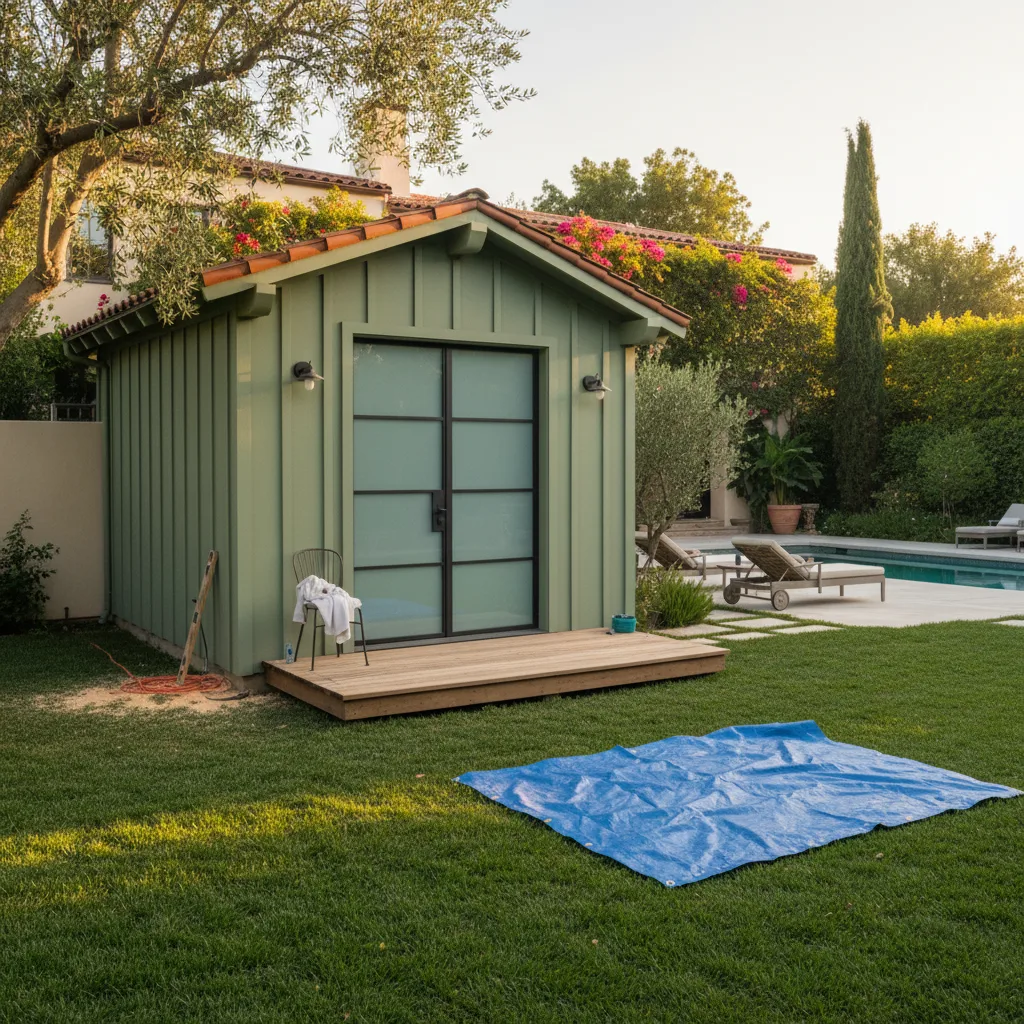
Planning an ADU and garage project in Beverly Hills? A full build-out typically runs $215,000 to $385,000 in 2026. Cosmetic garage conversions start near $130,000, while premium custom accessory dwelling units climb past $460,000. This is what your budget actually covers, what drives the price up, and how to vet a contractor who knows the ins and outs of building in the 90210.
The Honest 2026 Price for an ADU & Garage in Beverly Hills
Let's get straight to it. My name is Mike Reynolds, and as the structural editor here at Renology, I spend my time on job sites and reviewing plans, not crafting vague estimates. The numbers you see online often miss the mark for Beverly Hills because they don't account for the specific pressures of this market. Here, you're not just paying for materials and labor, you're paying for precision, logistical skill, and a deep understanding of local building codes and aesthetic expectations.
For 2026, we see the majority of detached ADU and garage combination projects landing in a core range of $215,000 to $385,000. This assumes a new, 500 to 800 square foot structure with standard, good-quality finishes. If you're looking at a simpler garage conversion with existing walls, you might budget closer to $130,000 to $215,000. On the other end, a high-end, architect-designed ADU with premium materials, custom millwork, and significant site work can easily exceed $460,000 to $695,000.
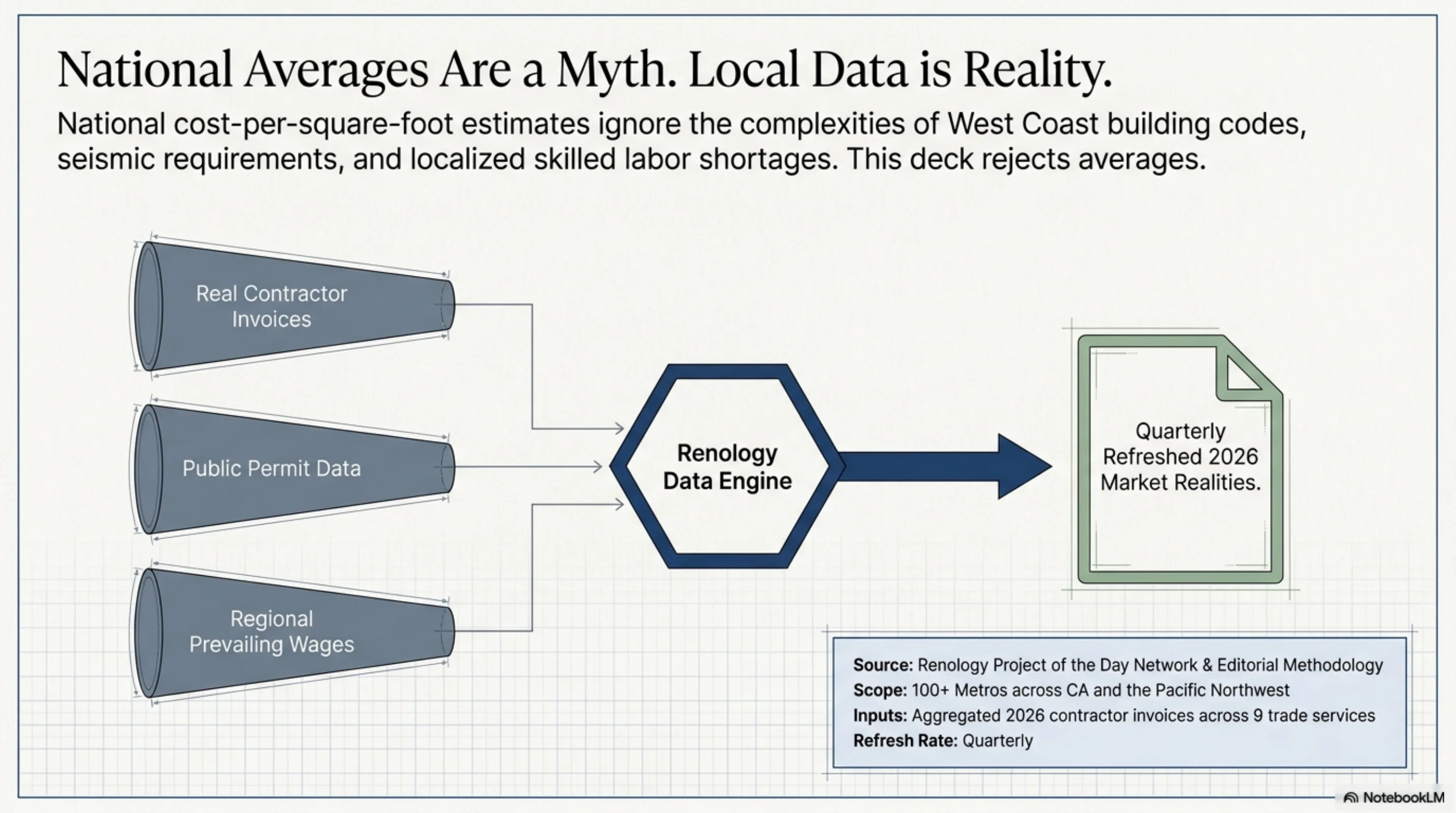
These figures are based on real invoices from our contractor network, cross-referenced with public permit data and material cost indexes. They represent the all-in cost: design, permits, labor, materials, and basic landscaping. What they don't include is the cost of your time and the critical decisions you'll need to make along the way. This guide is designed to make that part easier.
What Drives ADU & Garage Costs in Beverly Hills
See what a ADU build actually costs in your Beverly Hills zip.
Take 4 questions →The final price tag on your project isn't determined by a single factor, but by a combination of regional pressures and project-specific choices. Understanding these components is the first step to building a realistic budget and avoiding costly surprises down the road.
Labor: The Beverly Hills Premium
Skilled labor is the single largest component of any construction budget, and in Los Angeles, particularly Beverly Hills, it comes at a premium. The demand for top-tier carpenters, electricians, and plumbers far outstrips supply. According to the California Department of Industrial Relations, prevailing wages in Los Angeles County are among the highest in the state. A reputable general contractor is not just hiring hands, they are managing a team of specialized, licensed, and insured professionals who know how to execute work to a high standard and pass rigorous city inspections. This expertise is a non-negotiable cost.
Materials and Finishes
Your choice of materials will create the most significant variance in your budget. A standard asphalt shingle roof is functionally sound, but a standing seam metal roof or Spanish tile will cost three to five times more. The same principle applies everywhere: vinyl windows versus custom aluminum-clad, pre-fabricated cabinets versus custom rift-sawn white oak, basic tile versus a marble slab shower. While it's tempting to focus on the aesthetic finishes, remember that the "bones" of the structure, like framing lumber, insulation, and waterproofing, have also seen steady price increases, as tracked by sources like the National Association of Home Builders.
Soft Costs: The Work Before the Work
Before a single shovelful of dirt is moved, a significant amount of work and investment is required. These "soft costs" are often underestimated by homeowners but are critical to a successful project. They typically account for 10 to 20 percent of the total budget and include:
- Architectural and Design Fees: Creating the blueprints and detailed construction documents.
- Structural Engineering: Required for any new structure to ensure it meets seismic and load-bearing codes.
- Geotechnical and Soils Reports: Especially crucial for hillside properties or lots with questionable soil stability.
- Permit Fees: Paid to the City of Beverly Hills for plan review and inspections.
- Utility Connection Fees: Costs associated with hooking up new water, sewer, and electrical services.
Beverly Hills ADU & Garage by Tier: 3 Real Project Examples
To make the numbers more concrete, let's look at three typical project scopes we see in Beverly Hills. I've broken them down into tiers, outlining the scope, cost, and a realistic timeline from the day the permits are approved. These are composites from recent projects tracked through the Renology network.
| Tier | Typical Scope | Cost Range (2026) | Construction Timeline |
|---|---|---|---|
| Cosmetic / Garage Conversion | Converting an existing 400 sq. ft. garage. Adding insulation, drywall, and new electrical. Installing a pre-fab kitchenette, a simple bathroom, and LVP flooring. New garage door and windows. No foundation or structural changes. | $130,000 - $215,000 | 16-24 weeks |
| Mid-Range / New Detached ADU | New construction of a 650 sq. ft. detached one-bedroom ADU on a slab foundation. Standard wood framing, stucco exterior, and asphalt shingle roof. Mid-grade appliances, semi-custom cabinets, and quartz countertops. Tiled bathroom. Includes new utility trenching. | $215,000 - $385,000 | 32-56 weeks |
| Premium / Custom Build | Architect-designed 1,000 sq. ft. ADU, possibly with a second story or built into a hillside. Extensive site work, retaining walls, and custom foundation. High-end finishes like Fleetwood doors, custom cabinetry, stone slabs, and designer fixtures. Integrated smart home technology and professional landscaping. | $460,000 - $695,000+ | 50-70 weeks |
Pro tip
Always establish a contingency fund of at least 15 percent of your total construction cost. For older properties or complex hillside builds in Beverly Hills, I recommend pushing that to 20 percent. This isn't a "slush fund," it's a necessary buffer for uncovering unforeseen issues like non-compliant old plumbing or poor soil conditions once work begins.
Permits and Local Code in Beverly Hills
While state laws have made it easier to get an ADU permit, Beverly Hills is not a rubber-stamp city. The process is thorough, and your plans must be meticulous. Understanding the key agencies and regulations is essential for setting a realistic timeline.
The City of Beverly Hills Community Development Department
This is the agency that will review your plans and issue your building permit. While state laws like AB 68 mandate a 60-day review period for ADU applications, this clock only starts once your application is deemed complete. An incomplete or inaccurate submission can lead to weeks or even months of back-and-forth corrections. Your architect and contractor must be intimately familiar with the Beverly Hills Municipal Code, especially the specific zoning requirements for setbacks, height, and lot coverage in your neighborhood.
California Title 24 and CALGreen
These are statewide energy and green building standards that have a direct impact on your construction methods and material choices. Title 24, for instance, dictates minimum insulation values, window efficiency (U-factor), and requires high-efficacy lighting. CALGreen may require specific water-efficient fixtures or construction waste recycling plans. A good contractor will build these requirements into your initial bid, not treat them as an afterthought or an upgrade.
Utility Hookups with SCE and Public Works
Connecting your new ADU to power, water, and sewer is a major project milestone that involves coordinating with multiple entities. In Beverly Hills, you'll likely be dealing with Southern California Edison (SCE) for electricity and the Beverly Hills Public Works Department for water and sewer. Getting a new electrical meter set or a new sewer lateral approved can be a lengthy process involving separate applications, fees, and inspections. This is often a source of significant delays if not planned for from the very beginning.
The Beverly Hills Neighborhoods Where ADU & Garage Costs Diverge
Not all lots in Beverly Hills are created equal. The character, topography, and lot size of a neighborhood can have a profound impact on the complexity and cost of your ADU project. A contractor who has only worked in one part of the city may not be prepared for the challenges of another.
The Beverly Hills Flats: Easier Logistics, Higher Aesthetic Bar
The Flats are known for their grid layout and, as the name implies, relatively level lots. This is a huge advantage for construction. Access for machinery, material delivery, and staging is straightforward, which helps control labor costs and timelines. The primary challenge here is architectural. The homes in the Flats have a strong, established character, and the city's design review will ensure your ADU is a harmonious addition, not a jarring afterthought. This often means investing more in exterior materials and design to match the main residence.
An ADU isn't just a small house; it's a complete house, just smaller. It requires every single trade and inspection a primary residence does.
Trousdale Estates: The Engineering Challenge
Building in Trousdale is a different game entirely. The hillside topography introduces a host of complexities. In my last walkthrough of a project site just off Loma Vista Drive, the first 25 percent of the budget was allocated before any framing began. It was all below-grade work: extensive soil testing, deep caissons for foundation stability, and a massive concrete retaining wall. These are not optional expenses; they are non-negotiable engineering requirements for building safely on a slope. Access is also tricky, often requiring smaller trucks and carefully coordinated deliveries. This is where you need a contractor and structural engineer with specific hillside construction experience.
South of Wilshire: Density and Constraints
The neighborhoods south of Wilshire Boulevard, heading towards Beverlywood, often feature smaller lot sizes and greater density. While the lots are generally flat, the tightness presents its own set of challenges. There's less room for material staging, which can mean more frequent, smaller deliveries at a higher cost. Parking for the construction crew can be a daily puzzle. Setback requirements are tight, demanding absolute precision in the foundation and framing stages. Any project here requires a contractor who is an expert in logistical planning and maintaining a clean, contained, and neighbor-friendly job site.
Timeline: Realistic Week-by-Week Expectations
The 32 to 56-week construction timeline in the table above can feel abstract. Let's break down what that actually looks like. The most common mistake I see homeowners make is underestimating the pre-construction phase. Getting from an idea to a permit-in-hand can easily take as long as the initial phase of construction itself.
Editor's note
While state laws have streamlined the ADU approval process on paper, the reality is that a well-prepared, code-compliant application is the only thing that truly speeds up your permit. Rushing the design and engineering phase almost always leads to longer, more expensive review cycles with the city.
- Phase 1: Design & Permitting (8-16 Weeks): This is all about planning. You'll work with a designer or architect to create your plans, which then go to a structural engineer. Once the full set of construction documents is complete, it's submitted to the Beverly Hills Community Development Department. This phase ends the day you have an approved permit in your hands.
- Phase 2: Site Prep & Foundation (4-6 Weeks): The first physical work begins. This includes any necessary demolition, grading the site, trenching for utilities (water, sewer, electrical), and pouring the concrete foundation. This is a critical stage where everything must be perfectly square and level.
- Phase 3: Framing & Rough-Ins (6-10 Weeks): This is when your ADU starts to look like a building. The walls and roof structure are framed, sheathing is applied, and windows and exterior doors are installed. Immediately following this, the "rough-in" work happens: plumbers, electricians, and HVAC technicians run all the pipes, wires, and ducts through the open walls. This phase ends with a city inspection of all the in-wall systems before they are covered.
- Phase 4: Exterior & Interior Finishes (12-20+ Weeks): This is the longest and most detailed phase. It starts with insulation and drywall. Then, the exterior is finished with stucco, siding, and roofing. Inside, it's a cascade of trades: painters, tilers, floor installers, and cabinet makers. Finally, the "finish" trades come in to install countertops, light fixtures, plumbing fixtures, and appliances. The project concludes with a final inspection from the city.
How to Vet a Beverly Hills Contractor
Finding the right general contractor is the most important decision you'll make. A great contractor protects your investment and delivers quality work, while a poor one can turn your project into a financial and emotional nightmare. Here’s how to tell them apart.
Key Questions to Ask Every Potential Contractor
Go beyond "how much" and "how long." The answers to these questions will reveal their experience, process, and professionalism.
- How many ADUs have you completed specifically within Beverly Hills in the last 24 months? Can I see photos?
- Can you provide me with the license numbers for your primary subcontractors (electrical, plumbing)?
- Who will be my single point of contact, and who is the on-site project manager or foreman? How often will they be here?
- What is your process for handling change orders? Can you show me a sample change order form?
- How do you protect the main house and landscaping during construction? What is your daily cleanup protocol?
- What specific line items in your bid are allowances, and how did you arrive at those allowance amounts?
Red Flags to Watch For
If you encounter any of these, proceed with extreme caution or walk away entirely.
- A Vague or Lump-Sum Bid: A professional bid is highly detailed, with costs broken down by labor and materials for each stage of the project. A single number on a piece of paper is a sign of an amateur.
- Pressure to Sign Immediately: High-pressure sales tactics are a major red flag. A good contractor is busy and will let their reputation and detailed bid speak for themselves.
- Large Upfront Deposit Request: In California, it is illegal for a contractor to ask for a deposit of more than 10 percent of the total project cost or $1,000, whichever is less.
- No CSLB License or Insurance: Never hire anyone who cannot immediately provide you with their California State Licensing Board (CSLB) number and a current certificate of general liability and workers' compensation insurance. Verify it yourself on the CSLB website.
Renology Take
After analyzing hundreds of ADU projects, the pattern is clear: homeowners are blindsided not by the cost of lumber or tile, but by the complexity and cost of the pre-construction process. The focus is always on the physical build, but the project's success is determined long before ground is broken. It's decided in the quality of the architectural plans, the thoroughness of the structural engineering, and the accuracy of the permit application. Rushing this "soft cost" phase to save a few thousand dollars on design fees almost guarantees you'll pay ten times that amount in change orders, city-mandated revisions, and project delays. Invest heavily in a great architect and a contractor who sweats the details during planning. A well-planned project is a predictable project.
Sources & Methodology
These cost ranges are reconstructed from publicly available labor and permit data, the latest Remodeling Magazine cost-vs-value report, and Renology's own Project of the Day network, a rolling sample of real homeowner invoices we collect from Beverly Hills-area contractors. Last refreshed April 2026.
- National Association of Home Builders (NAHB) Remodeling Market Index, Q1 2026
- California Department of Industrial Relations, Los Angeles County Prevailing Wage Data, 2026
- City of Beverly Hills Community Development Department Permit Data, 2026
- Remodeling Magazine, 2026 Cost vs. Value Report
- Renology Project of the Day Network, aggregated 2026 contractor invoices in Beverly Hills
- California State Licensing Board (CSLB) Contractor Database
- Southern California Edison (SCE) Service Planning Requirements
Methodology
How Renology estimates adu / garage conversion costs in Beverly Hills.
Renology treats this page as a planning benchmark for Beverly Hills, California, not a final quote. We compare published local guide data, contractor scope patterns, permit-sensitive work, climate or site constraints, and finish-level assumptions.
Cost range
$215,000-385,000
Timeline
32-56 weeks
Source type
Editorial dataset
Local factor: Mediterranean (Köppen Csa): 14 inches annual rain, hot dry summers, mild winters. UV intensity is high year-round.
Use these numbers to shape a scope and spot missing line items. Confirm permits, structural work, electrical, plumbing, gas, waterproofing, drainage, and code-sensitive details with the local building department and a licensed professional.
Compare against the full Renology Cost IndexBeverly Hills · pre-screened
Get 3 Beverly Hills ADU bids in 48 hours.
Our editors already vetted Beverly Hills ADU builders. Answer 4 questions and we send 3 written bids inside 48 hours, with the real price for your scope, not their inflated first-call number.
- Free, no commission
- Pre-screened locally
- Bids inside 48 hours
Takes about 60 seconds. We'll text you when bids arrive.