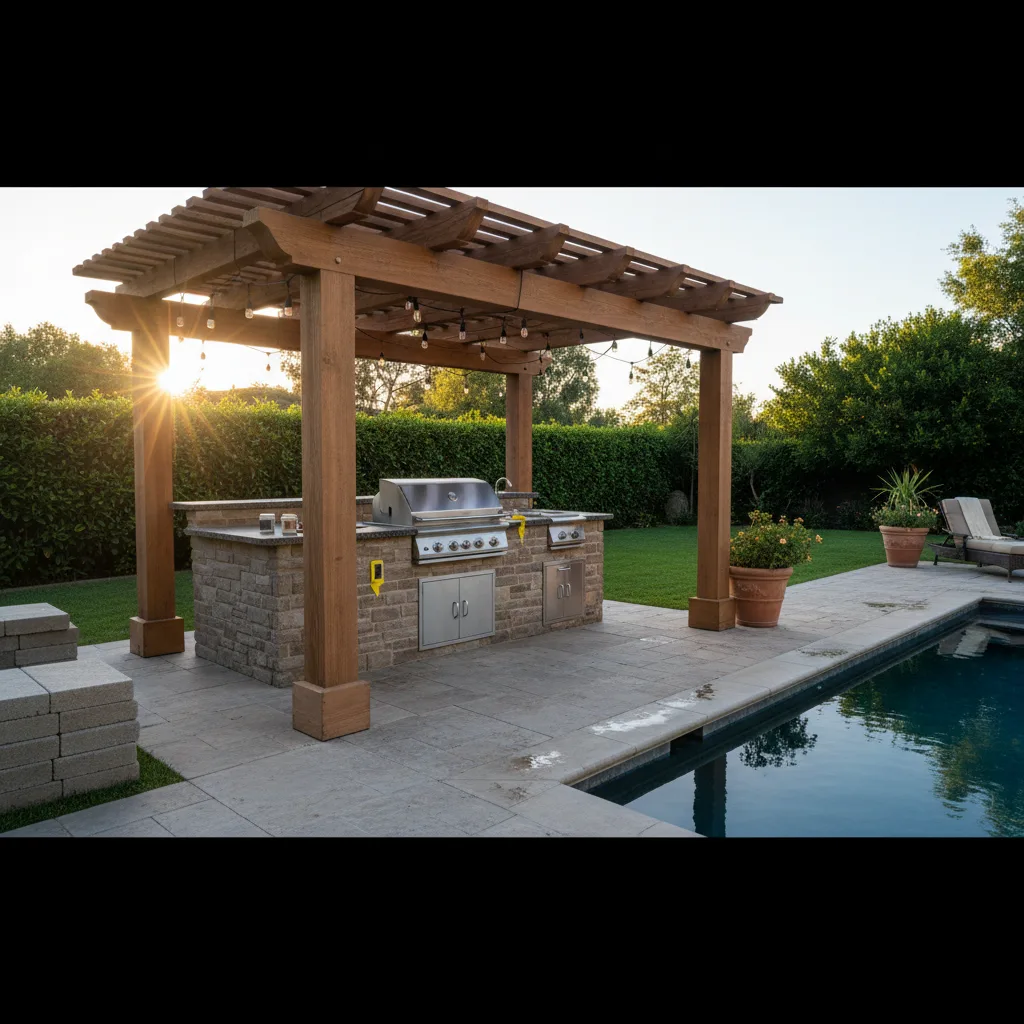
Planning an outdoor living space in Beverly Hills? A full project typically runs from $26,000 to $48,000 in 2026. Cosmetic refreshes start near $16,000, while premium custom work climbs past $58,000. This is what your budget actually covers, what drives the price up, and how to vet a contractor who knows Beverly Hills permits.
The Honest 2026 Price for Outdoor Living in Beverly Hills
Creating a true outdoor living space in Beverly Hills is about more than laying a new patio. It's about crafting an extension of your home, a functional and beautiful area for relaxing and entertaining that stands up to the Southern California climate. Whether you envision a sleek outdoor kitchen for hosting, a serene garden with a custom fire feature, or a multi-level terrace to capture canyon views, understanding the cost structure is the first step toward a successful project.
At Renology, we analyze thousands of real project invoices to provide a clear financial picture. For 2026, the data shows that a comprehensive outdoor renovation in Beverly Hills falls into a predictable range. The majority of projects land between $26,000 and $48,000. This price point covers a significant overhaul: think new hardscaping, a built-in grill station, professional lighting, and thoughtful landscaping. Simpler cosmetic updates, like resurfacing a patio or upgrading plantings, can start as low as $16,000. On the other end of the spectrum, ambitious projects involving custom structures, extensive retaining walls, or high-end outdoor kitchens regularly exceed $58,000, with top-tier projects reaching well into six figures.
These numbers are a reliable starting point, but remember that every property in Beverly Hills is unique. Factors like lot access, soil condition, and the age of your home can significantly influence the final cost. The key is to understand the core components that make up your budget and to plan for them from day one.
What Drives Outdoor Living Costs in Beverly Hills
See what a outdoor living build actually costs in your Beverly Hills zip.
Take 4 questions →The price tag for an outdoor project is a composite of several key factors, each carrying significant weight in a high-value market like Beverly Hills. It’s not just about the square footage; it’s about the complexity, quality, and expertise required to execute the vision correctly and legally.
Labor: The Premium for Proven Expertise
Skilled labor is the single largest component of any construction budget in Los Angeles County, and Beverly Hills is at the top of that market. You are not just hiring a crew; you are investing in experienced masons, licensed electricians and plumbers who specialize in outdoor systems, and carpenters who understand how to build structures that last. According to the California Department of Industrial Relations, prevailing wages for these trades are among the highest in the nation. For a project in Beverly Hills, where the standard for fit and finish is exceptionally high, expect to pay a 15 to 25 percent premium for a contractor with a proven portfolio of work in the area.
Materials: Durability Meets Design
Material choices have a profound impact on both the final cost and the long-term durability of your space. The Southern California sun is relentless, making material selection a critical, climate-aware decision.
- Hardscaping: Standard concrete pavers or poured concrete are the most cost-effective options. Upgrading to natural stone like bluestone, travertine, or custom-cut limestone can easily double or triple material costs.
- Woodwork: Pressure-treated pine is a budget choice, but it requires constant maintenance. Redwood and cedar offer a step up in durability and aesthetics. For high-end projects, tropical hardwoods like Ipe or Cumaru are the gold standard, offering incredible longevity and a beautiful finish, but at a significant cost premium.
- Outdoor Kitchens: A simple drop-in grill is one thing. A fully equipped outdoor kitchen with a high-performance grill from a brand like Lynx or Kalamazoo, a refrigerator, sink, and durable countertops like granite or Dekton can quickly add $20,000 or more to the budget.
Site Conditions and Logistics
The physical characteristics of your property are a major, and often underestimated, cost driver. A flat, easily accessible lot in the Beverly Hills Flats presents far fewer challenges than a sloped, compact lot in the hills above Sunset Boulevard. Site prep for a hillside project might require extensive grading, soil testing, and engineered retaining walls just to create a usable level area. Access for machinery can also be a major issue on narrow streets, potentially requiring smaller equipment that takes longer to do the job, or even manual labor, driving up costs.
Key takeaway
The most expensive part of your project might be the work you'll never see. Proper drainage, solid foundations for decks and walls, and correctly installed utility lines for gas and water are critical investments that prevent costly failures down the road.
Beverly Hills Outdoor Living by Tier: 3 Real Project Examples
To make the numbers more concrete, we've modeled three common project types based on real invoices from the Beverly Hills area. These examples illustrate how scope and material choices affect the budget and timeline. Note that these timelines assume permits are secured before construction begins.
| Tier | Scope | Cost Range | Timeline |
|---|---|---|---|
| Cosmetic Refresh | Resurfacing an existing 400 sq. ft. patio with new pavers. Adding a prefab gas fire pit. Replacing old landscape lighting with new low-voltage LED fixtures. Updating plantings in existing beds. | $16,000 to $26,000 | 2 to 3 Weeks |
| Mid-Range Overhaul | Demolition of an old concrete patio. Installing a new 500 sq. ft. natural stone patio. Building a custom outdoor kitchen island with a built-in gas grill, refrigerator, and granite countertop. Installing a new irrigation system and comprehensive landscape lighting. | $26,000 to $48,000 | 4 to 6 Weeks |
| Premium Custom Oasis | Full backyard redesign on a hillside lot. Includes new engineered retaining walls to create a larger level space. Installation of a 700 sq. ft. Ipe wood deck with a custom-built pergola. A high-end outdoor kitchen with a pizza oven. A new gas-plumbed fire feature with built-in seating. Professional audio system and smart lighting integration. | $58,000 to $86,000+ | 8 to 12 Weeks+ |
Permits and Local Code in Beverly Hills
Any significant outdoor project in Beverly Hills requires navigating the city's specific planning and building codes. This is not a step to be skipped. Working without permits can result in stop-work orders, fines, and the costly process of tearing out and redoing work to meet code. A professional contractor will manage this process for you.
The Beverly Hills Community Development Department
While part of the greater Los Angeles area, Beverly Hills is an incorporated city with its own permitting authority: the Beverly Hills Community Development Department. They handle all plan checks and permit issuance for projects within city limits. Their standards are exacting, with a strong focus on safety, aesthetics, and neighborhood consistency.
You will almost certainly need a permit if your project includes:
- Any new structure, including pergolas, pavilions, or decks over 30 inches high.
- Retaining walls over four feet in height (or any height if they are supporting a surcharge).
- New gas lines for a fire pit or grill.
- Any new electrical circuits for lighting or outlets.
- Fences or walls over a certain height (typically six feet).
California Codes with Local Impact
On top of local ordinances, your project must comply with statewide regulations that have a direct impact on outdoor living spaces. California's Title 24 energy code, for instance, has specific requirements for the efficiency of outdoor lighting fixtures. Similarly, the CALGreen building code mandates water-efficient irrigation systems, which is a critical consideration in our drought-prone climate. A knowledgeable contractor will design your project to meet these codes from the outset, avoiding delays during the plan check process.
Did you know
For properties located in designated hillside areas, Beverly Hills has a Hillside Ordinance that imposes stricter requirements for grading, drainage, and foundations. This often requires a geological and soils report before a permit can even be considered, adding several thousand dollars and weeks to the pre-construction phase.
The Beverly Hills Neighborhoods Where Outdoor Living Costs Diverge
Beverly Hills is not a uniform landscape. The character, lot size, and topography of its distinct neighborhoods create different challenges and opportunities for outdoor projects, directly influencing costs.
The Flats: Gracious Lots and Classic Designs
The area known as "The Flats" south of Sunset and north of Santa Monica Boulevard is defined by its grid of wide, tree-lined streets and large, level lots. The primary cost driver here is not site complexity but scale and material quality. With generous space to work with, projects often include large patios, formal gardens, swimming pools, and guest houses. Construction access is generally straightforward, keeping logistical costs in check. The architectural style here leans toward the traditional, and outdoor designs often reflect that with classic materials like brick and limestone.
Trousdale Estates: Mid-Century Modern on Challenging Hillsides
In my last walkthrough in Trousdale Estates, the challenges were immediately apparent. The entire neighborhood is built on a hillside, and nearly every project involves navigating steep slopes and bedrock. This is where engineering becomes paramount. I saw one project where half the budget was dedicated to a series of massive caissons and retaining walls just to support a new deck. The mid-century modern aesthetic is strictly protected, so designs must be sympathetic to the original architecture. Access is tight, and staging materials without disrupting the neighborhood is a major logistical puzzle that adds cost. Here, you are paying as much for the engineering and site work as you are for the visible finishes.
South of Wilshire: Smaller Lots, Smarter Solutions
The neighborhoods south of Wilshire Boulevard, including parts of Beverlywood, are characterized by smaller lots and greater density. Outdoor projects here are an exercise in maximizing limited space. Costs are driven by clever design and custom solutions. Think built-in seating that doubles as storage, vertical gardens to create a green privacy screen, and compact "spool" water features instead of full-size pools. Because space is at a premium, every detail matters, and the level of craftsmanship for custom built-ins can be very high.
The success of your outdoor oasis is built on the expensive, invisible work done before a single paver is laid.
Timeline: Realistic Week-by-Week Expectations
A common point of frustration for homeowners is a timeline that stretches beyond their expectations. A typical Beverly Hills outdoor project takes eight to fourteen weeks from your first call to a contractor to the final sign-off, but only about half of that time involves active construction on your property.
Phase 1: Design, Bidding, and Selection (2 to 4 weeks)
This is the planning stage. You will meet with landscape architects, designers, and contractors to develop your vision. They will create initial designs and provide detailed bids. Choosing your professional team and finalizing the scope of work happens here.
Phase 2: Permitting and Procurement (4 to 8 weeks)
Once you have a signed contract and finalized plans, your contractor will submit them to the Beverly Hills Community Development Department. This is often the longest and most opaque phase. The city reviews the plans for code compliance, and there may be a round of comments and revisions. Concurrently, your contractor will order long-lead-time materials like custom-ordered stone, high-end appliances, or specialty lumber, which can take weeks to arrive.
Phase 3: Active Construction (4 to 6 weeks for a mid-range project)
- Week 1: Demolition and Site Preparation. The noisy, dusty part. Old structures are removed, and the site is graded.
- Weeks 2-3: Underground and Foundations. This is crucial infrastructure work. Trenches are dug for electrical conduit, gas lines, and irrigation. Footings for decks and walls are poured.
- Weeks 3-4: Hardscaping and Major Structures. The vision starts to take shape as patios are laid, decks are framed, and pergolas are built.
- Weeks 5-6: Finishes and Systems. The outdoor kitchen is installed, lighting fixtures are wired, plants go in the ground, and the irrigation system is tested. This phase culminates in the final inspections from the city.
How to Vet a Beverly Hills Contractor
Choosing the right contractor is the most important decision you will make. In a market like Beverly Hills, you need a firm with specific, relevant experience. A generalist who occasionally builds a deck is not the right choice for a six-figure outdoor living project.
Key Questions for Your Shortlist
When interviewing potential contractors, go beyond the basic "Are you licensed and insured?". Dig deeper with these questions:
- "Can you walk me through your permit history with the City of Beverly Hills?" An experienced local contractor will have a track record and can speak confidently about the process and personnel at the city's building department.
- "Show me two projects you've completed in a hillside area similar to mine." If your property is on a slope, this is non-negotiable. You need to see proof they understand the unique structural and drainage challenges.
- "How do you communicate with clients, and how often?" Look for a clear process. Do they use a project management app? Do they schedule weekly check-in calls? Good communication is the key to a low-stress project.
- "What is your change order process?" Changes are inevitable. A professional will have a formal, transparent process requiring written approval from you before any additional work is done or costs are incurred.
Pro tip
The best bid is rarely the lowest bid. It's the most detailed. A line-item proposal that breaks down costs for demolition, materials, labor, and permits shows the contractor has thought through every step, reducing the risk of costly surprises.
Red Flags to Watch For
Be wary of any contractor who:
- Offers a bid that is dramatically lower than the others. This often means they have missed something in the scope or are using substandard materials or uninsured labor.
- Pressures you to sign a contract on the spot or asks for an unusually large deposit (anything over 10% or $1,000, whichever is less, is illegal in California for a down payment).
- Suggests that you can "save money" by skipping the permit process. This is a massive liability for you as the homeowner.
- Is unable to provide recent, local references that you can call.
Renology Take
As Renology's structural editor, I see a recurring pattern in high-value outdoor projects. Homeowners naturally focus on the tactile, visible elements: the texture of the stone, the grain of the wood, the gleam of the stainless steel grill. But the long-term success and durability of a Beverly Hills outdoor space are dictated by the elements you will never see. The real value is in the over-engineered retaining wall footings, the meticulously waterproofed deck ledger board, and the flawlessly graded drainage system that quietly pulls water away from your home's foundation during a rare winter downpour. The most common and costly mistake is underinvesting in this foundational work. A great contractor allocates a significant portion of the budget and schedule to getting this invisible infrastructure perfect before the first beautiful finish material is ever installed.
Sources & Methodology
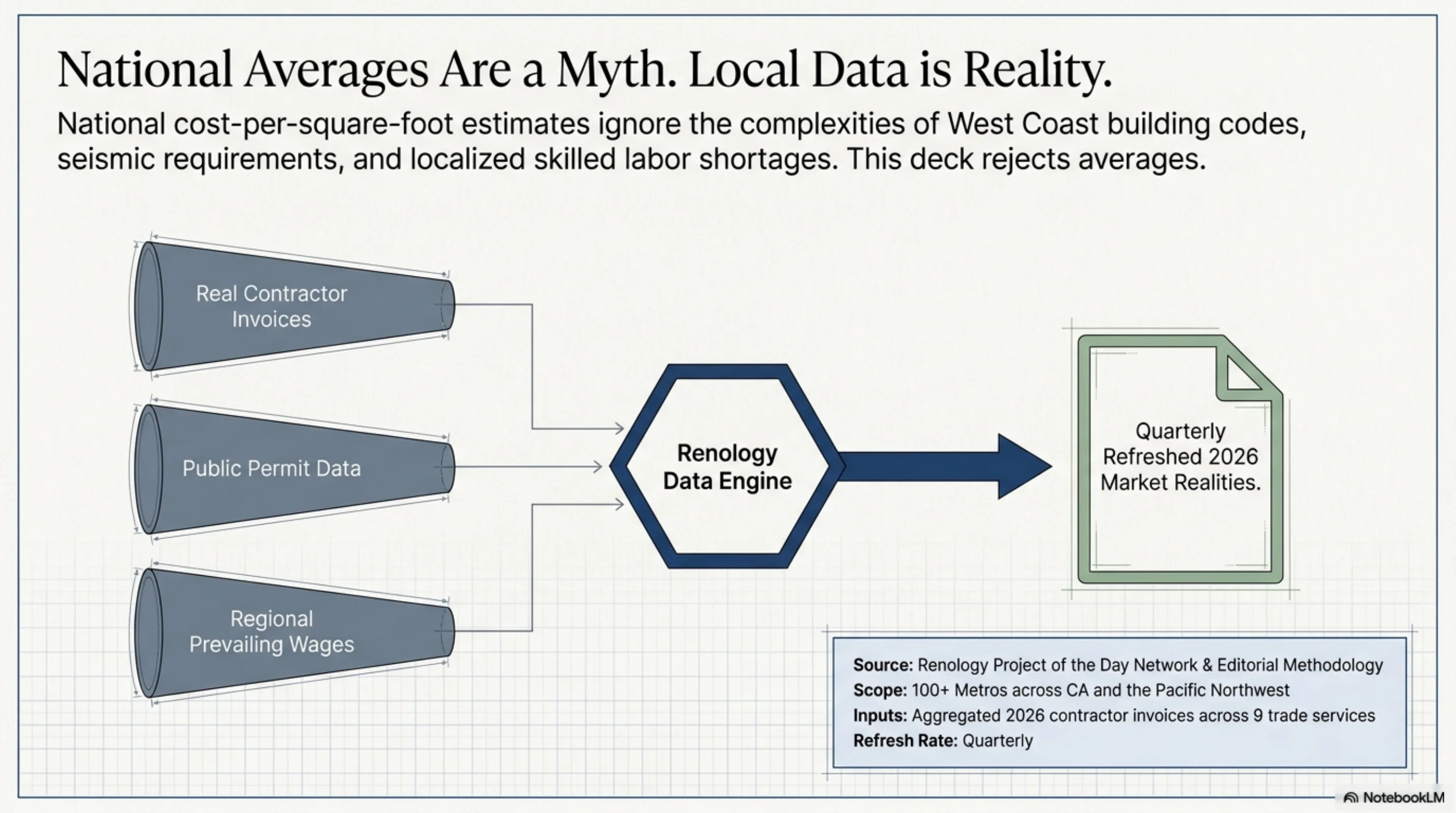
These cost ranges are reconstructed from publicly available labor and permit data, the latest Remodeling Magazine cost-vs-value report, and Renology's own Project of the Day network, a rolling sample of real homeowner invoices we collect from Beverly Hills-area contractors. Last refreshed April 2026.
- National Association of Home Builders (NAHB) Remodeling Market Index, Q1 2026
- California Department of Industrial Relations, Los Angeles County Prevailing Wage Data, 2026
- City of Beverly Hills Community Development Department Permit Data, 2026
- Remodeling Magazine, 2026 Cost vs. Value Report
- Renology Project of the Day Network, aggregated 2026 contractor invoices in Beverly Hills
- California Building Standards Code (Title 24)
- American Society of Landscape Architects (ASLA) Member Surveys
Methodology
How Renology estimates outdoor living costs in Beverly Hills.
Renology treats this page as a planning benchmark for Beverly Hills, California, not a final quote. We compare published local guide data, contractor scope patterns, permit-sensitive work, climate or site constraints, and finish-level assumptions.
Cost range
$26,000-48,000
Timeline
4-6 weeks
Source type
Editorial dataset
Local factor: Mediterranean (Köppen Csa): 14 inches annual rain, hot dry summers, mild winters. UV intensity is high year-round.
Use these numbers to shape a scope and spot missing line items. Confirm permits, structural work, electrical, plumbing, gas, waterproofing, drainage, and code-sensitive details with the local building department and a licensed professional.
Compare against the full Renology Cost IndexBeverly Hills · pre-screened
Get 3 Beverly Hills renovation bids in 48 hours.
Our editors already vetted Beverly Hills contractors. Answer 4 questions and we send 3 written bids inside 48 hours, with the real price for your scope, not their inflated first-call number.
- Free, no commission
- Pre-screened locally
- Bids inside 48 hours
Takes about 60 seconds. We'll text you when bids arrive.