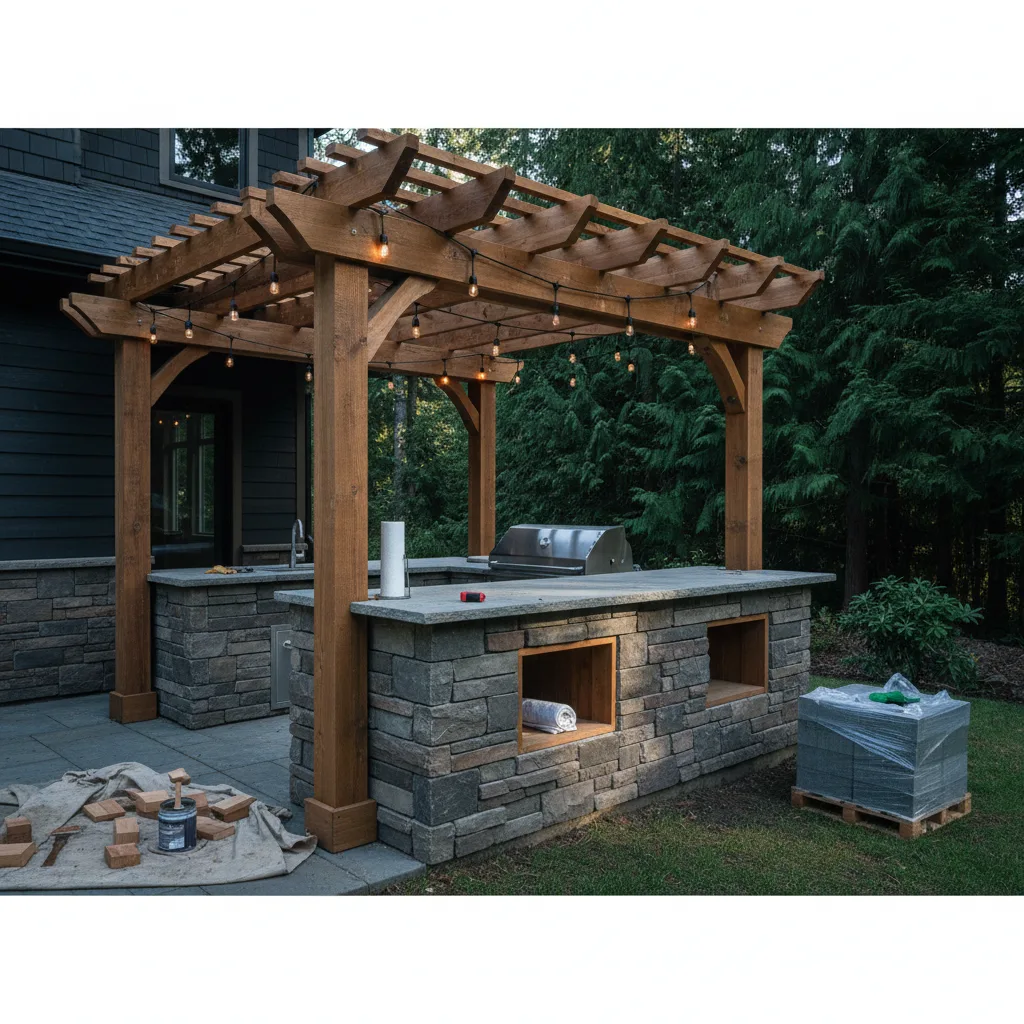
Planning an outdoor living space in Bellevue? A full project typically runs $22,000 to $40,000 in 2026. Cosmetic refreshes start near $13,000, while premium custom work with extensive features can easily climb past $48,000. This is what your budget actually covers, what drives the price up, and how to vet a contractor who understands Bellevue's specific climate and code requirements.
The Honest 2026 Price for Outdoor Living in Bellevue
Let's get straight to the point. The numbers you see in national home improvement magazines or on TV shows are not the numbers you will see on a real quote in Bellevue. Our region's combination of high demand for skilled labor, specific material needs dictated by our damp climate, and rigorous building codes places us in a higher cost bracket than most of the country. For 2026, we're seeing a consistent price structure for outdoor projects that holds across the Eastside.
A standard, well-built outdoor living project, like a new composite deck and a paver patio, will fall squarely in the $22,000 to $40,000 range. This is the budget for a project that significantly improves your home's function and value. If you are looking for a simpler update, such as refinishing an existing deck and adding new railings, you can expect to spend between $13,000 and $22,000. On the other end of the spectrum, a premium, architect-designed space with a covered structure, an outdoor kitchen, and integrated lighting will start at $48,000 and can readily exceed $72,000 depending on the complexity and finishes.
The key to understanding these costs is to reframe the idea of an "outdoor" space in the Pacific Northwest. This is not just a sun deck for July and August. It's a four-season extension of your home. The investment reflects the need for durable, water-resistant materials, proper drainage, and features like covered areas or built-in heating that make the space usable from March through November. A well-designed Bellevue backyard is not a seasonal luxury, it is a functional part of your daily life.
What Drives Outdoor Living Costs in Bellevue
See what a outdoor living build actually costs in your Bellevue zip.
Take 4 questions →The final price tag on your project is a direct result of four key factors: the high cost of skilled labor in our tech-driven economy, the specific materials required to withstand our weather, the administrative overhead of permits, and unique regional challenges like topography and soil conditions.
Skilled Labor in a High-Demand Market
The single largest component of your budget, often 40 to 50 percent, is labor. The Seattle metropolitan area has one of the most competitive construction markets in the country. We have a deep pool of talented craftspeople, but their time comes at a premium. A quality outdoor project requires more than just general carpentry. It demands expertise in foundation work, complex framing, water management, and often, licensed electricians and plumbers for features like lighting, outlets, and gas lines for fire pits or grills. A contractor who knows how to properly flash a ledger board against a house to prevent water intrusion is worth far more than one who does not. That expertise is reflected in the price.
Materials Built for the Pacific Northwest
Our persistent dampness and cool temperatures are tough on building materials. While a simple pressure-treated pine deck is the cheapest option upfront, it requires constant maintenance and has a shorter lifespan in our climate. This is why most Bellevue projects use more durable, and more expensive, materials.
- Composite Decking: Brands like Trex, TimberTech, and Fiberon are the standard for a reason. They resist rot, mold, and insects, and require minimal upkeep. Expect to pay a significant premium over wood, but you will save on long-term maintenance.
- Hardwoods: Cedar is the classic PNW choice, offering natural rot resistance and a beautiful aesthetic. For a top-tier project, tropical hardwoods like Ipe are incredibly dense and long-lasting, but come with the highest price tag and require specialized installation techniques.
- Patios and Hardscaping: Concrete pavers are a versatile and popular choice. Costs vary based on the quality of the paver and the complexity of the pattern. Natural stone, like bluestone or flagstone, offers a premium look but costs substantially more for both the material and the skilled labor required for installation.
- Structures and Features: The cost escalates quickly when you add elements like pergolas, covered roofs, outdoor kitchens, and built-in fireplaces. Each of these adds layers of complexity, requiring more materials, more labor hours, and often, more detailed engineering and permit reviews.
Permits, Plans, and Professional Fees
Do not underestimate the "soft costs" of your project. Before a single shovel hits the ground, you will invest in design, planning, and permitting. A simple deck design might be handled by your contractor, but a complex, multi-level space or one on a steep slope will require a structural engineer. An ambitious project with an outdoor kitchen and covered structure benefits from an architect or landscape designer to ensure the space is both functional and beautiful. These professional fees, along with the permit fees from the City of Bellevue, are a necessary part of ensuring your project is safe, legal, and built to last.
Bellevue Outdoor Living by Tier: 3 Real Project Examples
To make the numbers more concrete, let's look at what these budget tiers translate to in the real world. We have analyzed dozens of recent projects across Bellevue to create these representative examples. They show how scope, materials, and complexity directly influence the final cost and timeline.
Did you know
According to the 2026 Cost vs. Value Report from Remodeling Magazine, a new wood deck in the Seattle area recoups over 60 percent of its cost at resale, while a composite deck recoups nearly 55 percent. These are among the highest returns on investment for any home renovation project.
| Tier | Typical Scope | Cost Range | Timeline |
|---|---|---|---|
| Cosmetic Refresh | Refinishing an existing deck, replacing worn boards and railings, adding landscape lighting, minor planting updates. No change to footprint or structure. | $13,000 - $22,000 | 1-3 Weeks |
| Mid-Range Renovation | New 300 sq. ft. composite deck, a 200 sq. ft. paver patio with a gas fire pit, a simple cedar pergola, and new electrical for lighting and outlets. | $22,000 - $40,000 | 4-6 Weeks |
| Premium Custom Build | Architect-designed multi-level Ipe deck, a full outdoor kitchen with granite countertops and built-in appliances, a covered structure with heaters and skylights, extensive landscape grading and drainage work. | $48,000 - $72,000+ | 8-12+ Weeks |
The Cosmetic Refresh: A Smart Update
This tier is about working with what you have. Imagine a 1990s home in Lakemont with a solid but weathered cedar deck. A cosmetic project would involve power washing and re-staining the entire structure, replacing any split or rotting boards, and upgrading the old wooden baluster railings to a more modern cable or metal system. The contractor might also install low-voltage lighting on the stair risers and around the perimeter for ambiance and safety. This is a high-impact, low-complexity project that can be completed quickly and dramatically improves the usability of an existing space without the cost and hassle of a full demolition and rebuild.
The Mid-Range Renovation: The Bellevue Standard
This is the most common project we see. It is a complete transformation of the backyard into a true outdoor living room. This typically involves removing an old, small deck or concrete slab and starting fresh. The scope includes a properly-sized composite deck large enough for a dining table, connected to a paver patio with a seating area around a built-in gas fire pit. A simple, elegant pergola might define the dining space. This project requires a permit for the deck and the gas line, and it represents the sweet spot for families who want a beautiful, low-maintenance space for entertaining and relaxing.
The Premium Custom Build: An Architectural Statement
In neighborhoods like Medina or on waterfront properties in Enatai, outdoor living is treated as a smooth extension of the home's architecture. These are not just decks, they are fully realized outdoor rooms. The budget here accommodates premium materials like Ipe hardwood, which lasts for decades, and features that require significant infrastructure. A full outdoor kitchen means running not just gas, but also hot and cold water lines and drainage. A covered structure with a solid roof demands solid engineering to handle wind and rain loads. These projects always involve a design team, including an architect and a structural engineer, and the permit process is more involved. The result is a bespoke space that is as comfortable and functional as any room inside the house.
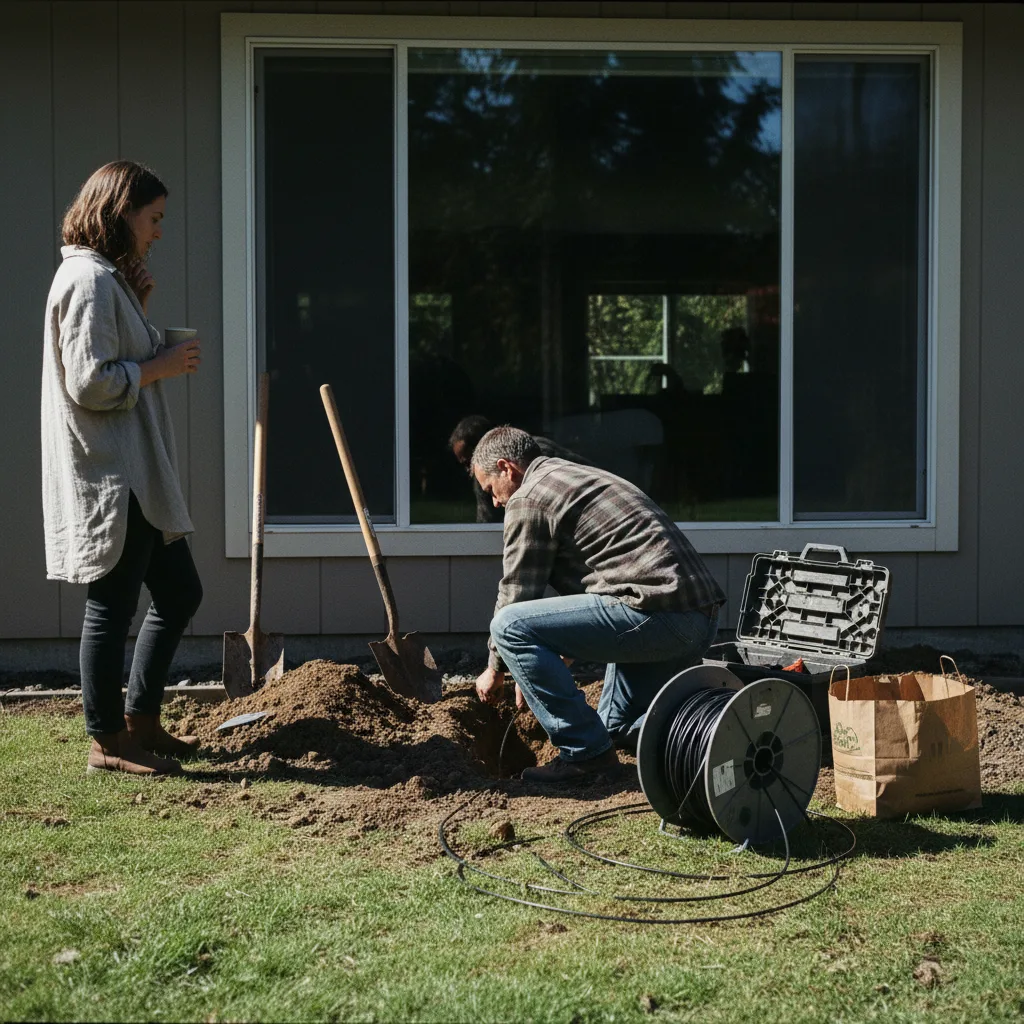
Permits and Local Code in Bellevue
Any significant outdoor project in Bellevue requires interaction with the city's Development Services Department. While it can seem like a bureaucratic hurdle, the permitting process exists to ensure your project is safe, structurally sound, and does not negatively impact your property or your neighbors.
When You Need a Permit
The city's rules are quite clear. You will almost certainly need a construction permit if your project includes any of the following:
- A new deck that is more than 30 inches above the ground at any point.
- Any deck, regardless of height, that will support a hot tub or a roof structure.
- A retaining wall over four feet tall (measured from the bottom of the footing).
- Any new roof structure, like a covered patio or gazebo, larger than 200 square feet.
- Running new electrical circuits or natural gas lines.
This is not an exhaustive list. The best practice is to assume you need a permit and have your contractor confirm. A reputable contractor will insist on permitting the work properly, it protects both you and them.
Navigating the Bellevue Land Use Code
Your project must also comply with the Bellevue Land Use Code (LUC), specifically Title 23, which governs zoning. This code dictates things like setbacks (how far your deck or patio must be from your property lines), lot coverage (the percentage of your property that can be covered by structures), and height limits. If your property is on a steep slope or near a stream, you will also have to contend with critical areas regulations, which add another layer of review and can restrict where and how you can build.
Important
Bellevue has strict regulations regarding tree preservation. If your project requires the removal of any significant trees, you will need a separate tree removal permit. An experienced local contractor will know how to work with an arborist and the city to work through this process effectively.
The Bellevue Neighborhoods Where Outdoor Living Costs Diverge
While the base costs for labor and materials are consistent across Bellevue, the specific character of your neighborhood can have a major impact on your project's scope, complexity, and final cost.
Medina and West Bellevue: The Premium Expectation
In areas with some of the highest property values in the state, the expectations for quality and design are correspondingly high. Projects here are almost always architect-led. The larger lot sizes allow for more expansive, multi-zone outdoor spaces, but they also mean more square footage of expensive decking and hardscaping. Waterfront properties add another layer of complexity, requiring adherence to shoreline management regulations, which can dictate materials and construction methods. The baseline for a project in Medina is often what would be considered a premium build elsewhere in the city.
Bridle Trails and Lakemont: Working with Nature
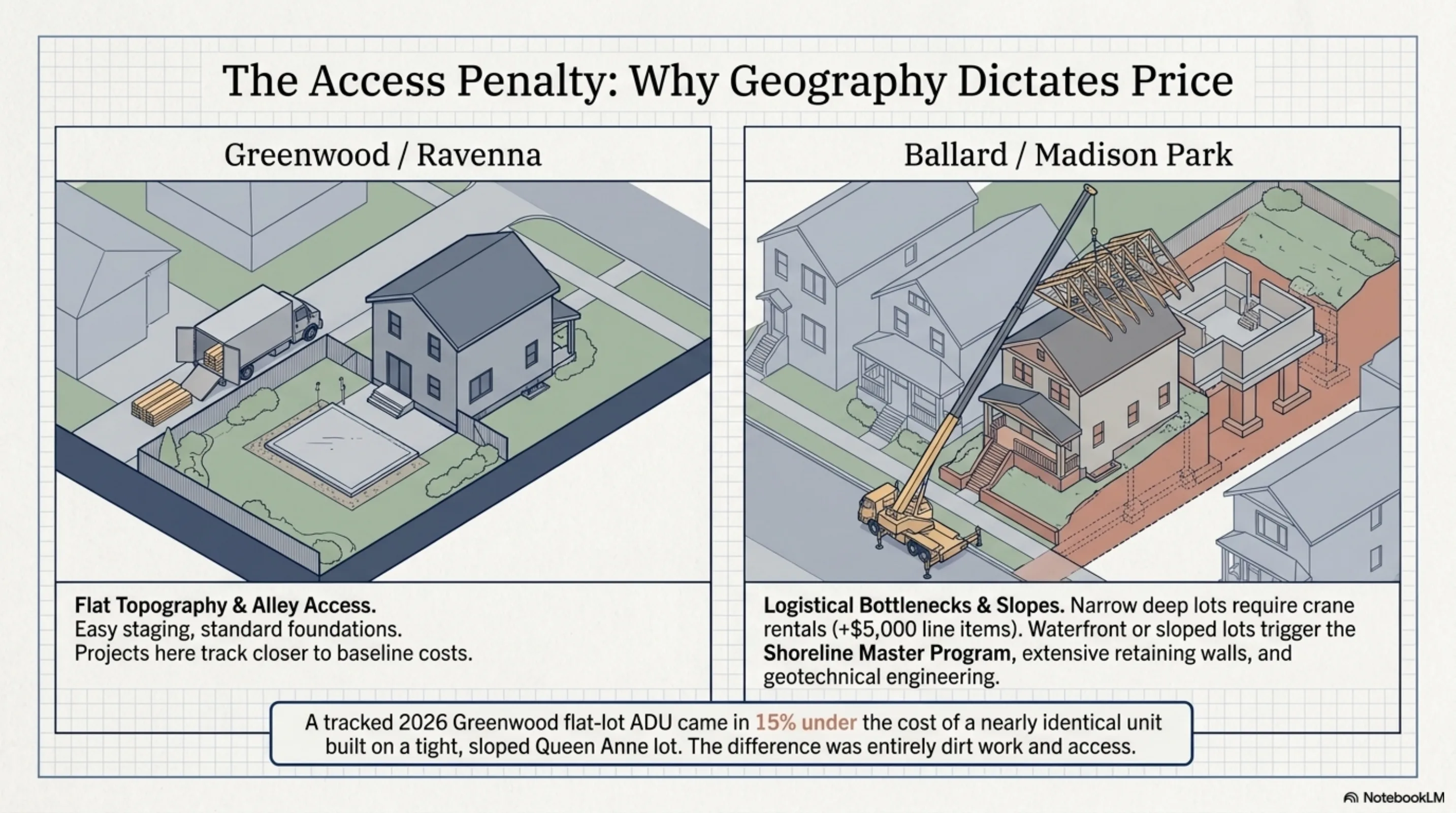
These neighborhoods are prized for their large, wooded lots and connection to nature. This setting presents unique challenges that drive up costs. Many properties are on sloped terrain, which requires more complex and expensive foundation work for decks, including taller support posts and deep concrete footings. Extensive grading and engineered retaining walls are often necessary to create level, usable patio areas. Tree preservation is also a major factor. A great design will work around significant trees, but this often requires creative and costly foundation solutions, like helical piles, to avoid damaging root systems. The focus here is on durable, natural-feeling materials that blend with the surroundings.
I was on-site at a project in Bridle Trails last spring, and the entire deck design had to be re-engineered to accommodate the critical root zone of a protected 80-year-old Douglas Fir. The solution involved spanning a 20-foot section with a steel beam, which added about $8,000 to the framing cost. It was a non-negotiable requirement from the city's arborist, and a perfect example of how neighborhood-specific factors can impact the budget.
Timeline: Realistic Week-by-Week Expectations
A common point of frustration for homeowners is a timeline that does not match reality. A quality outdoor project takes time, with much of that time spent on planning and waiting before construction even begins. A typical mid-range project in Bellevue has a total duration of 8 to 14 weeks from your first call to a contractor to the final walkthrough.
Phase 1: Design, Bidding, and Planning (2-6 Weeks)
This is the crucial upfront work. It involves finding and interviewing at least three contractors, finalizing your design and material selections, and signing a contract. Rushing this phase is the most common mistake homeowners make. Locking in every detail now, from the exact brand and color of composite decking to the model of the outdoor lights, prevents costly delays and change orders later.
Phase 2: Permitting and Procurement (2-6 Weeks)
Once you have signed with a contractor, they will finalize the construction drawings and submit them to Bellevue Development Services. This phase is largely a waiting game. The city's review time can vary depending on their workload and the complexity of your project. During this time, your contractor will be ordering long-lead-time materials, such as custom-order pavers or special-order railings, so they arrive when construction is ready to start.
The most expensive part of any project is changing your mind after construction starts.
Phase 3: Active Construction (4-6 Weeks)
This is when the visible progress happens. For a standard deck and patio project, it breaks down like this:
- Week 1: Demolition of any existing structures, site preparation, and excavation. The crew will then dig and pour the concrete footings for the deck. This is followed by a city inspection of the footings before any framing can begin.
- Weeks 2-3: The deck's substructure is framed, and the crew prepares the base for the paver patio. If you have gas or electrical lines, the licensed subcontractors will run the rough-in utilities during this time.
- Week 4: The decking and patio pavers are installed. This is when the space really starts to take shape. The crew will also build any structures like pergolas or privacy screens.
- Week 5: Finishing touches are completed. This includes installing railings, staircases, lighting fixtures, and any built-in features. The site is thoroughly cleaned.
- Week 6: The contractor will schedule the final inspection with the city. Once that passes, you will do a final walkthrough with your contractor to identify any small items that need adjustment, creating a "punch list" for them to complete.
How to Vet a Bellevue Contractor
Choosing the right contractor is the single most important decision you will make for your project. A great contractor will deliver a high-quality product on time and on budget, a bad one can become a nightmare. Diligent vetting is essential.
Pro tip
Always verify a contractor's license and insurance status yourself. You can check their registration and see any past infractions on the Washington State Department of Labor & Industries (L&I) public lookup tool. Do not just take their word for it.
Key Questions to Ask Every Potential Contractor
- How many outdoor living projects have you completed in Bellevue specifically in the past 12 months? Can I see a portfolio and speak with three recent local references?
- Who will be the project manager and my main point of contact? How often should I expect to receive progress updates?
- Can you provide me with your L&I contractor number and a certificate of your general liability and workers' compensation insurance?
- How do you handle unforeseen conditions, like hitting a large boulder during excavation or discovering rot on the house where the deck attaches? What does your change order process look like?
- What specific material brands do you typically work with and why? (This reveals their experience with products suited for our climate).
Red Flags to Watch For
- Vague Bids: A one-page quote with a single bottom-line number is a major red flag. A professional bid is itemized, breaking down costs for demolition, materials, labor, and permits.
- High-Pressure Sales Tactics: A contractor who pressures you to sign on the spot or offers a "special price" that is only good for today is not someone you want to work with for several months. - Large Upfront Payments: Washington state law has specific rules about deposits. A request for more than 10 or 15 percent of the total contract price before work begins is a cause for concern.
- The Lowest Bid: The cheapest quote is often the one where something has been left out. They may be using subpar materials, cutting corners on installation, or planning to make up the difference with a stream of expensive change orders. The best bid is usually one of the middle ones that is the most detailed and professional.
Renology Take
After reviewing hundreds of outdoor projects in the Pacific Northwest, the most critical pattern I see homeowners miss is the importance of water management. In Bellevue's climate, a beautiful deck or patio is secondary to a system that effectively moves water away from your home's foundation. The best contractors are obsessed with this. They meticulously flash ledger boards, slope patios almost imperceptibly, and incorporate smart drainage solutions like French drains or dry wells. It is the unglamorous, invisible work that ensures your investment lasts for decades instead of causing catastrophic rot in five years. When you are vetting a contractor, ask them to explain their water management strategy in detail. Their answer will tell you everything you need to know about their level of expertise.
Sources & Methodology
These cost ranges are reconstructed from publicly available labor and permit data, the latest Remodeling Magazine cost-vs-value report, and Renology's own Project of the Day network, a rolling sample of real homeowner invoices we collect from Bellevue-area contractors. Last refreshed April 2026.
- National Association of Home Builders (NAHB) Remodeling Market Index, Q1 2026
- Washington State Department of Labor & Industries (L&I), Contractor Licensing Data, 2026
- City of Bellevue Development Services, Permit Fee Schedules, 2026
- Remodeling Magazine, 2026 Cost vs. Value Report (Pacific Region)
- Renology Project of the Day Network, aggregated 2026 contractor invoices in Bellevue
- TimberTech and Trex Pro Installer Network, 2026 Regional Pricing Data
- Washington State Building Code Council, 2021 WSEC updates
Methodology
How Renology estimates outdoor living costs in Bellevue.
Renology treats this page as a planning benchmark for Bellevue, Washington, not a final quote. We compare published local guide data, contractor scope patterns, permit-sensitive work, climate or site constraints, and finish-level assumptions.
Cost range
$22,000-40,000
Timeline
4-6 weeks
Source type
Editorial dataset
Local factor: Pacific Northwest cool-wet (Köppen Csb): 38 inches annual rain, mild summers, frost-free winters near sea level.
Use these numbers to shape a scope and spot missing line items. Confirm permits, structural work, electrical, plumbing, gas, waterproofing, drainage, and code-sensitive details with the local building department and a licensed professional.
Compare against the full Renology Cost IndexBellevue · pre-screened
Get 3 Bellevue renovation bids in 48 hours.
Our editors already vetted Bellevue contractors. Answer 4 questions and we send 3 written bids inside 48 hours, with the real price for your scope, not their inflated first-call number.
- Free, no commission
- Pre-screened locally
- Bids inside 48 hours
Takes about 60 seconds. We'll text you when bids arrive.