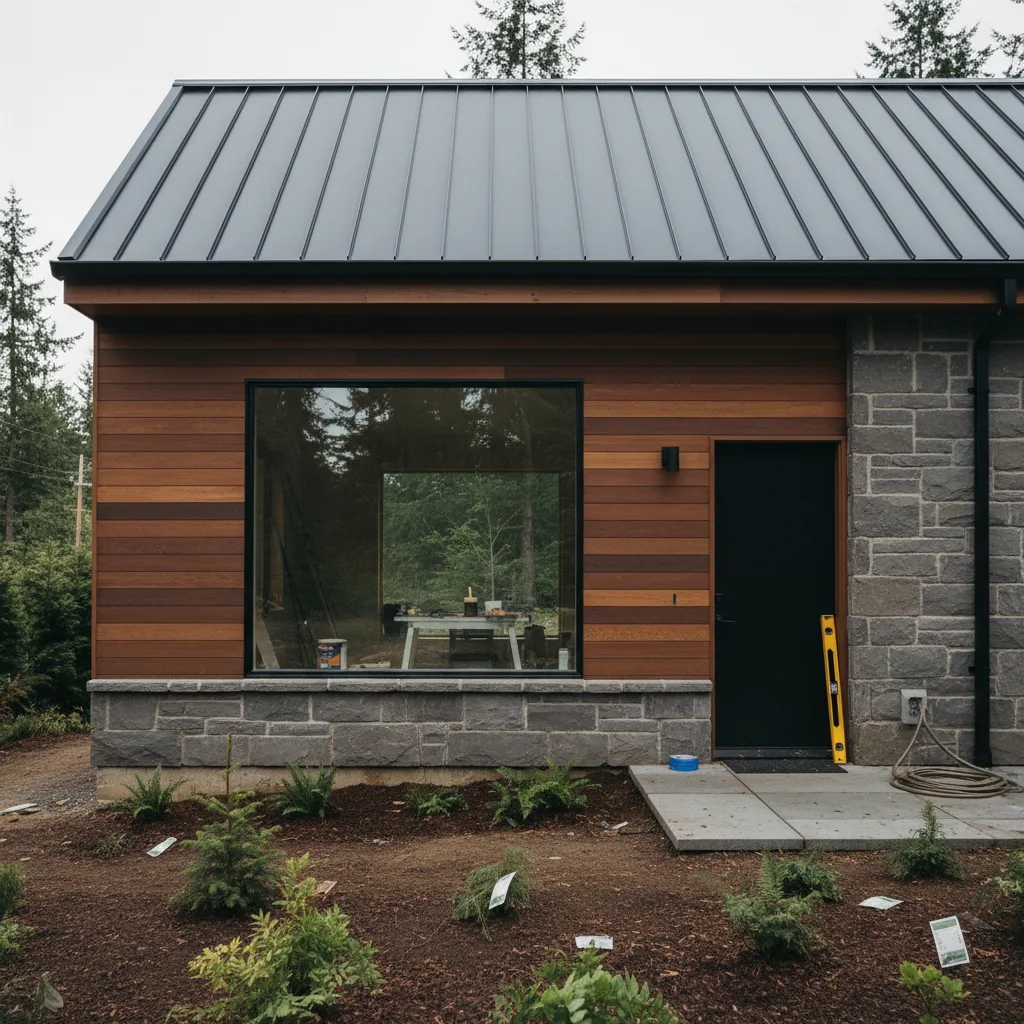
Planning an ADU and garage project in Bellevue? A full build typically runs $180,000 to $320,000 in 2026. Cosmetic garage conversions start near $110,000, while premium custom ADUs climb past $385,000. This is what your budget actually covers, what drives the price, and how to find a contractor who knows Bellevue permits.
The Honest 2026 Price for an ADU & Garage in Bellevue
Let's get straight to the numbers. Building a detached accessory dwelling unit (ADU), often combined with a new garage, is a significant structural project. Unlike an interior remodel, you are building a small house from the ground up. This involves excavation, foundation work, utility trenching, and full-system installations for plumbing, electrical, and HVAC. Based on real contractor invoices and permit data from the last year, a professionally managed ADU and garage project in Bellevue has a clear price spectrum.
The median project cost sits in the $180,000 to $320,000 range. This covers a well-appointed, code-compliant structure of around 600 to 800 square feet with a one or two-car garage. For simpler projects, like finishing an existing attached garage into a habitable space without adding a new foundation, you might land in the $110,000 to $180,000 range. On the high end, for architect-designed ADUs with premium materials, complex rooflines, or extensive site work on a sloped lot, budgets quickly exceed $385,000 and can reach $575,000 or more.
These figures are all-in costs, including labor, materials, project management, and a standard contractor’s markup. They do not, however, typically include architectural design fees, structural engineering reports, or significant landscaping, which can add another 10 to 20 percent to your total investment.
What Drives ADU & Garage Costs in Bellevue
See what a ADU build actually costs in your Bellevue zip.
Take 4 questions →Four main factors control the final price tag on your project: the complexity of the structure, the conditions of your lot, the quality of your finishes, and the cost of local labor and administration. Understanding these helps you see where your money is going and where you have control.
Labor and Materials
The Seattle metro area, including Bellevue, is one of the more expensive construction markets in the country. High demand for skilled trades like framers, electricians, and plumbers keeps labor rates at a premium. According to the National Association of Home Builders, labor accounts for roughly 40 to 50 percent of a new build's cost. Materials make up the other large portion. While lumber prices have stabilized since their post-pandemic peaks, items like high-performance windows, custom cabinetry, and quality siding common in Pacific Northwest architecture continue to be significant line items.
Site Conditions and Prep Work
This is the variable that most frequently surprises homeowners. Unlike a kitchen remodel, an ADU requires extensive groundwork. Key cost drivers include:
- Topography: A flat, clear lot is the cheapest canvas. A sloped lot in areas like Lakemont or Cougar Mountain requires retaining walls, more complex foundation engineering, and extensive excavation, adding tens of thousands to the budget.
- Soil Quality: Bellevue’s glacial till soil is generally good for building, but unexpected rock formations or poor drainage can necessitate costly soil reports and specialized foundation work.
- Utility Connections: Trenching for water, sewer, and electrical lines from the primary residence to the ADU is a major expense. The farther the ADU is from the main house, the higher the cost. Connecting to the city sewer main can be particularly expensive if your property has a long setback.
- Access: Can a concrete truck and excavator easily reach the build site? Tight access on smaller urban lots might require smaller equipment, which takes more time and increases labor costs.
Permits, Fees, and Soft Costs
Before a single nail is hammered, you will invest in "soft costs." These are the necessary administrative and design expenses. This includes paying an architect or designer for plans (typically 5-15% of construction cost), a structural engineer to approve those plans, and potentially a surveyor. Then come the city fees. Bellevue Development Services charges for plan review and permits based on the project's valuation. These fees, along with utility connection fees, can easily amount to several thousand dollars.
Bellevue ADU & Garage by Tier: 3 Real Project Examples
To make the numbers tangible, here are three common project scopes we see in the Bellevue area. These are composites based on real projects tracked through the Renology network. Costs reflect 2026 pricing for a standard 600-square-foot, one-bedroom ADU built over a new two-car garage.
| Tier | Scope of Work | Cost Range | Timeline |
|---|---|---|---|
| Cosmetic / Conversion | Converting an existing, attached garage. No new foundation. Adding insulation, drywall, and basic electrical/plumbing tied into the main house. Standard-grade finishes (vinyl plank flooring, stock cabinets, laminate countertops). Basic bathroom and kitchenette. | $110,000 - $180,000 | 4 - 6 months |
| Mid-Range / Standard Build | New detached ADU over a garage. Concrete slab foundation. Standard 2x6 wood framing. HardiePanel siding. Composition shingle roof. Mid-grade finishes (engineered hardwood, semi-custom cabinets, quartz counters, tiled shower). Energy-efficient windows and a ductless mini-split for HVAC. | $180,000 - $320,000 | 8 - 12 months |
| Premium / Custom | Architect-designed structure on a challenging lot. May include a daylight basement, complex rooflines, or extensive site work. High-end materials (cedar siding, standing seam metal roof, custom millwork). Luxury finishes (radiant floor heating, top-tier appliances, custom tile work). Smart home integration. | $385,000 - $575,000+ | 12 - 18 months |
Pro tip
The biggest difference between the Mid-Range and Premium tiers often isn't the size, but the cost of the "envelope." This includes windows, doors, siding, and roofing. High-performance European-style windows and premium siding can add $50,000 or more to a project compared to standard-grade materials.

Permits and Local Code in Bellevue
Building in Bellevue means working closely with Bellevue Development Services. The primary document governing your project will be the Bellevue Title 23 Land Use Code (LUC), which dictates what you can build, where you can build it, and how large it can be. Don't try to interpret this yourself; a good local architect or design-build firm will be your guide.
Key Regulations to Know
While codes are complex, a few key rules from the LUC often shape ADU projects in Bellevue. For example, a detached ADU cannot exceed 1,000 square feet of gross floor area. There are also specific rules about setbacks from property lines, maximum building height, and the percentage of your lot that can be covered by impervious surfaces like driveways and rooftops. These regulations directly influence the design and, consequently, the cost.
The Permitting Process
Getting a building permit for an ADU is not a quick errand. The process involves submitting detailed architectural and structural plans for review. A city plan checker will ensure your project complies with all building, fire, energy, and land use codes. In my experience, the initial review process in Bellevue can take anywhere from four to ten weeks. If the reviewer requests corrections or additional information, which is common, it can add several more weeks to the timeline. A contractor who promises to get permits in two weeks for a new structure is a major red flag.
Your lot's specific constraints, not your design wishlist, will have the final say on your project's scope and budget.
The Bellevue Neighborhoods Where ADU & Garage Costs Diverge
Not all Bellevue lots are created equal. The character and constraints of a neighborhood can significantly alter the cost and complexity of building an ADU. A project in Bridle Trails will face different challenges than one in Medina.
In my last walkthrough in Medina, I consulted on a project where the primary cost drivers were not the structure itself, but the constraints of the neighborhood. With its large estate lots, mature trees, and high property values, there's an expectation of architectural continuity. Design review can be more stringent, pushing homeowners toward more expensive materials and complex designs to match the main house., extensive root systems from protected trees often require specialized foundation engineering or repositioning the ADU, adding significant cost.
Contrast this with a neighborhood like Bridle Trails. While still an affluent area, many lots are zoned for equestrian use and have a more rural character. The key challenge here is often space and utilities. Lots can be sprawling, meaning the distance from the main house to the proposed ADU site can be substantial. A 200-foot utility trench for water, sewer, and power is vastly more expensive than a 30-foot one. Additionally, some older properties in the area might still be on septic systems, which can create major complications for adding a new dwelling unit, sometimes requiring a completely new and costly septic system.
Key takeaway
When budgeting, factor in the unique character of your neighborhood. The "soft" rules of local aesthetics and the "hard" rules of lot size, tree cover, and utility access can be just as impactful as the cost of lumber and labor.
Timeline: Realistic Week-by-Week Expectations
A common mistake is to think only about the construction phase. A full ADU project timeline begins the day you first call an architect or contractor. A realistic schedule for a standard, detached ADU in Bellevue is 36 to 64 weeks from start to finish.
- Phase 1: Design and Engineering (6 - 12 weeks): This is where you work with a designer or architect to create the plans. It involves initial concepts, revisions based on your feedback, and finalizing the construction documents. A structural engineer will also review and stamp the plans during this phase.
- Phase 2: Permitting (4 - 10 weeks): Your contractor or architect submits the plans to Bellevue Development Services. This is largely a waiting period, though you might need to respond to requests for clarification from the city.
- Phase 3: Site Prep and Foundation (3 - 5 weeks): Once permits are in hand, work begins. This includes excavation, grading, utility trenching, and pouring the concrete foundation and slab. This phase is highly weather-dependent.
- Phase 4: Framing and Rough-ins (6 - 8 weeks): The skeleton of the building goes up. This includes walls, floors, and the roof structure. Plumbers, electricians, and HVAC technicians then run all the pipes, wires, and ducts through the open walls. This phase concludes with the first set of city inspections.
- Phase 5: Exterior and Interior Finishes (12 - 20 weeks): This is the longest phase and where the structure starts to look like a home. It includes roofing, siding, windows, insulation, drywall, painting, flooring, cabinet installation, tile work, and fixture installation.
- Phase 6: Final Inspections and Punch List (2 - 4 weeks): The city building inspector returns for final checks. Once approved, you and your contractor will do a final walkthrough to identify any small items that need correction (the "punch list").
How to Vet a Bellevue Contractor
Finding the right contractor is the single most important decision you will make. A great contractor protects your investment; a poor one can turn it into a nightmare. Look for a firm with specific, recent experience building ADUs in Bellevue.
Questions to Ask Every Potential Contractor
Go beyond just asking for a price. A professional will welcome detailed questions.
- How many detached ADUs have you built in Bellevue in the last three years? Can I see photos and speak to the homeowners?
- Who will be my primary point of contact and how often will we communicate?
- How do you handle unforeseen conditions, like hitting rock during excavation? What does your change order process look like?
- Can you show me a sample project schedule and budget breakdown?
- Which parts of the project do you self-perform, and which do you subcontract? How long have you worked with your primary subcontractors?
Red Flags to Watch For
It is just as important to know what to avoid.
- Vague Bids: A one-page quote with a single number is a sign of an unsophisticated or dishonest operator. Demand a detailed, itemized bid that breaks down costs for labor, materials, and major project phases.
- Pressure for a Large Upfront Deposit: Washington state law has specific rules for contractor payments. A request for more than 25 percent of the project cost before work begins is a major warning.
- No Local References: A contractor who has only worked in other cities won't know the specifics of working with Bellevue's inspectors and permit processes. This local knowledge is invaluable.
- The Lowest Bid: The cheapest bid is often the most expensive in the long run. It usually means the contractor has missed something, is using subpar materials, or plans to make up the difference with a constant stream of change orders.
Important
Always verify a contractor's license and insurance yourself. Use the Washington State Department of Labor & Industries (L&I) public lookup tool. Confirm they have an active license, bond, and no outstanding infractions. Also, ask for a certificate of insurance showing both general liability and workers' compensation coverage.
Renology Take
As an editor focused on structure, the pattern I see homeowners miss most often with ADUs is underestimating the cost and complexity of everything that happens below ground. We get excited about floor plans and finishes, but the real budget-busters are often hidden. The cost to run a new sewer line across your property, the need for a retaining wall on a gentle slope, or the discovery of poor soil requiring deeper footings can easily add $30,000 to $50,000 to a project before a single wall is framed. My advice is to allocate at least 25 percent of your initial budget thinking to site work and utilities. Get a geotechnical report if you have any doubts about your soil. A few thousand dollars spent on due diligence upfront can save you from a five-figure surprise later.
Sources & Methodology
These cost ranges are reconstructed from publicly available labor and permit data, the latest Remodeling Magazine cost-vs-value report, and Renology's own Project of the Day network, a rolling sample of real homeowner invoices we collect from Bellevue-area contractors. Last refreshed April 2026.
- National Association of Home Builders (NAHB) Remodeling Market Index, Q1 2026
- Washington State Department of Labor & Industries, King County Prevailing Wage Data, 2026
- City of Bellevue Development Services, Permit Data, 2026
- Remodeling Magazine, 2026 Cost vs. Value Report
- Washington State Energy Code, 2021 Edition
- Bellevue Title 23 Land Use Code (LUC)
- Renology Project of the Day Network, aggregated 2026 contractor invoices in Bellevue
Methodology
How Renology estimates adu / garage conversion costs in Bellevue.
Renology treats this page as a planning benchmark for Bellevue, Washington, not a final quote. We compare published local guide data, contractor scope patterns, permit-sensitive work, climate or site constraints, and finish-level assumptions.
Cost range
$180,000-320,000
Timeline
32-56 weeks
Source type
Editorial dataset
Local factor: Pacific Northwest cool-wet (Köppen Csb): 38 inches annual rain, mild summers, frost-free winters near sea level.
Use these numbers to shape a scope and spot missing line items. Confirm permits, structural work, electrical, plumbing, gas, waterproofing, drainage, and code-sensitive details with the local building department and a licensed professional.
Compare against the full Renology Cost IndexBellevue · pre-screened
Get 3 Bellevue ADU bids in 48 hours.
Our editors already vetted Bellevue ADU builders. Answer 4 questions and we send 3 written bids inside 48 hours, with the real price for your scope, not their inflated first-call number.
- Free, no commission
- Pre-screened locally
- Bids inside 48 hours
Takes about 60 seconds. We'll text you when bids arrive.