Asphalt driveway
$3k to $7.2k
- 600 square feet of standard hot mix asphalt
- Priced at $5 to $12+ per square foot installed
- Lasts 15 to 30 years with sealing
- HomeGuide national range, not a local average
Plan a driveway around vehicle loads, access and where water will drain. Compare concrete, asphalt and pavers using the same measured area and base scope. Demolition, grading, drainage and work at the public sidewalk or curb need their own line items.
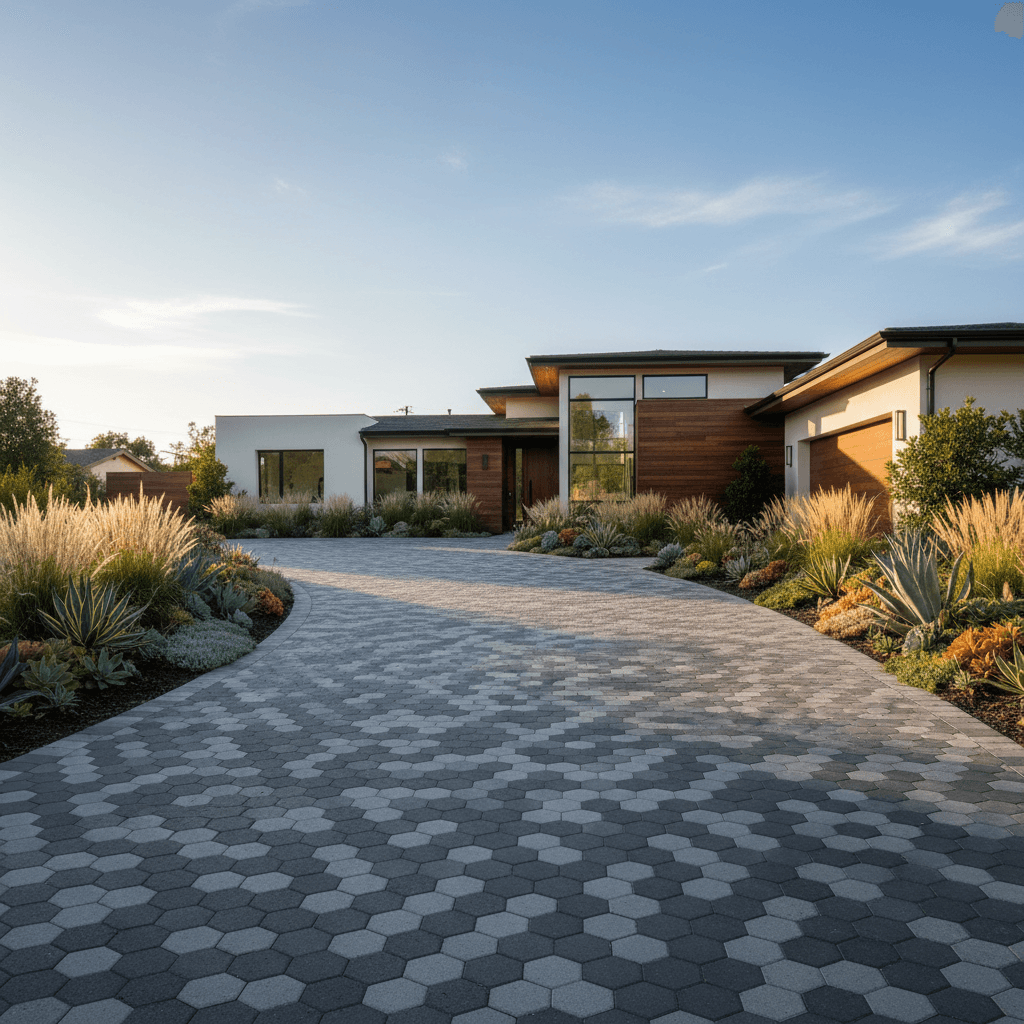
Match the budget to the work you need. Each tier is a published range for that scope, with its source listed at the end of this guide, and the local figures below show how your area compares. None of them is a quote. Confirm dimensions, preparation, materials, labor, fees and exclusions in each proposal.
$3k to $7.2k
$3.5k to $8.6k
$5.7k to $17.2k
Use the ranges to discuss scope and allowances. A site assessment and written proposals determine your actual cost. Material prices and service-life ranges below depend on product, installation and conditions; they are not warranties. References support their specific topics and do not validate all prices in this guide.
Compare project costs by areaConcrete, pavers, and stamped finishes that last 20+ years.
A driveway is the first thing visitors see and the most punished surface on your property. Heat, rain, oil drips, vehicle weight and years of sun all work on it. Material choice and the base underneath decide how soon you replace it.
National installed prices for a 2-car driveway, from HomeGuide: $3,000 to $7,200 for 600 square feet of asphalt, $3,500 to $8,600 for a 24 by 24 foot standard concrete driveway, and $5,700 to $17,200 for the same size in pavers. Los Angeles metro households reported an average of $5,788 on driveway or walkway work in the Census Bureau's 2023 housing survey, a figure that mixes repairs and new walkways with full replacements.
Standard concrete costs $6 to $10 per square foot installed: a plain gray slab with a broom finish. Basic decorative finishes such as a single-color stain or exposed aggregate run $10 to $15. A quality concrete driveway should last 30 to 40 years with proper maintenance.
Stamped concrete costs $8 to $26 per square foot, including the pour and the pattern, with colored concrete at the high end.
Interlocking pavers cost $10 to $30 per square foot installed and last 25 to 75 years. Single pavers can be lifted and replaced when one cracks or stains. High-end stone or brick paving runs $25 to $50 per square foot.
Permeable pavers cost $10 to $30 per square foot installed and sit on a thicker gravel base so water drains through. In Southern California, the turf replacement program allows permeable hardscape inside a converted lawn area but no other hardscape.
Asphalt costs $5 to $12+ per square foot installed and lasts 15 to 30 years. Sealing costs $1 to $2 per square foot each time it is done.
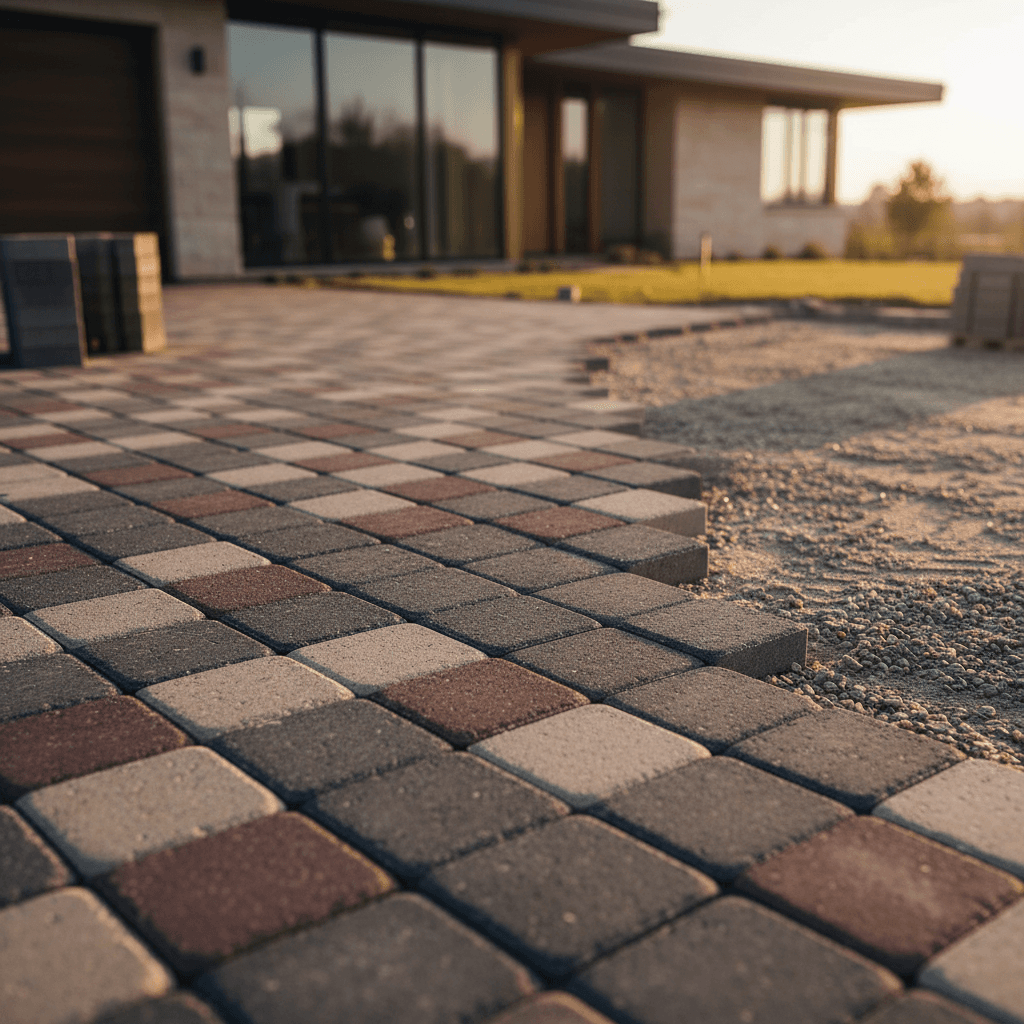
What sits under the surface decides how long it lasts. A residential concrete driveway should be at least 4 inches thick, 5 to 6 inches for heavy vehicles, with thicker edges. A paver driveway sits on geotextile fabric, Class II road base and bedding sand, with edging and polymeric joint sand.
Ask every bidder to write down the excavation depth, base material and compaction. A surface-only price is not comparable with a full replacement.
What sits under the surface decides how long a driveway lasts.
Compare local soil, slope, vehicle use, rainfall and freeze-thaw exposure with the proposed driveway system. Ask the contractor to explain the base and drainage specification for your property. A metro label alone does not determine which material will work best.
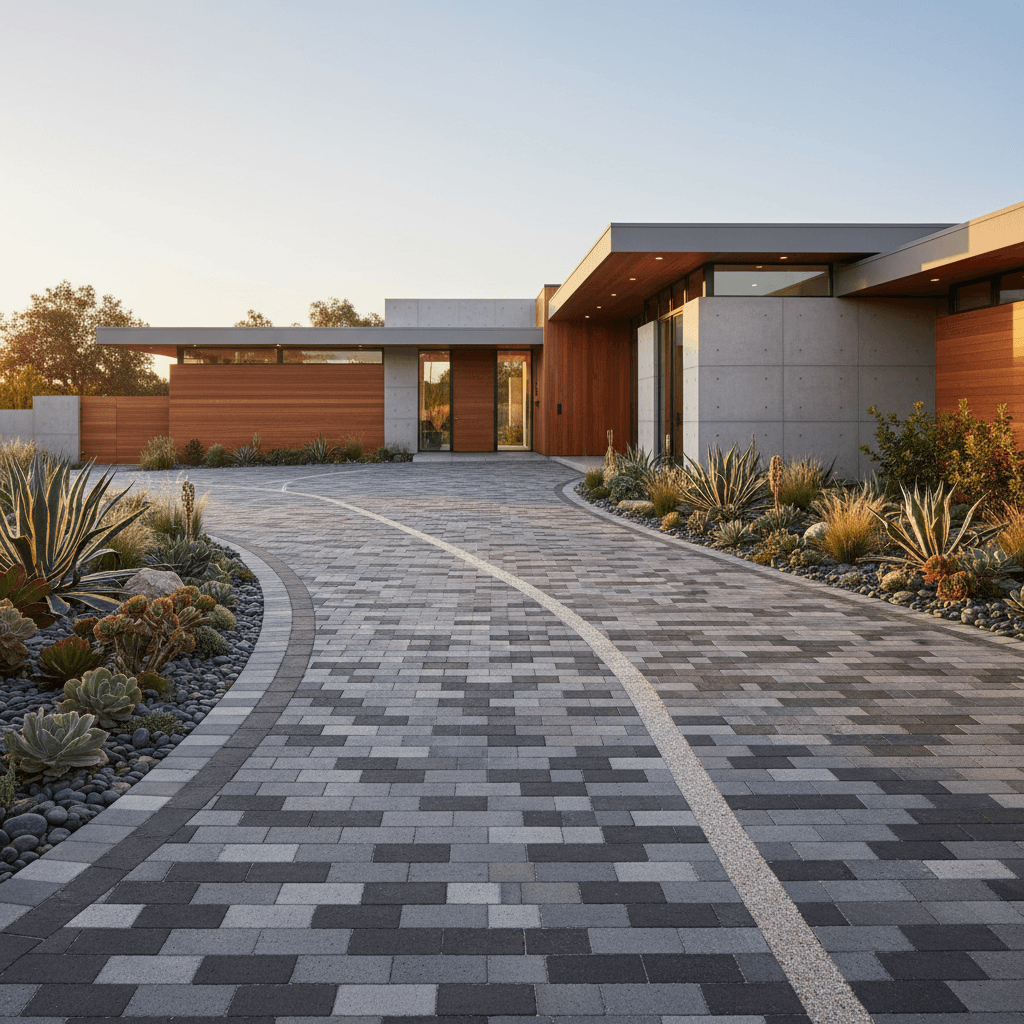
The fastest way to destroy a new driveway is poor drainage. Water pooling at the house edge causes foundation problems, and water running across the driveway erodes the base. Grade the surface so water runs away from the house, with channel drains where needed. Professional grading costs $3 to $8 per square foot, and many driveway contractors include it in their price.
Asphalt costs $5 to $12+ per square foot installed and lasts 15 to 30 years. A 600-square-foot asphalt driveway runs $3,000 to $7,200.
Concrete costs $6 to $15 per square foot for a standard 4-inch slab and lasts 30 to 40 years. A 24 by 24 foot concrete driveway runs $3,500 to $8,600. A 6-inch slab for heavy vehicles costs $8 to $20 per square foot.
Labor sets the local price. Cement masons and concrete finishers earned a median $30.67 an hour in the Los Angeles metro and $38.88 in the Seattle metro in May 2025, before the contractor's overhead and margin.
HomeGuide's national installed prices and lifespans for common driveway materials:
These prices assume standard site conditions. Demolition, grading, drainage and tight access are priced on top (see Hidden costs below).
Resurfacing lays a new wear surface over a sound existing base. Asphalt resurfacing costs $1 to $3 per square foot, or $550 to $2,200 for a 24 by 24 foot driveway. Concrete resurfacing costs $3 to $7 per square foot, or $1,700 to $2,900 for the same size. Resurface when the existing base is structurally sound, the height increase works at the garage and door transitions, and you are not changing material. Replace when the base has failed, you are changing material, you are adding drainage, or the driveway must be raised or regraded.
If you plan an EV charger, gate or other utility work, discuss the route with the appropriate installer before the new surface is built. Coordinating approved underground work can avoid reopening the driveway later. Ask for a project-specific quote.
Most homeowners treat the driveway as a standalone project. It rarely should be. If a larger renovation is coming, the driveway is one of the last exterior items to schedule, because heavy equipment and material deliveries during construction damage a new pad. If an ADU build, garage expansion or addition is planned, the driveway scope changes: part of the pad may come out for foundation work, drainage paths may shift, and a curb cut may need widening for construction access. See the renovation order of operations guide for sequencing logic.
Compare the complete specification, not just the price per unit. Ask which preparation, installation and finish work the allowance includes.
Typical service life: 30 to 40 years · Regional fit: Both
Standard gray concrete, 4-inch slab
Typical service life: 30 to 40 years · Regional fit: Both
Colored concrete at the high end of the range
Typical service life: 25 to 75 years · Regional fit: Both
Each paver can be replaced individually
Typical service life: 20 to 35 years · Regional fit: Both
Gravel-filled joints over an aggregate base let water through
Typical service life: 25 to 75 years · Regional fit: SoCal
Block paving stone or brick
Typical service life: 15 to 30 years · Regional fit: PNW
Sealcoat every 2 to 3 years
The guide’s planning timeline is 1 to 3 weeks. Ask the contractor to separate design, approvals, ordering and construction in the schedule for your scope.
Confirm the measured area, vehicle use, access and drainage. Agree on the surface and complete preparation scope.
Confirm approvals and any public curb or sidewalk work with the responsible authority. Plan utility coordination before excavation.
Remove the existing surface and prepare the grade and base for the site conditions and selected system.
Install the specified surface, edges and drainage details. Have the contractor document the agreed material and preparation scope.
Follow the installed system’s curing or settling instructions and keep vehicles off until the contractor confirms it is ready.
Inspect drainage, transitions and the finish together. Confirm cleanup, use instructions and warranty responsibilities.
Give each contractor the same project description and product selections. Ask what is included, excluded or left as an allowance, who handles approvals, and how changes will be agreed in writing.
A residential concrete driveway should be at least 4 inches thick, and 5 to 6 inches for heavy vehicles. A paver driveway needs geotextile fabric, road base, bedding sand and edging. Get the base written into every bid.
The budget tiers use HomeGuide's national installed ranges for a 2-car driveway, built from contractor estimates. The Census figures are averages of what metro households said they spent on driveway or walkway work, small repairs included. The BLS wages are what cement masons earn, before the contractor's overhead and margin.
Start with the authority responsible for your property. Costs and requirements vary within a metro. Browse California city guides.
Editorial planning notes; confirm the current scope, requirements and prices locally.
Los Angeles metro households reported an average of $5,788 on driveway or walkway work and San Francisco metro households $9,166 (Census American Housing Survey 2023; medians are not published for these metros). Median cement mason wage, May 2025 (BLS): $30.67 an hour in Los Angeles, $36.53 in San Francisco, $31.98 in San Diego.
Seattle-Tacoma-Bellevue households reported an average of $5,111 on driveway or walkway work (Census American Housing Survey 2023; the median is not published for the metro). Cement masons in the metro earned a median $38.88 an hour in May 2025 (BLS).
Los Angeles metro households reported an average of $5,788 on driveway or walkway work in the Census 2023 housing survey, a mix of repairs, walkways and replacements. For a full 2-car replacement, HomeGuide's national installed ranges are $3,500 to $8,600 for standard concrete and $5,700 to $17,200 for pavers. Cement masons in the metro earned a median $30.67 an hour in May 2025, before the contractor's overhead.
Seattle-Tacoma-Bellevue households reported an average of $5,111 on driveway or walkway work in the Census 2023 housing survey. HomeGuide's national range for a 600-square-foot asphalt driveway is $3,000 to $7,200, and a 24 by 24 foot concrete driveway runs $3,500 to $8,600. Seattle-area cement masons earned a median $38.88 an hour in May 2025, higher than in Los Angeles, San Francisco or San Diego.
Stamped concrete costs $8 to $26 per square foot and pavers $10 to $30, per HomeGuide. Pavers last 25 to 75 years, and a single cracked or stained paver can be lifted and replaced instead of patching a slab. A quality concrete driveway lasts 30 to 40 years with proper maintenance. Choose stamped concrete for a continuous surface and pavers for repairability.
Permeable pavers cost $10 to $30 per square foot installed, the same range as standard pavers, while pervious concrete runs $8 to $16. They need a deeper gravel base, deeper still on clay soils. In Southern California, the turf replacement program allows permeable hardscape inside a converted lawn area, but its rebate pays for the lawn conversion, not for paving a driveway.
Confirm the requirements for your exact scope with the building department responsible for the property. HomeGuide puts most residential concrete driveway permits at $50 to $200. Work on the curb, apron or public sidewalk can need a separate permit from the city. Ask the contractor to identify required permits, fees and inspections in writing.
A new concrete driveway takes foot traffic after 24 to 48 hours and light vehicles after 7 to 10 days, and reaches full strength at 28 to 30 days, per HomeGuide. A paver driveway takes a week to install. Permit review, demolition and material delivery come on top, so ask the contractor for those dates in writing before you sign.
A Renology representative calls to understand your plans and connects you with suitable contractors.
Find a ProFree to request a match. No obligation to hire.
Permits, costs and local conditions change by city. Pick the guide for your area.