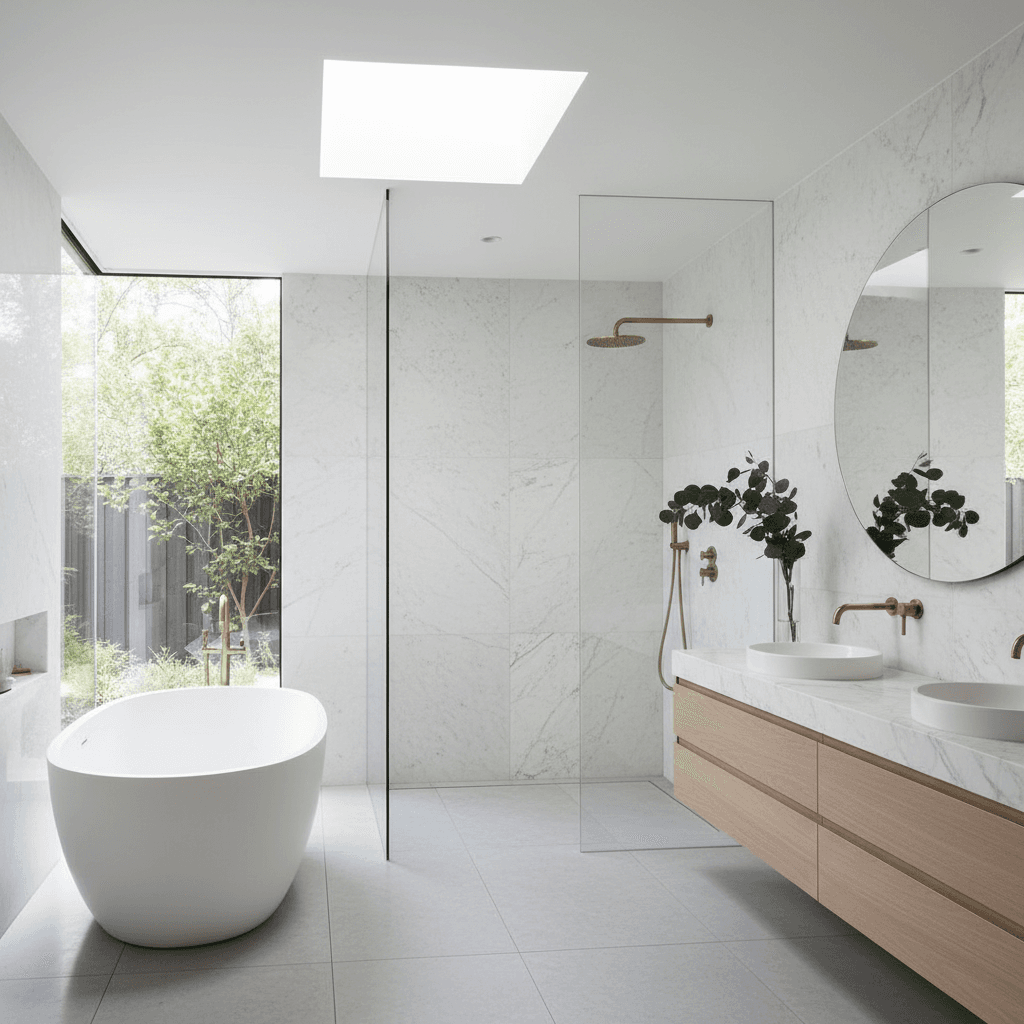
The short answer
Who issues the permits for a Seattle bathroom remodel?
A Seattle bathroom remodel usually involves two permit offices. SDCI issues the building and electrical permits, and Public Health, Seattle & King County issues the plumbing permit whenever plumbing is installed, relocated or changed. SDCI's residential checklist calls for a bathroom exhaust fan of at least 50 CFM vented directly outside, and any work that reduces ventilation needs a permit no matter how small. More than half of Seattle's housing units were built before 1980 (Census ACS 2024), so budget for lead-safe work, older pipes behind the tile and possible subfloor repair.
More than half of Seattle's homes were built before 1980. In one of them, ask what can be checked before demolition, such as the fan duct in the attic or the drain from the basement. Then agree how damage found behind the tile gets photographed and priced.
Discuss your scope with a Renology advisor and check suitable contractor options. Free for homeowners, with no obligation.
Finish refresh: inclusions & limits
Covers a like-for-like vanity and toilet, faucet trims, mirror, paint and a fan replacement on the existing duct. SDCI exempts minor alterations of $6,000 or less in any six-month period, but connecting a new fan or light is electrical work that needs an SDCI permit, and changing plumbing needs a county permit. This scope does not fix a shower that already leaks behind the tile.
Rebuild the wet area: inclusions & limits
Includes demolition, a new mixing valve and drain, backer and waterproofing, tile, glass, and an exhaust fan of at least 50 CFM ducted outside per SDCI's checklist. Public Health inspects the plumbing rough-in and asks owners to allow several business days after requesting an inspection. SDCI's energy checklist requires insulating any framing cavity exposed during the work, so price insulation for opened exterior walls.
Change the layout: inclusions & limits
Adds new drain and vent routes, possible joist changes, new circuits and a new fan duct path. For a basement bathroom, SDCI's checklist sets a 6 foot 4 inch minimum ceiling in existing basements and attics, versus 6 feet 8 inches in new construction or additions. SDCI requires full plan review, not STFI, to turn uninhabited attic storage into living space.
What a bathroom remodel costs in Seattle in 2026.
Seattle's permit records give a bathroom budget a firm middle. On 126 bathroom permits SDCI took in for single-family homes and duplexes since September 2024, owners declared a median of $30,000, and half of them landed between $15,000 and $48,750.
$30,000
The 2025 Cost vs Value report prices a midrange bathroom remodel in Seattle at $36,146 and an upscale one at $107,451. The Census Bureau's housing survey puts the median spent on bathroom projects across the Seattle-Tacoma-Bellevue metro at $10,000, a figure that includes small repairs and DIY. The permit count is modest because plumbing permits come from Public Health, Seattle & King County and SDCI exempts minor alterations of $6,000 or less, so many smaller jobs never file an SDCI building permit. A bid for your room adds what none of these records show: the fan duct, the subfloor and the pipes behind the tile.
All the numbers and where they come from
| Figure | Value | What it measures |
|---|---|---|
| Median permit value | $30,000 | Declared project cost on 126 bathroom building permits for single-family homes and duplexes, filed September 2024 to September 2026. Half fall between $15,000 and $48,750. (Seattle SDCI building permits, open data) |
| Top tenth of permits | $83,750+ | One in ten of those permits declared $83,750 or more. (Seattle SDCI building permits, open data) |
| Midrange bathroom remodel | $36,146 | Cost vs Value 2025 model price for a midrange bathroom remodel. (JLC, 2025 Cost vs Value, Seattle) |
| Universal design bathroom | $58,151 | Cost vs Value 2025 model price for a universal design bathroom remodel. (JLC, 2025 Cost vs Value, Seattle) |
| Upscale bathroom remodel | $107,451 | Cost vs Value 2025 model price for an upscale bathroom remodel. (JLC, 2025 Cost vs Value, Seattle) |
| What households spent | $10,000 | Median spent on bathroom projects in the Seattle-Tacoma-Bellevue metro in 2023, small updates and DIY work included (margin of error $1,983). (U.S. Census Bureau, American Housing Survey 2023, Table 16) |
| Plumber wage | $45.78 an hour | Median plumber wage in the Seattle-Tacoma-Bellevue metro, May 2025. Tile setters earned a median $38.00. Contractors bill above wages. (U.S. Bureau of Labor Statistics, May 2025 wages, Seattle-Tacoma-Bellevue) |
| Toilet rebate | Up to $100 | The Saving Water Partnership pays up to $100 per toilet, for up to 2 old toilets per household, replaced with a MaP Premium model (an independent flush-performance rating) using 1.1 gallons per flush or less. (Saving Water Partnership, Toilet Replacement Rebate) |
| Budget line | Define it | Watch for |
|---|---|---|
| Wet area rebuild | Demolition, valve, drain, waterproofing, tile and glass. JLC's 2025 Cost vs Value report lists a Seattle midrange bath remodel at $36,146 and an upscale one at $107,451. | Both are model projects priced for Seattle and sit above the national averages in the same report. Compare bids on scope, not on the headline figure. |
| Permits and inspections | An SDCI building or STFI permit priced on project value, an SDCI electrical permit, and a separate Public Health plumbing permit. | Ask who pulls each permit. In Washington, paid plumbing work must be done by a certified journeyman plumber who is or works for a registered contractor. |
| Behind the tile | Subfloor, rot, and old supply or drain lines found after demolition, plus lead-safe work in pre-1978 homes. | Put unit prices for subfloor and pipe replacement in the contract, so discoveries in an older Seattle house are priced before work pauses. |
For inclusions, allowances and exclusions, see how to read a contractor quote line by line. For broader benchmarks, see the Renology Cost Index.
What a bathroom remodel budget buys in Seattle.
$15,000
The bottom quarter of Seattle bathroom permits. This covers a refresh: vanity, toilet, faucet trims, mirror, paint and a new fan on the existing duct. Connecting a new fan or light still needs an SDCI electrical permit, and the Saving Water Partnership pays up to $100 back per qualifying toilet.
$30,000 to $49,000
From the median to the top of the middle half, which runs from $15,000 to $48,750, with the Cost vs Value midrange remodel at $36,146 inside it. That is enough to take the tub or shower to the studs and rebuild valve, drain, waterproofing, tile and glass. It also covers a fan of at least 50 CFM (cubic feet of air a minute) ducted outside, and insulation for any exterior wall that gets opened.
$55,000 to $85,000
From the Cost vs Value universal design bathroom at $58,151 to where the top tenth of permits begins at $83,750. Layouts change here: a moved toilet or shower, new drain and vent routes, or a basement bathroom, where SDCI's checklist sets a 6 foot 4 inch minimum ceiling.
$105,000 and up
Cost vs Value prices its upscale Seattle bathroom remodel at $107,451. The money here goes into tile, glass and fixtures, and into the joists when a drain moves across the floor.
Why two Seattle bathroom bids rarely cover the same work.
About 72 percent of these bathroom permits declare a round multiple of $5,000. That tells you the figure is a round number written on a form, not a price. It also covers the SDCI building permit only; the Public Health plumbing permit and the SDCI electrical permit are filed separately. A contractor's bid has to carry labor, materials, overhead and margin, plus a cushion for what sits behind the tile.
Lay the bids side by side and check who pulls which permit. One may include the SDCI building, SDCI electrical and Public Health plumbing permits, with a certified journeyman plumber working for a registered contractor, as Washington requires. It may allow for county inspections that need several business days' notice, and carry unit prices for subfloor, framing and pipe found once the old shower comes out. Another may leave those for later. Plumbers in the Seattle-Tacoma-Bellevue metro earned a median $45.78 an hour in May 2025 and tile setters $38.00; insurance, overhead and margin come on top.
Bring the bid checklist to every contractor so the numbers describe the same job.
Make the guide yours
Refresh, rebuild or a new bathroom in the basement?
The scope question in a Seattle bathroom is how far behind the tile you go. A refresh can put a new fan on the existing duct but will not fix a shower that already leaks behind the tile. A rebuild takes the wet area to the studs. A basement bathroom needs at least 6 feet 4 inches of ceiling.
No scope selected. The guide and checklist are available without choosing a project tier or leaving contact details.
Separate moisture diagnosis from a cosmetic update
A stain on the ceiling below a Seattle bathroom usually points one of two ways: a leak in the shower or drain, or a fan that dumps damp air into the attic. SDCI's checklist wants at least 50 CFM vented directly outside. Find out where the duct ends before anyone prices new tile.
A leak repair that changes plumbing goes on a Public Health, Seattle & King County permit, pulled by the plumber. A new fan or new wiring goes on an SDCI electrical permit. Either fix belongs on its own line, apart from tile and fixtures.
Official starting point: Seattle SDCI permit resources.
A decision to work through · illustrative scenario
A stain on the ceiling below the shower
The owners want a new vanity and tile. The ceiling below shows a stain, and the fan duct ends in the attic instead of outside. New tile alone would cover both problems.
Before you compare bids: Ask each bidder to find the source first: a leak test on the shower and drain, and a fan of 50 CFM or more rerouted outside, priced apart from the finishes.
What gets inspected before the walls close in a Seattle bathroom?
Seattle splits the inspections between two offices, and the schedule has to allow for both. The plumber pulls the Public Health permit, SDCI handles building and electrical, and plumbing rough-in, the electrical cover inspection and waterproofing all have to pass before the walls close. The county asks for several business days after an inspection request, so build that into the calendar.
- 1
Assess and decide. Pull permit history for the house, check whether the fan exhausts outside or only into the attic, and decide what moves. Moving drains changes the county plumbing permit and can change the SDCI permit route.
- 2
Permit and procure. Apply online for the SDCI STFI or building permit and the electrical permit, and have the plumber pull the Public Health permit. Order the valve, drain body and fan before demolition so rough-in is not held up.
- 3
Build and pass inspections. Plumbing rough-in, electrical cover inspection and waterproofing all happen before walls close. Allow several business days for county plumbing inspections, and keep the permit posted on site; SDCI permits last 18 months.
Ask for separate dates for design, permit review, ordering and construction.
The bathroom remodel checklist to give Seattle bidders
In Washington, paid plumbing work has to be done by a certified journeyman plumber who is, or works for, a registered contractor, so credentials belong on the list next to the fan specification. Add unit prices for subfloor, framing and pipe. More than half of Seattle's housing units were built before 1980, and those prices are easier to agree before the old shower comes out.
- Fan make, CFM rating of at least 50, and the exterior termination point marked on the drawing.
- A permit list: SDCI building or STFI, SDCI electrical, and Public Health plumbing, with who pulls each.
- The plumber's certification and the contractor's Washington L&I registration, checked before you sign.
- Unit prices for subfloor, framing and pipe replacement found once the old shower comes out.
- Smoke and carbon monoxide alarm updates that SDCI checks at final, priced in the electrical scope.
If you ask for help, a Renology advisor talks through your scope and checks local contractor availability. You decide whether to go ahead.
Already have a proposal? Check its scope and exclusions with the quote-review tool before your next contractor conversation.
Condensation, permits and unpermitted work in Seattle baths
Seattle bathroom questions tend to start with moisture and end with money. Here are the four that come up most.
Will a stronger fan solve condensation?
Not by itself. A fan that vents into the attic leaves the moisture in the house, however strong it is. SDCI's checklist asks for at least 50 CFM vented directly outside. Check where the duct ends, how long and bent the run is, and whether a timer keeps the fan running after a shower.
How much does it cost to renovate a bathroom in Seattle?
On 126 Seattle bathroom permits for single-family homes and duplexes since September 2024, owners declared a median project cost of $30,000, with half between $15,000 and $48,750. The 2025 Cost vs Value report prices a midrange bathroom remodel in Seattle at $36,146. A budget of $30,000 to $49,000 covers taking the tub or shower to the studs and rebuilding valve, drain, waterproofing, tile and glass, with a fan ducted outside.
Do I need a permit to remodel a bathroom in Seattle?
Often. SDCI exempts minor alterations of $6,000 or less in any six-month period, but new or altered wiring needs an SDCI electrical permit, and installing, relocating or changing plumbing requires a permit from Public Health, Seattle & King County. Work that reduces ventilation needs a permit however small. Non-structural interior work in a single-family home typically qualifies for SDCI's STFI permit.
What happens if a Seattle bathroom was added without a permit?
It can complicate later work. SDCI's Tip 316 says removing and rebuilding part of a structure built without a permit is not treated as a repair, and the owner must prove the original work was legally permitted before SDCI issues an STFI permit. Ask SDCI through its Send Us a Question page before buying, fixing or expanding an unpermitted bathroom.
Check contractor credentials with Washington Labor & Industries. Match the business identity and scope to the proposal.
Sources
- SDCI, Do You Need a Permit?
- SDCI, House Additions & Remodels
- SDCI, Construction Permit: Subject-to-Field-Inspection
- SDCI Tip 316, Subject-to-Field-Inspection Permits
- SDCI STFI Checklist, Residential and Energy Code Requirements
- SDCI, Electrical Permit
- SDCI, Construction Permit: Addition or Alteration
- WA L&I, City electrical permits and inspections
- Public Health, Seattle & King County, Plumbing and gas permits
- Public Health, Seattle & King County, Plumbing and gas piping inspections
- Public Health, Seattle & King County, Hire a registered contractor
- WA Department of Commerce, RRP Program
- U.S. Census Bureau, ACS 2024 5-year, Table B25034, Seattle city
- JLC, 2025 Cost vs Value, Seattle
- Seattle SDCI building permits, open data
- U.S. Census Bureau, American Housing Survey 2023, Table 16
- U.S. Bureau of Labor Statistics, May 2025 wages, Seattle-Tacoma-Bellevue
- Saving Water Partnership, Toilet Replacement Rebate
Keep planning.
Explore the general bathroom remodeling guide for project-wide ideas.
- Kitchen remodeling in Seattle →
- ADU & garage conversion in Seattle →
- Roof replacement in Seattle →
- Outdoor living in Seattle →
- Basement remodeling in Seattle →
- Decks & pergolas in Seattle →
- Flooring installation in Seattle →
Bathroom remodeling in other regions
Ready to hire? See vetted Seattle contractors →
Planning guidance, not a quote. Confirm current requirements for your address with the official sources linked above.