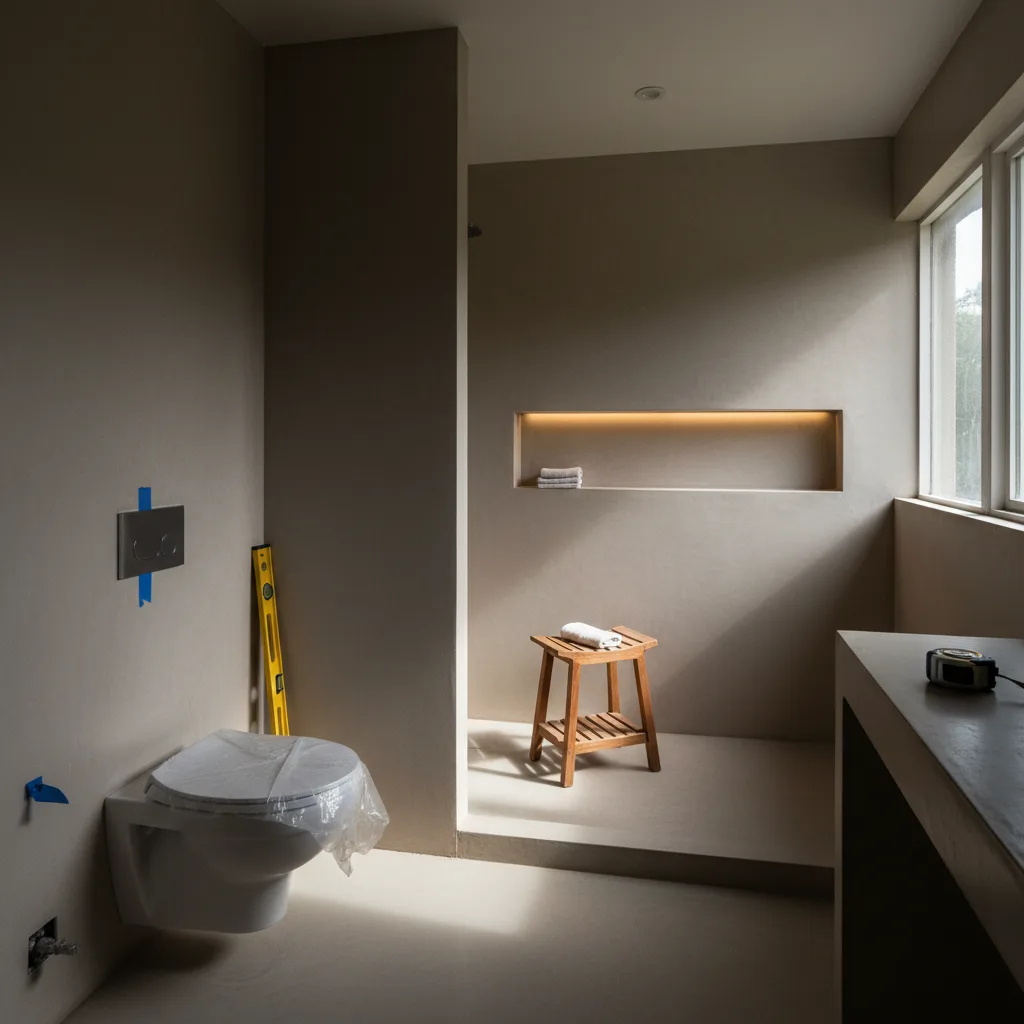
Planning a bathroom renovation in Culver City? A full project typically runs from $36,000 to $60,000 in 2026. Cosmetic refreshes start near $22,000, while premium custom work can easily climb past $72,000. This is what your budget actually covers, what drives the price up, and how to vet a contractor who truly understands Culver City permits.
The Honest 2026 Price for a Bathroom in Culver City
As the kitchens and baths editor for Renology, I review hundreds of project invoices each year. One thing is clear: national cost averages are misleading for a market like Los Angeles. The unique blend of high labor costs, demanding building codes, and a discerning design aesthetic in neighborhoods like Culver City creates a specific pricing environment. For 2026, we see the majority of full-gut bathroom renovations landing squarely in the $36,000 to $60,000 range. This figure represents a complete overhaul of a standard five-by-eight-foot bathroom, including design, labor, materials, and permits.
Of course, this is a baseline. A simple cosmetic update, keeping the existing layout and plumbing, can be achieved for as little as $22,000. On the other end of the spectrum, a primary suite expansion involving structural changes, premium materials like Calacatta marble, and high-end fixtures from brands such as Waterworks or Kallista can push budgets well over $100,000. Understanding where your project falls on this spectrum is the first step toward a successful renovation.
Why Culver City Costs What It Does
Culver City is not an isolated market; it’s part of the greater Los Angeles ecosystem. This means you’re contending with high demand for a finite pool of top-tier, licensed, and insured trade professionals. From plumbers to electricians to expert tile setters, the cost of skilled labor is the single largest component of your budget, often accounting for 40 to 50 percent of the total project cost. Add to this the logistical complexities of working in dense urban neighborhoods, strict California building codes, and the high cost of materials, and the price structure begins to make sense.
What Drives Bathroom Costs in Culver City
See what a bathroom remodel actually costs in your Culver City zip.
Take 4 questions →Beyond the sticker price of a slab of quartz or a designer faucet, several core factors dictate your final invoice. A budget is a balancing act between three main pillars: the scope of work (labor), the quality of materials, and the administrative overhead of permits and professional services.
Labor: The Biggest Line Item
Your general contractor’s fee covers the complex orchestration of your project, from demolition to the final coat of paint. This includes their own crew and a network of trusted subcontractors. In Los Angeles County, prevailing wage data from the California Department of Industrial Relations shows that a licensed plumber or electrician can bill between $90 and $150 per hour. A skilled tile setter, crucial for achieving the flawless look of a Zellige or marble installation, commands a similar rate. A full gut renovation of a 40-square-foot bathroom can easily require 120 to 200 hours of combined labor, making it the most significant cost driver.
Materials: From Off-the-Shelf to Bespoke
This is where your design vision comes to life, and where costs can vary dramatically. The difference between good, better, and best is substantial.
- Tile: A standard ceramic subway tile from a big-box store might cost $5 per square foot. A handcrafted cement tile from a boutique like Clé Tile can be $30 per square foot, and a waterjet-cut marble mosaic could exceed $100 per square foot. For a typical shower surround and floor, this choice alone can create a $5,000 variance.
- Vanity: A stock vanity from a major retailer can be found for under $1,000. A semi-custom piece with upgraded hardware might run $2,500 to $4,000. A fully custom, furniture-grade vanity built by a local cabinetmaker to your exact specifications will start at $5,000 and go up from there.
- Fixtures: A complete plumbing package (faucet, shower trim, toilet) from a reliable brand like Kohler or Moen might cost $1,500. A similar package from a luxury brand like Rohl or Brizo, featuring an unlacquered brass finish, can easily triple that price.
Permits, Design, and Soft Costs
These are the "invisible" costs that are critical for a legal and well-executed project. Expect to allocate 10 to 15 percent of your total budget to soft costs. This includes fees for architectural or interior design plans, structural engineering if you are moving walls, and the permit fees themselves, which are paid directly to the Culver City Building Safety Division. Skipping these steps to save a few thousand dollars is a recipe for failed inspections, costly rework, and potential issues when you eventually sell your home.
Culver City Bathrooms by Tier: Three Real Project Examples
To make these numbers tangible, we have aggregated data from recent Renology projects in the Culver City area. Here is a breakdown of what you can expect at three distinct budget levels. Note that these are all-in costs, including labor, materials, and basic project management.
| Tier | Typical Scope of Work | Cost Range (2026) | Timeline (Construction) |
|---|---|---|---|
| Cosmetic Refresh | Keep existing layout. Replace vanity, toilet, and light fixtures. Refinish or replace tile. New paint and hardware. No plumbing or electrical relocation. | $22,000 to $36,000 | 2 to 4 Weeks |
| Mid-Range Gut | Full demolition to studs. New plumbing and electrical. Convert tub to walk-in shower with frameless glass. Install new vanity, tile, and fixtures. Add recessed lighting and an exhaust fan. | $36,000 to $60,000 | 4 to 7 Weeks |
| Premium Custom | Expand footprint or reconfigure layout. Custom cabinetry and high-end stone slabs. Luxury fixtures, steam shower, heated floors. Designer involvement and structural engineering. | $72,000 to $110,000+ | 6, 10+ Weeks |
Editor's note
The most common project we see in Culver City is the Mid-Range Gut. Homeowners are often updating bathrooms in homes built between the 1940s and 1970s, which requires bringing plumbing and electrical systems up to today's code. This is not just an aesthetic choice but a necessary investment in the home's safety and functionality.
Permits and Local Code in Culver City
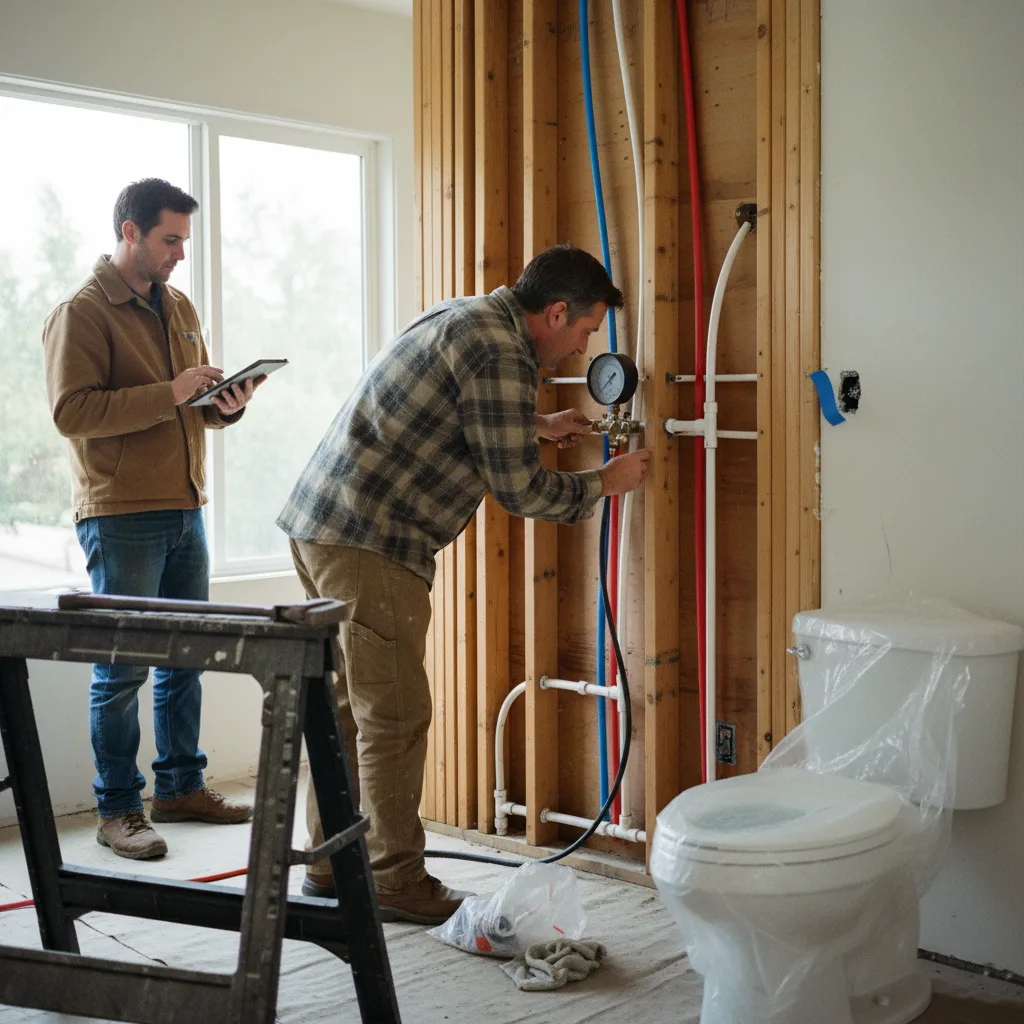
Any renovation that alters the structure, plumbing, or electrical systems of your home requires a permit. In Culver City, this process is managed by the Culver City Building Safety Division, not the larger Los Angeles Department of Building and Safety (LADBS), a distinction a good local contractor will know instinctively.
Getting a permit isn’t just paperwork; it’s your insurance that the work inside your walls is safe, legal, and built to last.
When You Need a Permit
A permit is triggered by more than you might think. While a simple cosmetic refresh (paint, new faucet in the same location) is typically exempt, nearly every other task is not. You will need a permit for:
- Relocating any plumbing fixture (toilet, sink, shower drain).
- Adding or moving electrical outlets or light fixtures.
- Removing or altering any wall, even if it is not load-bearing.
- Replacing a window or exterior door.
Your contractor is responsible for pulling the permits, but the homeowner is ultimately responsible for ensuring the project is properly permitted. The approved plans and permit card must be on-site for every inspection.
California Title 24 and CALGreen Requirements
Beyond the basic building code, all renovations in California must comply with Title 24, the state’s energy efficiency standards. For your bathroom, this has specific implications. All new lighting must be high-efficacy (typically LED), and any new exhaust fans must be high-efficiency and properly vented. Toilets are limited to a maximum of 1.28 gallons per flush, and showerheads to a maximum of 1.8 gallons per minute. These are not suggestions, they are mandatory requirements that will be checked during your final inspection.
The Culver City Neighborhoods Where Bathroom Costs Diverge
Culver City isn’t a monolith. The age, style, and constraints of the housing stock can significantly impact renovation costs from one neighborhood to another. A contractor who has worked extensively in the area will know how to price a job accurately based on the specific challenges your home presents.
I recently walked a potential project in Carlson Park, and the complexities were immediately apparent. The home, a beautiful 1940s Spanish-style bungalow, had its original galvanized steel plumbing and cloth-insulated wiring. The bathroom renovation wasn't just about selecting beautiful tile, it was about a full system replacement. The budget had to account for opening up more walls than usual to run new PEX water lines and modern electrical circuits, plus the delicate work of patching original plaster. This "discovery work" can add 15 to 20 percent to a budget compared to a newer home.
Carlson Park: Preserving Pre-War Charm
Homes in areas like Carlson Park and the surrounding historic neighborhoods often require a more surgical approach. The goal is to integrate modern amenities without sacrificing the home's original character. This can mean sourcing period-appropriate fixtures, matching existing wall textures, and dealing with decades-old infrastructure. Contractors who specialize in older homes often charge a premium for their expertise, but it is money well spent to avoid costly mistakes and preserve your home's value.
Blair Hills and Lindberg Park: Mid-Century Modern Constraints
In contrast, the mid-century homes found in neighborhoods like Blair Hills and Lindberg Park present different challenges. These homes, often built in the 1950s and 60s, may have smaller bathroom footprints and "slab-on-grade" foundations, which makes relocating plumbing drains significantly more expensive as it requires cutting into concrete., the post-and-beam construction common in MCM architecture can complicate running new ventilation or recessed lighting without disturbing the home's structural integrity. Access can also be a factor in hillside areas, potentially increasing labor costs for material delivery and debris removal.
Timeline: Realistic Week-by-Week Expectations
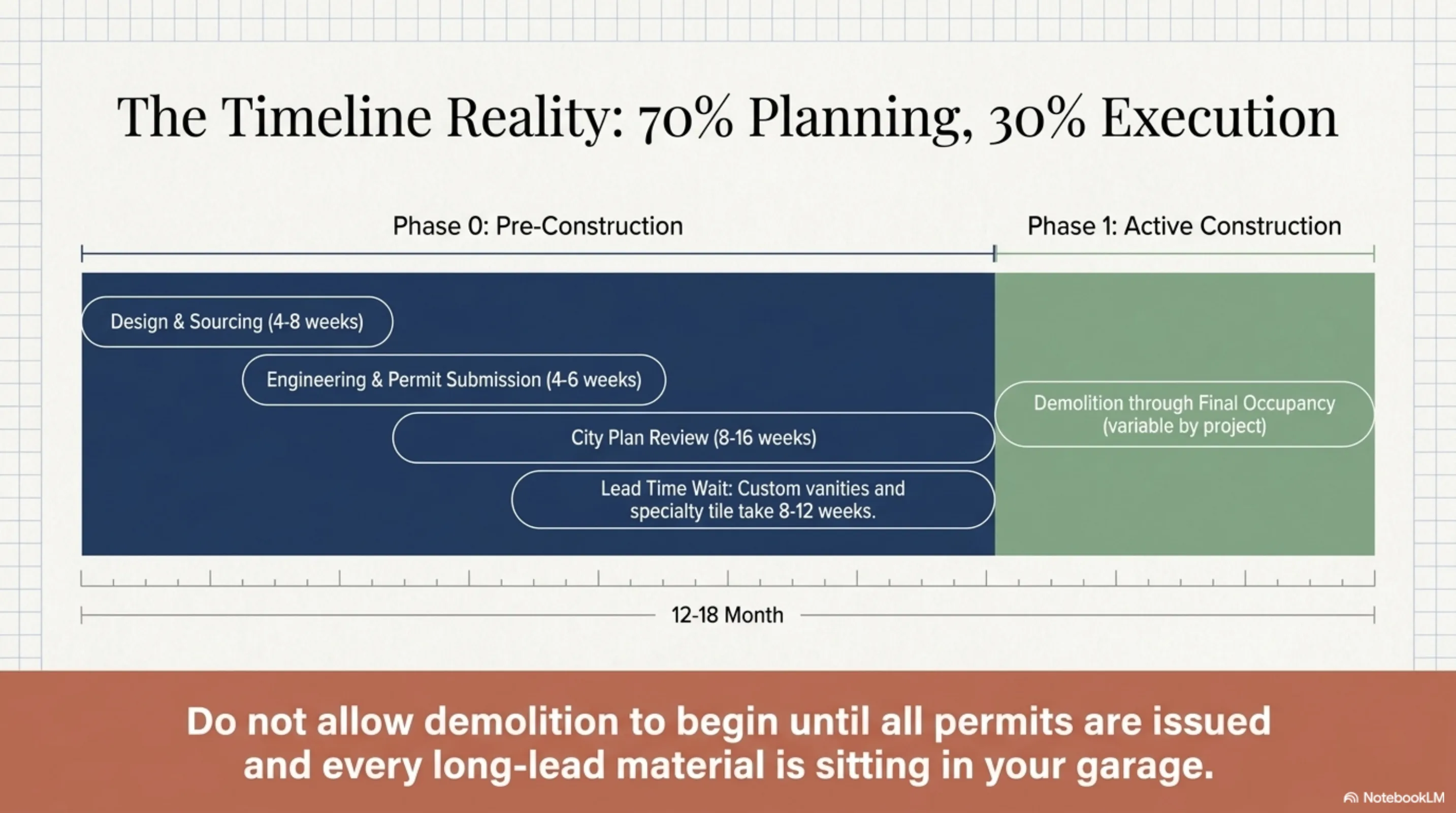
The "active construction" phase of three to eight weeks is only part of the story. A well-planned renovation follows a meticulous sequence, and the upfront work is just as important as the demolition. Rushing the planning phase is the number one cause of budget overruns and schedule delays.
Phase One: Design, Selection, and Procurement (4 to 12 Weeks)
This is the homework phase. It happens long before a hammer swings.
- Weeks 1-2: Initial consultations with designers and contractors.
- Weeks 3-4: Finalize layout and schematic designs.
- Weeks 5-8: Select all materials and fixtures. This is critical. Every single item, from the tile grout color to the cabinet pulls, should be specified before the final contract is signed.
- Weeks 9-12: Contractor finalizes bid, signs contract, and submits for permits. You place orders for all long-lead-time items, such as custom vanities or special-order tile, which can take eight weeks or more to arrive.
Phase Two: Active Construction (4 to 7 Weeks for a Mid-Range Project)
Once permits are approved and materials are on site, the physical work begins.
- Week 1: Site protection and demolition. Rough plumbing and electrical work begins.
- Week 2: Completion of all in-wall work (plumbing, electrical, ventilation, blocking for grab bars). This is followed by the crucial rough-in inspection.
- Week 3: Insulation and drywall installation. Taping, mudding, and sanding create a smooth surface for finishes.
- Week 4: Waterproofing the shower area, followed by tile installation.
- Week 5: Grouting, sealing tile, and painting. The room starts to take its final shape.
- Week 6: Installation of the vanity, countertops, and plumbing fixtures (toilet, sink, shower trim).
- Week 7: Installation of lighting, mirrors, hardware, and shower glass. This is followed by a final inspection from the city.
Pro tip
Do not allow construction to begin until every single material has been delivered and inspected on-site. Starting demo before your custom vanity or tile has arrived is a recipe for a stalled project and a crew that has to be pulled off your job to work elsewhere.
How to Vet a Culver City Contractor
Finding the right contractor is the most important decision you will make. A great partner will guide you through the process, anticipate problems, and deliver a high-quality result. A bad one can turn your dream project into a nightmare. Your vetting process should be thorough and methodical.
Questions to Ask Every Potential Contractor
Go beyond a simple request for a bid. Use your initial conversations to interview them.
- "What is your California CSLB license number?" (You should verify this online before meeting.)
- "Can you provide a certificate of insurance showing your general liability and workers' compensation coverage?"
- "How many bathroom renovations have you completed in or near Culver City in the past year?"
- "Can I speak with your two most recent clients?"
- "Who will be the dedicated project manager for my job, and how often will they be on-site?"
- "How do you handle unforeseen conditions, like rotted subfloors or outdated plumbing?" (Look for a clear process for documenting the issue and approving a change order.)
Red Flags to Watch For
Be wary of contractors who:
- Provide a vague, one-page bid with few details. A professional bid should be several pages long and itemize costs for labor and materials.
- Pressure you to sign a contract immediately with a "special price" that expires soon.
- Ask for a large down payment. In California, a down payment for a home improvement project cannot exceed 10% of the contract price or $1,000, whichever is less.
- Suggest you can save money by skipping the permit process. This is illegal and puts all the risk on you.
Renology Take
In my experience tracking hundreds of renovations, the most common mistake homeowners make is focusing their budget and attention almost exclusively on the "jewelry" of the bathroom: the tile, the fixtures, the vanity. These are the exciting, visible elements. However, the long-term success and durability of your bathroom depend entirely on what is behind the walls. The quality of the waterproofing system, the integrity of the plumbing, and the safety of the electrical work are what truly matter. A great contractor will spend as much time talking about the Schluter-KERDI membrane and the dedicated 20-amp circuit for the new outlet as they do about the marble countertop. Prioritize the infrastructure. It is the unglamorous but essential foundation of a bathroom that will not only look beautiful but will also last for decades without a single issue.
Sources & Methodology
These cost ranges are reconstructed from publicly available labor and permit data, the latest Remodeling Magazine cost-vs-value report, and Renology's own Project of the Day network, a rolling sample of real homeowner invoices we collect from Culver City-area contractors. Last refreshed April 2026.
- National Association of Home Builders (NAHB) Remodeling Market Index, Q1 2026
- California Department of Industrial Relations, Los Angeles County Prevailing Wage Data, 2026
- Culver City Building Safety Division Permit Data, 2026
- Remodeling Magazine, 2026 Cost vs. Value Report
- Renology Project of the Day Network, aggregated 2026 contractor invoices in Culver City
- California Building Standards Commission (Title 24)
Methodology
How Renology estimates bathroom costs in Culver City.
Renology treats this page as a planning benchmark for Culver City, California, not a final quote. We compare published local guide data, contractor scope patterns, permit-sensitive work, climate or site constraints, and finish-level assumptions.
Cost range
$36,000-60,000
Timeline
3-8 weeks
Source type
Editorial dataset
Local factor: Mediterranean (Köppen Csa): 14 inches annual rain, hot dry summers, mild winters. UV intensity is high year-round.
Use these numbers to shape a scope and spot missing line items. Confirm permits, structural work, electrical, plumbing, gas, waterproofing, drainage, and code-sensitive details with the local building department and a licensed professional.
Compare against the full Renology Cost IndexCulver City · pre-screened
Get 3 Culver City renovation bids in 48 hours.
Our editors already vetted Culver City contractors. Answer 4 questions and we send 3 written bids inside 48 hours, with the real price for your scope, not their inflated first-call number.
- Free, no commission
- Pre-screened locally
- Bids inside 48 hours
Takes about 60 seconds. We'll text you when bids arrive.