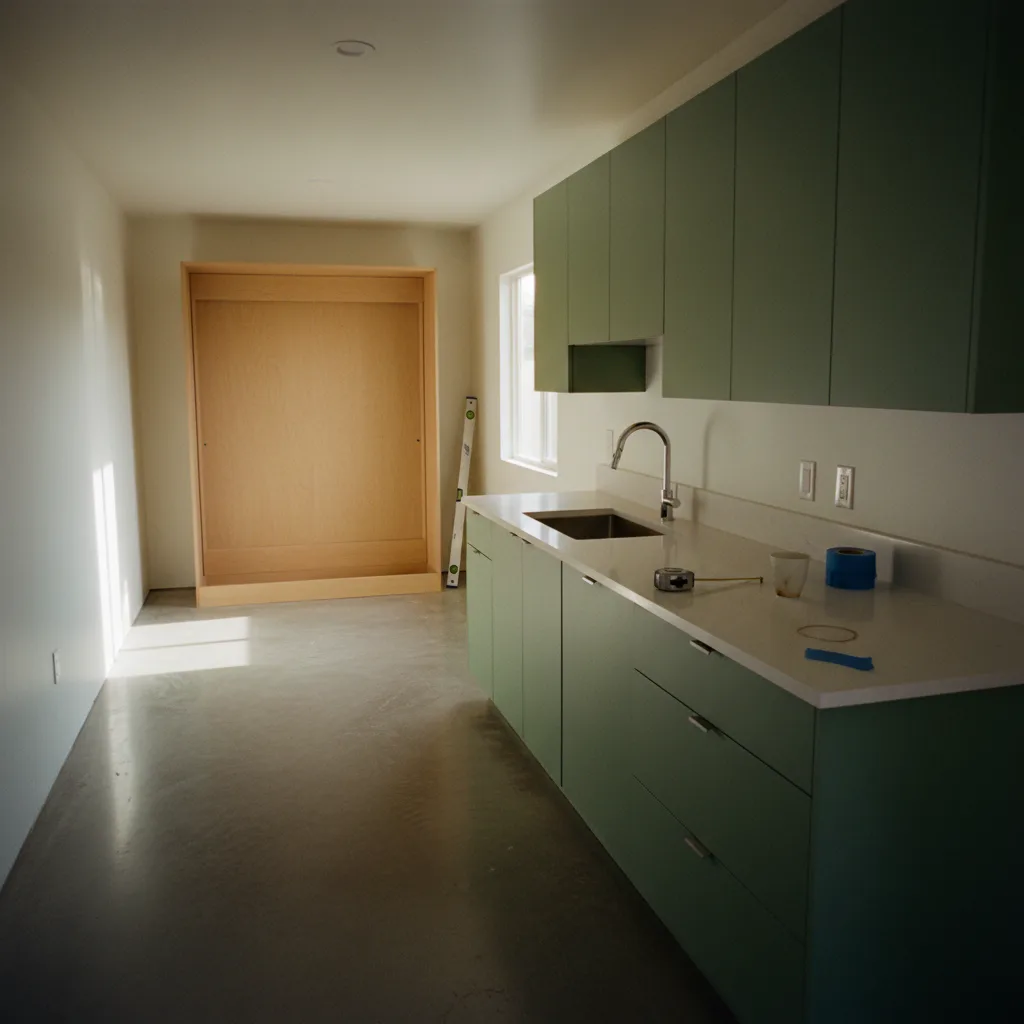
Planning an ADU and garage project in Culver City? A full build typically runs $215,000 to $385,000 in 2026. Cosmetic work starts near $130,000; premium custom builds climb past $460,000. This is what your budget actually covers, what drives the price, and how to find a contractor who gets Culver City.
The Honest 2026 Price for an ADU & Garage in Culver City
Let's get straight to the point. Building an Accessory Dwelling Unit (ADU), whether it's a garage conversion or a new detached structure, is a significant construction project. In Culver City, the density, property values, and building codes create a unique cost environment. When we analyze real contractor invoices, a clear pattern emerges for 2026. The all-in cost for a standard, well-built ADU project lands squarely between $215,000 and $385,000. This range covers design, permits, labor, materials, and basic finishes for a unit of about 400 to 750 square feet.
Of course, that's the middle of the market. On the lower end, a simple garage conversion that keeps the existing foundation and walls, focusing purely on interior finishing, can start around $130,000. This is your cosmetic tier. On the high end, for a custom-designed, two-bedroom detached unit with premium materials and complex site work, costs can easily exceed $460,000 and push towards $700,000 for larger, architecturally significant designs. Understanding where your project fits on this spectrum is the first step to a realistic budget and a successful build.
What Drives ADU & Garage Costs in Culver City
See what a ADU build actually costs in your Culver City zip.
Take 4 questions →A project's final price tag isn't just about square footage and fancy tile. It's a complex equation of labor, materials, and site-specific challenges. In a market like West Los Angeles, these factors are amplified. Here is how the costs break down.
The Price of Skilled Labor
Culver City is part of the greater Los Angeles construction market, where demand for qualified, licensed, and insured tradespeople is relentless. This is not a place where you'll find deep discounts on labor. According to the California Department of Industrial Relations, prevailing wages for key trades like electricians, plumbers, and framers are among the highest in the country. A good general contractor has a roster of trusted subcontractors, and keeping that team working smoothly costs money. Expect labor to account for 40 to 50 percent of your total project budget. This includes not just the crew on site but the project manager coordinating schedules, deliveries, and inspections.
Materials and Finishes
While labor is a huge component, your material choices dictate the rest of the budget. We are not just talking about countertops and flooring. California's Title 24 energy code, for instance, mandates specific performance from windows, insulation, and roofing materials, which are often more expensive than standard-grade products. Lumber prices, while down from their peak, remain volatile. The cost of concrete, rebar for foundations, and copper for wiring and plumbing adds up quickly. Your finish choices, from a $5 per square foot luxury vinyl plank to a $25 per square foot engineered hardwood, will create huge swings in the final number.
Pro tip
Finalize all your material selections before construction begins. Changing your mind about tile or a window size mid-project doesn't just add the cost of the new material; it creates delays and expensive change orders for the labor needed to adapt.
Permits, Fees, and Soft Costs
Before a single nail is hammered, you will spend thousands on "soft costs." This category includes architectural or design fees, structural engineering calculations, soil reports, and surveyor fees. Then come the city fees. The Los Angeles Department of Building and Safety (LADBS), which handles permitting for Culver City, has a schedule of fees for plan checks and inspections. You will also encounter school district fees, park fees, and potentially significant utility connection fees from LADWP for new water, sewer, and power lines. These can add $10,000 to $25,000 to the project cost before you even break ground.
Culver City ADU & Garage by Tier: 3 Real Project Examples
To make the numbers tangible, let's look at three common project types we see in Culver City. These are composites based on real invoices and contractor bids from the Renology network. Most homeowners find their project aligns with the Mid-Range tier, which offers the best balance of function, quality, and return on investment.
| Tier | Scope | Cost Range | Timeline |
|---|---|---|---|
| Cosmetic / Conversion | Converting an existing garage (approx. 400 sq ft) within the current footprint. New electrical sub-panel, interior framing, insulation, drywall, and paint. Basic kitchenette with pre-fab cabinets. Compact bathroom with standard fixtures. No changes to the foundation or roof structure. | $130,000 - $215,000 | 4 - 6 Months |
| Mid-Range / New Build | New construction of a detached one-bedroom ADU (500-750 sq ft). Standard foundation, 2x6 wood framing, stucco exterior. Mid-grade finishes: LVP flooring, quartz countertops, semi-custom cabinets, and a solid appliance package. Includes all utility trenching and hookups. | $215,000 - $385,000 | 8 - 12 Months |
| Premium / Custom | Architect-designed detached ADU (800-1,200 sq ft), often two-bedroom. May include complex foundation work for a sloped lot, steel moment frames for large window walls, high-end custom cabinetry, premium appliances, and designer lighting and plumbing fixtures. | $460,000 - $695,000+ | 12 - 16 Months |
Key takeaway
The biggest jump in cost and complexity is from a garage conversion to a new detached unit. A new build requires a new foundation, new utility lines from the street or main house, and a complete structural system, all of which are major cost centers.
Permits and Local Code in Culver City
Building in Southern California means working within a complex regulatory framework. While state laws have made it easier to get an ADU approved, the process still requires precision and a deep understanding of local requirements. Your contractor should be an expert here; this is not a place for them to learn on the job.
Navigating LADBS and State Mandates
Culver City's building permits are processed through the Los Angeles Department of Building and Safety (LADBS). Thanks to state laws like AB 970, local agencies are now under a "60-day shot clock" to approve or deny a completed ADU application, which has significantly reduced the long waiting periods of the past. However, getting to a "completed application" is the key. Your plans must be perfect and account for multiple layers of code.
The California Residential Code (CRC) governs the structure itself, but other codes are just as important. Title 24 is the state's energy code, which will dictate the R-value of your insulation, the U-factor of your windows, and the efficiency of your HVAC system. CALGreen building standards will add requirements for things like low-flow plumbing fixtures and construction waste diversion. A good architect or designer will bake all of this into your plans from day one to avoid costly revisions during the plan check process.
Utility Hookups and Site-Specific Rules
Getting a building permit from LADBS is only one part of the puzzle. You also need sign-off from the utility providers. For a new detached ADU, the Los Angeles Department of Water and Power (LADWP) will need to approve your plans for new water, sewer, and electrical connections. The cost and complexity of this work are frequently underestimated. Trenching across a landscaped backyard to run a new sewer lateral can cost tens of thousands of dollars and is one of the most common budget-busting surprises homeowners face.
Your lot is the ultimate boss. It dictates access, foundation design, and the real cost of connecting your new unit to the world.
The Culver City Neighborhoods Where ADU & Garage Costs Diverge
Not all lots in Culver City are created equal. The specific neighborhood you live in can have a real impact on your project's cost and timeline, often in ways that are not immediately obvious. The age of the housing stock, lot size, and even the width of the street can become major factors.
I was recently on a site walk for a proposed ADU in Carlson Park, and the challenges were classic for that area. The homes are beautiful, older Spanish and Craftsman styles on relatively generous lots. The upside is you have space to build. The downside is that the existing infrastructure is often decades old. The sewer lateral for the main house was original clay pipe, and the city required a full replacement out to the main line as a condition of the ADU permit. That was an unexpected $20,000 cost., the large, protected trees that give the neighborhood its character required an arborist report and careful foundation planning to avoid root damage, adding more soft costs and complexity.
Contrast that with a project I tracked in the Hayden Tract, near the Arts District. Here, the lots are much smaller, often zoned for light industrial or mixed use, and access is tight. The biggest cost driver was logistics. Getting a concrete truck or a lumber delivery onto the site required partial street closure permits and a flag crew. Labor costs were higher simply because every task, from moving materials to digging foundations, had to be done with smaller equipment or by hand in a constrained space. The design possibilities were more modern and exciting, but the physical act of building was a daily logistical puzzle that added hours, and therefore dollars, to the project.
Timeline: Realistic Week-by-Week Expectations
A common mistake is to think the timeline starts when construction begins. The reality is, you will be deep into the project for months before the first shovel hits the dirt. A realistic timeline is your best defense against frustration and anxiety. Here is a more honest breakdown for a standard, new-build ADU.
Phase 1: Design and Permitting (12 - 20 Weeks)
This is the foundation of your entire project. It involves finding an architect or designer, developing a concept, refining it into detailed construction drawings, and getting input from a structural engineer. Once the plans are complete, they are submitted to LADBS. While the city has 60 days to respond, that clock can be paused if they require corrections or more information. This back-and-forth can easily take three to five months.
Phase 2: Site Prep, Foundation, and Framing (8 - 12 Weeks)
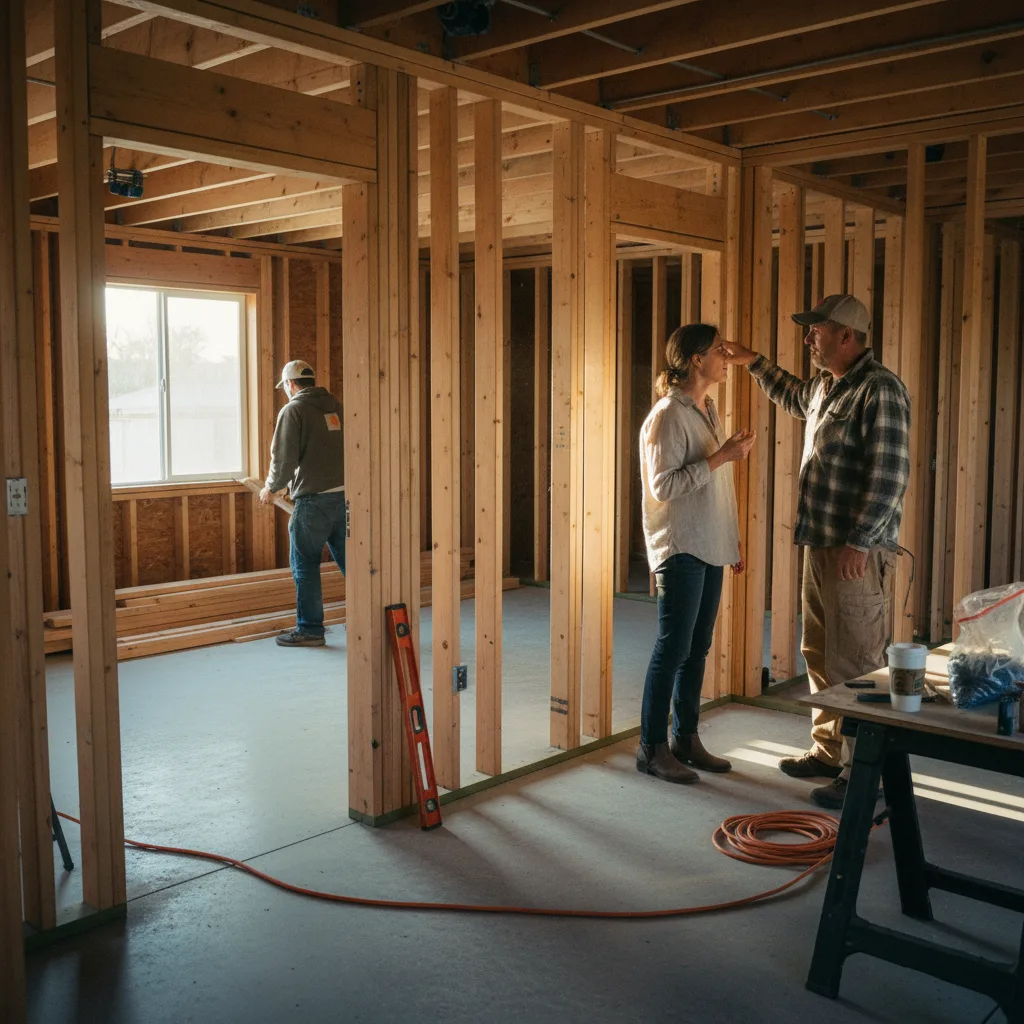
Once you have an approved permit, the physical work begins. This phase moves quickly and feels like great progress. It includes demolition of any existing structures, grading the site, trenching for utilities, and pouring the concrete foundation. After the concrete cures, the framing crew arrives to erect the walls, floor joists, and roof trusses. The skeleton of your ADU will appear in just a few weeks.
Phase 3: Rough-Ins and Exterior Finishes (8 - 10 Weeks)
With the frame up, the house gets "dried in" with roof sheathing, house wrap, and windows. This allows the interior trades to start their work regardless of the weather. Plumbers, electricians, and HVAC technicians will run all the pipes, wires, and ducts through the open walls. This is also when inspectors will visit to sign off on the work before any drywall goes up. On the outside, siding, stucco, or other finishes are applied.
Important
This phase is inspection-heavy. A failed inspection can cause a domino effect of delays, which is why working with a contractor who has a strong passing record with LADBS inspectors is critical.
Phase 4: Interior Finishes and Fixtures (8 - 14 Weeks)
This is where the structure starts to feel like a home. Drywall is hung and finished, followed by painting. Then comes the installation of flooring, cabinets, countertops, and tile. The final weeks are dedicated to setting plumbing fixtures, light fixtures, and appliances. This phase can feel slow, as it involves many different trades working in sequence in a small space.
How to Vet a Culver City Contractor
Choosing the right general contractor is the single most important decision you will make. A great contractor protects your budget, manages the schedule, and delivers a quality product. A bad one can turn your project into a financial and emotional nightmare. Diligence here is not optional.
Key Questions to Ask Every Candidate
When you interview potential contractors, go beyond "how much will it cost?" Their answers to these questions will reveal their professionalism and experience.
- Can you show me your California State License Board (CSLB) number? (Always verify it yourself online.)
- Can you provide a certificate of insurance for both general liability and workers' compensation?
- How many ADU or similar garage projects have you completed in the Culver City or West LA area in the last two years?
- Can I speak to the owners of your two most recent ADU projects?
- Who will be my dedicated project manager, and how often will they be on site?
- What does your payment schedule look like? (By law, a down payment cannot exceed 10% of the contract price or $1,000, whichever is less.)
- How do you handle change orders? Is there a standard markup for materials and labor on changes?
Red Flags to Watch For
Sometimes, what a contractor doesn't say is more telling than what they do. Be wary of these common red flags.
- A bid that is dramatically lower (20% or more) than the others. This often means they have missed something, are using uninsured labor, or plan to make up the difference with aggressive change orders.
- Vagueness about the permit process. An experienced local contractor will speak confidently about LADBS procedures and timelines.
- Pressure to sign a contract immediately. A professional will give you time to review the bid and check references.
- A request for a large upfront cash deposit. This is illegal in California and a massive warning sign.
- A portfolio with no relevant local work. Building in Culver City is different from building in the suburbs. You need someone who knows the local terrain.
Renology Take
After reviewing hundreds of ADU projects across Los Angeles, the meta-pattern is clear: homeowners consistently underestimate the cost of the "invisible" work. The budget you have in your head for beautiful finishes, smart appliances, and custom tile is often consumed by things you will never see again. I am talking about the cost of a new 200-amp electrical panel, the trenching and connection fees for a new sewer line, or the structural engineering needed to solve for poor soil conditions. These unglamorous, below-ground and behind-the-walls expenses are what separate a realistic budget from a fantasy. Focus first on the cost to create a safe, legal, and fully serviced structural shell. Only then should you allocate the remaining budget to the finishes. Get the bones right, and the rest will follow.
Sources & Methodology
These cost ranges are reconstructed from publicly available labor and permit data, the latest Remodeling Magazine cost-vs-value report, and Renology's own Project of the Day network, a rolling sample of real homeowner invoices we collect from Culver City-area contractors. Last refreshed April 2026.
- National Association of Home Builders (NAHB) Remodeling Market Index, Q1 2026
- California Department of Industrial Relations, Los Angeles County Prevailing Wage Data, 2026
- Los Angeles Department of Building and Safety (LADBS) Permit Data, 2026
- Remodeling Magazine, 2026 Cost vs. Value Report
- Renology Project of the Day Network, aggregated 2026 contractor invoices in Culver City
- California Building Standards Commission (Title 24)
- Culver City Municipal Code
Methodology
How Renology estimates adu / garage conversion costs in Culver City.
Renology treats this page as a planning benchmark for Culver City, California, not a final quote. We compare published local guide data, contractor scope patterns, permit-sensitive work, climate or site constraints, and finish-level assumptions.
Cost range
$215,000-385,000
Timeline
32-56 weeks
Source type
Editorial dataset
Local factor: Mediterranean (Köppen Csa): 14 inches annual rain, hot dry summers, mild winters. UV intensity is high year-round.
Use these numbers to shape a scope and spot missing line items. Confirm permits, structural work, electrical, plumbing, gas, waterproofing, drainage, and code-sensitive details with the local building department and a licensed professional.
Compare against the full Renology Cost IndexCulver City · pre-screened
Get 3 Culver City ADU bids in 48 hours.
Our editors already vetted Culver City ADU builders. Answer 4 questions and we send 3 written bids inside 48 hours, with the real price for your scope, not their inflated first-call number.
- Free, no commission
- Pre-screened locally
- Bids inside 48 hours
Takes about 60 seconds. We'll text you when bids arrive.