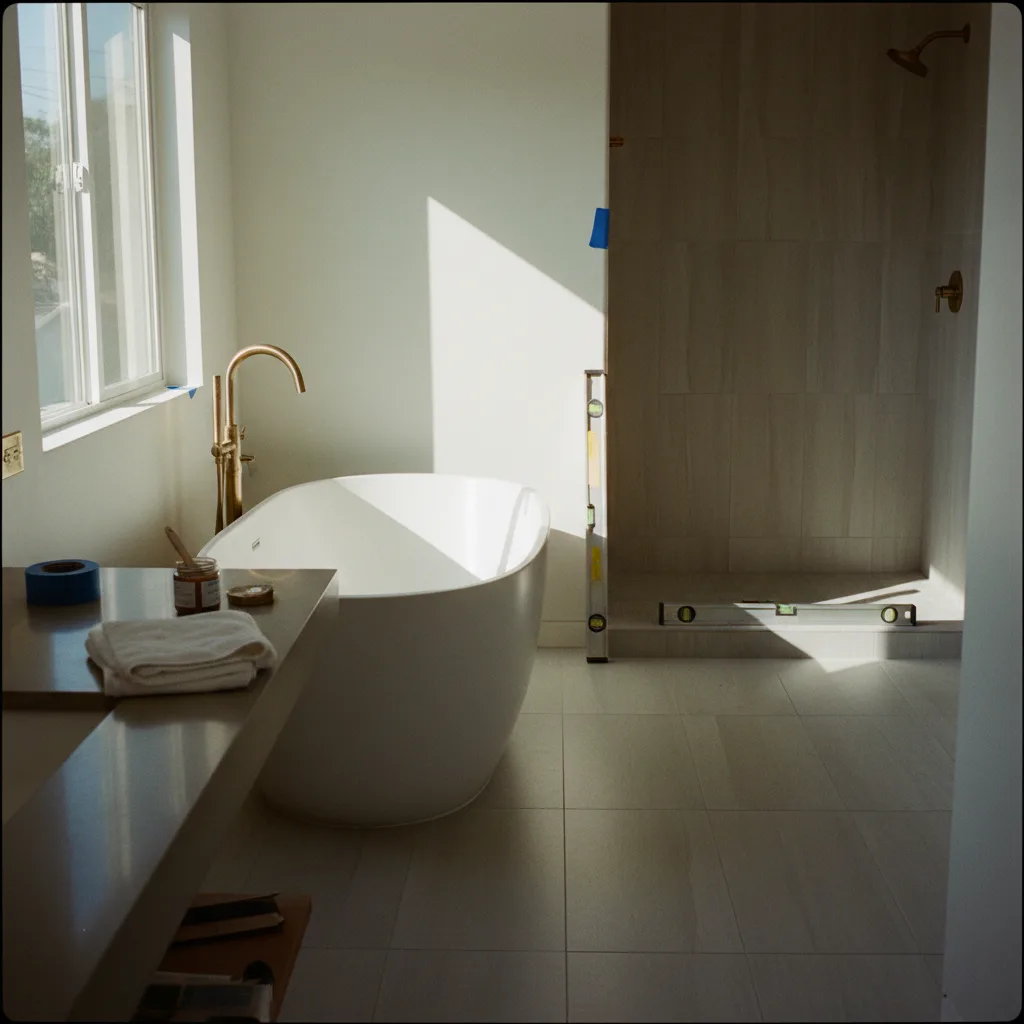
Planning a bathroom in Encinitas? A full project typically runs $33,000 to $55,000 in 2026. Cosmetic refreshes start near $20,000, while premium custom work climbs past $66,000. This is what your budget actually covers, what drives the price up, and how to vet a contractor who knows Encinitas permits.
The Honest 2026 Price for a Bathroom in Encinitas
As the kitchens and baths editor at Renology, I review hundreds of project invoices each quarter. The numbers for Encinitas tell a clear story: this is a premium market where quality craftsmanship and coastal-rated materials come at a cost. While national averages might suggest lower figures, the reality on the ground in San Diego County is different. A complete, gut renovation of a full bathroom in Encinitas will realistically land between $33,000 and $55,000. This range covers a standard five-by-eight-foot bathroom using quality, mid-range materials and a licensed, insured general contractor.
For homeowners looking for a lighter touch, a cosmetic refresh can be achieved for $20,000 to $33,000. This involves keeping the existing layout and plumbing locations, but updating surfaces like the vanity top, tile, and fixtures. On the other end of the spectrum, a high-end, premium renovation often starts at $66,000 and can easily exceed $99,000. These projects involve structural changes, moving walls, relocating plumbing, and specifying top-tier materials like natural stone slabs, custom cabinetry, and designer fixtures.
Understanding these price tiers is the first step. The next is knowing exactly what factors contribute to the final number on your contractor’s bid. From labor rates to the specific demands of building near the coast, every choice has a cost implication.
What Drives Bathroom Costs in Encinitas
See what a bathroom remodel actually costs in your Encinitas zip.
Take 4 questions →The final price tag on an Encinitas bathroom remodel is a composite of three main factors: skilled labor, material selection, and the administrative costs of permits and compliance. The weight of each factor shifts depending on your project's scope, but none can be ignored.
Labor: The San Diego Premium
Labor is the single largest component of any renovation budget, often accounting for 50 to 60 percent of the total cost. In the competitive San Diego construction market, the demand for licensed, insured, and highly skilled tradespeople, from plumbers and electricians to expert tile setters, is intense. This demand sets a high floor for labor rates. A qualified general contractor in Encinitas isn't just managing a schedule; they are coordinating a team of specialized subcontractors whose expertise ensures the project is built to last and meets California's stringent building codes. Cutting corners on labor by hiring an unlicensed or uninsured operator is the fastest way to a failed inspection and costly rework.
Materials and Finishes: From Practical to Precious
Your material choices have the most direct impact on the look, feel, and final cost of your bathroom. The difference between a $500 pre-fabricated vanity from a big-box store and a $5,000 custom-built white oak vanity is significant. The same principle applies across every line item.
- Tile: A simple ceramic subway tile might cost $8 per square foot, while a handmade Zellige clay tile or a natural stone mosaic can run $40 to $70 per square foot, before installation. The complexity of the tile pattern also affects labor costs; a herringbone or mosaic layout requires far more time and skill than a standard running bond.
- Countertops: Quartz is a popular and durable choice, typically ranging from $80 to $150 per square foot installed. For a more dramatic look, a slab of quartzite or marble can push costs to $200 per square foot or more, and requires more careful maintenance.
- Fixtures: Faucets, showerheads, and hardware are where quality really shows. A basic chrome faucet set might be $250, but a solid brass set from a brand like Waterworks or Kallista in a living finish like unlacquered brass can cost $1,500 or more. These higher-end fixtures are not just about aesthetics; their internal valves and construction are built for superior longevity.
The "Coastal Tax": Encinitas-Specific Conditions
Building in a coastal community like Encinitas introduces unique environmental challenges. The persistent salt in the air is corrosive to many metals. This means selecting exterior-grade or marine-grade hardware, lighting, and window frames is not an indulgence but a necessity for longevity. Stainless steel (specifically 316 grade), solid brass, and powder-coated aluminum are wise investments. Inside the bathroom, high humidity demands excellent ventilation and waterproofing. I always recommend specifying a high-CFM (cubic feet per minute) exhaust fan and investing in a top-tier waterproofing system like Schluter-KERDI behind all tiled shower and tub surrounds. These are not places to value-engineer; the cost of remediating mold or water damage far exceeds the upfront investment in proper protection.
Encinitas Bathrooms by Tier: Three Real Project Examples
To make the numbers tangible, we have aggregated data from recent Encinitas projects in our network. These three tiers represent the most common project scopes we see, from a simple surface-level update to a full-custom reconfiguration.
The Cosmetic Refresh
This tier is for a structurally sound bathroom that just needs a modern facelift. The goal is maximum visual impact with minimal disruption. The plumbing and electrical layouts remain untouched, which avoids the cost and complexity of permits and major trade work. Think of it as a "pull-and-replace" project: the old vanity is replaced with a new one of the same size, the faucet is swapped out, a new light fixture is installed, and the room gets a fresh coat of paint. The flooring and shower tile might be updated, but the underlying structures are preserved.
The Mid-Range Renovation
This is the most common project type for Encinitas homeowners. It is a full gut renovation where everything is removed down to the studs. This allows for new plumbing, new electrical wiring to meet current code, and the installation of proper insulation and waterproofing. While the main fixture locations (toilet, shower) might stay in the same general area to manage plumbing costs, there is flexibility to install a larger vanity, a new freestanding tub, or convert a tub-shower combo into a spacious walk-in shower. Material choices are a significant step up, featuring durable porcelain tile, quartz countertops, and quality fixtures from brands like Kohler, Brizo, or Hansgrohe.
A mid-range renovation is about correcting past issues and building a foundation for the next twenty years, not just covering them up.
The Premium, Custom Retreat
At this level, the bathroom becomes a bespoke space tailored to the homeowner's exact specifications. The budget allows for significant layout changes, like moving walls to expand the footprint, adding a window for more natural light, or creating a separate water closet. Materials are top-of-the-line: natural stone slabs for shower walls, custom-milled cabinetry with specialized storage, heated floors, a steam shower, and designer lighting and plumbing fixtures. A professional interior designer is almost always involved to orchestrate the complex material palette and ensure a cohesive, high-end result.
| Tier | Typical Scope | Cost Range (2026) | Timeline |
|---|---|---|---|
| Cosmetic Refresh | New vanity, fixtures, lighting, mirror, paint. Existing layout and plumbing remain. No permits typically required. | $20,000 to $33,000 | 1 to 3 Weeks |
| Mid-Range Renovation | Full gut to studs. New plumbing, electrical, tile, fixtures, and finishes. Layout may be slightly modified. Permits required. | $33,000 to $55,000 | 3 to 8 Weeks |
| Premium Custom | Structural changes, layout reconfiguration, custom cabinetry, natural stone, high-end fixtures, steam shower, heated floors. | $66,000 to $99,000+ | 8, 16+ Weeks |
Permits and Local Code in Encinitas
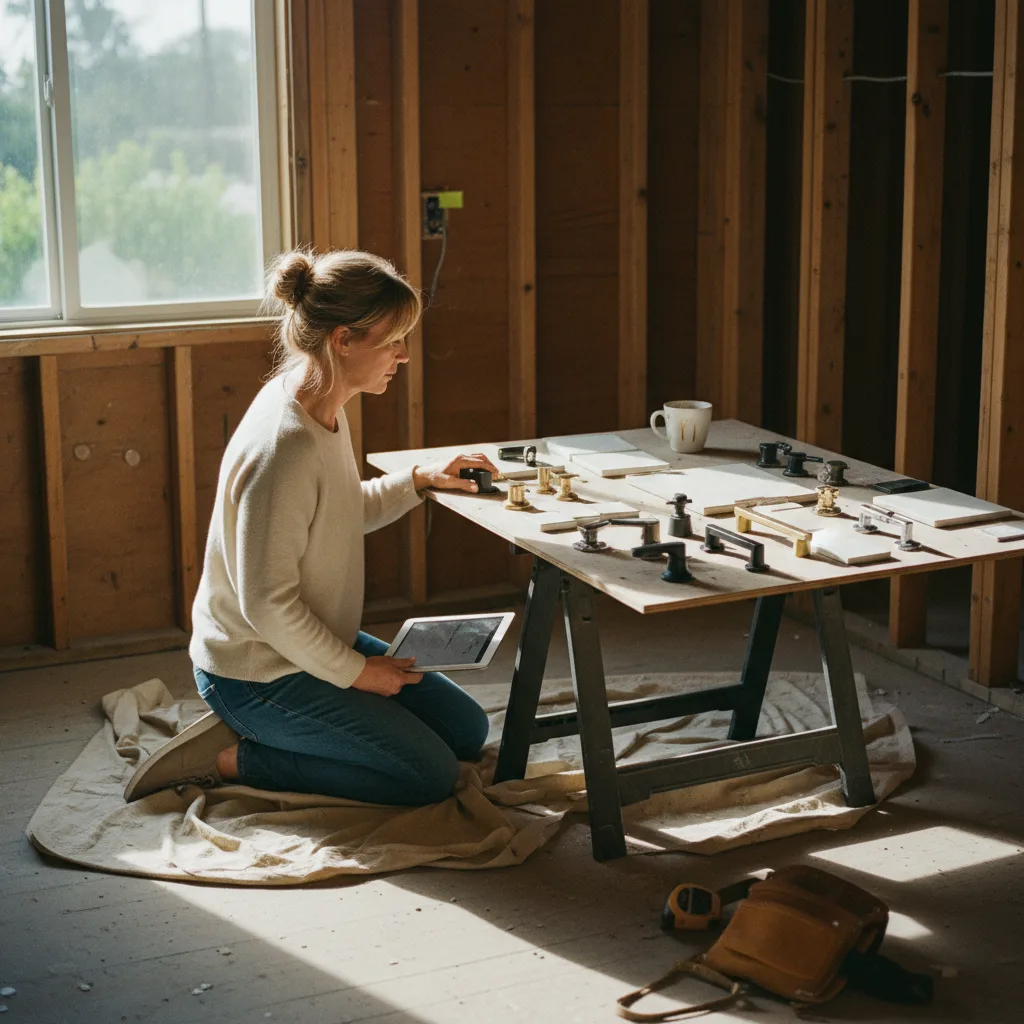
Any bathroom project that involves moving plumbing, altering electrical circuits, or changing structural walls requires a permit from the City of Encinitas Development Services Department. The permitting process is not just a bureaucratic step; it is a critical consumer protection that ensures the work is performed safely and according to the California Residential Code (CRC).
Navigating the Permitting Process
Your general contractor should handle the entire permit application process, which includes submitting architectural plans and any necessary engineering calculations. In Encinitas, the plan check process can take anywhere from three to eight weeks, depending on the complexity of your project and the department's workload. It is crucial to have this permit in hand before any demolition begins. Work performed without a permit can result in stop-work orders, fines, and the costly process of having to tear open walls to prove to an inspector that the hidden work was done correctly.
The California Coastal Commission Factor
A significant portion of Encinitas lies within the Coastal Zone, a designated area subject to the oversight of the California Coastal Commission. If your home is west of Interstate 5, it is highly likely your project will require an additional layer of review. Renovations that change the exterior footprint of the home, add a window, or even significantly alter the appearance from the public view may require a Coastal Development Permit (CDP). This process runs concurrently with the city's permit review and can add several weeks or even months to the pre-construction timeline. A contractor with extensive experience in Encinitas will be familiar with these requirements and can advise you on how they might impact your project's scope and schedule.
Did you know
California's Title 24 energy code mandates specific requirements for all remodels. In the bathroom, this includes high-efficacy lighting (meaning LED fixtures are standard), low-flow plumbing fixtures to conserve water, and continuous insulation in any new walls that are built.
The Encinitas Neighborhoods Where Bathroom Costs Diverge
While Encinitas is a relatively small city, its distinct neighborhoods present different challenges and opportunities for a bathroom renovation, which in turn affects the final cost. Home age, lot size, and local aesthetics all play a role.
Leucadia: Coastal Character and Aging Infrastructure
The funky, eclectic vibe of Leucadia is part of its charm, with many homes being older beach cottages and mid-century bungalows. Renovating a bathroom here often means dealing with aging infrastructure. It is not uncommon to open a wall and discover old galvanized plumbing, outdated knob-and-tube wiring, or a rotted subfloor from a slow, decades-old leak. A savvy contractor will anticipate these "surprises" and build a healthy contingency (15 to 20 percent) into the budget. Access can also be a challenge on smaller, denser lots, which can slightly increase labor costs for material delivery and debris removal. The aesthetic here often calls for materials that feel authentic and lived-in, like handmade tiles, reclaimed wood, and unlacquered brass, which can carry a higher price point than more conventional finishes.
Olivenhain: Estate Homes and High-End Expectations
In contrast, Olivenhain is characterized by larger, more recently built custom and semi-custom homes on spacious lots. The bathrooms are typically larger to begin with, often featuring separate tubs and showers, dual vanities, and walk-in closets. A renovation here is less about fixing old problems and more about updating finishes to the highest current standards. The sheer scale of the rooms drives up material costs; a master bathroom in Olivenhain might require 300 square feet of tile, compared to 100 in a Leucadia bungalow. Homeowner expectations are also higher, with a strong preference for natural stone, luxury plumbing brands, and custom features like steam showers and heated floors. The larger project scope naturally leads to higher overall costs and longer timelines.
In my last walkthrough in Olivenhain, I reviewed a primary bath project that was part of a larger whole-home update. The bathroom alone had a budget of over $120,000. The scope included book-matched Calacatta marble slab walls in the shower, a custom-fabricated rift-sawn white oak vanity stretching 12 feet, and a full suite of smart home-integrated fixtures. This is the upper end of the market, but it illustrates how the scale and material expectations in neighborhoods like this can set a very different baseline.
Timeline: Realistic Week-by-Week Expectations
One of the most common points of friction in any renovation is a misunderstanding of the timeline. A bathroom project is more than just the active construction phase; the planning and procurement stages are just as critical and often take longer than homeowners expect.
Pre-Construction: The Planning Phase (4-12 weeks)
This is where the foundation for a smooth project is laid. Rushing this stage is a recipe for delays and budget overruns later.
- Weeks 1-3: Design and Contractor Vetting. This involves defining your scope, gathering inspiration, and interviewing at least three qualified general contractors.
- Weeks 3-5: Bidding and Contract. Contractors will prepare detailed, itemized bids. Once you select a contractor, you will sign a contract that outlines the scope, payment schedule, and project details.
- Weeks 5-12: Material Selection and Permitting. You will work with your contractor or a designer to finalize every single material, from the tile grout color to the cabinet pulls. Simultaneously, your contractor will submit plans to the city for permits. The lead time on materials is a major factor; custom vanities can take 8 to 12 weeks to arrive, and some high-end tile or plumbing fixtures can have similar lead times. Construction should not begin until all major materials are on-site.
Active Construction: A Week-by-Week View (3-8+ weeks)
Once permits are approved and materials are delivered, the physical work can begin. For a standard mid-range renovation, the schedule typically looks like this:
- Week 1: Demolition and Rough-in. The existing bathroom is torn out to the studs. The plumber and electrician will then "rough-in" the new pipes, drains, and wiring inside the open walls. This is followed by an inspection from the city.
- Week 2: Insulation, Drywall, and Waterproofing. After the rough-in inspection passes, new insulation and moisture-resistant drywall are installed. In wet areas, a critical waterproofing membrane is applied.
- Week 3-4: Tile and Grout. Tiling is a meticulous process that cannot be rushed. This is often the most time-consuming part of the active construction phase.
- Week 5: Vanity, Countertops, and Paint. The main cabinet is set, and the countertop fabricator will come to create a template. While the stone is being cut, the room can be painted.
- Week 6-7: Final Fixtures and Finishes. Once the countertops are installed, the plumber and electrician return for the "final" phase: installing the faucet, toilet, shower trim, light fixtures, and exhaust fan.
- Week 8: Glass, Mirror, and Punch List. The custom shower glass is measured and installed. The mirror, towel bars, and other accessories are mounted. You and your contractor will do a final walkthrough to create a "punch list" of any small items that need adjustment before final payment.
Key takeaway
The timeline is sequential. Tiling cannot begin until waterproofing is complete, and final plumbing cannot be installed until countertops are in. Any delay in one step will have a cascading effect on the entire schedule.
How to Vet an Encinitas Contractor
Choosing the right general contractor is the most important decision you will make for your project. A great contractor ensures a high-quality result, a smooth process, and a transparent budget. A poor one can lead to endless frustration and financial distress.
The Essential Questions to Ask
When interviewing potential contractors, go beyond just asking for a price. Their answers to these questions will reveal their professionalism and experience.
- Can you provide your California State License Board (CSLB) number? (You should always verify this online.)
- Can you provide a certificate of insurance showing your general liability and workers' compensation policies?
- How many bathroom renovations have you completed in Encinitas in the last year?
- Can you share references from three recent clients whose projects were similar in scope to mine?
- Who will be the dedicated project manager for my job, and how often will they be on-site?
- How do you handle change orders? Is there a set fee for changes, and how are they documented?
- What is your process for protecting the rest of my home from dust and debris during construction?
Important
Always get at least three itemized bids. A bid that is significantly lower than the others is a major red flag. It often means the contractor has missed something in the scope or is using subpar labor and materials, and they will likely make up the difference with expensive change orders later.
Red Flags to Watch For
- A contractor who offers a bid without a detailed site visit.
- Pressure to sign a contract immediately or offers a "special price" if you sign today.
- A request for a large upfront deposit. California law limits down payments to 10 percent of the contract price or $1,000, whichever is less.
- Vague or non-itemized bids that lump costs into broad categories like "materials" or "labor."
- An unwillingness to provide a license number, insurance certificates, or references.
- Suggesting that you can save money by not pulling a permit for work that clearly requires one.
Renology Take
After analyzing thousands of bathroom projects, the most common and costly mistake homeowners make is underinvesting in the "invisible" parts of the renovation. It is tempting to allocate the entire budget to the beautiful finishes you can see and touch, like the tile and the vanity. But the long-term success of a bathroom lies behind the walls. Meticulous waterproofing, proper ventilation, and up-to-code plumbing and electrical are the unglamorous but essential elements that prevent catastrophic failures down the road. A great contractor will prioritize this foundational work. When you are reviewing bids, pay close attention to the line items for these systems. A cheap bid often skimps here, and it is a price you will eventually pay, one way or another.
Sources & Methodology
These cost ranges are reconstructed from publicly available labor and permit data, the latest Remodeling Magazine cost-vs-value report, and Renology's own Project of the Day network, a rolling sample of real homeowner invoices we collect from Encinitas-area contractors. Last refreshed April 2026.
- National Association of Home Builders (NAHB) Remodeling Market Index, Q1 2026
- California Department of Industrial Relations, San Diego County Prevailing Wage Data, 2026
- City of Encinitas Development Services Department, Permit Data, 2026
- California Coastal Commission, Public Permit Records
- Remodeling Magazine, 2026 Cost vs. Value Report
- Renology Project of the Day Network, aggregated 2026 contractor invoices in Encinitas
- Schluter Systems, Waterproofing Specification Guides
Methodology
How Renology estimates bathroom costs in Encinitas.
Renology treats this page as a planning benchmark for Encinitas, California, not a final quote. We compare published local guide data, contractor scope patterns, permit-sensitive work, climate or site constraints, and finish-level assumptions.
Cost range
$33,000-55,000
Timeline
3-8 weeks
Source type
Editorial dataset
Local factor: Coastal Mediterranean: 10 inches annual rain, mild year-round (60-75F), salt-air corrosion within 5 miles of coast.
Use these numbers to shape a scope and spot missing line items. Confirm permits, structural work, electrical, plumbing, gas, waterproofing, drainage, and code-sensitive details with the local building department and a licensed professional.
Compare against the full Renology Cost IndexEncinitas · pre-screened
Get 3 Encinitas renovation bids in 48 hours.
Our editors already vetted Encinitas contractors. Answer 4 questions and we send 3 written bids inside 48 hours, with the real price for your scope, not their inflated first-call number.
- Free, no commission
- Pre-screened locally
- Bids inside 48 hours
Takes about 60 seconds. We'll text you when bids arrive.