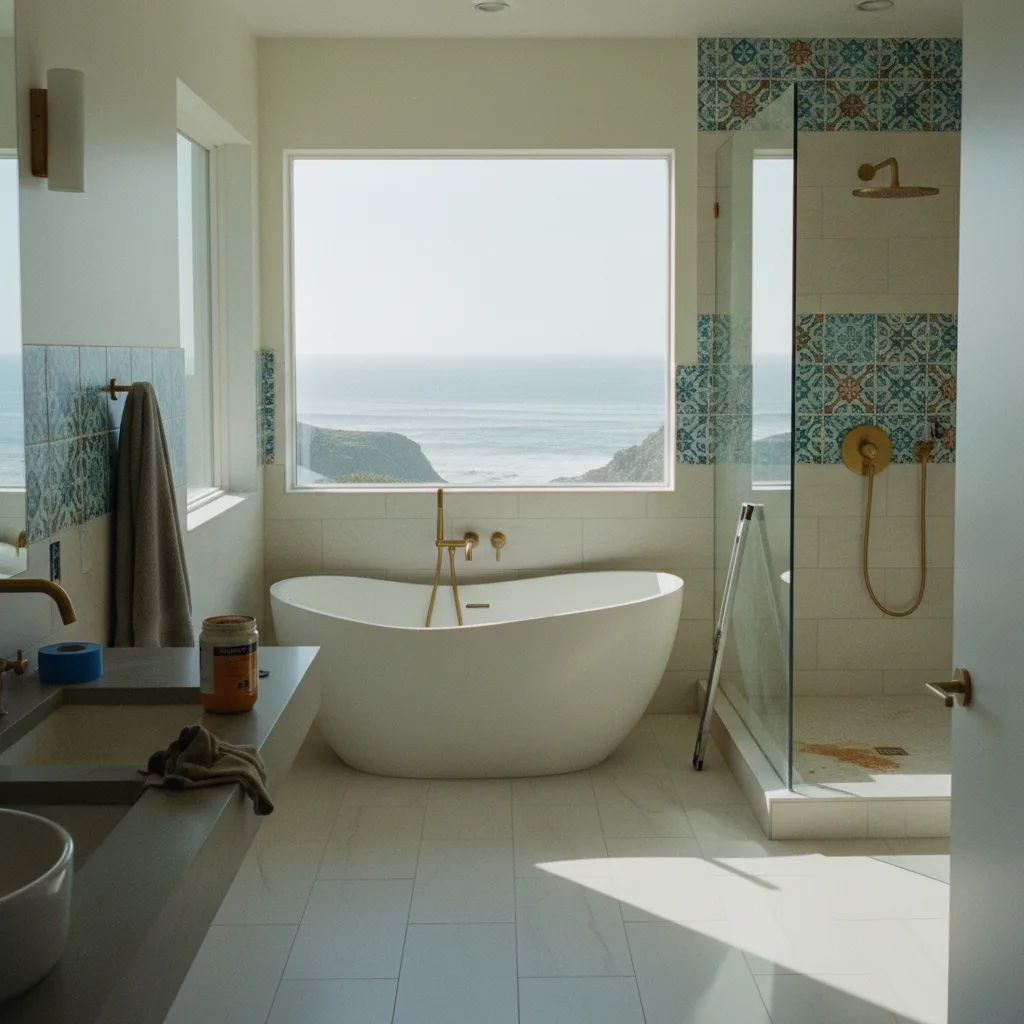
Planning a bathroom in La Jolla? A full project typically runs $33,000 to $55,000 in 2026. Cosmetic refreshes start near $20,000, while premium custom work climbs past $66,000. This is what your budget actually covers, what drives the price, and how to vet a contractor who knows La Jolla permits.
The Honest 2026 Price for a Bathroom in La Jolla
In the world of renovation, few projects promise a return on investment, both financial and personal, quite like a well-executed bathroom. In La Jolla, where property values are among the highest in the nation, this is doubly true. But the path from a dated bath to a personal spa is paved with decisions, each with a price tag attached. Based on an analysis of real contractor invoices and local material costs, a comprehensive La Jolla bathroom renovation in 2026 falls into a clear spectrum. The majority of projects land between $33,000 and $55,000 for a full pull-and-replace renovation in a standard five-by-eight-foot space.
For those seeking a lighter touch, a cosmetic refresh involving paint, new fixtures, and a vanity top can be achieved for $20,000 to $33,000. On the other end, a premium, custom renovation that involves reconfiguring walls, moving plumbing, and specifying top-tier materials like book-matched stone slabs and designer fixtures will start at $66,000 and can easily exceed $100,000. Understanding what separates these tiers is the first step toward building a realistic budget and a space that reflects the distinct character of your La Jolla home.
What Drives Bathroom Costs in La Jolla
See what a bathroom remodel actually costs in your La Jolla zip.
Take 4 questions →A bathroom budget is a complex equation influenced by three main variables: the high cost of skilled labor in Southern California, the grade of materials you select, and the often-underestimated costs of permits and professional services. The coastal environment and high-end market of La Jolla add their own unique pressures to the final number.
Labor: The Price of Expertise
In the San Diego metro area, and particularly in affluent communities like La Jolla, the demand for top-tier, licensed, and insured trade professionals is intense. This is the single largest component of your budget, often accounting for 40 to 60 percent of the total cost. A bathroom renovation is not one job but a sequence of specialized tasks: demolition, framing, plumbing, electrical, HVAC for ventilation, waterproofing, tile setting, painting, and finish carpentry. Each requires a master of their craft. According to the California Department of Industrial Relations, prevailing wages for plumbers and electricians in San Diego County are among the highest in the state, a cost that is directly reflected in your contractor's bid.
Materials and Finishes: From Builder-Grade to Bespoke
This is where your design vision comes to life, and where the budget can fluctuate most dramatically. The difference between a $500 pre-fabricated vanity from a big-box store and a $7,000 custom-built, rift-sawn white oak vanity is substantial. The same applies across every line item. A simple porcelain tile might cost $8 per square foot, while a Calacatta Gold marble slab for a smooth shower wall can run over $150 per square foot, before the complex fabrication and installation are even considered. Fixtures are another key area. A faucet set from a standard brand may cost $300, whereas a solid brass set from a designer line like Waterworks or Kallista with a physical vapor deposition (PVD) finish, essential for resisting the coastal salt air, can be ten times that price.
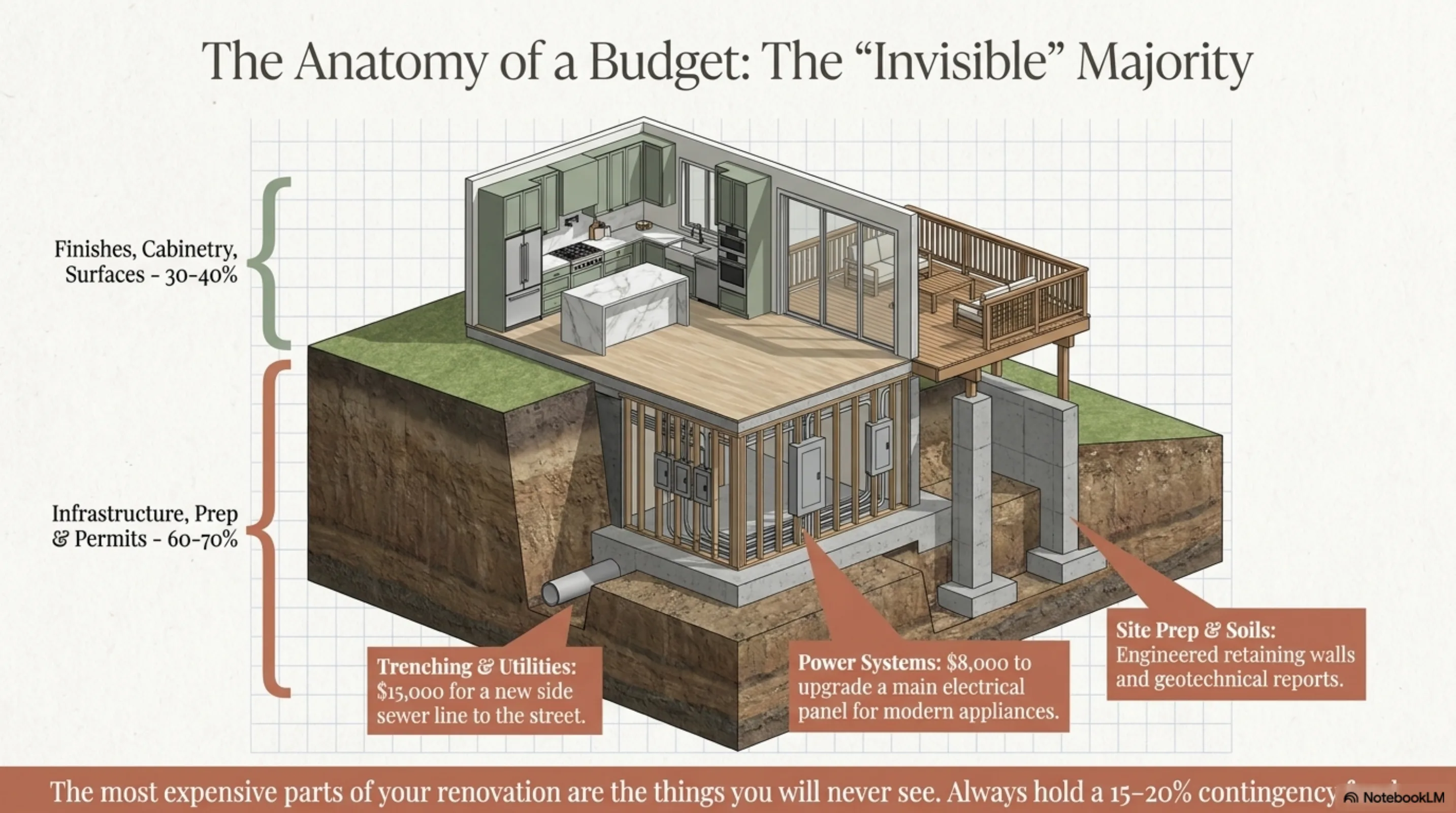
A bathroom renovation is 10 percent design and 90 percent execution behind the walls.
Permits, Plans, and Professional Services
The "soft costs" of a renovation are often overlooked in initial estimates. If you are moving walls, changing the electrical layout, or altering plumbing supply or drain lines, you will need a permit from the City of San Diego. This process requires architectural plans, which can cost anywhere from $1,500 to $5,000 for a single bathroom. The permit fees themselves, while not exorbitant, are another line item. If any structural changes are involved, a structural engineer will need to review and stamp the plans, adding another $1,000 to $2,500. These professional services ensure your renovation is safe, durable, and up to California's stringent building codes, protecting your home's value in the long run.
La Jolla Bathroom by Tier: 3 Real Project Examples
To make these numbers tangible, we have modeled three common project scopes based on real renovations we have tracked in La Jolla. These examples illustrate how budget, scope, and timeline align. Note how the complexity of the work, not just the material cost, dramatically extends the project timeline.
Key takeaway
The primary driver shifting a project from Mid-Range to Premium is often not just the material grade, but the decision to move walls and plumbing. This single choice triggers a cascade of additional costs, including architectural plans, structural engineering, and more complex trade work.
| Tier | Typical Scope | Cost Range | Timeline |
|---|---|---|---|
| Cosmetic Refresh | Keep existing layout. Replace vanity, toilet, and fixtures. Refinish tub or replace with a simple alcove model. New porcelain tile floor, new lighting on existing wiring, and fresh paint. Materials are typically high-quality stock items. | $20,000 to $33,000 | 2-4 Weeks |
| Mid-Range Renovation | Full gut of the existing bathroom. May involve moving a non-load-bearing wall. New custom or semi-custom vanity with a quartz countertop. Frameless glass shower enclosure with a curb. High-quality fixtures from brands like Brizo or Rohl. New electrical for dedicated circuits and upgraded ventilation fan. | $33,000 to $55,000 | 4-8 Weeks |
| Premium Custom | Complete gut and layout reconfiguration. Moving load-bearing walls and all plumbing/electrical. Curbless shower with linear drain, steam unit, and slab stone walls. Freestanding sculptural tub. Custom floating vanity. Designer fixtures from Waterworks or Dornbracht. Radiant floor heating and smart home integration for lighting and sound. | $66,000 to $99,000+ | 8-16+ Weeks |
Permits and Local Code in La Jolla
Any renovation that involves more than simple surface replacements requires careful attention to local regulations. In La Jolla, this means working with the City of San Diego's Development Services Department (DSD) and, for many homeowners, navigating the rules of the California Coastal Commission.
The Permitting Authority: San Diego DSD
For any bathroom project that alters the plumbing, electrical, or structural systems, you will need to submit plans to the San Diego DSD for review and approval. This is not optional. Work performed without a permit can result in stop-work orders, fines, and significant difficulty when you eventually sell your home. A qualified local contractor will handle this process for you, but it is crucial to understand that it adds time to the front end of your project. A standard plan check for a bathroom remodel can take four to six weeks, and sometimes longer if corrections are required.
Key Codes Affecting Your Project
Your renovation must comply with several layers of building codes, which a good design-build firm or architect will incorporate into your plans from the start.
- California Residential Code (CRC): This governs everything from the spacing of electrical outlets to the required slope of a shower floor.
- California Title 24: These are the state's energy efficiency standards. For your bathroom, this means specifying high-efficacy lighting (almost always LED), vacancy sensors for lights, and high-performance, low-noise ventilation fans to control moisture.
- CALGreen Code: California's green building standards mandate low-flow plumbing fixtures (toilets, faucets, showerheads) to conserve water, among other requirements.
- California Coastal Commission: If your property is located in the "coastal zone" (generally west of Interstate 5 in La Jolla), any significant exterior changes associated with your remodel could trigger a review by the Coastal Commission. This adds another layer of complexity and time, and it is a critical factor to discuss with your contractor if you live near the coast.
The La Jolla Neighborhoods Where Bathroom Costs Diverge
While La Jolla is a uniformly high-cost market, the specific character of its micro-neighborhoods can introduce unique challenges and costs to a bathroom renovation. The age of the home, lot size, and architectural style all play a significant role.
The Muirlands: Estate Homes and Aging Infrastructure
In The Muirlands, you find larger, older estate homes, many built before 1960. While beautiful, these properties often hide aging infrastructure. It is not uncommon during demolition to discover original galvanized steel plumbing that needs complete replacement, or knob-and-tube wiring that must be brought up to modern code. The larger footprint of these homes can also mean longer plumbing and electrical runs, increasing material and labor costs. The sheer scale of a master bathroom in a Muirlands home often means more square footage of expensive tile or stone, larger custom vanities, and more extensive labor to complete the work.
In my last walkthrough of a 1950s ranch in Muirlands, the plan was a straightforward master bath update. Once we opened the walls, however, we found a corroded drain stack and an unvented plumbing system that had to be entirely re-engineered to pass inspection. The homeowner's 15 percent contingency budget was essential in covering this unforeseen but non-negotiable scope expansion, a common story in this part of La Jolla.
Bird Rock: Coastal Constraints and Mid-Century Modernism
Contrast this with the charming, densely packed neighborhood of Bird Rock. Here, many homes are mid-century modern bungalows on smaller lots. The primary challenges are often space and access. Bathrooms are typically smaller, demanding clever design solutions like wall-mounted toilets and floating vanities to create a sense of openness. Lot constraints can make material delivery and debris removal more complicated for contractors., the proximity to the ocean is a major material consideration. All exterior-facing hardware, window frames, and even the fasteners used in construction must be stainless steel or have a marine-grade finish to resist corrosion from the salt-laden air. This adds a premium to material costs that is less of a factor further inland.
Editor's note
When renovating in a historic or architecturally significant neighborhood, consider how your material choices will align with the home's original character. A hyper-modern bathroom can feel out of place in a Spanish Colonial Revival, potentially impacting its long-term market appeal.
Timeline: Realistic Week-by-Week Expectations
One of the most common points of friction in any renovation is a misunderstanding of the timeline. The "active construction" phase is only one part of the process. A well-managed project follows a predictable, multi-stage path from concept to completion.
- Weeks 1-4: Design, Selections, and Bidding. This is the foundational phase. You will work with a designer or design-build firm to create the layout, and then you must make nearly all of your material selections: tile, vanity, countertops, fixtures, lighting, and paint. This is also when you will interview and receive itemized bids from at least three qualified contractors.
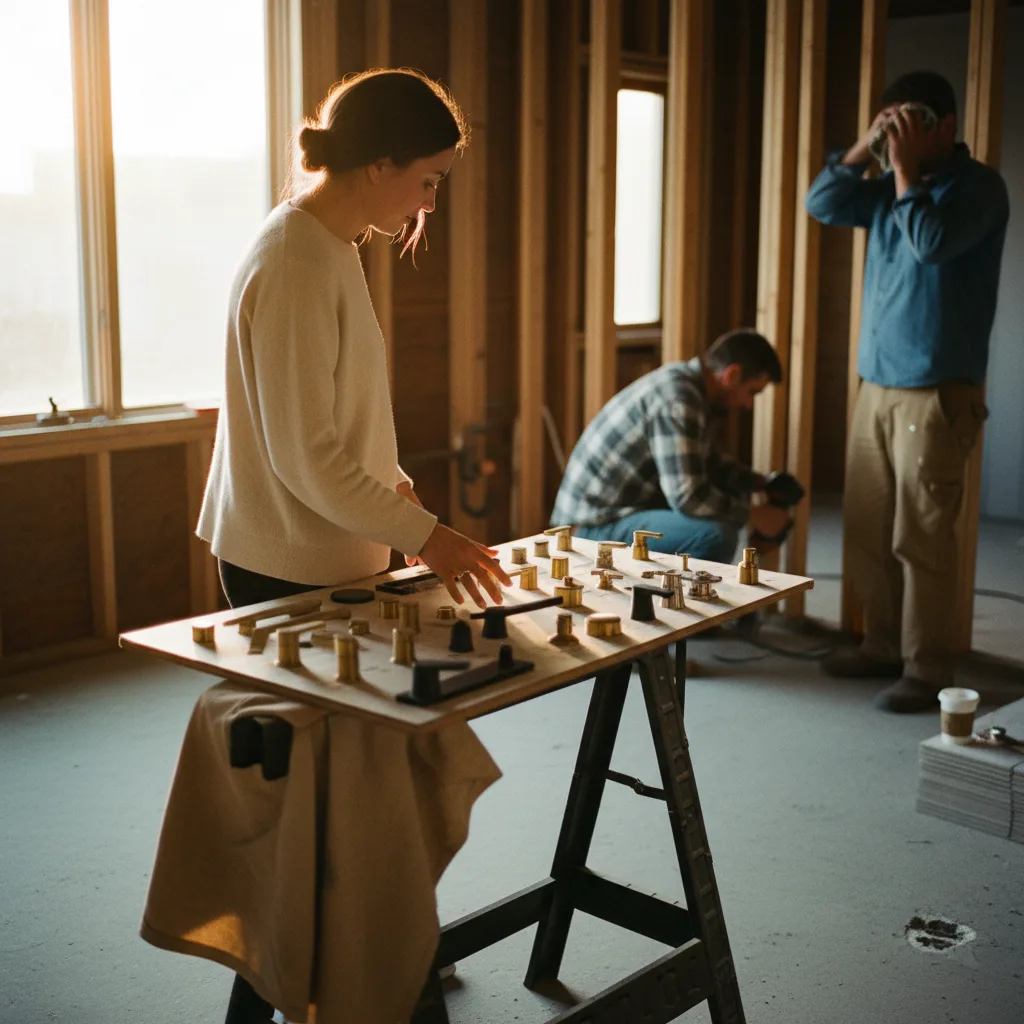
- Weeks 5-8: Permitting and Procurement. Once you have selected a contractor and signed a contract, they will submit the finalized plans to the city for permits. Simultaneously, they should begin ordering all your long-lead-time materials. Custom vanities can take eight to twelve weeks to arrive; some imported tile or designer fixtures can take even longer.
- Weeks 9-10: Demolition and Rough-In. With permit in hand and materials on site, active construction begins. The old bathroom is demolished down to the studs. This is when any surprises, like rotted subfloors or old plumbing, are discovered. Plumbers and electricians then "rough-in" the new pipes, drains, and wiring inside the open walls. This phase ends with a city inspection.
- Weeks 11-13: Insulation, Drywall, and Waterproofing. After the rough-in is approved, the walls are insulated and closed up with moisture-resistant drywall. Then comes one of the most critical steps: waterproofing the shower and tub area. This involves applying a liquid membrane like RedGard or a sheet membrane system like Schluter-KERDI. This step cannot be rushed.
- Weeks 14-16: Finishes, Fixtures, and Punch List. This is the most transformative phase. Tile is installed, the room is painted, and the vanity, countertops, and toilet are set. The plumber and electrician return to install the "trim" or finish fixtures: faucets, showerheads, and lights. The final glass for the shower is measured and installed. The project concludes with a final inspection and a "punch list" walkthrough with your contractor to identify and correct any minor imperfections.
Did you know
The biggest cause of schedule delays is waiting for materials to arrive after demolition has already started. A professional contractor will not begin demo until every single item, from the tub to the cabinet pulls, is either on-site or has a confirmed delivery date.
How to Vet a La Jolla Contractor
Choosing the right contractor is the single most important decision you will make. A great contractor ensures your project is built to last, stays on budget, and is a positive experience. A bad one can be a financial and emotional disaster. Rigorous vetting is non-negotiable.
Key Questions to Ask Your Top Candidates
After you have checked their license on the California State License Board (CSLB) website and confirmed they have active General Liability and Workers' Compensation insurance, ask these specific questions:
- How many bathroom renovations have you completed in La Jolla in the last two years? Can I speak with three recent clients?
- Who will be the dedicated project manager for my job, and how often will they be on-site?
- How do you handle waterproofing in a shower? (Look for specific answers mentioning a system like Schluter, Laticrete Hydro Ban, or a traditional hot mop and cement pan).
- What is your process for handling change orders when unforeseen issues arise?
- Can you provide me with a detailed, itemized bid, not just a single lump-sum price?
Pro tip
Always verify a contractor's license number yourself on the CSLB's "Instant License Check" online tool. It is a free and immediate way to see if their license is active and if there are any public complaints or disciplinary actions against them.
Critical Red Flags to Watch For
Be wary of contractors who exhibit any of these behaviors. They are often signs of inexperience, financial instability, or a lack of professionalism.
- Provides a vague, one-page bid with little detail. This is a recipe for cost overruns through change orders.
- Pressures you to sign a contract immediately, often using a "special price" that is only good for today.
- Asks for a large down payment. In California, a down payment for a home improvement contract cannot exceed 10 percent of the contract price or $1,000, whichever is less.
- Cannot provide you with recent, local references or proof of insurance.
- Suggests doing the work without a permit to save money. This is illegal and puts all the risk on you, the homeowner.
Renology Take
As the kitchens and baths editor, I see hundreds of projects a year. The most common pattern I see with homeowners in high-value markets like La Jolla is a hyper-focus on the visible finishes, the "jewelry" of the bathroom, at the expense of the critical systems behind the walls. It is tempting to allocate more of the budget to that stunning marble slab or designer faucet. However, the long-term success and durability of your investment depend entirely on what you cannot see. Meticulous waterproofing, powerful and quiet ventilation, and dedicated electrical circuits are the unglamorous but essential elements that prevent leaks, mold, and functional failures down the road. A great contractor will educate you on these systems, not just the tile. Invest in the 90 percent of the project that is invisible, and the beautiful 10 percent you see every day will last a lifetime.
Sources & Methodology
These cost ranges are reconstructed from publicly available labor and permit data, the latest Remodeling Magazine cost-vs-value report, and Renology's own Project of the Day network, a rolling sample of real homeowner invoices we collect from La Jolla-area contractors. Last refreshed April 2026.
- National Association of Home Builders (NAHB) Remodeling Market Index, Q1 2026
- California Department of Industrial Relations, San Diego County Prevailing Wage Data, 2026
- City of San Diego Development Services Department Permit Data, 2026
- Remodeling Magazine, 2026 Cost vs. Value Report
- Renology Project of the Day Network, aggregated 2026 contractor invoices in La Jolla
Methodology
How Renology estimates bathroom costs in La Jolla.
Renology treats this page as a planning benchmark for La Jolla, California, not a final quote. We compare published local guide data, contractor scope patterns, permit-sensitive work, climate or site constraints, and finish-level assumptions.
Cost range
$33,000-55,000
Timeline
3-8 weeks
Source type
Editorial dataset
Local factor: Coastal Mediterranean: 10 inches annual rain, mild year-round (60-75F), salt-air corrosion within 5 miles of coast.
Use these numbers to shape a scope and spot missing line items. Confirm permits, structural work, electrical, plumbing, gas, waterproofing, drainage, and code-sensitive details with the local building department and a licensed professional.
Compare against the full Renology Cost IndexLa Jolla · pre-screened
Get 3 La Jolla renovation bids in 48 hours.
Our editors already vetted La Jolla contractors. Answer 4 questions and we send 3 written bids inside 48 hours, with the real price for your scope, not their inflated first-call number.
- Free, no commission
- Pre-screened locally
- Bids inside 48 hours
Takes about 60 seconds. We'll text you when bids arrive.