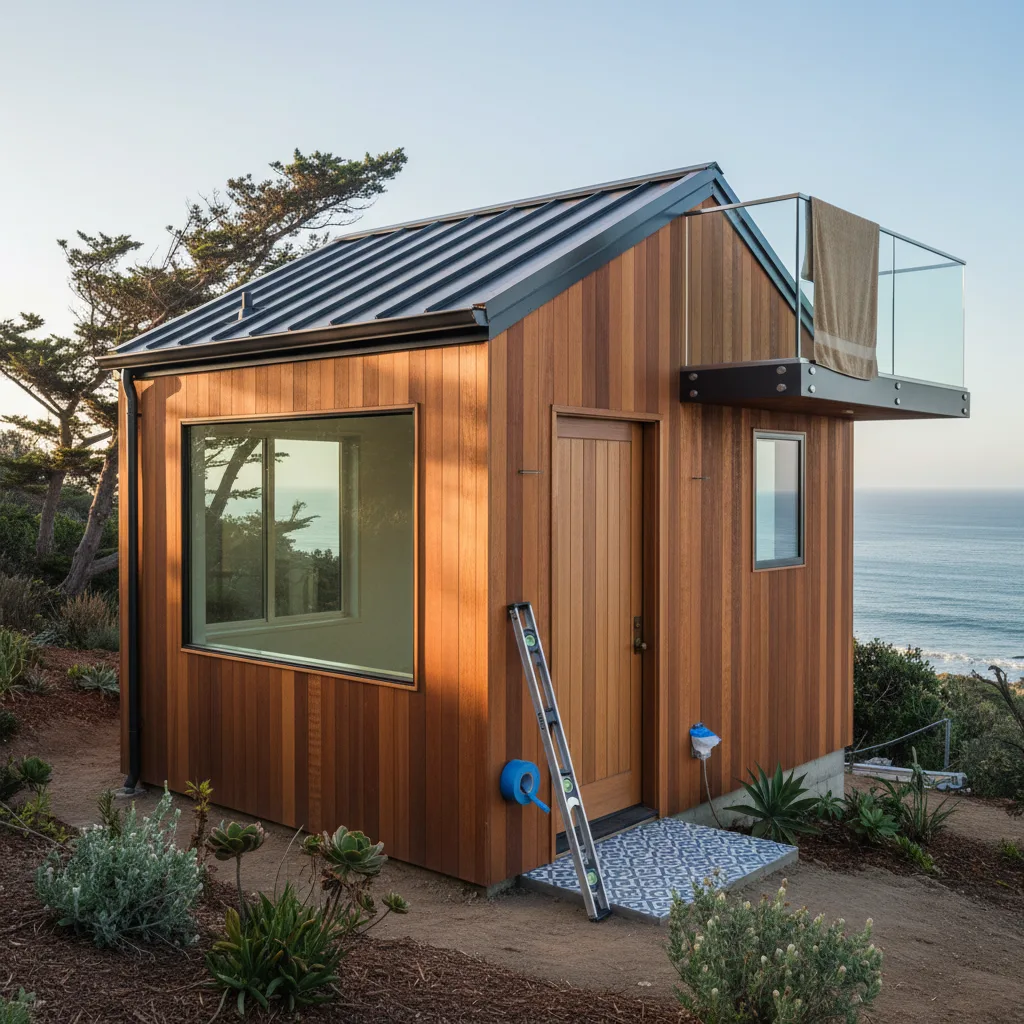
Planning an ADU and garage project in La Jolla? A full build typically runs $200,000 to $350,000 in 2026. Cosmetic updates start near $120,000, while premium custom work climbs past $420,000. Here is what your budget actually covers, what drives the price, and how to find a contractor who gets La Jolla.
The Honest 2026 Price for an ADU and Garage in La Jolla
Let's get straight to the point. Building an Accessory Dwelling Unit (ADU), whether attached to a new garage, detached, or as a garage conversion, is a significant construction project. In La Jolla, you are not just building a small home; you are navigating some of the most challenging and expensive real estate in the country. Based on our analysis of contractor invoices and permit data, a standard, well-built ADU and garage project in La Jolla will cost between $200,000 and $350,000 in 2026.
This range covers a new, one-bedroom ADU of around 600 to 800 square feet, built with good quality, but not extravagant, materials. If you are looking at a more basic cosmetic conversion of an existing garage with minimal structural changes, you might get in closer to the $120,000 to $200,000 range. On the other end, for a two-story structure with high-end finishes, custom millwork, and extensive site preparation on a sloped lot, budgets quickly push past $420,000 and can easily exceed $630,000.
These are not abstract numbers. They reflect the real-world costs of skilled labor, durable materials suited for a coastal environment, and the complex permitting process specific to the City of San Diego and, in many cases, the California Coastal Commission. The biggest mistake a homeowner can make is anchoring their expectations to a national cost-per-square-foot average. That math simply does not apply here.
What Drives ADU and Garage Costs in La Jolla
See what a ADU build actually costs in your La Jolla zip.
Take 4 questions →The final price tag on your project invoice is a result of four distinct cost centers. Understanding them is the first step to controlling your budget. The price is not just about the size of the structure; it is about the complexity of the site, the quality of the team, and the layers of required approvals.
Labor: The "La Jolla Premium"
General contractors and subcontractors in La Jolla carry higher insurance costs and command higher wages than those in other parts of San Diego County. This is not arbitrary. Working on tight lots with limited street parking and staging areas requires more planning and logistical skill. Crews that are experienced with hillside construction, coastal building codes, and satisfying the expectations of discerning homeowners are in high demand. Expect to pay a 15 to 25 percent premium for a qualified, local team compared to inland San Diego rates. This is money well spent to avoid costly mistakes and delays.
Materials and Finishes
The coastal environment is relentless. Salt spray, intense sun, and marine air layers demand materials that can withstand the elements. This means specifying corrosion-resistant hardware (like 316 stainless steel), high-performance windows with specific coatings, and exterior finishes that resist fading and moisture intrusion. While these materials cost more upfront, they prevent premature failure and costly repairs down the line. Interior finishes follow a similar pattern, with local expectations leaning toward durable, high-quality surfaces like stone countertops, hardwood or luxury vinyl plank flooring, and solid-core doors.
Site Conditions and Lot Constraints
This is often the most underestimated cost. Many La Jolla properties are on canyons, hillsides, or have compact, zero-lot-line footprints.
- Grading and Foundation: A sloped lot can add $30,000 to $100,000 or more to a project for grading, retaining walls, and a stepped or engineered foundation. This is not an area for compromise.
- Utility Hookups: Tying into existing sewer, water, and electrical lines can be simple or incredibly complex. A long trench, boring under a driveway, or upgrading an electrical panel to handle the new load can add tens of thousands of dollars to the budget.
- Access and Staging: If your property is on a narrow street or has limited access, every delivery of materials and every piece of heavy equipment costs more in labor and logistics. Contractors must factor in the time and expense of managing a constrained job site.
La Jolla ADU and Garage by Tier: Three Real Project Examples
To make these numbers more concrete, we have broken down three typical project scopes we see in the La Jolla market. These are based on aggregated data from real projects completed in the last 18 months, adjusted for 2026 projections. Most homeowners find their project falls into the Mid-Range tier.
Key takeaway
The primary difference between these tiers is not just the quality of the finishes you can see, but the amount of structural and site work required. The more you move earth, reroute utilities, and alter the building's envelope, the higher the cost.
| Tier | Typical Scope | Cost Range (2026) | Estimated Timeline |
|---|---|---|---|
| Cosmetic Garage Conversion | Converting an existing, structurally sound garage. No new foundation or footprint expansion. Includes finishing interior walls, adding a bathroom and kitchenette, upgrading electrical panel, and installing code-compliant windows and doors. Assumes existing slab is in good condition. | $120,000 - $200,000 | 4 - 7 months |
| Mid-Range Detached ADU | New construction of a 600-800 sq. ft. one-bedroom, one-bathroom ADU with a new two-car garage. Standard foundation on a relatively flat lot. Mid-grade finishes: LVP flooring, semi-custom cabinets, quartz countertops, and quality appliance package. Includes all utility trenching and hookups. | $200,000 - $350,000 | 8 - 14 months |
| Premium Custom ADU & Garage | Architect-designed 800-1,200 sq. ft. ADU, often two-story or built into a hillside. Includes significant site work, retaining walls, and an engineered foundation. High-end finishes: custom millwork, natural stone, premium window systems (e.g., Fleetwood or LaCantina doors), and designer fixtures. May include solar panels and advanced home systems. | $420,000 - $630,000+ | 12 - 18+ months |
Permits and Local Code in La Jolla
Building in La Jolla means working primarily with the City of San Diego's Development Services Department (DSD). While the state of California has passed laws like AB 68 to streamline ADU approval, the local process still has its complexities. Your architect and contractor must be fluent in the city's specific interpretations of the California Residential Code (CRC) and local zoning ordinances.
The City of San Diego DSD
For any ADU project, you will need a building permit from the DSD. The plan submission and review process is entirely digital. A complete set of plans, typically including architectural, structural, and sometimes civil engineering drawings, is required. The city also enforces California's Title 24 energy efficiency standards, which dictate requirements for insulation, window performance, and lighting. Plan checkers will review your submission for compliance with all these codes. A minor error or omission can send your plans back for corrections, adding weeks or even months to your pre-construction timeline.
The California Coastal Commission Overlay
If your property lies within the Coastal Zone, which includes a significant portion of La Jolla west of the I-5, you may be subject to an additional layer of review. The city's planning department reviews projects in this area for consistency with the Local Coastal Program (LCP). For major projects or those with potential view impacts, a separate Coastal Development Permit (CDP) may be required, which involves scrutiny from the California Coastal Commission. This process is notoriously slow and detailed, and it can significantly affect your project's design, timeline, and cost. A contractor without experience in the coastal overlay is a major liability.
Did you know
The City of San Diego offers several pre-approved ADU building plans, known as "Permit-Ready ADUs." While these can sometimes speed up the plan check process, they are not a one-size-fits-all solution. They often still require significant site-specific engineering and modifications to work with La Jolla's unique lot topographies.
The La Jolla Neighborhoods Where ADU and Garage Costs Diverge
Not all of La Jolla is the same from a construction standpoint. The neighborhood you live in directly impacts the complexity and cost of building an ADU. A project in the flatlands of La Jolla Shores is a different beast entirely from one in the hills of Muirlands.
Bird Rock vs. The Muirlands
Consider two popular neighborhoods: Bird Rock and The Muirlands. In Bird Rock, the lots are typically smaller, flatter, and denser. The primary challenges here are logistical: tight access for equipment, minimal onsite storage for materials, and the need to be a good neighbor in close quarters. Projects often focus on maximizing the efficiency of a small footprint. While foundation work is usually straightforward, the "soft costs" of project management and logistics are higher.
In contrast, The Muirlands is characterized by large, sprawling lots, many of which are situated on steep hillsides. Here, the challenge is geotechnical and structural. Building an ADU often requires extensive grading, caissons drilled deep into the bedrock, and substantial retaining walls just to create a level building pad. These upfront site development costs can easily add six figures to the budget before a single wall is framed. The scale of homes is larger, and the finish level expected is typically higher, pushing projects firmly into the premium tier.
I was on a site walk in The Muirlands last quarter for a proposed two-story ADU over a new garage. The homeowner had a preliminary budget based on a simple cost-per-square-foot calculation. But the lot sloped down 30 feet from the street. The geotechnical report required 20-foot-deep concrete piers for the foundation. The cost for the earthwork and foundation alone was nearly $150,000. That is the kind of reality check that defines hillside construction in La Jolla.
Timeline: Realistic Week-by-Week Expectations
A common point of friction between homeowners and contractors is the project timeline. The 32 to 56 weeks of active construction cited in industry reports is just one piece of a much longer process. A more realistic view accounts for the crucial phases before and after the hammers start swinging.
The fastest way to slow down your project is to rush the planning phase.
Here is a more pragmatic breakdown of a typical mid-range ADU project timeline from start to finish:
- Phase 1: Design and Engineering (6 - 12 weeks): This involves working with an architect or designer to create your plans, getting a survey of your property, and engaging a structural engineer. Rushing this stage is a recipe for expensive change orders later.
- Phase 2: Permitting (8 - 20 weeks): You submit your completed plans to the City of San Diego DSD. The initial review can take several weeks. If the city requires corrections (which is common), your design team will need time to make revisions and resubmit. If a Coastal Development Permit is needed, this phase can extend significantly.
- Phase 3: Site Prep and Foundation (4 - 8 weeks): Once the permit is in hand, work can begin. This includes demolition, grading, trenching for utilities, and pouring the concrete foundation. This phase is heavily dependent on weather.
- Phase 4: Framing and Rough-Ins (6 - 10 weeks): The structure takes shape. This includes framing the walls and roof, sheathing, and installing windows and doors. Plumbers, electricians, and HVAC technicians then run all the wiring, pipes, and ductwork inside the walls.
- Phase 5: Exterior and Interior Finishes (10 - 16 weeks): This is the longest phase. It covers roofing, siding, insulation, drywall, painting, flooring, tile work, cabinet installation, countertops, and final hookups for plumbing and electrical fixtures.
- Phase 6: Final Inspections and Punch List (2 - 4 weeks): The city building inspector visits multiple times to sign off on the work. After the final inspection passes, your contractor will walk through the project with you to identify and fix any small remaining items (the "punch list").
How to Vet a La Jolla Contractor
Finding the right general contractor is the single most important decision you will make. A great contractor protects your investment, while a poor one can turn your project into a financial and emotional nightmare. Look for a builder who specializes in projects of your scope and has extensive, recent experience specifically within La Jolla.
Key Questions to Ask Every Potential Contractor
Go beyond the basic "Are you licensed and insured?" Dig deeper with these questions during your interviews:
- How many ADU or similar-scale projects have you completed in La Jolla in the past two years? Can I see photos and speak with the homeowners?
- Who will be my primary point of contact, and who is the site supervisor? How often can I expect updates?
- Have you ever worked on a project that required a Coastal Development Permit? Can you describe that process?
- How do you handle unforeseen conditions, like discovering poor soil or old, unmapped plumbing? How are change orders priced and approved?
- Can you provide me with an itemized bid that breaks down the costs for major phases like foundation, framing, and finishes?
Pro tip
Ask for a sample of their standard contract and a sample change order form. A professional contractor will have clear, fair documents ready to share. Vague contracts or a resistance to putting things in writing are major red flags.
Red Flags to Watch For
- The Lowball Bid: A bid that is significantly lower than others is almost always a sign that something has been left out. The contractor may be planning to make up the difference with a constant stream of expensive change orders.
- Vague Scope of Work: The proposal should detail exactly what is included, down to model numbers for appliances and allowances for finishes. If it just says "install new floors," that is not specific enough.
- High-Pressure Sales Tactics: A good contractor will give you time to review their bid and check their references. Anyone pressuring you to sign a contract "today to lock in the price" should be avoided.
- Lack of Local References: A contractor who cannot provide you with at least three recent, relevant project references in the La Jolla or immediate coastal San Diego area may not understand the specific challenges of building here.
Renology Take
As an editor who sees project data from across the country, I can tell you the defining pattern for La Jolla ADU and garage projects is the outsized impact of pre-construction costs. Homeowners budget for lumber, windows, and cabinets, but they are often blindsided by the five- and six-figure costs of geotechnical reports, structural engineering for hillside lots, and utility upgrades. In many parts of the country, site work is a small fraction of the budget. In La Jolla, it can be 25 percent or more. The most successful projects are not the ones with the flashiest finishes, but the ones where the homeowner and contractor allocated a realistic budget for everything that happens below the ground and behind the walls. Get the foundation and structure right, and the rest will follow.
Sources and Methodology
These cost ranges are reconstructed from publicly available labor and permit data, the latest Remodeling Magazine cost-vs-value report, and Renology's own Project of the Day network, a rolling sample of real homeowner invoices we collect from La Jolla-area contractors. Last refreshed April 2026.
- National Association of Home Builders (NAHB) Remodeling Market Index, Q1 2026
- California Department of Industrial Relations, San Diego County Prevailing Wage Data, 2026
- City of San Diego Development Services Department Permit Data, 2026
- Remodeling Magazine, 2026 Cost vs. Value Report
- California Coastal Commission, Public Permit Records
- Renology Project of the Day Network, aggregated 2026 contractor invoices in La Jolla
Methodology
How Renology estimates adu / garage conversion costs in La Jolla.
Renology treats this page as a planning benchmark for La Jolla, California, not a final quote. We compare published local guide data, contractor scope patterns, permit-sensitive work, climate or site constraints, and finish-level assumptions.
Cost range
$200,000-350,000
Timeline
32-56 weeks
Source type
Editorial dataset
Local factor: Coastal Mediterranean: 10 inches annual rain, mild year-round (60-75F), salt-air corrosion within 5 miles of coast.
Use these numbers to shape a scope and spot missing line items. Confirm permits, structural work, electrical, plumbing, gas, waterproofing, drainage, and code-sensitive details with the local building department and a licensed professional.
Compare against the full Renology Cost IndexLa Jolla · pre-screened
Get 3 La Jolla ADU bids in 48 hours.
Our editors already vetted La Jolla ADU builders. Answer 4 questions and we send 3 written bids inside 48 hours, with the real price for your scope, not their inflated first-call number.
- Free, no commission
- Pre-screened locally
- Bids inside 48 hours
Takes about 60 seconds. We'll text you when bids arrive.