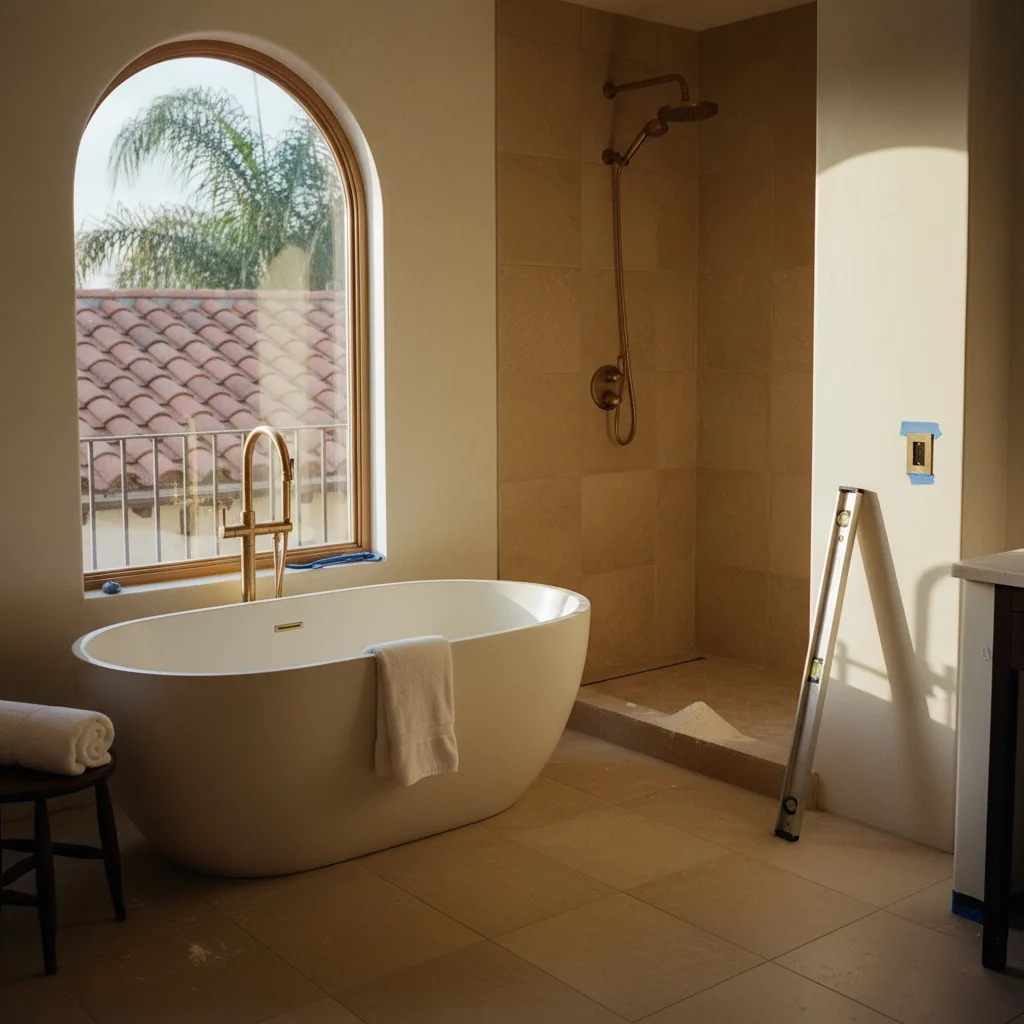
Planning a bathroom in Glendale? A full project typically runs $36,000 to $60,000 in 2026. Cosmetic refreshes start near $22,000; premium custom work climbs past $72,000. This is what your budget actually covers, what drives the price up, and how to vet a contractor who knows Glendale permits.
The Honest 2026 Price for a Bathroom in Glendale
As the kitchens and baths editor at Renology, I review hundreds of project invoices each year. The data is clear: Glendale, with its unique mix of historic homes and hillside properties, presents a specific set of challenges and costs. While national averages can be a helpful starting point, they often fail to capture the nuances of labor rates, material sourcing, and permitting in the Los Angeles metro area. For a Glendale homeowner in 2026, a realistic budget is paramount.
The median project cost we see falls squarely in the $36,000 to $60,000 range for a full gut renovation of a standard five-by-eight-foot bathroom. This involves replacing everything from the studs out: new plumbing, electrical, insulation, tile, fixtures, and finishes. For those seeking a less intensive update, a cosmetic refresh can be achieved for $22,000 to $36,000. At the other end of the spectrum, a high-end, custom primary bathroom with structural changes, luxury materials, and extensive design work will start at $72,000 and can easily exceed $110,000.
These figures represent the all-in cost, including design, labor, materials, permits, and a contractor's overhead. Understanding what is behind these numbers is the first step toward a successful renovation that meets both your aesthetic goals and your financial plan.
What Drives Bathroom Costs in Glendale
See what a bathroom remodel actually costs in your Glendale zip.
Take 4 questions →A bathroom renovation budget is a complex equation with three primary variables: the scope of labor, the quality of materials, and the fixed costs of doing business legally in Glendale. Changing any one of these can swing your final cost by tens of thousands of dollars.
Labor: The Biggest Slice of the Budget
In Southern California, skilled labor is the single largest expense in any renovation, often accounting for 50 to 60 percent of the total project cost. A bathroom project requires a coordinated team of licensed professionals: a general contractor, a plumber, an electrician, a tile setter, a drywall specialist, and a painter. According to the California Department of Industrial Relations, prevailing wages for these trades in Los Angeles County are among the highest in the nation. The complexity of your project directly impacts labor hours. For instance:
- Keeping the layout: If your toilet, shower, and vanity stay in their current locations, you minimize expensive plumbing and electrical work.
- Moving fixtures: Relocating a toilet or converting a tub to a walk-in shower requires opening walls and floors, rerouting drain and supply lines, and passing additional inspections. This can add $5,000 to $15,000 to your labor bill.
- Intricate tile work: A complex mosaic pattern or a floor-to-ceiling large-format porcelain slab requires far more prep and installation time than a simple subway tile wainscot. A master tile setter's daily rate reflects this precision.
Materials and Finishes: Where Style Meets Substance
This is where your design vision comes to life, and it's also where costs can escalate quickly. The quality and origin of your selections create huge price variations. Consider the vanity: a stock 36-inch model from a big-box store might cost $800, while a custom-built white oak vanity with a quartz countertop from a local fabricator can be $5,000 or more. The difference is in the materials, the construction (dovetail joints vs. staples), and the finish. The same principle applies across every item in the room.
- Tile: Ceramic ($5 per square foot) vs. hand-painted cement tile ($30 per square foot) vs. Calacatta marble slab ($150+ per square foot).
- Fixtures: A faucet set from a brand like Delta is well-made and costs around $300. A similar set from a designer brand like Waterworks or Kallista, specified in an unlacquered brass finish, can be $2,000.
- Lighting: Basic vanity lights might be $150. A pair of artisanal sconces and a statement chandelier, part of a layered lighting plan, can easily run into the thousands.
Pro tip
Splurge on the elements you touch every day, like the vanity hardware, faucet, and shower controls. You can save on areas like field tile, where a high-quality, affordable porcelain can mimic the look of expensive natural stone with greater durability.
Permits, Plans, and Overhead
The "soft costs" of a renovation are non-negotiable and essential for a legal, safe, and well-executed project. In Glendale, any work involving plumbing, electrical, or structural changes requires a permit from the City of Glendale's Building & Safety Division. The permit fees themselves are a few hundred dollars, but the process of creating permit-ready plans, managing submissions, and coordinating inspections adds to the contractor's overhead, which is factored into your total price. This also includes essential business costs like liability insurance and workers' compensation, which protect you as the homeowner.
Glendale Bathroom by Tier: Three Real Project Examples
To make these numbers tangible, let's look at three typical project scopes we see in Glendale. These are based on aggregated invoice data from the Renology network, showing what is realistically achievable at each budget level.
| Tier | Scope of Work | Cost Range (2026) | Timeline |
|---|---|---|---|
| Cosmetic Refresh | Keep existing layout. Replace vanity, toilet, and all fixtures. Reglaze existing tub and tile or install a new pre-fabricated shower surround. New flooring (LVT or porcelain tile), new lighting, and fresh paint. No plumbing or electrical relocation. | $22,000 to $36,000 | 2-4 Weeks |
| Mid-Range Gut Renovation | Full demolition to the studs. New plumbing and electrical in existing locations. New insulation and moisture-resistant drywall. Tiled walk-in shower with frameless glass door. Mid-grade porcelain tile on floor and walls. Semi-custom vanity with quartz top. New ventilation fan, lighting, and all fixtures (e.g., Kohler, Brizo). | $36,000 to $60,000 | 4-8 Weeks |
| Premium Custom Primary Bath | Full gut demolition, potentially involving layout changes (e.g., moving walls, relocating toilet). High-end materials like natural stone slabs, custom white oak or walnut millwork. Freestanding tub, curbless shower with linear drain. Designer fixtures (e.g., Waterworks, Rohl). Sophisticated lighting plan with multiple zones. Heated floors. | $72,000 to $110,000+ | 8-16+ Weeks |
I recently reviewed a project in Glendale that perfectly illustrates the mid-range tier. The homeowners had a classic 1950s hall bathroom with a tub-shower combo. For $52,000, their contractor took the room down to the studs, installed a new copper supply line, and created a beautiful walk-in shower with a built-in niche and bench. They chose a durable 24x48 inch porcelain tile that looks like Calacatta marble for the walls, a semi-custom vanity, and quality fixtures. The project passed all city inspections and completely transformed the home's functionality and value.
Permits and Local Code in Glendale
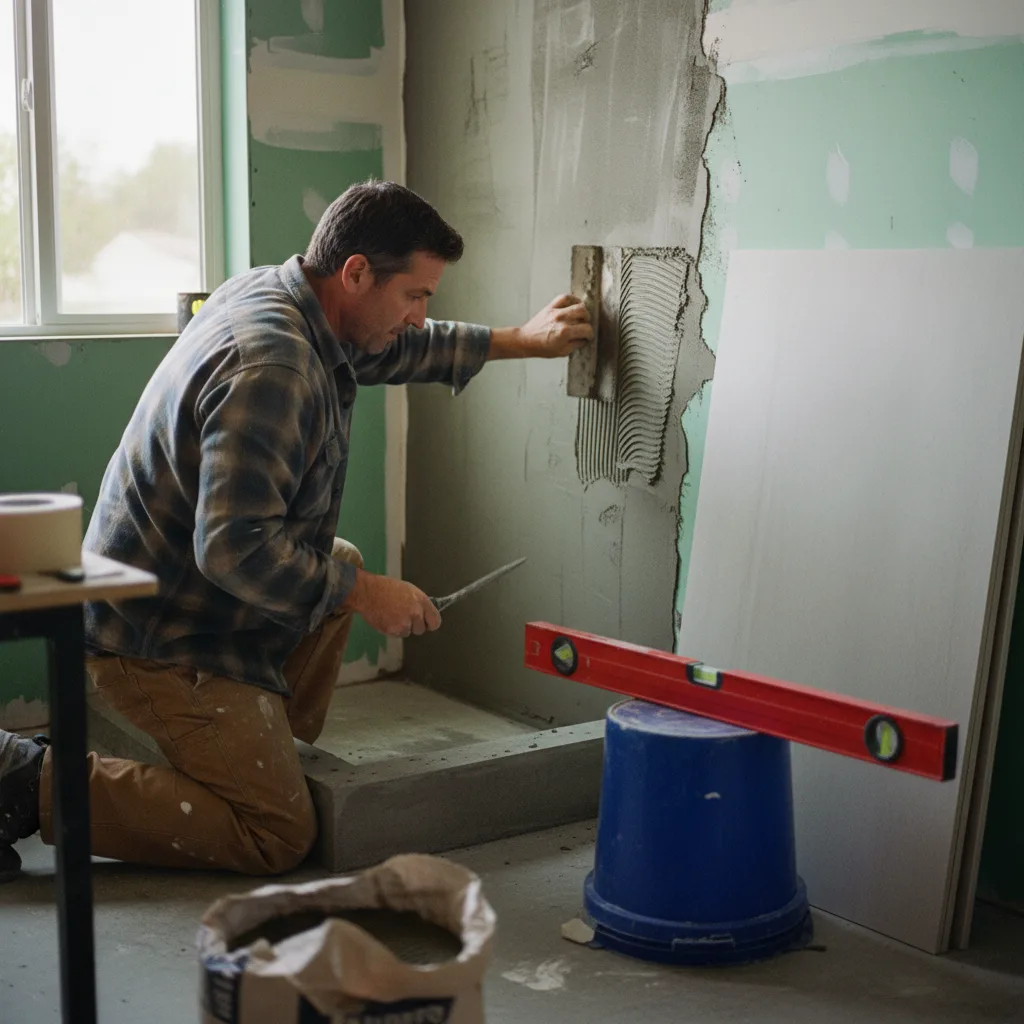
Working with the City of Glendale's Building & Safety Division is a critical part of any significant bathroom remodel. While some homeowners are tempted to skip this step to save time or money, it is a shortsighted mistake. A permitted project ensures the work is done to current safety standards, which is vital for plumbing and electrical systems hidden behind walls. It also protects your home's resale value, as unpermitted work can be a major red flag for future buyers.
When a Permit is Required
In Glendale, you will need a permit if your project includes any of the following:
- Relocating or adding new plumbing fixtures (sinks, toilets, showers).
- Altering or adding new electrical circuits (outlets, switches, lighting).
- Moving or removing any walls, even non-load-bearing ones.
- Changing the size or location of windows or doors.
Essentially, if you are doing more than swapping out a faucet or painting the walls, you likely need a permit. An experienced local contractor will handle the entire permitting process, from submitting architectural plans to scheduling the required inspections (e.g., rough plumbing, rough electrical, insulation, and final).
Complying with California Title 24
A key regulation that impacts bathroom design is the California Energy Code, known as Title 24. For bathrooms, this has specific requirements for lighting and ventilation. All new hardwired light fixtures must be high-efficacy (typically LED), and you must install a high-performance ventilation fan that is properly sized for the room and ducted to the outside. This isn't just a bureaucratic hurdle; it ensures your new bathroom has excellent air quality, preventing moisture and mold issues down the line, and is energy efficient.
Did you know
The City of Glendale offers some permits online through its GGOV portal, which can sometimes speed up the process for simpler projects. However, for full renovations, your contractor will likely need to submit plans for a full plan check review.
The Glendale Neighborhoods Where Bathroom Costs Diverge
Glendale is not a monolith. The character, age, and topography of its neighborhoods create distinct renovation challenges that directly influence project costs. A bathroom remodel in the flatlands of Mariposa is a different undertaking from one in the hills of the Verdugo Woodlands.
Rossmoyne and the Challenge of Historic Homes
In neighborhoods like Rossmoyne, known for its beautiful Spanish Colonial and Tudor homes from the 1920s and 30s, renovations are a delicate balance of modernization and preservation. In my last walkthrough of a primary bath project in a 1928 Spanish home there, the challenges were immediately apparent. The original plumbing was galvanized steel, which had to be completely replaced with copper back to the main line, a significant unforeseen expense. The walls were thick plaster and lath, not drywall, which made demolition and electrical work more labor-intensive. The goal was to install a modern curbless shower and a double vanity while respecting the home's historic archways and window casings. This kind of surgical renovation requires a higher level of craftsmanship and a bigger budget than working in a newer home with standard framing.
Verdugo Woodlands and Hillside Logistics
Contrast this with the Verdugo Woodlands or Chevy Chase Canyon. Here, many homes are built on hillsides, which introduces a different set of logistical hurdles. Job site access can be tight, making material deliveries and debris removal more complicated and costly. Parking for trade crews can be limited. For projects involving any foundation work or changes to the building envelope, a soils report might be necessary. Contractors who specialize in hillside construction often have slightly higher rates to account for these operational complexities. The design might also be influenced by the landscape, with homeowners often wanting to add larger windows to capture views, which can trigger structural engineering requirements.
Your bathroom is the most complex room in your house per square foot; investing in a detailed plan upfront saves thousands in changes later.
Timeline: Realistic Week-by-Week Expectations
One of the most stressful parts of a renovation is not knowing what to expect. While every project is unique, a standard mid-range gut remodel in Glendale typically follows a predictable construction sequence over four to eight weeks, after the design is finalized and permits are secured.
- Pre-Construction (4-12 Weeks): This is the planning phase. It includes hiring a contractor, finalizing the design and material selections, and submitting plans to the City of Glendale for permit approval. Long-lead items like custom vanities or special-order tile should be ordered now.
- Week 1: Demolition and Protection. The crew will seal off the work area to contain dust. Old fixtures, tile, and drywall are removed down to the studs. This is when any hidden issues, like water damage or old wiring, are discovered.
- Week 2: Rough-in and Framing. The plumber and electrician will run new pipes, drains, and wires for your new layout. If you are moving walls or changing window sizes, the framing is done now. This is a loud and messy week.
- Week 3: Inspections and Close-up. The city inspector will visit to approve the rough plumbing and electrical work. Once passed, the new insulation goes in, and the moisture-resistant drywall is hung, taped, and mudded.
- Week 4-5: Waterproofing and Tile. This is a visually transformative stage. The shower area is waterproofed with a membrane system. Then, the tile setter begins the meticulous process of laying floor and wall tile. Grouting and sealing follow.
- Week 6: Major Installations. The vanity, countertops, and any built-in cabinetry are installed. The freestanding tub, if you have one, is set in place. The room starts to feel like a bathroom again.
- Week 7: Finishes and Fixtures. Plumbers and electricians return for their final hookups. The toilet, sinks, faucets, shower controls, lighting, and ventilation fan are all installed.
- Week 8: Painting and Punch List. The final coat of paint goes on. The shower glass is installed. The contractor will then walk through the project with you to create a "punch list" of any small adjustments needed before final payment is made and the project is officially complete.
Important
This timeline assumes no major delays from material backorders or inspection scheduling. Building a 10 to 15 percent buffer into both your budget and your timeline is always a wise strategy.
How to Vet a Glendale Contractor
Choosing the right general contractor is the single most important decision you will make. A great contractor is a project manager, a problem-solver, and your advocate. A bad one can turn your dream project into a nightmare of delays and cost overruns. Proper vetting is non-negotiable.
Key Questions to Ask Potential Contractors
When you interview at least three contractors, go beyond just asking for a price. Dig into their process and experience:
- Can you show me your California State License Board (CSLB) license and proof of general liability and workers' compensation insurance?
- How many bathroom renovations have you completed in Glendale in the last two years?
- Can I speak with two or three of your most recent clients? (And actually call them!)
- Who will be the on-site project manager, and how often will they be here?
- How do you handle communication with clients? Do you use a project management app, email, or daily texts?
- What is your process for handling change orders when unexpected issues arise or I want to make a change?
- What specific material brands do you typically use for unseen items like waterproofing membranes, plumbing valves, and drywall? (This reveals their commitment to quality.)
Red Flags to Watch For
Equally important is knowing what to avoid. Be wary of contractors who:
- Offer a significantly lower bid than others. This often means they have missed something in the scope or are using subpar materials and uninsured labor.
- Pressure you to sign a contract immediately or offer a "special price" if you sign today.
- Are vague about the payment schedule or ask for a large portion of the cost upfront. (In California, a down payment cannot exceed 10 percent of the project cost or $1,000, whichever is less.)
- Cannot provide a detailed, itemized bid. The bid should break down costs for labor, materials, permits, and overhead, not just give a single lump sum.
- Have no online presence or a portfolio of work that seems inconsistent.
Renology Take
In my experience tracking hundreds of bathroom projects, the most common mistake homeowners make is focusing on the visible finishes while under-budgeting for what is behind the walls. The "unsexy" parts of the renovation, like upgrading 70-year-old plumbing, installing a proper waterproofing system like Schluter-Kerdi, or adding a dedicated circuit for new lighting, are what ensure the longevity and safety of your investment. A beautiful tile job is meaningless if it is laid over a rotting subfloor. A great contractor will educate you on the importance of this foundational work. My advice is to allocate a solid portion of your budget to getting the infrastructure right first. You can always upgrade a faucet later, but you can never go back and fix the plumbing inside a finished wall without tearing it all out again.
Sources & Methodology
These cost ranges are reconstructed from publicly available labor and permit data, the latest Remodeling Magazine cost-vs-value report, and Renology's own Project of the Day network, a rolling sample of real homeowner invoices we collect from Glendale-area contractors. Last refreshed April 2026.
- National Association of Home Builders (NAHB) Remodeling Market Index, Q1 2026
- California Department of Industrial Relations, Los Angeles County Prevailing Wage Data, 2026
- City of Glendale Building & Safety Division Permit Data, 2026
- Remodeling Magazine, 2026 Cost vs. Value Report
- Renology Project of the Day Network, aggregated 2026 contractor invoices in Glendale
- Schluter Systems North America
- California State License Board (CSLB)
Methodology
How Renology estimates bathroom costs in Glendale.
Renology treats this page as a planning benchmark for Glendale, California, not a final quote. We compare published local guide data, contractor scope patterns, permit-sensitive work, climate or site constraints, and finish-level assumptions.
Cost range
$36,000-60,000
Timeline
3-8 weeks
Source type
Editorial dataset
Local factor: Mediterranean (Köppen Csa): 14 inches annual rain, hot dry summers, mild winters. UV intensity is high year-round.
Use these numbers to shape a scope and spot missing line items. Confirm permits, structural work, electrical, plumbing, gas, waterproofing, drainage, and code-sensitive details with the local building department and a licensed professional.
Compare against the full Renology Cost IndexGlendale · pre-screened
Get 3 Glendale renovation bids in 48 hours.
Our editors already vetted Glendale contractors. Answer 4 questions and we send 3 written bids inside 48 hours, with the real price for your scope, not their inflated first-call number.
- Free, no commission
- Pre-screened locally
- Bids inside 48 hours
Takes about 60 seconds. We'll text you when bids arrive.