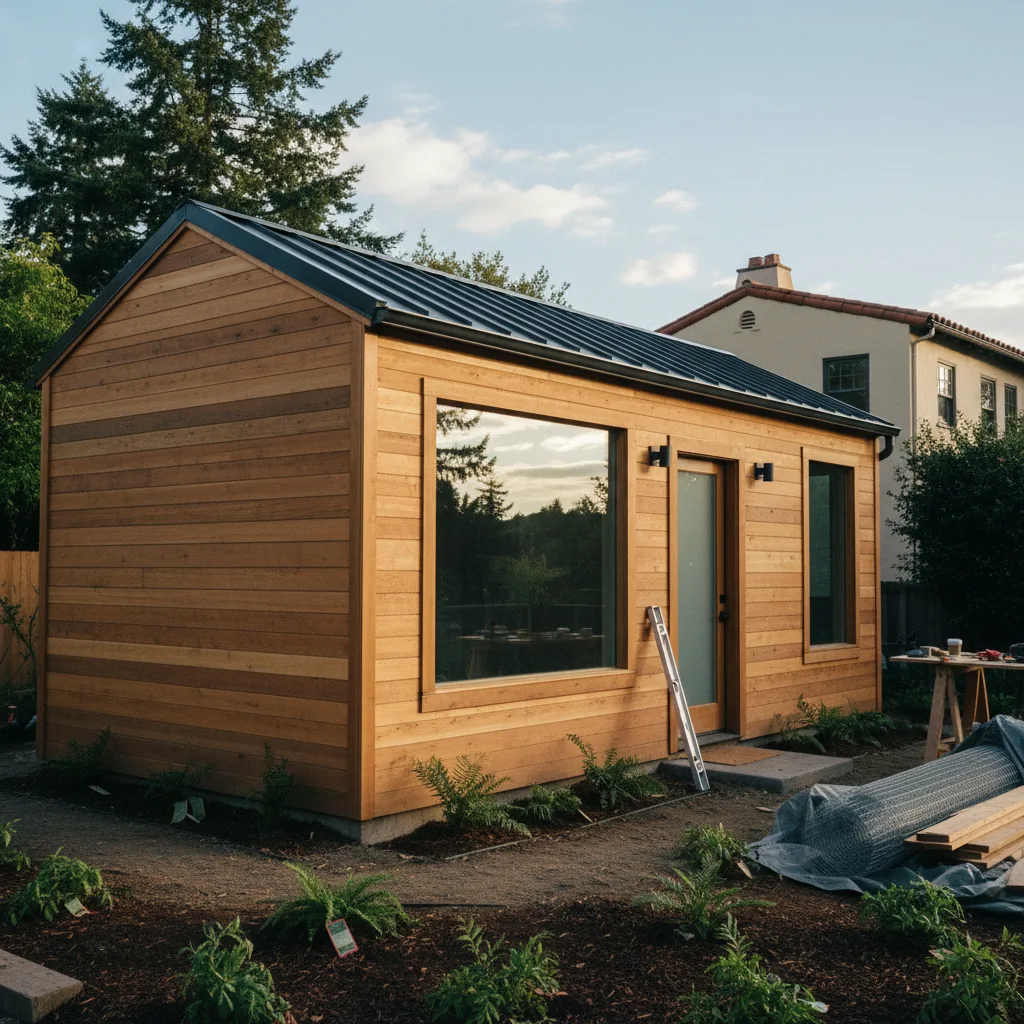
Planning an ADU and garage project in Glendale? A full build-out typically runs $215,000 to $385,000 in 2026. Cosmetic refreshes start near $130,000, while premium custom work climbs past $460,000. This is what your budget actually covers, what drives the price up, and how to vet a contractor who knows Glendale’s specific rules.
The Honest 2026 Price for an ADU & Garage in Glendale
Let's get the most important number out of the way first. Based on our analysis of real contractor invoices and permit data, a standard, all-in Accessory Dwelling Unit (ADU) project in Glendale, often involving a garage conversion or a new detached structure, costs between $215,000 and $385,000. This isn't a ballpark guess from a national cost calculator. It's the real-world price range for a professionally managed, fully permitted project in this specific market. The final number depends entirely on the scope you choose, the state of your existing property, and the level of finishes you select.
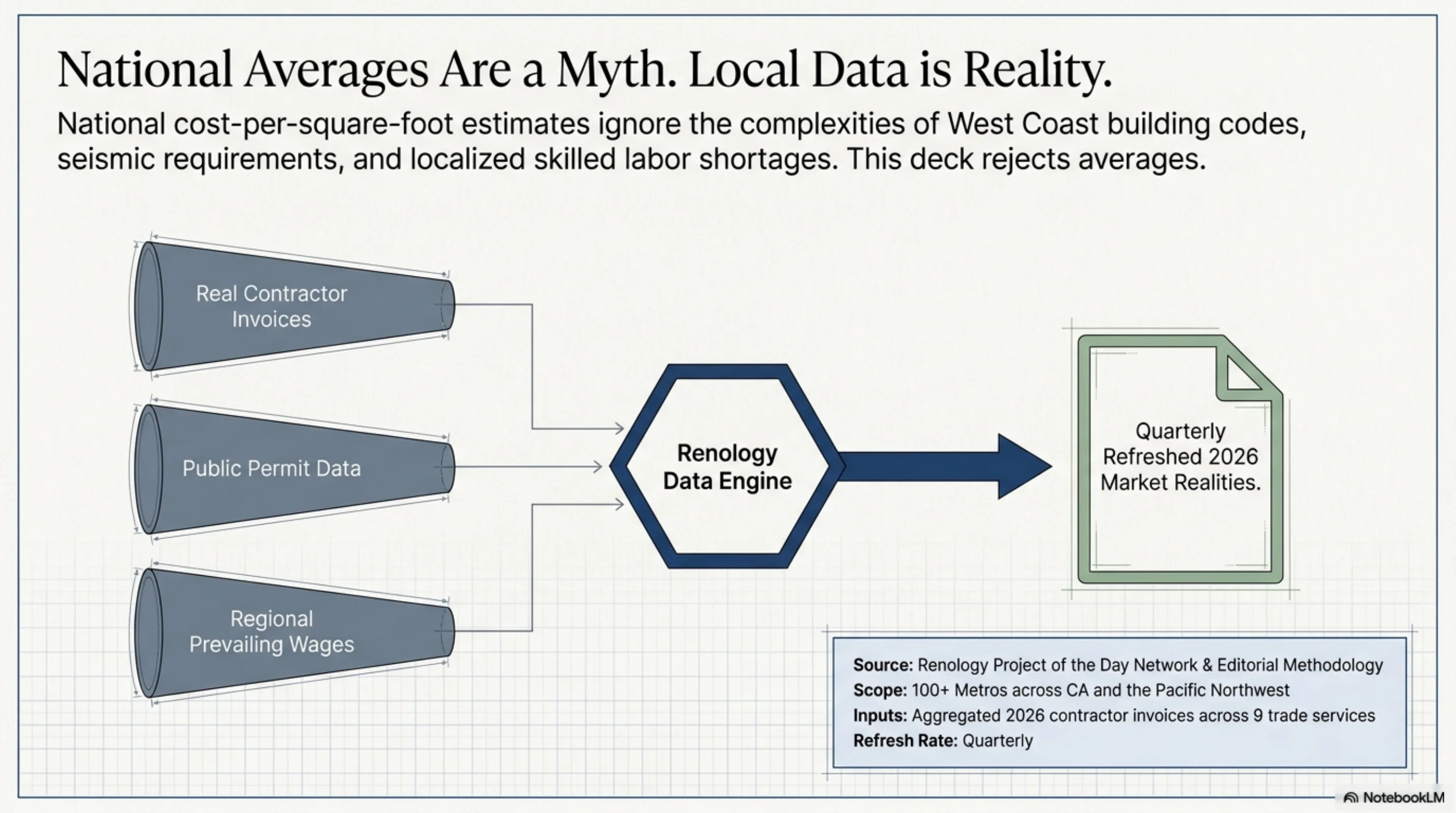
As the structural editor at Renology, I see homeowners get tripped up by unrealistic budget expectations more than any other single issue. The price you see on a home improvement TV show or a national blog post rarely accounts for the specific cost pressures of Southern California construction, from seismic codes to the high demand for skilled labor. The numbers we present here are built from the ground up, reflecting what your neighbors in Glendale are actually paying for quality work in 2026.
Breaking Down the Budget Tiers
Not every project is a full teardown. Your goals and existing conditions will place your project into one of three primary budget tiers. Understanding where you fit is the first step to a realistic plan.
- Refresh Tier ($130,000 to $215,000): This range typically covers a straightforward garage conversion. We're talking about finishing an existing, structurally sound garage. The work involves insulation, drywall, adding code-compliant electrical and plumbing, installing a bathroom and kitchenette, and upgrading the flooring and lighting. The key here is that you are working within an existing footprint with minimal structural changes.
- Standard Tier ($215,000 to $385,000): This is the most common project type. It could be a more complex garage conversion that requires significant structural work, like reinforcing the foundation or reframing the roof. It also covers a modest, new-construction detached ADU (around 400-600 square feet) with good quality, but not extravagant, materials. Think brand-name appliances, durable flooring, and solid fixtures from reputable suppliers.
- Premium Tier ($460,000 to $695,000+): Here, you're entering the realm of custom design. This budget supports a larger detached ADU (800-1,200 square feet), high-end materials like custom cabinetry and stone countertops, designer fixtures, and complex architectural features. These projects often involve significant site work, especially on hillside lots, and a deeper level of engagement with architects and interior designers.
Why National Averages Don't Work Here
National cost-per-square-foot averages are the most misleading metric in residential construction. They blend costs from low-cost rural areas with high-cost urban centers, creating a number that is accurate for almost nowhere. In Glendale, you're not just paying for lumber and drywall. You're paying for a contractor who understands Title 24 energy requirements, CALGreen building standards, and the specific plan review process at the Glendale Community Development Department. You're paying for labor from a skilled pool of tradespeople who are in constant demand across the entire Los Angeles basin. That local expertise is built into the price, and it's what keeps a project on track and up to code.
What Drives ADU & Garage Costs in Glendale
See what a ADU build actually costs in your Glendale zip.
Take 4 questions →Beyond the obvious factors of size and material quality, several less visible elements have a major impact on your final invoice. A savvy homeowner understands these forces before they even start collecting bids. The primary cost drivers are a mix of labor, materials, bureaucracy, and the unique geology of the area.
Labor and Materials
In the Los Angeles metro area, skilled labor is a premium commodity. The region's constant construction activity means that qualified general contractors, electricians, plumbers, and framers command high wages. According to the California Department of Industrial Relations, prevailing wages for trades in Los Angeles County are among the highest in the state. This isn't a contractor padding the bill, it's the market reality. Materials are a similar story. While some items have national pricing, the logistics of getting them to a dense urban area adds cost., California's strict building codes often require higher-grade materials, such as specific types of fire-resistant siding or energy-efficient windows, which carry a higher price tag.
Permits, Fees, and Engineering
Building an ADU is not a simple cosmetic update, it's the construction of a new dwelling. This involves a significant upfront investment in planning and permits before a single nail is hammered. You should budget for architectural or design fees, structural engineering costs (especially for new builds or on hillside lots), and potentially a survey of your property. Then come the city fees. The City of Glendale's Building & Safety Division will charge for plan checks and a series of permits covering building, electrical, plumbing, and mechanical work. These fees are calculated based on project valuation and can easily add several thousand dollars to the total cost.
Key takeaway
Don't mistake the construction bid for the "all-in" cost. Soft costs like design, engineering, and permits can account for 10 to 20 percent of your total project budget. Ask prospective contractors if these are included in their initial estimate.
Site-Specific Factors
This is where the unique character of your property comes into play. Does your Glendale home sit on a flat lot or a steep hillside? Hillside construction is significantly more expensive due to the need for retaining walls, deeper foundations, and complex soil engineering. Access is another major factor. If your backyard is hard to reach with heavy equipment, labor costs will increase as materials have to be moved by hand. Finally, the condition of your existing utilities is a huge variable. Tying a new ADU into an old, undersized sewer line or electrical panel will trigger a mandatory and often costly upgrade to the main house's infrastructure.
Glendale ADU & Garage by Tier: 3 Real Project Examples
To make these numbers more concrete, let's look at three composite projects based on real invoices and scopes we've tracked in Glendale. These examples show the clear trade-offs between budget, scope, and timeline. The difference between a simple conversion and a custom build is not just in the finishes, it's in the complexity of the entire process.
| Tier | Scope of Work | Cost Range | Timeline |
|---|---|---|---|
| Cosmetic / Refresh | Conversion of an existing, structurally sound 400 sq. ft. garage. No changes to footprint. Includes new insulation, drywall, electrical panel sub-panel, and plumbing tie-ins. Standard finishes: laminate flooring, stock cabinets, builder-grade tile, and fixtures. | $130,000 - $215,000 | 4 - 6 months |
| Mid-Range / Standard | New construction of a 550 sq. ft. detached ADU on a flat lot. Standard foundation and wood framing. Includes a full kitchen with mid-grade appliances, a full bathroom, and a separate bedroom. Upgraded finishes like engineered hardwood, semi-custom cabinets, and quartz countertops. | $215,000 - $385,000 | 6 - 9 months |
| Premium / Custom | Architect-designed 900 sq. ft. detached ADU, potentially with a second story or built into a hillside. Involves significant site work, retaining walls, and custom engineering. High-end finishes: custom millwork, premium appliances, natural stone surfaces, and designer lighting and plumbing fixtures. | $460,000 - $695,000+ | 9 - 14 months |
Permits and Local Code in Glendale
Every construction project lives and dies by its permits. In Glendale, the primary authority is the City of Glendale Community Development Department, and its Building & Safety Division is where your plans will be scrutinized. While state laws have made it easier to get ADUs approved, you still have to follow a rigorous local process.
Navigating Glendale's Building & Safety Division
Your contractor or architect will submit a full set of plans for a process called "plan check." A city plan checker reviews every detail to ensure it complies with the California Building Code (CBC), local zoning ordinances, and Glendale's specific amendments. This is not a rubber-stamp process. It's common for plans to be returned with corrections or requests for more information, especially regarding structural engineering, energy calculations required by Title 24, or fire safety access. An experienced local contractor will anticipate these requests and prepare a more complete package from the start, saving weeks or even months of back-and-forth.
The permit is not a hurdle to be cleared; it is the blueprint for a safe, legal, and valuable addition to your property.
Key State Mandates to Know
California has passed several laws to encourage ADU construction, and they directly impact your project. AB 68 and SB 9, for instance, streamlined the approval process, requiring cities like Glendale to approve or deny an ADU permit application within 60 days. These laws also limit the ability of cities to impose restrictive parking requirements or minimum lot sizes. However, they do not eliminate the need to comply with objective health and safety codes. Your project must still meet all structural, electrical, and fire-safety standards. This is where a professional's guidance is indispensable.
Did you know
Under state law, you can now often build both a standard ADU and a smaller "Junior ADU" (JADU) within your existing home on the same property. This has become a popular strategy in Glendale for maximizing rental income or creating multi-generational living spaces.
The Glendale Neighborhoods Where ADU & Garage Costs Diverge
Glendale is not a monolith. The city's diverse topography and housing stock mean that a project in one neighborhood can face a completely different set of challenges, and costs, than an identical project just a few miles away. The two biggest factors are lot constraints and local character.
In neighborhoods like Rossmoyne and Verdugo Woodlands, you'll find older, larger homes on more spacious lots. This often provides more flexibility for a detached, new-construction ADU. However, the age of the homes here can be a double-edged sword. I was on a site walk in Rossmoyne last quarter where the homeowner had a perfect spot for a 700-square-foot ADU, but we quickly discovered the home's original 100-amp electrical panel and clay sewer line were completely inadequate. The budget had to expand by nearly $25,000 to trench a new sewer lateral to the street and upgrade the main electrical service for the entire property. These are the kinds of "surprises" that are common in areas with older infrastructure.
Contrast that with South Glendale, closer to the Americana and the city's denser urban core. Here, the lots are typically smaller and flatter, making garage conversions the most popular ADU strategy. The primary challenge isn't infrastructure age, it's access. Streets can be narrow, and there's often little to no side-yard space. This means materials may need to be carried in by hand instead of delivered by forklift, and staging areas for construction are limited. These logistical hurdles add labor hours and can directly increase the cost of a project compared to a suburban lot with easy street access.
Timeline: Realistic Week-by-Week Expectations
One of the hardest truths in construction is that things always take longer than you hope. A realistic timeline for an ADU project in Glendale, from the first call to a designer to the final inspection, is often close to a year. We can break this down into three distinct phases.
- Phase 1: Design and Engineering (4-8 weeks). This is the planning stage. You'll work with a designer or architect to create the layout, select materials, and develop the construction documents. A structural engineer will then use these plans to create the necessary calculations and drawings for the foundation, framing, and any other structural elements.
- Phase 2: Permitting (8-16 weeks). Once the plans are complete, they are submitted to the Glendale Building & Safety Division. The 60-day state mandate is a good benchmark, but if the plans require significant corrections, this phase can stretch longer. Patience is key here.
- Phase 3: Construction (16-32 weeks). This is the active build, and its duration depends heavily on your project's scope. A simple garage conversion might be on the shorter end of this range, while a complex custom build on a hillside will be on the longer end. The timeline can be affected by weather, inspection scheduling, and material availability.
Important
The biggest source of delays during construction is often the supply chain. Custom windows, high-end appliances, and specific types of tile can have lead times of 12 weeks or more. A good general contractor will order these long-lead items the moment the permit is issued to avoid having the project sit idle while waiting for a delivery.
How to Vet a Glendale Contractor
Choosing the right contractor is the single most important decision you will make. A great contractor will keep your project on time and on budget, while a bad one can turn your investment into a nightmare. Look for a builder with specific, recent experience building ADUs in Glendale.
Questions to Ask Every Potential Contractor
When you interview candidates, go beyond just asking for a price. Dig into their process and experience.
- How many ADUs have you completed in Glendale in the past 24 months?
- Can you provide me with the addresses of three recent projects so I can see your work?
- Who will be my day-to-day point of contact and project manager?
- How do you handle change orders? Is your process documented in the contract?
- Can you show me your current CSLB license, general liability insurance, and workers' compensation insurance certificates?
- What potential challenges do you see with my specific property?
Red Flags to Watch For
Be wary of contractors who exhibit any of these behaviors. They are often signs of inexperience or financial instability.
- An unusually low bid, significantly undercutting other quotes. This often means they've missed something and will make it up with expensive change orders later.
- Vagueness about the timeline or the payment schedule.
- A demand for a large upfront deposit. California law limits deposits to 10 percent of the contract price or $1,000, whichever is less.
- An inability or unwillingness to provide a list of local references.
- High-pressure sales tactics or pushing you to sign a contract immediately.
Renology Take
As an editor who reviews construction data all day, I see one meta-pattern homeowners consistently miss, especially with ADUs. They fixate on the visible costs, the "per-square-foot" price of the structure itself. They budget for the framing, the drywall, the kitchen, and the bathroom. What they fail to properly budget for is the cost of connecting that new, perfect little house to the world. The trenching for the sewer line, the new electrical conduit from the street, the water meter upgrade, the gas line extension, these are the unglamorous, often invisible expenses that can break a budget. On a tricky Glendale hillside lot, I've seen site prep and utility work account for 30 percent of the total project cost. My advice is simple: get a firm, itemized quote for all site and utility work before you fall in love with your floor plan.
Sources & Methodology
These cost ranges are reconstructed from publicly available labor and permit data, the latest Remodeling Magazine cost-vs-value report, and Renology's own Project of the Day network, a rolling sample of real homeowner invoices we collect from Glendale-area contractors. Last refreshed April 2026.
- National Association of Home Builders (NAHB) Remodeling Market Index, Q1 2026
- California Department of Industrial Relations, Los Angeles County Prevailing Wage Data, 2026
- City of Glendale Community Development Department, Permit Data, 2026
- Remodeling Magazine, 2026 Cost vs. Value Report
- Renology Project of the Day Network, aggregated 2026 contractor invoices in Glendale
- California Building Standards Code (Title 24)
- U.S. Bureau of Labor Statistics, Los Angeles-Long Beach-Anaheim, CA Metropolitan Area, 2026
Methodology
How Renology estimates adu / garage conversion costs in Glendale.
Renology treats this page as a planning benchmark for Glendale, California, not a final quote. We compare published local guide data, contractor scope patterns, permit-sensitive work, climate or site constraints, and finish-level assumptions.
Cost range
$215,000-385,000
Timeline
32-56 weeks
Source type
Editorial dataset
Local factor: Mediterranean (Köppen Csa): 14 inches annual rain, hot dry summers, mild winters. UV intensity is high year-round.
Use these numbers to shape a scope and spot missing line items. Confirm permits, structural work, electrical, plumbing, gas, waterproofing, drainage, and code-sensitive details with the local building department and a licensed professional.
Compare against the full Renology Cost IndexGlendale · pre-screened
Get 3 Glendale ADU bids in 48 hours.
Our editors already vetted Glendale ADU builders. Answer 4 questions and we send 3 written bids inside 48 hours, with the real price for your scope, not their inflated first-call number.
- Free, no commission
- Pre-screened locally
- Bids inside 48 hours
Takes about 60 seconds. We'll text you when bids arrive.