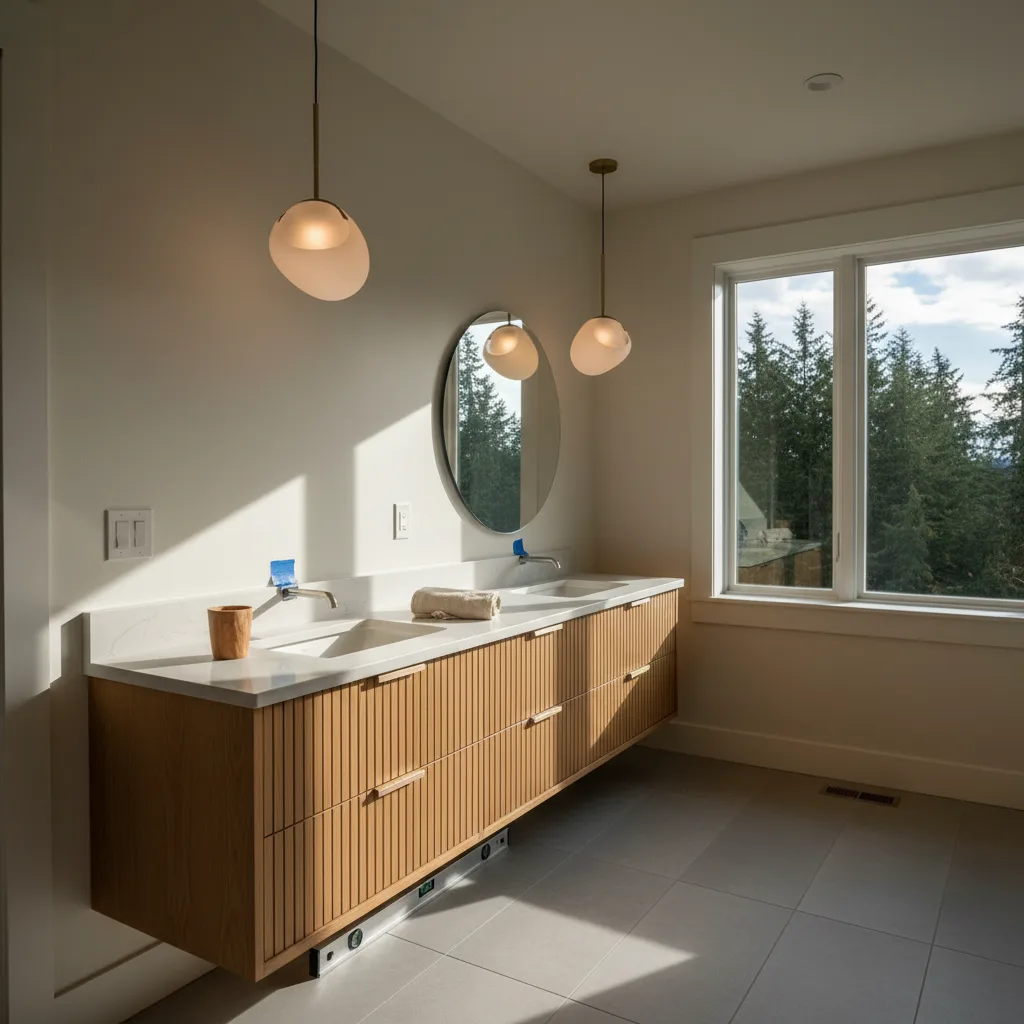
Planning a bathroom renovation in Redmond? A full project typically runs $30,000 to $50,000 in 2026. Cosmetic refreshes start near $18,000, while premium custom work often climbs past $60,000. This is what your budget actually covers, what drives the price, and how to vet a contractor who knows Redmond permits.
The Honest 2026 Price for a Bathroom in Redmond
As the kitchens and baths editor for Renology, I review hundreds of project invoices from across the country. The Seattle metropolitan area, including Redmond, consistently ranks as one of the more significant investments for homeowners, and for good reason. The combination of a competitive labor market, high standards for craftsmanship, and a housing stock with specific needs creates a unique pricing environment. When we analyze real, closed-out projects from 2025 and early 2026, a clear picture emerges for Redmond homeowners.
A complete, mid-range bathroom renovation, the most common project we see, lands squarely in the $30,000 to $50,000 range. This assumes a standard five-by-eight-foot bathroom, fully gutted, with quality, readily available materials. For homeowners looking for a faster, more budget-conscious update without moving walls or plumbing, a cosmetic refresh is a viable option, typically costing between $18,000 and $30,000. On the other end of the spectrum, a premium or primary suite renovation, involving structural changes, high-end materials, and extensive custom work, will start around $60,000 and can easily exceed $90,000.
These figures are not abstract estimates. They represent the total cost to the homeowner, including design, materials, labor, permits, and a contractor's overhead. Understanding what places your project in one category versus another is the first step toward building a realistic budget and a successful renovation.
What Drives Bathroom Costs in Redmond
See what a bathroom remodel actually costs in your Redmond zip.
Take 4 questions →The final price tag on your Redmond bathroom is a composite of several key factors, some obvious and some hidden behind the walls. While the gleam of a new faucet is satisfying, it's the foundational elements of labor, structural integrity, and code compliance that form the bulk of your investment.
Labor: The Pacific Northwest Premium
The single largest component of any renovation budget is skilled labor. In the high-demand Redmond market, driven by a strong economy, the cost for licensed and insured tradespeople, from plumbers and electricians to expert tile setters, is higher than the national average. A qualified general contractor orchestrates this team, managing schedules, quality control, and inspections. Their fee, typically 15 to 20 percent of the project cost, covers not just management but also crucial insurance, bonding, and warranty protections. Expect to pay for expertise, reliability, and the peace of mind that comes with a properly executed project. Cutting corners on labor is the most common path to costly rework and failed inspections.
Materials and Finishes: From Practical to Palatial
This is where your design vision truly comes to life, and where the budget can expand most rapidly. The difference between a basic and a premium bathroom often lies in the material specifications.
- Tile: A simple ceramic subway tile from a big-box store might cost $4 per square foot. A handcrafted zellige tile from a specialty supplier can be $35 per square foot, and a custom waterjet mosaic can run into the hundreds. The complexity of the tile pattern also impacts labor costs; a herringbone or mosaic layout requires significantly more cutting and time than a simple running bond.
- Vanities: A stock 36-inch vanity might cost $800. A semi-custom unit from a brand like Bellmont Cabinet Co. could be $3,000, while a fully custom, furniture-grade vanity made from rift-sawn white oak with specialized hardware can easily top $7,000.
- Fixtures: A complete faucet, shower head, and valve set from a reliable brand like Moen or Delta might be $600. A comparable set in an unlacquered brass finish from a designer brand like Waterworks or Kallista can cost $4,000 or more. The internal mechanics matter, too; a high-quality thermostatic valve that prevents scalding and maintains consistent temperature is a worthwhile investment hidden behind the wall.
- Surfaces: A pre-fabricated quartz countertop is a durable and cost-effective choice. A slab of Calacatta Gold marble, however, is a luxury material that requires careful selection, fabrication, and sealing, with costs that are five to ten times higher.
Pro tip
When selecting materials, always consider the long-term maintenance. Natural stone like marble requires regular sealing and is susceptible to etching from acidic products. High-quality porcelain, on the other hand, can offer a nearly identical look with superior durability and zero required maintenance, often making it a smarter choice for a busy family bathroom.
The Unseen Essentials: Waterproofing, Ventilation, and Code
What you don't see is arguably more important than what you do. A significant portion of your budget is dedicated to creating a durable, safe, and healthy space. This includes multi-layer waterproofing systems in the shower, like the Schluter-KERDI membrane, which protects your home's structure from moisture. It also includes powerful, quiet ventilation fans, required by the Washington State Energy Code to properly manage humidity and prevent mold growth. If your home is older, the project will also include the cost of bringing plumbing and electrical systems up to today's standards, which is not optional, it's required for a permit to be finalized.
Redmond Bathrooms by Tier: Three Real Project Examples
To make these numbers tangible, let's look at three distinct project scopes we frequently see in the Redmond area. I've tracked similar projects in neighborhoods from Grass Lawn to Education Hill, and they consistently fall into these archetypes. The primary variable is not the size of the room, but the depth of the intervention.
The most successful renovations are not about spending more, but about aligning the scope of work with the budget from day one.
Below is a breakdown of what you can expect at each investment level. These scopes, costs, and timelines are based on a standard five-by-nine-foot hall bathroom.
| Tier | Typical Scope of Work | Cost Range (2026) | Construction Timeline |
|---|---|---|---|
| Cosmetic Refresh | No layout changes. Keep existing tub/shower. New vanity (stock), new toilet, new light fixtures and faucet, LVP or ceramic tile flooring, new paint. Professional tub reglazing. | $18,000 to $30,000 | 2 to 3 weeks |
| Mid-Range Gut Renovation | Full demolition to studs. New tub or shower pan with tiled walls. New semi-custom vanity with quartz top. New Toto toilet. Updated plumbing valves. New GFCI electrical. New exhaust fan. Porcelain tile floor. Recessed lighting. | $30,000 to $50,000 | 4 to 6 weeks |
| Premium Custom Oasis | Full demolition. Potential layout change (e.g., moving a wall). Curbless shower with linear drain. Custom vanity with natural stone. High-end fixtures (e.g., Dornbracht). Radiant floor heating. Steam shower system. Freestanding tub. Upgraded lighting plan with dimmers. | $60,000 to $90,000+ | 6, 10+ weeks |
The mid-range renovation represents the sweet spot for return on investment and functional improvement for most Redmond homeowners. It addresses all the core components of the bathroom, updates the infrastructure behind the walls, and provides a completely new look and feel without the budget strain of a fully custom, primary suite-style project.

Permits and Local Code in Redmond
Any renovation that involves more than simple surface replacements requires a permit. In Redmond, this process is managed by the City of Redmond Development Services. Attempting to bypass this crucial step can result in stop-work orders, fines, and significant trouble when you eventually sell your home. A professional contractor will manage this entire process for you, but it's important to understand what it involves.
The Permitting Process
For a standard bathroom remodel that alters plumbing or electrical systems, your contractor will submit a set of plans for review. These plans must demonstrate compliance with the current Washington State Residential Code and local Redmond amendments. The city's plan checkers will verify details like GFCI outlet placement near water sources, proper drain and vent line sizing, and the installation of anti-scald valves. In Redmond, the review process for a straightforward interior remodel is typically efficient, often taking between three to five weeks, which is notably quicker than the "Seattle Process" many have heard about.
Key Code Requirements to Know
While your contractor is responsible for compliance, being an informed homeowner helps. A few key requirements that often add to the scope and cost in older homes include:
- Ventilation: The Washington State Energy Code mandates mechanical ventilation in all bathrooms. Your old, noisy fan likely doesn't meet the current standard for airflow (CFM, or cubic feet per minute) or quiet operation (sones). A new, properly vented Panasonic or Broan fan is a common and necessary upgrade.
- Waterproofing: Modern codes have very specific requirements for how showers and tub surrounds are waterproofed before tile is installed. This involves membranes, special sealants, and a "pan liner" test to ensure the shower base is completely watertight.
- Electrical: All outlets in a bathroom must be protected by a Ground Fault Circuit Interrupter (GFCI). Your renovation will likely require a dedicated 20-amp circuit for the bathroom outlets, separate from the lighting, which can sometimes mean running a new wire from your home's main electrical panel.
The Redmond Neighborhoods Where Bathroom Costs Diverge
While city-wide averages provide a baseline, renovation costs can vary based on the specific character and housing stock of Redmond's distinct neighborhoods. The age of the home is the single biggest factor, dictating the extent of system upgrades required.
Education Hill: The Mid-Century Challenge
Many homes in Education Hill were built between the 1960s and 1980s. While often well-built, their bathrooms present a specific set of challenges. Footprints are typically small, and the underlying infrastructure is aging. A renovation here often uncovers cast iron or galvanized plumbing that needs replacement, and electrical systems that lack the capacity for modern lighting and amenities. Asbestos testing and potential abatement for old vinyl flooring or drywall texture can also add a few thousand dollars and a week to the schedule. The goal is often to create a more open feel within the existing small footprint, using smart design choices like wall-mounted vanities and large-format tiles.
Idylwood and Grass Lawn: Post-War Potential
These neighborhoods feature a significant number of post-war homes from the 1950s and 60s. The bathrooms are often tiny, and the original construction may not meet modern structural standards. Renovations here frequently involve "surprises" behind the walls, like rotted subfloors from slow leaks or uninsulated exterior walls. The investment in these homes is often skewed more heavily toward structural and system upgrades rather than purely aesthetic finishes. However, the opportunity to properly rebuild these small spaces with modern waterproofing and insulation provides immense long-term value and comfort.
Did you know
In many older Redmond homes, the original bathroom subfloor may only be 1/2-inch plywood. Current tile industry standards, set by the Tile Council of North America (TCNA), require a much stiffer subfloor to prevent tile and grout from cracking. This often means your contractor will need to add a layer of 1/2-inch or 5/8-inch plywood before installing the tile underlayment, a necessary and non-negotiable step for a long-lasting floor.
Timeline: Realistic Week-by-Week Expectations
Once your materials are selected and your permits are in hand, the active construction phase begins. A common point of stress for homeowners is the apparent chaos of the first few weeks. Understanding the sequence of events can provide much-needed peace of mind. Here is a typical week-by-week flow for a mid-range, 6-week project.
Editor's note
This timeline begins *after* all your long-lead items have arrived. Custom vanities can take eight to twelve weeks to be delivered, and some specialty tiles can take just as long. Do not allow demolition to begin until every single item, from the tub to the cabinet pulls, is in your garage or at a local warehouse.
- Week 1: Protection and Demolition. Your contractor will protect floors and surrounding areas. Then, the careful work of demolition begins. This is the "discovery" phase, where any hidden issues like rot, mold, or unexpected wiring are uncovered. A contingency fund of 10-15% is for exactly this moment.
- Week 2: Rough-In and Framing. This is the phase for major systems. The plumber runs new copper or PEX supply lines and ABS drains. The electrician runs new wiring for outlets, switches, and lighting. If you're moving walls or changing the shower size, new framing is built.
- Week 3: Insulation, Drywall, and First Inspection. After the rough-in work is inspected by the city, insulation is installed in exterior walls. Then, moisture-resistant drywall (often called "green board") is hung, taped, and mudded. This is a dusty process that can take several days to allow the joint compound to dry properly between coats.
- Week 4: Waterproofing and Tile. The space starts to transform. The shower pan and walls are waterproofed with a liquid membrane or a sheet product. Once that cures, the tile setter begins their meticulous work. Tiling a full bathroom can take three to five days, depending on the complexity.
- Week 5: Grout, Paint, and Major Fixtures. After the tile mortar has fully cured, the tile is grouted and sealed. The walls and ceiling get their final coats of paint. The vanity, countertop, and toilet are installed.
- Week 6: Final Connections and Punch List. This is the week of finishing touches. The plumber installs the faucets and shower trim. The electrician installs light fixtures, switches, and the exhaust fan. The shower glass is installed. Finally, you and your contractor will walk through the project and create a "punch list" of any tiny adjustments needed before you make the final payment.
How to Vet a Redmond Contractor
Choosing the right contractor is the most important decision you will make. A great contractor ensures your project is built to last, stays on budget, and is a positive experience. A bad one can be a financial and emotional nightmare.
In my last walkthrough on Education Hill, the contractor had a dedicated tablet on-site with the full set of permitted plans, material specs, and the change order log from their project management software. That level of organization is what separates the pros from the pack. It shows they respect the plan, the budget, and your investment.
The Three Essential Questions to Ask
When you interview potential contractors, go beyond just asking for a price. Their answers to these questions will reveal their professionalism and experience.
- "Can you please provide a copy of your Washington State L&I registration and your certificate of liability insurance?" Do not accept a verbal "yes." Get the documents. Verify their status on the L&I website. Ensure their insurance coverage is at least $1 million. This is non-negotiable.
- "How many bathrooms have you remodeled specifically in Redmond or the Eastside in the past 12 months?" You want a specialist, not a generalist. A contractor who regularly works in Redmond will be familiar with the housing stock, have relationships with the city's building inspectors, and know the best local suppliers.
- "How do you handle communication, unforeseen conditions, and change orders?" Look for a clear, documented process. Do they use a project management app? Are change orders written, priced, and approved by you before work proceeds? A professional will have a system. An amateur will be vague.
Red Flags to Watch For
Equally important is knowing what to avoid. If you encounter any of the following, it's best to walk away.
- A Vague Estimate: A professional bid is several pages long, with line items for each phase of the work. A one-page quote with a single number is a sign of inexperience or a plan to make up the difference with change orders.
- High-Pressure Sales Tactics: A good contractor is busy. They will not pressure you to sign a contract on the spot with a "today only" discount.
- A Large Upfront Deposit: A request for more than 10 percent of the project cost before work begins is a major red flag. A standard payment schedule ties payments to project milestones (e.g., after rough-in inspection, after drywall is complete).
- "We can save you money by skipping the permit." This is not a contractor. This is a person asking you to take on immense financial and legal liability. Run.
Key takeaway
The best bid is rarely the lowest bid. The best bid is the most detailed. It demonstrates that the contractor has thought through every step of your project and is pricing it honestly from the start.
Renology Take
After analyzing thousands of bathroom projects, the most critical pattern I see homeowners miss is the value of the "invisible" 50 percent. It's easy to fall in love with a specific tile or a statement vanity, but the long-term success of your bathroom is determined by the quality of the work behind the walls. The expert plumbing that ensures proper drainage, the code-compliant electrical that prevents hazards, and most importantly, the meticulous, multi-layered waterproofing that protects your home's structure from water damage. These elements constitute a huge part of the budget but have no aesthetic payoff. Prioritizing investment in a contractor who obsesses over these technical details is the single best decision you can make. The beautiful finishes are the reward for getting the foundation right.
Sources & Methodology
These cost ranges are reconstructed from publicly available labor and permit data, the latest Remodeling Magazine cost-vs-value report, and Renology's own Project of the Day network, a rolling sample of real homeowner invoices we collect from Redmond-area contractors. Last refreshed April 2026.
- National Association of Home Builders (NAHB) Remodeling Market Index, Q1 2026
- Washington State Department of Labor & Industries (L&I), Prevailing Wage Data, 2026
- City of Redmond Development Services, Permit Data, 2026
- Remodeling Magazine, 2026 Cost vs. Value Report (Pacific Region)
- Renology Project of the Day Network, aggregated 2026 contractor invoices in Redmond
- 2021 Washington State Residential Code
- Ferguson Bath, Kitchen & Lighting Gallery, 2026 Price Index
Methodology
How Renology estimates bathroom costs in Redmond.
Renology treats this page as a planning benchmark for Redmond, Washington, not a final quote. We compare published local guide data, contractor scope patterns, permit-sensitive work, climate or site constraints, and finish-level assumptions.
Cost range
$30,000-50,000
Timeline
3-8 weeks
Source type
Editorial dataset
Local factor: Pacific Northwest cool-wet (Köppen Csb): 38 inches annual rain, mild summers, frost-free winters near sea level.
Use these numbers to shape a scope and spot missing line items. Confirm permits, structural work, electrical, plumbing, gas, waterproofing, drainage, and code-sensitive details with the local building department and a licensed professional.
Compare against the full Renology Cost IndexRedmond · pre-screened
Get 3 Redmond renovation bids in 48 hours.
Our editors already vetted Redmond contractors. Answer 4 questions and we send 3 written bids inside 48 hours, with the real price for your scope, not their inflated first-call number.
- Free, no commission
- Pre-screened locally
- Bids inside 48 hours
Takes about 60 seconds. We'll text you when bids arrive.