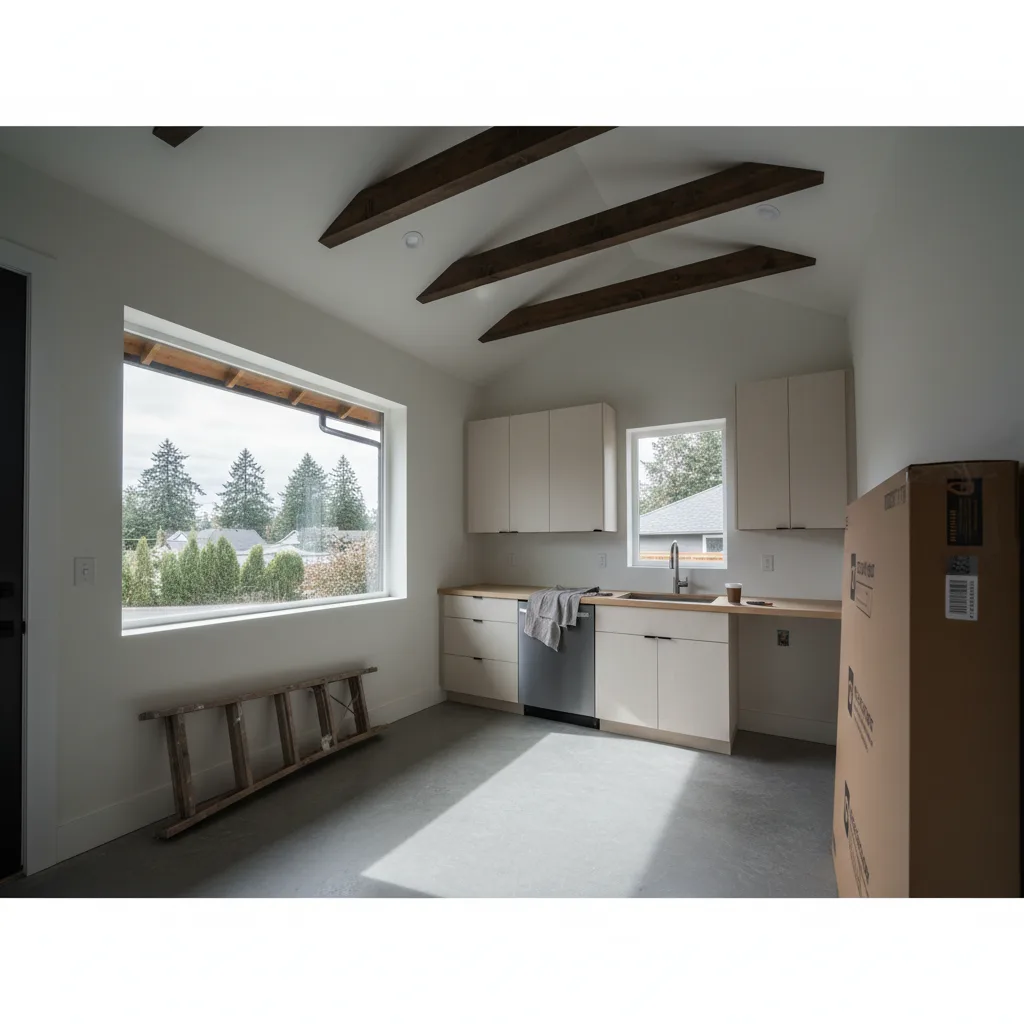
Planning an ADU and garage project in Redmond? A full build typically runs from $180,000 to $320,000 in 2026. Simpler garage conversions start near $110,000, while premium custom work climbs past $385,000. This is what your budget actually covers, what drives the price up, and how to vet a contractor who knows Redmond permits.
The Honest 2026 Price for an ADU & Garage in Redmond
Let's get straight to the point. Building an Accessory Dwelling Unit (ADU), whether it's converting a garage or building a new detached structure (DADU), is a significant construction project. In Redmond, the cost reflects the high demand for housing, the price of skilled labor in the Seattle metro area, and a rigorous permitting process. Based on our analysis of real contractor invoices and permit data, a typical, all-in ADU project in Redmond will cost between $180,000 and $320,000.
This is not just the cost of lumber and drywall. This range represents the total project cost, from the initial architectural drawings and structural engineering to the final coat of paint and utility hookups. It's the number you need to have in mind for financing and budgeting. The final price tag is a function of size, complexity, and finish level. Simple garage conversions without extensive plumbing can land at the lower end, around $110,000. On the other hand, a high-end, two-story DADU with premium materials and custom features will easily exceed $385,000 and can approach $575,000 or more for architecturally distinct designs.
It is critical to understand that an ADU is not a room addition. It is the construction of a separate, small home on your property. It requires its own foundation, its own utility connections, and must meet the same stringent building, energy, and safety codes as a primary residence. The homeowners who have the smoothest projects are the ones who accept this reality from day one.
What Drives ADU & Garage Costs in Redmond
See what a ADU build actually costs in your Redmond zip.
Take 4 questions →The final invoice for your Redmond ADU is a complex equation with several key variables. Homeowners often focus on visible costs like appliances and flooring, but the most substantial expenses are frequently buried in the structure, the site, and the paperwork. Understanding these drivers is the first step to building a realistic budget.
Labor and Materials: The Big Two
There is no way around it: skilled labor is expensive on the Eastside. The demand for qualified carpenters, electricians, plumbers, and foundation crews far outstrips the supply. This competition for talent means you are paying a premium for a reliable team. Expect labor to account for 40 to 50 percent of your total project cost. Materials make up the other large portion. While lumber prices have stabilized from their post-pandemic peaks, items like high-performance windows, engineered wood products, roofing, and siding are subject to market fluctuations. Choosing premium materials, such as standing-seam metal roofing over architectural shingles or custom cabinetry over stock options, will directly and substantially increase your budget.
Site Prep and Utilities: The Hidden Budget Killers
This is where budgets get broken. Before a single wall can be framed, your site must be prepared. This is far more involved than most people think. Costs include excavation for the foundation, grading the land to ensure proper drainage, and potentially removing trees or other obstructions. If your lot has a steep slope, you may need retaining walls, which adds thousands to the cost.
The single biggest surprise for many homeowners is the cost of running utilities. A new ADU needs water, sewer, and electricity. This involves trenching from the main house or the street to the new unit, a process that can be complicated by existing landscaping, driveways, or buried rock. Connecting to the city sewer system alone can be a five-figure expense. Your main home's electrical panel may also need a heavy-up, a costly upgrade to handle the additional load of a second dwelling.
Pro tip
Get a specific, itemized quote for site work and utility connections. A vague "site prep" line item in a bid is a red flag. Ask contractors how they handle unforeseen issues like hitting hardpan rock during excavation or discovering an old, unmapped drain field.
Permits, Fees, and Soft Costs
The "soft costs" of design and permitting can add 10 to 20 percent to your total budget before any construction begins. These include:
- Architectural Design: Whether you use a dedicated architect or a design-build firm, expect to pay for a full set of construction drawings. This can range from $8,000 to $20,000 or more.
- Structural Engineering: A structural engineer must review and stamp your plans to ensure they meet seismic and load-bearing requirements.
- Permit Fees: The City of Redmond charges fees for plan review and inspections. These are calculated based on the project's valuation and can run into the thousands.
- Impact Fees: Depending on the size and location of your ADU, you may be required to pay impact fees, which help fund public services like schools, parks, and transportation. These can be substantial, so it is vital to check with the city early in your planning.
Redmond ADU & Garage by Tier: 3 Real Project Examples
To make these numbers more concrete, let's look at three common project types in Redmond. These examples illustrate how scope, size, and finish level affect the final cost and timeline. Most projects fall into the "Mid-Range" category, which represents the construction of a new, moderately-sized detached ADU.
| Tier | Scope of Work | Cost Range | Timeline |
|---|---|---|---|
| Garage Conversion | Converting an existing attached or detached garage. Finishing interior walls, adding insulation, installing a bathroom and kitchenette. Minimal structural changes. Upgrading electrical panel. Assumes existing foundation is sound. | $110,000 - $180,000 | 4 - 6 months |
| Mid-Range DADU | New construction of a 600-800 sq. ft. detached ADU. One bedroom, one bathroom. Slab-on-grade foundation. Standard grade finishes: LVP flooring, semi-custom cabinets, solid surface countertops, fiber cement siding. Includes all site prep and utility connections. | $180,000 - $320,000 | 9 - 14 months |
| Premium DADU | New construction of a 1,000 sq. ft. DADU, possibly with a second story or basement. Two bedrooms, high-end finishes: hardwood floors, custom millwork, stone countertops, premium appliances, vaulted ceilings, energy-efficient features like triple-pane windows. Architect-designed. | $385,000 - $575,000+ | 12 - 18 months |
Editor's note
These timelines are for the entire project lifecycle, from the first conversation with a designer to the final inspection. The actual "active construction" phase is shorter, but do not underestimate the time required for planning and permitting. Rushing the pre-construction phase is the most common cause of budget overruns and delays later on.
Permits and Local Code in Redmond
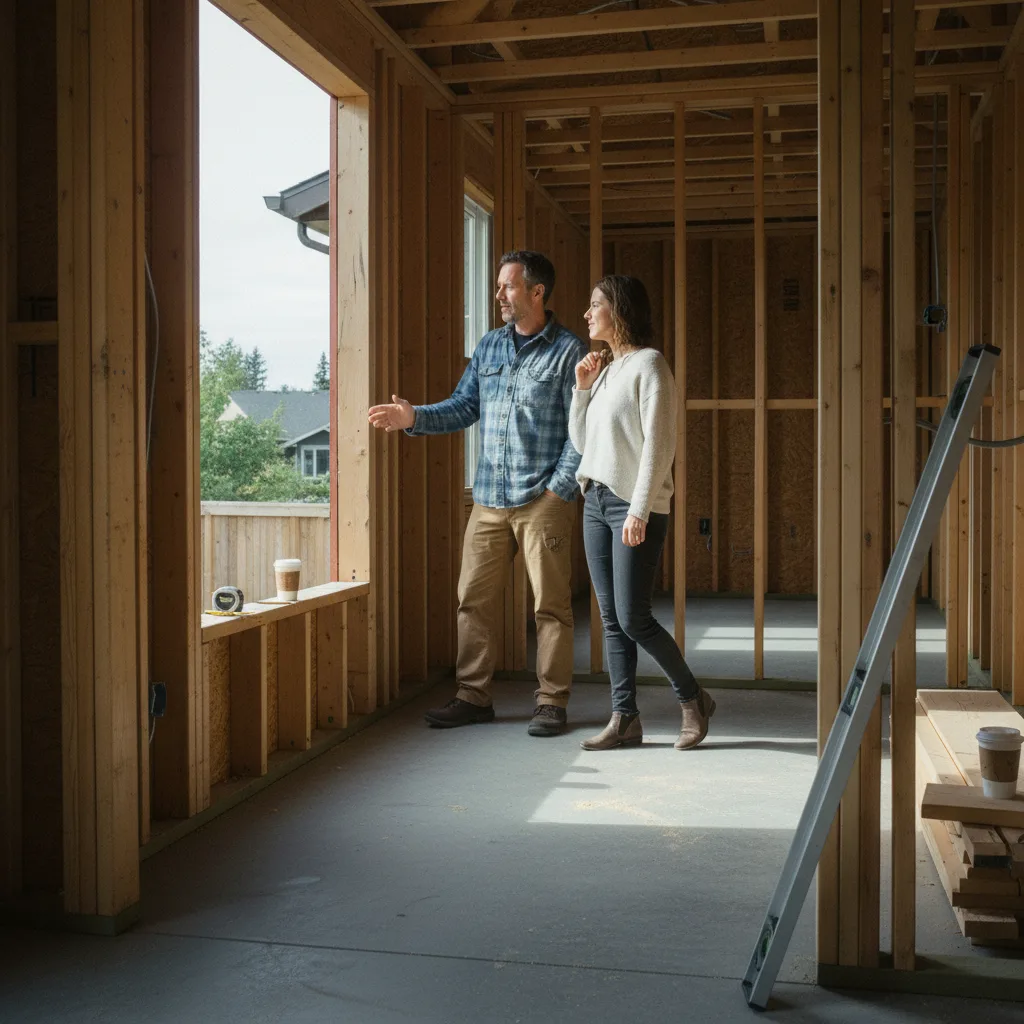
Building in Redmond means working closely with the City of Redmond Development Services Department. Their review process is thorough and designed to ensure that all new construction is safe, energy-efficient, and compliant with local zoning. Attempting to bypass or rush this process is a recipe for disaster.
The Redmond Zoning Code (RZC)
Your project must adhere to the rules outlined in the Redmond Zoning Code, specifically section RZC 21.08.230 for Accessory Dwelling Units. This code dictates critical project parameters. For example, a DADU cannot exceed 1,000 square feet of gross floor area. It also specifies height limits, property line setbacks, and parking requirements. An experienced local contractor will be intimately familiar with these rules and can design a project that meets them from the start, avoiding costly redesigns during the plan review process.
State-Level Building and Energy Codes
Beyond local zoning, your ADU must comply with statewide regulations. The 2021 Washington State Building Code governs all structural, plumbing, and electrical aspects of the build. This is not a set of suggestions; it is the law. Additionally, the 2021 Washington State Energy Code is one of the strictest in the nation. It mandates high levels of insulation (typically R-21 in walls and R-49 in ceilings), air-sealing measures, and high-efficiency heating and ventilation systems. While these requirements add to the upfront cost, they result in a comfortable and inexpensive-to-heat living space for the long term.
An ADU is not a side project; it is the construction of a small, code-compliant house on your property.
The Redmond Neighborhoods Where ADU & Garage Costs Diverge
Not all lots in Redmond are created equal. The character, age, and topography of a neighborhood can have a significant impact on the complexity and cost of an ADU project. A flat, open lot in a newer development presents a very different challenge from a sloped, wooded lot in an older part of the city.
Education Hill: Established Lots and Tree Canopy
Education Hill is known for its larger, more established lots and mature landscaping. This can be a double-edged sword. A larger lot might offer more flexibility in placing your DADU to maximize privacy and sunlight. However, the beautiful, mature trees that define the neighborhood can also be a major constraint. Redmond has a strict tree protection ordinance. You may need an arborist's report, and the location of your ADU might be dictated by the need to avoid the root zones of significant trees., older homes in the area may have aging sewer lines or undersized electrical panels, requiring expensive upgrades to service the new unit.
I was on a site walk in Education Hill last month for a proposed DADU. The homeowner had a perfect spot picked out in their backyard, but it was directly under the canopy of a massive 60-year-old Douglas Fir. The city's arborist would never approve it. We had to shift the entire footprint 40 feet to the south, which required more extensive grading and a longer utility trench. That one tree added nearly $20,000 to the site prep budget. It is a perfect example of how site constraints, not just finishes, drive the final cost.
Idylwood and Rose Hill: Tighter Lots and Site Access
In neighborhoods like Idylwood and parts of Rose Hill, you often find smaller lots, some of which have been subdivided over the years. Building an ADU here is a game of inches. Maximizing the allowable footprint while respecting mandatory setbacks from property lines requires careful design. The biggest challenge, however, is often site access. On a tight lot, there may be no easy way for excavation equipment, concrete trucks, and delivery vehicles to reach the backyard. This can mean using smaller, less efficient equipment or even craning materials over the main house, both of which add significant cost and time to the project. A contractor who has experience with infill projects in these neighborhoods is essential.
Timeline: Realistic Week-by-Week Expectations
A common misconception is that a small house can be built quickly. While the structure itself goes up relatively fast, the entire process, from concept to completion, is a marathon, not a sprint. A realistic total timeline for a Redmond DADU is 36 to 64 weeks.
Did you know
The permitting process with the City of Redmond is often the first major delay. A complete and accurate set of plans submitted by an experienced professional will move much faster than an incomplete application that requires multiple rounds of corrections and resubmittals.
- Phase 1: Design and Permitting (8-16 weeks). This is the crucial planning stage. You will work with a designer or architect to create your plans, get them engineered, select a contractor, and submit your permit application to the city. Do not rush this.
- Phase 2: Site Work and Foundation (4-8 weeks). Once you have a permit in hand, the physical work begins. This involves clearing the site, digging for the foundation and utility trenches, and pouring the concrete slab or footings. This phase is highly dependent on weather; a rainy spring can cause delays.
- Phase 3: Framing and Dry-In (6-10 weeks). This is when your ADU starts to look like a house. The crew will frame the walls and roof, install sheathing, and then put on the roofing, windows, and exterior doors. At the end of this phase, the building is "in the dry" and protected from the elements.
- Phase 4: Rough-In and Finishes (12-16 weeks). This is the longest and most complex phase. It starts with running all the plumbing, electrical wiring, and HVAC ductwork inside the walls (the "rough-in"). After those systems pass inspection, insulation and drywall go up. Then comes the detail work: painting, flooring, tile, cabinet installation, countertops, and final fixture installation for plumbing and electrical.
- Phase 5: Final Inspections and Punch List (2-4 weeks). The project is nearly complete. The city building inspector will perform a final inspection to ensure everything is up to code. Once you receive your Certificate of Occupancy, you and your contractor will do a final walkthrough to create a "punch list" of any small items that need to be fixed or adjusted.
How to Vet a Redmond Contractor
Choosing the right contractor is the single most important decision you will make. A great contractor will guide you through the process, manage a complex schedule, and deliver a high-quality product. A poor one can turn your project into a financial and emotional nightmare. You need someone who specializes in new residential construction, not just general remodeling.
Beyond the License and Insurance
Verifying that a contractor has an active license with the Washington State Department of Labor & Industries (L&I) and carries adequate general liability and workers' compensation insurance is the absolute bare minimum. It is like checking if a surgeon has a medical license; it is necessary, but it does not tell you if they are any good. You need to dig deeper to find a true professional with specific, relevant experience.
Questions That Reveal True Expertise
When you interview potential contractors, skip the generic questions. Ask pointed questions that test their local knowledge and process:
- How many detached ADUs have you permitted and built within Redmond city limits in the past two years? Can I see photos and speak with the owners?
- What is the biggest unforeseen challenge you have encountered on a Redmond ADU project, and how did you resolve it? (Listen for answers about site conditions, utility hookups, or permit revisions).
- Can you walk me through your change order process? How do you document and approve changes to the scope and budget?
- What is your typical communication schedule? Will I have a dedicated project manager? How often can I expect updates?
- Based on my lot, what do you anticipate will be the most difficult part of the site work and utility connections?
Red Flags in a Bid
When comparing bids, do not just look at the bottom-line number. The cheapest bid is often the most expensive in the long run. Watch out for these red flags:
- An unusually low price. If one bid is significantly lower than the others, it is almost certain that something has been left out, either intentionally or through incompetence. You will pay for it later in change orders.
- Vague line items. A good bid is highly detailed. A bid with vague categories like "Electrical Work: $20,000" is a sign of a contractor who hasn't done their homework.
- No contingency allowance. Every construction project has surprises. A professional contractor will insist on including a contingency fund of 10 to 15 percent in the budget to cover unforeseen issues.
- High-pressure sales tactics. A contractor who pressures you to sign a contract immediately or offers a "special discount" if you sign today is not someone you want to work with for the next year.
Renology Take
After tracking hundreds of structural projects, the most common mistake I see homeowners make with ADUs is a fundamental misunderstanding of scale. They approach it like a kitchen remodel when they should be approaching it like building a new custom home. The most expensive and complex parts of the job have nothing to do with the tile or countertops. They are the earthwork, the concrete, the utility trenching, and the complex dance with the city's permitting department. Homeowners fixate on the cost per square foot for the finished space, but a huge portion of the budget is spent before you even have a floor to stand on. If you want a successful project, shift your focus. Vet your contractor on their experience with site work and Redmond permits, not just their portfolio of pretty interiors. That is the key to a predictable budget and a realistic timeline.
Sources & Methodology
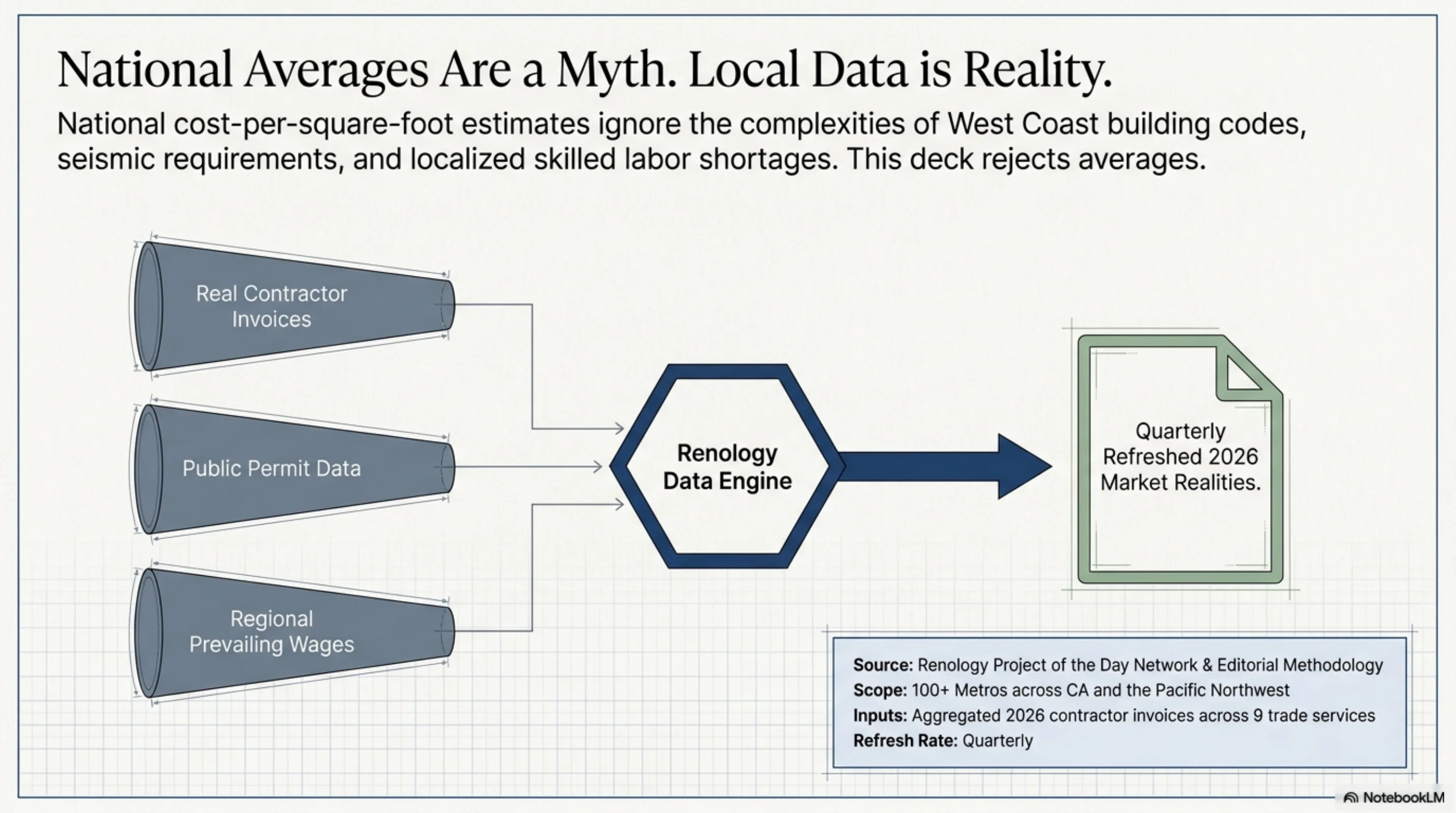
These cost ranges are reconstructed from publicly available labor and permit data, the latest Remodeling Magazine cost-vs-value report, and Renology's own Project of the Day network, a rolling sample of real homeowner invoices we collect from Redmond-area contractors. Last refreshed April 2026.
- City of Redmond Development Services Permit Data, 2026
- King County Assessor's Office, New Construction Data, 2026
- Washington State Department of Labor & Industries (L&I), Prevailing Wage Data, 2026
- National Association of Home Builders (NAHB) Home Building Geography Index, Q1 2026
- Remodeling Magazine, 2026 Cost vs. Value Report (Pacific Region)
- Master Builders Association of King and Snohomish Counties, 2026 Market Analysis
- Renology Project of the Day Network, aggregated 2026 contractor invoices in Redmond
Methodology
How Renology estimates adu / garage conversion costs in Redmond.
Renology treats this page as a planning benchmark for Redmond, Washington, not a final quote. We compare published local guide data, contractor scope patterns, permit-sensitive work, climate or site constraints, and finish-level assumptions.
Cost range
$180,000-320,000
Timeline
32-56 weeks
Source type
Editorial dataset
Local factor: Pacific Northwest cool-wet (Köppen Csb): 38 inches annual rain, mild summers, frost-free winters near sea level.
Use these numbers to shape a scope and spot missing line items. Confirm permits, structural work, electrical, plumbing, gas, waterproofing, drainage, and code-sensitive details with the local building department and a licensed professional.
Compare against the full Renology Cost IndexRedmond · pre-screened
Get 3 Redmond ADU bids in 48 hours.
Our editors already vetted Redmond ADU builders. Answer 4 questions and we send 3 written bids inside 48 hours, with the real price for your scope, not their inflated first-call number.
- Free, no commission
- Pre-screened locally
- Bids inside 48 hours
Takes about 60 seconds. We'll text you when bids arrive.