In Los Angeles, the line between indoors and out has all but vanished. The deck is no longer an afterthought; it’s the second living room, the primary dining space, the office with the best light. But creating this essential extension of the home involves a foundational choice with long-term consequences: the rich, authentic character of natural wood versus the engineered resilience of high-performance composite. This decision impacts everything from your weekend maintenance schedule to your home's value. A professionally designed and built deck and pergola in Los Angeles typically runs $18,000 to $42,000 (Renology Cost Index, updated 2026-04). While some smaller, simpler projects can start lower, particularly for condo deck refreshes or ground-level platforms, most full-scale projects fall squarely within this range, reflecting the city’s high labor costs and exacting building codes.
In a Nutshell: Natural Wood vs. Composite Decking Trade-Offs
- Aesthetics: Natural wood like Ipe or Redwood offers unparalleled, authentic beauty with unique grain patterns. Composite decking from brands like Trex and TimberTech provides consistent color and texture, with high-end lines now closely mimicking the look of real wood.
- Upfront Cost: Pressure-treated pine is the budget option, but hardwoods like Ipe can cost more than premium composites. High-performance composites generally have a higher initial material cost than most common wood choices.
- Maintenance: Wood requires annual cleaning, sanding, and sealing to prevent rot and fading. Composite requires only occasional soap-and-water cleaning and is warrantied against fading, staining, and rot for 25 to 50 years.
- Durability in LA Climate: Hardwoods are naturally resistant to rot and insects. Composites are impervious to moisture and pests, and top-tier options offer superior UV resistance against the relentless Southern California sun. Fire resistance is a key differentiator, with many composites carrying a Class A fire rating, crucial for homes in Wildland-Urban Interface (WUI) zones.
- Longevity: A well-maintained hardwood deck can last 25 to 40 years. A high-quality composite deck is often warrantied for 25 to 50 years, with a lifespan that can exceed that.
The Contenders: Natural Hardwood vs. High-Performance Composite
The choice of decking material is the single most significant decision you'll make. It dictates not only the look of your outdoor space but also its cost, safety, and the amount of time you'll spend maintaining it. On one side, you have natural wood, the traditional choice, prized for its authentic look and feel. We're not just talking about pressure-treated pine; the real contenders in the LA market are premium options like Redwood, known for its regional appropriateness and rich color, and exotic hardwoods like Ipe (Brazilian Walnut), famed for its extreme density and longevity. These materials offer a connection to nature that many homeowners crave. On the other side is high-performance composite decking. This isn't the plastic-looking product of the 1990s. Today's market leaders, such as Trex, TimberTech (by AZEK), and Fiberon, produce sophisticated boards with multi-tonal streaking, deep grain patterns, and protective shells that resist almost everything LA's climate can throw at them. They are engineered systems designed for performance, promising decades of use with minimal upkeep. The decision is a classic trade-off between timeless authenticity and modern convenience.
Aesthetics & Style: The Unmistakable Look and Feel
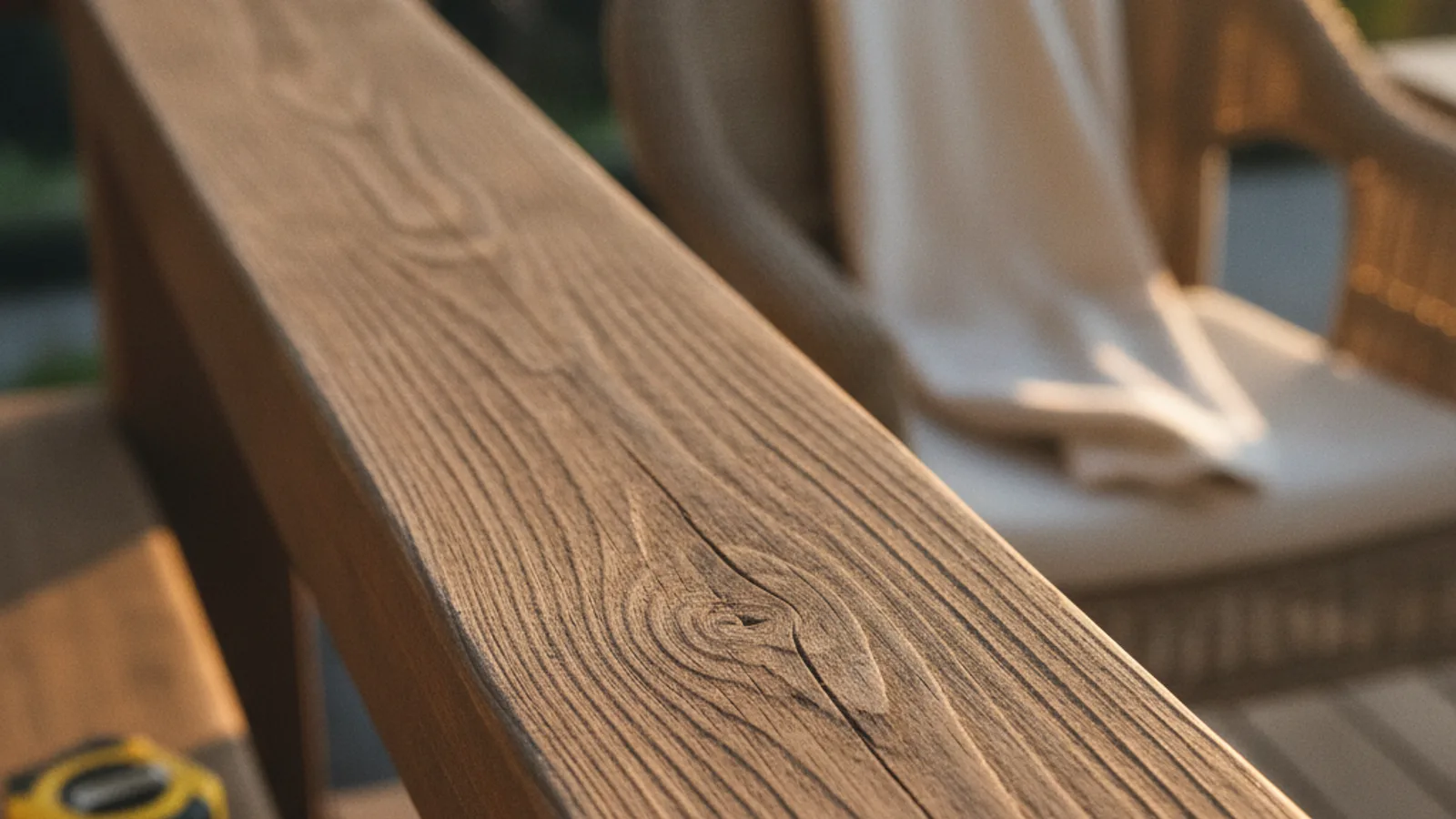
For the design purist, nothing compares to the genuine article. A natural Ipe deck, with its deep, chocolatey-brown tones that can be oiled to maintain their richness or allowed to weather to a sophisticated silvery-gray, has a visual depth that is difficult to replicate. Each board is unique. The way light plays across the grain of real Redwood in a Pasadena backyard during the golden hour is something designers strive to capture. The minimalist decade is over; warmth and texture are back, and natural wood is the undisputed champion of organic texture. However, the aesthetic gap is closing. High-end composite lines like TimberTech's AZEK Vintage Collection or Trex's Transcend Lineage series now feature complex color blending and wire-brushed, low-gloss finishes that are remarkably convincing. Colors like 'English Walnut' or 'Carmel' offer the warm, nuanced look of tropical hardwoods without the maintenance. The key difference remains uniformity. A composite deck will look almost exactly like the showroom sample, which provides predictability. A wood deck is a natural product, full of variations and character that some see as beauty and others as imperfection. The choice often comes down to a philosophical preference: the perfect consistency of an engineered product versus the perfect imperfections of a natural one.
Upfront Cost & Installation: The Initial Investment
Breaking down the decks pergola los angeles cost reveals a surprising inversion at the high end. While basic pressure-treated wood is the cheapest entry point, the premium hardwoods popular in Los Angeles are often more expensive than top-tier composites. In 2026, expect to pay between $15 to $25 per square foot for Ipe or Cumaru decking alone. By contrast, high-performance composites from Trex or TimberTech typically range from $12 to $22 per square foot for the boards. Labor is where the costs converge. Installing hardwood is more labor-intensive; dense woods like Ipe require pre-drilling for every screw and specialized blades for cutting, increasing installation time. A qualified decks pergola contractor los angeles will charge more for this specialized work. Composites, while also requiring skilled installation, often use hidden fastener systems that can speed up the process. A pergola adds another layer of cost, from a few thousand for a simple cedar structure to over $15,000 for a complex hardwood build with integrated lighting and hardware. Overall, for a mid-to-high-end project, the total upfront cost for a premium wood deck and a high-performance composite deck are often surprisingly close, forcing the decision onto other factors like long-term maintenance.
Long-Term Maintenance & Durability: The Real Cost of Ownership
This is where the two paths diverge most sharply. A natural wood deck is a long-term commitment. To keep Redwood or Ipe from fading to gray and to protect it from moisture and UV damage, it requires annual or biennial attention. This involves a thorough cleaning, followed by the application of a penetrating oil or sealer. A homeowner can do this themselves over a weekend, or hire a professional for $500 to $1,200, depending on the deck's size and condition. If neglected, the wood can splinter, warp, and become susceptible to rot, though dense hardwoods are highly resistant. Over a 25-year lifespan, this maintenance can add up to $10,000 to $25,000 in cost and countless hours of work. Composite decking, by contrast, is the 'set it and forget it' option. Its durable PVC or polyethylene shell is non-porous and resists stains, scratches, mold, and fading. The maintenance schedule consists of a simple soap-and-water cleaning once or twice a year to remove surface dirt. There is no sanding, no staining, no sealing. Ever. This is the primary value proposition and a major driver of its popularity in busy households from Eagle Rock to Culver City. The durability is backed by extensive warranties, often 25 to 50 years for stain and fade resistance, providing long-term peace of mind that wood simply cannot match.
Performance in the LA Climate: Sun, Salt, and Fire
Los Angeles presents a uniquely challenging environment for building materials. The relentless UV radiation can bleach and break down wood fibers. The salt-laden air in coastal communities like Santa Monica and Mar Vista can accelerate corrosion of fasteners. And, most critically, the risk of wildfire in hillside communities from the Hollywood Hills to Pasadena demands materials that can resist ignition. Natural hardwoods like Ipe have a natural advantage due to their extreme density, which gives them a Class A fire rating, the same as concrete. This makes them an excellent, code-compliant choice for homes in WUI zones. Redwood is less dense and typically carries a Class B rating unless treated. High-performance composites have invested heavily in fire safety. Many product lines, particularly from TimberTech AZEK and certain Trex collections, are tested to ASTM E84 standards and also achieve a Class A rating, making them a compliant and safe choice for high-risk areas. Where composites pull ahead is in UV and moisture resistance. The protective cap stock contains advanced UV inhibitors that prevent the board from fading significantly over its lifetime, a common complaint with first-generation composites. And because they absorb virtually no water, they are an ideal choice for poolside decks or homes in damp canyons where wood might struggle with mold or mildew.
Resale Value & ROI: What Your Investment Returns
A well-designed deck is consistently one of the best remodeling projects for return on investment. The annual Cost vs. Value report from Remodeling Magazine regularly shows homeowners recouping 60% to 80% of their investment upon sale. In the Southern California market, where outdoor living is paramount, that figure can be even higher. The material choice plays a significant role in how buyers perceive that value. A weathered, splintering wood deck can be a liability, signaling deferred maintenance to a potential buyer. Conversely, a freshly-oiled Ipe deck can be a major selling point, exuding luxury and quality. The composite deck offers a different kind of value: the promise of low maintenance. For many buyers, particularly those with busy families or who want a second home they can lock up and leave, the idea of a beautiful outdoor space that requires no annual work is a powerful incentive. A 2021 study by the National Association of Realtors found that new wood decks and patios were among the projects that brought homeowners the most joy and satisfaction, which translates directly into perceived value during a sale. Ultimately, a high-quality deck, whether wood or composite, that is well-integrated into the home's design will add significant value. The key is choosing the right material for the home's style and likely buyer demographic.

Sustainability: The Environmental Footprint
3 Los Angeles deck builders, editor-screened. 4 questions.
See my 3 matchesThe conversation around sustainability is complex for both materials. For natural wood, the key is responsible forestry. Hardwoods like Ipe have historically been associated with deforestation in the Amazon. To ensure an ethical choice, it is imperative to source wood certified by the Forest Stewardship Council (FSC), which guarantees it comes from a responsibly managed forest. Redwood, when sourced from sustainably managed forests in California, can be a good local choice with a smaller carbon footprint from transportation. Wood is also biodegradable at the end of its life. Composite decking's sustainability story centers on its use of recycled materials. Most composite boards are made from a mix of recycled plastics (like grocery bags and shrink wrap) and reclaimed wood fibers (like sawdust from cabinet factories). Trex, for example, is one of the largest recyclers of plastic film in North America, diverting hundreds of millions of pounds from landfills annually. This reuse of materials is a significant environmental benefit. However, composites are not biodegradable and are difficult to recycle again at the end of their long lifespan. The choice comes down to a preference for a renewable, biodegradable resource that requires diligent sourcing versus a product that gives a second life to waste materials but is less circular in its end-of-life phase.
Why Are Decks So Expensive in Los Angeles in 2026?
The high cost of Los Angeles decks and pergolas is a function of three primary factors: labor, materials, and regulation. First, skilled labor in Southern California is expensive. According to the California Department of Industrial Relations prevailing wage data for Los Angeles County, experienced carpenters and installers command high wages, which are passed on to the consumer. A reputable decks pergola contractor los angeles must carry significant insurance and workers' compensation, adding to overhead. Second, material costs have remained improved. The Producer Price Index (PPI) from the U.S. Bureau of Labor Statistics shows sustained high prices for both lumber and plastic products since 2021. The complex supply chains for exotic hardwoods and the energy-intensive manufacturing process for composites contribute to these high material prices. Third, the regulatory environment in Los Angeles is stringent. Any deck over 30 inches high or attached to the house requires a permit from the Los Angeles Department of Building and Safety (LADBS). This process involves submitting detailed structural plans, which often must be created by a draftsperson or engineer, and undergoing multiple inspections to ensure compliance with the California Building Code, especially its seismic and fire-resistance provisions. These administrative and engineering costs can add several thousand dollars to a project before a single board is laid.
Three Representative Los Angeles Deck Projects from 2026
Three representative projects from 2026, scoped similarly, reconstructed from Renology's Project of the Day network and used here in aggregate form:
- The Silver Lake Hillside Perch: $24,500. A 250-square-foot cantilevered deck off the back of a 1960s home. The project used TimberTech AZEK decking in 'Coastline' for its Class A fire rating, a requirement for the neighborhood. The cost included significant engineering for the new footings and ledger connection to meet seismic codes, along with a minimalist steel cable railing system to preserve the view.
- The Culver City Entertainer's Patio: $38,000. This project replaced a cracked concrete slab with a 400-square-foot ground-level deck and an attached 12x12-foot cedar pergola. The homeowners chose Redwood for its classic California look. The cost included demolition of the old patio, installation of a new drainage system, integrated low-voltage lighting in the deck stairs, and electrical work for overhead fans and heaters in the pergola.
- The Sherman Oaks Outdoor Living Room: $55,000+. A large, 600-square-foot multi-level Ipe deck with a fully-equipped outdoor kitchen and a large, modern pergola. The high cost was driven by the premium hardwood, the complexity of the levels requiring extensive structural work, and the amenities. This included running gas and water lines for the grill and sink, high-end stainless steel components, and a sophisticated lighting plan. This is an example of projects that exceed the typical range due to extensive scope.
How to Avoid Budget Overruns on Your Deck Build
A deck project's budget can easily spiral without careful planning. The most common cause of overruns is scope creep: adding features mid-project, like built-in benches, a more complex lighting scheme, or deciding to upgrade materials after work has begun. The best defense is a highly detailed plan and a fixed-price contract with your builder. Before you sign, ensure the scope of work document lists every single detail, from the brand and color of the decking to the style of the fasteners and the specific model of post caps. This eliminates ambiguity. Another area for surprise costs is uncovering unforeseen issues, such as rot in the house's rim joist where the deck attaches, or poor soil requiring deeper footings. The National Association of Home Builders recommends a ten to fifteen percent contingency on renovations in homes over thirty years old. This fund, set aside from the main budget, is specifically for handling these unexpected but often necessary repairs. Finally, understand the full permit process upfront. Our Los Angeles Decks & Pergolas Permit Playbook 2026 provides a detailed guide to navigating the LADBS requirements, which can help you and your contractor anticipate the necessary inspections and associated fees, preventing delays and unexpected costs.
Information Gain: The Unseen Structure That Defines Your Deck's Safety
Most homeowners focus on the decking boards they see and walk on, but the safety, stability, and longevity of your deck are determined by the substructure you don't see. In a seismic zone like Los Angeles, this is not a place to cut corners. The single most critical component is the ledger board, the piece of lumber that attaches the deck to your house. According to the California Building Code, this connection must be made with specific types of bolts or structural screws at precise intervals, not nails. Improper ledger attachment is the number one cause of catastrophic deck collapse. Equally important is the flashing. This is a waterproof membrane, typically made of metal or a peel-and-stick product, that is installed between the ledger board and your house sheathing. It prevents water from getting into your home's wall assembly, which can lead to devastating rot that compromises both the deck and the house itself. Many budget contractors skip or improperly install flashing, creating a massive liability down the road. Finally, consider the foundation. The footings that support your deck's posts must be dug to a specific depth and diameter, as dictated by LADBS and soil conditions, to prevent the deck from sinking or heaving. The posts themselves must be connected to these footings with specified metal connectors that resist uplift and lateral forces during an earthquake. When you get quotes from a decks pergola contractor los angeles, ask them to detail their approach to the ledger connection, flashing, and footings. A contractor who emphasizes these structural elements is one who prioritizes safety over speed.
The Verdict: Which Deck Material is Right for Your LA Home?
The decision between natural wood and composite decking in 2026 is a choice between two excellent, mature product categories. Your final decision should be based on your budget, tolerance for maintenance, and design priorities.
Choose Natural Hardwood (like Ipe or Redwood) if:
- You are a design purist who values the authentic, unique character and feel of real wood above all else.
- You or a hired professional are committed to the annual maintenance routine required to keep the wood looking its best and protected from the elements.
- You are building in a high-risk fire zone and select a dense hardwood like Ipe that carries a Class A fire rating.
- Your home's architectural style, such as a Craftsman in Pasadena or a mid-century modern in the Hills, demands the organic texture of real wood.
Choose High-Performance Composite (like Trex or TimberTech) if:
- Your primary goal is to minimize long-term maintenance and maximize your time enjoying the space rather than working on it.
- You have children or pets and value the splinter-free, highly stain-resistant, and easy-to-clean surface.
- You prioritize long-term warranties (often 25-50 years for stain and fade) and predictable performance.
- You are building in a WUI fire zone and select one of the many product lines that carry a Class A fire rating.
Sources & Methodology
See the Renology Methodology for how sources are reviewed, ranges are normalized, and planning-data limits are handled.
Cost ranges in this guide draw on the following named industry sources, public agency datasets, and Renology editorial research.
- Renology Cost Index (2026-04)
- California Department of Industrial Relations, Prevailing Wage Data, Los Angeles County (2026)
- U.S. Bureau of Labor Statistics, Producer Price Index (PPI) (2026)
- Los Angeles Department of Building and Safety (LADBS), Building Code (2025)
- Remodeling Magazine, Cost vs. Value Report (2025)
- National Association of Home Builders (NAHB) (2024)
- National Association of Realtors, Remodeling Impact Report (2022)
- California Building Standards Code (Title 24) (2022)
- Trex Company, LLC, Technical Specifications (2026)
- The AZEK Company (TimberTech), WUI Compliance Documentation (2026)
- Forest Stewardship Council (FSC) (2026)
Renology Take
The most important pattern Los Angeles homeowners miss is that a deck is no longer just a feature; it's infrastructure. It's an engineered platform that must withstand seismic forces, resist fire, and manage water, all while serving as a primary living space. The rising decks pergola los angeles cost isn't just about inflation; it's about the rising standards of safety and performance demanded by building codes and the climate. The debate between wood and composite often obscures this more critical point: the quality of the build, especially the unseen structure, is far more important than the surface material. A poorly built Ipe deck is a dangerous liability, while a meticulously constructed composite deck can be a multi-generational asset. Invest first in a great contractor who understands LA's specific structural challenges, then choose the surface that best fits your lifestyle.
Frequently Asked Questions About Los Angeles Decks & Pergolas
Do I need a permit for a deck or pergola in Los Angeles?
Yes, in most cases. The Los Angeles Department of Building and Safety (LADBS) requires a permit for any deck that is more than 30 inches above the ground at any point, is attached to the house, or serves a required exit door. Pergolas and other overhead structures often require permits as well, especially if they are over a certain size (typically 120 square feet) or are attached to the home. The permitting process involves submitting plans for review to ensure they comply with the California Building Code for structural safety, railings, stairs, and foundation requirements. Working with an experienced decks pergola contractor los angeles is critical, as they will be familiar with the LADBS e-Permit system and the specific documentation required, which can save significant time and prevent costly mistakes. Attempting to build without a permit can result in stop-work orders, fines, and the potential need to tear down the structure.
What is a WUI-compliant deck and do I need one?
WUI stands for Wildland-Urban Interface, which is the zone where homes and undeveloped wildland meet. Many parts of Los Angeles, particularly in the foothills and canyon communities like Bel Air, Laurel Canyon, and parts of the San Fernando Valley, are designated as High Fire Hazard Severity Zones. If your home is in one of these zones, the LADBS and the California Fire Code will require your deck to be built with WUI-compliant materials. This typically means using ignition-resistant or non-combustible materials. For decking, this includes dense hardwoods like Ipe, which have a natural Class A fire rating, or specific composite decking products that have been tested and certified with a Class A or Class B rating. The goal is to create a defensible space around your home and reduce the risk of it igniting from flying embers during a wildfire. Your contractor should be able to verify your property's WUI status and ensure all materials, from the decking to the substructure, meet these strict fire safety codes.
How long does it take to build a deck and pergola in Los Angeles?
The timeline for a decks pergola los angeles 2026 project can vary significantly. The pre-construction phase is often the longest part. This includes design, engineering (if required), and securing a permit from LADBS, which can take anywhere from four weeks to several months depending on the complexity of the project and the city's workload. Once the permit is issued and materials are on site, the physical construction for a typical 300-500 square foot deck and pergola can take two to four weeks. This can be affected by weather, the complexity of the site (e.g., a steep hillside requires more time for foundations), and the scheduling of required city inspections at various stages (footings, framing, final). It's wise to plan for a total project duration of three to five months from the day you hire a contractor to the final sign-off.
Can I put a pergola on an existing deck?
Possibly, but it requires a structural evaluation. A pergola adds a significant amount of weight (the structure itself) and new types of loads (uplift from wind) that your existing deck's foundation may not have been designed to handle. Before proceeding, you must have a qualified contractor or structural engineer inspect your deck's footings, posts, and beams to determine if they can support the additional load. In many cases, the footings directly beneath the planned pergola posts will need to be retrofitted or replaced with larger, deeper ones. The connection of the pergola posts to the deck framing is also a critical structural detail that must be done correctly to ensure safety. Simply placing a pre-fabricated pergola on top of an existing deck without reinforcing the structure is unsafe and will not pass a city inspection.
What's the difference between Trex, TimberTech, and Fiberon?
These are the three of the largest and most respected brands in composite decking, but they have key differences. Trex is known for its eco-friendly manufacturing, using 95% recycled materials, and offers a tiered system from the budget-friendly 'Enhance' line to the premium 'Transcend' and 'Lineage' lines. TimberTech, owned by AZEK, is often positioned as a premium technology leader. Its AZEK line is not a wood composite but a capped polymer (PVC) decking, which contains no wood fibers, offering superior moisture resistance and a lower heat absorption on its light-colored boards. Their TimberTech-branded lines are traditional wood-plastic composites. Fiberon, another major player, offers a wide range of products and is known for its rich color palettes and competitive warranties. The choice often comes down to specific colors, textures, and the technology (capped composite vs. PVC) that best suits your climate and budget.
How much space do I need around a deck for landing zones?
This is a great design question that considers how the deck functions, much like a kitchen layout. While there are no strict codes for this, good design practice suggests creating clear 'landing zones' and circulation paths. A landing zone is the open floor space next to a key feature. For example, next to a grill, you'll want at least three feet of clear deck space to place platters and tools. The area at the top and bottom of deck stairs should be a clear landing of at least 36 by 36 inches. For a dining table, you need at least three feet of clearance around the entire table to allow people to comfortably pull out their chairs and walk behind them. Thinking in terms of these functional zones during the design phase ensures your deck is not just beautiful but also works effortlessly for cooking, dining, and relaxing.
Are there any restrictions on deck lighting in Los Angeles?
Yes, Los Angeles has light ordinance rules designed to reduce light pollution and nuisance to neighbors. While you have a lot of freedom with deck lighting, there are principles to follow. All exterior lighting should be shielded and directed downwards to prevent light from trespassing onto adjacent properties or into the night sky. The focus is on low-voltage landscape lighting, such as recessed stair lights, under-rail strip lighting, and down-lights on pergola posts, rather than bright, unshielded floodlights. The color temperature of the light is also a design choice; a warm 2700K light creates a cozy, inviting atmosphere, while a cooler 3000K light feels more modern and crisp. A good lighting plan enhances safety on stairs and adds significant ambiance, making the deck usable and beautiful after dark.
How do I find a qualified deck contractor in Los Angeles?
Finding a great decks pergola contractor los angeles is crucial. Start by verifying their license with the California Contractors State License Board (CSLB). Ensure they carry both general liability insurance and workers' compensation. Ask for a portfolio of recent, local projects and request at least three references you can call. When you speak to references, ask about communication, cleanliness of the job site, and how the contractor handled unexpected problems. Get at least three detailed bids. A quality bid will break down costs for materials, labor, and permits, and will specify the exact brands and materials to be used. Be wary of any bid that is significantly lower than the others, as it may indicate corners are being cut on materials, insurance, or the unseen structural components of the build.
This article is from The Renology Magazine, the renovation magazine and contractor-advisory for homeowners in Southern California, San Diego, and Greater Seattle. Want more renovation breakdowns? Search "The Renology Magazine" on Google.
Frequently Asked Questions
Do I need a permit for a deck or pergola in Los Angeles?
What is a WUI-compliant deck and do I need one?
How long does it take to build a deck and pergola in Los Angeles?
Can I put a pergola on an existing deck?
What's the difference between Trex, TimberTech, and Fiberon?
How much space do I need around a deck for landing zones?
Are there any restrictions on deck lighting in Los Angeles?
How do I find a qualified deck contractor in Los Angeles?
Los Angeles · pre-screened
Get 3 Los Angeles deck bids in 48 hours.
Our editors already vetted Los Angeles deck builders. Answer 4 questions and we send 3 written bids inside 48 hours, with the real price for your scope, not their inflated first-call number.
- Free, no commission
- Pre-screened locally
- Bids inside 48 hours
Takes about 60 seconds. We'll text you when bids arrive.
Sources
- Renology Cost Index
- California Department of Industrial Relations, Prevailing Wage Data, Los Angeles County
- U.S. Bureau of Labor Statistics, Producer Price Index (PPI)
- Los Angeles Department of Building and Safety (LADBS), Building Code
- Remodeling Magazine, Cost vs. Value Report
- National Association of Home Builders (NAHB)
- National Association of Realtors, Remodeling Impact Report
- California Building Standards Code (Title 24)
- Trex Company, LLC, Technical Specifications
- The AZEK Company (TimberTech), WUI Compliance Documentation
- Forest Stewardship Council (FSC)