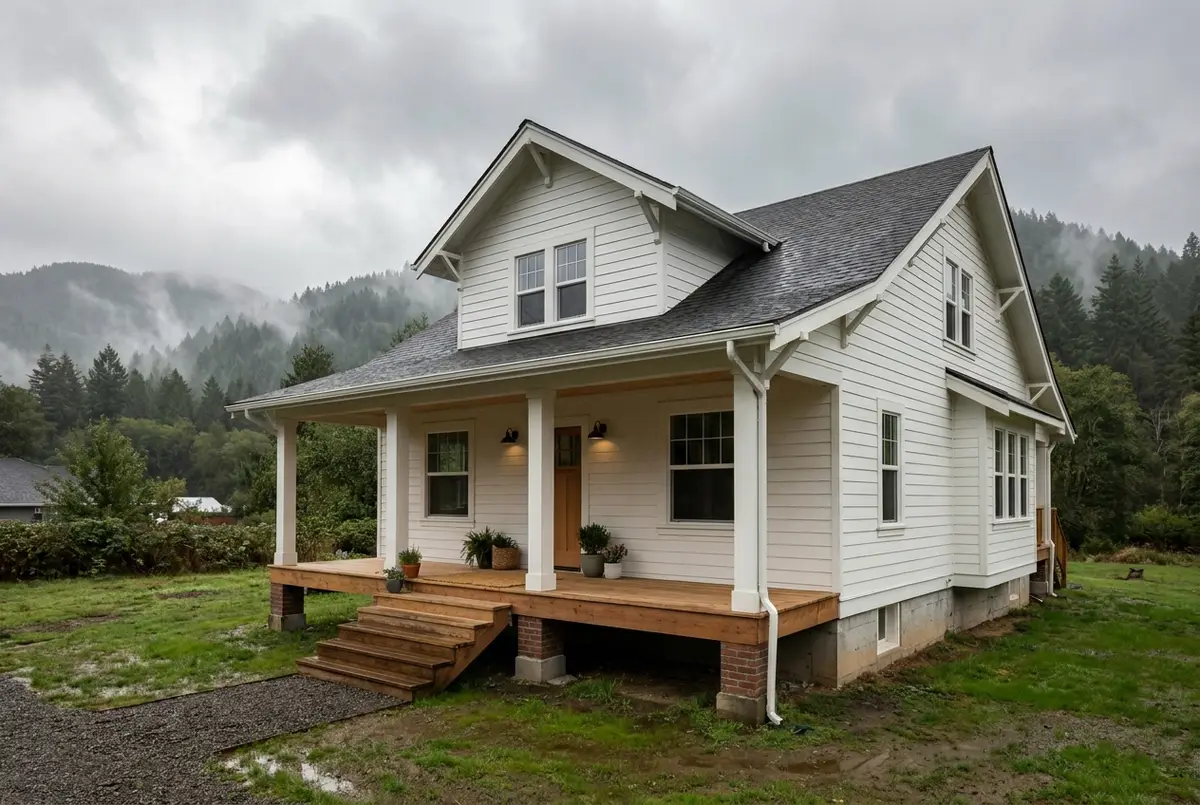
What changes a remodel in Snoqualmie.
52.6 percent of Snoqualmie homes were built between 2000 and 2009
Snoqualmie had 4,774 homes in the Census Bureau's five-year survey ending in 2024. Of those, 2,511 were built in the 2000s and another 1,089 in the 2010s, so three in four homes are less than 27 years old. The median year built is 2005. The rest of the stock is much older: 341 homes, 7.1 percent, date from 1939 or earlier. Those two groups need very different remodels. A newer house is mostly about finishes and first system replacements, while a pre-1940 house can bring old wiring, a shallow foundation and, downtown, flood rules.
Source: Census ACS 2020-2024, Year Structure Built, Snoqualmie
Most of downtown Snoqualmie sits in the river's floodplain
The city's annual flood report says most of downtown lies within the floodplain of the Snoqualmie River and floods from time to time. The worst flood in the city's known history came in November 1990, and the most recent major one in January 2009. The hazard comes from the main stem and south fork of the river and from Kimball Creek, which backs up when the river is high. Any development in the floodplain or floodway, not just new buildings, needs a flood improvement permit and possibly an elevation certificate. If a remodel or repair costs 50 percent or more of the building's market value, the whole house must then meet the rules for new construction, which can mean raising it above the base flood elevation.
Work near the river over $8,504 needs a shoreline permit
Inside Snoqualmie's shoreline jurisdiction, a Shoreline Substantial Development Permit is required before any development whose total cost or fair market value exceeds $8,504, or that materially interferes with normal public use of the water. Some exceptions apply, so call the Planning Division at 425-888-5337 before you plan a deck, addition or grading near the Snoqualmie River. The city also runs a Home Elevation Program to lift houses out of flood reach, and its building staff will visit a property to give advice on flooding, drainage and sewer backflow.
What a remodel costs in Snoqualmie in 2026.
$977,200
Snoqualmie has no permit valuation dataset we could use, so the figures for the city are from the Census Bureau. The city's median owner-occupied home was valued at $977,200 across 2020 to 2024, and its median household earned $214,107. Owners with a mortgage paid a median $3,626 a month. Gas heats 64.5 percent of occupied homes, and owners live in 85.1 percent of occupied homes.
For the largest project on this page, Cost vs Value's 2025 Seattle data lists a 660 square foot, one-bedroom detached ADU with a mini-split heat pump at $210,944, and only 32.3 percent of that returned at resale. Downtown, foundation and elevation work add to that, and concrete trades cost more in this metro: cement masons and concrete finishers around Seattle earned a median $38.88 an hour in May 2025, while the national median was $27.41.
| Figure | Value | What it measures |
|---|---|---|
| Median home value | $977,200 | Owner-occupied homes in Snoqualmie, Census ACS 2020-2024 (Census ACS 2020-2024, Median Value, Snoqualmie) |
| Median household income | $214,107 | All Snoqualmie households, Census ACS 2020-2024 (Census ACS 2020-2024, Median Household Income, Snoqualmie) |
| Median monthly owner costs with a mortgage | $3,626 | Snoqualmie owners with a mortgage, Census ACS 2020-2024 (Census ACS 2020-2024, Monthly Owner Costs, Snoqualmie) |
| Homes heated with gas | 64.5% | Snoqualmie homes using piped gas as the main heat source; 34.4 percent use electricity (Census ACS 2020-2024, House Heating Fuel, Snoqualmie) |
| Detached ADU, Seattle | $210,944 | 660 square foot one-bedroom ADU, Seattle average in Cost vs Value 2025; 32.3 percent back at sale (Cost vs Value 2025, Seattle) |
| Median cement mason wage | $38.88 an hour | Concrete finishers and cement masons in the metro, May 2025; $27.41 across the U.S. (BLS OEWS May 2025, Seattle-Tacoma-Bellevue cement masons and concrete finishers) |
Who issues permits in Snoqualmie.
Inside city limits, the City of Snoqualmie Building Division issues building, plumbing, mechanical and floodplain permits. Some permit types, including residential repairs, reroofs, ADUs, decks, mechanical and plumbing, are filed through MyBuildingPermit; others use the city's online forms or a PDF emailed to PermitSubmittal@snoqualmiewa.gov. The state's Labor and Industries department handles electrical permits, and addresses outside the city go to King County.
- City of Snoqualmie Building Division
Building, reroof, deck, ADU, mechanical, plumbing and floodplain development permits inside Snoqualmie city limits
- Washington State Department of Labor and Industries
Electrical permits and inspections for Snoqualmie addresses
- Snoqualmie requires no permit for installing or replacing siding, for an uncovered deck no more than 30 inches above grade, or for a fence under 6 feet, subject to setbacks.
- Detached one-story sheds, playhouses and similar buildings are exempt only up to 120 square feet, subject to setbacks.
- Reroofs need a permit, as does installing, moving or replacing a water heater, furnace, heat pump, fireplace or stove.
- Any development in the floodplain needs a permit, and a floodplain project that adds hard surface goes through drainage review.
- Up to two ADUs are allowed per lot in single-family zones, each no larger than 1,000 square feet, with one off-street parking space each unless exempt.
- No new residential construction is allowed in the floodway. In the floodplain outside it, an ADU must sit at least one foot above the 100-year base flood elevation, shown by an elevation certificate.
- A drainage report is required once a project adds or replaces 2,000 square feet of hard surface, and for any project in the floodplain.
- City Hall's public counter is open Monday through Thursday, 9 a.m. to 3 p.m.
What Snoqualmie homeowners plan most.
Deck building
An uncovered deck up to 30 inches above grade needs no Snoqualmie permit, but a higher or covered one does, and in the floodplain any deck is development. The linked deck guide was written for Seattle; Snoqualmie's Building Division handles the permit.
Bathroom remodel
Moving or replacing fixtures where water lines, drains or vents change needs a Snoqualmie plumbing permit, which can be filed through MyBuildingPermit.
ADU or garage conversion
Snoqualmie allows two ADUs per lot up to 1,000 square feet each, but none in the floodway. Use the Seattle ADU guide for design and budget, and Snoqualmie's own checklist for floodplain elevation rules.
House elevation
Raising a house above the base flood elevation is a frequently used way to protect homes in Snoqualmie, and the city runs a Home Elevation Program for it.
Roofing
Snoqualmie requires a permit for every reroof, filed through MyBuildingPermit.
Before you start.
How much does an ADU cost in Snoqualmie?
A 660 square foot, one-bedroom detached ADU averaged $210,944 in Seattle's 2025 Cost vs Value data. Snoqualmie allows up to two ADUs per lot, each up to 1,000 square feet with one parking space. In the floodplain the unit must sit a foot above the 100-year flood elevation, and none can go in the floodway, which adds foundation cost downtown.
Do I need a permit to build a deck in Snoqualmie?
Not for an uncovered deck that stays within 30 inches of grade and meets setbacks. A covered deck or a higher one needs a permit, filed through MyBuildingPermit. In the floodplain, any development needs a flood improvement permit, so check with the Building Division at 425-888-5435 before building a deck downtown.
Is my Snoqualmie home in the floodplain?
Most of downtown is. The city's flood report says most of downtown lies in the Snoqualmie River floodplain. The Planning Division, at 425-888-5337, can tell you your flood zone, base flood elevation and map panel, and the city holds elevation certificates for homes built or raised since 1988. FEMA's maps are online at msc.fema.gov.
What is the 50 percent rule for flood zone homes in Snoqualmie?
If the cost of a remodel, addition or repair equals or exceeds 50 percent of the building's market value, the house must meet the same rules as new construction. A house damaged that badly must be elevated above the base flood elevation. Plan a large downtown remodel around that threshold, and get an appraisal early.
Do I need a permit for new siding in Snoqualmie?
No. Snoqualmie lists installing or replacing siding as work that needs no permit, along with painting, tile, carpet, cabinets and countertops, fences under 6 feet and uncovered decks within 30 inches of grade. Reroofs, water heater and furnace replacements, and any work in the floodplain do need permits.
Explore regions, cities & neighborhoods →
Renovating in Snoqualmie?
Tell us what you are planning. A Renology advisor talks it through and introduces a vetted contractor who works in Snoqualmie. Free, with no obligation.
Find a contractor in Snoqualmie →Already have a bid? The quote-review tool checks its scope and exclusions, wherever you live.
Sources
- Census ACS 2020-2024, Year Structure Built, Snoqualmie
- City of Snoqualmie, Annual Flood Report 2025-2026
- Census ACS 2020-2024, Median Value, Snoqualmie
- Census ACS 2020-2024, Median Household Income, Snoqualmie
- Census ACS 2020-2024, Monthly Owner Costs, Snoqualmie
- Census ACS 2020-2024, House Heating Fuel, Snoqualmie
- Cost vs Value 2025, Seattle
- BLS OEWS May 2025, Seattle-Tacoma-Bellevue cement masons and concrete finishers
- Census ACS 2020-2024, Tenure, Snoqualmie
- City of Snoqualmie, Do I Need a Permit?
- City of Snoqualmie, Building Permits
- City of Snoqualmie, Accessory Dwelling Unit Checklist (rev. August 2026)
- City of Snoqualmie, Application to Develop in a Floodplain
- MyBuildingPermit, About Us
- Washington L&I, Electrical permits, fees and inspections
- BLS OEWS May 2025, national cement masons and concrete finishers