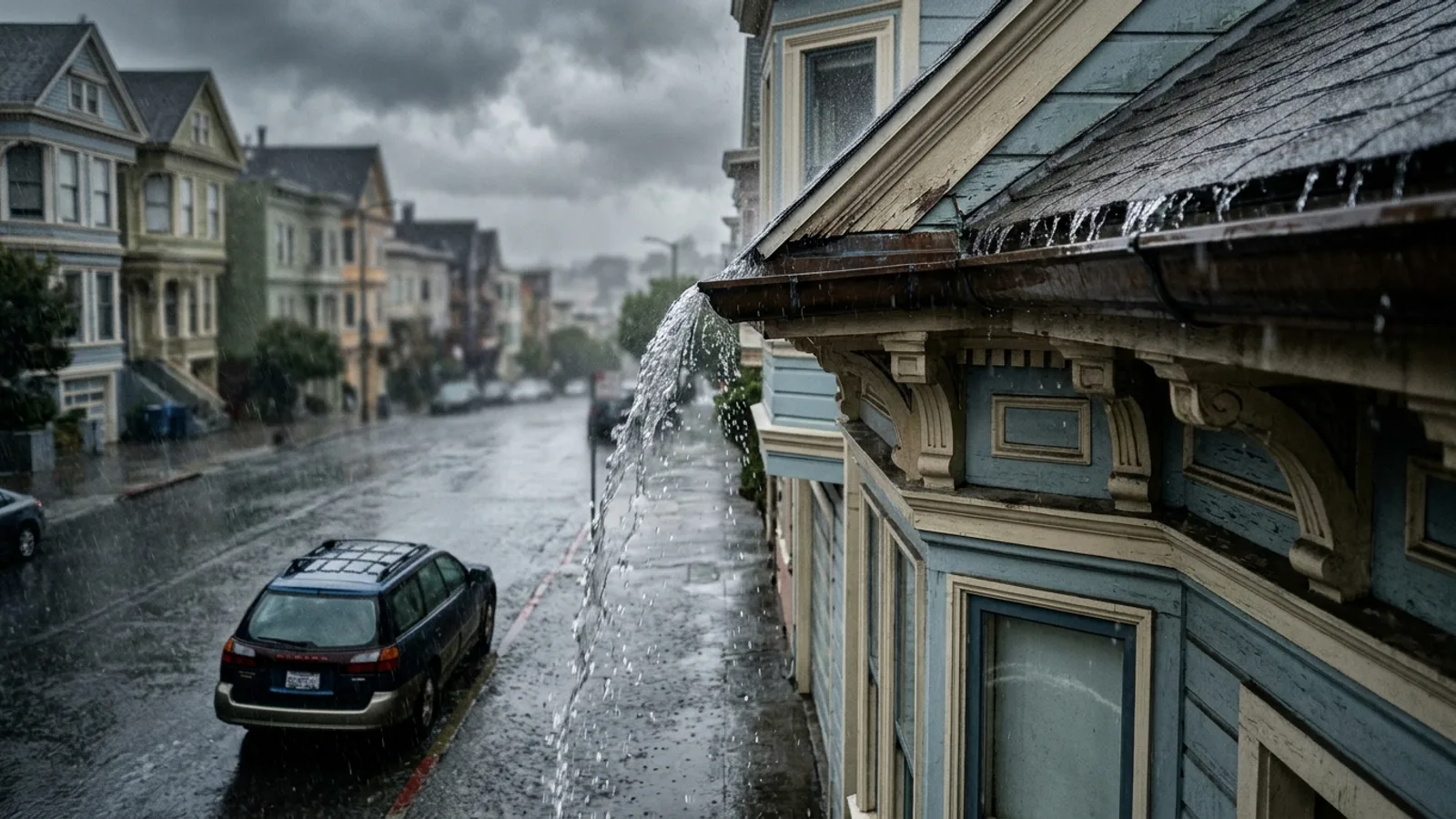
Downtown San Francisco got 2.64 inches of rain on November 18, 2026, breaking a record for the date set in 1918. Showers continued Thursday and cold nights follow. Here is what the storm did and how to check your roof safely.
San Francisco's 2.64 inches broke a 1918 record for November 18
Downtown San Francisco received 2.64 inches of rain on Wednesday, November 18, 2026, according to the National Weather Service, breaking the record for the date set in 1918 and making it the sixth wettest November day on record, CBS News Bay Area reported on Thursday.
That one day was a little more than the city's average for the whole month of November, 2.6 inches, cited by the San Francisco Standard. A normal water year downtown brings 22.88 inches, the NOAA 1991 to 2020 normal in the Renology El Niño rainfall record, so Wednesday delivered more than a tenth of a year's rain.
| Measure, November 18, 2026 | Figure | Source |
|---|---|---|
| Rain, downtown San Francisco, full day | 2.64 inches | NWS via CBS News |
| Rank | Record for the date, 6th wettest November day | NWS via CBS News |
| Peak gust, Pier 1 | 43 mph | SF Standard |
| Gusts, North Bay and higher elevations | about 60 mph | SF Standard |
| PG&E customers without power, 4 p.m. | more than 14,800 | CBS News |
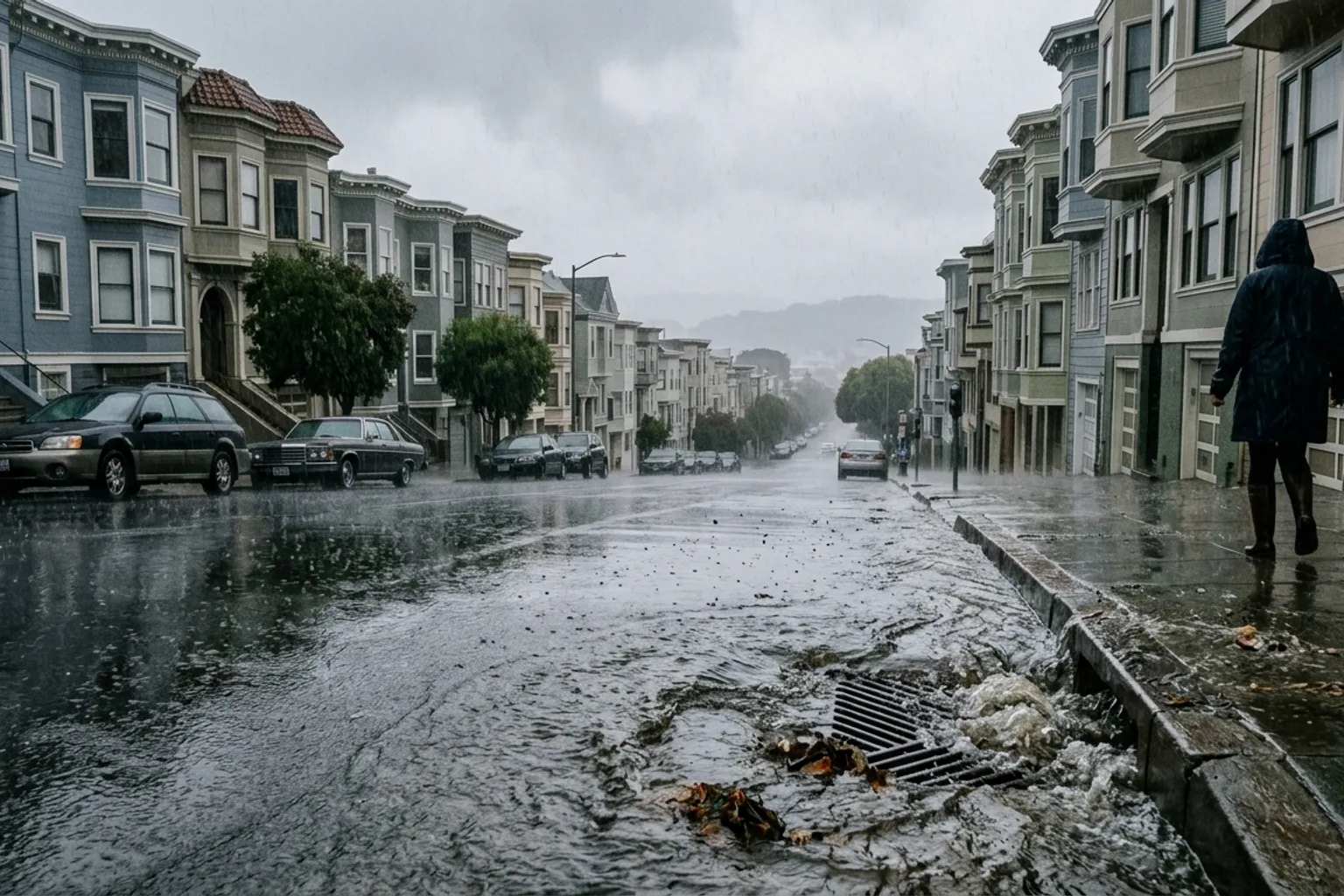
Flooded ramps, a leaking Moscone Center and more than 14,800 customers without power
Water stood about a foot and a half deep at the US-101 off-ramp at Alemany Boulevard, and flooding blocked the I-280 off-ramp at Cesar Chavez Street, the SF Standard reported from CHP logs.
Streets flooded near Pier 14 on the Embarcadero, in the Outer Sunset and in the Mission, and water came through the ceiling of the Moscone Center during a conference, the paper reported.
PG&E counted more than 14,800 Bay Area customers without power at 4 p.m., more than 10,000 of them in the East Bay, and the weather service put Alameda and Contra Costa counties under a flood warning until 6:45 p.m. on Wednesday, CBS reported.
Wind and heavy rain test the same parts of a house: the roof covering, the metal flashing around chimneys and vents, and the gutters that carry the water away. Those are the places worth a look this week.
Noticed a ceiling stain or a gap in the shingles after this storm? Tell us about your roof and a Renology advisor can connect you with a vetted local roofer.
Check my roof →Free for homeowners. No obligation.
Showers continued Thursday, and cold nights follow
Wet weather could last into Thursday afternoon and evening, November 19, with isolated thunderstorms possible, and the weather service issued cold weather advisories for much of the North Bay from 1 a.m. to 8 a.m. on Friday, with lows in the low to mid 30s, CBS reported.
A second advisory covers the same areas plus the East Bay early Saturday. On Wednesday, the SF Standard reported that rain could continue off and on through Thanksgiving.
The winter outlook favors more rain for California
3 roofers, editor-screened. 4 questions.
See my 3 matchesSeparately from this storm, NOAA's Climate Prediction Center said on November 19 that "a strong El Nino continues and is forecast to persist through January-February-March 2027," and its December to February outlook shows an increased chance of above-normal precipitation for California, in its seasonal discussion.
Across the nine strong El Niño winters since 1957, downtown San Francisco's October to September water-year rainfall finished above normal seven times, against 41% of all years since 1951. That is a tilt, not a promise: the 1965-66 and 1991-92 strong El Niño winters both finished below normal in the city.
What to check on your roof after the storm, without climbing up
The National Roofing Contractors Association says homeowners "should only perform a roof system inspection from ground level," because the risk of falling is too great without proper safety systems, in its storm guidance. These are things a homeowner can look at safely, as possible signs that water got in:
- Outside, from the yard or sidewalk: missing, cracked or lifted shingles and tiles, bent metal flashing at the chimney and vents, and gutters that sag or have pulled away from the house. Binoculars help.
- Inside, in the attic in daylight: damp or darkened roof boards, wet insulation, or water trails around vents, the chimney and skylights.
- Inside, on ceilings and walls: brown rings, bubbling paint or soft drywall, especially under chimneys and skylights.
- Gutters and downspouts: water spilling over the edge during rain may mean a clog, and downspouts that empty right next to the foundation can add to moisture problems below the house.
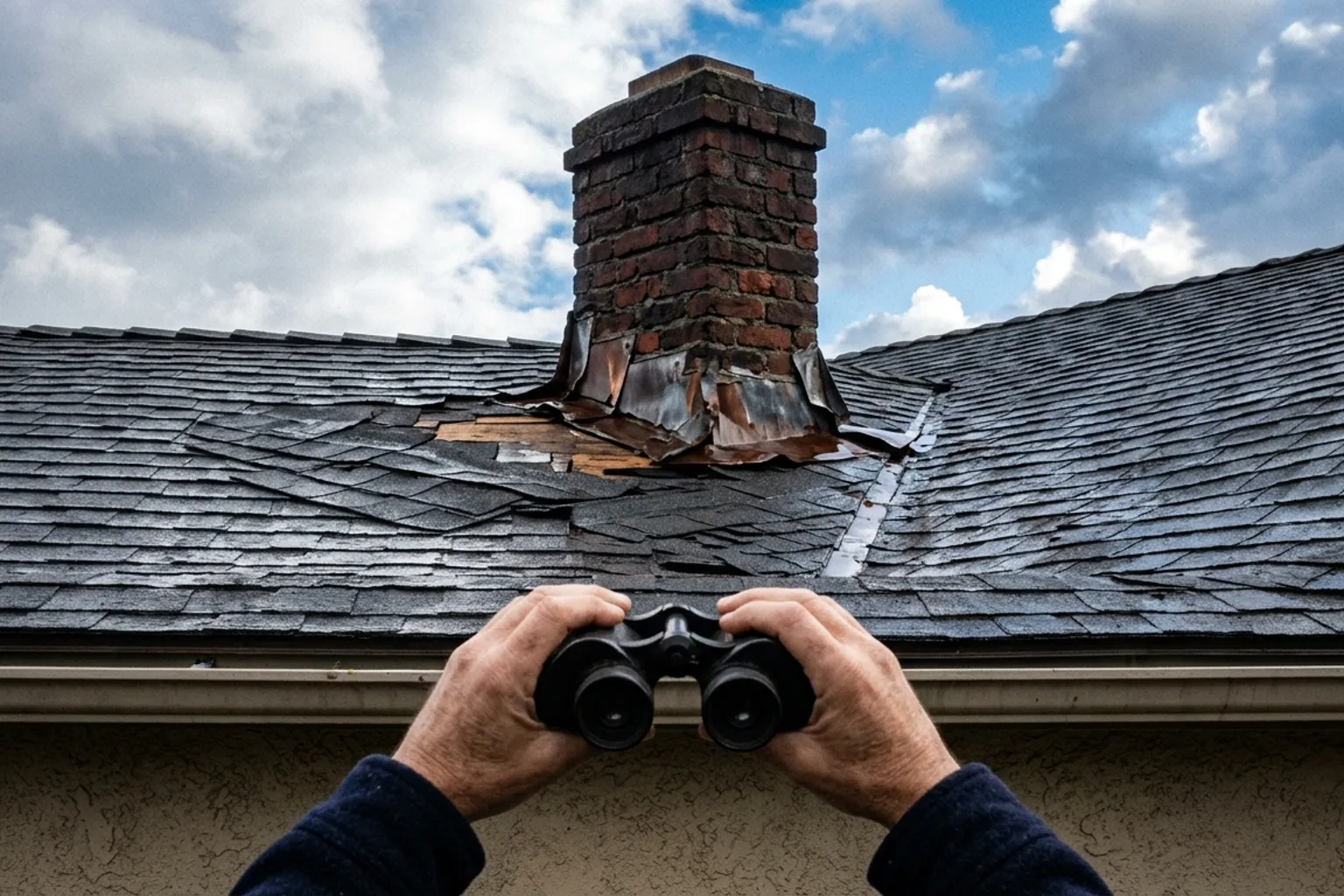
Anything you find on the roof itself is a job for a licensed roofer. NRCA notes that professional roofers are trained to identify damage that may not be obvious to a homeowner.
Document the damage, protect the house, and keep every record
The California Department of Insurance tells storm-hit homeowners to "take pictures and keep records of all clean up and repair costs," to make temporary repairs that prevent further damage, and not to make permanent repairs until the insurance adjuster sees the damage, in its winter storm tips.
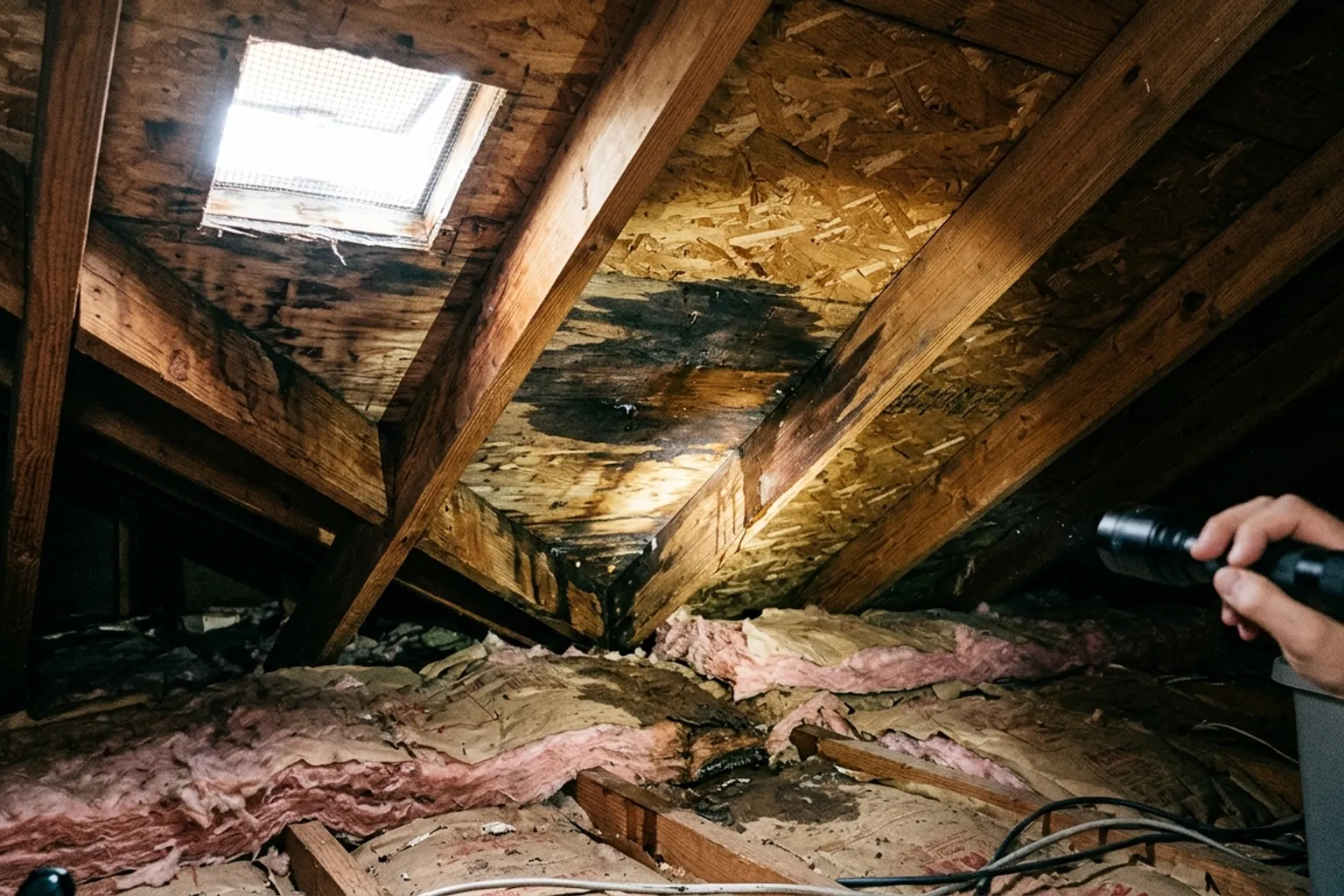
In practice: photograph what you can reach safely, inside and out, arrange temporary protection if water is still getting in, and keep the receipts. The same guidance says to check a contractor's licensing status, including complaints registered with the Contractors State License Board, before hiring.
Whether a policy pays depends on the policy and on why the water got in. An opening caused by a covered event such as wind is treated differently from seepage through worn materials, which policies generally exclude. Our guide on whether home insurance covers a leaking roof in California goes through the details.
When to have storm damage assessed
Renology's analysis of San Francisco Department of Building Inspection filings on DataSF counted 27,864 permits naming a reroof or roof replacement on one- and two-family homes from 2014 through 2025, and 31% of them were filed in August, September and October.
Filing dates show when applications went in, not how soon a roofer can start. If this storm showed you a stain, a gap or a sagging gutter, the practical step is to have it assessed during the next dry stretch. Our El Niño home prep guide covers the rest of the house, from drainage to flood insurance.
Methodology
How Renology builds this guide
Renology combines public permit and labor signals, supplier pricing, remodeler quote patterns, and editorial review of comparable projects. Cost references are planning ranges, not fixed bids, because site conditions, materials, access, permits, and finish level can change the final price.
- Benchmarked against the Renology Cost Index, related service guides, and the Renology Methodology.
- Reviewed for local market context when a local market is available.
- Focused on roof scope, materials, timeline, contractor risk, and budget drivers.
Frequently Asked Questions
How much rain did San Francisco get on November 18, 2026?
What is the Bay Area forecast after the storm?
Should I climb on my roof to check for storm damage?
What should I do first if the storm damaged my roof?
How do I check that a roofer is licensed in California?
Ready to find a pro?
Tell us what you are planning and where. A Renology advisor can help you explore contractor matching.
Find a Pro- Free for homeowners
- Licensed, vetted local contractors
- No obligation to hire
Sources
- CBS News Bay Area, More rain for Bay Area after storm breaks records; colder temps to return, November 19, 2026· accessed 2026-11-19
- CBS News Bay Area, Storm system pounds Bay Area with heavy rain, strong winds; record rainfall in San Francisco, November 18, 2026· accessed 2026-11-19
- San Francisco Standard, Storm chaos: Atmospheric river causes flooding across San Francisco, November 18, 2026· accessed 2026-11-19
- NOAA Climate Prediction Center, Prognostic Discussion for Long-Lead Seasonal Outlooks, November 19, 2026· accessed 2026-11-19
- National Roofing Contractors Association, storm repair guidance for homeowners, July 27, 2022· accessed 2026-11-19
- California Department of Insurance, Top Ten Tips for People Affected by Winter Storms· accessed 2026-11-19
- City and County of San Francisco, Department of Building Inspection permit record, DataSF· accessed 2026-10-16
- Contractors State License Board, Check a License· accessed 2026-11-19
Follow Renology on Google
Choose Renology as a preferred source and our guides show up more often in your Google results, including Top Stories and AI Overviews.