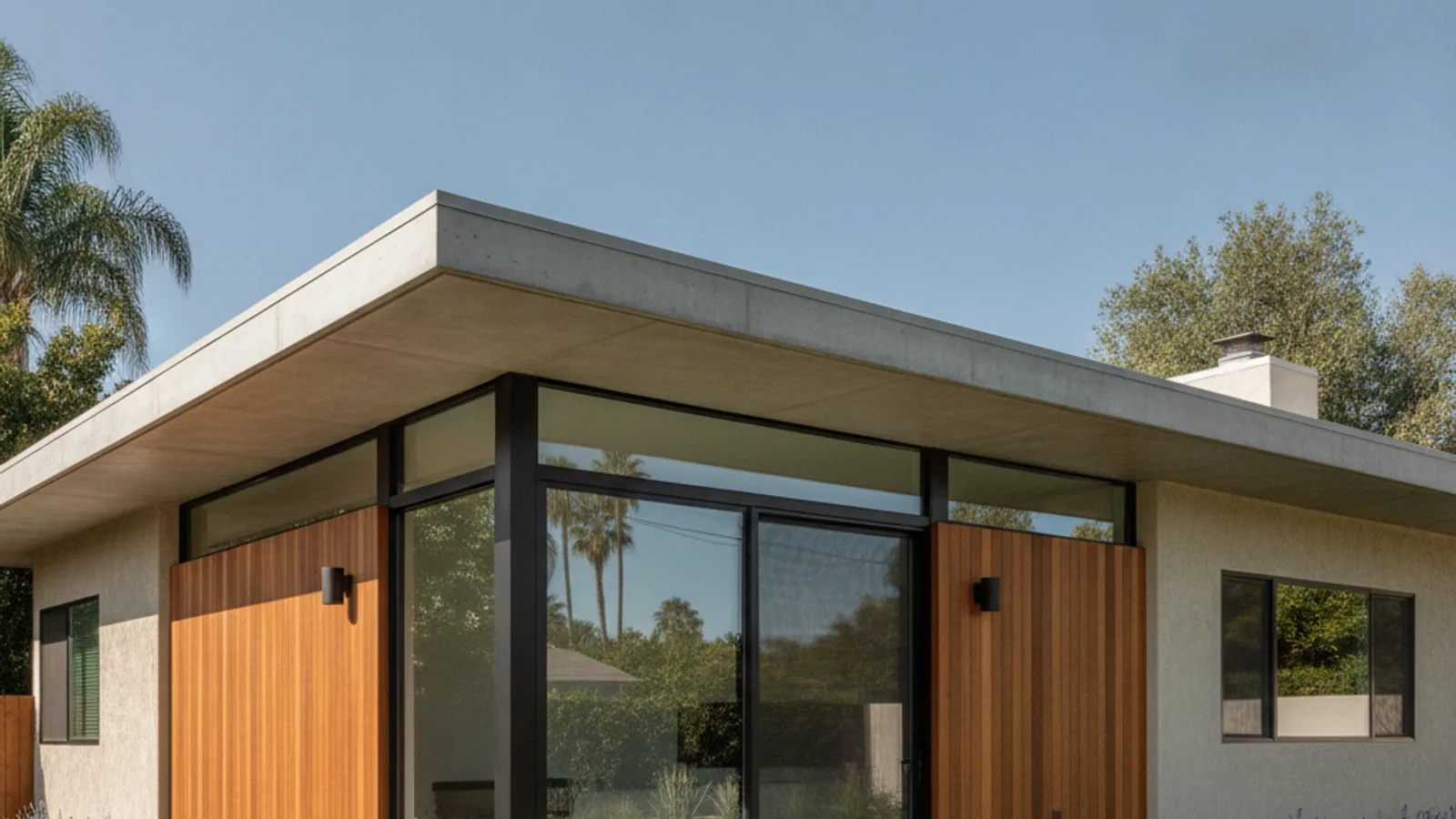
Before the first wall of your California home addition goes up, a building permit must be in hand. According to the California Building Standards Code, no building or structure may be erected, constructed, enlarged, altered, repaired, moved, improved, removed, converted or demolished unless a separate permit for each building or structure has first been obtained from the building official.
Quick answer
- A building permit is required for any home addition in California before work begins.
- A state license is required for contractors on any construction or alteration project in California where the total cost for labor and materials is $1,000 or more.
- Under California's Energy Code, an addition is any change that increases a building's conditioned floor area and volume.
- The state's solar panel mandate for newly constructed single-family homes does not apply to additions or alterations.
- When you sign a building permit application as an owner-builder, you assume full responsibility for all phases of your project and its integrity.
Does Every Home Addition Need a Permit?
According to the California Building Standards Code, no building or structure may be erected, constructed, enlarged, altered, repaired, moved, improved, removed, converted or demolished unless a separate permit for each building or structure has first been obtained from the building official. Because code requirements vary in different cities and counties around the state, you should always check with your local building department to find out exactly what is needed in your area. Once you have the permit process in hand, the next step is to understand what the state's Energy Code considers an 'addition'.
Is It an Addition or an Alteration?
According to the Energy Code, an addition is any change to a building that increases conditioned floor area and conditioned volume. This means that attached accessory dwelling units (ADUs) and conversions of existing unconditioned spaces like garages into conditioned spaces are considered additions. For single-family homes, the 2025 Energy Code's heating, ventilation, and air conditioning (HVAC) requirements apply to additions and alterations to existing buildings. For example, additions to existing single-family residences that are 1,000 square feet or less do not need to meet the ventilation cooling requirements in Section 150.1(c)12. The state's solar mandate does not apply to additions. The 2025 Energy Code requires solar photovoltaic (PV) systems for all newly constructed single-family residential buildings, with five exceptions, but these requirements do not apply to additions or alterations to existing buildings. Knowing these rules helps you understand the scope of work, which leads to the next question: who is legally allowed to build it?
Who Is Allowed to Build Your Addition?
In California, the law is clear about who can build. All businesses or individuals who construct or alter any building in California must be licensed by the California Contractors State License Board (CSLB) if the total cost for labor and materials on the project is $1,000 or more. There are serious penalties for unlicensed contracting. First time offenses for contracting without a license are usually a misdemeanor, carrying a potential sentence of up to six months in jail and/or a $500 fine, along with a potential administrative fine of $200 to $15,000. You can find a licensed professional to ensure your project is handled correctly. But what if you want to manage the project yourself?
Can You Be Your Own General Contractor?
Homeowners in California can act as an owner-builder, but this role comes with significant legal and financial responsibilities. When you sign a building permit application as an owner-builder, you assume full responsibility for all phases of your project and its integrity. This means you must pull all building permits, and your project must pass codes and building inspections. As the owner-builder, you are also responsible for ordering materials, making sure all suppliers are paid, and for supervising, scheduling, and paying subcontractors. If you use anyone other than a licensed subcontractor for work, you may be considered an "employer," which brings on many more responsibilities. This path requires careful consideration before you decide how to pay for it all.
How Can You Finance a Home Addition?
With a loan like the Fannie Mae HomeStyle Renovation, the home's future 'as-completed' value is used to help calculate the maximum loan amount. For purchase transactions, the total loan amount can be up to 75% of either the purchase price plus renovation costs or the “as-completed” appraised value, whichever is lower. Borrowers can renovate any part of their home, including bathrooms, roofs, or adding accessory dwelling units like an in-law suite. If you choose to do some work yourself, be aware of specific program rules. Under the HomeStyle Renovation program for one-unit properties, “Do It Yourself” renovations may not represent more than 10% of the “as completed” value of the property, and this option is not available for manufactured homes. To understand what your project might cost, we recommend using a detailed home addition cost calculator.
What to ask before you hire
- Are you licensed with the California Contractors State License Board (CSLB)?
- Who will be responsible for obtaining the building permits for this project?
- How do you ensure compliance with California's Energy Code (Title 24)?
- Will you use subcontractors, and are they all licensed and insured?
- What is the payment schedule and what project milestones correspond to each payment?
- Can you walk me through the city's inspection process for a project like this?
- How do you handle changes to the plan or unforeseen problems during construction?
Renology's take
Building a home addition is a major undertaking that goes far beyond design and construction. Homeowners should treat permitting, code compliance, and contractor licensing not as bureaucratic hurdles, but as essential safeguards. Taking on the role of an owner-builder can seem like a way to save money, but it comes with significant legal and financial responsibilities that can quickly become overwhelming. We recommend that most homeowners hire a licensed, vetted general contractor who can manage the complexities of the project from start to finish.
Sources
- CSLB, Do I need a building permit for my project?, Contractors State License Board (CSLB). Accessed 2026-10-21.
- CSLB, Before Applying for a License (when a license is required), Contractors State License Board (CSLB). Accessed 2026-10-21.
- California Energy Commission, 2025 Energy Code Accessory Dwelling Units (ADU) FAQs, California Energy Commission, 2025 Energy Code. Accessed 2026-10-21.
- California Energy Commission, 2025 Single-Family Solar PV FAQs, California Energy Commission, 2025 Energy Code. Accessed 2026-10-21.
- CSLB, Owner-Builder Responsibilities, Contractors State License Board (CSLB). Accessed 2026-10-21.
- California Energy Commission, 2025 Single-Family HVAC FAQs, California Energy Commission, 2025 Energy Code. Accessed 2026-10-21.
- Fannie Mae, HomeStyle Renovation, Fannie Mae. Accessed 2026-10-21.
Frequently Asked Questions
Does California's solar panel requirement apply to home additions?
What's the difference between an addition and an alteration under the Energy Code?
Can I do the work myself on a home addition?
Do I need a permit to convert my garage into living space?
What happens if I hire an unlicensed contractor?
Ready to find a pro?
Tell us what you are planning and where. A Renology advisor can help you explore contractor matching.
Find a Pro- Free for homeowners
- Licensed, vetted local contractors
- No obligation to hire
Sources
- CSLB, Do I need a building permit for my project?· accessed 2026-10-21
- CSLB, Before Applying for a License (when a license is required)· accessed 2026-10-21
- California Energy Commission, 2025 Energy Code Accessory Dwelling Units (ADU) FAQs· accessed 2026-10-21
- California Energy Commission, 2025 Single-Family Solar PV FAQs· accessed 2026-10-21
- CSLB, Owner-Builder Responsibilities· accessed 2026-10-21
- California Energy Commission, 2025 Single-Family HVAC FAQs· accessed 2026-10-21
- Fannie Mae, HomeStyle Renovation· accessed 2026-10-21