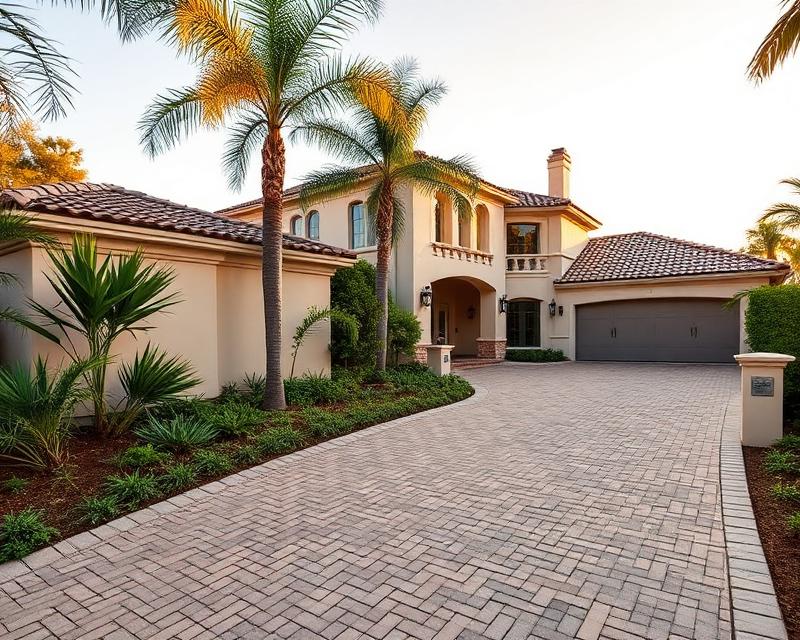
Service Guide
Driveways & Pavers
in California
Durable, beautiful installations that transform your home's curb appeal. California's trusted guide to designing, choosing, and installing the perfect driveway.
$10 to $50
Per sq ft installed
3 to 5 Days
Installation timeline
25 to 75 Yrs
Paver lifespan
One at a Time
Pavers replace individually
Understanding Pavers
What Are Driveways & Pavers?
Pavers are individual interlocking units made from concrete, natural stone, brick, or porcelain that are assembled into a continuous surface for driveways, walkways, patios, and other outdoor areas. Unlike poured concrete, a paver installation consists of hundreds or thousands of individual pieces arranged over a compacted aggregate base and sand setting bed.
Pavers are a common choice for California driveways. The region's seismic activity is part of the appeal: because pavers are individual units with flexible joints, they can move with the ground instead of cracking as one slab.
Water conservation is another powerful motivator. Permeable paver systems allow rainwater to filter through gaps into the ground, and are actively encouraged by California stormwater regulations.
Did You Know?
HomeGuide puts the life of a paver driveway at 25 to 75 years, against 30 to 40 years for a quality concrete driveway. The bigger difference is repair: a cracked or stained paver can be lifted and replaced on its own.
How Much Does a Paver Driveway Cost in California?
HomeGuide puts driveway pavers at $10 to $30 per square foot installed, materials and labor, depending on the material and design complexity. For a standard 24 by 24 foot two-car driveway, that works out to $5,700 to $17,200. A high-end stone or brick paver driveway costs $25 to $50 per square foot, or $15,000 to $30,000. These are national figures; ask for local bids to see where your area lands.
💡 Pro Tip: Try our Driveway Cost Calculator for a personalized estimate based on your project size, material choice, and California zip code.
Driveway Material Comparison: Cost, Durability & Style
Choosing the right driveway material is one of the most consequential decisions in any California hardscaping project. Each material carries a distinct cost profile, expected lifespan, maintenance burden, and aesthetic character. Below is a comparison of five common driveway materials, with installed prices and lifespans from HomeGuide's national cost guides.
Concrete Pavers (Interlocking) are a popular driveway material in California for good reason. At $10 to $30 per square foot installed, they last 25 to 75 years with modest maintenance. Concrete pavers handle California heat without softening, resist cracking during seismic events thanks to their flexible joint system, and offer a wide range of color, shape, and pattern combinations. If a single paver is damaged, it can be replaced individually without disturbing the surrounding surface, a real advantage over monolithic materials.
Stamped Concrete provides the look of pavers or natural stone, usually for less: $8 to $26 per square foot installed, with colored concrete at the high end. It is a single poured slab with patterns and colors pressed into the surface before it cures. HomeGuide puts its life at 25 to 50 years with regular resealing, and the main drawback in California is cracking. As a monolithic surface, stamped concrete cannot flex with seismic movement or soil expansion, and once it cracks, repairs are visually obvious. HomeGuide recommends resealing every 2 to 3 years to stop the color fading.
Natural Stone, including travertine, bluestone, flagstone, and granite, is the premium tier: HomeGuide prices high-end stone or brick paver driveways at $25 to $50 per square foot installed. Well-maintained travertine pavers can last 50 to 100 years or more, and HomeGuide notes travertine stays 20% to 30% cooler than concrete in direct sunlight. The higher driveway pavers cost reflects both the raw material price and the skilled labor required for proper installation.
Standard Concrete (Poured/Broom-Finished) is the baseline option at $6 to $10 per square foot installed, or $10 to $15 with basic decorative finishes. It is functional, widely available, and fast to install. A quality concrete driveway should last 30 to 40 years with proper maintenance, but it is prone to cracking from soil movement, tree root pressure, and thermal expansion, and the aesthetic options are limited to color tinting and basic broom or exposed aggregate finishes.
Asphalt is the lowest-cost paved option at $5 to $12+ per square foot installed, but it is less common for California residential driveways. Asphalt softens and gets tacky in sustained summer heat, which inland California sees for months at a time. HomeGuide says it needs sealcoating every 2 to 3 years, lasts 15 to 30 years when properly maintained, and offers little design flexibility. For California's climate, asphalt is generally better suited to commercial parking lots than residential driveways.
Material Cost & Lifespan at a Glance
Concrete Pavers
$10 to $30/sq ft | 25 to 75 years
Best all-around choice for California
Stamped Concrete
$8 to $26/sq ft | 25 to 50 years
Budget-friendly, prone to cracking
Natural Stone
$25 to $50/sq ft | 50 to 100 years (travertine)
Premium look, long life
Standard Concrete
$6 to $15/sq ft | 30 to 40 years
Functional, prone to cracking
Asphalt
$5 to $12+/sq ft | 15 to 30 years
Softens in California heat
For most California homeowners, concrete interlocking pavers offer the best balance of cost, durability, design flexibility, and climate performance. Natural stone is the right choice for premium properties where aesthetics and longevity justify the higher driveway pavers cost. Standard concrete and stamped concrete serve budget-conscious projects, though a cracked slab is harder to repair invisibly than a single paver.
Permeable Pavers & California Stormwater Compliance
California's stormwater regulations are among the most stringent in the nation, and they are directly shaping how driveways and outdoor surfaces are designed and built. Under the state's Municipal Separate Storm Sewer System (MS4) permits, local jurisdictions are required to reduce polluted stormwater runoff from new and redeveloped properties. For homeowners, this increasingly means that impervious surfaces like traditional concrete driveways are being scrutinized by local planning departments.
Permeable pavers are interlocking paver systems designed with wider joints or open-cell structures that allow rainwater to filter through the surface into a prepared aggregate base below, where it is absorbed into the soil rather than running off into storm drains. A properly installed permeable paver driveway lets much of the rain soak in where it falls instead of sheeting off a solid slab into the street.
California's Low Impact Development (LID) standards, adopted by most municipalities as part of their MS4 compliance strategy, encourage or require the use of pervious surfaces in new construction and major renovations. While permeable pavers are not yet mandated for all residential driveway replacements statewide, some California cities and water agencies encourage permeable surfaces through their stormwater rules or rebate programs. In Southern California, for example, the SoCal Water$mart turf replacement program allows permeable hardscape inside a converted lawn area but no other hardscape.
The cost difference is smaller than many homeowners expect: HomeGuide prices permeable pavers at $10 to $30 per square foot installed, the same range it gives for standard driveway pavers, with the extra cost sitting in the thicker gravel base. A permeable driveway may also reduce the need for a separate French drain, catch basin, or other drainage system to manage runoff; HomeGuide puts an exterior drainage system at $1,000 to $4,000 on average.
Permeable Pavers: Key Benefits for California Properties
- Reduces stormwater runoff, supporting MS4 compliance
- Recharges groundwater, which matters in drought-prone California regions
- May qualify for municipal incentives and streamlined permitting
- Eliminates standing water and puddles on the driveway surface
- Can reduce or eliminate the need for separate drainage systems
- Same aesthetic options as standard pavers with comparable durability
Maintenance for permeable pavers means keeping the joints free of dirt and debris; HomeGuide suggests sweeping or vacuuming every 3 months and refilling the gravel as needed so fine sediment does not clog the infiltration pathways. When properly maintained, permeable paver systems maintain their drainage performance for the full lifespan of the installation. For California homeowners planning a new driveway, permeable pavers are a forward-looking investment that addresses both current stormwater regulations and likely future requirements.
Heat, UV & Climate Considerations for California Driveways
California's climate presents a unique set of challenges and advantages for driveway materials that differ significantly from the rest of the country. Understanding how heat, UV exposure, seismic activity, and mild winters affect different materials is essential for making the right choice for your property.
Surface heat is a primary concern, especially in Southern California, the Central Valley, and desert communities. Dark-colored materials like asphalt and charcoal concrete get very hot on summer afternoons. Light-colored pavers, including natural travertine, sandstone tones, and light gray concrete, reflect more solar radiation and stay noticeably cooler than their dark counterparts; HomeGuide says travertine stays 20% to 30% cooler than concrete in direct sunlight. For families with children who play in the driveway or homeowners who frequently walk barefoot to their vehicles, surface temperature is a meaningful quality-of-life factor. Heat-resistant pavers are particularly important in hot inland communities like Palm Springs, Bakersfield, and the San Fernando Valley.
UV exposure in California is intense and sustained, and prolonged sun causes color fading in lower-quality materials. When selecting California driveway materials, choose products with a long written color warranty, a useful sign that the manufacturer stands behind its pigments and surface treatments. Through-body colored pavers (where the color extends throughout the full thickness of the paver, not just the surface) resist fading far better than surface-coated products.
Seismic performance is a California-specific factor that strongly favors interlocking pavers over monolithic surfaces. Poured concrete and stamped concrete are rigid slabs that crack when the ground shifts during seismic events. Interlocking pavers, by contrast, are individual units connected through a flexible sand-joint system that allows the surface to flex and redistribute stress without fracturing. When a few pavers do shift or crack, they can be lifted and relaid instead of cutting out a section of slab.
Mild winters are California's major climate advantage for driveway longevity. In northern states, the freeze-thaw cycle, where water seeps into material pores, freezes, expands, and cracks the surface, is a leading cause of driveway deterioration. Most of lowland California rarely sees it, and HomeGuide notes that stamped concrete, for one, lasts longer in moderate climates where the ground doesn't freeze. That advantage applies across driveway materials.
California Climate Factors: What They Mean for Your Driveway
Heat Advantage
Light-colored pavers stay cooler than dark surfaces. Choose sandstone, cream, or light gray tones for comfort.
UV Resistance
Select through-body colored pavers with a written fade warranty to stand up to strong year-round sun.
Seismic Safety
Interlocking pavers flex with ground movement rather than cracking as one slab, and are easier to repair after it.
No Freeze-Thaw
California's mild winters spare most driveways the freeze-thaw damage common in northern climates.
Why Pavers
6 Reasons California Homeowners Choose Pavers
Built to Last Decades
HomeGuide puts a paver driveway at 25 to 75 years. Individual pavers can be replaced if damaged, no need to tear out the entire surface.
Earthquake-Friendly Design
Flexible interlocking joints let the surface move with the ground instead of cracking as one slab. In earthquake-prone California, that means fewer visible cracks and simpler repairs.
Unlimited Design Options
A wide range of colors, shapes, textures, and patterns to match your home's architecture, from classic herringbone brick to sleek large-format porcelain.
Boosts Curb Appeal
The driveway is one of the first things buyers and neighbors see. A professionally installed paver driveway is a visible upgrade to the front of the house.
Permeable Options Save Water
Permeable pavers let rainwater filter into the ground, reducing runoff and helping you comply with California's stormwater regulations. May qualify for incentives.
Low Maintenance, High Reward
Occasional sweeping, rinsing, and topping up the joint sand. Sealing is optional for most concrete pavers. Stained pavers can be spot-treated or replaced.
The Process
How a Driveway & Paver Project Works
Consultation & Site Assessment
First VisitA professional visits your property to assess site conditions, measure the project area, discuss design preferences and budget, and evaluate drainage, soil, and access.
Custom Design & Material Selection
Design PhaseThe design team creates a custom layout showing paver patterns, colors, borders, and special features. Materials are chosen from samples.
Permits & Site Preparation
Before Work StartsAll necessary permit applications are handled. Most standard paver installations in California don't require a building permit, but requirements are confirmed and managed.
Professional Installation
3 to 5 DaysExcavation, grading, geotextile fabric, compacted aggregate base, sand setting bed, paver laying, edge restraints, and polymeric sand. HomeGuide puts a typical paver driveway install at 3 to 5 days, and it can be used immediately.
Final Walkthrough & Warranty
Final DayThe completed project is walked through, sealant applied if specified, site cleaned, and a maintenance guide plus written workmanship warranty provided. Ready to use immediately.
Materials Guide
Comparing Driveway & Paver Materials
Every material performs differently in the California climate. Here's how the most popular options compare, with installed prices and lifespans from HomeGuide's national cost guides.
| Material | Cost / sq ft | Lifespan | Maintenance | Heat | Seismic | California Climate | Best For |
|---|---|---|---|---|---|---|---|
Concrete PaversMOST POPULAR | $10 to $30 | 25 to 75 years | Low, top up joint sand | Moderate | Excellent | Budget + versatility | |
Travertine | $13 to $45 | 50 to 100+ years | Medium, seal every 2 to 3 yrs | Low (stays cool) | Excellent | Pool decks + patios | |
Porcelain | $15 to $30 | 50+ years | Very Low | Moderate | Excellent | Modern contemporary | |
Natural Flagstone | $15 to $32 | 10 to 50 years | Medium, reseal every 1 to 5 yrs | Low to Moderate | Excellent | Hillside + rustic | |
Stamped Concrete | $8 to $26 | 25 to 50 years | Medium, reseal every 2 to 3 yrs | High | Poor | Quick large areas |
Concrete Pavers
MOST POPULARCost / sq ft
$10 to $30
Lifespan
25 to 75 years
Heat Retention
Moderate
Seismic
ExcellentCalifornia Climate
Best For
Budget + versatility
Low, top up joint sand
Travertine
Cost / sq ft
$13 to $45
Lifespan
50 to 100+ years
Heat Retention
Low (stays cool)
Seismic
ExcellentCalifornia Climate
Best For
Pool decks + patios
Medium, seal every 2 to 3 yrs
Porcelain
Cost / sq ft
$15 to $30
Lifespan
50+ years
Heat Retention
Moderate
Seismic
ExcellentCalifornia Climate
Best For
Modern contemporary
Very Low
Natural Flagstone
Cost / sq ft
$15 to $32
Lifespan
10 to 50 years
Heat Retention
Low to Moderate
Seismic
ExcellentCalifornia Climate
Best For
Hillside + rustic
Medium, reseal every 1 to 5 yrs
Stamped Concrete
Cost / sq ft
$8 to $26
Lifespan
25 to 50 years
Heat Retention
High
Seismic
PoorCalifornia Climate
Best For
Quick large areas
Medium, reseal every 2 to 3 yrs
Our recommendation for most California driveways: Concrete interlocking pavers in a herringbone pattern offer the best combination of durability, value, seismic performance, and design flexibility.
California Local Guide
Permits, Climate & Neighborhood Insights
Permits & Regulations
In many California cities, standard at-grade paver installations for driveways, patios, and walkways do not require a building permit. This can include replacing an existing concrete driveway with pavers at the same grade level. Confirm with your local building department.
Projects that usually need permits: changes to grading/drainage patterns, retaining walls over 3 to 4 feet tall, structures attached to the paver area, or work within the public right-of-way (a new or widened curb cut, for example).
Local Low Impact Development rules may require stormwater management features on larger projects. Permeable pavers are one way to meet them.
Climate Considerations
Most of California rarely sees the freeze-thaw cycles that damage installations in colder regions, a real longevity advantage.
Intense UV exposure can fade some colors over time, making UV-stable materials and sealants important. Dark pavers get uncomfortably hot during peak summer.
Lighter colors and naturally cool materials like travertine reduce surface heat (HomeGuide says travertine stays 20% to 30% cooler than concrete in direct sunlight), which matters for barefoot-traffic areas like pool decks and patios.
Neighborhood Insights
Hollywood Hills & Hillside Areas
Steep driveways require careful material selection for traction and drainage. Textured pavers with good grip and integrated channel drains are essential.
Pasadena & San Marino
Historic district design guidelines may influence paver color and style. Brick and natural stone complement the Craftsman and Colonial Revival architecture.
San Fernando Valley
Larger lot sizes mean larger driveway projects. Higher temperatures make heat retention an important consideration, light-colored pavers help reflect heat.
Westside (Santa Monica, Brentwood, Palisades)
Contemporary and mid-century modern homes pair well with large-format porcelain. Salt air in coastal areas makes a quality sealer worth asking about.
South Bay (Manhattan Beach, Hermosa)
Sand infiltration is a maintenance consideration. Polymeric joint sand helps limit weed growth and sand washout.
Public reviews
How homeowners rate our driveway and paver contractors
These are the public ratings of contractors on the Renology roster who do this work. Renology does not host or edit these reviews, so read them at the source.
- Exodus Construction & Remodeling
Westlake Village
4.7out of 5 from 89 reviews
Read them on Google
- Moda Outdoor Living
Woodland Hills
5.0out of 5 from 80 reviews
Read them on Google
- My Outdoor Builder
Los Angeles
5.0out of 5 from 70 reviews
- HQ Remodeling & Design
Huntington Beach
4.9out of 5 from 69 reviews
Read them on Google
- Skyline Builders WA
Bellevue
4.9out of 5 from 68 reviews
- Polestar Builders Group
Sherman Oaks
5.0out of 5 from 60 reviews
Read them on Google
Find help with your driveway project
A Renology advisor calls to understand your project and connect you with suitable contractors. Discuss your scope and request quotes directly from the contractors.
- Tell us about your project
- Speak with an advisor
- Connect with contractors
The contractors provide your project quotes.
FAQ
Frequently Asked Questions
Sources
- HomeGuide: How Much Does It Cost to Install Driveway Pavers? (2026) (updated January 6, 2026)
- HomeGuide: How Much Does a Concrete Driveway Cost? (2026) (updated June 3, 2025)
- HomeGuide: How Much Does Paving an Asphalt Driveway Cost? (2026) (updated May 28, 2025)
- HomeGuide: How Much Does Stamped Concrete Cost? (2026) (updated December 23, 2025)
- HomeGuide: How Much Do Permeable Pavers or Pervious Concrete Cost? (2026) (updated May 27, 2025)
- HomeGuide: How Much Do Travertine Pavers Cost? (2026) (updated April 16, 2026)
- HomeGuide: How Much Does a Flagstone Patio Cost? (2026 Prices) (updated October 6, 2023)
- HomeGuide: How Much Does Concrete Removal Cost? (2026 Prices) (updated May 27, 2025)
- HomeGuide: How Much Does Landscape Design Cost? (2026) (updated December 23, 2025)
- HomeGuide: How Much Does a Retaining Wall Cost? (2026) (updated January 16, 2026)
Keep reading
Related renovation guides.
Continue through adjacent scopes so bids, permits, and material choices make sense together.
Your Next Step: Getting a Driveway Quote in California
Browse top-rated driveway contractors in California, read reviews, and get matched for free.
An advisor discusses your project · Contractors provide the quotes