Service Guide
Building a Deck
in California
What a deck costs to build here in 2026, which boards stand up to sun and fire codes, and when the city needs to see plans.
$25 to $80
Per sq ft installed
Slopes
Engineered hillside builds
No Sealing
Composite upkeep
25 to 50 Yrs
Composite, per HomeGuide
Before You Build
What a Deck Adds to a California Home
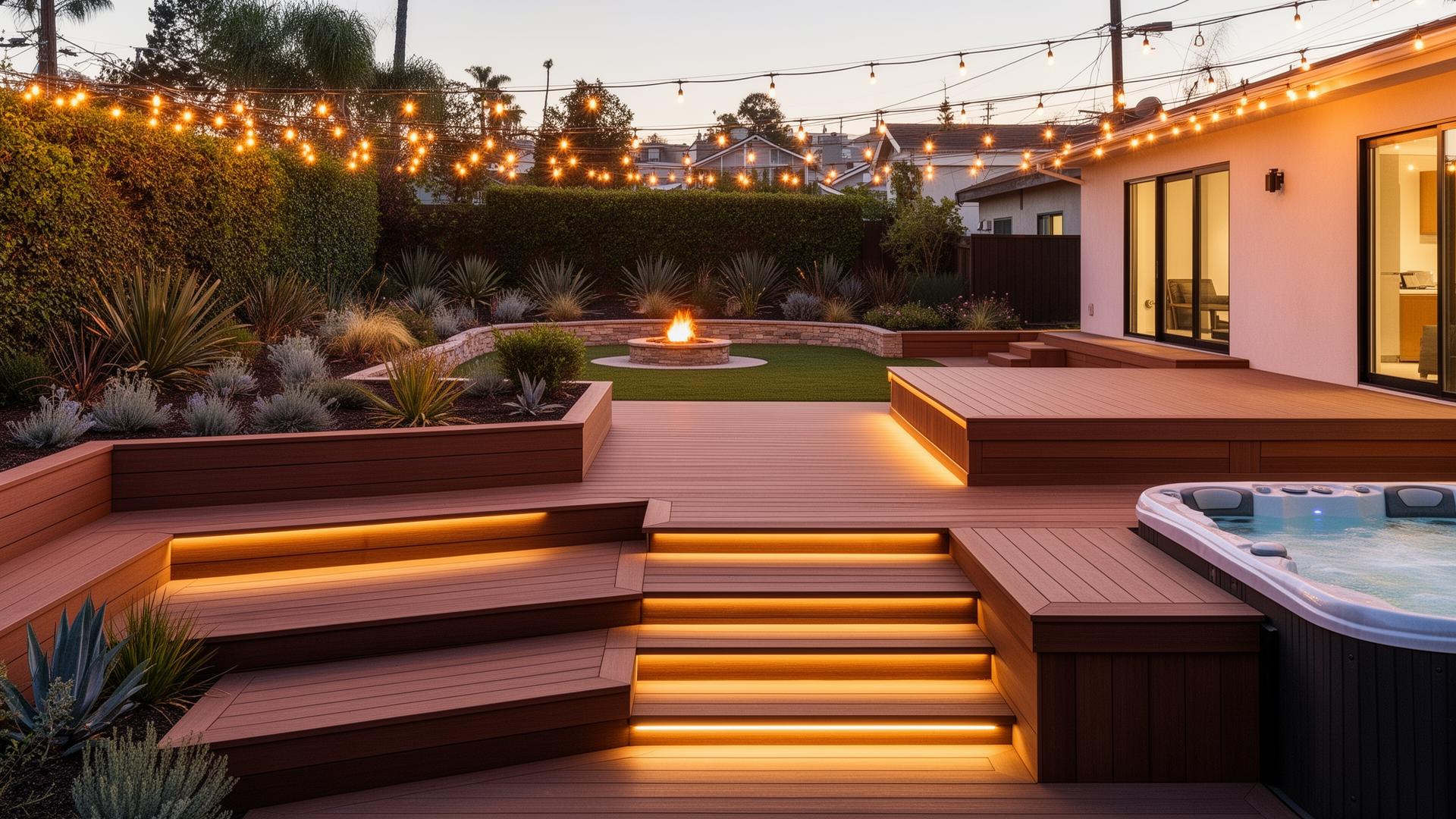
A deck gives you a flat, usable floor right outside the back door. On a level lot that usually means a low platform big enough for a table and chairs. On a sloped lot it is often the only flat outdoor space the property will ever have, built out over ground you could not otherwise use.
Mild weather across most of the state means a deck here sees use in more months than it would back east, so the boards take more sun and almost no freezing. That changes what you should ask a builder: how a board handles UV and heat, what fire rating it carries, and how the frame gets anchored if the yard falls away from the house.
Resale Check
Decks hold their value well at resale. Cost vs Value 2025 prices a defined 16 by 20 foot wood deck at $18,419 in Los Angeles and finds 99.6 percent of that recouped at resale.
Deck Cost in California for 2026
A deck in California runs $25 to $80 per square foot installed in 2026, depending mostly on the board you choose. Those are HomeGuide's national installed prices: $25 to $50 for pressure-treated wood, $50 to $70 for Ipe hardwood and $40 to $80 for composite such as Trex or TimberTech. Built in wood on a 20 by 20 foot footprint, that comes to roughly $10,000 to $20,000.
Quick Answer: Deck Materials by Price
| Material | Installed / sq ft | Lifespan | Upkeep |
|---|---|---|---|
| Pressure-treated pine | $25 to $50 | 10 to 25 years | Clean, seal and stain yearly |
| Redwood | $28 to $54 | 10 to 25 years | Reseal yearly against mold and UV |
| Composite | $40 to $80 | 25 to 50 years | Wash now and then, no sealing |
| Ipe hardwood | $50 to $70 | 40 to 70 years | Low |
| Aluminum | $100 to $125 | Varies by product | None |
Installed prices and lifespans are HomeGuide's national figures. Its wood deck lifespan covers both pressure-treated pine and redwood.
Height and slope push a project past that range. HomeGuide puts multi-level decks at $60 to $100 per square foot, and raised, hillside and rooftop decks carry extra engineering and deeper footings on top of the boards. For a Los Angeles benchmark, Cost vs Value 2025 prices its defined 16 by 20 foot deck at $18,419 in wood and $26,872 in composite.
Picking Boards: Redwood, Composite, Pine and Fire-Rated Decking
The material you pick sets most of what the deck will cost you over its life, not just on the day it is built. Strong sun, long dry summers and wildfire rules all weigh on that choice more here than in cooler, wetter states.
Redwood grows in Northern California, and the tannins in its heartwood hold off rot and insects. HomeGuide prices a redwood deck at $28 to $54 per square foot installed. Left alone it weathers to silver-gray; sealed, it keeps its red-brown color. If sourcing matters to you, FSC-certified boards come from managed forests in the north of the state. The catch, per HomeGuide, is yearly resealing. Skip it and the wood is open to mold and UV damage, and over time it splits and checks.
Composite boards, sold by Trex, TimberTech and others, mix recycled wood fiber with plastic. At $40 to $80 per square foot installed they cost more than wood up front, but you never stain, seal or sand them, so the gap shrinks with every year you would have spent resealing. HomeGuide says most Trex products carry a 20 to 25 year warranty. Cool-touch lines such as Trex Transcend and TimberTech Advanced PVC stay cooler than standard composite, which you will notice on an inland deck in July.
Pressure-treated pine is the cheapest way to get a deck built, at $25 to $50 per square foot installed on HomeGuide's figures. It wants cleaning, sealing and stain every year, and dry heat makes it crack, warp and split. HomeGuide gives wood decks 10 to 25 years against 25 to 50 for composite. Pine still makes sense for a short-term or tight-budget build, as long as you add the upkeep to the price before comparing it with composite.
Decking in Fire Hazard Zones
Lots in a Wildland-Urban Interface (WUI) area or a Very High Fire Hazard Severity Zone (VHFHSZ) have to use ignition-resistant decking. Class A fire-rated composite, from lines such as Fiberon and some Trex products, qualifies. So does fire-retardant-treated (FRT) lumber, which is pressure-impregnated with fire-retardant chemicals to reach a Class A or B rating. Aluminum does not burn at all, though HomeGuide prices it at $100 to $125 per square foot installed. Across fire-prone areas such as Malibu, the San Gabriel foothills and the Hollywood Hills, this decking is required by code, not an upgrade.
Permits, Hillside Rules and Engineering
An unpermitted deck can bring fines, an order to tear it out, and hard questions from a buyer's inspector when you sell. Deck rules in California come from the California Building Code (CBC), your city or county code, and fire-zone rules, and every jurisdiction combines them a little differently.
What is exempt. Most California cities adopt a residential code that lets only a small freestanding deck go without a permit: 200 square feet or less, no more than 30 inches above grade at any point, not attached to the house, and not serving the required exit door. A deck fastened to the house on a ledger board needs a permit at any height, because it ties into the home's structure. Some cities are stricter than the model code, so call the building department before anyone digs.
Hillside rules. Many jurisdictions designate hillside areas and put extra limits on grading, retaining walls and structures there. Plan on a geotechnical report, soils engineering and a drainage plan on top of the structural drawings. In Los Angeles, the Baseline Hillside Ordinance (BHO) caps floor area and impervious coverage on hillside lots, which can shrink a planned deck or move it.
Engineering. Raised and cantilevered decks, and any deck carrying a hot tub or an outdoor kitchen, need a licensed structural engineer. The engineer stamps calculations and drawings showing the frame meets the seismic provisions in CBC Chapter 16 and the required loads. HomeGuide puts engineers at $100 to $220 per hour for the site visit and design.
Chapter 7A in Fire Zones
In Wildland-Urban Interface (WUI) zones, decks fall under the same ignition-resistant materials rule as the rest of the exterior. California Building Code Chapter 7A covers construction in fire hazard zones and sets the flame-spread and fire-resistance ratings those materials must meet. Have your builder confirm the parcel's fire zone before writing up the materials list.
Timing and fees. HomeGuide says a permit takes a week or longer to issue and puts a basic deck permit at $50 to $150 nationally. Fees and review times grow with the size of the job and differ by city, and engineered or hillside decks take longer to clear. Some jurisdictions sell expedited plan check. Your contractor normally pulls the permit, but the legal duty to have the work permitted and inspected stays with you as the owner.
Reasons to Build
What a Well-Built Deck Gives You
More Usable Floor Area
A deck works as an outdoor room for eating, sitting or hosting, and in most of California the weather lets you use it in every season.
Flat Ground on a Slope
On a hillside or uneven lot, a deck is often the simplest way to get level space. A cantilevered frame can put a seating area over ground that was too steep to use.
Little Upkeep with Composite
Composite boards skip the staining, sealing and sanding. A wash every so often is the whole routine, so weekends go to using the deck instead of refinishing it.
Cooler Boards Underfoot
Cool-touch composite lines stay cooler in direct summer sun than older boards, so bare feet are less of a problem on a July afternoon.
Holds Its Value
Cost vs Value 2025 finds a wood deck addition recoups 95 percent of its cost at resale nationally and a composite deck 89 percent.
Fire-Rated Choices
Class A composite and aluminum decking let owners in Very High Fire Hazard Severity Zones (VHFHSZ) build a deck that meets the fire code.
Step by Step
How a Deck Project Runs
Site Visit
Day 1The builder measures the area and checks slope, soil, buried utilities and how equipment will reach the spot. You talk through how you plan to use the deck. For hillside and raised decks, the structural needs and site access get a first look here.
Plans and Engineering
PlanningDrawings set the shape, levels, railing, boards, lighting and framing. A licensed engineer designs the structure for raised and hillside decks. Many builders also show 3D renderings so you can see the deck from several angles before you sign off.
Permit
Before ConstructionAny attached deck, or one more than 30 inches above grade, needs a building permit; in the City of Los Angeles it comes from LADBS. The structural calculations go in with the application, and hillside sites may get added review under the Hillside Ordinance. HomeGuide says a permit takes a week or longer to issue.
Build
5 Days to 4 WeeksOn HomeGuide's timelines, a simple ground-level deck takes at least 5 to 7 days and a raised deck over 300 square feet usually 2 to 4 weeks. The crew sets footings (concrete piers or helical piles), frames the structure in treated lumber or steel, hangs the joists, lays the boards, then adds railings, lights and stairs.
Inspection and Handover
CompletionThe builder walks the deck with you, the city inspector signs off, the site gets cleaned and you receive the warranty paperwork. HomeGuide says most Trex products carry a 20 to 25 year warranty; ask your builder for a written workmanship warranty as well.
Side by Side
How Decking Materials Compare
| Attribute | Pressure-Treated Pine | Composite | Cool-Touch Composite ★ | Ipe | Aluminum |
|---|---|---|---|---|---|
| Installed price per sq ft | $25 to $50 | $40 to $80 | Upper end of composite pricing | $50 to $70 | $100 to $125 |
| Expected life | 10 to 25 yrs | 25 to 50 yrs | 25 to 50 yrs | 40 to 70 yrs | Depends on product |
| Upkeep | Yearly stain and seal | Occasional wash | Wash only | Light | None |
| Fire rating | No rating | Class B | Class A on some lines | Class A (natural) | Noncombustible |
| Heat in sun | Warm | Warm | Cooler (cool-touch) | Warm | Hot in sun |
| Sun fading | Grays and splits | Holds color well | Holds color best | Weathers to gray | Holds color best |
| Good fit for | Tight budgets | Low upkeep at a fair price | Most homes | A natural wood look | Fire zones, rooftops |
Our pick: For most California homes, a cool-touch composite line (Trex Transcend, TimberTech Pro) gives the best mix of looks, durability and no-sealing upkeep. If you want real wood, Ipe lasts 40 to 70 years on HomeGuide's figures. In a Very High Fire Hazard Severity Zone (VHFHSZ), start with aluminum or Class A composite.
Local Notes
Local Rules and Conditions to Plan Around
Permits in Los Angeles
LADBS issues deck permits in the City of Los Angeles. The only exemption is a freestanding deck of 200 square feet or less, no higher than 30 inches above grade; an attached deck needs a permit whatever its height. Expect to submit structural plans, engineering calculations for raised decks, and details showing the California Building Code is met on live loads, guardrails, baluster spacing and stairs. Hillside lots add a review under the city's hillside rules.
Engineering on Slopes
Hillside decks usually stand on caissons or piers drilled down to stable soil or bedrock, and cantilevered sections may need steel moment frames. A soils report and structural engineering are required. They cost more than decks on flat lots, yet view decks in the Hollywood Hills, Mount Washington and Eagle Rock stay in steady demand.
Building in a Fire Zone
Very High Fire Hazard Severity Zones call for decking with higher fire resistance. Aluminum, which does not burn, is the strongest choice, and Class A composites and treated hardwoods also qualify. On a raised deck, the underside has to be enclosed or built from fire-resistant materials so embers cannot collect beneath it. Look up a Los Angeles parcel's zone at zimas.lacity.org.
By Neighborhood
Hollywood Hills and the Bird Streets: cantilevered view decks, often with steel framing and cable rails. Santa Monica and Venice: low decks and rooftop decks in a modern style. Sherman Oaks and Encino: large ground-level decks, where cool-touch boards earn their keep in Valley heat. Eagle Rock and Mount Washington: hillside view decks that mix materials.
Public reviews
How homeowners rate our deck contractors
These are the public ratings of contractors on the Renology roster who do this work. Renology does not host or edit these reviews, so read them at the source.
- Exodus Construction & Remodeling
Westlake Village
4.7out of 5 from 89 reviews
Read them on Google
- My Outdoor Builder
Los Angeles
5.0out of 5 from 70 reviews
- Skyline Builders WA
Bellevue
4.9out of 5 from 68 reviews
- Dr-Deck Construction
Los Angeles
5.0out of 5 from 61 reviews
Read them on Google
- Asher Brothers Construction
Danville
5.0out of 5 from 52 reviews
- Renovision Design & Build
Bellevue
5.0out of 5 from 50 reviews
Read them on Google
Find help with your deck project
A Renology advisor calls to understand your project and connect you with suitable contractors. Discuss your scope and request quotes directly from the contractors.
- Tell us about your project
- Speak with an advisor
- Connect with contractors
The contractors provide your project quotes.
FAQ
Deck Questions, Answered
Sources
- HomeGuide: Cost to Build a Deck (updated February 10, 2026)
- HomeGuide: Composite Decking Prices (updated February 10, 2026)
- JLC / Zonda: Cost vs Value 2025, Los Angeles (2025 report)
- JLC / Zonda: Cost vs Value 2025, National Data (2025 report)
- International Code Council: 2021 International Residential Code, Chapter 1, Section R105.2 (2021 edition)
Keep reading
Related renovation guides.
Continue through adjacent scopes so bids, permits, and material choices make sense together.
Your Next Step: Finding a Deck Builder in California
Browse top-rated deck builders in California, compare options, and get matched for free.
Find a Trusted ProAn advisor discusses your project · Contractors provide the quotes