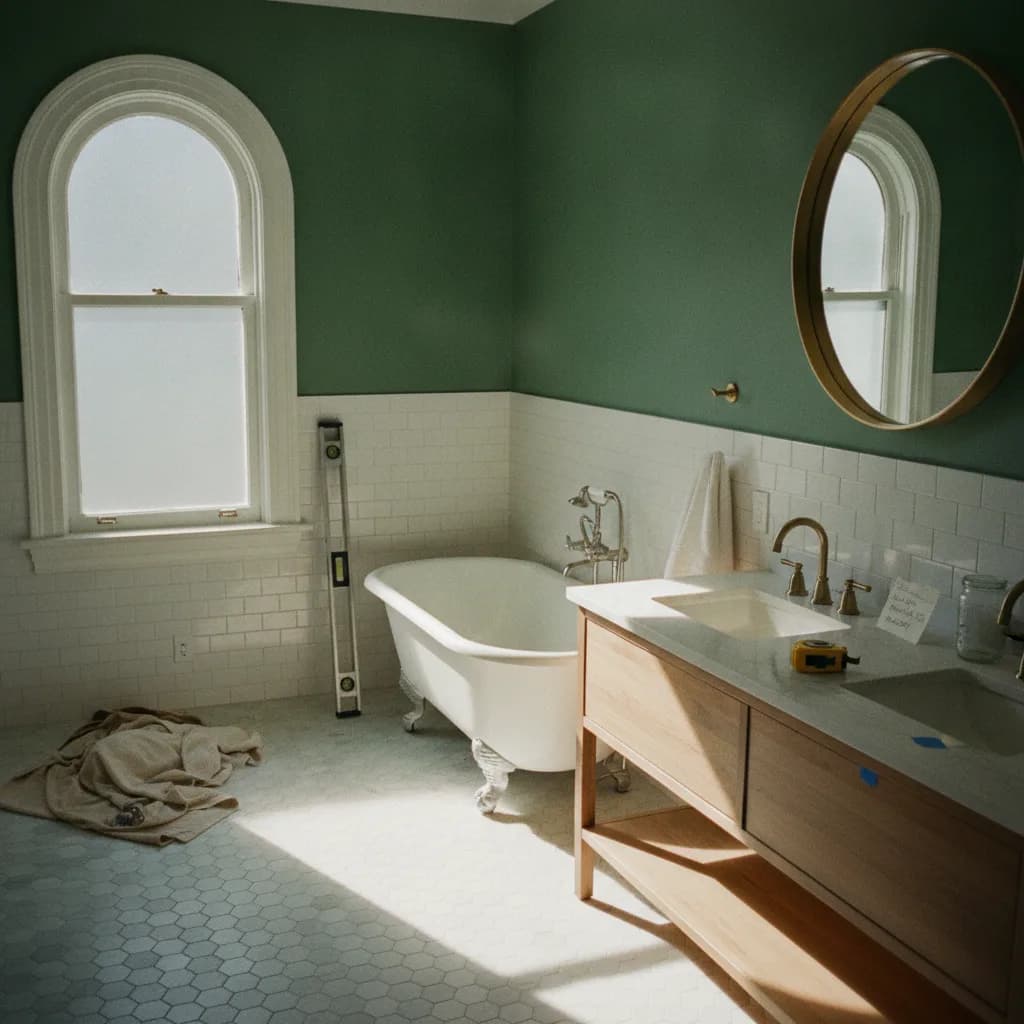
A typical bathroom remodel in San Francisco goes over budget by twenty-five percent and over schedule by three weeks. The reasons are predictable: old buildings, expensive labor, and homeowners making critical decisions after demolition has already started. The homeowners who stay on budget do seven things differently, and they lock in every single one before the first tile is cracked.
In a Nutshell
The core mistake behind most budget-blowing bathroom remodels is a failure to plan for San Francisco's specific challenges. Expecting a straightforward project in a 90-year-old Victorian is the fastest way to add $15,000 to your bill. The most common errors are underestimating labor costs, ignoring mandatory code upgrades, and choosing finishes that can't handle the Bay Area's coastal humidity. Your counter-move this week: get a structural pest inspection report for the bathroom area. It will tell you more about hidden water damage than any contractor's visual estimate.
Mistake #1: Accepting the First Quote Without a Deep Vet
Most homeowners get a few quotes and pick the one in the middle. This is a guess, not a decision. The real cost isn't in the number, but in what the number omits. A lowball quote from a less-experienced bathroom contractor in San Francisco often leaves out crucial line items like SFDBI permit fees, seismic strapping for the water heater, or the cost of dealing with potential dry rot found in the subfloor. When these items surface mid-project, they become expensive change orders. You lose all your negotiating use. The fix is a rigorous vetting process. Don't just get quotes. Get a complete project plan. Get three quotes. Check three references. Visit one finished job before signing. Ask their references about communication, change orders, and how the contractor handled surprises. A reputable contractor's bid will be detailed, accounting for potential issues common in older San Francisco homes. They should be able to walk you through their contingency planning and explain how they handle unforeseen conditions. This conversation is more important than the final number on their initial proposal. A detailed bid protects you and sets the project up for success, minimizing the financial pain of mid-stream surprises that are all too common in this city.
Mistake #2: Underestimating San Francisco-Specific Costs
Homeowners see national average costs online and anchor their expectations there. This is a fatal error in the Bay Area. A bathroom remodel in San Francisco costs significantly more than one in Sacramento or Fresno, and the reasons are baked into the city's DNA. Labor is the primary driver. The California Department of Industrial Relations prevailing wage data for San Francisco County shows some of the highest skilled labor rates in the country. A licensed plumber or electrician here commands a premium. Then there are the logistical hurdles: parking for trades, material delivery in dense neighborhoods like North Beach or the Mission, and navigating the San Francisco Department of Building Inspection (SFDBI) add time and money. Older housing stock is another major factor. A 1920s Edwardian in Pacific Heights will likely have galvanized plumbing and knob-and-tube wiring that must be replaced to meet current code, instantly adding thousands to the scope. The National Association of Home Builders recommends a ten to fifteen percent contingency on renovations in homes over thirty years old. In San Francisco, a twenty percent contingency is safer. Don't build a budget based on a Zillow estimate. Build it based on detailed local bids that explicitly account for these regional cost multipliers.
Mistake #3: Choosing Finishes Based on Trends, Not Performance
The mistake is falling for a look without considering the material's performance in a high-moisture, high-use environment. Many popular finishes, like unsealed natural stone, porous cement tiles, or matte black fixtures in a home with hard water, create long-term maintenance nightmares. They look great for the first six months, then become a constant battle against mildew, stains, and mineral deposits. In coastal neighborhoods like the Richmond or Sunset District, humidity is a constant pressure. The wrong paint, grout, or vanity material can lead to peeling, mold, and warping. The fix is to select finishes for durability first, aesthetics second. For flooring, choose a porcelain tile with a high PEI rating for hardness. For shower walls, consider large-format solid surfaces like quartz or Corian to minimize grout lines, the primary point of failure. Use an epoxy-based grout like Laticrete SpectraLOCK Pro, not cheaper cementitious grout. For fixtures, a PVD (physical vapor deposition) finish on faucets and showerheads from brands like Brizo or Kohler will resist scratches and hard water spots far better than a simple powder coat. Your bathroom's finishes are a system. They must work together to resist water. A beautiful bathroom that fails in two years is a very expensive mistake.
Mistake #4: Ignoring the Layout's Inefficiencies
3 San Francisco bathroom remodelers, editor-screened. 4 questions.
See my 3 matchesMany homeowners treat a remodel as a simple cosmetic update. They keep the toilet, sink, and shower in the same place to save money, even if the existing layout is awkward and inefficient. This saves a few thousand dollars on plumbing upfront but locks in a dysfunctional space for the next twenty years. The cost of moving plumbing is often overestimated, especially when the walls are already open. The real waste is spending $30,000 on a new bathroom that still has a door that collides with the vanity, insufficient storage, or a cramped shower. The counter-move is to optimize the layout before you do anything else. Think about workflow. Can two people use the space at once? Is there adequate landing space next to the sink? Is the toilet the first thing you see from the hallway? Sometimes, simply reversing a door swing or replacing a bulky vanity with a floating one can transform the feel of the room. For a more significant change, consider a wet room design or swapping the tub for a larger, more accessible walk-in shower, a popular move in many San Francisco bathrooms. A skilled designer or a design-build bathroom contractor in San Francisco can often find five or six inches of space you didn't know you had, completely changing the room's utility. Fixing the flow is the highest-use decision you can make.
Mistake #5: Failing to Secure a Watertight Scope of Work
The most common point of conflict between a homeowner and contractor is a vague scope of work (SOW). Most people accept a one-page estimate that lists basics like "Install new tile" or "Replace vanity." This is totally insufficient. It doesn't specify the tile layout (herringbone vs. stacked), the type of waterproofing membrane (like a Schluter-Kerdi system), the exact model of the vanity, or the finish on the cabinet pulls. Every undefined detail is a future argument and a potential change order. The contractor assumes the cheapest option; you assume the one you saw on Pinterest. The discrepancy is your cost to bear. The solution is to demand a scope of work that is exhaustively detailed. It should read like a recipe. Every single material, finish, and fixture should be specified by brand, model number, color, and size. Benjamin Moore Aura Bath & Spa paint in Chantilly Lace, OC-65. A Toto Drake toilet, model CST776CSFG#01. Hansgrohe Locarno faucet in chrome. This level of detail forces you to make all your decisions before construction begins, which is exactly where they should be made. It also allows for a true apples-to-apples comparison of contractor bids. A detailed SOW is your single most important tool for controlling the cost of a bathroom in San Francisco. For more on navigating the paperwork, see our San Francisco bathrooms permit playbook for 2026.
Mistake #6: Skimping on Waterproofing and Ventilation
This is the mistake you won't see until it's a five-figure repair bill. Homeowners focus on the visible elements like tile and tubs, but what's behind the wall is what protects your investment. Improper waterproofing is the leading cause of catastrophic bathroom failures. Some contractors still use just a vapor barrier behind cement board, an outdated method that can trap moisture and lead to rot. The modern standard is a topical waterproofing membrane applied directly to the backer board, like Schluter-Kerdi or RedGard. This creates a fully sealed, waterproof shell before any tile is laid. Insist on it. Equally critical is ventilation. An undersized, noisy fan that isn't ducted properly to the exterior is useless. Mold and mildew are inevitable, especially in San Francisco's damp climate. The fix is to specify a high-quality, quiet fan sized for your bathroom's cubic footage (not just square footage) and to verify it is properly vented to the outside, not just into the attic or ceiling joists. A Panasonic WhisperCeiling fan with a humidity sensor is an excellent investment. It will automatically turn on when needed, protecting the space even when you forget. These two systems, waterproofing and ventilation, are the life support of your bathroom. Cutting corners here to save a thousand dollars is the worst trade you can make.
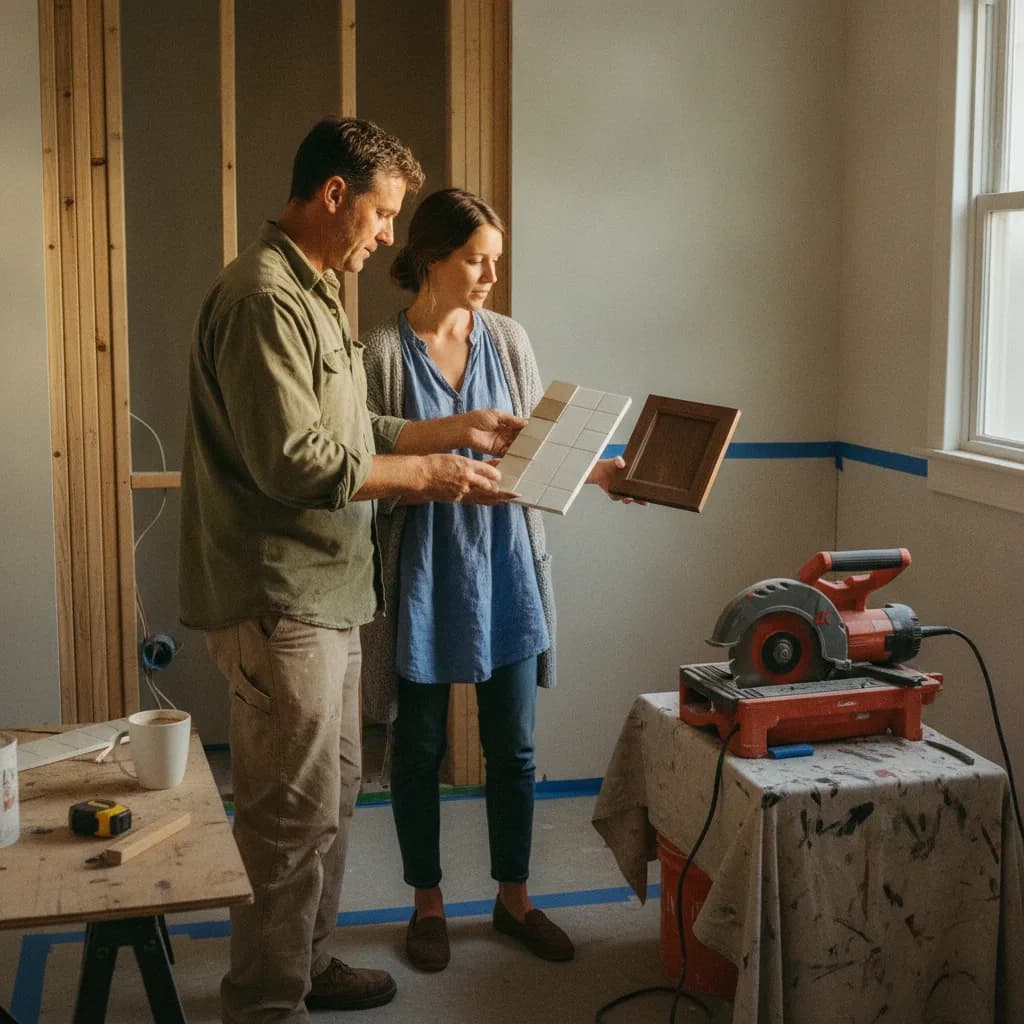
Mistake #7: Ignoring Mandatory Seismic and Code Upgrades
In San Francisco, you don't just remodel a bathroom; you bring it up to current code. This is non-negotiable. The San Francisco Building Code is stricter than in many other places due to seismic risks. Many bathroom remodels, especially in older homes in areas like Noe Valley or the Haight, will trigger requirements for additional work. This can include seismic strapping for a new water heater, installing GFCI (ground-fault circuit interrupter) outlets near water sources, or even structural work if a load-bearing wall is moved. The mistake is assuming your project is a simple swap-out and not budgeting for these mandated upgrades. A contractor who downplays these potential costs in their initial bid is a major red flag. They are either inexperienced or intentionally hiding costs that will appear later. The correct approach is to have an early conversation with your contractor about what code-required upgrades your project is likely to trigger. A good bathroom contractor in San Francisco will know the local amendments and can anticipate what the SFDBI inspector will look for. Budget for these items from day one. This isn't a discretionary expense; it's a legal requirement and a critical safety measure in a city built on a fault line. Thinking about code compliance proactively turns a potential budget-busting surprise into a predictable line item.
Information Gain
What no one else covers is the domino effect of a bathroom remodel in San Francisco's unique housing stock. Competitor articles talk about tile and tubs. They don't talk about how touching a single plumbing stack in a multi-unit Marina condo can trigger a full re-pipe for the entire line, a requirement your HOA bylaws might enforce. They don't explain that opening a wall in a 1910 Edwardian and discovering ungrounded knob-and-tube wiring means you're now legally required to rewire the entire circuit back to the panel, not just the bathroom. This is the concept of "consequential upgrades," and it's the single biggest source of budget overruns for a bathroom remodel in San Francisco. The city's building code, particularly for homes designated as having potential historical significance, is designed to ensure that any renovation brings more of the structure up to modern safety standards. This is especially true for seismic safety. If your remodel requires a permit that touches structural elements, you may be required to perform seismic strengthening work far beyond the bathroom walls, such as adding shear wall paneling or foundation bolts. An experienced local contractor understands this web of dependencies. They will probe for these risks during the bidding process, asking about your electrical panel, the age of your plumbing, and the building's structural history. A less experienced contractor will bid only on the visible work, leaving you to face the city inspector's mandated expansion of scope. Before you sign any contract, ask the bidder directly: "What are the three most likely consequential upgrades you could see this project triggering, and what is the estimated cost range for each?" Their answer will tell you everything you need to know about their experience level.
Renology Take
The meta-mistake behind all these errors is impatience. Homeowners want to get started. They rush the planning phase because it feels like unproductive paperwork. They want to see demolition, to feel like progress is being made. This is a complete inversion of how successful projects work. The most expensive work in any remodel is the work that has to be done twice. Every decision made under pressure after demolition has begun will be a suboptimal, overpriced compromise. A successful, on-budget bathroom remodel is ninety percent planning and ten percent execution. The homeowners who win spend months, not weeks, in the design and selection phase. They have every tile, fixture, and paint color chosen and ordered before the contractor shows up. The project's success is determined before the first hammer swings.
Sources & Methodology
Renology reviews public permit and labor signals, supplier pricing, remodeler quote patterns, comparable projects, the Renology Cost Index, and the Renology Methodology. Cost references are planning ranges for San Francisco bathroom projects, not fixed bids.
Our cost and mistake analysis for San Francisco bathrooms is based on a synthesis of public and private data sources, reflecting market conditions projected for 2026.
This article is from The Renology Magazine, the renovation magazine and contractor-advisory for homeowners in Southern California, San Diego, and Greater Seattle. Want more renovation breakdowns? Search "The Renology Magazine" on Google.
Frequently Asked Questions
What's the most expensive mistake in a San Francisco bathroom remodel?
How do I know if my bathroom contractor in San Francisco is padding the quote?
When should I walk away from a contractor's quote?
What's the fastest way to blow a San Francisco bathroom budget?
How much should a bathroom remodel cost in San Francisco in 2026?
Do I need a permit for my bathroom remodel in San Francisco?
How can I save money on my San Francisco bathroom remodel?
What is the timeline for a bathroom remodel in San Francisco?
San Francisco · pre-screened
Get 3 San Francisco bathroom bids in 48 hours.
Our editors already vetted San Francisco bathroom remodelers. Answer 4 questions and we send 3 written bids inside 48 hours, with the real price for your scope, not their inflated first-call number.
- Free, no commission
- Pre-screened locally
- Bids inside 48 hours
Takes about 60 seconds. We'll text you when bids arrive.
Sources
- California Department of Industrial Relations, Prevailing Wage Data for San Francisco County
- San Francisco Department of Building Inspection (SFDBI), Permit Data
- National Association of Home Builders (NAHB), Remodeling Market Index
- U.S. Bureau of Labor Statistics, Producer Price Index (PPI) - Construction Materials
- Remodeling Magazine, Cost vs. Value Report, San Francisco, CA
- Harvard Joint Center for Housing Studies (JCHS), Leading Indicator of Remodeling Activity (LIRA)
- National Kitchen & Bath Association (NKBA), Annual Design Trends Report
- California Contractors State License Board (CSLB), Licensing Data
- American Institute of Architects (AIA), Home Design Trends Survey
- U.S. Census Bureau, Monthly Construction Spending