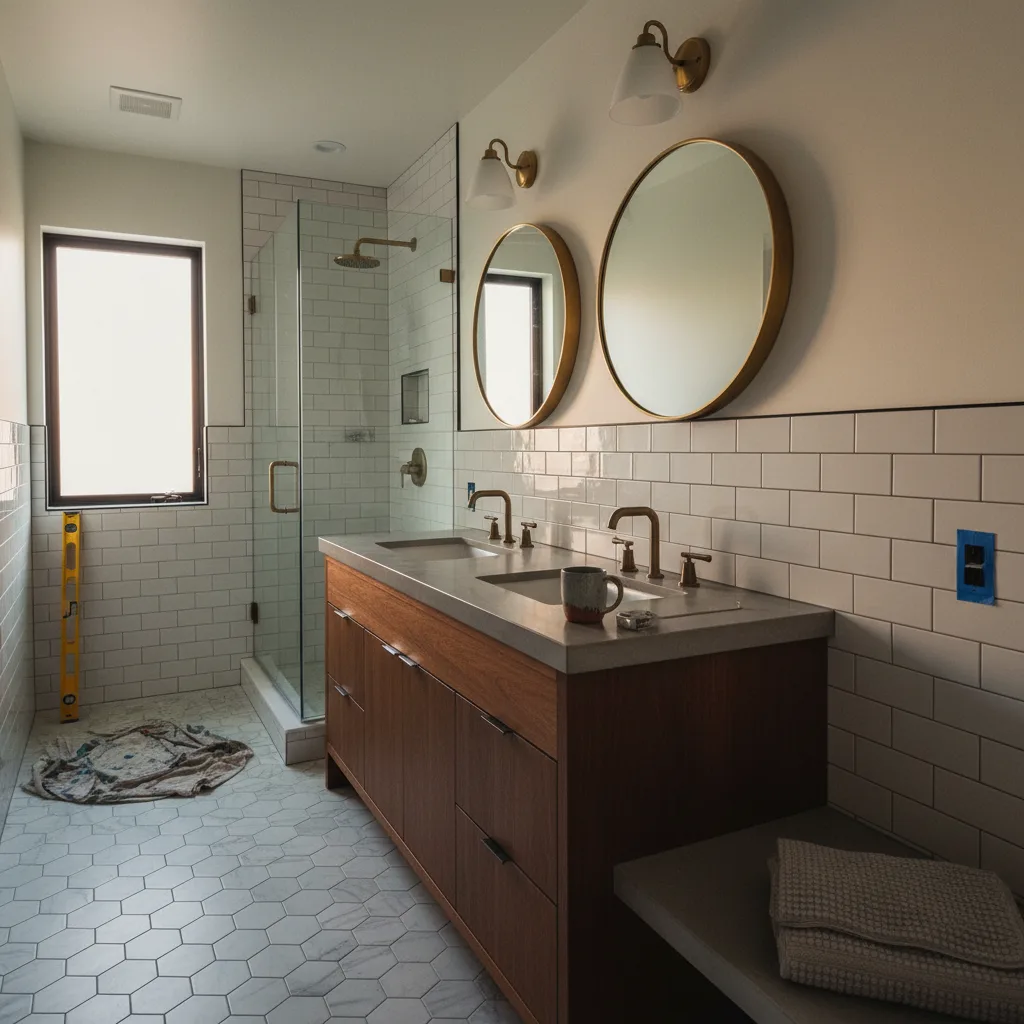
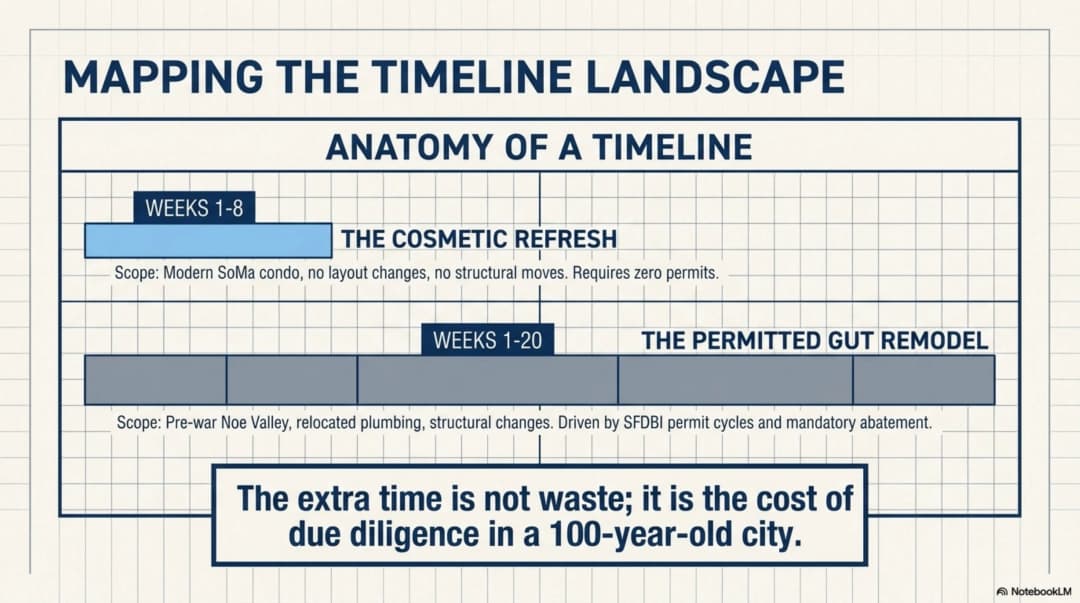
A full gut bathroom remodel in San Francisco takes 12 to 20 weeks, start to finish. I'm talking permits, demo, and final polish. Timelines can start lower, around six to eight weeks, for a cosmetic refresh in a modern SoMa condo with no layout changes. But for most pre-war homes in neighborhoods like Noe Valley, the biggest delay isn't materials or labor. It's the San Francisco Department of Building Inspection (SFDBI) plan review process, especially if your building has a whiff of historic character. Assume the city will take its time. Plan for it. A proper bathroom san francisco remodel is a marathon, not a sprint.
In a Nutshell
- Total Timeline: 12, 20 weeks for a full, permitted remodel.
- Key Phases: Design & Permits; Demolition & Abatement; Rough-In & Inspection; Finishes & Final.
- Biggest Delay Risk: Permit review cycles at SFDBI, and discovering structural rot or knob-and-tube wiring behind walls.
- Contingency Fund: The National Association of Home Builders recommends a ten to fifteen percent contingency fund. In San Francisco's older homes, I tell clients to budget a firm twenty percent.
Phase 1: Design and Permits (Weeks 1, 6)
This is the paper phase. Nothing happens on site, but the entire project is decided here. Your architect or designer draws up the plans, ensuring they comply with California's Title 24 energy code and local seismic standards. You, the owner, select every fixture, tile, and finish. This is when your scope-lock date is set; it's the point of no return for changes. A good bathroom contractor in San Francisco will have a permit expediter who knows the SFDBI system inside and out. Common holdups include incomplete submittals getting kicked back by the city or plans for older buildings triggering a historic preservation review. If you're moving a load-bearing wall, expect to add weeks for structural engineering before you can even submit. This phase ends when the permit is in hand.
Phase 2: Site Prep and Demolition (Weeks 7, 8)
Work begins. The contractor's crew installs dust barriers and floor protection to contain the mess. Then, demolition starts. For any home built before 1978, this phase must include testing for lead paint and asbestos by a certified abatement specialist. This isn't optional; it's California law. The biggest risk here is the unknown. Once the walls are open, we might find corroded galvanized supply lines, active knob-and-tube remnants, or dry rot in the floor joists from a slow leak. Discoveries like that stop the job cold. It means a revised plan, a change order, and possibly a trip back to the city for a permit revision. Utility shutoffs are carefully coordinated with PG&E and the San Francisco Public Utilities Commission (SFPUC).
Phase 3: Framing and Rough-In (Weeks 9, 11)
With the room stripped to the studs, the rebuild starts. Carpenters re-frame walls and build out any new structures like shower niches or pony walls. Then the trades arrive in a specific sequence. Plumbing goes first, laying new supply and drain lines. Electrical is next, running new circuits for lights, outlets, and the fan. Finally, mechanical for the ventilation ducting. Each trade's work must be inspected and signed off by a city inspector before anything can be covered up. The inspection card posted on site tells the story. A passed rough-in inspection means the bones of the project are sound and the load path is correct. You cannot proceed to drywall until you have those signatures. This is a critical checkpoint for all san francisco bathrooms.
Phase 4: Finishes and Final Inspection (Weeks 12, 16)
3 San Francisco bathroom remodelers, editor-screened. 4 questions.
See my 3 matchesAfter the rough-in inspections are cleared, the walls get closed. This involves insulation, vapor barriers, and moisture-resistant drywall. In the wet areas, waterproofing is everything. A full membrane system like Schluter-KERDI is the standard for a job built to last. Then comes the visible progress: tile installation, grouting, painting, and setting the vanity and toilet. Electricians return to install lights and switches, and the plumber sets the faucets and shower trim. The final step is the final inspection from SFDBI. The inspector verifies GFCI protection, ventilation rates, and fixture operation. A passing grade gets you a Certificate of Final Completion. The project is officially done. This is the moment every homeowner and bathroom contractor in San Francisco works toward.
Three Representative Projects from 2026
Three modeled project scenarios for 2026, built from the Renology Cost Index and typical local scopes. These are illustrative estimates, not completed client projects:

- Pacific Heights Master Bath: A full gut and expansion in a 1920s Edwardian. 180 sq ft. Relocated all fixtures, added a steam shower, and installed a custom floating vanity. Required structural engineering and extensive historic review. Total cost: $115,000. Total timeline: 22 weeks.
- Sunset District Guest Bath: Mid-range gut remodel in a 1950s row house. 60 sq ft. Kept the existing layout, replacing all fixtures, tile, and vanity. Dealt with corroded galvanized supply lines found during demo. The total bathroom cost in San Francisco came to $48,000. Total timeline: 14 weeks.
- SoMa Condo Powder Room: A cosmetic refresh in a modern high-rise. 30 sq ft. New vanity, toilet, faucet, lighting, and paint. No permits were required as the footprint was unchanged. Total cost: $15,000. Total timeline: 4 weeks (two of which were waiting for the vanity to arrive).
What Can Compress This Timeline
The homeowner who saves six weeks does three things before signing. First, they lock the scope. Every change order after demolition starts is a two-week delay, minimum. Don't decide on tile after the walls are open. Decide on it before the permit is even filed. Second, they order every single finish material, from the tub to the towel bars, and have it sitting in the garage before the first hammer swings. Supply chain delays are real; don't let a backordered faucet hold up your entire project. Third, they hire a design-build firm. One contract, one point of responsibility. The architect and builder are on the same team from day one, not pointing fingers when a problem arises.
What Blows It Up
Three things kill a San Francisco bathroom remodel schedule. One: surprises in the walls. Unreinforced masonry, active knob-and-tube wiring, or major pest damage means a full stop for engineering and revised permits. This is common in the city's beautiful but old housing stock. Two: Historic Preservation review. If your building is a landmark or in a conservation district, the city gets a say on everything, adding months of review. Three: Neighbors. In a condo or attached home, access issues, HOA approvals, and noise complaints can cause serious delays. The National Association of Home Builders recommends a ten to fifteen percent contingency on renovations in homes over thirty years old. In San Francisco, I advise my clients to make it twenty percent.
What Should Be in Your Contractor's Schedule
A real schedule isn't a guess. It's a document that outlines the critical path. Demand these line items from any bathroom contractor you're considering. It shows they've thought through the logistics of building in a tough city.
- Scope-lock date
- Permit submission date
- Permit issuance date (target)
- Material order deadlines and expected delivery dates
- Demolition start date
- Rough plumbing inspection date
- Rough electrical inspection date
- Close-wall date (post-inspection)
- Tile start date
- Final inspection date (target)
For a deeper dive on the city process and what to expect from the paperwork, see our permit playbook.
Renology Take
The internet is full of "six-week bathroom remodel" stories. Those aren't happening in San Francisco, not for a real remodel. That marketing timeline ignores the six weeks of design and permitting upfront. It assumes you have a new-build home with perfect framing and no surprises. The reality for most san francisco bathrooms is a four-month project. The extra time isn't waste; it's the cost of due diligence. It's for navigating a tough permit office, for properly abating hazards in a 100-year-old home, and for building something that will pass inspection and last another fifty years. Don't rush the parts that matter. A solid foundation, a correct rough-in, and perfect waterproofing are what separate a good job from a disaster waiting to happen.
Sources & Methodology
Renology reviews public permit and labor signals, supplier pricing, remodeler quote patterns, comparable projects, the Renology Cost Index, and the Renology Methodology. Cost references are planning ranges for San Francisco bathroom projects, not fixed bids.
- San Francisco Department of Building Inspection (SFDBI) Permit Services, 2026
- California Department of Industrial Relations, Prevailing Wage Determinations for San Francisco County, 2026
- National Kitchen & Bath Association (NKBA) 2026 Design Trends Report
- Remodeling Magazine, 2026 Cost vs. Value Report, Pacific Region
- National Association of Home Builders (NAHB) Housing Market Index, 2026
- Renology Project of the Day Network, San Francisco Data, 2025-2026
Frequently Asked Questions
How long does a bathroom remodel in San Francisco really take?
Can I live in the home during construction?
What's the longest single phase in a San Francisco bathroom remodel?
Can I fast-track the permits in San Francisco?
San Francisco · pre-screened
Get 3 San Francisco bathroom bids in 48 hours.
Our editors already vetted San Francisco bathroom remodelers. Answer 4 questions and we send 3 written bids inside 48 hours, with the real price for your scope, not their inflated first-call number.
- Free, no commission
- Pre-screened locally
- Bids inside 48 hours
Takes about 60 seconds. We'll text you when bids arrive.
Sources
- San Francisco Department of Building Inspection (SFDBI) Permit Services
- California Department of Industrial Relations, Prevailing Wage Determinations for San Francisco County
- National Kitchen & Bath Association (NKBA) 2026 Design Trends Report
- Remodeling Magazine, 2026 Cost vs. Value Report, Pacific Region
- National Association of Home Builders (NAHB) Housing Market Index
- Renology Project of the Day Network, San Francisco Data