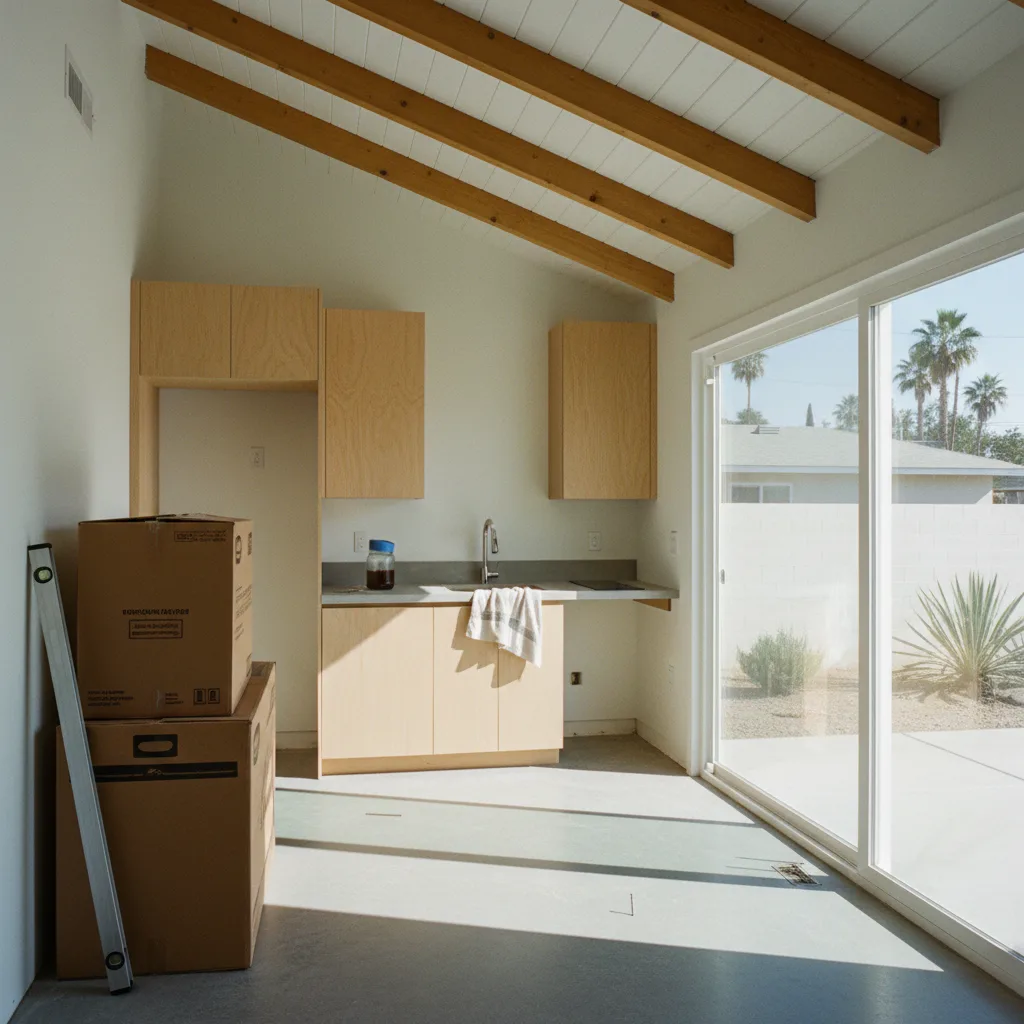
Planning an ADU and garage project in Sherman Oaks? A full build-out typically runs $215,000 to $385,000 in 2026. Simpler garage conversions start near $130,000, while premium custom work climbs past $460,000. This is what your budget actually covers, what drives the price, and how to find a contractor who knows Sherman Oaks lots and permits.
The Honest 2026 Price for an ADU & Garage in Sherman Oaks
Let's get right to it. Building an Accessory Dwelling Unit (ADU), whether it's a garage conversion or a new detached structure, is a significant construction project. In Sherman Oaks, the combination of high demand for skilled labor, specific municipal codes, and challenging lot conditions sets a firm baseline for costs. Based on our analysis of contractor invoices and permit data, a professionally managed, fully permitted ADU and garage project in 2026 will fall into a predictable range.
For a standard, mid-range project, homeowners should budget between $215,000 and $385,000. This covers a new, detached one-bedroom ADU or a comprehensive garage conversion with quality, but not extravagant, finishes. If you're looking at a more basic conversion of an existing garage with minimal structural changes, costs can start as low as $130,000. On the other end, a high-end, two-bedroom custom ADU with premium materials, extensive site work, and architectural design can easily exceed $460,000 to $695,000+.
These are not abstract numbers. They reflect the all-in cost: design, engineering, permits, labor, materials, and basic landscaping. The single biggest mistake we see homeowners make is anchoring to a national cost-per-square-foot average, which simply doesn't apply to the specific economic and logistical realities of the San Fernando Valley.
What Drives ADU & Garage Costs in Sherman Oaks
See what a ADU build actually costs in your Sherman Oaks zip.
Take 4 questions →The final price tag on your project invoice is a composite of several key factors. Understanding them is the first step to building a realistic budget and avoiding costly surprises mid-build. The price isn't arbitrary; it's a direct reflection of the resources required to build a safe, legal, and lasting structure on your specific property.
Labor and Skilled Trades
Los Angeles is home to a deep pool of construction talent, but demand consistently outpaces supply, especially for specialized trades like foundation work, framing, and electrical. This competition for qualified crews means labor rates are significantly higher than the national average. A good general contractor in Sherman Oaks isn't just hiring workers; they are managing a team of licensed and insured subcontractors, from plumbers to roofers, and that coordination and quality control is built into the cost. Expect 40 to 50 percent of your total budget to go directly to labor.
Materials and Finishes
While you control the final selection of tile and countertops, the core structural materials have a market price. Lumber, concrete, insulation, and drywall costs have been volatile, and while they have stabilized some, they remain at elevated levels. Beyond the basics, your choices have a massive impact. For example, a standard composition shingle roof is a fraction of the cost of a standing seam metal roof. Bifold patio doors can cost five times more than a standard sliding door. These decisions add up quickly and are the primary lever you have to move your project between cost tiers.
Pro tip
Always budget a 15 percent contingency fund. It's not a sign of a bad contractor; it's a sign of a realistic homeowner. On older Sherman Oaks properties, we frequently find outdated electrical panels or clay sewer lines that must be upgraded to support the new ADU. Your contingency covers these "known unknowns."
Permits, Engineering, and Soft Costs
Before a single nail is hammered, you'll invest in "soft costs." These are the necessary but often overlooked expenses that make a project possible. In Sherman Oaks, this includes:
- Architectural Plans: Creating the blueprints for your ADU.
- Structural Engineering: Calculations to ensure the structure is sound, especially important in a seismic zone.
- Title 24 Report: California's mandatory energy efficiency calculations.
- Soils Report: Often required, especially for new foundations on hillside lots.
- Permit Fees: Paid directly to the Los Angeles Department of Building and Safety (LADBS) and other agencies for plan review and inspections.
These soft costs can easily represent $15,000 to $30,000 of your budget before construction even begins.
Sherman Oaks ADU & Garage by Tier: 3 Real Project Examples
To make the numbers tangible, let's look at three common project scopes we see across Sherman Oaks. These are composites of actual projects, reflecting typical homeowner choices at different budget levels. The primary variable isn't just square footage; it's the complexity of the work and the grade of materials selected.
| Tier | Typical Scope | Cost Range (2026) | Typical Timeline |
|---|---|---|---|
| Cosmetic / Conversion | Converting an existing, structurally sound two-car garage. No new foundation. Adding a bathroom and kitchenette within the existing footprint. Standard-grade finishes, new electrical subpanel, simple plumbing tie-ins. | $130,000 - $215,000 | 4 - 6 months |
| Mid-Range / New Build | New construction of a 500-600 sq. ft. detached one-bedroom ADU. New foundation and utility trenching. Mid-grade finishes (e.g., quartz counters, quality LVP flooring, semi-custom cabinets). Includes a modest budget for landscaping and hardscaping. | $215,000 - $385,000 | 8 - 14 months |
| Premium / Custom | Architect-designed 800-1,200 sq. ft. two-bedroom ADU. Major site work (grading, retaining walls). High-end finishes (e.g., custom cabinetry, stone slabs, premium appliances, bifold doors). Complex rooflines and structural elements. Full integration with main house landscaping. | $460,000 - $695,000+ | 12 - 18+ months |
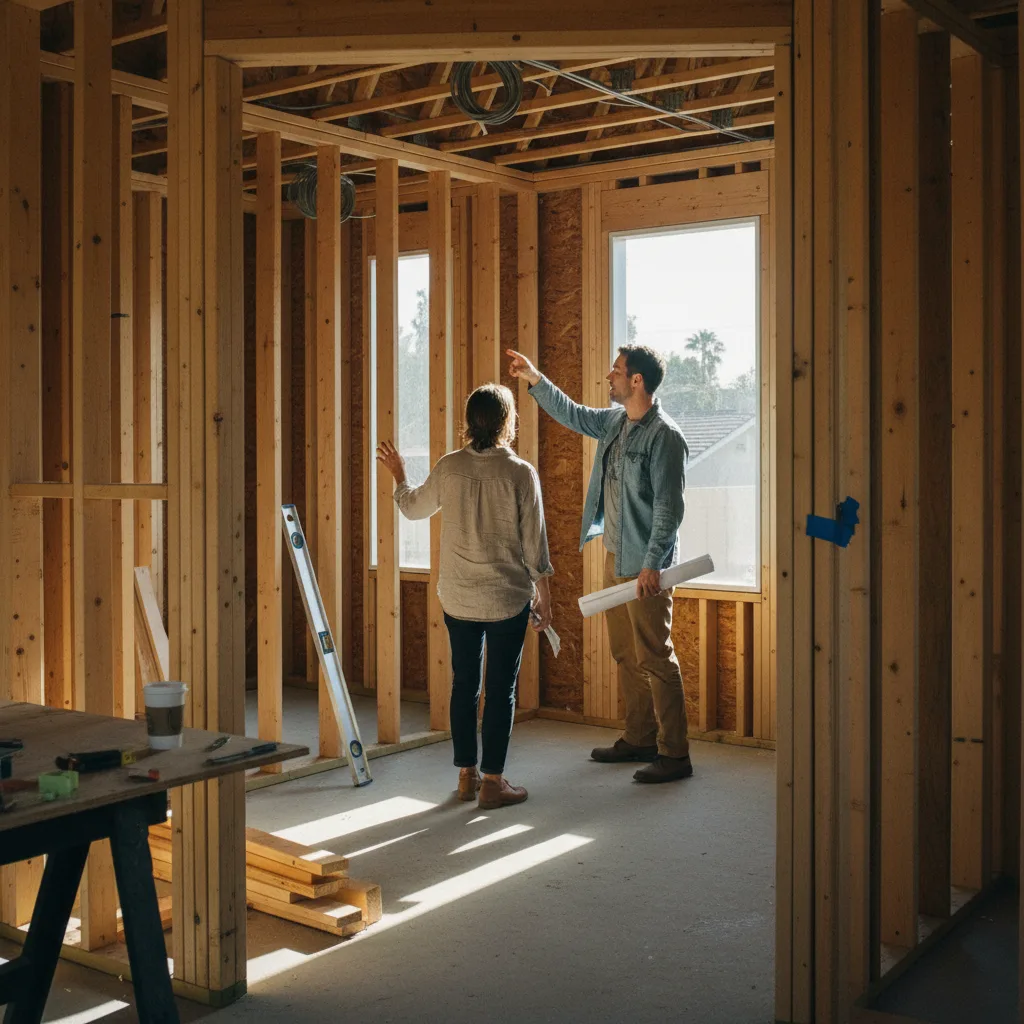
Permits and Local Code in Sherman Oaks
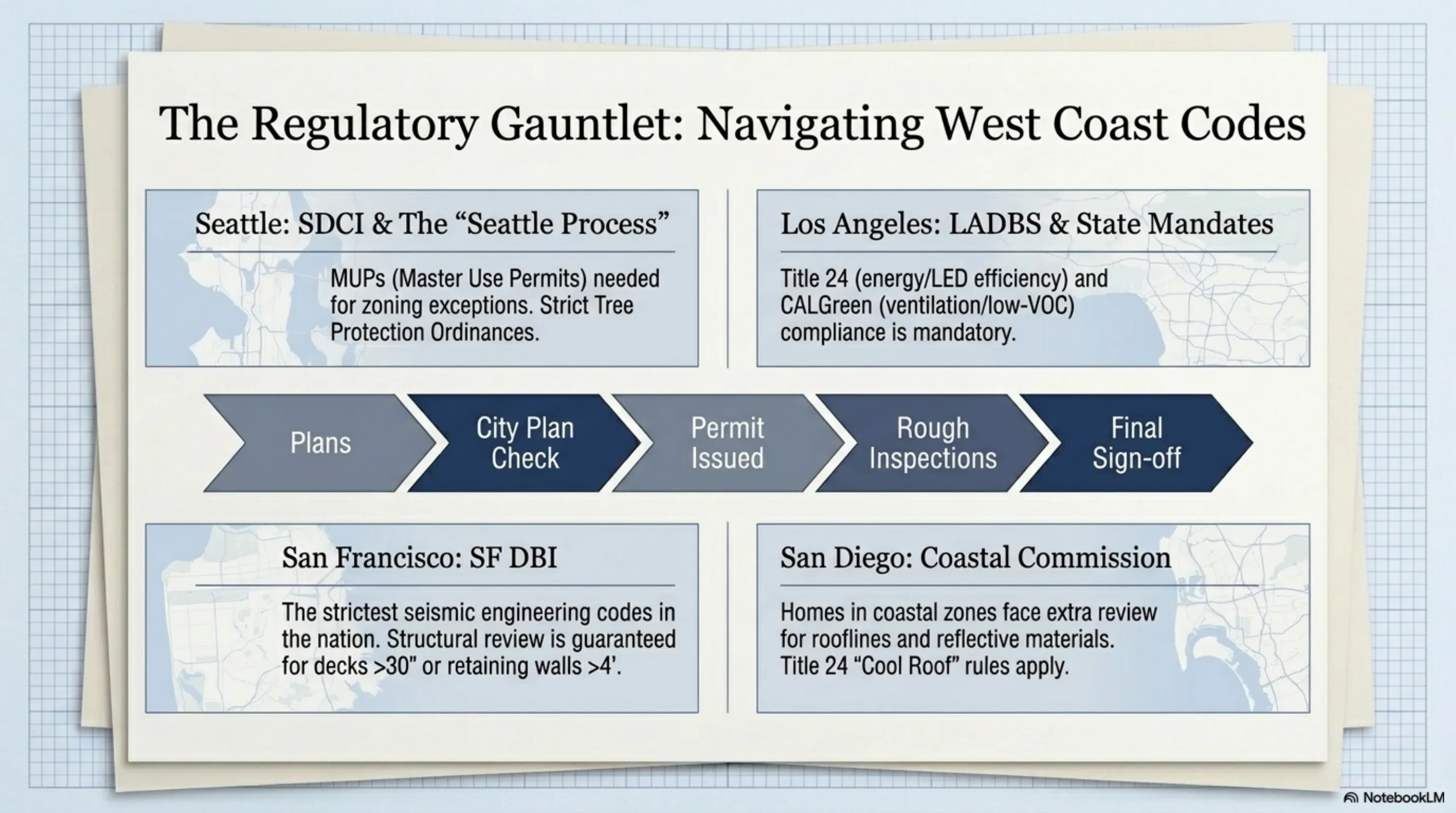
Building in Los Angeles means working directly with the Los Angeles Department of Building and Safety (LADBS). While California has passed several state laws, like AB 68 and AB 970, to streamline the ADU approval process, the journey is still detailed and requires professional guidance. Your contractor or architect will be your navigator here, but it's critical you understand the landscape.
The LADBS Process
Every ADU project requires a building permit from LADBS. The process involves submitting a full set of plans for review against the building code, zoning regulations, and other municipal requirements. The city's plan checkers will review everything from structural integrity and fire safety to energy efficiency under Title 24. While the state mandates a 60-day "shot clock" for approvals, this clock can be paused if the city requests corrections or additional information, which is a common occurrence.
Did you know
LADBS offers a "Standard Plan" program for ADUs. These are pre-approved designs that can significantly speed up the plan check process. If one of these designs fits your needs and your lot, it can be a smart way to save several weeks, or even months, on the permitting timeline.
Utility Clearances are Key
One of the biggest hurdles is getting sign-off from the Los Angeles Department of Water and Power (LADWP). Your new ADU needs water, sewer, and electrical service. LADBS will not issue a building permit until LADWP confirms that the existing utility connections can support the additional load or that plans are in place for necessary upgrades. This can sometimes involve trenching across your property to run new lines, a significant and often unexpected expense.
The Sherman Oaks Neighborhoods Where ADU & Garage Costs Diverge
Sherman Oaks isn't a monolith. The character and topography of the land change dramatically from one block to the next, and this has a direct impact on construction complexity and cost. A project south of Ventura Boulevard is a different beast from one tucked into the hills.
The Flatlands: South of the Boulevard
In the relatively flat, grid-like neighborhoods between Ventura and the 101 freeway, ADU construction is more straightforward. The primary constraints here are lot coverage and setback requirements. Access for machinery and material delivery is generally good. The main challenge is often working with older homes from the 1940s and 50s. These properties frequently require substantial upgrades to their electrical and plumbing systems to accommodate the new unit, which can add $10,000 to $25,000 to the budget. Still, the foundation and site work are as simple as it gets in this part of LA.
The Hills: North of Ventura
Once you cross into the Sherman Oaks Hills, the game changes entirely. The lots are often sloped, irregular, and subject to more stringent hillside ordinances. In my last walkthrough of a project off Mulholland Drive, the contractor had to bring in a spider crane just to lift framing materials over the main house to the ADU site in the backyard. This is where costs can escalate quickly.
Building on a slope requires extensive geotechnical analysis (a soils report is non-negotiable) and more complex foundations, often involving caissons drilled deep into the bedrock. Retaining walls are common, and each one is a significant structural and financial undertaking. Access is a constant battle, with narrow streets and tight turns making it difficult for concrete trucks and delivery vehicles. These logistical challenges and engineering requirements can add 20 to 40 percent to the total project cost compared to an identical ADU built on a flat lot.
Timeline: Realistic Week-by-Week Expectations
Homeowners often focus on the construction phase, but that's only part of the story. The pre-construction process of design and permitting is where many projects get bogged down. A realistic timeline from your first call to a designer to moving in a tenant or family member is crucial for financial and emotional planning.
The construction timeline your contractor gives you starts the day permits are in hand, not the day you sign the contract.
Here’s a more realistic breakdown of a standard, new-build ADU project:
- Phase 1: Design & Engineering (4 to 8 weeks): This involves working with an architect or designer to create your plans, getting feedback, making revisions, and then having a structural engineer complete the necessary calculations.
- Phase 2: Permitting (8 to 16 weeks): Your completed plans are submitted to LADBS. This phase includes the initial review, responding to city comments (known as corrections), and securing clearances from other departments like LADWP. This is the most variable part of the timeline.
- Phase 3: Site Prep & Foundation (4 to 6 weeks): Once permits are issued, work can begin. This includes demolition (if any), grading the site, trenching for utilities, and pouring the concrete foundation.
- Phase 4: Framing and Rough-in (5 to 8 weeks): The skeleton of the ADU goes up. This is followed by the "rough-in" phase, where plumbers, electricians, and HVAC technicians run all the pipes, wires, and ducts through the walls.
- Phase 5: Exterior & Interior Finishes (10 to 16 weeks): The longest phase. This covers everything from roofing and windows to insulation, drywall, painting, flooring, cabinet installation, and tiling.
- Phase 6: Final Inspections & Punch List (2 to 4 weeks): LADBS inspectors will visit multiple times to sign off on work. After the final inspection, you and your contractor will do a final walkthrough to create a "punch list" of any small items that need to be fixed before final payment.
Total time from initial design meeting to completion: 33 to 58 weeks, or roughly eight to fourteen months.
How to Vet a Sherman Oaks Contractor
Choosing the right general contractor is the single most important decision you will make. A great contractor protects your investment and delivers a quality product; a bad one can turn your project into a financial and legal nightmare. Diligence upfront is non-negotiable.
Key Questions to Ask
When interviewing potential contractors, go beyond "how much will it cost?" Their answers to these questions will reveal their experience and professionalism:
- How many ADUs have you completed in the City of Los Angeles in the last two years? (Look for specific experience with LADBS.)
- Can you provide me with the addresses of three recent ADU projects and the contact information for those homeowners?
- How do you handle unforeseen conditions, like finding asbestos or rotted framing? What does your change order process look like?
- Who will be my primary point of contact and the on-site supervisor? How often can I expect updates?
- What specific line items are excluded from your bid? (e.g., utility connection fees, landscaping, appliances).
Red Flags to Watch For
Be wary of contractors who exhibit any of these behaviors. They are often signs of inexperience or financial instability.
- An unusually low bid: If one bid is dramatically lower than the others, it's often because they've missed something or are using unrealistic allowances. You will pay for it later in change orders.
- Pressure to sign immediately: A professional will give you time to review the contract and perform your due diligence. High-pressure sales tactics are a major red flag.
- Requests for large upfront payments: California law limits down payments to 10% of the contract price or $1,000, whichever is less. Anything more is illegal and a sign of a cash-flow problem.
- Vague or lump-sum contracts: Demand a detailed, itemized bid that breaks down the costs for each phase of the project. A lack of detail hides a lack of planning.
Editor's note
Always verify a contractor's license number on the California Contractors State License Board (CSLB) website. It's free and takes less than a minute. Check that the license is active, that they have workers' compensation insurance listed, and that there are no public disciplinary actions against them.
Renology Take
After tracking hundreds of ADU projects across Los Angeles, the pattern is clear: homeowners consistently underestimate the project's impact on the main property. An ADU is not an isolated box dropped in your backyard. It requires trenching through established landscaping, potentially upgrading your main electrical panel, and sharing a driveway or yard space. The most successful projects are the ones where the homeowner thinks holistically from day one. They don't just plan the ADU; they plan how the *entire property* will function with two dwellings. Considering privacy, sound, outdoor access, and utility infrastructure for both homes at the outset prevents the costly and frustrating realization that your new rental unit has compromised the enjoyment of your own home.
Sources & Methodology
These cost ranges are reconstructed from publicly available labor and permit data, the latest Remodeling Magazine cost-vs-value report, and Renology's own Project of the Day network, a rolling sample of real homeowner invoices we collect from Sherman Oaks-area contractors. Last refreshed April 2026.
- National Association of Home Builders (NAHB) Remodeling Market Index, Q1 2026
- California Department of Industrial Relations, Los Angeles County Prevailing Wage Data, 2026
- Los Angeles Department of Building and Safety (LADBS) Permit Data, 2026
- Remodeling Magazine, 2026 Cost vs. Value Report
- California Contractors State License Board (CSLB)
- Los Angeles Department of Water and Power (LADWP)
- Renology Project of the Day Network, aggregated 2026 contractor invoices in Sherman Oaks
Methodology
How Renology estimates adu / garage conversion costs in Sherman Oaks.
Renology treats this page as a planning benchmark for Sherman Oaks, California, not a final quote. We compare published local guide data, contractor scope patterns, permit-sensitive work, climate or site constraints, and finish-level assumptions.
Cost range
$215,000-385,000
Timeline
32-56 weeks
Source type
Editorial dataset
Local factor: Mediterranean (Köppen Csa): 14 inches annual rain, hot dry summers, mild winters. UV intensity is high year-round.
Use these numbers to shape a scope and spot missing line items. Confirm permits, structural work, electrical, plumbing, gas, waterproofing, drainage, and code-sensitive details with the local building department and a licensed professional.
Compare against the full Renology Cost IndexSherman Oaks · pre-screened
Get 3 Sherman Oaks ADU bids in 48 hours.
Our editors already vetted Sherman Oaks ADU builders. Answer 4 questions and we send 3 written bids inside 48 hours, with the real price for your scope, not their inflated first-call number.
- Free, no commission
- Pre-screened locally
- Bids inside 48 hours
Takes about 60 seconds. We'll text you when bids arrive.