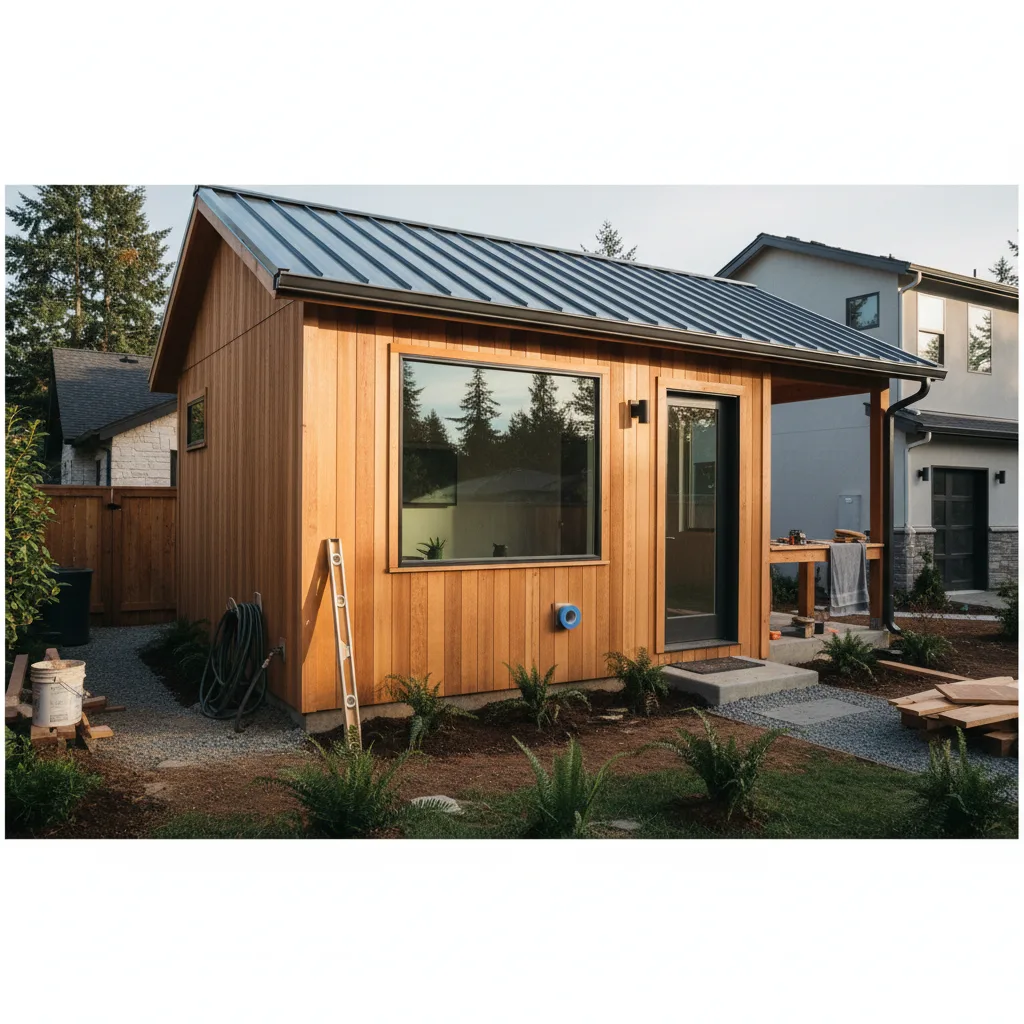
Planning an ADU and garage project in Encino? A full build-out typically runs $215,000 to $385,000 in 2026. Cosmetic garage conversions start near $130,000, while premium custom work climbs past $460,000. Here is what that budget actually covers, what drives the price, and how to find a contractor who gets it right in the Valley.
The Honest 2026 Price for an ADU & Garage in Encino
Let's get straight to the point. Building an Accessory Dwelling Unit (ADU), whether it's a garage conversion or a new detached structure, is a significant construction project. In Encino, you are not just building a small house; you are navigating specific lot constraints, demanding building codes, and a high-cost labor market. As the structural editor at Renology, I review project invoices from across the city. The numbers do not lie, and they often surprise homeowners who start their journey with national cost estimators.
For 2026, the realistic, all-in cost for a professionally managed ADU and garage project in Encino settles between $215,000 and $385,000. This range covers a quality, turn-key unit built to code. Simple garage conversions with existing foundations can land on the lower end, around $130,000, but these are rare and assume the structure is in excellent shape. On the other end, a custom, two-story ADU with premium finishes and complex site work can easily push past $460,000, sometimes reaching $695,000 or more for architecturally significant designs on challenging lots.
These are not abstract figures. They reflect the real-world cost of permits, foundational work, skilled labor, and mid-grade materials that can withstand the San Fernando Valley's climate. Understanding the components of this cost is the first step to a successful project that adds lasting value to your property.
What Drives ADU & Garage Costs in Encino
See what a ADU build actually costs in your Encino zip.
Take 4 questions →The final price tag on your invoice is a direct result of local economic and geographic realities. A project in Encino is fundamentally different from one in a lower-cost market. The primary drivers are labor, materials, site conditions, and the non-negotiable costs of regulatory compliance.
### Labor: The Valley Premium
Skilled trade labor is the single largest component of your budget, often accounting for 40 to 50 percent of the total cost. Los Angeles, and the Valley in particular, has a high demand for experienced framers, electricians, and plumbers who are familiar with local codes. According to the California Department of Industrial Relations, prevailing wages for these trades are among the highest in the state. You are paying for expertise, reliability, and the contractor's overhead, which includes insurance, licensing, and project management. A low-ball labor quote is often a red flag for an unlicensed or uninsured operator.
### Materials and Finishes
While you have some control here, certain material costs are fixed. Lumber, concrete for the foundation, and Title 24-compliant windows and insulation have market prices that fluctuate but remain high. Where you can influence the budget is in the finishes:
- Flooring: Luxury vinyl plank (LVP) is a durable, cost-effective choice, while engineered hardwood or custom tile will increase the budget significantly.
- Cabinetry: Stock or semi-custom cabinets from a big-box store are the baseline. Fully custom millwork can add tens of thousands of dollars.
- Fixtures: Faucets, lighting, and hardware can range from a few thousand dollars for the entire project to that much for a single designer faucet.
### Site Conditions and Lot Constraints
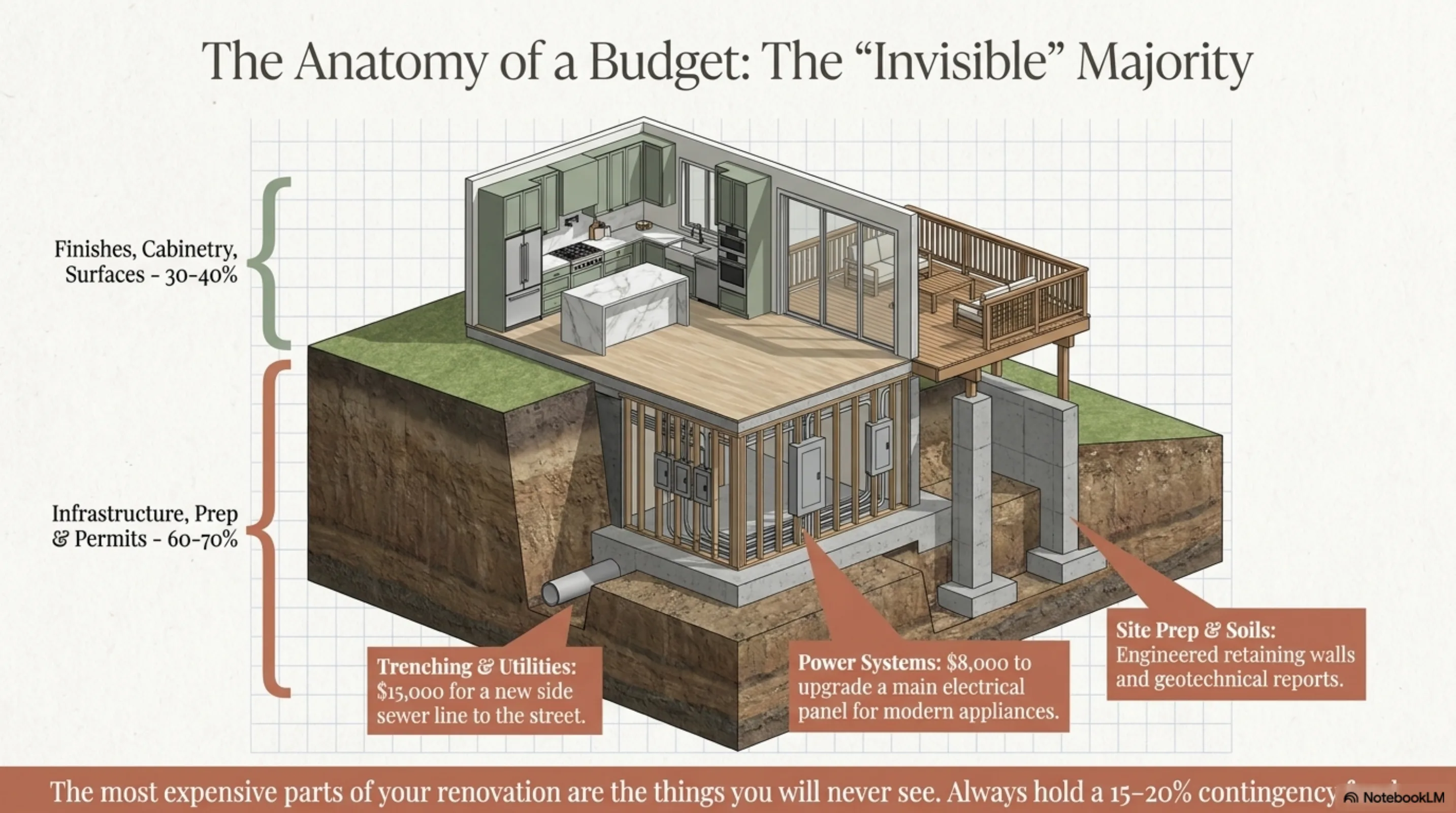
This is where many budgets break. Your lot's specific characteristics dictate a huge portion of the cost before a single wall goes up. Is your property on a hillside south of Ventura Boulevard? Expect to pay for a soils report, structural engineering for retaining walls, and increased labor costs for difficult access. Is your main sewer line located at the front of the house, far from the proposed ADU in the backyard? Trenching and connecting utilities can add $10,000 to $25,000 unexpectedly. These are the pragmatic, on-the-ground issues that a good contractor will identify early.
The cost of your ADU is determined by the land long before you pick out the countertops.
Encino ADU & Garage by Tier: Three Real Project Examples
To make the numbers tangible, I've outlined three common project scopes we see in Encino, based on aggregated invoice data from the Renology network. These represent real-world scenarios, from a basic conversion to a high-end custom build. The timelines reflect active construction after permits are approved.
| Tier | Scope of Work | Cost Range (2026) | Timeline |
|---|---|---|---|
| Cosmetic / Conversion | Converting an existing, structurally sound garage. Includes new drywall, insulation, electrical panel upgrade, adding a bathroom with standard fixtures, basic kitchenette (no gas line), and Title 24 compliant windows/door. Assumes foundation and framing are solid. | $130,000 - $215,000 | 16-24 weeks |
| Mid-Range / Standard Build | New construction of a detached 500-750 sq. ft. one-bedroom ADU. Includes new foundation, standard wood framing, stucco exterior, composition shingle roof, mid-grade LVP flooring, semi-custom cabinets, quartz countertops, and all new utility hookups (sewer, water, electric). | $215,000 - $385,000 | 32-56 weeks |
| Premium / Custom | Architect-designed 1,000-1,200 sq. ft. two-bedroom ADU, potentially two-story over a new garage. Includes significant site work, high-end finishes (hardwood floors, custom cabinetry), premium appliances, bifold doors, and complex rooflines. May involve hillside construction or extensive landscaping. | $460,000 - $695,000+ | 50-70 weeks |
Pro tip
The "Cosmetic" tier is tempting, but most garages in Encino, especially those from the 1950s and 60s, require a new foundation slab and significant framing upgrades to meet current seismic and building codes. What starts as a conversion often becomes a near-total rebuild.
Permits and Local Code in Encino
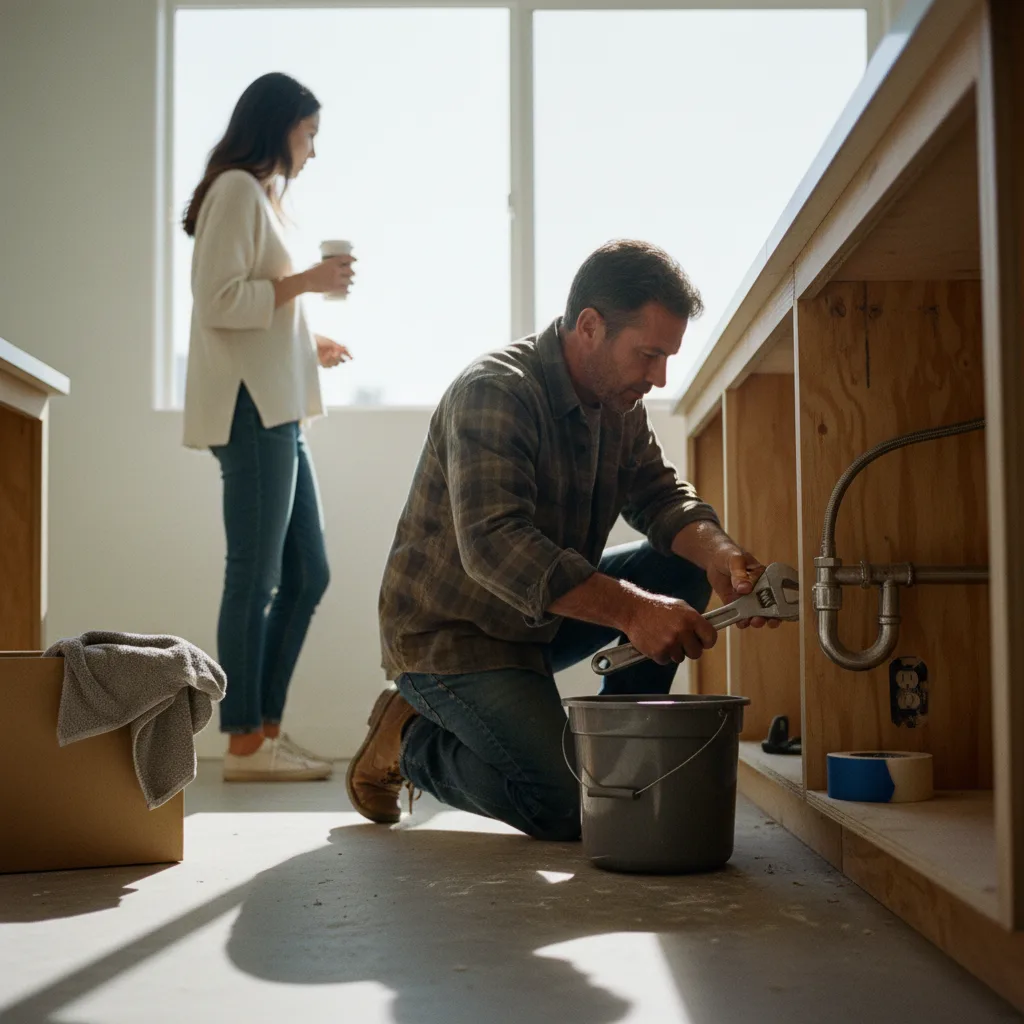
Every construction project lives and dies by the permit. In Encino, you are under the jurisdiction of the Los Angeles Department of Building and Safety (LADBS). While California state laws like AB 68 have streamlined the approval process for ADUs, you are still facing a rigorous plan check and inspection schedule. Your contractor's familiarity with the LADBS process is critical.
### The LADBS Plan Check
Before any work begins, your architectural and structural plans must be submitted to LADBS for review. They will check for compliance with the California Building Code, local zoning ordinances, and especially California's Title 24 energy code. Title 24 dictates everything from the R-value of your insulation to the efficiency of your water heater and lighting. Using an architect or designer who specializes in Los Angeles ADUs can prevent months of back-and-forth with the city's plan checkers.
Did you know
LADBS offers pre-approved "Standard Plans" for ADUs, which can significantly speed up the permitting timeline. If one of these designs fits your needs and lot, it can cut the plan check phase from months to weeks.
### Inspections and Sign-Offs
Once your permit is issued, a city inspector will visit your site at multiple key stages of construction. These include:
- Foundation and Footings: Before concrete is poured.
- Framing and Shear Walls: After the structure is up but before insulation and drywall.
- Rough Electrical, Plumbing, and Mechanical: Before the walls are closed.
- Final Inspection: For the Certificate of Occupancy.
A failed inspection can halt work for days or weeks. An experienced Encino contractor knows what inspectors are looking for and builds to exceed code, not just meet it.
The Encino Neighborhoods Where ADU & Garage Costs Diverge
Encino is not a monolith. The character of the land, the age of the housing stock, and local zoning overlays create different cost structures depending on where your property is located. A project in the flatlands is a different beast from one in the hills.
### Amestoy Estates and the Southern Hills
The neighborhoods south of Ventura Boulevard, climbing into the Santa Monica Mountains, are known for their large, sprawling ranch homes on generous lots. While the space is a plus, the topography is a major cost driver. Building an ADU here often requires a geotechnical (soils) report, which can cost several thousand dollars. If the site is sloped, you will need engineered retaining walls and a more solid foundation, adding $30,000 to $100,000 or more to the site work budget. Access for concrete trucks and heavy equipment can also be limited, increasing labor time and costs.
### The Flatlands North of the Boulevard
In the grid of streets between Ventura Boulevard and the 101 Freeway, you will find classic post-war suburban tracts. The lots are typically flat and smaller, which simplifies site work. However, these lots present a different challenge: setbacks and lot coverage. Your ADU design must carefully adhere to the required distances from property lines and the main house., the original homes, built in the 1950s, often have outdated electrical panels and sewer lines that are undersized for an additional dwelling. A main panel upgrade and a new sewer lateral are common, and necessary, expenses here, often adding $15,000 to $30,000 to the project.
In my last walkthrough in the area just north of Hesby Street, I saw three ADU projects underway on a single block. Two of them required complete sewer line replacements back to the city connection, a surprise cost the homeowners had not budgeted for. A contractor who knows the area would have flagged this as a high probability from the start.
Timeline: Realistic Week-by-Week Expectations
Homeowners often underestimate the total duration of a project. The construction itself is only one phase. A realistic timeline, from your first call to a designer to moving a tenant in, is closer to a year than a few months.
### Phase 1: Design and Engineering (6-12 Weeks)
This is where your vision takes shape. You will work with an architect or designer to create the floor plan and elevations. A structural engineer will then create the calculations and drawings needed for the foundation and frame. This is also when you will be making key material decisions.
### Phase 2: Permitting with LADBS (8-16 Weeks)
Your completed plans are submitted to the city. This can be the most unpredictable phase. A simple, by-the-book project might get through plan check in two months. A more complex design or one that requires zoning variances can take four months or longer. Any corrections requested by the city will add to this timeline.
### Phase 3: Construction (32-56 Weeks for a Standard Build)
Once the permit is in hand, the physical work begins. This phase breaks down further:
- Weeks 1-4: Site prep, demolition (if any), and foundation pour.
- Weeks 5-10: Framing, sheathing, and roofing.
- Weeks 11-16: Rough-in for electrical, plumbing, and HVAC systems.
- Weeks 17-24: Insulation, drywall, and exterior finishes (stucco, siding).
- Weeks 25-32: Interior finishes: flooring, painting, cabinet installation, tiling.
- Weeks 33-36: Final fixtures, appliance installation, and cleanup.
Important
This timeline assumes no major delays from weather, material backorders, or failed inspections. Build a buffer of at least four to six weeks into your personal planning.
How to Vet an Encino Contractor
Choosing the right general contractor is the most important decision you will make. A great contractor keeps the project on track and on budget; a bad one can turn it into a financial and legal nightmare. You need someone who has specific, recent experience building ADUs in Encino.
### Key Questions to Ask
When you interview potential contractors, go beyond "how much will it cost?". Ask pointed questions that reveal their process and experience:
- How many ADUs have you completed in Encino or the San Fernando Valley in the last 24 months? Can I see photos and speak to two recent clients?
- Are you familiar with the LADBS Standard Plan program and the RTI (Ready to Issue) process?
- How do you handle utility connections with LADWP and SoCalGas? What is your process for that?
- What is your change order procedure? How do you price unforeseen conditions like poor soil or a cracked sewer line?
- What percentage of your total project cost should I set aside for a contingency fund? (A good contractor will say 10 to 15 percent).
### Red Flags to Watch For
Be wary of contractors who:
- Provide a vague, one-page bid with no line-item details.
- Pressure you to sign a contract immediately with a "special price" that expires today.
- Cannot provide a copy of their CSLB license, general liability insurance, and workers' compensation certificate.
- Suggest doing parts of the work without permits to "save money." This can make your property unsellable and lead to massive fines.
- Ask for an unusually large down payment. California law limits down payments to 10 percent of the contract price or $1,000, whichever is less.
Key takeaway
The best bid is rarely the lowest bid. It is the most detailed. It demonstrates that the contractor has thought through every step of your specific project, from site prep to the final coat of paint.
Renology Take
After tracking hundreds of structural projects, the meta-pattern I see most homeowners miss is focusing on the building while ignoring the site. They fall in love with a floor plan or a kitchen design but fail to budget for the unglamorous, expensive work required just to prepare the ground it sits on. In Encino, the true cost of an ADU is often hidden in the soil, the slope of the lot, and the path of a 70-year-old sewer pipe. My advice is to allocate 20 percent of your initial budget estimate to site work and utilities. If you end up not needing it all, that is a happy surprise. But if you do, you will have planned for the pragmatic reality of construction, not just the architectural dream.
Sources & Methodology
These cost ranges are reconstructed from publicly available labor and permit data, the latest Remodeling Magazine cost-vs-value report, and Renology's own Project of the Day network, a rolling sample of real homeowner invoices we collect from Encino-area contractors. Last refreshed April 2026.
- National Association of Home Builders (NAHB) Remodeling Market Index, Q1 2026
- California Department of Industrial Relations, Los Angeles County Prevailing Wage Data, 2026
- Los Angeles Department of Building and Safety (LADBS) Permit Data, 2026
- Remodeling Magazine, 2026 Cost vs. Value Report
- Renology Project of the Day Network, aggregated 2026 contractor invoices in Encino
- California Building Standards Commission, Title 24 Energy Code
- City of Los Angeles Zoning Information and Map Access System (ZIMAS)
Methodology
How Renology estimates adu / garage conversion costs in Encino.
Renology treats this page as a planning benchmark for Encino, California, not a final quote. We compare published local guide data, contractor scope patterns, permit-sensitive work, climate or site constraints, and finish-level assumptions.
Cost range
$215,000-385,000
Timeline
32-56 weeks
Source type
Editorial dataset
Local factor: Mediterranean (Köppen Csa): 14 inches annual rain, hot dry summers, mild winters. UV intensity is high year-round.
Use these numbers to shape a scope and spot missing line items. Confirm permits, structural work, electrical, plumbing, gas, waterproofing, drainage, and code-sensitive details with the local building department and a licensed professional.
Compare against the full Renology Cost IndexEncino · pre-screened
Get 3 Encino ADU bids in 48 hours.
Our editors already vetted Encino ADU builders. Answer 4 questions and we send 3 written bids inside 48 hours, with the real price for your scope, not their inflated first-call number.
- Free, no commission
- Pre-screened locally
- Bids inside 48 hours
Takes about 60 seconds. We'll text you when bids arrive.