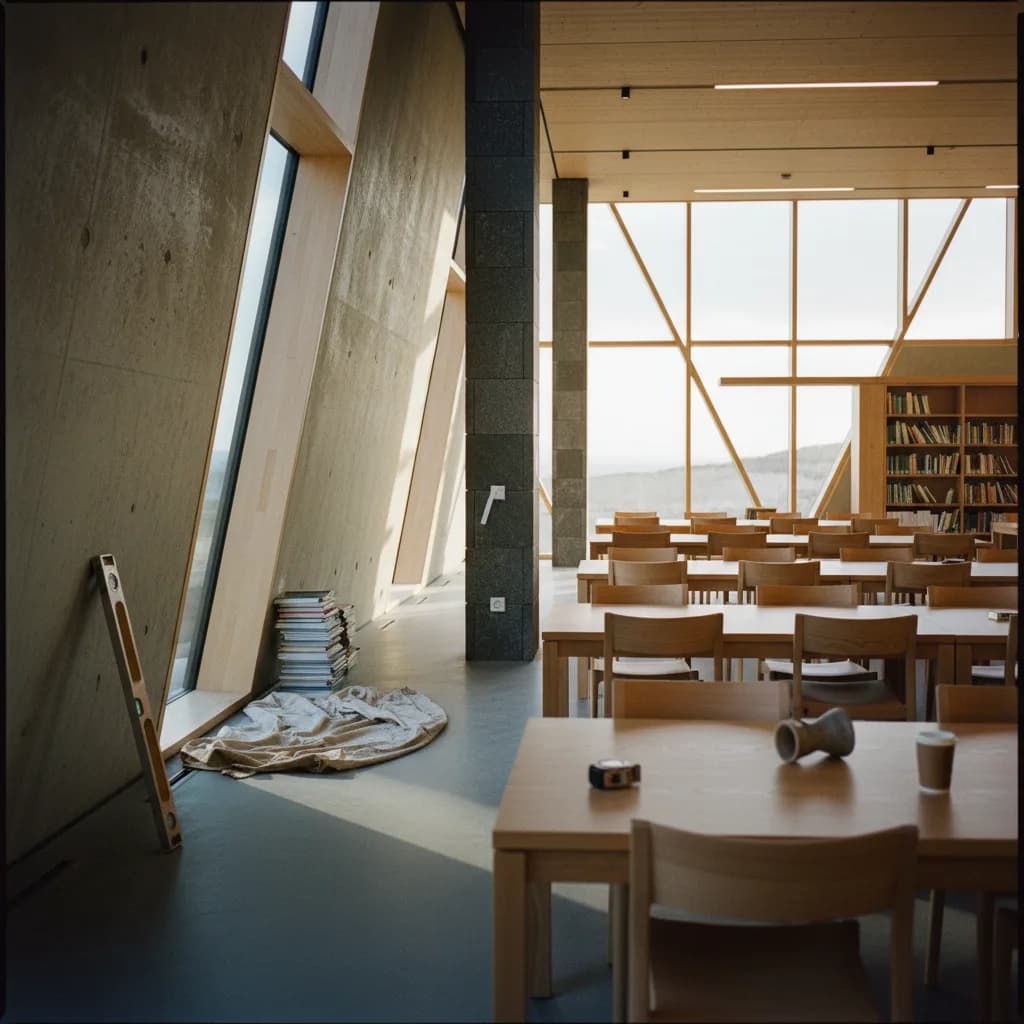
In this episode, we are tackling the single biggest question in American home design today: the open floor plan. Is its reign over? For two decades, sledgehammers took down walls in the name of light and flow. But a recent survey from the National Association of Home Builders shows that only 34% of buyers now list a completely open kitchen-family room as a 'must-have', a sharp drop from its peak. We will explore the shift away from the great room and toward something more nuanced and intentional. Full structural changes can run into the tens of thousands, but smaller zoning strategies can start lower, especially in condos or townhomes.
The Trend in a Nutshell
The verdict for 2026? The fully open floor plan is being replaced by 'broken-plan' or zoned layouts. Homeowners are seeking the light and connection of an open concept but with clever separation. Think glass partitions, strategic archways, and half-walls to create defined spaces for cooking, working, and relaxing without a return to small, dark rooms.
What This Episode Is About
This is a big topic, so let's set the stage. If you take three things from this discussion, let them be these:
- The 'Why' Behind the Shift: We'll break down how permanent work-from-home culture and a renewed desire for privacy are driving homeowners to rethink the cavernous great room.
- The Rise of the 'Broken-Plan': You'll learn the key strategies designers are using, from cased openings to custom millwork, to create defined zones without sacrificing a sense of openness.
- Smarter Questions, Better Renovations: We will give you the three essential questions to ask yourself before you talk to any contractor, ensuring your layout serves how you actually live, not just how it looks on social media.
The Real Numbers (National Picture)
Talk of changing layouts often comes down to cost. Removing or adding walls is a structural change with real budget implications. Based on national averages from contractor cost databases and remodeling industry reports, here is what homeowners can expect. Three modeled project scenarios for 2026, built from the Renology Cost Index and typical local scopes. These are illustrative estimates, not completed client projects:
- Removing a Non-Load-Bearing Wall: For a typical 12-foot wall, this can cost between $800 and $2,500 nationally. This includes demolition, patching drywall on the ceiling and adjacent walls, and floor patching.
- Removing a Load-Bearing Wall: This is a much larger project. Costs typically range from $4,000 to $15,000, and can go higher. This requires a structural engineer's report, a substantial laminated veneer lumber (LVL) beam, and extensive finish work.
- Adding a New Interior Wall: To build a standard 12-foot-long wall with a doorway, expect costs between $2,500 and $6,000. This covers framing, electrical for outlets, drywall, finishing, and paint.
Remember that these costs are highly dependent on local labor rates. Data from the Bureau of Labor Statistics Occupational Employment and Wage Statistics program shows skilled labor rates vary by as much as 40% between major metropolitan statistical areas. The National Association of Home Builders recommends a ten to fifteen percent contingency on renovations in homes over thirty years old to cover surprises found behind the drywall.
What Most Homeowners Get Wrong About This
The most common misconception is that the conversation is binary: either you have a loud, messy open floor plan or you must return to the dark, cramped rooms of the 1970s. This is a false choice. The pushback against the great room isn't about isolation, it's about function. The purely open concept failed on three practical fronts for the modern family:
- Acoustics: Sound travels everywhere. The noise from the dishwasher, the television, and a work call all compete in the same sonic space, creating a stressful environment.
- Clutter: There is no hiding the mess. The kitchen's prep zone is visible from the front door, and kids' toys take over the living space. A lack of definition means a lack of containment.
- Privacy: When the home becomes the office, gym, and school, having a quiet corner to retreat to is no longer a luxury, it's a necessity. The open plan offers no escape.
The actual answer designers are implementing is the 'broken-plan' layout, which uses smart, partial separations to create distinct zones while maintaining light and flow. More on that in a moment. For a deeper look at planning your space, check out our guide to modern kitchen layouts.
The 3 Questions Every Homeowner Should Ask
3 pros, editor-screened. 4 questions.
See my 3 matchesBefore you hire a contractor or an architect, your project's success depends on answering these three questions with brutal honesty. Get these right, and the floor plan will follow.
1. How do we actually use our space from 9 to 5?
Why this matters: This question exposes the gap between your aspirational life and your daily reality. Where do you take work calls? Where do the kids do homework? Where does the clutter pile up? A good answer sounds like: "I need a dedicated workspace with acoustic privacy, and the current dining table in the middle of everything isn't working."

2. What specific problem is changing the floor plan meant to solve?
Why this matters: It forces you to clarify your primary goal. Are you seeking more natural light, better traffic flow for entertaining, or just a cosmetic update? A good answer sounds like: "We never use the formal living room. Opening it partially to the kitchen would create a functional family hub we would use daily." This is also the stage where you determine if you need a structural engineer's input.
3. Can we achieve our goal with partial separation instead of full removal?
Why this matters: This opens the door to more creative, functional, and often less expensive solutions than a sledgehammer. A good answer sounds like: "A wide cased opening or a peninsula with built-in shelving could define the kitchen's work triangle without completely walling it off from the family room." Understanding the scope is key, as even minor wall changes can require permits. You can learn more in our national permit playbook.
What Changed in 2026
The momentum away from the completely open floor plan has been building, but several factors in 2026 have accelerated the trend. The most significant is the widespread acceptance of hybrid and remote work as a permanent fixture of the American economy. The home is no longer just a place of rest; it is a place of production, and this demands a new level of functionality, including acoustic and visual privacy for focused work.
The higher interest rate environment has also played a role. With fewer homeowners moving, the focus has shifted to renovating existing spaces to meet new needs. Instead of buying a bigger house, families are looking for ways to make their current footprint work harder. This has fueled a boom in creative solutions like installing interior glass partitions with unlacquered brass frames, adding high-performance pocket doors to section off a den, or using fluted white oak millwork to build a visual screen between a prep zone and a seating area.
We are also seeing a response in material trends. There is a greater demand for beautiful, functional doors and hardware, sound-dampening materials, and flexible lighting plans that can create different moods in a single, large space. The 2026 homeowner is looking for a home that can adapt to different needs throughout the day.
The Renology Take
From a design perspective, this is the most exciting shift in residential architecture in a generation. The minimalist decade is over. We are done with cavernous white boxes that echo every sound and offer no sense of intimacy. The new luxury is a home that works for its inhabitants, providing both connection and sanctuary.
The pendulum is not swinging back to the past. It is swinging forward to a more intelligent, human-centered design that values function as much as form. The 2026 home is not about being open or closed. It is about being thoughtful. It is about creating spaces that feel generous but also provide comfort, quiet, and a place to recharge. That is a trend with staying power.
Sources & Methodology
See the Renology Methodology for how sources are reviewed, ranges are normalized, and planning-data limits are handled.
- National Association of Home Builders (NAHB), "What Home Buyers Really Want," 2026 Edition.
- The NKBA (National Kitchen & Bath Association), "2026 Design Trends Report."
- Remodeling Magazine, "2025 Cost vs. Value Report," National Averages.
- U.S. Census Bureau, "American Housing Survey," 2025.
- U.S. Bureau of Labor Statistics (BLS), "Occupational Employment and Wage Statistics," May 2025 National Data.
- Renology Editorial Methodology: This article synthesizes proprietary data from the Renology Project of the Day network, trade association reports, and interviews with certified kitchen and bath designers.
Frequently Asked Questions
Is an open floor plan bad for resale value in 2026?
What exactly is a 'broken-plan' layout?
Can I create more defined spaces without a major renovation?
How does the trend toward defined spaces affect kitchen design?
Ready to find a pro?
Tell us about your project and location. A Renology advisor can help you explore contractor matching.
Free for homeowners. No obligation to hire.
Find a ProSources
- National Association of Home Builders (NAHB), "What Home Buyers Really Want," 2026 Edition.
- The NKBA (National Kitchen & Bath Association), "2026 Design Trends Report."
- Remodeling Magazine, "2025 Cost vs. Value Report," National Averages.
- U.S. Census Bureau, "American Housing Survey," 2025.
- U.S. Bureau of Labor Statistics (BLS), "Occupational Employment and Wage Statistics," May 2025 National Data.
- Renology Editorial Methodology
Follow Renology on Google
Choose Renology as a preferred source and our guides show up more often in your Google results, including Top Stories and AI Overviews.