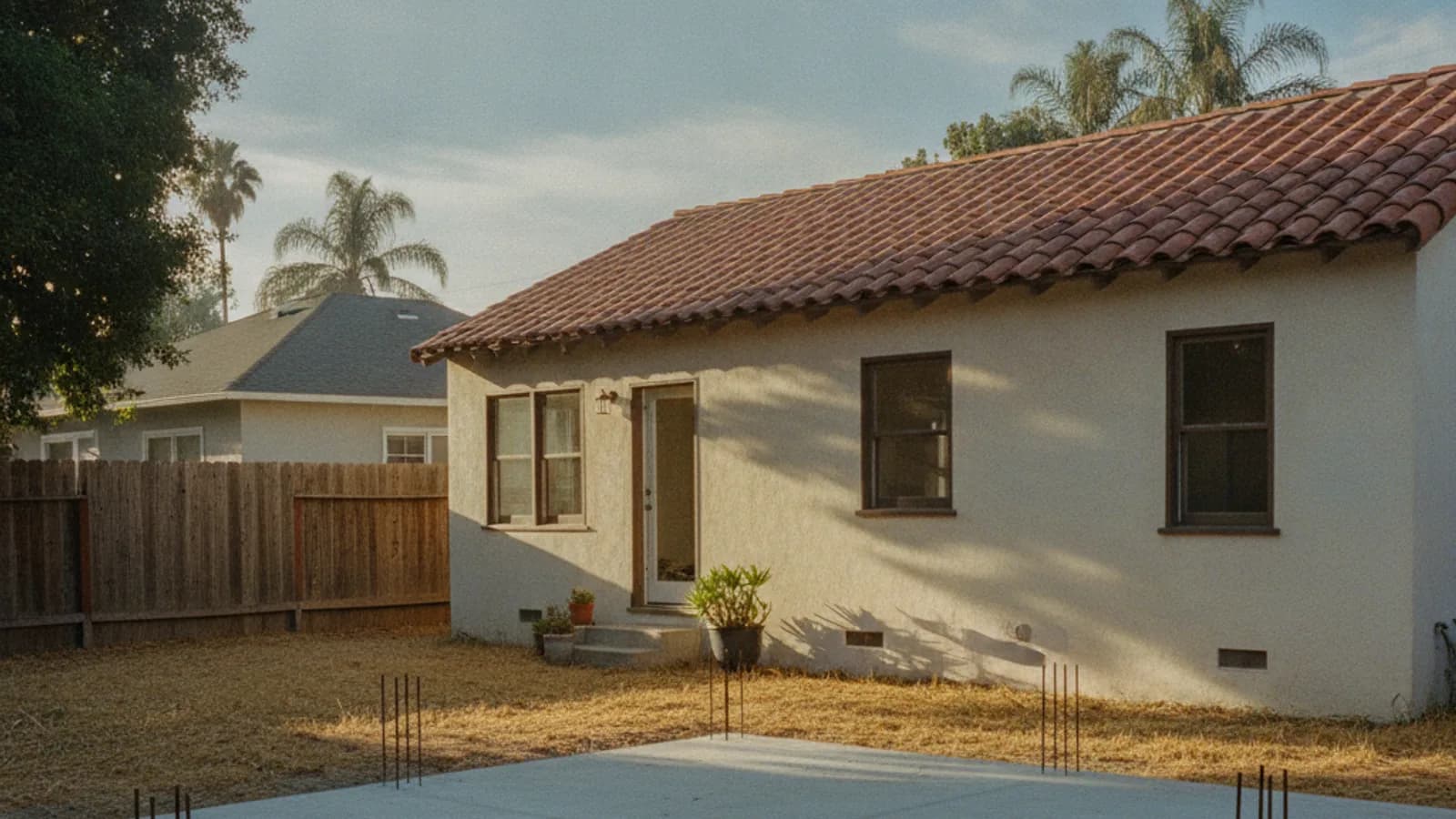
1820s Weston colonial home exterior with granite fieldstone foundation visible at ground level

Editorial

Why Weston Foundations Crack: The Glacial Geology Boston Builders Ignore

Why a foundation repair inside Weston, Massachusetts is a glacial-ledge problem, not a Boston-metro foundation problem, and what to look for in a contractor who has actually done depth-to-ledge soundings.

Golden Edit·2026-05-17·Updated May 2026·12 min read

Reviewed by David Kim, Cost Guide Editor on May 18, 2026.

Reviewed by the Renology Editorial Team|Last updated: May 2026

Why a foundation repair inside Weston, Massachusetts is a glacial-ledge problem, not a Boston-metro foundation problem, and what to look for in a contractor who has actually done depth-to-ledge soundings.

By Mike Reynolds, Structural & Outdoor Editor


A foundation repair inside Weston, Massachusetts is not a Boston-metro foundation repair with a higher tax bill. It is a structurally different project, governed by the Town of Weston Building Department at 11 Town House Road, regulated by a Conservation Commission that reviews any excavation within 100 feet of a wetland, and built into a geology that splits between exposed granite ledge and shallow till over more ledge. Most contractors who advertise "Weston foundation repair" have done a Boston-area job inside Weston. That is not the same thing.

In a Nutshell

  • The Town of Weston has its own Building Department at 11 Town House Road, independent of Newton, Wellesley, Waltham, and Lincoln. Permits, inspections, and the fee schedule are all separate.
  • Weston sits on the Wachusett-Marlborough Tunnel granite ridge. Ledge runs 2 to 12 feet below grade across most of the town and changes the repair scope before any other variable.
  • Foundation repairs inside Weston run roughly $4,500 to $280,000 in 2026, split into three observable tiers driven mostly by foundation era and ledge depth.
  • The Weston Conservation Commission reviews any work inside the 100-foot wetland buffer. Filings add 4 to 8 weeks of timeline and $1,800 to $4,500 in soft costs.

The Concord Road settlement

The first time I walked a Weston foundation under real settlement it was a 1972 ranch on Concord Road in 02493. The owners had bought the house in 2019, lived through six New England winters, and watched the southwest corner sink visibly over the previous two of them. Two diagonal cracks ran from the corner toward the slab, the lowest course of fieldstone parge was spalling, and after every heavy rain the basement showed standing water in the same corner.

The structural engineer they hired sounded the ledge with a probe rod and a soil sample. The ledge sat at 9 feet of depth on the front side of the corner and at 14 feet on the rear side. The existing footing was at 7 feet. The corner was bearing on five to seven feet of glacial till in front, and on twelve feet of till behind the corner. The till behind the corner had compacted unevenly across the prior two winters, and that is the soil that is no longer holding the southwest corner up.

A Boston-area foundation contractor working from a Boston-metro pricing playbook had quoted two helical piers, both at an assumed 7-foot drive depth, for $42,000. The work would not have reached the ledge on the rear side of the corner. The piers would have bottomed out in the same till that is moving now. The corner would have continued to settle.

This is what a Weston foundation does that a Boston-metro foundation does not. The ledge is not at one depth. It varies across a single corner. The till on top of the ledge is not uniform glacial outwash. It is whatever the last glacier dropped and the last 12,000 years compacted unevenly. A contractor who quotes from a tape measure and an exterior visual is missing the variable that runs the project.

Why Weston is its own municipality, and why that matters

Weston is an incorporated municipality in Middlesex County, not a Boston neighborhood and not part of any unincorporated regional service area. The Town's Building Department operates from Town Hall at 11 Town House Road. Permits filed there are reviewed by Town staff, inspected by a Town inspector, and assessed against the Town fee schedule, which is published separately from Newton, Wellesley, and Waltham.

The Town also has a Conservation Commission, also at 11 Town House Road. The Commission reviews any work within the wetland resource areas defined by the Massachusetts Wetlands Protection Act (310 CMR 10.00), specifically the 100-foot buffer around bordering vegetated wetlands and the 200-foot riverfront area around perennial streams. Weston has more total wetland acreage than any town on Route 128, which means the Conservation Commission filing is triggered on a higher percentage of foundation projects in Weston than in surrounding towns.

The practical consequence is that a Weston foundation project frequently involves two separate permit paths in parallel: the building permit at the Building Department and the Notice of Intent at the Conservation Commission. A contractor who only knows the building permit path is going to be surprised by the Conservation calendar.

The Conservation Commission meets monthly. If you miss the cutoff for the next month's hearing, the project waits another month. A complete NOI packet that arrives 14 days before the hearing is heard at that hearing. An incomplete one is held over.

What is actually under the soil

Weston housing splits across three foundation eras and the soils are non-uniform across each.

Pre-1900 rubble fieldstone: the original colonial and federal homes, mostly along Boston Post Road, Highland Street, and the older parts of Wellesley Street. Walls of mortared stone, often built directly on the ledge where the ledge was at grade, on a few inches of compacted soil where it was not. The failure modes are mortar erosion at the freeze-thaw level just below grade, frost heave at the lowest courses, and uneven settlement where the soil bears and the ledge does not. Underpinning fieldstone is roughly 2 to 3 times the cost of underpinning poured concrete because the work must dismantle and rebuild the existing wall as the underpin is installed.

1900 to 1950 fieldstone or brick: more uniformly mortared than the pre-1900 stock, sometimes with a thin cement parge coat applied later. Failure mode is parge spalling at the soil line and water intrusion through unsealed mortar joints. Some pier settlement under interior bearing walls when an addition was added later without engineered footings.

1950 to 1985 poured concrete: the standard New England wet-pour with two horizontal rebar runs at most, often none at the footing tie-in. Failure mode is vertical and diagonal cracks from concrete shrinkage and seasonal frost cycling, plus water intrusion at the cold joints between successive pours. The 1972 ranch on Concord Road is in this group.

1985 to present poured concrete with modern rebar: properly engineered, properly footed, generally sound. Failure mode is settlement on a portion of the footprint where the ledge dropped off behind the rear wall and the engineered fill compacted differently than the engineer expected.

The materials of each era have predictable behavior. The variable that is not in any of these descriptions is the depth-to-ledge across the footprint of any individual house. That depth changes with grade, with the elevation of the lot relative to the ridge below, and with where the glacier dropped the most till. The only way to know is to probe.

Depth-to-ledge probing. A six-foot steel rod, driven by hand with a sledge from grade in the soil at each repair location, will resist at the ledge. A more accurate method is a controlled-rate boring with a soil sample taken every 12 inches. Either method tells the engineer what is between the existing footing and competent rock. A contractor who has not probed at the actual repair location is guessing.

Glacial till. What sits between the ledge and the ground surface in Weston is glacial till: a non-uniform mix of clay, silt, sand, gravel, and cobble dropped by the retreating Laurentide ice sheet. Till compacts unevenly. The clay-rich pockets shrink in dry summers and swell in wet ones. The sand-rich sections drain freely but settle when the water table drops. A foundation built on till has to be either deep enough to reach the ledge or wide enough to spread the load across an area large enough to average the till variability. Pre-1985 Weston construction often did neither.

Wetland buffer water tables. Weston's seasonal high water table is shallow on lots within the wetland resource areas. Foundations built in these locations show frost heave at the lowest courses every spring and water intrusion through any cold joint. The 100-foot Conservation buffer that triggers the NOI also marks the geology that needs the most careful drainage planning.

A contractor who walks the site and then asks to see the lowest grade behind the house, the wetland line per the most recent Conservation Commission delineation, and the soil sample from the engineer's report is reading the site. A contractor who quotes from a driveway visual is selling a number.

The three pricing tiers I have observed in Weston

Across the Weston foundation projects I have walked or reviewed quote packages for over the past two years, repair pricing falls into three observable tiers in 2026 dollars. These are not list prices. They are what the houses produce after the engineer has finished sounding the ledge.

Tier 1, Crack injection and waterproofing: $4,500 to $12,000. Epoxy or polyurethane crack injection on the interior, exterior membrane application where excavation allows, perimeter drain tile connection to a sump or daylight, regrading away from the foundation. This tier works in Weston when the foundation is structurally sound (no settlement, no out-of-plumb walls) and the only symptom is water intrusion. Most 1985-present poured-concrete foundations fall in this tier.

Tier 2, Partial underpin or helical pier: $24,000 to $65,000. Helical piers driven to competent rock or controlled-load piers extended down to ledge, typically two to six piers on a single corner or wall section. Engineering by a Massachusetts-licensed structural engineer, stamped and submitted with the building permit. Conservation Commission Notice of Intent if the work touches the wetland buffer. Exterior drainage modification if the settlement is partly water-driven. This is the most common Weston foundation repair, and the tier where a contractor's geology knowledge matters most.

Tier 3, Full underpin or lift-and-rebuild: $95,000 to $280,000. Full perimeter underpinning of a pre-1900 fieldstone foundation, or a lift-and-rebuild where the existing foundation is removed and replaced with poured concrete on engineered footings. Common on 1820-1900 colonial stock that has accumulated 175 years of mortar erosion plus frost cycling. Requires temporary structural shoring of the house above, careful coordination with the Conservation Commission if the excavation goes into the buffer, and a structural engineer on-site at key milestones. Timelines run 14 to 26 working weeks of construction plus permit overhead.

The middle tier is where most Weston repairs land. The Crack-and-Waterproof tier is the most over-prescribed (homeowners frequently hire it when the actual problem is structural and the symptom is just secondary water). The Full Underpin tier is the most under-prescribed (homeowners frequently hire Tier 2 piers when the foundation is fieldstone and what it needs is full reconstruction).

The right way to read these numbers is not as a menu. It is as a screen. A Tier 2 quote at $18,000 is missing engineering or Conservation review. A Tier 2 quote at $96,000 is padding pier count or carrying contingency that should be a separate line.

What to ask a Weston foundation contractor

3 Weston pros, editor-screened. 4 questions.

See my 3 matches

Five questions that filter the list quickly:

  1. Did you probe the depth-to-ledge at each repair location. The honest answer is yes, with a specific depth reported for each. "Standard 8-foot helical pier" without depth-to-ledge data is a guess. Any contractor who has worked Weston knows this.

  2. Will the work trigger a Conservation Commission filing. The right answer references the wetland delineation map and the current Order of Resource Area Delineation on file with the Town. A contractor who answers "we'll find out" has not pulled a Weston permit recently.

  3. Who is the structural engineer on the project. The right answer is a named Massachusetts-licensed structural engineer with prior Weston work. A "we use whoever the Town accepts" answer means the contractor does not have an engineer relationship and is going to outsource on a cost-plus basis.

  4. How is the payment schedule milestoned. Five milestones tied to inspection sign-offs: contract, engineering and permit issued, excavation and shoring inspected, underpin or pier installation passed, final and restoration. Not percentages by week.

  5. Can I see your last three Weston foundation projects. Streets named (Boston Post Road, Highland Street, Concord Road, Wellesley Street), year, scope. Reference calls go to actual homeowners. Not the 2022 portfolio gallery.

A contractor who answers all five concretely is, statistically, the contractor worth getting a quote from. A contractor who reframes any of them ("we don't need to probe, we know Weston") has not seen enough Weston till.

Why the small specialist crew beats the regional foundation franchise

There is a Boston-area habit of trusting the high-marketing-spend regional franchise foundation company and suspecting the small specialist. In Weston specifically, the math runs the other way.

The franchise advantage is volume and reach. None of those advantages help inside a 1972 Concord Road ranch sitting on uneven till over variable ledge. The work is forensic, not template. The foreman who has driven 200 piers in Weston knows when the rod is hitting cobble that will read as competent rock but is not. The foreman who has driven 200 piers across all of Greater Boston has averaged out his Weston experience to a metro generalization.

The way to tell the two apart is the depth-to-ledge question. The franchise will quote a standard pier depth. The specialist will quote a depth verified by a probe at the actual location.

The Renology Take

Weston is unusual among premium American zip codes in how completely the geology drives the foundation repair market. The town's independent Building Department is a real wedge. The Conservation Commission is a real timeline factor. The granite ledge is the variable that no other factor outweighs. The contractor who has done depth-to-ledge probes in Weston is the contractor whose quote can be trusted.

The reader's job here is not to find the cheapest quote. It is to find the contractor whose depth-to-ledge data is verifiable and whose Conservation Commission experience is current. The ledge will be honest with him. The contractor who knows the ledge is the one worth hiring.

Sources & Methodology

Renology reviews public permit and labor signals, supplier pricing, remodeler quote patterns, comparable projects, the Renology Cost Index, and the Renology Methodology. Cost references are planning ranges for Weston renovation projects, not fixed bids.

  • Town of Weston, Building Department. https://www.westonma.gov/268/Building-Department
  • Town of Weston, Conservation Commission. https://www.westonma.gov/216/Conservation-Commission
  • Massachusetts State Building Code, 780 CMR Ninth Edition, Chapter 18 on foundations.
  • Massachusetts Wetlands Protection Act, 310 CMR 10.00 implementing regulations.
  • USGS Bedrock Geologic Map of Massachusetts, eastern Middlesex County sheet, Wachusett-Marlborough Tunnel ridge.
  • USDA Natural Resources Conservation Service, Soil Survey of Middlesex County Massachusetts, glacial till mapping units.

Mike Reynolds is the Structural & Outdoor editor at The Renology. He writes about what fails under real loads, what gets caught at inspection, and what pencils out over ten years of use. This is an editorial feature outside the magazine's primary coverage metros of Southern California, San Diego, and Greater Seattle.

For Weston homeowners ready to take this off the page, our partner Golden Yards (https://www.goldenyardsmag.com/journal/foundation-repair-cost-weston-ma-2026-guide) publishes the itemized tier pricing this article describes.

Sources & methodology

How Renology builds this guide

Renology combines public permit and labor signals, supplier pricing, remodeler quote patterns, and editorial review of comparable projects. Cost references are planning ranges, not fixed bids, because site conditions, materials, access, permits, and finish level can change the final price.

  • Benchmarked against the Renology Cost Index, related service guides, and the Renology Methodology.
  • Reviewed for Weston market context when a local market is available.
  • Focused on renovation scope, materials, timeline, contractor risk, and budget drivers.

Get 3 Weston renovation bids in 48 hours.

Our editors already screened Weston contractors. Answer 4 questions; we send 3 written bids inside 48 hours, with the real price for your scope, not their inflated first-call number.

Send my 3 bids

Free. No commission. If a match doesn't fit, we'll send another.

Frequently Asked Questions

Does Weston have its own building department, separate from Boston-metro towns?
Yes. The Town of Weston Building Department operates from Town Hall at 11 Town House Road, Weston, MA 02493, with its own permit fee schedule and inspectors. A foundation repair inside Weston must be permitted through the Town, not through Newton, Wellesley, Waltham, or any other neighboring municipality.
How much does a foundation repair cost in Weston in 2026?
Foundation repairs inside Weston run roughly $4,500 to $280,000 in 2026, split into three tiers. Tier 1 (crack injection and waterproofing) runs $4,500 to $12,000. Tier 2 (partial underpin or helical pier on settlement) runs $24,000 to $65,000, the most common repair. Tier 3 (full underpin or lift-and-rebuild, typical on pre-1900 fieldstone) runs $95,000 to $280,000.
Why do Weston foundation quotes vary so much between contractors?
The variation is geological, not arbitrary. Weston sits on the Wachusett-Marlborough granite ridge, with ledge depth varying from 2 to 12 feet below grade across the town. A contractor who has done depth-to-ledge probes at the actual repair locations quotes accurately. A contractor working from a visual inspection is guessing pier depth and pier count. Also, Conservation Commission filings are commonly missed in the initial quote on lots within the wetland buffer.
Does the Weston Conservation Commission review foundation work?
Yes, when the work is within 100 feet of a bordering vegetated wetland or 200 feet of a perennial stream. A Notice of Intent must be filed, a hearing held, and an Order of Conditions issued before excavation can begin. The Commission meets monthly. Filings add 4 to 8 weeks to the timeline and $1,800 to $4,500 in soft costs.
Why does Weston have so much foundation work compared to surrounding towns?
Two reasons. First, the geology: the Wachusett-Marlborough ridge produces uneven glacial till over uneven ledge, which causes settlement on pre-1985 foundations. Second, the housing stock: Weston has a meaningful inventory of 1820-1900 fieldstone foundations that have accumulated 125 to 200 years of mortar erosion and frost cycling and are now reaching their structural failure point.
What is the difference between underpinning a fieldstone and a poured-concrete foundation?
Roughly 2 to 3 times the cost on fieldstone. Underpinning rubble fieldstone requires dismantling sections of the existing wall, installing modern footings, and tying back into the stone above. Poured-concrete underpinning typically uses helical piers or concrete pier extensions, which are less disruptive. Weston has a meaningful inventory of both foundation types.

Get 3 honest 2026 quotes for your driveway.

Our editors already screened the Weston-area driveway pros. Answer 4 questions. We send 3 matches with the real price for your scope, not their inflated first-call number.