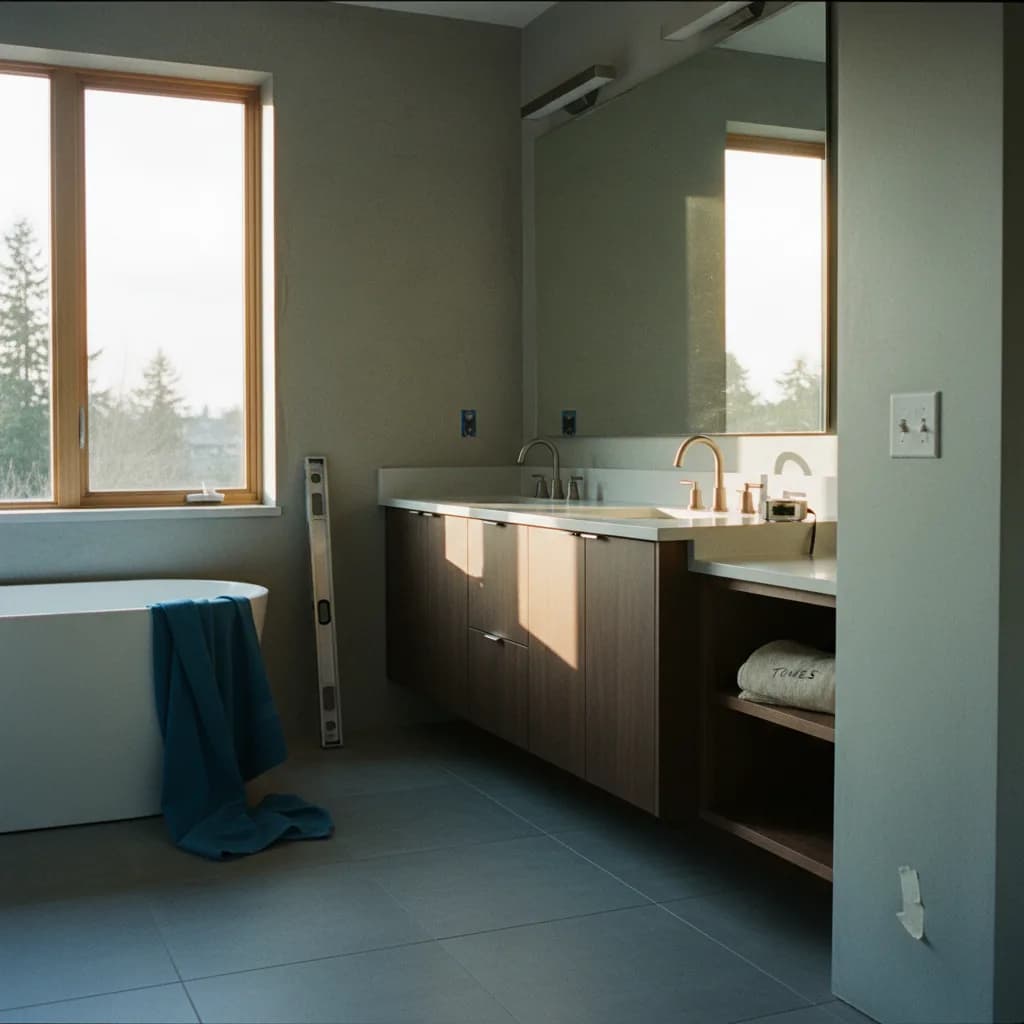
A full bathroom remodel in Seattle typically costs between $30,000 and $50,000 in 2026 for a mid-range project, and high-end remodels can run well past $95,000. The median cost for a mid-range bathroom remodel in the Seattle-Tacoma-Bellevue metro area is $31,540, according to Remodeling Magazine's 2026 Cost vs. Value report, but this figure often excludes structural changes or high-end finishes common in the city proper. Costs can start lower, typically in the $18,000 to $25,000 range, for a cosmetic refresh or a small condo bathroom with existing plumbing layouts.
In a Nutshell
- Total Cost Range: $28,000 to $95,000+
- Mid-Range Project Cost: $30,000 to $50,000
- Typical Timeline: Four to nine weeks from demolition to completion.
- Biggest Surprise Line Item: Advanced waterproofing systems and high-CFM ventilation, essential for Seattle's damp climate, can add $2,500 to $5,000 more than homeowners in drier climates anticipate.
What does a bathroom remodel actually cost in Seattle?
The final cost of a Seattle bathroom remodel is determined by the size of the space, the quality of materials, and the extent of changes to the layout. We have categorized projects into three tiers based on data from Seattle contractors and national cost surveys.
| Tier | Cost Range (2026) | Scope & Materials |
|---|---|---|
| Basic / Refresh | $18,000, $35,000 |
|
| Mid-Range | $35,000, $75,000 |
|
| Premium / Custom | $75,000, $150,000+ |
|
A typical mid-range bathroom cost in Seattle breakdown is as follows, according to the National Kitchen & Bath Association (NKBA):
- Labor: 25-35%
- Fixtures (tub, toilet, sinks): 15-20%
- Cabinetry & Vanity: 15-20%
- Tile & Countertops: 10-15%
- Plumbing & Electrical: 10-15%
- Finishes (paint, trim, lighting): 5-10%
The bottom-of-range projects, often under $25,000, are typically cosmetic updates in newer condos or townhomes where plumbing is not moved and underlying structures are sound, requiring minimal prep work.
Why is it more expensive in Seattle than surrounding regions?
Remodeling a bathroom in Seattle carries a premium compared to national figures or even other parts of Washington. Three primary factors drive this difference.
First, labor rates are significantly higher. According to 2026 Washington State L&I contractor licensing and labor rate data, licensed and insured plumbers in the Seattle metro command $120 to $185 per hour, while skilled tile setters bill at $90 to $150 per hour. General contractor overhead and profit, typically 15-25% of the project total, is calculated on top of these high base costs, compounding the expense.

Second, the city's housing stock contributes to costs. A large percentage of homes in Seattle were built before 1980, meaning bathroom remodels often uncover the need for significant plumbing and electrical updates to meet modern code. This can include replacing old galvanized pipes, upgrading knob-and-tube wiring, and addressing rot or structural decay from decades of moisture exposure, a common issue in the Pacific Northwest climate.
Third, neighborhood premiums and logistical challenges increase project costs. Permitting and working in dense, high-value neighborhoods like Queen Anne, Laurelhurst, or Madison Park involves higher fees, more complex logistics for parking and material delivery, and contractors who price their services to match the local real estate market. These factors can add five to ten percent to the total project cost compared to a similar project in a suburb like Renton or Kent.
What do real Seattle homeowners spend in 2026?
Three modeled project scenarios for 2026, built from the Renology Cost Index and typical local scopes. These are illustrative estimates, not completed client projects:
- $48,500 in Ballard: A 5-foot by 9-foot guest bathroom in a 1940s craftsman. This project involved a full gut demolition. The contractor replaced old galvanized plumbing with PEX, installed a new tub-shower combination with subway tile to the ceiling, a semi-custom vanity with a quartz top, and new marmoleum flooring. The cost included updating the electrical for a new GFCI circuit and a high-power ventilation fan.
- $71,000 in Capitol Hill: A primary bathroom in a 1990s condo. The scope included removing a bulky tub deck to create a large, curb-less walk-in shower with a linear drain and frameless glass enclosure. It featured mid-grade porcelain tile, a floating double vanity, and updated LED lighting. The higher cost reflects the complexities of working in a multi-unit building, including core drilling for plumbing and strict rules for water shutoffs and debris removal.
- $115,000 in West Seattle: A primary bathroom expansion in a 1960s home. This project involved moving a non-load-bearing wall to capture space from an adjacent closet. It featured a freestanding soaking tub, a separate tiled shower with a custom niche, heated tile floors, a custom-built walnut vanity, and high-end fixtures. The price reflects the added structural work, extensive plumbing and electrical relocation, and premium material selections.
Where does the money actually go?
3 Seattle bathroom remodelers, editor-screened. 4 questions.
See my 3 matchesA standard quote from a bathroom contractor in Seattle will cover the obvious items, but several necessary costs are often left out of initial estimates or appear as allowances. Homeowners should budget for these explicitly.
- Permit Fees: The Seattle Department of Construction and Inspections (SDCI) charges for plumbing, electrical, and sometimes structural permits. Expect $800 to $2,500 depending on project valuation.
- Waterproofing System: Beyond tile backer board, a modern waterproofing system like Schluter-KERDI is critical in Seattle. This can add $1,500 to $3,000 for materials and specialized labor.
- Asbestos or Lead Abatement: In homes built before 1980, testing and professional removal of hazardous materials found in old flooring, drywall, or insulation is mandatory and can cost $1,000 to $4,000.
- Ventilation Upgrades: Meeting Seattle's code for bathroom ventilation may require not just a new fan but new, larger ductwork run to the exterior, costing $750 to $1,800.
- Plumbing and Electrical Sub-Panel Upgrades: If the remodel adds significant new electrical load (like a heated floor or steam shower) or requires extensive re-piping, you may need to upgrade a sub-panel or main service, costing $2,000 to $5,000.
- Debris Hauling and Disposal: Contractors often bill separately for dumpsters and disposal fees, which can range from $500 to $1,200 for a full bathroom gut.
- Temporary Bathroom Facilities: If this is the only bathroom in the house, you may need to budget for alternatives during the four-to-nine-week construction period.
What stops a Seattle bathroom project from running over budget?
Budget overruns are common in bathroom remodels, but they typically stem from three predictable sources. Understanding them is the key to financial control.
First is scope creep. Adding a heated floor mid-project or changing from a standard toilet to a wall-hung model after plumbing is roughed in creates a cascade of change orders. Finalize all material selections and design choices before demolition begins. A change that seems small can add thousands in labor and delay the project by weeks.
Second, unforeseen conditions behind the walls are a major risk, especially in Seattle's older homes. Water damage, wood rot, outdated wiring, or pest infestations are common discoveries upon demolition. The National Association of Home Builders recommends a ten to fifteen percent contingency on renovations in homes over thirty years old. For a $60,000 Seattle bathroom, this means having $6,000 to $9,000 in reserve.
Third is an incomplete or vague scope of work from the contractor. A low bid that omits details for waterproofing, ventilation, or trim work is not a good deal; it is a future change order. A detailed quote specifying brands, model numbers, and installation methods provides a clear baseline and protects both parties. Pair it with a payment schedule that releases money only against verified work and most change-order fights never start.
What should your Seattle contractor include in the quote?
A detailed quote is the foundation of a successful project. Before signing a contract, ensure your bathroom contractor in Seattle provides a written scope of work that itemizes the following. For a detailed walkthrough of the city's requirements, see our guide: Seattle Bathroom Permit Playbook 2026.
- Demolition and disposal of all existing materials.
- Framing or structural modifications.
- All necessary permits and scheduling of inspections.
- Plumbing rough-in and finish installation (specify fixture models).
- Electrical rough-in and finish installation (specify lighting, outlets, fan).
- HVAC modifications, specifically ducting for the ventilation fan.
- Insulation and vapor barrier installation.
- Drywall installation, taping, and finishing (specify finish level).
- Waterproofing system for shower and tub surrounds (specify brand and method).
- Tile installation, including grout and sealant (specify tile, pattern, and grout type).
- Cabinetry and countertop installation.
- Painting and finish trim work.
- A clear payment schedule tied to project milestones.
- A written warranty for labor and workmanship.
Sources & Methodology
See the Renology Methodology for how sources are reviewed, ranges are normalized, and planning-data limits are handled.
Cost ranges in this guide draw on the following named industry sources, public agency datasets, and Renology editorial research.
- Remodeling Magazine, 2026 Cost vs. Value Report: Seattle, WA (2026)
- National Kitchen & Bath Association (NKBA), 2026 Design Trends & Market Outlook (2026)
- Seattle Department of Construction and Inspections (SDCI), Permit Fee Schedule (2026)
- Washington State Department of Labor & Industries (L&I), Prevailing Wage Data for King County (2026)
- National Association of Home Builders (NAHB), Remodeling Market Index (RMI) (Q1 2026)
- Renology Project of the Day (POTD) Network, Seattle Metro Data (2024-2026)
Renology Take
The primary pattern that leads to budget issues and long-term failure in Seattle bathrooms is underinvestment in moisture management. In a city with over 150 days of precipitation annually, the battle against water intrusion and mold is constant. Homeowners, often focused on visible finishes like tile and vanities, may accept a contractor's bid that minimizes costs on waterproofing membranes, high-capacity ventilation, and proper air sealing. This is a critical error. The incremental cost of a solid system like a Schluter-KERDI membrane and a correctly-sized Panasonic fan is $2,000 to $4,000. The cost to remediate a failed shower pan and resulting structural rot five years later is $15,000 to $25,000. A successful bathroom seattle 2026 project prioritizes the invisible infrastructure over the decorative finishes. The best money spent is on the parts you will never see again.
Related city renovation guides
Other US wealth-market cities where we publish itemized contractor pricing and permit reality:

- Cherry Hills Village basements, why Denver's wealthiest suburb builds down
- Weston foundations, the glacial geology Boston builders ignore
- Atherton ADU boom, different from the rest of the Bay Area
- Paradise Valley bath design, desert modernism meets old Arizona money
- Brentwood roofs, the Tennessee insurer replacement timing window
- McLean kitchens, renovating for DC diplomatic-class entertaining
Frequently Asked Questions
What is the ROI on a bathroom remodel in Seattle?
How long does a full bathroom remodel take in Seattle?
Do I need a permit for a bathroom remodel in Seattle?
What are the biggest differences between a basic and mid-range remodel?
How can I save money on my Seattle bathroom remodel?
Ready to find a pro?
Tell us about your project and location. A Renology advisor can help you explore contractor matching.
Free for homeowners. No obligation to hire.
Find a ProSources
- Remodeling Magazine, 2026 Cost vs. Value Report: Seattle, WA
- National Kitchen & Bath Association (NKBA), 2026 Design Trends & Market Outlook
- Seattle Department of Construction and Inspections (SDCI), Permit Fee Schedule
- Washington State Department of Labor & Industries (L&I), Prevailing Wage Data for King County
- National Association of Home Builders (NAHB), Remodeling Market Index (RMI)
- Renology Project of the Day (POTD) Network, Seattle Metro Data
Follow Renology on Google
Choose Renology as a preferred source and our guides show up more often in your Google results, including Top Stories and AI Overviews.