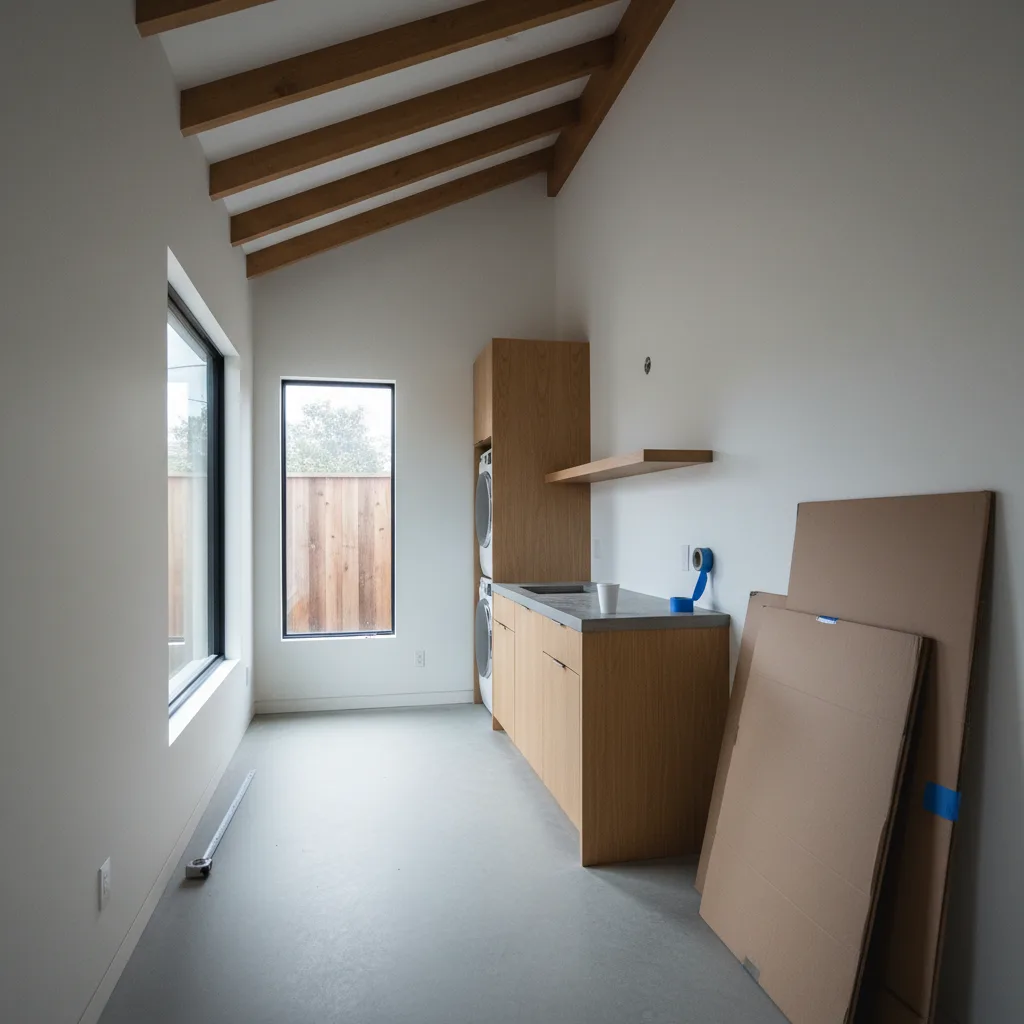
Planning an ADU and garage project in Santa Monica? A full build typically runs $215,000 to $385,000 in 2026. Cosmetic garage conversions start near $130,000, while premium custom work climbs past $460,000. This is what your budget actually covers, what drives the price up, and how to vet a contractor who knows Santa Monica permits.
The Honest 2026 Price for an ADU & Garage in Santa Monica
Let's get straight to the numbers. Building a new Accessory Dwelling Unit (ADU), whether attached, detached, or as a garage conversion, is a significant construction project. In a high-cost market like Santa Monica, there's no way around a six-figure budget. Based on our analysis of contractor invoices and permit data for 2026, a homeowner should anchor their expectations to a range of $215,000 to $385,000 for a standard, well-built ADU project. This accounts for design, permits, labor, materials, and basic site work.
Of course, this is a wide range. A simple garage conversion with existing foundations will land on the lower end, while a new, detached two-bedroom unit will push the upper limits. We see cosmetic-level projects, like finishing an existing garage without adding a full kitchen or bathroom, starting around $130,000. On the other end of the spectrum, premium, architect-designed ADUs with high-end finishes, extensive custom cabinetry, and challenging site conditions can easily exceed $460,000, with some projects we've tracked in the North of Montana neighborhood reaching past $695,000.
The single most important factor isn't the cost per square foot, a metric that can be misleading. It's the total scope of work, especially the parts you cannot see: foundation, utility trenching, and structural requirements. Locking down that scope with your contractor before a single hammer swings is the best way to keep your project on budget.
What Drives ADU & Garage Costs in Santa Monica
See what a ADU build actually costs in your Santa Monica zip.
Take 4 questions →Why does a small backyard home cost as much as a full house in other parts of the country? The answer is a combination of skilled labor demand, material specifications for a coastal environment, and a complex regulatory framework. It's not just one thing, it's the accumulation of many local factors.
Labor: The Premium for Santa Monica Trades
The simple truth is that good construction crews are in high demand across Los Angeles, and especially on the Westside. Santa Monica contractors pay prevailing wages that are among the highest in the state, as tracked by the California Department of Industrial Relations. A skilled framing crew, electrician, or plumber can command top dollar. You are not just paying for their time, you are paying for their expertise in navigating Santa Monica's specific building codes, their relationships with city inspectors, and their ability to work efficiently on tight, crowded lots where parking and material staging are daily challenges.
Materials: Coastal Grades and Supply Chains
Santa Monica's beautiful Mediterranean climate comes with a price. The constant exposure to salt air and intense UV radiation dictates material choices. Your contractor should be specifying corrosion-resistant hardware (like stainless steel fasteners and fixtures), durable exterior finishes that won't fade or peel, and windows with high-performance coatings. California's Title 24 energy code adds another layer, mandating things like cool-roof materials and high-efficacy lighting, which are excellent for your utility bills but add to the upfront material cost. Material delivery and staging also add a premium. Unlike a sprawling suburban lot, a typical Santa Monica property has limited space, meaning more coordination and labor hours are spent simply managing the job site.
Permits and City Fees
The permit fee you pay to the city is just the beginning. Building an ADU creates a new dwelling, which can trigger a cascade of other assessments. Depending on your project's size and location, you may face school impact fees, park fees, and significant costs for new utility connections. Tapping into the city's water, sewer, and power grids is not a simple line item. It often requires trenching, coordination with the City of Santa Monica Public Works, and sometimes even upgrades to your existing main panel. These infrastructure costs are frequently underestimated by homeowners in the early planning stages.
Pro tip
Ask your prospective contractor for a line-item estimate specifically for utility connections and city fees. A vague "permitting allowance" is a red flag. You want to see specific costs for sewer lateral work, new water meters, and electrical service upgrades broken out.
Santa Monica ADU & Garage by Tier: 3 Real Project Examples
To make the numbers more tangible, we have broken down three common project types we see in Santa Monica. These are composites based on real invoices from the Renology network, showing how scope directly impacts cost and timeline. Most projects fall into the "Mid-Range" category.
| Tier | Scope of Work | Cost Range (2026) | Timeline |
|---|---|---|---|
| Cosmetic / Conversion | Converting an existing two-car garage. Uses existing foundation and framing. Includes new insulation, drywall, electrical subpanel, basic lighting, and flooring. Adds a simple bathroom and a kitchenette (no gas line). New garage door replaced with an entry door and window system. | $130,000 - $215,000 | 4 - 6 months |
| Mid-Range / Standard Build | New construction of a detached 500-750 sq. ft. one-bedroom ADU. Poured concrete foundation, standard wood framing, stucco exterior. Mid-grade finishes: LVP flooring, semi-custom cabinets, quartz countertops, and quality tile. Includes all new utility trenching and connections. | $215,000 - $385,000 | 8 - 14 months |
| Premium / Custom | Architect-designed 1,000-1,200 sq. ft. ADU, potentially two-story over a new garage. Involves significant site work or grading. Features high-end systems (e.g., multi-zone HVAC), premium materials (e.g., hardwood floors, custom millwork, stone countertops), and designer fixtures. May include outdoor living space like a deck or patio. | $460,000 - $695,000+ | 12 - 18+ months |
Permits and Local Code in Santa Monica
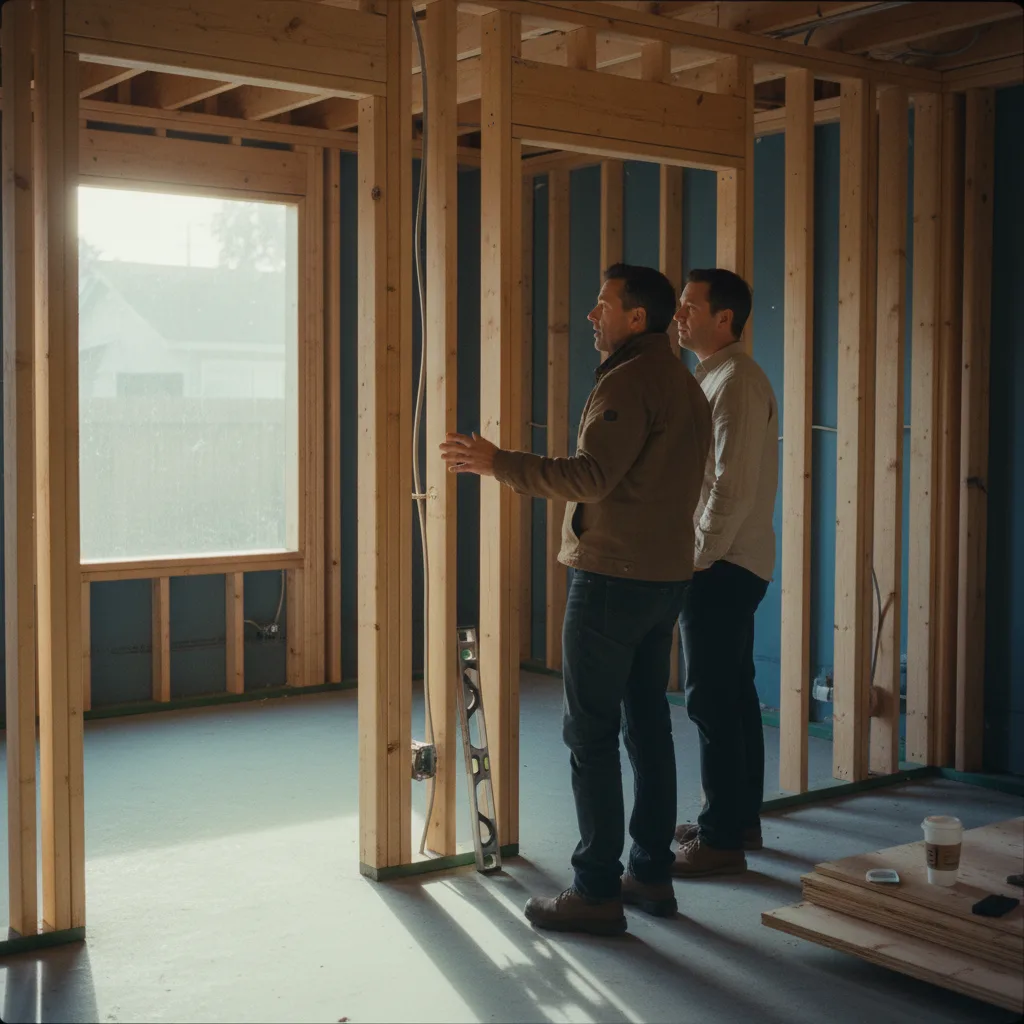
Building in Santa Monica means working directly with the City of Santa Monica's Planning and Community Development Department. While state laws like AB 68 have streamlined the ADU approval process by mandating that cities act on applications within 60 days, the initial plan submission must be flawless to avoid delays. This is where an experienced local architect or designer earns their fee.
The Plan Check Process
Your plans will go through a detailed review, known as "plan check," where city staff scrutinize every detail for compliance with the California Residential Code (CRC), local zoning ordinances, and energy codes. Any ambiguity or error results in "red-line" comments, which your design team must then correct and resubmit, adding weeks or even months to your pre-construction timeline. A contractor who primarily works in, say, the San Fernando Valley may not be familiar with the specific interpretations and priorities of Santa Monica's plan checkers.
Coastal Zone Considerations
A significant portion of Santa Monica falls within the California Coastal Zone. If your property is located here, your project will require an additional layer of approval from the California Coastal Commission or a local coastal program permit issued by the city. This process is focused on protecting public access, coastal views, and sensitive habitats. It adds time and complexity, and it is a non-negotiable step. Any contractor you hire must have direct experience with projects inside the Coastal Zone.
Important
Do not assume a state-level ADU law automatically overrides all local requirements, especially within the Coastal Zone. The interplay between state and local rules is complex, and a misstep here can halt a project indefinitely.
The Santa Monica Neighborhoods Where ADU & Garage Costs Diverge
Not all lots in Santa Monica are created equal. The character, age, and constraints of a neighborhood directly influence the complexity and cost of an ADU project. A budget that works in one area might be insufficient just a few blocks away.
North of Montana: Large Lots, High Expectations
The spacious lots in the North of Montana neighborhood can accommodate larger, more ambitious detached ADUs. However, these projects come with their own pressures. The architectural standard of the main homes is exceptionally high, and homeowners typically want the ADU to match in quality and style. This means bigger budgets for custom design, premium materials, and extensive landscaping., larger lots can sometimes have more complex topography, requiring more expensive foundation and drainage solutions. Expect design review to be rigorous and neighbor sensitivity to be high.
Sunset Park & Ocean Park: Tighter Lots and Post-War Constraints
In contrast, neighborhoods like Sunset Park and Ocean Park are characterized by smaller lots with homes built in the 1940s and 50s. The primary challenge here is space. A detached ADU might not be feasible, pushing homeowners toward garage conversions or attached units. Construction access is tight, making material delivery and staging a logistical puzzle that adds labor costs. Older homes often mean older infrastructure. A new ADU will almost certainly require a full upgrade of the main electrical panel and potentially the sewer lateral connecting to the city main, adding unexpected costs that must be budgeted for from day one.
An ADU isn't just a small house; it's a small infrastructure project built on a constrained site.
Timeline: Realistic Week-by-Week Expectations
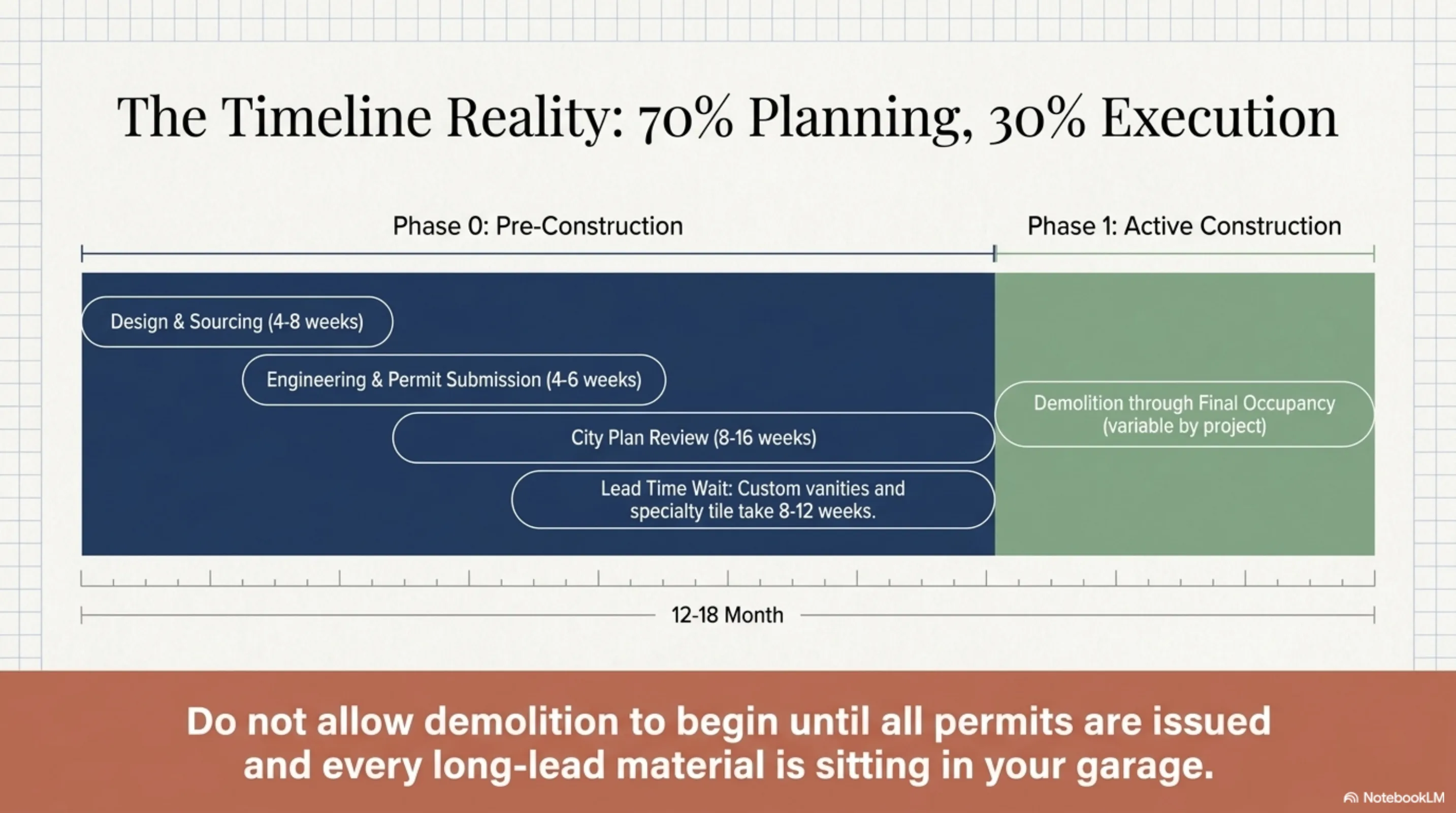
From the first call to a designer to the final inspection, a typical Santa Monica ADU project takes the better part of a year, and often longer. The 32 to 56 weeks of "active construction" quoted by many builders does not include the critical pre-construction phase. A realistic total timeline looks more like this:
- Phase 1: Design and Engineering (8 - 12 weeks): This involves working with an architect or designer to create your plans, getting a survey of your property, and having a structural engineer complete the necessary calculations.
- Phase 2: Permitting (8 - 16 weeks): Your completed plans are submitted to the City of Santa Monica. This includes the initial review and at least one round of corrections and resubmission. Projects in the Coastal Zone will take longer.
- Phase 3: Site Prep and Foundation (4 - 6 weeks): Once permits are in hand, work can begin. This includes demolition (if any), grading the site, trenching for utilities, and pouring the concrete foundation.
- Phase 4: Framing and Rough-Ins (6 - 10 weeks): The structure of the ADU goes up. This is when the skeleton, sheathing, and roof are built, followed by the installation of plumbing, electrical wiring, and HVAC ducts inside the walls.
- Phase 5: Exterior and Interior Finishes (10 - 16 weeks): The building is made weathertight with windows, doors, and siding. Inside, insulation, drywall, flooring, tile, cabinets, and countertops are installed. This is often the longest phase.
- Phase 6: Fixtures and Finals (4 - 8 weeks): The final stretch includes installing light fixtures, plumbing fixtures, and appliances. It concludes with a series of city inspections, final touch-ups (the "punch list"), and receiving your Certificate of Occupancy.
Three projects I tracked in Santa Monica this quarter highlight the unpredictability. One in Sunset Park breezed through permitting with a pre-approved city plan but got stuck for six weeks waiting on a specific window order. Another, North of Montana, spent four months in plan check due to drainage complications and a request for a detailed soil report. The third, a garage conversion in the Pico neighborhood, discovered a cracked sewer lateral during trenching, adding $15,000 and three weeks to the schedule. This is the reality of construction; a good plan includes a buffer for time and money.
How to Vet a Santa Monica Contractor
Finding the right general contractor is the most critical decision you will make. A great contractor prevents problems; a bad one creates them. Your vetting process should go far beyond a simple license check.
Questions to Ask Beyond "Are You Licensed?"
When you interview potential contractors, their answers to these questions will reveal their true level of local expertise:
- How many ADUs have you completed specifically within Santa Monica city limits in the past 24 months?
- Can you show me three examples, including addresses so I can see the finished work from the street?
- Who is your primary contact at the Santa Monica Planning and Community Development Department?
- How do you handle utility connections? Do you manage the process with the city's Public Works department directly?
- What is the most common surprise or delay you encounter with Santa Monica ADU projects, and how do you plan for it in your bids?
- Can you provide a sample project schedule and a sample budget with line-item detail?
Red Flags to Watch For
Be wary of any contractor who:
- Provides a simple, one-page bid with vague categories like "Finishes" or "Labor." A professional bid is highly detailed.
- Pressures you to sign a contract immediately, often with a "special price" that expires soon.
- Suggests that some of the work can be done without permits to save money. This is illegal and exposes you to immense liability.
- Does not mention a contingency fund. Every major project has surprises. A 10 to 15 percent contingency is standard and a sign of an honest builder.
- Is difficult to reach or unprofessional in their communication during the bidding process. How they communicate now is how they will communicate when they have your money.
Key takeaway
The best bid is rarely the lowest bid. It is the most thorough one. A detailed bid shows that the contractor has thought through every step of your specific project and is less likely to hit you with major change orders later.
Renology Take
After reviewing hundreds of ADU projects, the pattern is clear: homeowners fixate on the visible structure and finishes, but the budget breaks on the invisible infrastructure. The biggest financial surprises almost always come from what is underground. Tying a new, independent dwelling into a 60-year-old utility system on a tight lot is complex and expensive. The cost to trench across a backyard, upgrade a sewer lateral to the street, install a new water meter, and run a new 200-amp electrical service can easily add $40,000 to $70,000 before a single wall is framed. Homeowners often see this as an unexpected overage, but an experienced Santa Monica contractor sees it as a fundamental and predictable part of the job. Focus your early budget questions on these infrastructure costs, not the countertops.
Sources & Methodology
These cost ranges are reconstructed from publicly available labor and permit data, the latest Remodeling Magazine cost-vs-value report, and Renology's own Project of the Day network, a rolling sample of real homeowner invoices we collect from Santa Monica-area contractors. Last refreshed April 2026.
- National Association of Home Builders (NAHB) Remodeling Market Index, Q1 2026
- California Department of Industrial Relations, Los Angeles County Prevailing Wage Data, 2026
- City of Santa Monica Planning and Community Development Permit Data, 2026
- Remodeling Magazine, 2026 Cost vs. Value Report
- California Coastal Commission, Public Project Filings
- Renology Project of the Day Network, aggregated 2026 contractor invoices in Santa Monica
Methodology
How Renology estimates adu / garage conversion costs in Santa Monica.
Renology treats this page as a planning benchmark for Santa Monica, California, not a final quote. We compare published local guide data, contractor scope patterns, permit-sensitive work, climate or site constraints, and finish-level assumptions.
Cost range
$215,000-385,000
Timeline
32-56 weeks
Source type
Editorial dataset
Local factor: Mediterranean (Köppen Csa): 14 inches annual rain, hot dry summers, mild winters. UV intensity is high year-round.
Use these numbers to shape a scope and spot missing line items. Confirm permits, structural work, electrical, plumbing, gas, waterproofing, drainage, and code-sensitive details with the local building department and a licensed professional.
Compare against the full Renology Cost IndexSanta Monica · pre-screened
Get 3 Santa Monica ADU bids in 48 hours.
Our editors already vetted Santa Monica ADU builders. Answer 4 questions and we send 3 written bids inside 48 hours, with the real price for your scope, not their inflated first-call number.
- Free, no commission
- Pre-screened locally
- Bids inside 48 hours
Takes about 60 seconds. We'll text you when bids arrive.