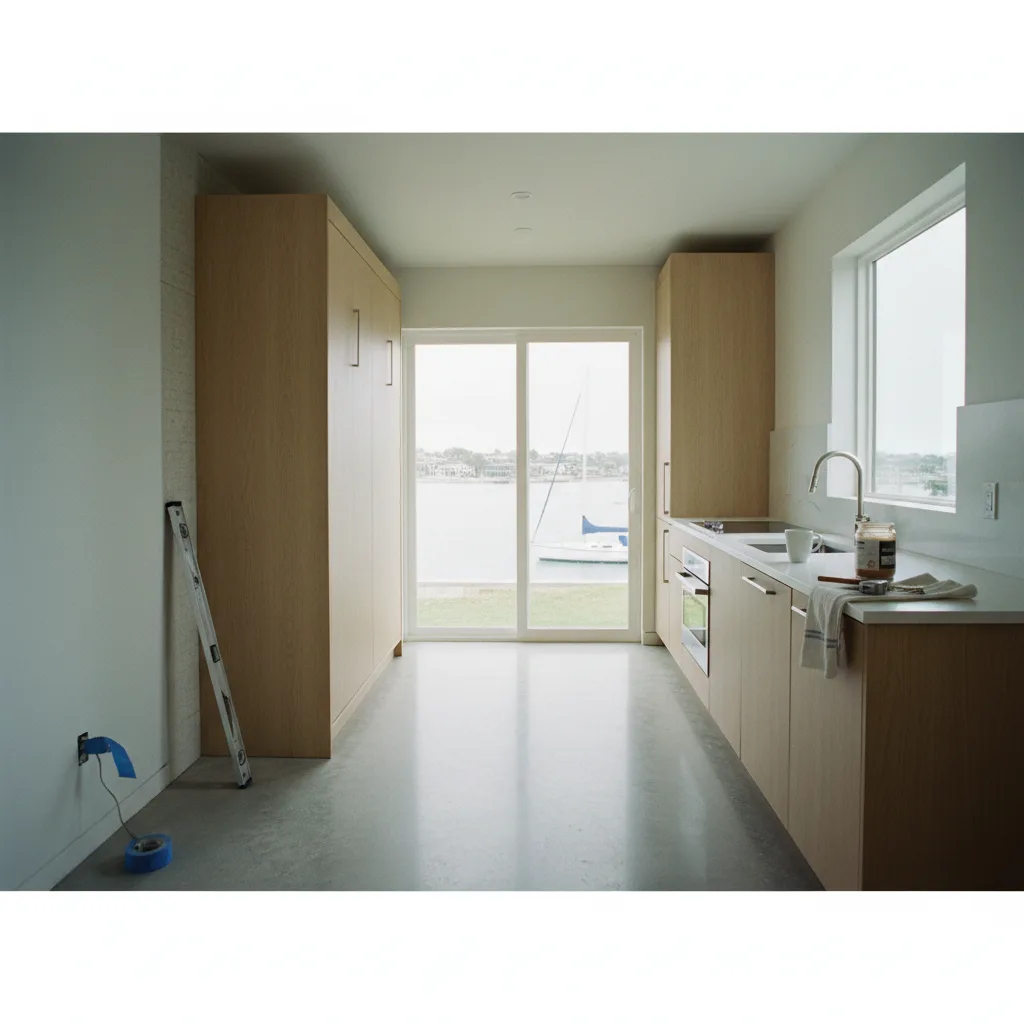
Planning an ADU and garage project in Newport Beach? A full build-out typically runs from $210,000 to $380,000 in 2026. Cosmetic refreshes start near $125,000, while premium custom work often climbs past $455,000. This is what your budget actually covers, what drives the price up, and how to vet a contractor who truly understands Newport Beach permits and lot constraints.
The Honest 2026 Price for an ADU and Garage in Newport Beach
Let's get straight to the point. Building or converting an ADU and garage in Newport Beach is a significant investment, and national cost estimators often miss the mark by a wide margin. The coastal premium is real. Based on our analysis of local contractor bids and permit data, we see a clear spectrum of costs. For a standard, ground-up ADU combined with a garage project, homeowners should budget between $210,000 and $380,000. This range covers a well-appointed, code-compliant structure built by a licensed and insured professional.
Of course, this is not a one-size-fits-all number. A simple garage conversion with basic finishes might land closer to the $125,000 mark. On the other end, a high-end, two-story ADU over a custom garage in a neighborhood like Crystal Cove, with designer finishes and complex structural engineering, can easily exceed $455,000 to $685,000. The final invoice is a direct result of three things: the scope of your vision, the quality of your materials, and the complexities of your specific lot.
What Drives ADU and Garage Costs in Newport Beach
See what a ADU build actually costs in your Newport Beach zip.
Take 4 questions →The price tag for your project is not arbitrary. It is a formula of hard costs and site-specific challenges. Understanding these components is the first step to building a realistic budget and avoiding mid-project sticker shock. In Newport Beach, four key factors dictate the bottom line.
Labor and Skilled Trades
Orange County, and Newport Beach in particular, is one of the most expensive labor markets in the country. There is a high demand for top-tier carpenters, electricians, plumbers, and foundation specialists. You are not just paying for their time, you are paying for their expertise in coastal construction, their familiarity with local inspectors, and their ability to work efficiently on tight, often challenging sites. Expect labor to account for 40 to 50 percent of your total project cost. This is not the place to cut corners, a poorly executed job will cost far more to fix down the line.
Materials and Finishes
The constant exposure to salt air and intense sun requires a higher grade of materials. From stainless steel fasteners and corrosion-resistant flashing to durable exterior cladding and marine-grade paint, building to last by the coast costs more. Windows need to be high-performance to meet California's Title 24 energy code. Interior finishes, from cabinetry and countertops to flooring and fixtures, offer the widest range of cost variation. A project with builder-grade materials can cost half as much as one with custom millwork and high-end European appliances.
Pro tip
Always specify materials that are rated for coastal environments. Using standard exterior light fixtures or hardware might save a few hundred dollars up front, but they will likely show signs of rust and corrosion within two to three years, requiring premature replacement.
Permits and Engineering
The "soft costs" of a project often surprise homeowners. These are the necessary expenses incurred before a single nail is hammered. In Newport Beach, this includes architectural plans, structural engineering calculations (especially for seismic and soil considerations), and potentially a survey of your property lines. Then come the city fees. Plan review, permit issuance, and inspection fees from the City of Newport Beach Community Development Department can add several thousand dollars to your budget. If you are in the coastal zone, you will also need a Coastal Development Permit (CDP), which adds another layer of review and cost.
Newport Beach ADU and Garage by Tier: 3 Real Project Examples
To make these numbers more concrete, we have broken down typical projects into three tiers. These are based on aggregated invoices and project scopes from the Renology network of contractors in the Newport Beach area. This table illustrates how scope, cost, and timeline expand as you move from a basic conversion to a fully custom build.
| Tier | Typical Scope | Cost Range (2026) | Typical Timeline |
|---|---|---|---|
| Cosmetic / Conversion | Converting an existing garage. No new foundation. Insulating, drywalling, adding pre-fab cabinets, LVP flooring, and basic electrical/plumbing tie-ins. Standard fixtures and finishes. | $125,000 to $210,000 | 4 to 6 months |
| Mid-Range / Standard Build | New ground-up construction of a 400-600 sq. ft. ADU with an attached two-car garage. Slab foundation, standard framing, mid-grade finishes (e.g., quartz counters, semi-custom cabinets), and energy-efficient windows. | $210,000 to $380,000 | 8 to 14 months |
| Premium / Custom | Custom architectural design for an 800-1,200 sq. ft. ADU, potentially two stories over a garage. High-end finishes, custom millwork, premium appliances, extensive tile work, complex rooflines, and potentially a deck or patio. | $455,000 to $685,000+ | 12, 18+ months |
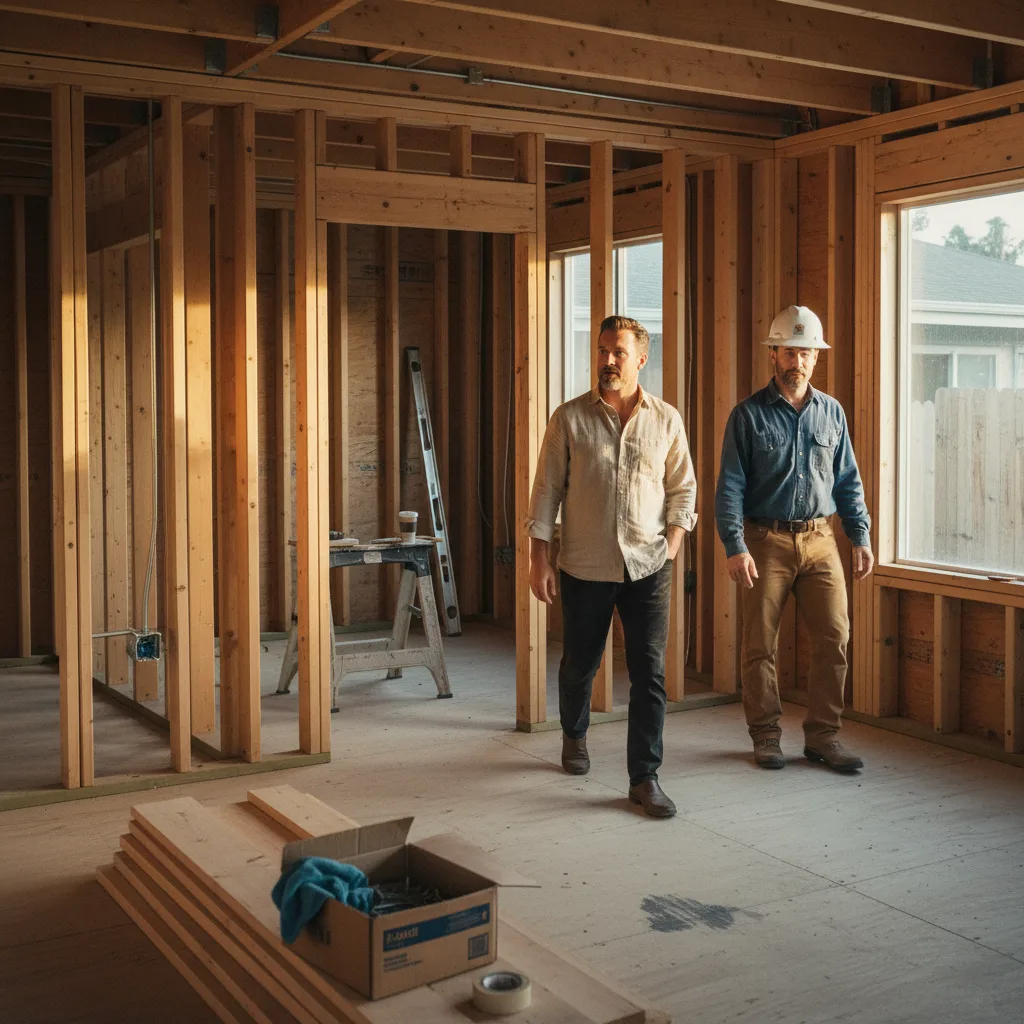
Permits and Local Code in Newport Beach
You cannot build in Newport Beach without engaging with the city's planning and building departments. The process is thorough and designed to ensure safety, environmental protection, and neighborhood cohesion. A contractor who claims they can skip steps or "handle it" without formal plans is a major red flag.
The City of Newport Beach Community Development Department
This is your primary point of contact. The department handles plan checks, permit issuance, and inspections for all construction projects. Their review process ensures your plans comply with the California Residential Code (CRC), local zoning ordinances, and energy efficiency standards mandated by California's Title 24. Expect a plan review process of several weeks, or even a few months, for a new ADU. The more complete and professional your initial submission, the smoother this process will be.
The Coastal Development Permit (CDP)
If your property lies within the designated "Coastal Zone," any new construction, including most ADUs, will require a Coastal Development Permit. This is a separate review process from the standard building permit and is mandated by the California Coastal Act. The goal is to protect coastal resources, public access, and scenic views. This process can add significant time and complexity to your project, often requiring additional reports or studies. A contractor experienced in the coastal zone will know how to prepare a CDP application and anticipate the concerns of the reviewers.
Getting the permit is not a formality, it is the first major phase of your construction project.
The Newport Beach Neighborhoods Where ADU and Garage Costs Diverge
Not all lots in Newport Beach are created equal. The character, constraints, and construction realities of your specific neighborhood will have a substantial impact on your project's cost and timeline. A quote for a project in one area may not be applicable to another, even for an identical structure.
Balboa Island: The Challenge of Access and Density
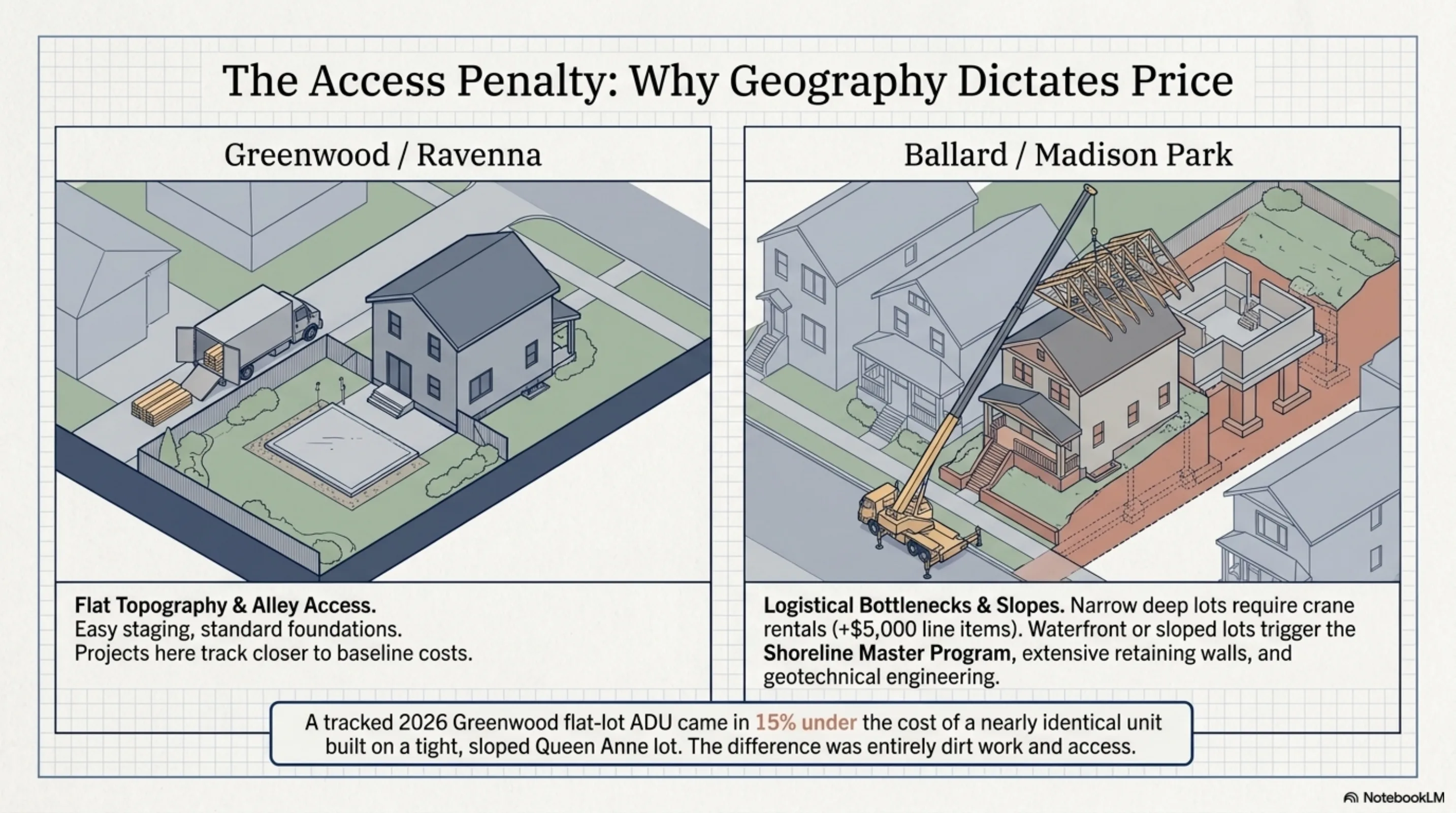
Building on Balboa Island is a lesson in logistics. The lots are famously small, leaving virtually no room for material staging. Access is often limited to narrow streets and alleys. This means materials may need to be delivered in smaller batches, and heavy equipment like concrete pump trucks can be difficult to position. Labor costs can be higher simply due to the added time spent on logistics., the historic character of the island means that design review can be stringent, with an emphasis on maintaining the existing neighborhood aesthetic. Any project here requires a contractor with surgical precision and immense patience.
Corona del Mar: Topography and Aging Infrastructure
In contrast, many parts of Corona del Mar feature larger lots, but they come with their own set of challenges. The varied topography means you might be dealing with a sloped lot, which requires more complex and expensive foundation engineering, including retaining walls and potential soil analysis. Many homes in the flower streets and older sections of CdM date back several decades. Tying a new ADU into aging electrical, sewer, and water lines can trigger requirements for expensive system-wide upgrades to bring the entire property up to current code. What starts as an ADU project can quickly expand to include a new electrical panel or main sewer line replacement.
I was on a site walkthrough in Corona del Mar last quarter for a proposed ADU over a new garage. The lot had a significant downslope. The initial budget looked reasonable, but once the geotechnical engineer's report came back, the foundation design had to be completely revised to include deep caissons drilled into the bedrock. It added nearly $60,000 to the project cost before they even got to framing. This is the kind of site-specific surprise that a good local contractor will flag as a possibility from day one.
Timeline: Realistic Week-by-Week Expectations
One of the most common points of friction between homeowners and contractors is the project timeline. A standard ADU and garage project in Newport Beach takes 32 to 56 weeks of active construction, but that clock only starts after permits are in hand. The total duration from your first call to a designer to the final inspection is often much longer.
Key takeaway
The "total project window" is what matters for your planning. From the day you decide to build until the day you can use the space, expect the process to take the better part of a year, and often longer for custom projects.
Phase 1: Design and Permitting (12 - 24 weeks)
This is the pre-construction phase where all the critical thinking happens. It is not passive waiting time.
- Weeks 1-6: Architectural Design and Engineering. You will work with an architect or designer to create the plans. A structural engineer will then ensure the plans are sound.
- Weeks 7-8: Contractor Bidding and Selection. You will submit your plans to several vetted contractors for bids.
- Weeks 9-24+: City Plan Check and Permitting. Your chosen contractor submits the plans to the City of Newport Beach. This phase can vary wildly depending on the city's workload, the complexity of your project, and whether a CDP is required.
Phase 2: Construction (32 - 56 weeks)
Once the permit is issued, the physical work begins.
- Weeks 1-4: Site Prep, Demolition, and Foundation.
- Weeks 5-10: Framing, Sheathing, and Roofing.
- Weeks 11-16: Rough-in for Mechanical, Electrical, and Plumbing (MEP).
- Weeks 17-20: Windows, Doors, and Exterior Finishes (Siding, Stucco).
- Weeks 21-26: Insulation and Drywall.
- Weeks 27-40: Interior Finishes: Flooring, Tile, Cabinetry, Countertops, Painting.
- Weeks 41-50: Fixture Installation (Plumbing, Electrical, Appliances).
- Weeks 51-56: Final Touches, Landscaping, and City Inspections.
How to Vet a Newport Beach Contractor
Choosing the right general contractor is the single most important decision you will make. A great contractor is a project manager, a problem solver, and your advocate. A bad one can turn your investment into a nightmare. Here is how to tell the difference.
Key Questions to Ask
Go beyond "Are you licensed and insured?" Dig deeper with questions that reveal their local experience and process.
- How many ADU projects have you completed in Newport Beach specifically? Can you provide addresses for three of them?
- Who will be my primary point of contact, and who is the on-site project manager?
- How do you handle project changes? What does your change order process look like?
- Have you ever managed a project that required a Coastal Development Permit?
- Can you provide a detailed, itemized bid rather than a single lump-sum price?
- What potential challenges do you see with my specific lot?
Red Flags to Watch For
Certain behaviors should give you immediate pause. Trust your gut, if something feels off, it probably is.
- An unusually low bid. This often means they have missed something in the scope or are using subpar materials and labor, and they plan to make up the difference with expensive change orders.
- A request for a large upfront deposit. California law limits down payments to 10 percent of the contract price or $1,000, whichever is less.
- Vagueness about timelines or process. A professional will have a clear system for communication, billing, and scheduling.
- Hesitation to provide their license number, insurance certificates, or references.
- Pressure to sign a contract immediately. A good partner will give you time to review the documents and do your due diligence.
Important
Always verify a contractor's license status on the California Contractors State License Board (CSLB) website. It is free, instant, and can save you from hiring someone who is not legally qualified to perform the work.
Renology Take
As an editor who sees project plans and post-mortems from across the country, the most common mistake I see homeowners in Newport Beach make is underestimating the true scope of pre-construction. They get fixated on the build itself, the framing and finishes. But in a high-regulation, high-value market like this, the project is often won or lost in the first six months of planning, engineering, and permitting. The physical construction is just the execution of that plan. The contractors who succeed here are not just builders, they are expert navigators of the local bureaucracy. Your budget and timeline must account for this reality. A great plan and a clean permit are the best foundation you can build on, long before you ever pour the concrete.
Sources & Methodology
These cost ranges are reconstructed from publicly available labor and permit data, the latest Remodeling Magazine cost-vs-value report, and Renology's own Project of the Day network, a rolling sample of real homeowner invoices we collect from Newport Beach-area contractors. Last refreshed April 2026.
- National Association of Home Builders (NAHB) Remodeling Market Index, Q1 2026
- California Department of Industrial Relations, Orange County Prevailing Wage Data, 2026
- City of Newport Beach Community Development Department, Permit Data, 2026
- California Contractors State License Board (CSLB)
- Remodeling Magazine, 2026 Cost vs. Value Report
- Renology Project of the Day Network, aggregated 2026 contractor invoices in Newport Beach
- California Coastal Commission Guidelines
Methodology
How Renology estimates adu / garage conversion costs in Newport Beach.
Renology treats this page as a planning benchmark for Newport Beach, California, not a final quote. We compare published local guide data, contractor scope patterns, permit-sensitive work, climate or site constraints, and finish-level assumptions.
Cost range
$210,000-380,000
Timeline
32-56 weeks
Source type
Editorial dataset
Local factor: Coastal Mediterranean: 12 inches annual rain, mild year-round, salt-air corrosion within 5 miles of coast.
Use these numbers to shape a scope and spot missing line items. Confirm permits, structural work, electrical, plumbing, gas, waterproofing, drainage, and code-sensitive details with the local building department and a licensed professional.
Compare against the full Renology Cost IndexNewport Beach · pre-screened
Get 3 Newport Beach ADU bids in 48 hours.
Our editors already vetted Newport Beach ADU builders. Answer 4 questions and we send 3 written bids inside 48 hours, with the real price for your scope, not their inflated first-call number.
- Free, no commission
- Pre-screened locally
- Bids inside 48 hours
Takes about 60 seconds. We'll text you when bids arrive.