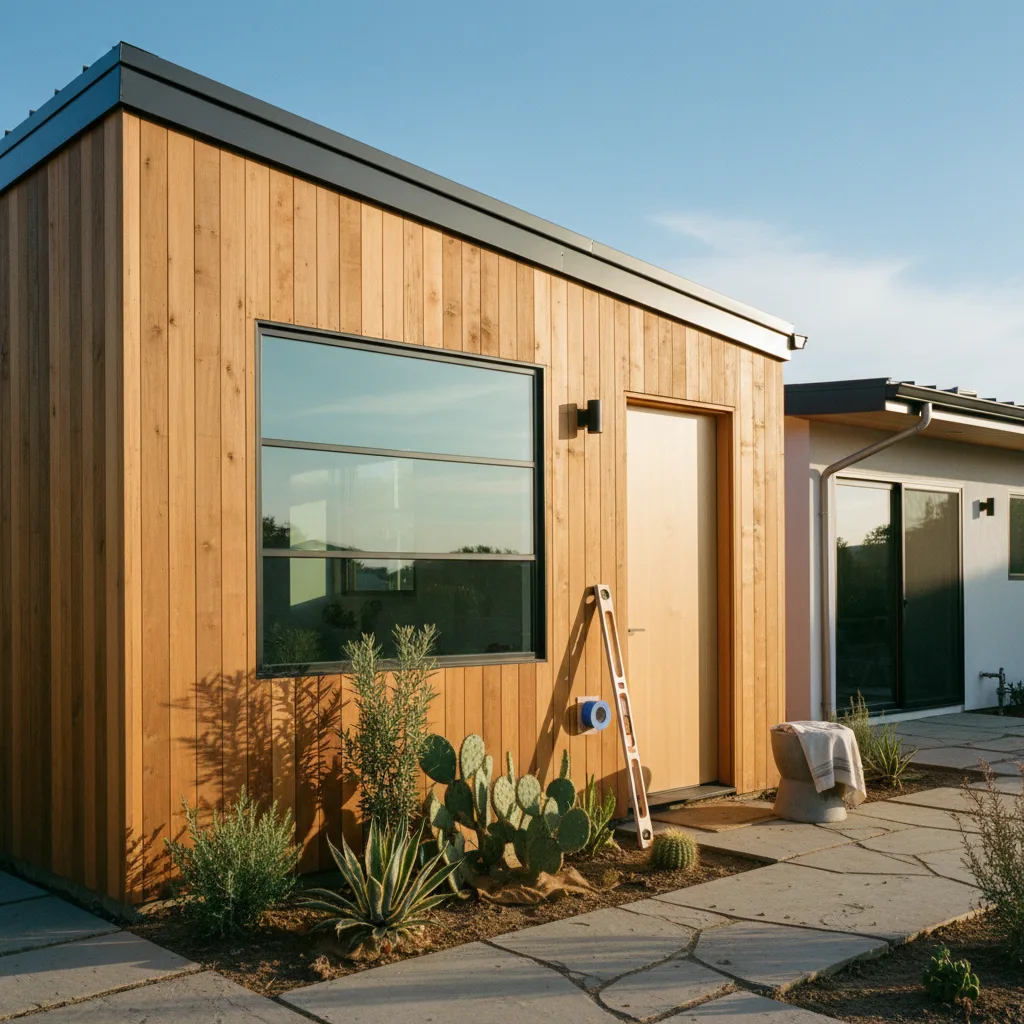
Planning an ADU and garage project in Del Mar? A full build-out typically runs $200,000 to $350,000 in 2026. Cosmetic garage updates start near $120,000, while premium, custom ADUs climb past $420,000. This is what your budget actually covers, what drives the price, and how to vet a contractor who knows Del Mar permits.
The Honest 2026 Price for an ADU & Garage in Del Mar
Let's get straight to the point. Building in Del Mar is a significant investment, and anyone quoting you national-average prices isn't being straight with you. The combination of high property values, demanding building codes, and a limited pool of top-tier labor creates a unique cost environment. For a combined Accessory Dwelling Unit (ADU) and garage project, whether it's a conversion, an addition, or a new detached structure, you need a realistic budget from day one.
Based on our analysis of contractor invoices and permit data, a standard, well-built ADU and garage project in Del Mar costs between $200,000 and $350,000. This range covers a quality build with mid-grade finishes and professional management. If you're looking at a more basic cosmetic garage refresh or a simple studio conversion with existing plumbing, you might land in the $120,000 to $200,000 range. For high-end, custom projects involving architectural design, premium materials, and challenging lot conditions, budgets frequently start at $420,000 and can easily exceed $630,000.
These are not placeholder numbers. They reflect the all-in cost, including design, permits, labor, materials, and a modest contingency. Understanding where your project fits on this spectrum is the first step to a successful build that doesn't spiral out of control.
What Drives ADU & Garage Costs in Del Mar
See what a ADU build actually costs in your Del Mar zip.
Take 4 questions →Four main factors dictate your final invoice: skilled labor, material choices, permit complexity, and the unique constraints of your specific property. Unlike a simple interior remodel, an ADU and garage project involves structure, utilities, and significant site work, each with its own cost implications.
Labor: The Premium for Del Mar Expertise
In San Diego County, and especially in coastal communities like Del Mar, skilled labor is at a premium. The high cost of living means carpenters, electricians, and plumbers command higher wages. According to the California Department of Industrial Relations, prevailing wages for trades in the San Diego area are consistently 15 to 25 percent above the national average. More importantly, you're not just paying for hands on a job. You're paying for a contractor's experience with the City of Del Mar's specific review processes and, crucially, their relationships with reliable subcontractors who will actually show up and do quality work in a high-demand market.
Materials and Finishes
While you control the final finish selections, certain material costs are baked in by local conditions. Due to the coastal environment, projects here demand corrosion-resistant materials. Stainless steel hardware, properly sealed windows, and durable exterior finishes are not upgrades; they are necessities to prevent rapid deterioration from the salt air., California's Title 24 energy code mandates specific standards for insulation, roofing, and windows, which often precludes the cheapest available options. These requirements ensure long-term efficiency but add to the upfront material cost.
Permits and Engineering
This is a major cost driver that homeowners often underestimate. An ADU is legally a new dwelling, requiring a full suite of plans: architectural, structural, mechanical, electrical, and plumbing. You will need a structural engineer to sign off on foundation and framing plans. You may need a civil engineer for grading and drainage, especially on a sloped lot. Add to that city plan check fees, inspection fees, and potentially school district fees. In Del Mar, if your property falls within the Coastal Zone, you'll also face a review from the California Coastal Commission, which adds another layer of scrutiny, time, and cost.
Del Mar ADU & Garage by Tier: 3 Real Project Examples
To make these numbers tangible, let's look at three typical project scopes we see in Del Mar. I've tracked similar projects over the last year, and they consistently fall into these buckets. The biggest variable is always the starting condition of the property and the complexity of the site.
Key takeaway
The timeline below reflects active construction. Always add eight to sixteen weeks on the front end for design, engineering, and the city's permitting process. For projects requiring Coastal Commission review, that pre-construction phase can easily stretch to six months or more.
| Tier | Scope of Work | Cost Range (2026) | Typical Timeline |
|---|---|---|---|
| Cosmetic / Conversion | Converting an existing, permitted garage into a simple studio ADU. Assumes foundation and structure are sound. Includes adding a bathroom and kitchenette, upgrading electrical panel, new insulation, drywall, flooring, and paint. No change to footprint. | $120,000 to $200,000 | 16 to 24 weeks |
| Mid-Range / New Build | A new, detached two-car garage with a 500-800 sq. ft. one-bedroom ADU above or adjacent. Standard foundation, wood framing, stucco exterior. Mid-grade finishes: LVP flooring, semi-custom cabinets, quartz countertops, quality tile. Includes all new utility connections. | $200,000 to $350,000 | 32 to 56 weeks |
| Premium / Custom | An architect-designed detached ADU and garage (800-1,200 sq. ft.). May involve a hillside foundation, structural steel, large custom windows, high-end appliances (think Wolf or Sub-Zero), fully custom cabinetry, and premium exterior materials like cedar siding or architectural panels. | $420,000 to $630,000+ | 50, 70+ weeks |
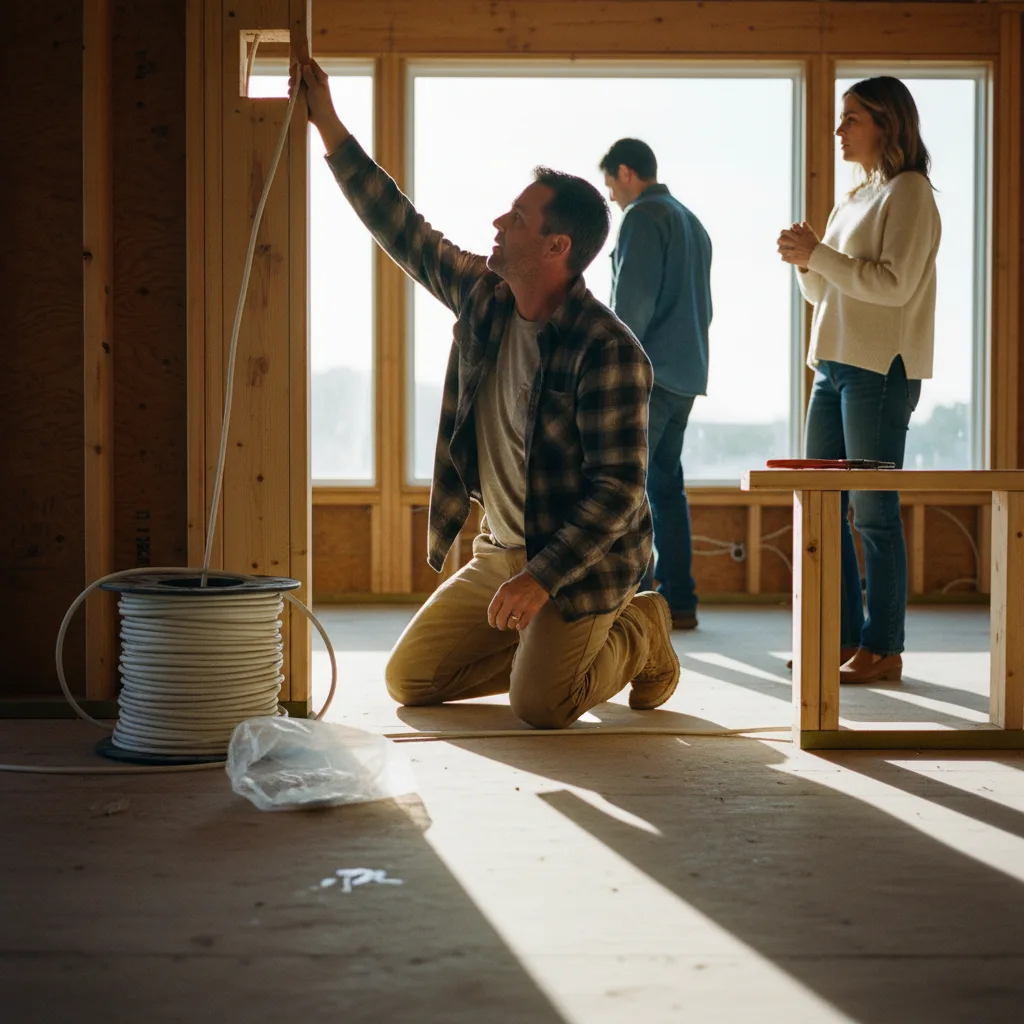
Permits and Local Code in Del Mar
Getting a permit in Del Mar is not a simple over-the-counter affair. It's a multi-step process that requires patience and a deep understanding of local regulations. Your contractor or architect will be your guide, but you need to know the key players and rules that will shape your project.
The City of Del Mar Planning Department
All plans start here. The City of Del Mar Planning Department is responsible for ensuring your project complies with local zoning, height limits, setbacks, and design guidelines. Del Mar has a Design Review Board (DRB) that scrutinizes projects to ensure they fit the community's character. This is a subjective process that can require design revisions. Your plans must be meticulously detailed to pass plan check. Any ambiguity will result in corrections and delays.
The California Coastal Commission (CCC)
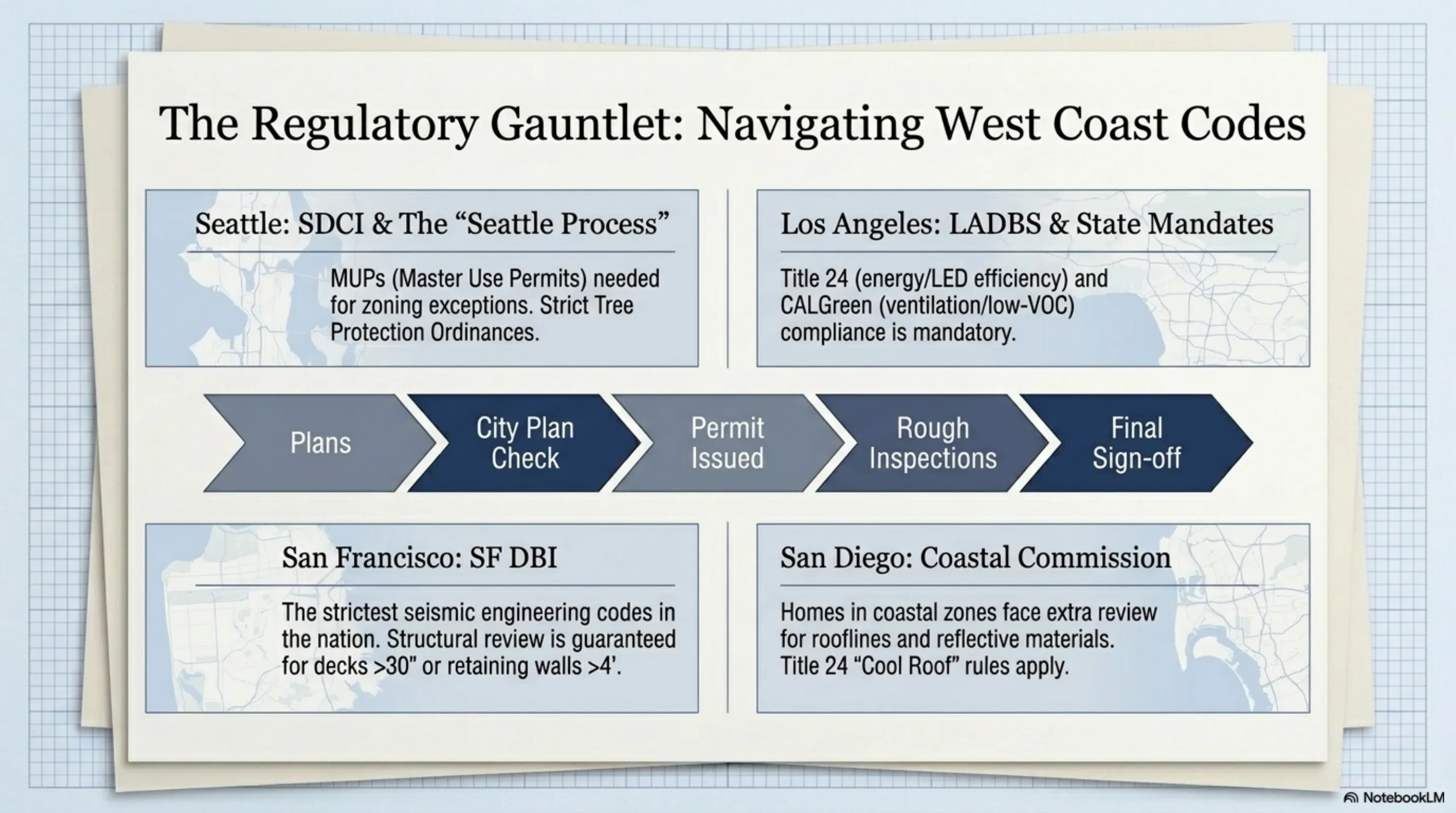
This is the big one. If your property is west of Interstate 5, it's almost certainly in the Coastal Zone. Any significant development, including a new ADU, will likely require a Coastal Development Permit (CDP) from the CCC or the city (acting on the CCC's behalf). The CCC's mandate is to protect coastal access, views, and resources. This can impact your building's height, placement on the lot, and even exterior color choices. The CCC review process runs parallel to the city's process and can add months to your pre-construction timeline.
Your lot's constraints, not your design wishes, will have the final say on your project's scope and budget.
State-Level Codes: Title 24 and CALGreen
On top of local rules, all construction must adhere to statewide building codes. The two most impactful for your budget are:
- California Title 24: These are the state's energy efficiency standards. For a new ADU, this means mandatory high-performance windows, specific insulation values, efficient HVAC systems, and potentially "cool roof" materials.
- CALGreen: The California Green Building Standards Code requires specific measures for water efficiency, construction waste diversion, and the use of low-VOC (volatile organic compound) paints and finishes.
The Del Mar Neighborhoods Where ADU & Garage Costs Diverge
Saying a project costs "X" in Del Mar is too simplistic. Where you build in this small city matters immensely. Costs can swing by more than 25 percent based on neighborhood-specific factors like lot size, topography, and regulatory oversight.
In my last walkthrough in Olde Del Mar, the challenges were immediately obvious. We were looking at a garage ADU project on a tight, sloped lot from the 1940s. Site access was limited to a narrow street, making material delivery and staging a logistical puzzle that adds real cost. The lot was small, so setback requirements were a major design constraint. And because it was west of Camino Del Mar, the project was squarely under the jurisdiction of the Coastal Commission, which meant extra scrutiny on viewsheds and neighborhood character. Labor costs are higher here simply because everything is harder to do.
Contrast that with a project I tracked in Del Mar Heights, east of the I-5. The lots are generally larger and flatter, and the homes are newer, often from the 60s and 70s. Site access is straightforward. While still subject to the city's Design Review Board, the heavy hand of the Coastal Commission is absent. This removes a significant layer of time and uncertainty from the permit process. Grading is less of an issue, and there's more room to maneuver, which translates to more efficient work and lower labor costs for the same square footage.
Timeline: Realistic Week-by-Week Expectations
A successful project runs on a realistic schedule. The biggest mistake homeowners make is underestimating the pre-construction phase. The clock doesn't start when the first hammer swings; it starts the day you hire your designer or architect.
Pro tip
Do not order a single appliance or piece of furniture until your building permits are in hand. A delay in plan check can easily push your start date by months, leaving you to pay for storage.
- Weeks 1-8: Design & Engineering. This is where you work with an architect or designer to create the plans. It involves initial concepts, revisions based on your feedback, and ultimately, the creation of detailed construction documents. Structural and other engineering happens concurrently.
- Weeks 9-20: Permitting. Your complete plan set is submitted to the City of Del Mar. This is not a passive waiting period. The city's plan checker will likely return comments or corrections that your designer must address and resubmit. If CCC review is required, this phase can extend significantly.
- Weeks 21-25: Bidding & Contractor Selection. With approved plans, you can get firm, apples-to-apples bids from contractors. This is also when you'll finalize the contract and your contractor will schedule subcontractors and order long-lead-time materials like windows and custom doors.
- Weeks 26-30: Site Prep & Foundation. Construction begins. This includes demolition (if any), grading the site, trenching for utilities, and pouring the concrete foundation and slab.
- Weeks 31-36: Framing & Rough-Ins. The structure goes up. Walls are framed, the roof is put on, and windows are installed. This is followed by the "rough-in" phase, where plumbers, electricians, and HVAC technicians run all the pipes, wires, and ducts through the walls.
- Weeks 37-48: Exterior & Interior Finishes. The building is sealed from the weather with exterior finishes like stucco or siding. Inside, insulation and drywall go up, followed by painting, flooring, tile work, and cabinet installation.
- Weeks 49-56: Fixtures, Landscaping & Final Inspection. The final details come together. Light fixtures, plumbing fixtures, and appliances are installed. Any required landscaping or hardscaping is completed. This phase concludes with a final inspection from the city. Once you pass, you receive your Certificate of Occupancy.
How to Vet a Del Mar Contractor
Finding the right contractor is the single most important decision you'll make. In a market like Del Mar, you need someone with specific local experience, not just a general builder. A cheap bid from an out-of-area contractor is often a red flag that they don't understand the real costs of working here.
Key Questions to Ask Every Potential Contractor
Go beyond "Are you licensed and insured?" Dig deeper with these questions:
- How many ADU or garage projects have you completed in Del Mar specifically in the last three years?
- Can you provide me with the addresses of two of those projects so I can do a drive-by?
- Which architects or designers do you typically work with in this area?
- Have you ever managed a project that required a Coastal Development Permit? Can you walk me through that process?
- How do you handle project management and communication? Do you use a software portal? How often will we have site meetings?
- What is your standard contingency percentage, and what are the most common issues that trigger change orders on projects like mine?
Important
A professional contractor will welcome these questions. Evasiveness is a major red flag. Also, verify their license on the California Contractors State License Board (CSLB) website. It's free and takes two minutes.
Red Flags to Watch For
- The Vague, Lowball Bid: The lowest bid is often the least detailed. It's a sign the contractor has left things out and plans to make up the difference with expensive change orders later. A good bid is several pages long and itemizes costs for each phase.
- High-Pressure Sales Tactics: A good contractor is busy. They won't pressure you to sign a contract on the spot or offer a "special price" if you commit today.
- Large Upfront Deposit: California law limits contractor down payments to 10 percent of the contract price or $1,000, whichever is less. Anyone asking for more is breaking the law.
Renology Take
As the structural editor at Renology, I see homeowners make the same critical mistake over and over: they fall in love with a design before they understand their property. In a place like Del Mar, the land dictates the project. Before you spend a dollar on an architect, spend a few hundred on a consultation with a contractor or a surveyor to understand your true constraints. Do you have the setbacks for a detached unit? Is the sewer lateral accessible? What are the real-world implications of your lot's slope? Answering these pragmatic questions first saves you tens of thousands in wasted design fees and months of frustration. The most beautiful plan is worthless if it's unbuildable on your lot or un-permittable by the city. Start with the ground truth, then design from there.
Sources & Methodology
These cost ranges are reconstructed from publicly available labor and permit data, the latest Remodeling Magazine cost-vs-value report, and Renology's own Project of the Day network, a rolling sample of real homeowner invoices we collect from Del Mar-area contractors. Last refreshed April 2026.
- National Association of Home Builders (NAHB) Remodeling Market Index, Q1 2026
- California Department of Industrial Relations, San Diego County Prevailing Wage Data, 2026
- City of Del Mar Planning Department Permit Data, 2026
- California Coastal Commission Permit Filings, 2026
- Remodeling Magazine, 2026 Cost vs. Value Report
- Renology Project of the Day Network, aggregated 2026 contractor invoices in Del Mar
Methodology
How Renology estimates adu / garage conversion costs in Del Mar.
Renology treats this page as a planning benchmark for Del Mar, California, not a final quote. We compare published local guide data, contractor scope patterns, permit-sensitive work, climate or site constraints, and finish-level assumptions.
Cost range
$200,000-350,000
Timeline
32-56 weeks
Source type
Editorial dataset
Local factor: Coastal Mediterranean: 10 inches annual rain, mild year-round (60-75F), salt-air corrosion within 5 miles of coast.
Use these numbers to shape a scope and spot missing line items. Confirm permits, structural work, electrical, plumbing, gas, waterproofing, drainage, and code-sensitive details with the local building department and a licensed professional.
Compare against the full Renology Cost IndexDel Mar · pre-screened
Get 3 Del Mar ADU bids in 48 hours.
Our editors already vetted Del Mar ADU builders. Answer 4 questions and we send 3 written bids inside 48 hours, with the real price for your scope, not their inflated first-call number.
- Free, no commission
- Pre-screened locally
- Bids inside 48 hours
Takes about 60 seconds. We'll text you when bids arrive.