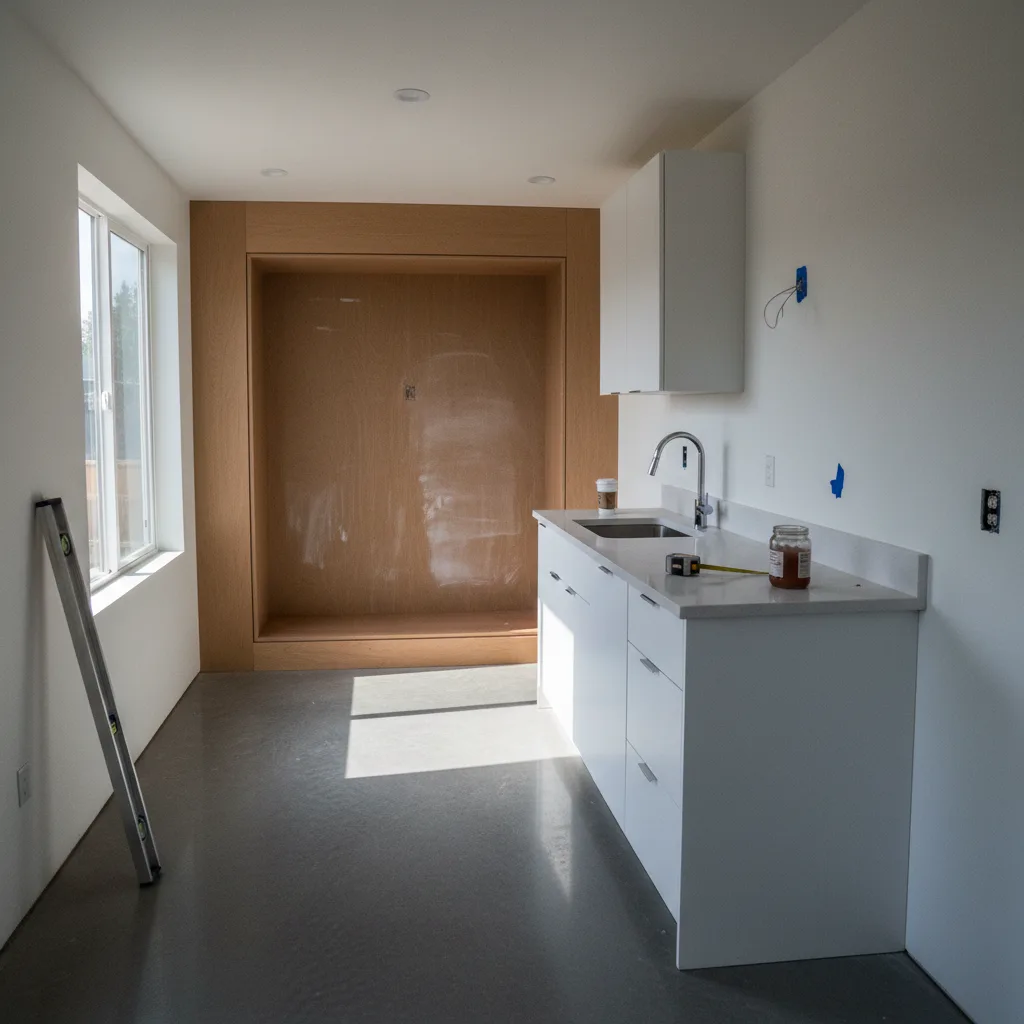
Planning an ADU and garage in Issaquah? A full project typically runs $180,000 to $320,000 in 2026. Value-engineered builds start near $110,000, while premium custom work climbs past $385,000. This is what your budget covers, what drives the price, and how to find a pro who knows Issaquah.
The Honest 2026 Price for an ADU and Garage in Issaquah
Let's get straight to the point. Building an Accessory Dwelling Unit (ADU), whether attached, detached, or above a new garage, is a significant construction project. In Issaquah, the combination of high demand for skilled labor, challenging terrain, and rigorous building codes sets a firm price floor. Based on our analysis of contractor invoices and permit data, a professionally managed ADU and garage project in 2026 will land squarely in the $180,000 to $320,000 range. This figure represents a complete, turn-key project, from foundation to final paint.
Can you spend less? Yes. A more basic, value-engineered project with standard finishes might start around $110,000. This often involves converting an existing garage rather than building a new structure from the ground up. On the other end of the spectrum, a high-end, custom-designed ADU with premium materials, complex architecture, and extensive site work can easily exceed $385,000, sometimes pushing past $575,000 for architecturally significant builds on difficult lots.
The key is to understand that these are not estimates pulled from a national database. They reflect the real-world cost of concrete, lumber, labor, and permits right here in the Issaquah and greater Eastside market. Understanding what goes into that number is the first step to a successful project.
What Drives ADU and Garage Costs in Issaquah
See what a ADU build actually costs in your Issaquah zip.
Take 4 questions →Several factors converge to shape the final price tag on your project. It is not just about square footage or the quality of your countertops. The context of building in this specific part of King County plays a massive role. I see homeowners get caught off guard by these regional realities all the time.
Labor and Materials: The Seattle Premium
Issaquah is firmly within the Seattle metropolitan area's high-cost construction market. We have a deep pool of talented craftspeople, but demand consistently outstrips supply, which means you pay a premium for qualified, licensed, and insured electricians, plumbers, framers, and finishers. According to the National Association of Home Builders, labor accounts for roughly 40 to 50 percent of a new construction project's budget. Here, it is often on the higher end of that scale. Material costs are also influenced by our location. While we have good access to lumber from the Pacific Northwest, specialty items and logistics for getting everything to a job site add up.
Site Conditions and Lot Constraints
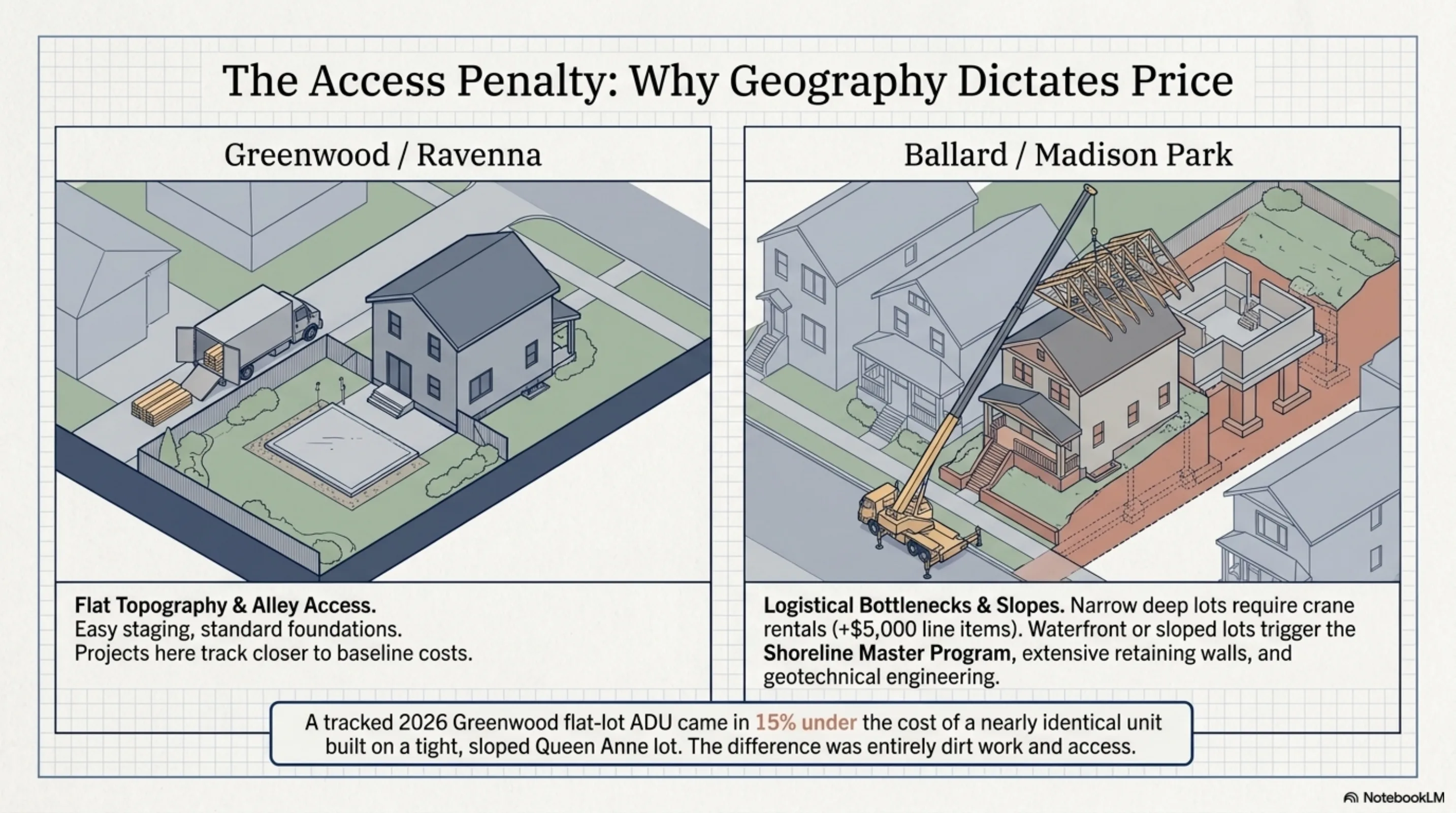
This is the big one that many homeowners underestimate. Issaquah is not flat. Many neighborhoods are built on hillsides, which introduces complexity and cost.
- Excavation and Foundation: A sloped lot requires more extensive earthwork, retaining walls, and potentially a more complex foundation design like stepped footings or piers. This is not a line item you can easily shrink.
- Access: Can a concrete truck or excavator easily get to your backyard? Tight access on older lots or in dense new developments can mean more labor hours and specialized equipment.
- Utilities: Tying into existing sewer, water, and electrical lines is a major cost. The further your new ADU is from the main house's connection points, the more trenching and cost you will incur. In some cases, an undersized electrical panel in the main house will need a costly upgrade to support the new unit.
Permits, Fees, and Engineering
You are not just paying for a builder. Before a single nail is hammered, you will invest in design, structural engineering, and a permit package for the City of Issaquah. These "soft costs" can represent 10 to 20 percent of your total budget. This includes architectural plans, structural calculations (especially important for our seismic zone), and the city's plan review and permit fees. Do not mistake these for bureaucratic hurdles, they are essential for ensuring your new structure is safe, legal, and built to last.
Key takeaway
The biggest cost driver is not the grade of your materials, it is the scope of the work. Adding square footage, moving walls, or altering plumbing and electrical layouts will impact your budget far more than choosing a premium tile over a standard one. Lock in your scope before you sign a contract.
Issaquah ADU and Garage by Tier: Three Real Project Examples
To make the numbers more tangible, let's break down what you can expect at three distinct budget levels. I have seen projects like these all over the Eastside. They illustrate how scope, materials, and complexity influence the final cost and timeline. Notice how the timeline expands significantly with structural work and custom orders.
| Tier | Typical Scope | Cost Range | Timeline (Post-Permit) |
|---|---|---|---|
| Value-Engineered | Conversion of an existing garage. No new foundation. Standard grade finishes (laminate counters, vinyl plank flooring). Basic kitchenette and bathroom. Pre-fab cabinets. Minimal changes to exterior. | $110,000 - $180,000 | 16 - 24 Weeks |
| Mid-Range / Standard | New detached ADU (400-800 sq ft) with a one or two-car garage below. Full kitchen with stone counters and mid-grade appliances. Tiled bathroom. Good quality windows and doors. Some custom elements. Professional design input. | $180,000 - $320,000 | 32 - 56 Weeks |
| Premium / Custom | Architect-designed ADU (800-1,000 sq ft) over a custom garage. Significant site work on a challenging lot. High-end finishes (hardwood floors, custom cabinetry, luxury appliances). Structural complexities like vaulted ceilings or large glass walls. | $385,000 - $575,000+ | 50 - 70 Weeks |
Permits and Local Code in Issaquah
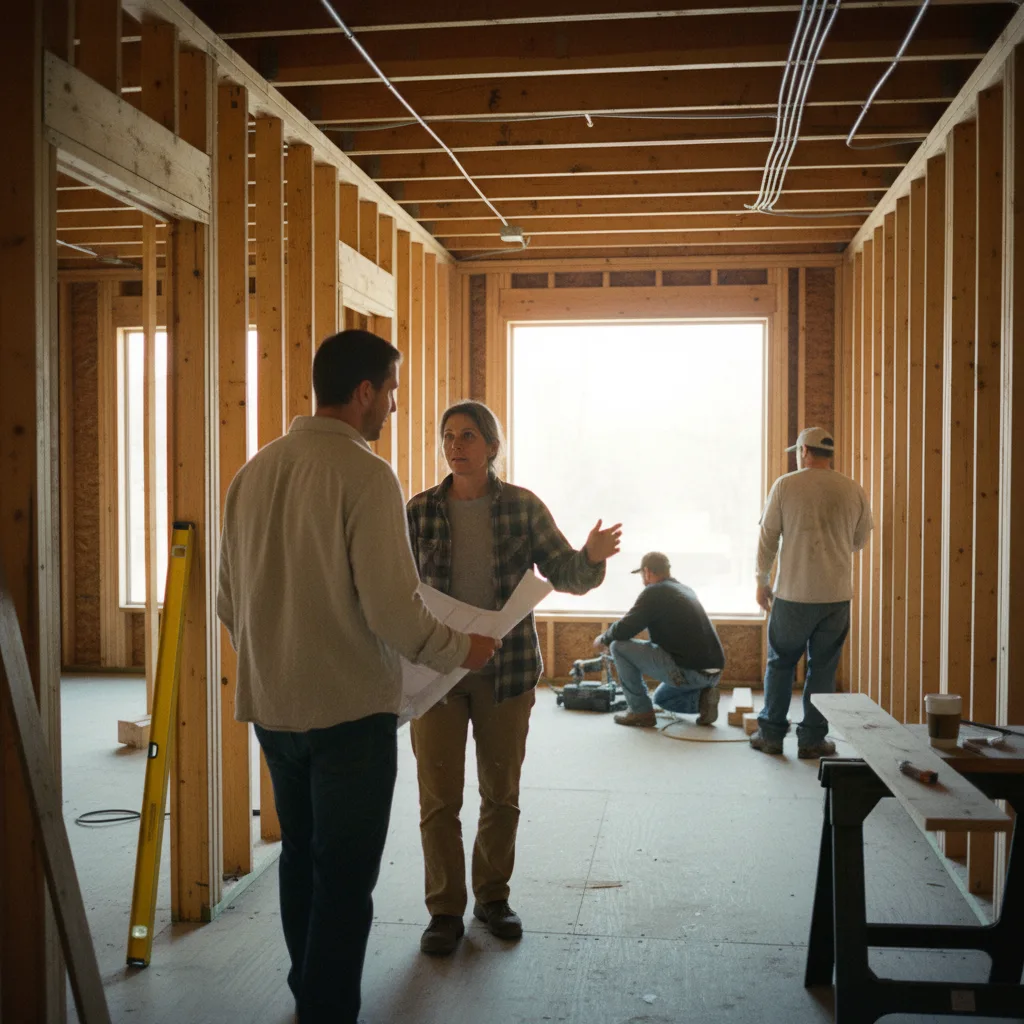
Building in Issaquah means working directly with the City of Issaquah Development Services Department. They are the authority for all building permits, inspections, and land use regulations. Trying to work around the official process is a recipe for disaster, leading to stop-work orders, fines, and the potential for having to tear out unpermitted work. A professional contractor will handle this entire process, but you should be aware of the key rules that will govern your project.
Understanding Issaquah Municipal Code (IMC) Title 18
The rulebook for your project is the Issaquah Municipal Code, specifically Title 18, which covers zoning and land use. For ADUs, section IMC 18.07.480 is critical. It lays out the specific requirements your project must meet. Key provisions include:
- Size Limits: A detached ADU cannot exceed 1,000 square feet of gross floor area. This ensures these secondary units remain subordinate to the main house.
- Owner Occupancy: The property owner must reside in either the primary residence or the ADU for at least six months of the year. This is intended to prevent properties from becoming de facto duplexes for absentee landlords.
- Parking: Generally, one additional off-street parking space is required for the ADU, unless you meet specific exemptions, such as being located near a major transit stop.
The city's plan review is not an obstacle, it is your first line of quality control, ensuring your project is safe and compliant from the start.
The Permit and Inspection Timeline
Once your plans are submitted, the city's plan review process begins. For a project as complex as an ADU, expect this to take several weeks, sometimes a few months if the plans are incomplete or require revisions. After the permit is issued, a series of inspections will occur at critical stages of construction: foundation, framing, plumbing, electrical, and finally, the certificate of occupancy. Each inspection must be passed before the contractor can proceed to the next phase.
The Issaquah Neighborhoods Where ADU and Garage Costs Diverge
A project in Olde Town is a completely different animal from one in the Issaquah Highlands. The character, age, and topography of your specific neighborhood have a direct and significant impact on the complexity and cost of an ADU project. I've walked job sites in all these areas, and the challenges are unique to each.
Talus and the Issaquah Highlands
These master-planned communities are known for their modern homes, scenic views, and very steep slopes. Building here presents specific challenges:
- Geotechnical Engineering: The "critical slopes" common in these areas often require a geotechnical report and specialized foundation engineering to ensure stability. This is a significant upfront cost.
- Strict Design Guidelines: Homeowners Associations (HOAs) in these neighborhoods have rigorous design review processes. Your ADU's exterior materials, colors, and architectural style will need to conform to the community's aesthetic, which can limit choices and increase costs.
- Access and Staging: Lots can be tight, and staging materials without disrupting the neighborhood requires careful planning. This can translate to higher labor costs.
Olde Town Issaquah
The historic heart of the city offers charm but comes with its own set of construction realities.
- Smaller Lots: The lots are typically smaller and flatter, which can simplify foundation work. However, meeting setback requirements for a new detached structure can be a major design puzzle.
- Aging Infrastructure: Tying into older city sewer and water mains can sometimes reveal the need for upgrades. Similarly, the electrical service to an older home may be insufficient to power an ADU and require a costly heavy-up.
- Zoning Nuances: While the city-wide ADU code applies, historic context or unique zoning from a bygone era can sometimes introduce variables that require careful navigation during the permitting process.
Pro tip
Before you even hire a designer, use the City of Issaquah's online mapping tools to check your property for any critical areas like steep slopes, wetlands, or stream buffers. Discovering these late in the design process can cause expensive delays and redesigns.
Timeline: Realistic Week-by-Week Expectations
One of the most common points of friction between homeowners and contractors is the project timeline. A full ADU and garage build is a marathon, not a sprint. A realistic timeline helps manage expectations and reduces stress. Here is a typical breakdown for a standard, mid-range project once financing is secured.
In my last walkthrough of a project in Talus, the homeowner was surprised the foundation and retaining walls took nearly six weeks. But with the steep grade and the sheer volume of concrete and rebar required for a seismically sound structure, that's just the reality. Underestimating the time for site prep and foundation work is a classic mistake.
Phase 1: Pre-Construction (8 - 16 Weeks)
- Weeks 1-4: Design and Engineering. Working with an architect or designer to create the construction drawings. This involves back-and-forth to refine the layout, style, and materials. Structural engineering happens concurrently.
- Weeks 5-14: Permitting. The completed plans are submitted to the City of Issaquah. The timeline here depends heavily on the city's workload and the quality of the submission. Expect at least one round of comments or corrections from the plan checker.
- Weeks 15-16: Contractor Final Bids and Material Ordering. With the approved permit in hand, you can sign a contract. Your builder will immediately begin ordering long-lead-time items like windows, custom doors, and trusses.
Phase 2: Active Construction (32 - 56 Weeks)
- Weeks 1-6: Site Prep and Foundation. Excavation, grading, utility trenching, and pouring the concrete foundation and garage slab. This phase is heavily weather-dependent.
- Weeks 7-12: Framing and Rough-ins. The structure takes shape. Walls go up, the roof is framed and sheathed. Plumbers, electricians, and HVAC technicians run all the pipes, wires, and ducts inside the open walls.
- Weeks 13-20: Exterior and Insulation. Windows and doors are installed, and the siding and roofing are completed, making the structure watertight. Insulation is installed, and the whole building passes a critical framing and rough-in inspection.
- Weeks 21-30: Interior Finishes. Drywall is hung, taped, and textured. This is followed by priming and painting, cabinet installation, and flooring.
- Weeks 31-36: Final Finishes and Fixtures. Countertops are installed, tile work is completed, and light fixtures, plumbing fixtures, and appliances are put in place. This is where the space really starts to look like a home.
- Weeks 37-40: Punch List and Final Inspection. The builder walks through the project with you to create a "punch list" of any small items needing correction. After these are addressed, the city performs its final inspection and issues a Certificate of Occupancy.
Editor's note
This timeline assumes no major delays from supply chain issues, weather, or unexpected site conditions. It is wise to build a buffer of a few weeks into your personal planning for moving in or renting the unit.
How to Vet an Issaquah Contractor
Finding the right contractor is the single most important decision you will make. A great contractor is a partner who protects your investment, while a bad one can turn your project into a financial and emotional nightmare. Do not just go with the lowest bid. Rigorous vetting is non-negotiable.
Questions to Ask Every Potential Builder
When you interview your short list of three contractors, have these questions ready. Their answers will tell you a lot about their professionalism and experience.
- How many ADU or detached garage projects have you completed in Issaquah or the Eastside in the last two years? (You want specific experience, not a generalist).
- Can you provide me with the addresses of three recent projects and the contact information for those homeowners?
- How do you handle project management and communication? Do you use a specific software? How often will we have site meetings?
- What is your process for handling change orders? How are costs and schedule impacts documented and approved?
- What are the biggest challenges you anticipate with my specific lot and project? (A good contractor will have already spotted potential issues).
- Can you show me your current Washington State contractor's license and your certificate of insurance?
Red Flags to Watch For
Be wary of contractors who exhibit any of these behaviors. They are often signs of inexperience, financial instability, or a lack of professionalism.
- An unusually low bid. This is the biggest red flag. It often means they have missed something in the scope, are using uninsured labor, or plan to make up the difference with expensive change orders.
- Vague contracts. A professional contract is incredibly detailed. It specifies materials, timelines, payment schedules, and a clear scope of work. If the contract is thin on details, walk away.
- High-pressure sales tactics. A good builder will not pressure you to sign a contract on the spot or offer a "special price" that is only good for today.
- Requests for large upfront payments. A reasonable down payment to cover initial material orders is standard, but it should not be more than 10 to 15 percent of the total project cost. Payments should be tied to project milestones.
Important
Always verify a contractor's license yourself on the Washington State Department of Labor & Industries (L&I) website. It is a free, instant search that confirms they are registered, bonded, and insured. Never take their word for it.
Renology Take
After tracking hundreds of structural addition projects, the pattern I see most often is homeowners focusing intensely on the cosmetic finishes while under-budgeting for the unglamorous, foundational work. Everyone gets excited about the kitchen layout or the bathroom tile, but the real budget-busters are hidden. It is the cost of the geotechnical report for a sloped lot, the thousand-dollar-per-foot cost of trenching for a new sewer line, or the surprise $5,000 needed to upgrade the main house's electrical panel. These "below ground and behind the walls" costs are non-negotiable and can easily consume 20 to 30 percent of your total budget. A successful project starts with a realistic budget for the entire scope, not just the parts you can see and touch at the end.
Sources & Methodology
These cost ranges are reconstructed from publicly available labor and permit data, the latest Remodeling Magazine cost-vs-value report, and Renology's own Project of the Day network, a rolling sample of real homeowner invoices we collect from Issaquah-area contractors. Last refreshed April 2026.
- City of Issaquah Development Services Department, 2026 Permit Fee Schedule
- Washington State Department of Labor & Industries, Prevailing Wage Data for King County, 2026
- National Association of Home Builders (NAHB) Construction Cost Survey, 2026
- Remodeling Magazine, 2026 Cost vs. Value Report (Seattle, WA)
- U.S. Census Bureau, Building Permits Survey for the Seattle-Tacoma-Bellevue, WA MSA
- Issaquah Municipal Code (IMC) Title 18, Land Use Code
- Renology Project of the Day Network, aggregated 2026 contractor invoices in Issaquah
Methodology
How Renology estimates adu / garage conversion costs in Issaquah.
Renology treats this page as a planning benchmark for Issaquah, Washington, not a final quote. We compare published local guide data, contractor scope patterns, permit-sensitive work, climate or site constraints, and finish-level assumptions.
Cost range
$180,000-320,000
Timeline
32-56 weeks
Source type
Editorial dataset
Local factor: Pacific Northwest cool-wet (Köppen Csb): 38 inches annual rain, mild summers, frost-free winters near sea level.
Use these numbers to shape a scope and spot missing line items. Confirm permits, structural work, electrical, plumbing, gas, waterproofing, drainage, and code-sensitive details with the local building department and a licensed professional.
Compare against the full Renology Cost IndexIssaquah · pre-screened
Get 3 Issaquah ADU bids in 48 hours.
Our editors already vetted Issaquah ADU builders. Answer 4 questions and we send 3 written bids inside 48 hours, with the real price for your scope, not their inflated first-call number.
- Free, no commission
- Pre-screened locally
- Bids inside 48 hours
Takes about 60 seconds. We'll text you when bids arrive.