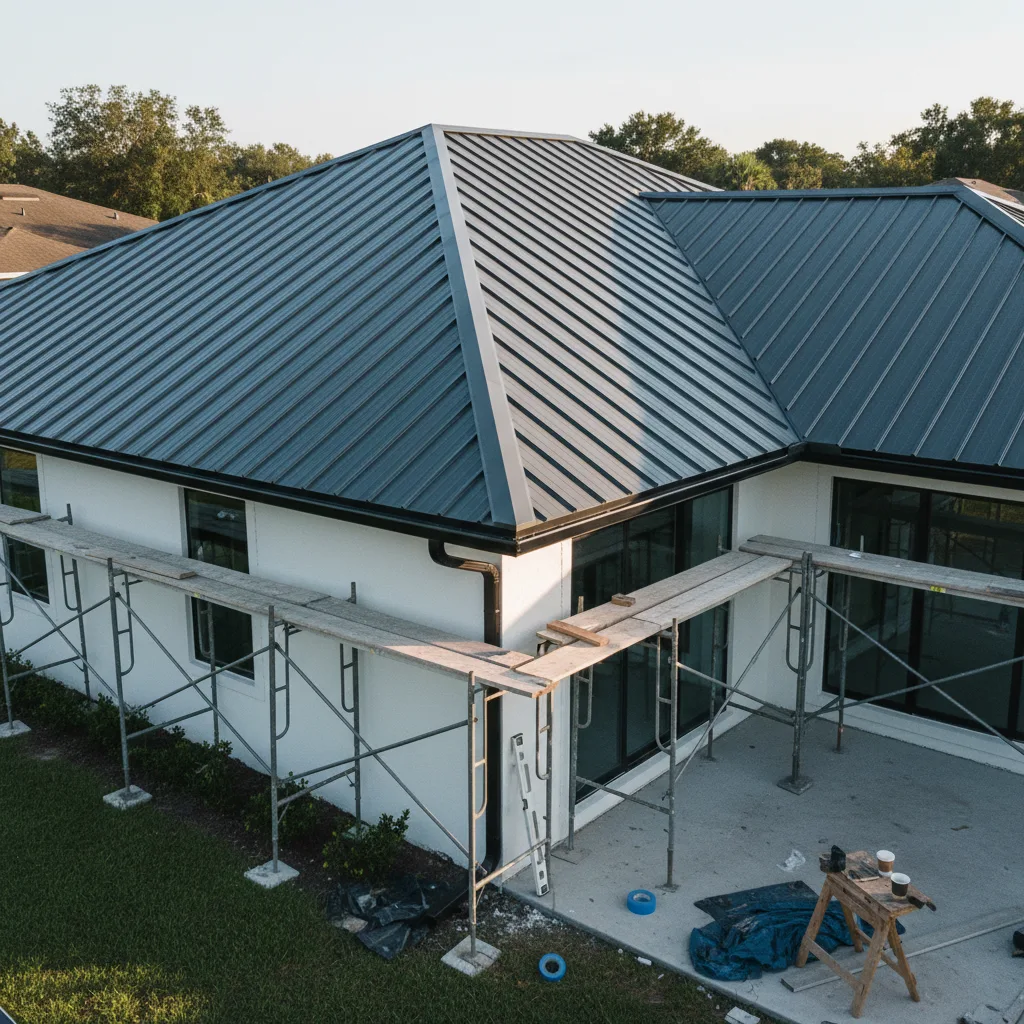
A roof replacement in Orlando in 2026 runs $11,800 to $21,500 for a typical single-family home. Florida's wind-borne-debris code and the state's product-approval rules drive both the material choice and the cost, and they are the reason an Orlando roof is rarely a simple tear-off-and-replace.
The Honest 2026 Price for Roofing in Orlando
For a standard asphalt-shingle re-roof on a 2,000 to 2,500 square foot home, expect $11,800 to $21,500. Architectural shingles rated for high wind sit in the middle; standing-seam metal and tile push toward and past the high end. Premium assemblies with full code upgrades can run to $38,000. The low end assumes a clean tear-off with no rotten decking and no truss repair.
What Drives Roofing Costs in Orlando
See what a roofing project actually costs in your Orlando zip.
Take 4 questions →Labor and Crew
Roofing labor in Central Florida is priced for heat and storm risk. Crews work early to beat the afternoon storms, and a reputable company carries the insurance and licensing the state requires. Labor is typically 40 to 55 percent of the total.
Materials and Florida Product Approval
Every roofing assembly in Florida needs a Florida Product Approval number or a Miami-Dade NOA proving it meets wind and water-intrusion standards. This narrows your material list to tested systems and is non-negotiable at inspection. It also means the cheapest shingle at the big-box store is usually not a legal choice here.
Code Upgrades and the Building Envelope
Florida code can require a secondary water barrier (peel-and-stick underlayment), upgraded nailing patterns, and re-nailing of the roof deck to the trusses during a re-roof. These are the line items that separate a real Orlando bid from a lowball one.
Orlando Roofing by Tier: 3 Real Project Examples
Tier 1, architectural shingle ($11,800 to $15,600): A standard tear-off and replace on a Dr. Phillips home with high-wind-rated shingles, new underlayment, and code-required deck re-nailing. No structural surprises.
Tier 2, shingle with repairs ($15,600 to $21,500): A College Park home where the tear-off reveals soft decking and a fascia repair, plus a secondary water barrier upgrade.
Tier 3, metal or tile ($22,000 to $38,000): A standing-seam metal or concrete-tile roof in Winter Park, chosen for longevity and wind performance, with the heavier structure and slower install that come with it.
Permits and Local Code in Orlando
Orange County and City of Orlando Review
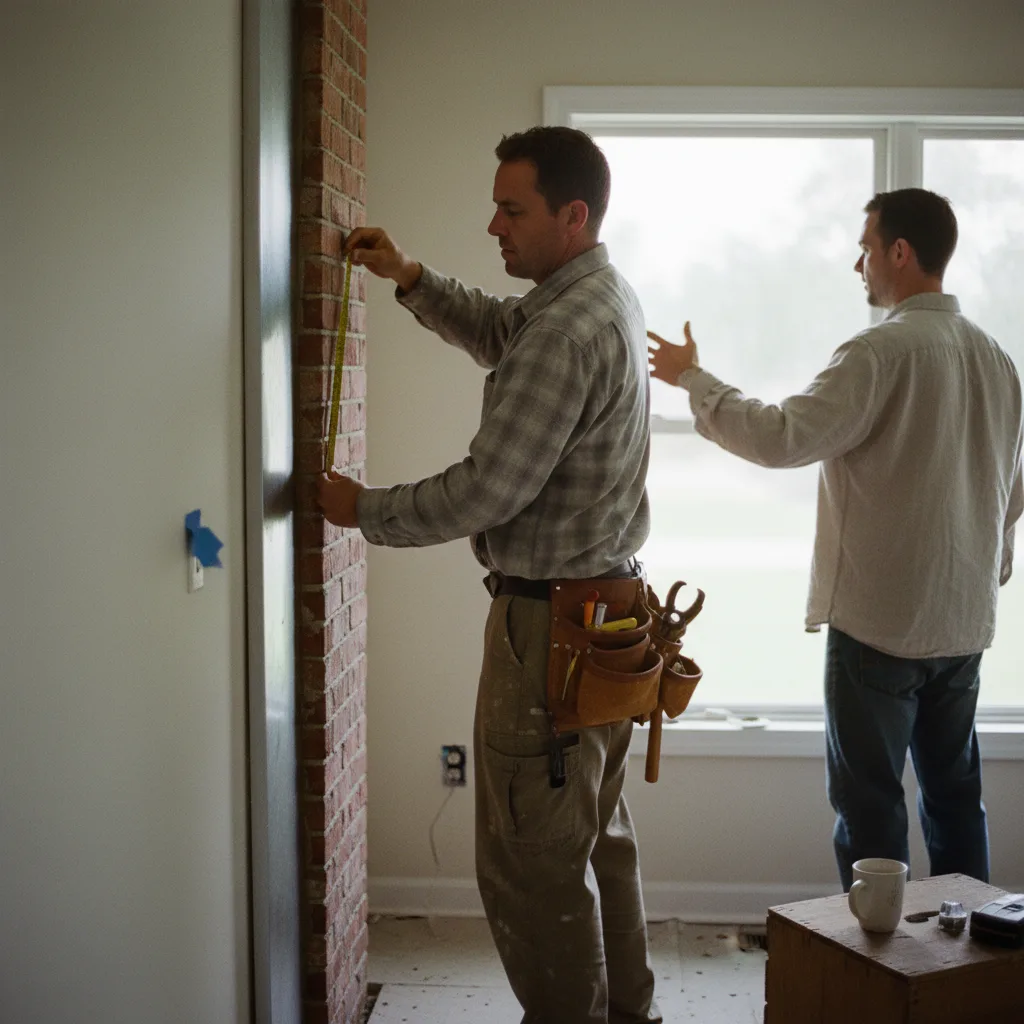
Orange County and the City of Orlando require permits for structural, roofing, electrical, plumbing, and mechanical work. Most residential permits issue in 2 to 6 weeks; plan review can extend that during hurricane-season backlogs. Florida product approval (NOA or Florida Product Approval number) is required for roofing assemblies and exterior openings.
Wind-Borne-Debris and Inspections
Orlando sits in Florida's wind-borne-debris region, so the assembly, fasteners, and underlayment all have to meet the wind code, and a mid-roof inspection (the "dry-in" inspection) is mandatory before the final cover goes on. A contractor who skips the dry-in inspection is skipping the step that protects your insurance claim after a storm.
The Orlando Neighborhoods Where Roofing Costs Diverge
Winter Park and Baldwin Park
Mature oak canopy means more debris, more shade-driven moss and algae, and sometimes tree-trimming before a crew can stage. Tile and metal are more common here, which raises the baseline.
Lake Nona and Dr. Phillips
Newer homes and HOA standards can dictate shingle color and profile, and HOA approval may precede the permit.
Timeline: Realistic Week-by-Week Expectations
Phase 1: Permit and Scheduling (2 to 6 weeks)
Permit pull, product-approval documentation, and scheduling around the weather.
Phase 2: Active Install (2 to 5 days)
Tear-off, deck inspection and re-nailing, dry-in with the mid-roof inspection, then the final cover and final inspection.
How to Vet an Orlando Roofing Contractor
Key Questions to Ask
Ask for the Florida roofing license number and verify it. Ask which Florida Product Approval or NOA the proposed system carries. Ask whether the bid includes deck re-nailing and a secondary water barrier, and confirm they pull the permit and schedule the mid-roof inspection.
Red Flags to Watch For
A bid with no product-approval reference, no dry-in inspection, or a price far below the others. After a Central Florida storm, the cheap roof is the one that leaks and the one the insurer questions.
Renology Take
An Orlando roof is a wind-and-water system, not just a layer of shingles. The bids that look expensive are usually the ones that include the code upgrades, the product approval, and the dry-in inspection that actually keep water out and keep your claim valid. Buy the system the climate requires, not the lowest number on the page.
Methodology
How Renology estimates roofing costs in Orlando.
Renology treats this page as a planning benchmark for Orlando, Florida, not a final quote. We compare published local guide data, contractor scope patterns, permit-sensitive work, climate or site constraints, and finish-level assumptions.
Cost range
$11,800-21,500
Timeline
1-3 weeks
Source type
Editorial dataset
Local factor: Humid subtropical (Köppen Cfa): about 52 inches of rain a year, hot wet summers with daily afternoon storms, and high year-round humidity. Wind-borne-debris exposure and karst (sinkhole) geology shape both code and cost.
Use these numbers to shape a scope and spot missing line items. Confirm permits, structural work, electrical, plumbing, gas, waterproofing, drainage, and code-sensitive details with the local building department and a licensed professional.
Compare against the full Renology Cost IndexOrlando · pre-screened
Get 3 Orlando roof bids in 48 hours.
Our editors already vetted Orlando roofers. Answer 4 questions and we send 3 written bids inside 48 hours, with the real price for your scope, not their inflated first-call number.
- Free, no commission
- Pre-screened locally
- Bids inside 48 hours
Takes about 60 seconds. We'll text you when bids arrive.