In this episode, we are tackling the one question every homeowner asks after the dust settles: “What do I wish I had done differently?” It’s the ghost in the machine of every project. A recent National Association of Realtors survey found that 78 percent of homeowners feel a major sense of accomplishment after a remodel, but a significant portion also harbor deep-seated home renovation regrets. These regrets almost never have to do with the paint color. They are about money, time, and communication breakdowns. We’re going to dissect the most common mistakes so you can avoid them entirely.
What This Episode Is About
The most common home renovation regrets stem not from aesthetic choices but from a rushed planning process, poor contractor vetting, and setting an inadequate budget. Avoiding these pitfalls requires shifting focus from finishes to framework, ensuring your project's foundation, the contract, the team, and the financial plan, is solid before a single wall comes down.
If you take three things from this episode, make them these:
- Regret is a process problem, not a product problem. We will show you why the contract you sign and the communication plan you establish matter more than your choice of quartz countertop.
- The right questions are uncomfortable. You need to ask potential contractors about their insurance, their payment schedule, and their process for handling mistakes. We will give you the exact script.
- A 2026 budget is not a 2024 budget. We will break down how shifts in material costs, labor availability, and financing affect project planning now.
The Real Numbers (National Picture)
Let's talk numbers. The data shows a clear pattern of optimism meeting reality. According to the National Association of the Remodeling Industry (NARI), nearly 40 percent of projects go over budget. Why? Homeowners consistently underestimate costs and fail to build in a sufficient contingency fund. The National Association of Home Builders recommends a ten to fifteen percent contingency on renovations in homes over thirty years old. Most homeowners allocate five percent, if any at all. This is the number one source of home renovation regrets.
National median spending on renovations continues to climb. To give you a sense of scale, here are typical 2026 national cost ranges for major projects. Remember, these can start lower for simple cosmetic updates or smaller condominium footprints.
- Full Kitchen Remodel: $80,000 to $155,000. This range covers everything from semi-custom cabinets and quartz countertops to moving plumbing and electrical, but it rarely includes high-end appliances which can add another $20,000.
- Primary Bathroom Remodel: $35,000 to $75,000. A project in this range involves a new layout, a quality Schluter waterproofing system, tile, fixtures, and a frameless glass shower enclosure.
- Exterior Remodel (Siding & Windows): $25,000 to $60,000. This typically involves replacing ten to fifteen windows and installing a durable siding product like James Hardie ColorPlus fiber cement.
These figures reflect the persistent shortage of skilled labor, which Bureau of Labor Statistics construction wage data confirms is the primary driver of cost increases. A detailed project budget is your best defense; learn more in our guide to renovation budgeting.
What Most Homeowners Get Wrong About This
Most homeowners believe the biggest renovation regrets are aesthetic. They fixate on choosing the wrong shade of white (is Benjamin Moore Chantilly Lace too stark?) or a backsplash tile that will look dated in five years. This is a misdirection. The real, lasting regrets are almost always procedural and financial.
The fix is to treat your renovation like a business transaction, not a creative hobby. Your relationship with your contractor is not a friendship; it is a legally binding agreement to perform a specific scope of work for a specific price. Emotional decisions lead to budget overruns and project delays. The homeowners who finish on time, on budget, and remain happy with the outcome are the ones who get the front-end work right. They understand that the most important decisions happen before the first hammer swings.
They focus on three things:
- A detailed, fixed-price contract.
- A clear communication protocol.
- A fully vetted and insured contractor.
Get these three pieces locked down, and your aesthetic choices will fall into place. Fail on any of them, and even the most beautiful finishes will not save you from regret.
The 3 Questions Every Homeowner Should Ask
3 pros, editor-screened. 4 questions.
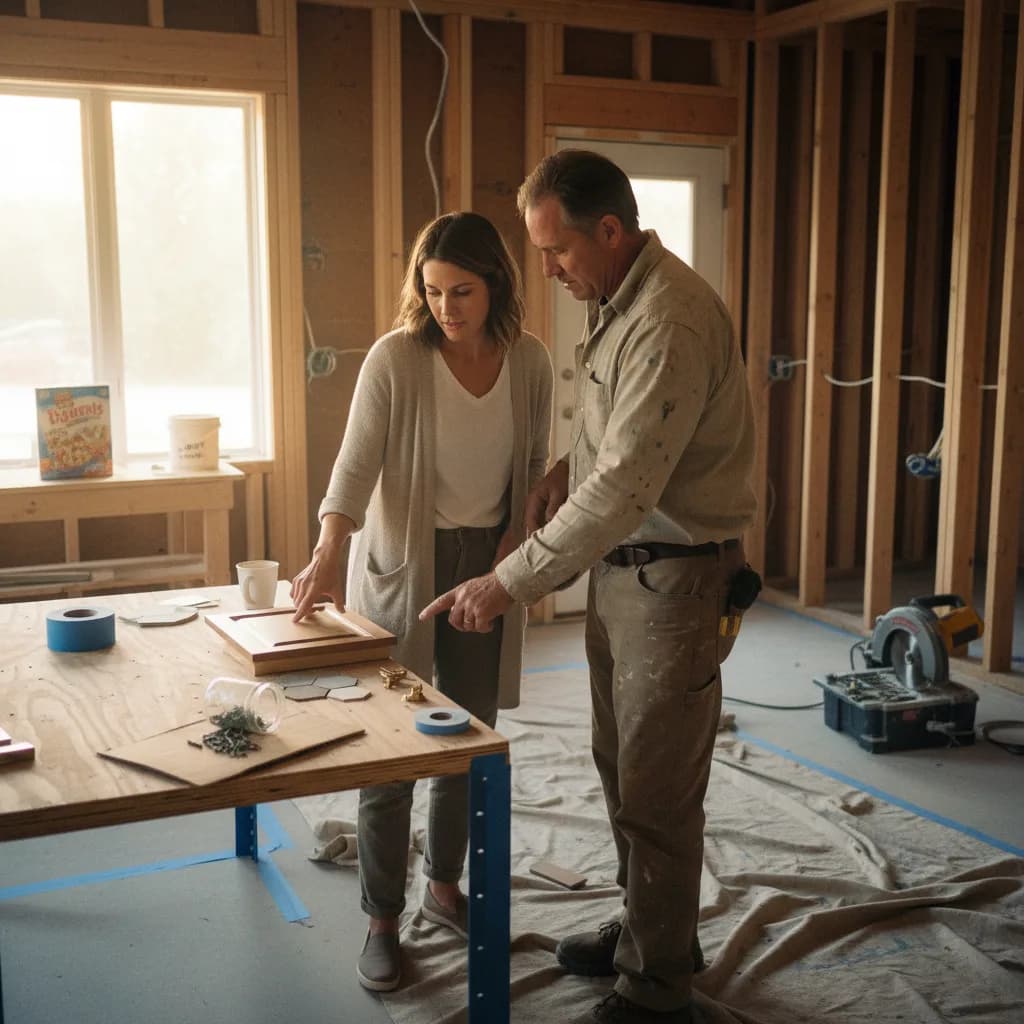
See my 3 matchesVetting a contractor is not about asking if they can do the job. It is about asking how they handle things when the job goes wrong. Cut through the sales pitch with these three direct questions before you sign anything. For a complete list, see our contractor vetting checklist.
1. “What is your process for a change order?”
Why this matters: This reveals their entire project management philosophy. Scope creep is the number one budget killer, and you need to know exactly how changes are proposed, priced, approved, and documented in writing before they are executed.
What a good answer sounds like: “Any change, whether it adds or subtracts cost, requires a formal change order document. It will detail the cost and time impact. Both of us must sign it before any new work begins.”
2. “May I have a copy of your Certificate of Insurance and your state license number?”
Why this matters: This is non-negotiable. You need to verify they carry both general liability and workers' compensation insurance. An uninsured contractor puts your entire property at risk.
What a good answer sounds like: “Absolutely. I’ll email them to you this afternoon. You can verify our license status on the state contractor board website.”
3. “How do you handle material procurement and payment draws?”
Why this matters: This question uncovers their financial stability and planning skills. A contractor who needs a huge upfront deposit may be using your money to finish their last job.
What a good answer sounds like: “We use a milestone-based payment schedule. A small deposit secures your spot, with subsequent payments tied to specific, verifiable project milestones like ‘foundation poured’ or ‘drywall complete.’”
What Changed in 2026
The renovation landscape in 2026 is different from the volatile post-pandemic years. While supply chains have largely normalized for standard materials like lumber and drywall, specialized items and high-end appliances can still have lead times of several months. Plan accordingly.
Financially, the interest rate environment has stabilized from its 2023 peaks, making HELOCs and construction loans more predictable, but borrowing costs are still a significant budget line item. On the plus side, federal Inflation Reduction Act (IRA) tax credits for energy-efficient upgrades are fully operational. For 2026, the guidelines for qualifying heat pumps, windows, and insulation have been updated, so check the Energy Star website for the latest specifications before purchasing.
On the regulatory front, many states and municipalities are now enforcing the 2024 International Energy Conservation Code (IECC), which demands higher insulation values and mandatory air-leakage testing. This adds a small cost but delivers long-term savings. The biggest challenge remains labor. The skilled trade shortage is acute, meaning the best crews are booked six to twelve months out. The biggest mistake you can make in 2026 is rushing the planning and hiring process. Proper permitting is also critical; our national permit guide can help you understand the requirements.
The Renology Take
After analyzing thousands of projects, the meta-pattern is clear. Homeowners who experience deep home renovation regrets almost always made the same foundational error: they fell in love with a result before they respected the process. They picked out tile before they had a signed contract. They discussed cabinet colors before they verified their contractor’s insurance. They focused on the fun, tangible parts and outsourced trust on the hard, boring parts.
The single most important thing to remember is this: a great renovation is not a design project. It is a project management exercise with a design component. Get the management part right, and the design will take care of itself. Vet your partners. Document everything. Plan for overages. Do the hard work upfront, and you will avoid the regret later.
Sources & Methodology
See the Renology Methodology for how sources are reviewed, ranges are normalized, and planning-data limits are handled.
- National Association of Home Builders (NAHB), Remodeling Market Index (RMI), Q1 2026
- Remodeling Magazine, 2026 Cost vs. Value Report
- National Kitchen & Bath Association (NKBA), 2026 Design Trends Report
- U.S. Census Bureau, American Housing Survey
- U.S. Bureau of Labor Statistics (BLS), Construction Occupational Employment and Wage Statistics
- EnergyStar.gov, Federal Income Tax Credits and Incentives for Energy Efficiency, 2026 Guidelines
- Renology Editorial Methodology: Analysis of post-project homeowner surveys and interviews.
Frequently Asked Questions
What is the single most common home renovation regret?
How can I avoid regretting my choice of contractor?
Is it a mistake to choose trendy finishes over timeless ones?
Should I live in my home during a major renovation?
Get 3 renovation bids in 48 hours.
Our editors already vetted contractors. Answer 4 questions and we send 3 written bids inside 48 hours, with the real price for your scope, not their inflated first-call number.
- Free, no commission
- Pre-screened locally
- Bids inside 48 hours
Takes about 60 seconds. We'll text you when bids arrive.
Sources
- National Association of Home Builders (NAHB), Remodeling Market Index (RMI)
- Remodeling Magazine, 2026 Cost vs. Value Report
- National Kitchen & Bath Association (NKBA), 2026 Design Trends Report
- U.S. Census Bureau, American Housing Survey
- U.S. Bureau of Labor Statistics (BLS), Construction Occupational Employment and Wage Statistics
- EnergyStar.gov, Federal Income Tax Credits and Incentives for Energy Efficiency
- Renology Editorial Methodology: Analysis of post-project homeowner surveys and interviews.