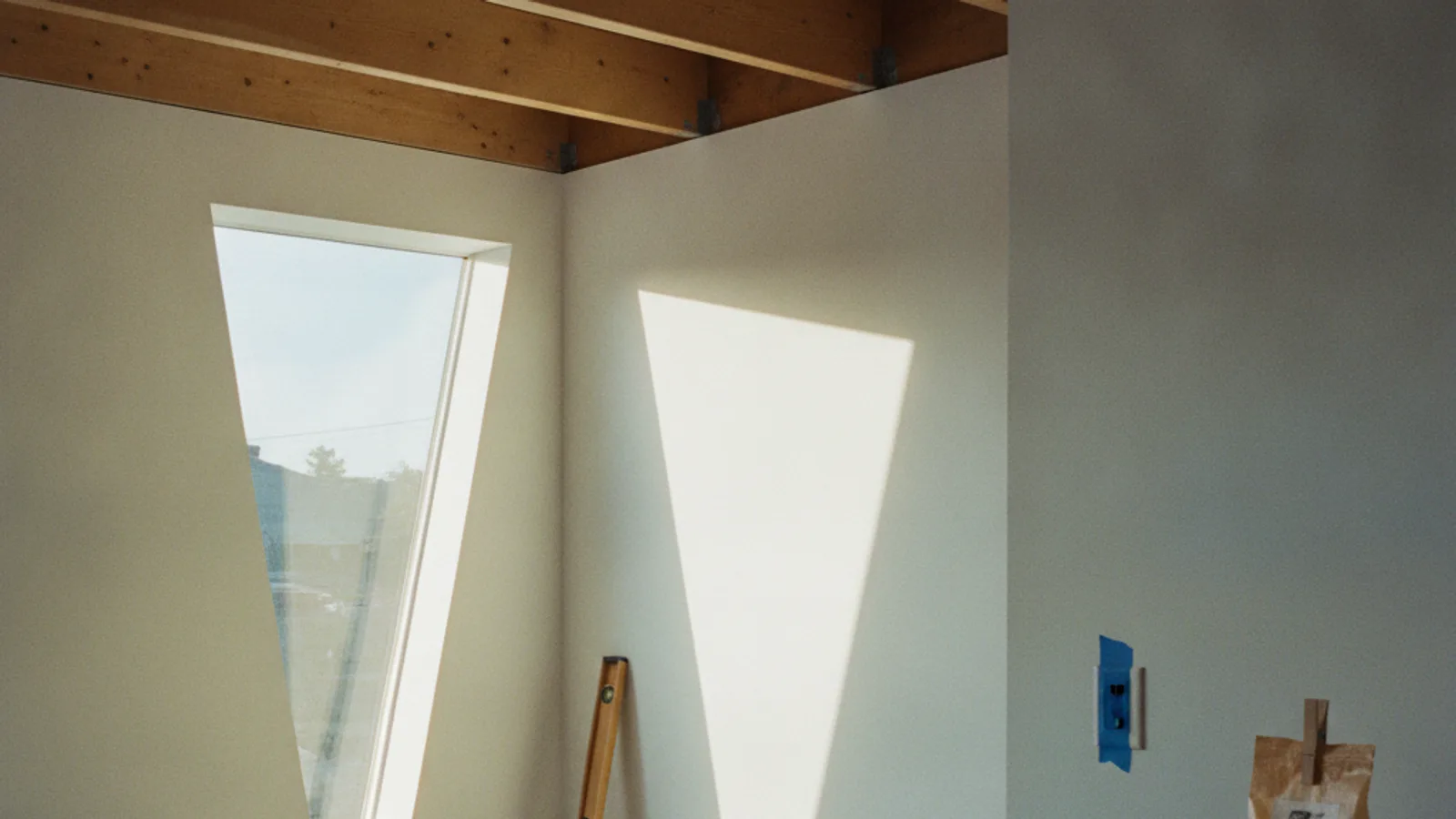
When the Lees, a couple with two young children and an aging parent, looked at their cluttered, drafty garage in San Francisco's Sunset District, they saw more than just storage space. They saw a solution. They envisioned a warm, light-filled home for grandma now, and a potential source of rental income down the road. What followed was a two-year journey into the realities of building in one of America's most challenging construction markets. This project, completed in early 2026, is a masterclass in maximizing a small footprint, navigating seismic requirements, and understanding the true, all-in cost of a San Francisco ADU. It’s a story about more than just adding square footage; it’s about building flexibility and resilience into a family home, one rift-cut white oak cabinet at a time.
In a Nutshell
- Location: Sunset District, San Francisco, CA
- Project Type: Garage Conversion ADU (Accessory Dwelling Unit)
- Size: 520 square feet (1 bedroom, 1 bath)
- Homeowners: A family of four, building for a grandparent
- Timeline: 6 months (planning & permits), 10 months (construction)
- Initial Budget: $350,000
- Final Cost: $482,000
- Key Feature: Custom millwork and a floor-to-ceiling sliding glass door connecting the main living space to a newly landscaped patio, creating a smooth indoor-outdoor experience.
The Before: A Sunset District Garage with Potential
The starting point was a familiar San Francisco scene: a two-car tandem garage at the ground level of a classic 1940s Marina-style home. The space was cavernous and underutilized, a repository for holiday decorations, forgotten bicycles, and the general detritus of family life. The concrete floor was cracked and uneven, and the single, aging garage door did little to keep out the persistent Sunset fog and chill. Structurally, it was a prime example of a soft-story condition, with wide openings and limited bracing on the ground floor, a common vulnerability in the city's housing stock. The only natural light came from two small, high windows, casting the space in a permanent gloom. Access to the backyard was through a rickety side door, down a set of crumbling concrete steps. The potential was there, but it was buried under decades of neglect and the specific challenges of a dense, urban lot with zero-lot-line neighbors on either side.
The Homeowner's Brief: A Flexible Space for Family and Future Income
The Lees' vision was clear and twofold. Their immediate need was a safe, comfortable, and accessible ground-floor apartment for an aging parent, eliminating the main house's steep entry stairs from her daily routine. This meant incorporating universal design principles from the outset: a curbless shower, a 36-inch wide bathroom door, and ample clearance in the galley kitchen. Looking ahead, they knew the ADU would eventually become a rental unit, a crucial financial asset in a city with high living costs. Therefore, the design couldn't feel clinical or temporary. It needed the polish and appeal of a modern, high-end apartment. The aesthetic brief called for a space that felt larger than its 520 square feet, achieved through abundant natural light and a restrained, warm material palette. They specified a direct connection to the backyard, hoping to transform a neglected patch of dirt into a usable patio and garden, borrowing precious outdoor living space for the small unit.
Initial Budgeting: What Does an ADU in San Francisco Cost in 2026?
Establishing a realistic budget for a San Francisco ADU is a formidable task. In early 2026, the typical all-in cost for a quality garage conversion or new detached ADU ranges from $350,000 to over $600,000. These figures can start lower, of course, for more straightforward interior-only projects in condos or homes with newer infrastructure, but a ground-up build or complex conversion will almost certainly land in this range. The high cost is a direct reflection of the city's market conditions. According to the California Department of Industrial Relations' prevailing wage data for San Francisco County, skilled labor rates are among the highest in the nation. This, combined with logistical complexities like limited street parking for construction vehicles and challenging site access, inflates every line item. The Lees initially budgeted $350,000, a figure based on preliminary conversations and online cost estimators, which often fail to capture the full scope of site-specific needs.
Three modeled project scenarios for 2026, built from the Renology Cost Index and typical local scopes. These are illustrative estimates, not completed client projects:
- Noe Valley Garage Conversion (450 sq. ft.): A complex project on a sloped lot requiring significant excavation and retaining walls. Final cost came to $465,000 due to extensive foundation work and high-end finishes.
- Bernal Heights Detached ADU (600 sq. ft.): A new-build in a backyard with difficult access. The use of a panelized building system helped control framing costs, but utility trenching to the street added $40,000. Final cost was $510,000.
- Outer Richmond In-Law Unit Legalization (500 sq. ft.): Bringing an existing, unpermitted unit up to code. This involved seismic upgrades and all new systems. The project cost $390,000, demonstrating that even renovations of existing spaces are a major investment.
Design & Material Selections: Maximizing Light and Space
Sarah Chen's designer eye is most evident in the project's material palette. The minimalist decade is over; warmth and texture are back, and this ADU is a perfect example. The design, a collaboration between the homeowners and a local design-build firm, centered on creating an atmosphere of calm expansiveness. The undeniable star is the custom cabinetry. Rift-cut white oak is the new white, and here it provides a serene, uniform backdrop in the galley kitchen and for the living room built-ins. The flat-panel doors and integrated finger pulls keep the look clean and modern. For the countertops, the choice was Caesarstone's 'Calacatta Nuvo' in a honed finish, offering the look of marble without the maintenance anxiety, a practical choice for both a grandparent and future tenants. The functional work triangle is compact but efficient, with a designated prep zone between the sink and the induction cooktop. A crucial landing zone next to the refrigerator provides space for unloading groceries. Fixtures throughout are unlacquered brass from Rejuvenation, a living finish that will patina beautifully over time, adding a layer of character. Lighting was a key consideration to combat the notorious Sunset gloom. Layers of warm 2700K LED lighting, from recessed cans to under-cabinet strips, create a bright, inviting environment day or night.
Finding the Right ADU Contractor in San Francisco
For a project of this scale and complexity, selecting the right team was the most critical decision the Lees made. They focused their search on design-build firms specializing in the unique challenges of San Francisco ADU construction. An integrated design-build approach streamlines communication and accountability, as the architect, designer, and builder are all under one roof. They interviewed three firms, carefully checking their license status and insurance with the California Contractors State License Board (CSLB). The winning firm presented a detailed portfolio of similar garage conversions, demonstrating a deep understanding of local codes and the San Francisco Department of Building Inspection (DBI) review process. Their bid was not the lowest, but it was the most comprehensive, including allowances for common SF-specific issues like utility upgrades and potential structural surprises. This level of foresight gave the Lees confidence. A key part of locking in the scope was understanding the permitting journey. For a detailed guide on navigating the city's requirements, see our San Francisco ADU Permit Playbook 2026. The right `adu contractor san francisco` is more than a builder; they are a guide through a complex bureaucratic and logistical process.
The Build: From Foundation to Finishes
3 San Francisco ADU builders, editor-screened. 4 questions.
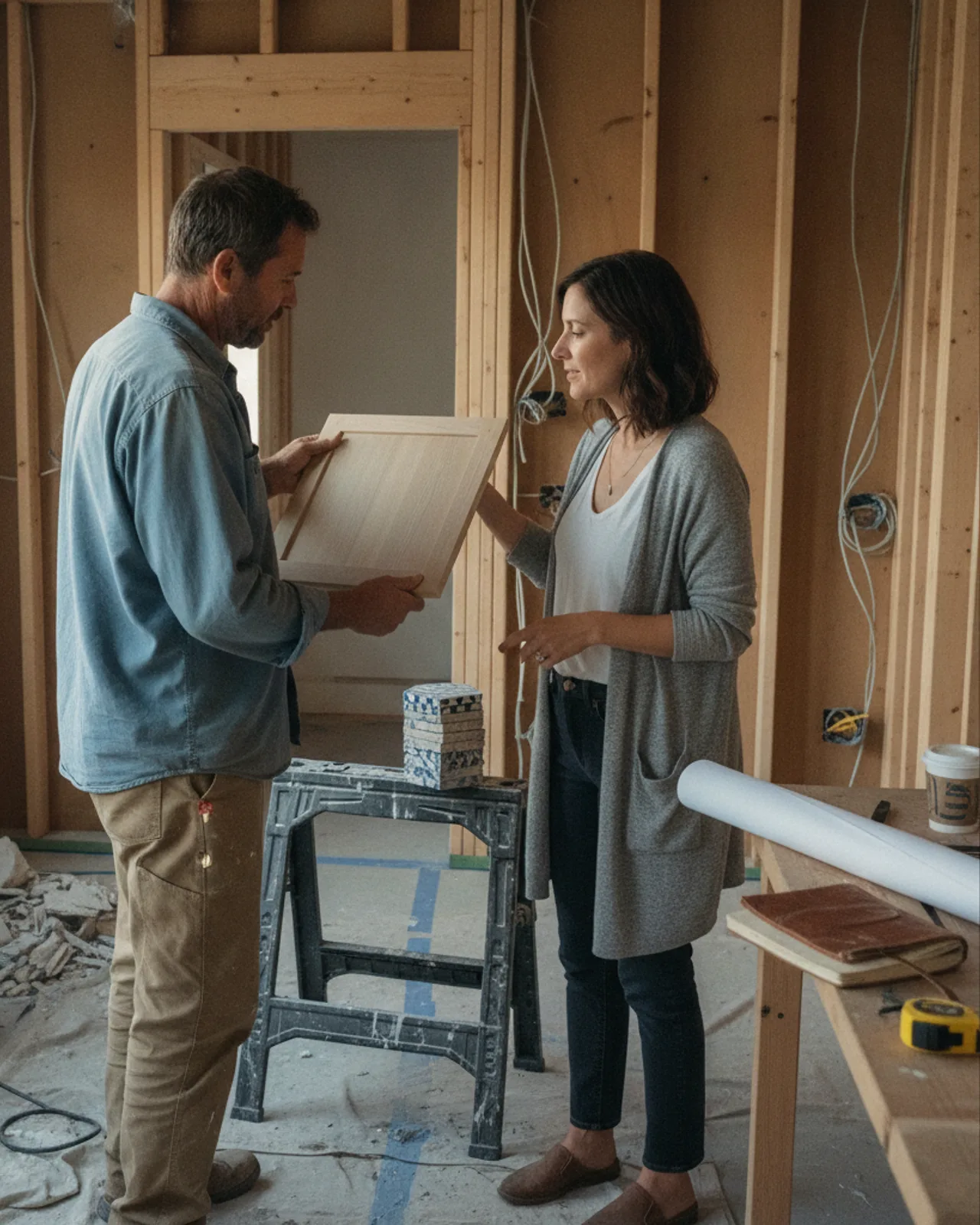
See my 3 matchesThe ten-month construction phase began with a surgical demolition of the old garage. The team had to carefully support the two stories above while removing the old slab and excavating for the new, deeper foundation required by the structural engineer. This phase immediately highlighted the constraints of a dense urban site; all debris had to be hauled away in small dump trucks, and concrete was pumped from the street, requiring a partial lane closure and a separate city permit. After the new slab, reinforced with steel rebar, was poured and cured, framing began. The crew installed new shear walls and a moment frame at the front of the building to create the wide opening for the new sliding glass door while maintaining seismic integrity. This is where the project's design began to take physical shape, transforming a dark box into a series of defined spaces. The homeowners made weekly site visits to meet with the project manager, making decisions on details like outlet placement and tile layouts. It was during one of these meetings that the accompanying photo was taken, capturing a moment of collaboration that is essential to a successful project.
Once the structure was enclosed and insulated, the focus shifted to the systems. New electrical, plumbing, and HVAC lines were run, a complex process that involved carefully opening walls in the main house above to connect to the existing infrastructure. The utility connections were a project in themselves, requiring coordination with both PG&E and the SFPUC for the new, separate meters. The interior finishing stage was where the homeowners' vision truly came to life. Drywall was installed and finished to a level-five smoothness, a premium detail that creates flawless, uniform surfaces. The white oak floors were laid, followed by the installation of the custom cabinetry. Each step, from tiling the bathroom to installing the unlacquered brass fixtures, was executed with precision. The final piece of the puzzle was the installation of the large aluminum-clad wood sliding door, which finally flooded the space with that soft afternoon Pacific Northwest light the design had aimed to capture.
Information Gain: The Hidden Costs of Site Work and Utility Hookups in SF
Most articles on the `adu cost in San Francisco` focus on finishes and appliances, the visible components of a budget. But the most significant and unpredictable expenses are often buried in the ground or hidden behind walls. In San Francisco, site work and utility connections can easily account for twenty to thirty percent of a total project budget, and they are the items most likely to cause delays and overruns. For the Lees' project, the first surprise was the soil. While no major issues were found, the city required a geotechnical report due to the proximity to a liquefaction zone, adding $5,000 and a month to the pre-construction timeline. The real challenge, however, was utilities. Establishing a new, separate address for the ADU triggered a cascade of requirements from the San Francisco Public Utilities Commission (SFPUC) and Pacific Gas & Electric (PG&E). The SFPUC required a new water service and meter, which involved trenching from the city main in the street, breaking up the sidewalk, and paying significant capacity charges, totaling nearly $25,000. PG&E required a similar process for a new gas and electric meter, another $20,000. These costs are completely separate from the interior plumbing and electrical work done by the contractor., the city's sewer lateral ordinance required the homeowners to replace their aging clay sewer line to the main, an unexpected $15,000 job. These are not optional upgrades; they are non-negotiable prerequisites for getting a certificate of occupancy. An experienced `adu contractor san francisco` will flag these as potential costs, but the final figures are often unknown until the utility companies complete their engineering reviews, making it a difficult line item to budget with precision.
Surprise! Navigating a Soft Story Retrofit Requirement
The biggest challenge of the project emerged during the structural plan review with the San Francisco Department of Building Inspection (DBI). While the initial ADU plans included solid seismic upgrades for the new unit itself, the city reviewer flagged the entire building as a mandatory soft-story candidate under Ordinance 13-11. Because the garage conversion involved removing the main garage door and altering the ground-floor structure, it triggered a requirement to seismically strengthen the entire ground floor to protect the dwellings above. This was a significant scope expansion. The initial plan for shear walls had to be replaced with a more expensive and complex steel moment frame. The National Association of Home Builders recommends a ten to fifteen percent contingency on renovations in homes over thirty years old. The Lees had a ten percent contingency ($35,000), but the mandatory soft-story retrofit added a staggering $62,000 to the project cost, completely overwhelming their reserve fund. It was a stressful, non-negotiable change that forced them to re-evaluate their financing. While the result is a much safer home for their entire family, it serves as a critical warning for anyone considering a garage conversion ADU in San Francisco: your project may be subject to building-wide upgrades that extend far beyond the four walls of the new unit.
The Final Numbers: An Itemized Cost Breakdown
The gap between the initial budget and the final cost tells the story of the project's unforeseen complexities. Here is a detailed breakdown of where the money went. The final `adu san francisco 2026` cost reflects the realities of building in a high-cost, heavily regulated environment.
- Planning, Design & Engineering: $45,000 (Includes architectural, structural, geotechnical report, and Title 24 energy calculations)
- Permits & Fees (SFDBI, SFPUC, PG&E): $38,000
- Site Work & Foundation: $55,000 (Includes excavation, new concrete slab, and sewer lateral replacement)
- Mandatory Soft-Story Seismic Retrofit: $62,000
- Framing & Structural Steel: $48,000
- Exterior Finishes (Siding, Windows, Door, Roofing): $35,000
- Utilities (Plumbing, Electrical, HVAC): $65,000 (Includes all interior work and new hookups/trenching)
- Insulation & Drywall: $22,000
- Interior Finishes (Flooring, Tile, Paint): $30,000
- Custom Cabinetry & Millwork: $28,000
- Appliances & Fixtures: $19,000
- Landscaping & Patio: $15,000
- Contractor Fee (Overhead & Profit at 15%): $20,000 (Adjusted from initial scope)
- Total Final Cost: $482,000
The Finished Space: A Tour of the Completed ADU
Stepping into the completed ADU is like entering a different world from the garage it replaced. The dominant feeling is one of serene, light-filled calm. The ten-foot-wide sliding glass door, the project's single largest expense, pays for itself by effectively dematerializing the rear wall, merging the living area with the new ipe wood patio. The afternoon sun, once a stranger to the space, now streams in, reflecting off the warm tones of the white oak flooring. The galley kitchen is a marvel of efficiency. The honed quartz countertops provide a durable, matte surface that feels wonderful to the touch. The work triangle is tight, placing the sink, induction range, and integrated refrigerator within a few steps of each other, perfect for a one-person household. The living area is defined by the custom built-in that houses a small media center and provides much-needed storage, its rift-cut oak matching the kitchen for a cohesive feel. The bedroom, though modest in size, feels spacious thanks to a large window overlooking the garden. The bathroom is a small jewel box, with floor-to-ceiling ceramic tile and the show-stopping curbless shower, its unlacquered brass hardware already beginning to develop a rich, warm patina. Every detail, from the weight of the solid-core doors to the soft-close drawers, speaks to a level of quality that achieves the homeowners' goal: a space that feels like a custom home, not a converted garage.
Lessons Learned: The Homeowner's Advice
Reflecting on the project, the Lees offered three key pieces of advice for others contemplating a `san francisco adu`. First, they stressed the importance of hiring a design-build firm with extensive local experience. "Our contractor had seen the soft-story issue come up before and knew exactly which engineers to call," one of the homeowners shared. "Without that expertise, we would have lost months just trying to figure out the next step." Second, they advise having a much larger contingency fund than you think you need, especially for older homes. "The ten percent we set aside felt responsible, but it wasn't nearly enough for a mandatory seismic retrofit. In San Francisco, I'd say twenty percent is a safer number." Finally, they recommended getting the utility companies involved as early as possible. "The permitting and engineering review for our new water and power connections took almost four months. Start those conversations before you even submit your building plans to the city, because they run on a completely separate timeline." Despite the budget shocks and delays, they have no regrets. "Every time we see Grandma enjoying her garden, we know it was worth it. We built her a home, and we made our own home safer and more valuable in the process."
Sources & Methodology
See the Renology Methodology for how sources are reviewed, ranges are normalized, and planning-data limits are handled.
Cost ranges in this guide draw on the following named industry sources, public agency datasets, and Renology editorial research.
- California Department of Industrial Relations, Prevailing Wage Data (2026)
- San Francisco Department of Building Inspection, Permit Data (2026)
- Remodeling Magazine, Cost vs. Value Report (2026)
- National Association of Home Builders, Remodeling Market Index (Q1 2026)
- Harvard Joint Center for Housing Studies (JCHS), Leading Indicator of Remodeling Activity (LIRA) (2026)
- Bureau of Labor Statistics, Producer Price Index (Construction Materials) (2026)
- U.S. Census Bureau, Annual Construction Spending Survey (2025)
- California Department of Housing and Community Development (HCD), ADU Handbook (2025)
- San Francisco Public Utilities Commission (SFPUC), Schedule of Rates and Charges (2026)
- Pacific Gas & Electric (PG&E), Service and Rate Information (2026)
- American Institute of Architects (AIA), Home Design Trends Survey (Q4 2025)
Renology Take
The Lees' project is a microcosm of the evolving ADU landscape in high-cost cities. The narrative is shifting. Once seen primarily as a tool for passive income, the ADU is increasingly a solution for multi-generational living, a way to keep families together and provide care for aging relatives. This project also highlights the intense professionalization of the `adu san francisco` market. The days of informal, under-the-radar conversions are over. Building in a city like San Francisco now requires a team of experts: architects, structural engineers, geotechnical engineers, and contractors who are part-architect, part-therapist, part-bureaucratic navigator. The high costs and regulatory hurdles, while daunting, are creating safer, more resilient housing. The Lees didn't just build an apartment; they performed a seismic retrofit, upgraded their utilities, and created a legal, permanent asset. That’s the real story of the 2026 ADU: it’s less a renovation and more an act of urban acupuncture, a small but powerful intervention that strengthens the entire home.
Frequently Asked Questions
What is the average cost per square foot for an ADU in San Francisco in 2026?
How long does it take to get ADU permits in San Francisco?
Can I build an ADU in my backyard in San Francisco?
Do I need an architect for a San Francisco ADU project?
What are the biggest hidden costs for a San Francisco ADU?
How does a soft-story retrofit requirement affect an ADU project?
What California state laws make it easier to build an ADU in San Francisco?
How much value does an ADU add to a San Francisco property?
Are there pre-approved ADU plans available in San Francisco?
What are the key differences between building an ADU in the Sunset vs. a neighborhood like the Mission?
San Francisco · pre-screened
Get 3 San Francisco ADU bids in 48 hours.
Our editors already vetted San Francisco ADU builders. Answer 4 questions and we send 3 written bids inside 48 hours, with the real price for your scope, not their inflated first-call number.
- Free, no commission
- Pre-screened locally
- Bids inside 48 hours
Takes about 60 seconds. We'll text you when bids arrive.
Sources
- California Department of Industrial Relations, Prevailing Wage Data
- San Francisco Department of Building Inspection, Permit Data
- Remodeling Magazine, Cost vs. Value Report
- National Association of Home Builders, Remodeling Market Index
- Harvard Joint Center for Housing Studies (JCHS), Leading Indicator of Remodeling Activity (LIRA)
- Bureau of Labor Statistics, Producer Price Index (Construction Materials)
- U.S. Census Bureau, Annual Construction Spending Survey
- California Department of Housing and Community Development (HCD), ADU Handbook
- San Francisco Public Utilities Commission (SFPUC), Schedule of Rates and Charges
- Pacific Gas & Electric (PG&E), Service and Rate Information
- American Institute of Architects (AIA), Home Design Trends Survey