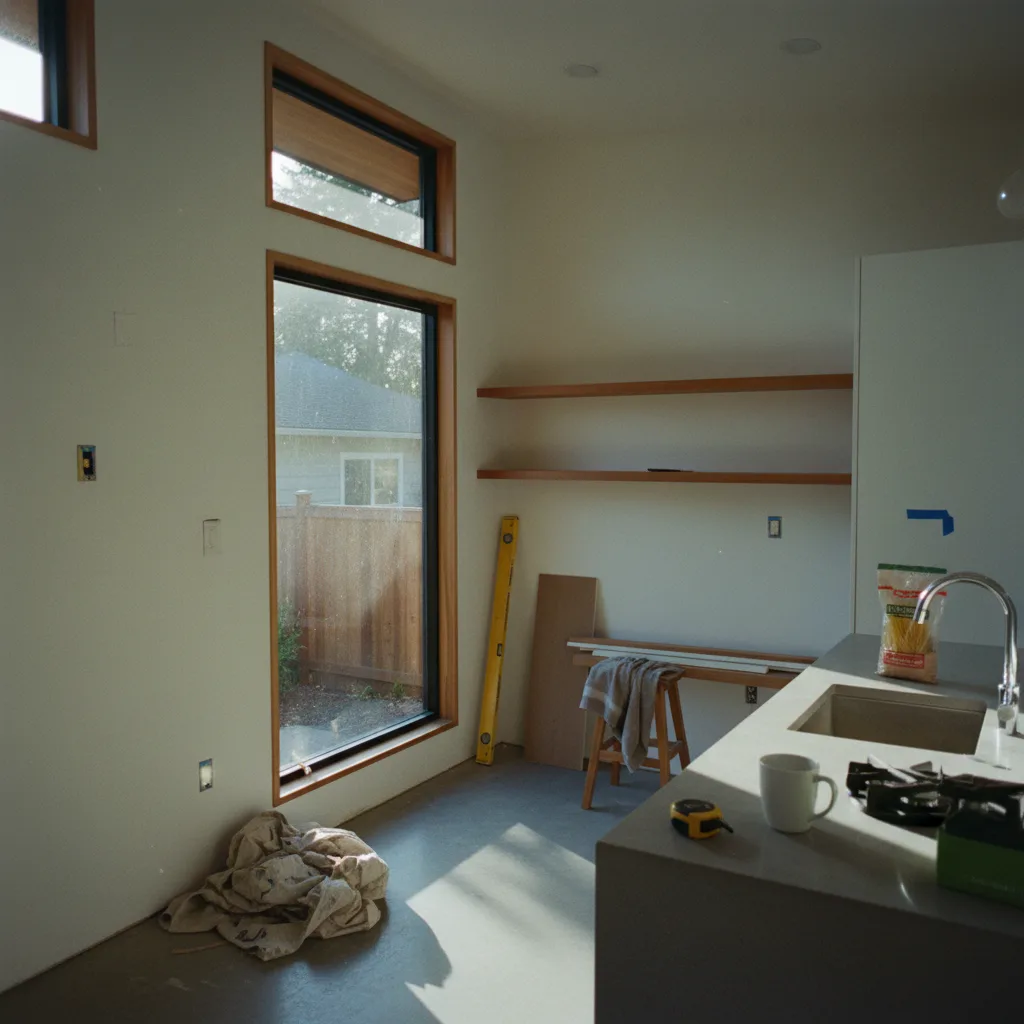
A detached ADU build in Seattle takes between eight and twelve months, start to finish. There's no other honest number for 2026. Timelines can start lower for garage conversions or prefab units, which might shave off two months. But for a new stick-built detached accessory dwelling unit (DADU), from your first talk with an architect to getting your Certificate of Occupancy, plan on a year. The biggest single delay is navigating the Seattle Department of Construction & Inspections (SDCI), especially if your lot in a neighborhood like West Seattle has an Environmentally Critical Area (ECA). The build itself is predictable. The paperwork is the wild card.
In a Nutshell
- Total Timeline: 28, 40 weeks from permit submission to final inspection. Add 8-12 weeks upfront for design and feasibility.
- The Four Phases: Design and Permits; Site Prep and Foundation; Framing and Rough-In; Finishes and Final Inspection.
- Biggest Delay Risk: SDCI permit review cycles. A project touching a steep slope or requiring a new side sewer assessment can add three months of administrative back-and-forth before you ever break ground.
- Contingency Planning: Hold back 10-15% of your total budget in a contingency fund. You will probably need it for unforeseen site conditions, a classic Seattle surprise.
Phase 1: Design and Permits (weeks 1, 12)
This is where the project is born on paper and approved by the city. It’s entirely administrative and feels slow, but good work here prevents expensive changes later. Your architect or designer develops floor plans, elevations, and site plans. A structural engineer then produces the calculations and drawings required for the build. Once the package is complete, you or your contractor submits it to the Seattle Department of Construction & Inspections (SDCI). The city's review can take anywhere from a few weeks for a simple project to several months if corrections are required. Common holdups include drainage plans, energy code compliance, or ECA reviews. The goal is to get your permit issued, which means the city has approved the plans and you have permission to build. The homeowner's job is to make decisions quickly and lock the scope before submission.
Phase 2: Site Prep and Foundation (weeks 13, 16)
Once you have a permit in hand, physical work begins. This phase is about preparing the ground for the new structure. It starts with establishing site access for machinery and materials. Then, excavation crews clear and grade the build area based on the plans and any required geotechnical reports. Utility trenching follows, creating paths for water, sewer, and power from the main house or street. This is where you connect to Seattle Public Utilities (SPU) for water and sewer, and Seattle City Light for electricity. Finally, contractors form up and pour the concrete foundation. The major risks here are weather, as Seattle rain can halt excavation and concrete work, and discovery. Finding an old, buried oil tank or unstable soil not caught in the geotech survey can stop a job cold.
Phase 3: Framing and Rough-In (weeks 17, 24)
With a solid foundation cured, the structure takes shape quickly. The framing crew erects the walls, floor joists, and roof trusses, transforming a concrete slab into a recognizable house. Sheathing and house wrap follow, creating the building envelope. Once the structure is weather-tight with windows and doors installed, the rough-in trades arrive. This is a critical, choreographed sequence. Plumbers run supply and drain lines, HVAC technicians install ductwork, and electricians pull wire to every box. Each trade must complete their work before the next can begin efficiently. The city inspector visits multiple times during this phase to sign off on the inspection card for plumbing, electrical, and mechanical systems before any insulation or drywall can be installed. Passing these inspections confirms the work is up to code and safely concealed within the walls.
Phase 4: Finishes and Final Inspection (weeks 25, 32)
3 Seattle ADU builders, editor-screened. 4 questions.
See my 3 matchesThis is the phase where the house becomes a home. After the rough-in inspections are cleared, insulation is installed in the wall cavities. Drywall is then hung, taped, mudded, and sanded to create smooth interior surfaces. Next comes the finish work: painting, flooring installation, tile setting, and the installation of cabinets and countertops. Plumbers and electricians return to install fixtures like faucets, sinks, toilets, and light switches. The final step is the final inspection with the SDCI inspector. They walk through the completed ADU, checking everything from smoke detector placement to GFCI outlets. If everything on the punch list is addressed and approved, the city issues a Certificate of Occupancy (CofO), which makes the ADU a legal, habitable dwelling.
Three Representative Projects from 2026
Three modeled project scenarios for 2026, built from the Renology Cost Index and typical local scopes. These are illustrative estimates, not completed client projects:

- Ballard Detached ADU: A new, 800-square-foot, two-bedroom DADU built on a standard lot. Slab-on-grade foundation with higher-end finishes. Total cost: $465,000. Total timeline: 38 weeks from permit submission.
- Fremont Garage Conversion: Converting an existing 450-square-foot garage into a studio ADU. Required foundation upgrades and a new side sewer connection. Total cost: $240,000. Total timeline: 29 weeks.
- Capitol Hill Attached ADU: Creating a 650-square-foot one-bedroom AADU in the basement of a 1920s craftsman. Involved significant excavation and structural work. Total cost: $310,000. Total timeline: 32 weeks.
What Can Compress This Timeline
The homeowner who saves six weeks does three things before signing a contract. First, they use one of Seattle's pre-approved DADU plans. This can cut months off the SDCI plan review. Second, they finalize every single finish selection, from faucets to flooring, before the project starts. No changes after the scope-lock date means no delays for backordered tile or the wrong vanity. Third, they hire an integrated design-build firm. When the architect and builder are on the same team, communication is streamlined and problems are solved without finger-pointing. These steps remove the biggest sources of homeowner-caused delays and keep the project moving forward.
What Blows It Up
Three things reliably derail a Seattle ADU timeline. First, site conditions. A steep slope in Queen Anne or poor soils anywhere south of I-90 can trigger a lengthy and expensive ECA review with SDCI. Second, utility surprises. Discovering your home's side sewer is cracked or undersized is a common issue in older Seattle neighborhoods and replacing it can add $20,000 and a month of delay. Third, change orders. Deciding to move a window after framing is complete isn't a small tweak; it's a cascade failure that impacts framing, sheathing, electrical, and drywall. The National Association of Home Builders recommends a ten to fifteen percent contingency on renovations in homes over thirty years old. In Seattle, that's not advice; it's a requirement for survival.
What Should Be in Your Contractor's Schedule
Your contractor's schedule shouldn't be a vague outline; it should be a detailed sequence with dates. A professional `adu contractor seattle` will provide a schedule that includes specific milestones. Insist on seeing these line items before you sign:
- Scope-lock date for all owner selections
- Final plans to structural engineer
- Permit application submittal to SDCI
- Permit issuance date
- Excavation and foundation pour dates
- Framing start and completion dates
- Rough-in inspection dates (plumbing, electrical, mechanical, framing)
- Drywall start date
- Cabinet and countertop installation
- Final inspection date with SDCI
This level of detail holds everyone accountable. For more on navigating the city's requirements, see our permit playbook.
Renology Take
The marketing from builders often sells a six-month ADU build. That timeline only covers the construction itself, from foundation to final paint. The realistic timeline for an `adu seattle` project in 2026, from the day you hire a designer to the day you get keys, is closer to a full year. The most underestimated phase is always permitting. SDCI is thorough, and Seattle's complex terrain and aging infrastructure mean site-specific issues are the rule, not the exception. The best builders in this city are not just expert carpenters; they are expert navigators of Seattle's bureaucracy. Your `adu cost in Seattle` is driven less by lumber prices and more by what it takes to get the structure out of the ground legally. Spend your energy vetting your team's permitting experience. That is what separates a 10-month project from a 16-month ordeal.
Sources & Methodology
Renology reviews public permit and labor signals, supplier pricing, remodeler quote patterns, comparable projects, the Renology Cost Index, and the Renology Methodology. Cost references are planning ranges for Seattle ADU projects, not fixed bids.

- NAHB Remodeling Market Index, Q1 2026
- Seattle Department of Construction & Inspections (SDCI), ADU Permit Data, 2026
- Washington State L&I, Contractor Wage & Hour Data, 2026
- Remodeling Magazine, 2026 Cost vs. Value Report (Pacific Region)
- Renology Project of the Day Network, Seattle MSA Data, 2025-2026
- City of Seattle, Pre-Approved DADU Plans Program Information, 2026
Frequently Asked Questions
How long does an ADU in Seattle really take?
Can I live in the main house during construction?
What's the longest single phase of an ADU build?
Can I fast-track the permits for a Seattle ADU?
How much does an ADU in Seattle cost in 2026?
Ready to find a pro?
Tell us about your project and location. A Renology advisor can help you explore contractor matching.
Free for homeowners. No obligation to hire.
Find a ProSources
- NAHB Remodeling Market Index
- Seattle Department of Construction & Inspections (SDCI), ADU Permit Data
- Washington State L&I, Contractor Wage & Hour Data
- Remodeling Magazine, 2026 Cost vs. Value Report (Pacific Region)
- Renology Project of the Day Network, Seattle MSA Data
- City of Seattle, Pre-Approved DADU Plans Program Information
Follow Renology on Google
Choose Renology as a preferred source and our guides show up more often in your Google results, including Top Stories and AI Overviews.