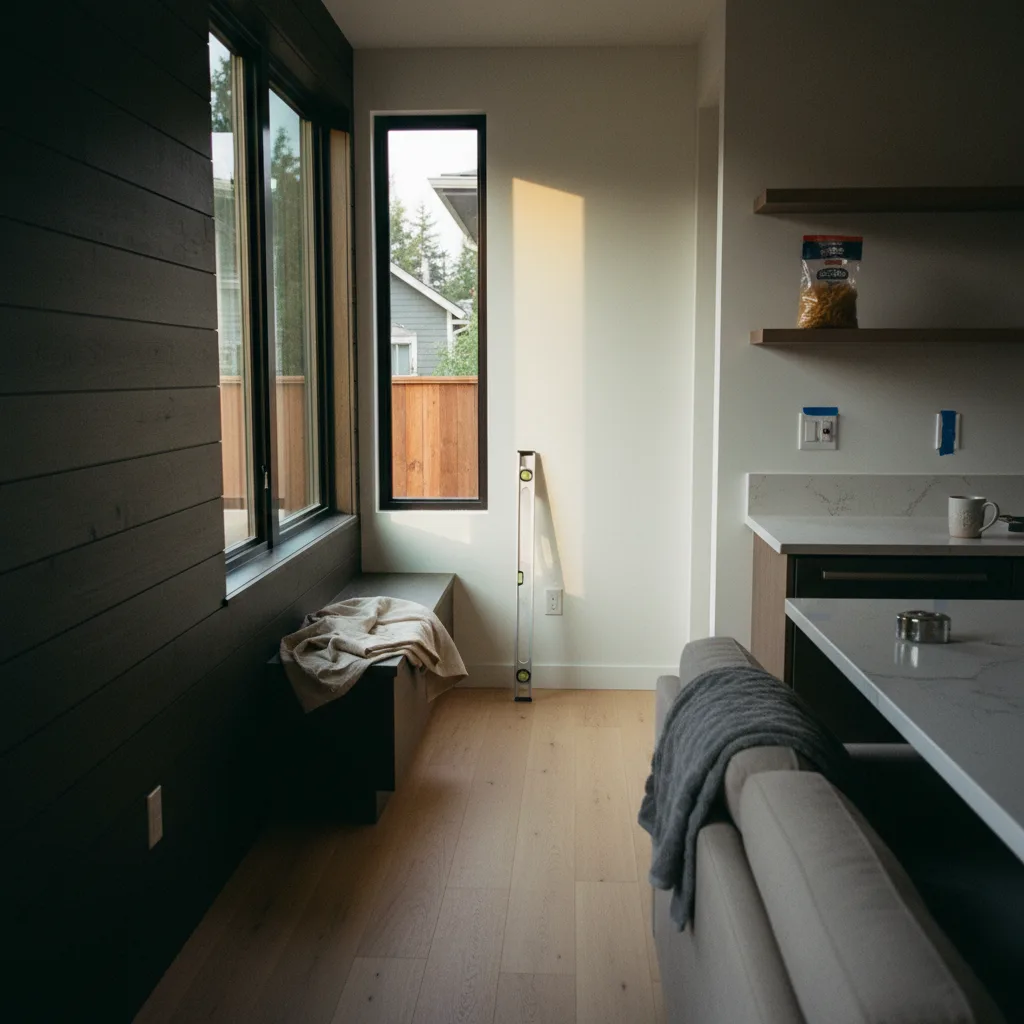
Constructing a detached accessory dwelling unit (DADU) in Seattle costs between $180,000 and $320,000 for a typical mid-range project in 2026, including a quality, 800-square-foot build. High-end custom builds can run well past $400,000. The total cost can start lower for projects converting existing space like a basement or attached garage, which avoids major foundation and utility work. These figures reflect the all-in price, including design, permits, site work, and construction for a new structure.
In a Nutshell
- Total Project Cost Range: $180,000, $320,000 for a typical new detached ADU.
- Mid-Range Project Cost: A typical 800-square-foot, two-bedroom ADU lands near the midpoint of that range, around $250,000.
- Typical Timeline: Twelve to eighteen months from initial design consultation to final inspection.
- Biggest Surprise Cost: Site preparation and utility connections. Trenching and connecting to Seattle Public Utilities and Seattle City Light can range from $25,000 to $55,000, a figure often underestimated in initial budgets.
What does an ADU actually cost in Seattle?
The cost of an ADU in Seattle is driven by size, level of finish, and site complexity. We have segmented project costs into three common tiers based on data from Seattle-area contractors and building permits filed with the Seattle Department of Construction & Inspections (SDCI).
| Tier | Size (sq. ft.) | All-In Cost Range (2026) | Key Features |
|---|---|---|---|
| Basic | 400, 600 | $280,000, $390,000 | Standard-grade finishes, stock cabinetry, vinyl flooring, simple rectangular footprint, pre-approved DADU plans. |
| Mid-Range | 700, 900 | $400,000, $550,000 | Semi-custom design, quartz countertops, engineered hardwood, upgraded appliance package, more complex roofline. |
| Premium | 900, 1,000 | $560,000, $700,000+ | Fully custom architectural design, high-end fixtures, custom millwork, premium windows, radiant floor heating, extensive site work. |
For a mid-range, $250,000 ADU project, the budget allocation is typically as follows:
- Structure (Foundation, Framing, Roof): 35%
- Labor: 25%
- Exterior Finishes (Siding, Windows, Doors): 10%
- Interior Finishes (Drywall, Flooring, Paint, Millwork): 10%
- Plumbing & Electrical Systems: 10%
- Site Work & Utility Connections: 5%
- Design, Engineering & Permits: 5%
The lower end of the cost spectrum typically applies to attached accessory dwelling units (AADUs) or conversions of existing permitted structures like garages. These projects benefit from an existing foundation and structure, significantly reducing costs.
Why is it more expensive in Seattle than the surrounding region?
Building an ADU in Seattle proper carries a premium over surrounding areas in King County for three primary reasons.
First, labor rates are among the highest in the state. According to the Washington State Department of Labor & Industries (L&I) prevailing wage data for King County, a journey-level carpenter commands between $65 and $85 per hour, and licensed electricians bill between $110 and $150 per hour. An established adu contractor seattle firms work with must pay these rates to retain qualified, experienced crews, and this cost is passed directly into the project budget.

Second, material costs and logistics are inflated by high demand and constrained supply chains in the Puget Sound region. Everything from structural lumber to high-performance windows costs more to procure and deliver to a dense urban site., the city's stringent energy code requirements often mandate more expensive materials like triple-pane windows or specific types of insulation, adding to the base material cost.
Third, neighborhood premiums and site complexity increase costs significantly. Building on a small, sloped lot in a neighborhood like Queen Anne or West Seattle involves higher costs for excavation, shoring, and foundation work. Difficult site access for machinery and material delivery in areas like Ballard or Capitol Hill adds logistical expenses. Finally, Seattle's position in a seismically active zone requires engineering and construction practices that meet strict earthquake-resistant standards, adding 5% to 8% to structural costs compared to non-seismic regions.
What do real Seattle homeowners spend in 2026?
Three modeled project scenarios for 2026, built from the Renology Cost Index and typical local scopes. These are illustrative estimates, not completed client projects:
- The Ballard DADU: $415,000. A 650-square-foot, one-bedroom detached unit built on a flat, easily accessible lot. The homeowners opted for a pre-designed plan from a local architect to save on design fees. The project used standard-grade but durable materials, including fiber cement siding and LVP flooring. The budget was efficient, but a $15,000 surprise arose from needing to upgrade the main house's electrical panel to support the new unit.
- The Columbia City Two-Story: $580,000. This project involved a 950-square-foot, two-bedroom DADU with a second story to preserve yard space. The custom design included vaulted ceilings, higher-end appliances, and a dedicated home office space. The complexity of a two-story build, plus significant excavation for a deeper foundation on a slight slope, drove the cost higher. Utility trenching was complex, costing nearly $40,000.
- The West Seattle AADU Conversion: $240,000. Homeowners converted their 700-square-foot daylight basement into a legal one-bedroom AADU. Costs were contained by using the existing foundation and structure. Major expenses included adding a separate entrance with an exterior staircase, excavating for larger egress windows, installing a full kitchen and bathroom, and adding soundproofing between floors. This represents a more accessible entry point for a Seattle ADU.
Where does the money actually go?
3 Seattle ADU builders, editor-screened. 4 questions.
See my 3 matchesA general contractor's bid covers the main construction, but several critical costs are often listed as allowances, exclusions, or separate line items. Homeowners should budget for these independently to avoid financial strain.
- Geotechnical & Site Survey: $4,000, $8,000. Necessary for understanding soil conditions and property lines, especially on sloped or complex lots.
- Utility Connection Fees: $25,000, $55,000. This covers the physical hookups and capacity charges from Seattle City Light and Seattle Public Utilities. The cost varies dramatically based on the distance from the main lines to the ADU site.
- Architectural & Engineering Fees: $20,000, $45,000. This represents 8% to 15% of the construction cost for custom plans, structural engineering, and drainage plans.
- Seattle Department of Construction & Inspections (SDCI) Permit Fees: $15,000, $25,000. These fees are calculated based on project valuation and are separate from the cost of producing the plans.
- Landscaping & Fencing: $10,000, $25,000. The quote typically leaves the site as a clean dirt lot. Restoring lawns, adding patios, walkways, and fencing is a separate budget item.
- Washington State Sales Tax: Approximately 10.25% in Seattle. This tax applies to all materials and subcontractor labor, adding a significant amount to the total cost. Some contractors embed this in their pricing, but it's crucial to verify.
- Builder's Risk Insurance: $3,000, $6,000. A specific policy required to cover the structure during construction against theft, fire, or vandalism.
- New Appliances: $7,000, $18,000. Unless specified, the appliance package (refrigerator, range, dishwasher, washer/dryer) may be an allowance that doesn't cover the desired quality.
What stops a Seattle ADU from running over budget?
Three primary factors cause budget overruns in Seattle ADU projects. The first is an incomplete or ambiguous scope of work. When design decisions, material selections, and finishes are not finalized before construction begins, every change order introduces delays and added costs. The second cause is unforeseen site conditions, such as encountering poor soil that requires extra foundation engineering or discovering an old, undocumented utility line during excavation. The third, and most common, is homeowner-driven changes during the construction phase. Deciding to add a window or upgrade tile after materials have been ordered can have a cascading effect on cost and schedule.
To mitigate these risks, a contingency fund is essential. The National Association of Home Builders recommends a ten to fifteen percent contingency on renovations in homes over thirty years old. For new construction like an ADU, a 10% contingency is a responsible minimum to cover unexpected site issues or minor design adjustments.
Navigating Seattle's Permitting Process
The permitting journey for a Seattle ADU involves multiple city departments and can be complex. Understanding the specific requirements for your property, from zoning limitations to environmental critical areas, is the first step. For a detailed walkthrough of the process, see our guide: Seattle ADU Permit Playbook 2026.
What should your Seattle contractor include in the quote?
A detailed, transparent quote is the foundation of a successful project. A quote from a reputable adu contractor seattle should be a multi-page document that itemizes the scope of work, not a one-page summary. Ensure it includes:
- A detailed scope of work describing all tasks.
- Itemized costs for major project phases (e.g., foundation, framing, electrical).
- A list of specific material allowances (e.g., $8,000 for appliances, $5/sqft for tile).
- Costs for site preparation, excavation, and grading.
- All labor costs, including project management fees.
- Costs for plumbing, HVAC, and electrical systems.
- Exclusions (what is NOT included, such as landscaping or utility connection fees).
- A projected payment schedule tied to construction milestones.
- The estimated cost of permits (or clarification that it's a separate homeowner expense).
- Proof of licensing and insurance (liability and workers' compensation).
- A proposed start date and estimated project duration.
- Details on the warranty provided for workmanship and materials.
- A clear change order process.
- Cleanup and debris removal procedures.
Sources & Methodology
See the Renology Methodology for how sources are reviewed, ranges are normalized, and planning-data limits are handled.
Cost ranges in this guide draw on the following named industry sources, public agency datasets, and Renology editorial research.
- Seattle Department of Construction & Inspections (SDCI) Permit Data (2025)
- Washington State Department of Labor & Industries, King County Prevailing Wage Rates (2026)
- Remodeling Magazine, 2025 Cost vs. Value Report (Pacific Region) (2025)
- National Association of Home Builders (NAHB), Construction Cost Survey (Q4 2025)
- Builderon, Seattle ADU Cost Survey (2025)
- Renology Project of the Day (POTD) Network, Seattle Metro Data (2024-2026)
Renology Take
The primary miscalculation homeowners make when budgeting for a Seattle ADU is focusing on the vertical construction cost per square foot while underestimating the horizontal costs. Site work, utility trenching, drainage systems, and landscaping can easily represent 20% to 30% of the total project budget before framing even begins. The cost to get the site ready for the structure is substantial, especially on Seattle's characteristically sloped or tree-filled lots. A contractor's estimate of $500 per square foot often refers only to the building itself. A more realistic, all-in financial model requires adding a significant budget for these foundational, non-negotiable expenses. Successful projects are those where the homeowner budgets for the entire property transformation, not just the new building.
Frequently Asked Questions
What is the potential rental income and ROI for an ADU in Seattle?
How long does it take to build an ADU in Seattle?
Can I really build an ADU in Seattle for under $250,000?
What are the biggest factors that increase ADU Seattle cost?
Do I have to pay impact fees for an ADU in Seattle?
Seattle · pre-screened
Get 3 Seattle ADU bids in 48 hours.
Our editors already vetted Seattle ADU builders. Answer 4 questions and we send 3 written bids inside 48 hours, with the real price for your scope, not their inflated first-call number.
- Free, no commission
- Pre-screened locally
- Bids inside 48 hours
Takes about 60 seconds. We'll text you when bids arrive.
Sources
- Seattle Department of Construction & Inspections (SDCI) Permit Data
- Washington State Department of Labor & Industries, King County Prevailing Wage Rates
- Remodeling Magazine, 2025 Cost vs. Value Report (Pacific Region)
- National Association of Home Builders (NAHB), Construction Cost Survey
- Builderon, Seattle ADU Cost Survey
- Renology Project of the Day (POTD) Network, Seattle Metro Data