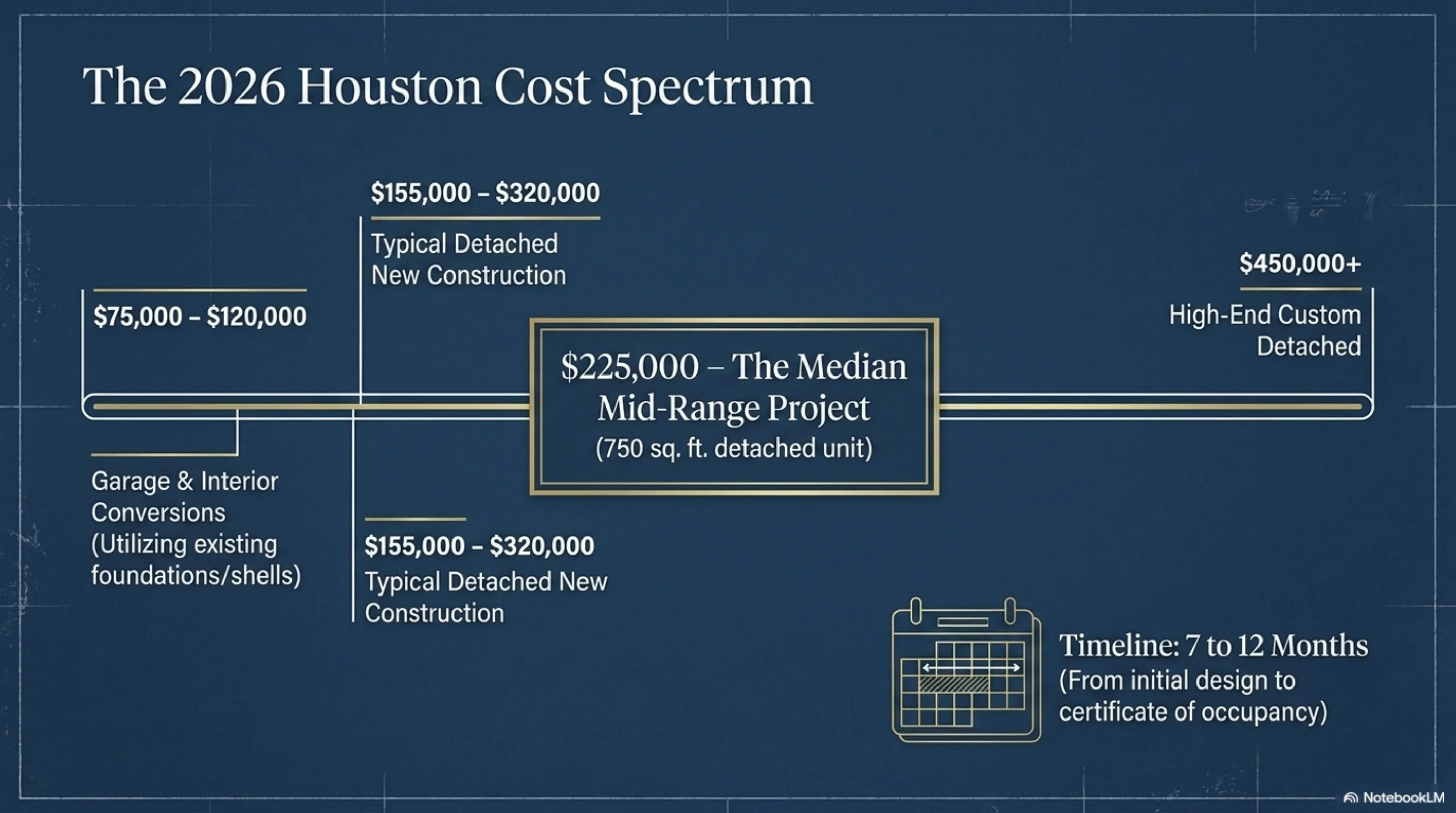
A new construction detached Accessory Dwelling Unit (ADU) in Houston costs between $155,000 and $320,000 in 2026. The median project cost is approximately $225,000 for a 750-square-foot unit. Costs can start lower, from $75,000 to $120,000, for garage or interior conversions that use an existing foundation and utility connections, but this is not the typical project.
In a Nutshell
- Total Cost Range: $75,000 (garage conversion) to $450,000+ (high-end custom detached unit).
- Typical Mid-Range Project: $190,000, $260,000 for a detached 750-square-foot, two-bedroom ADU.
- Project Timeline: Seven to twelve months from initial design to receiving the certificate of occupancy.
- Biggest Surprise Line Item: Utility connection fees (water, sewer, electrical), which can range from $8,000 to $25,000 depending on the distance from public mains.
What Does an ADU Actually Cost in Houston?
The total cost for a Houston ADU is determined by size, build type (detached, attached, or conversion), and finish quality. The following table outlines typical cost ranges for new detached units in 2026, which represent the majority of projects.
| Tier | Cost Range | Size | Common Features |
|---|---|---|---|
| Basic | $155,000, $195,000 | 500, 650 sq. ft. | Prefab or simple panelized construction; standard-grade finishes; vinyl flooring; laminate countertops. |
| Mid-Range | $190,000, $260,000 | 650, 850 sq. ft. | Stick-built construction; semi-custom cabinetry; quartz countertops; LVP flooring; energy-efficient windows. |
| Premium | $260,000, $450,000+ | 850, 1,200 sq. ft. | Fully custom architectural design; high-end appliances; hardwood floors; custom millwork; premium fixtures. |
For a typical mid-range, $225,000 detached Houston ADU, the budget allocation is as follows:
- Structure & Foundation: 35%
- Labor: 25%
- Exterior Finishes (siding, roof, windows): 15%
- Interior Finishes (drywall, paint, flooring): 10%
- Plumbing & Electrical: 10%
- Permits & Design Fees: 5%
The bottom of the cost range, below $120,000, typically applies only to garage conversions where the slab, walls, and roof structure are already in place, significantly reducing foundational and framing costs.
Why Is Building an ADU in Houston More Expensive Than in Other Texas Cities?
The ADU Houston cost is influenced by several local and regional factors that drive prices above those in smaller Texas markets. The three primary drivers are labor rates, soil conditions, and neighborhood-specific premiums.
- Skilled Labor Rates. Houston's construction market is competitive. According to the Texas Workforce Commission's Houston-The Woodlands-Sugar Land MSA occupational wage data, median wages for skilled trades like electricians, plumbers, and carpenters are ten to twenty percent higher than in other parts of the state. This premium is passed directly into the labor portion of any ADU budget. Finding a qualified ADU contractor in Houston with availability can also command a premium.
- Challenging Soil and Climate Conditions. Much of the Houston area sits on expansive clay soil, which swells and shrinks with moisture changes. This requires more solid and expensive foundations, such as engineered slabs or pier-and-beam systems, which can add $15,000 to $30,000 to a project compared to a standard slab-on-grade foundation. Additionally, proximity to the Gulf Coast mandates compliance with stringent wind-load building codes, requiring impact-rated windows and reinforced framing that increase material costs.
- Neighborhood Premiums and Logistics. Building in established, dense neighborhoods like The Heights, River Oaks, or West University Place adds costs. Limited site access for machinery and material delivery, restrictive work hours, and higher expectations for exterior aesthetics that match the primary home all contribute to a five to fifteen percent cost premium compared to building in a newer suburb with more space.
What Do Real Houston Homeowners Spend in 2026?
Three representative projects from 2026, scoped similarly, reconstructed from Renology's Project of the Day network and used here in aggregate form:
- Project 1: Garage Conversion in The Heights. A 600-square-foot one-bedroom unit built within the shell of an existing two-car garage. The project required reinforcing the existing slab, running new plumbing and electrical lines, and adding a new roof structure. With mid-grade finishes, including LVP flooring and semi-custom cabinets, the all-in cost was $115,000. The use of the existing foundation was the primary cost-saving factor.
- Project 2: Detached New Build in West University Place. An 800-square-foot, two-bedroom detached ADU built from the ground up. The project required an engineered pier-and-beam foundation due to soil conditions. It featured an upgraded insulation package, custom cabinetry to match the main house, and energy-efficient windows. The total project cost, including extensive site work and utility trenching, was $245,000.
- Project 3: Prefab ADU in Spring Branch. A 550-square-foot, one-bedroom prefabricated unit. The homeowner's cost included the unit itself plus all necessary site work: foundation pouring, utility connections, delivery, and final installation. While offering less design flexibility, the timeline was shorter. The total cost from site prep to move-in was $170,000.
Where Does the Money Actually Go?
3 Houston ADU builders, editor-screened. 4 questions.
See my 3 matchesInitial quotes from an ADU contractor in Houston often focus on the structure itself, leaving out critical site-specific costs. Homeowners should budget for these items separately, as they are highly variable.
- Soil Report: $1,500, $3,000. Required by the city in many areas to determine foundation requirements.
- Structural Engineering: $3,000, $7,000. To design a foundation that can withstand Houston's expansive clay soil.
- Utility Connection Fees: $8,000, $25,000. The cost to trench and connect water, sewer, and electrical lines from the street or main house to the ADU. This is the most common budget-buster.
- Landscaping and Fencing: $5,000, $15,000. To repair damage from construction and create privacy between the main house and the ADU.
- City of Houston Impact Fees: $2,000, $6,000. In some cases, the city may levy fees for the new unit's impact on public infrastructure.
- Temporary Site Services: $500, $1,200 per month. Includes portable toilets, temporary fencing, and debris removal services during the build.
- Construction Insurance Rider: $600, $1,800. An extension of your homeowner's policy to cover liability during the construction phase.
What Stops a Houston ADU from Running Over Budget?
Based on project data, budget overruns on Houston ADU projects typically stem from three main sources. Addressing these proactively is key to financial control.
- Unforeseen Site Conditions. Discovering buried debris, a high water table, or unexpectedly poor soil during excavation can halt work and require costly engineering changes. This is particularly common on older properties in established neighborhoods.
- Client-Driven Scope Changes. Upgrading from quartz to marble countertops or adding a covered porch after construction has begun can have a cascading effect on costs and timelines. Each change requires new material orders and revised labor schedules.
- Incomplete Architectural Plans. Vague or incomplete plans force contractors to make assumptions, which often leads to disputes or the need for expensive rework. Detailed plans that specify every finish and fixture are critical.
To prepare for these possibilities, a financial buffer is essential. The National Association of Home Builders recommends a ten to fifteen percent contingency on renovations in homes over thirty years old. For new ADU construction, a contingency of ten percent is a responsible minimum.
Completing the City of Houston's permitting process also requires meticulous documentation. A detailed breakdown of the application process is available in our complete Houston ADU permit playbook for 2026.
What Should Your Houston Contractor Include in the Quote?
A comprehensive quote is a fixed-price proposal, not an estimate. It should be detailed enough to prevent surprise charges. Ensure your ADU contractor's proposal includes line items for the following:
- Site Preparation, Grading, and Excavation
- Foundation (including any required engineering)
- Framing and Structural Supports
- Sheathing, Roofing, and Weather Barrier
- Exterior Finishes (siding, trim, paint)
- Windows and Exterior Doors
- Plumbing (rough-in and final fixtures)
- Electrical (rough-in, panel, and final fixtures)
- HVAC System (unit, ducting, and thermostat)
- Insulation (walls and ceiling)
- Drywall, Taping, and Texture
- Interior Finishes (flooring, cabinetry, countertops, paint)
- Site Cleanup and Debris Removal
- Labor Costs and Project Management Fees
- Warranty Information
Sources & Methodology
Cost ranges in this guide draw on the following named industry sources, public agency datasets, and Renology editorial research.
- City of Houston Planning & Development Department, 2026 Fee Schedule (2026)
- Remodeling Magazine, 2025 Cost vs. Value Report (Houston, TX data) (2025)
- National Association of Home Builders (NAHB), Housing Market Index (Q1 2026)
- Texas Workforce Commission, Houston-The Woodlands-Sugar Land MSA Occupational Wage Data (2025)
- Zillow Rental Market Trends, Houston (Q1 2026)
- HomeAdvisor, True Cost Guide for ADU Construction (2026)
- Renology Project of the Day Network, Houston Metro Data (2024-2026 Aggregate)
Renology Take
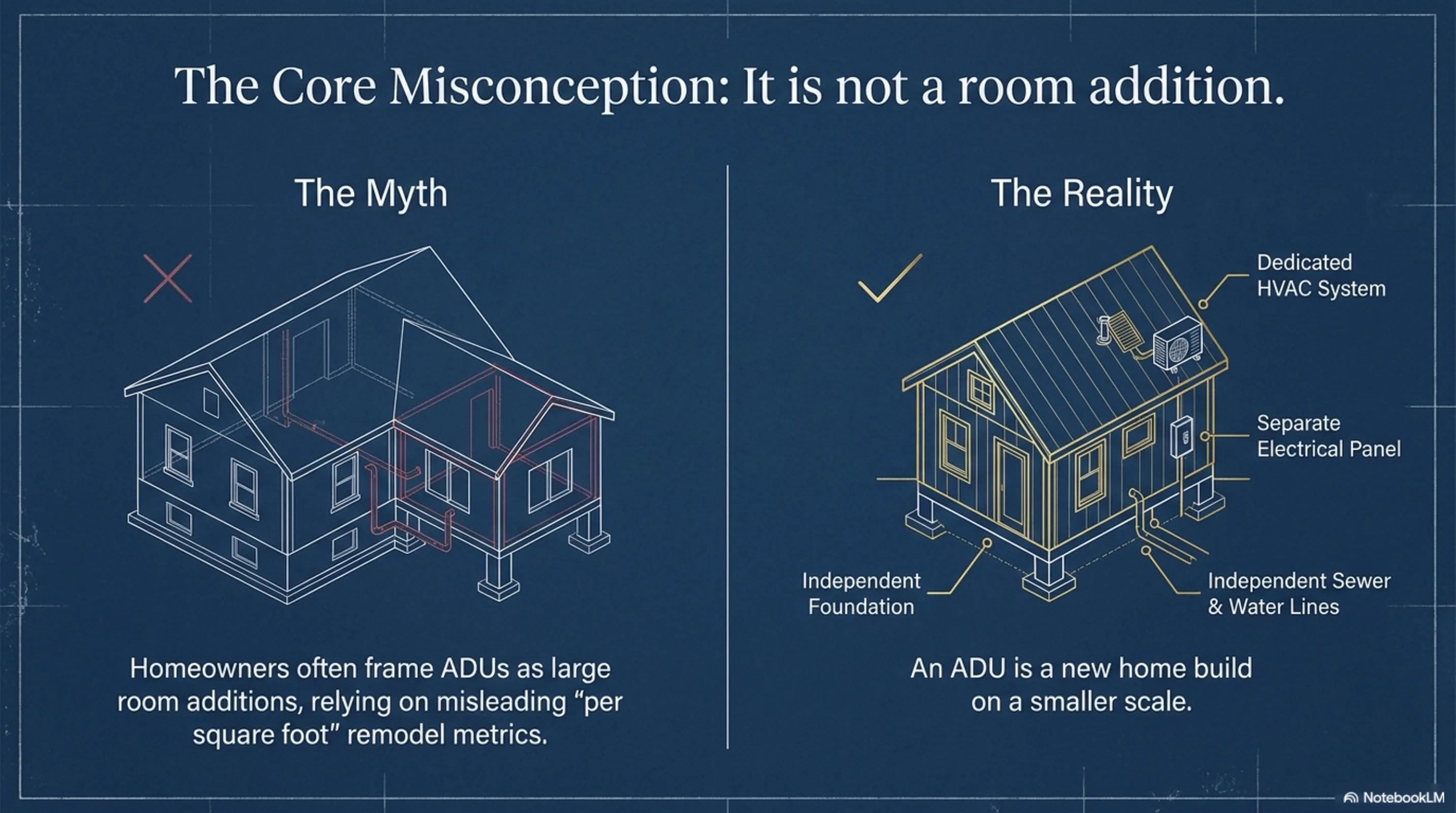
The most significant pattern causing budget and timeline issues for a Houston ADU is the misconception of the project's complexity. Homeowners often frame it as a large room addition when, in reality, they are building a small, independent house. An ADU has its own foundation, its own sewer and water lines, a separate electrical panel, and its own HVAC system. This infrastructure is what separates it from a simple renovation and drives a significant portion of the cost. The 'per square foot' cost metrics that work for interior remodels are misleading here. The most successful ADU projects begin when the homeowner acknowledges they are undertaking a new home build, just on a smaller scale, and budgets accordingly for the extensive site work, utility connections, and engineering that this entails.
Sources & methodology
How Renology builds this guide
Renology combines public permit and labor signals, supplier pricing, remodeler quote patterns, and editorial review of comparable projects. Cost references are planning ranges, not fixed bids, because site conditions, materials, access, permits, and finish level can change the final price.
- Benchmarked against the Renology Cost Index, related service guides, and the Renology Methodology.
- Reviewed for Houston market context when a local market is available.
- Focused on ADU scope, materials, timeline, contractor risk, and budget drivers.
Houston · pre-screened
Get 3 Houston ADU bids in 48 hours.
Our editors already vetted Houston ADU builders. Answer 4 questions and we send 3 written bids inside 48 hours, with the real price for your scope, not their inflated first-call number.
- Free, no commission
- Pre-screened locally
- Bids inside 48 hours
Takes about 60 seconds. We'll text you when bids arrive.